Best Irons for Mid Handicappers: The Middle Ground
The mid handicap iron is the hardest club in golf to shop for, because it is defined by what it gives up rather than what it does. Here is the trade set out in numbers you can check.
Some links here earn us a commission at no extra cost to you. It never changes what we recommend or the order we rank it. How this works.
The mid handicap iron is the hardest club in golf to shop for, because the category is defined by subtraction. It is a game improvement iron with some of the head taken away, some of the offset removed and a little of the margin on a bad strike traded back for control. What follows is four sets that make that trade, and exactly how much each one gives up.
The four, compared
The band this page covers is narrow and precise. A 7 iron between 29 and 31 degrees, offset between roughly 2.5 and 3.5 mm, a sole narrower than a game improvement iron and wider than a players one, and a head you can still see some of behind the ball.
| Pick | Best for | 7 iron | Offset | Set | Shafts | Price |
|---|---|---|---|---|---|---|
| Srixon ZXi5 | The widest stock shaft choice in the category | 31° loft, 62° lie, 37.25 inches | 3.2 mm in the 7 iron, 4.2 mm in the 3 iron | 3 iron to SW, with AW and SW included | Steel 105g and 115g, graphite 53g, 56g, 60g and 80g | Around £1,000 to £1,100 for six irons, steel to graphite |
| Ping i540 | Distance loft in a small head, fully documented | 29° loft, 62° lie, 37 inches | 0.10 inch in the 7 iron, 0.19 inch in the 4 iron | 4 iron to PW, plus a 47° UW | PING AWT 3.0, ALTA CB Blue, Dynamic Gold, KBS Tour, Modus 105 | Around £950 to £1,260 for six irons, steel to graphite |
| Mizuno JPX925 Forged | Forged feel at a loft that still holds a green | 30° loft, 62° lie, 37.25 inches | 0.126 inch in the 7 iron, 0.15 inch in the 4 iron | 4 iron to GW | Not listed on Mizuno's specification page | Around £920 to £1,200 for six irons in steel |
| Titleist T250 | Hollow body speed inside a clean shape | 30.5° | Not published where it can be read | 2 iron to W48 | True Temper AMT Tour Black, Mitsubishi MMT AMC Blue 85 | Around £990 to £1,190 for six to seven irons in steel |
Almost every set here is what the industry calls a hollow or filled head, which is the design that made this category possible. A thin face supported from inside by foam or polymer gives you speed and forgiveness in a shape small enough that a decent player will look at it. The category ladder sets out where that construction sits relative to everything else.
Srixon ZXi5: the one with a shaft for everybody
The Srixon ZXi5 is the middle rung of Srixon's own five step range, and they rate it at mid to high for forgiveness and mid to high for workability, which is an unusually honest way of describing a compromise. The 7 iron is 31 degrees with 3.2 mm of offset and a 62 degree lie, and the set runs from a 20 degree 3 iron to a 56 degree sand wedge.
The reason it leads this page is the shaft list. Stock options run True Temper Dynamic Gold Mid at 105g and 115g in steel, KBS TGI Tour Graphite at 60g and 80g, a UST Recoil Dart at 56g and a UST Helium Nanocore at 53g. That is six weights covering everything from a strong player to a golfer losing speed, all without a custom order.
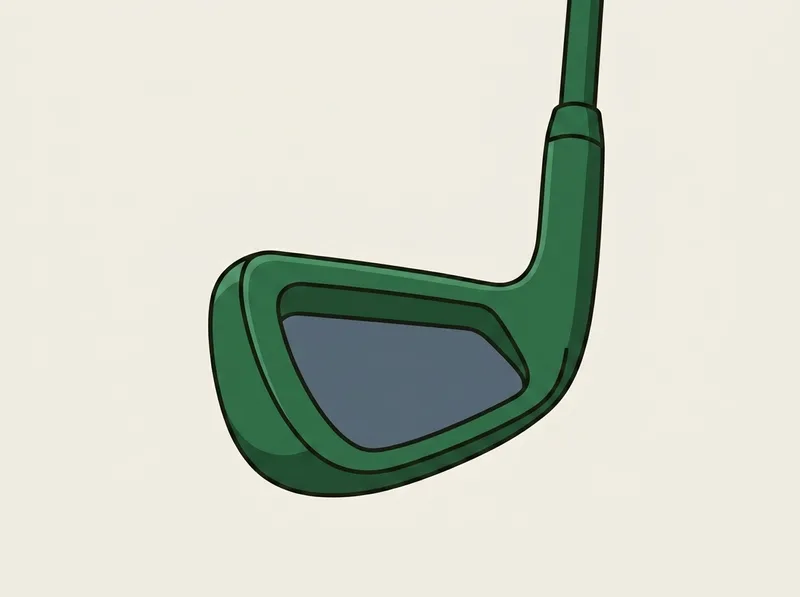 Around £1,000 to £1,100 for six irons, steel to graphite
Srixon ZXi5
- 7 iron
- 31° loft, 62° lie, 37.25 inches
- Offset
- 3.2 mm in the 7 iron, 4.2 mm in the 3 iron
- Set
- 3 iron to SW, with AW and SW included
- Shafts
- Steel 105g and 115g, graphite 53g, 56g, 60g and 80g
- Pitching wedge
- 44°, with a 50° AW and a 56° SW
- Rated
- Srixon place it at mid-high for both forgiveness and workability
- Four graphite weights and two steel weights as stock, which is the widest shaft range on this page by a distance.
- A 44 degree pitching wedge, which is the weakest here and the reason this set gaps cleanly into a 50 and a 56.
- Srixon publish loft, lie, offset, length and swingweight for every head, and rate the model against their own range for forgiveness and workability.
- No bounce figure is published for any club, so turf behaviour has to be judged by hitting it.
- A 3 iron at 20 degrees is offered in the set, and very few golfers at this level should carry one.
- The cavity is shallower than the game improvement sets below it, so a heel strike costs more than it used to.
VerdictThe default pick for a mid handicapper buying without a fitting, because the shaft you need almost certainly exists as a stock option. The missing bounce figures are the one thing to ask about before you commit.
The pitching wedge is the other quiet advantage. At 44 degrees it is the weakest here, which means it gaps into the 50 degree approach wedge and 56 degree sand wedge Srixon build for the same set with nothing left over. Sets with a 42 degree pitching wedge leave a hole that has to be filled with a purchase.
What is missing is bounce, and Srixon publish none of it. On a narrower sole than a game improvement iron that is a real gap, because bounce is what decides whether a slightly heavy strike skids or digs.
Ping i540: game improvement loft, players offset
The Ping i540 is the most interesting set on this page because of what it does to the two numbers this whole category turns on. The 7 iron is 29 degrees, which is a game improvement loft. The offset is 0.10 inch, which is roughly half what a game improvement iron carries and close to a players iron.
That combination is deliberate and it is the single clearest statement of what a mid handicap iron is for. You get the ball speed and the launch of a strong loft, in a head that does not sit visibly behind the shaft at address and does not shut the face for you.
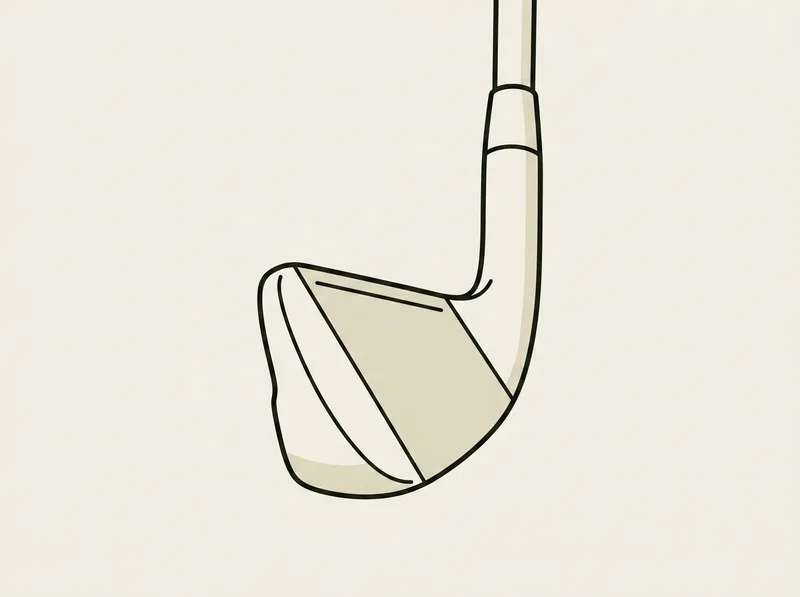 Around £950 to £1,260 for six irons, steel to graphite
Ping i540
- 7 iron
- 29° loft, 62° lie, 37 inches
- Offset
- 0.10 inch in the 7 iron, 0.19 inch in the 4 iron
- Set
- 4 iron to PW, plus a 47° UW
- Shafts
- PING AWT 3.0, ALTA CB Blue, Dynamic Gold, KBS Tour, Modus 105
- Bounce
- 9.0° in the 7 iron, 13.0° in the PW
- Pitching wedge
- 42°
- Loft, lie, length, offset, bounce and swingweight are published for every head, which is the fullest specification table in the category.
- A 29 degree 7 iron with only 0.10 inch of offset, which is game improvement loft inside a players profile.
- Five stock shaft families, so weight and launch can be matched without a custom charge.
- The strongest lofted set here, which means the highest ball speed and the least stopping power on a firm green.
- The set stops at a pitching wedge and a 47 degree utility, so a sand wedge is a separate decision.
- Ping build to order, so it is harder to hit one before buying than the others here.
VerdictThe pick for a golfer who wants the distance of a game improvement iron without the size, and who will check the numbers rather than take a description on trust. The strong lofts are the trade, and they show up on firm greens rather than on the range.
Ping publish loft, lie, length, offset, bounce and swingweight for every head, so the whole trade is legible: bounce climbs from 6.0 degrees in the 4 iron to 13.0 in the pitching wedge, offset shrinks from 0.19 inch to 0.04, and lie opens from 60.5 to 64.1 degrees. Five stock shaft families cover the weight range.
The cost of the strong lofts is stopping power, and it shows up on firm greens rather than on a launch monitor. A 29 degree 7 iron launches lower and spins less than a 33 degree one at the same speed, which is exactly what TrackMan describe when they say more loft generally increases spin rate. The ball goes further and it also runs further after it lands.
Mizuno JPX925 Forged: the loft that still holds a green
The Mizuno JPX925 Forged sits at 30 degrees in the 7 iron with 0.126 inch of offset, which places it almost exactly at the midpoint of everything this page covers. It is a degree weaker than the Ping, a degree stronger than the Srixon, and it carries a little more offset than either.
Mizuno publish offset for every club to three decimal places, running from 0.15 inch in the 4 iron down to 0.091 inch in the gap wedge. Loft, lie and length are all there as well. What is not there is a stock shaft, on Mizuno's own specification page, for a forged set where feel is the reason people buy it.
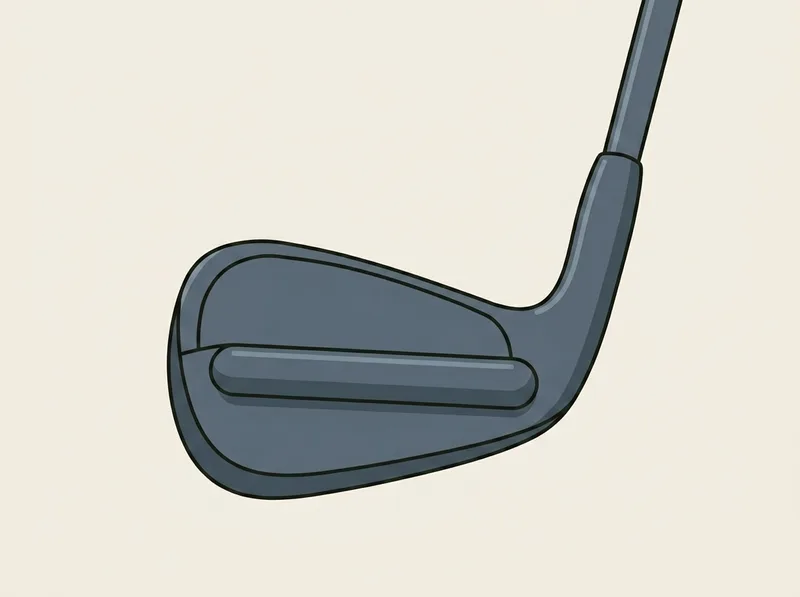 Around £920 to £1,200 for six irons in steel
Mizuno JPX925 Forged
- 7 iron
- 30° loft, 62° lie, 37.25 inches
- Offset
- 0.126 inch in the 7 iron, 0.15 inch in the 4 iron
- Set
- 4 iron to GW
- Shafts
- Not listed on Mizuno's specification page
- Pitching wedge
- 43°, with a 48° GW
- Bounce
- Not published per club
- A 30 degree 7 iron sits almost exactly between the game improvement and players categories, which is what this page is about.
- Offset is published to three decimal places for every club and falls steadily through the set from 0.15 inch to 0.091 inch.
- The set runs to a 48 degree gap wedge, so the first hole below the pitching wedge is already filled.
- No stock shaft is listed on Mizuno's own specification page, so the build depends on the seller.
- Bounce is not published, which matters more here than on a wide soled iron because the sole is narrower.
- The set stops at a 4 iron and a gap wedge, with no utility or sand wedge option inside the range.
VerdictThe right buy for a golfer who cares how the club feels and does not want to give up stopping power to get it. The unlisted shaft is the gap, and on a forged set it is worth a phone call before you order.
That absence matters more here than it does on a game improvement iron. A forged head is chosen for how it transmits impact, and a 130g shaft transmits a different impact from a 90g one in the same head. Ask what is in the club before you pay for it, and be specific about weight rather than flex.
The set composition is clean: 4 iron through gap wedge, with the 48 degree already covering the first hole below the pitching wedge. That is one fewer purchase than most sets on this page require.
Titleist T250: hollow, and quietly documented
The T250 is an all steel hollow body with a forged face and split high density tungsten weighting, and the point of the all steel construction is that the head can be filled and fast without the softer materials most hollow irons use. The 7 iron is 30.5 degrees and the loft ladder runs in half degree steps through the middle of the set, which is finer than anyone else here.
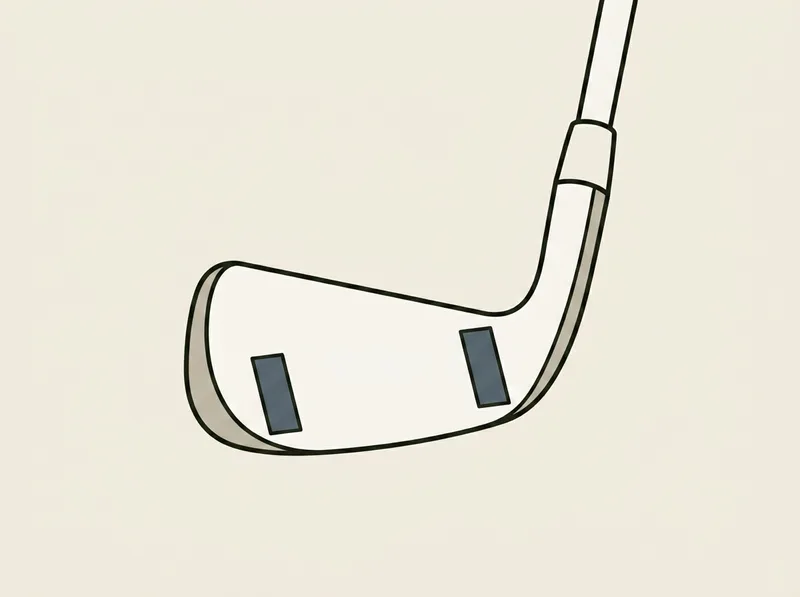 Around £990 to £1,190 for six to seven irons in steel
Titleist T250
- 7 iron
- 30.5°
- Offset
- Not published where it can be read
- Set
- 2 iron to W48
- Shafts
- True Temper AMT Tour Black, Mitsubishi MMT AMC Blue 85
- Pitching wedge
- 43°, with a 48° W above it
- Construction
- All steel hollow body, forged L-Face, split tungsten
- An all steel hollow body, so the speed of a filled head arrives without the softer materials that usually come with it.
- The loft ladder is published in half degree steps through the middle irons, which is unusually fine.
- Two stock shafts covering steel and graphite, both listed on the launch material.
- Titleist refuse automated requests, so only the lofts, shafts and construction they announced could be read at source.
- Priced identically to Titleist's own tour iron in the UK, which makes the price a range decision rather than a materials one.
- A hollow head is harder to bend for loft and lie than a solid one, which limits later adjustment.
VerdictThe pick for a golfer who wants a fast face without a large head, and who is buying through a fitter who can read the numbers Titleist do not publish openly. Bought blind it is a good iron with a thinner paper trail than its price deserves.
The gap in the row above is deliberate and it is the same one that appears on every Titleist entry across this site. Their product pages refuse automated requests, so the only figures repeated here are the ones Titleist themselves published when the range launched: lofts, stock shafts and construction. Offset and bounce circulate on retailer pages and are not repeated, because a number nobody can check against its source is not evidence.
If you are buying a T250 the fix is straightforward. Ask the fitter to read the offset off Titleist's own fitting material in front of you, in the same way you would read a bounce figure off a wedge.
How much forgiveness you are actually giving up
This is the question the category exists to answer, and it deserves a number rather than a shrug.
Nineteen points of greens in regulation is roughly three and a half more greens a round. That is the size of the problem a mid handicapper is still solving, and it is why this category keeps a genuine amount of forgiveness rather than pretending the buyer has stopped missing.
The honest framing is that a mid handicapper misses the middle often enough for perimeter weighting to matter and centres it often enough to notice what a smaller head lets them do. Both halves are true, which is precisely why the compromise sells.
The lofts, side by side
Loft is what makes these sets look different on a launch monitor and it is the number most likely to mislead you in a shop.
| Set | 7 iron | Pitching wedge | Next club in the set |
|---|---|---|---|
| Srixon ZXi5 | 31° | 44° | 50° AW, then 56° SW |
| Ping i540 | 29° | 42° | 47° UW |
| Mizuno JPX925 Forged | 30° | 43° | 48° GW |
| Titleist T250 | 30.5° | 43° | 48° W |
Two and a half degrees separate the strongest 7 iron here from the weakest, which is most of a club. It is also the entire distance difference anyone will demonstrate to you between these sets, and it is available for free by taking a 6 iron instead.
What the loft genuinely changes is descent. A weaker lofted iron lands steeper and stops sooner, which is worth more to a golfer hitting 35% of greens than an extra six yards is, because the shots that cost you at this level are the ones that finish through the back. How far iron lofts have drifted covers the twenty year move that produced this table.
The top of the set is where the money is wasted
Every set here offers a long iron and three of the four offer something at 20 degrees or stronger. The evidence says leave them.
Shot Scope's tracked comparison of long irons against hybrids gives a 10 handicap golfer a 2% better chance of hitting the green with a hybrid, 14 feet better proximity, a 15 feet tighter miss dispersion and 14 yards more distance out of the rough. Those are not marginal figures, and they come from tracked rounds rather than a robot.
The part worth noticing is that the advantage does not shrink as you improve. A scratch golfer in the same dataset gains 6% on greens hit, which is a larger edge than the 10 handicapper sees. Long irons are hard for everybody and a slightly smaller head does not change that.
A sensible set at this level is 5 iron through pitching wedge with a hybrid or a driving iron above, or 6 iron through pitching wedge if your 5 iron and your 6 iron already carry the same distance. What each replacement does covers the club that goes in the gap, and building a distance chart is how you find out whether you have one.
Combo sets, and why they exist
Every maker on this page will build a combo set, and at this handicap it is often the right answer rather than an indulgence.
The logic is simple. Forgiveness matters most where the club is longest, lowest lofted and hardest to launch, and it matters least in a 9 iron that is short, heavily lofted and forgiving almost regardless of how it is built. So a 5 and 6 iron from a more forgiving model paired with a 7 through pitching wedge from a more compact one puts the help where the difficulty is.
Srixon build their whole range around this, with published set recommendations that pair the more forgiving model in the long irons with the more compact one below. Ping and Mizuno both build combos to order. The cost is usually nothing beyond the price of the clubs.
Which of these pages you actually want
This category sits between two others and the boundaries are worth naming, because being on the wrong page costs more than picking the wrong set on the right one.
- If your misses are still frequent and scattered, and approach shots regularly finish short of the green rather than left or right of it, the category below this one is doing more for you. Game improvement irons covers it.
- If you find the middle of the face most of the time and your dispersion is already tight, the category above gives back control that these sets deliberately withhold. Players irons picks that up.
- If the irons are fine and the scoring is not, the shots are somewhere else. How to break 90 is about the part of a round that no iron changes.
What to spend
Iron prices in this category run on a predictable cycle. A set is full price for around nine months and drops by roughly a third when its replacement is announced, and nothing about the clubs changes in between.
| Budget | What it buys | Who it suits |
|---|---|---|
| £400 to £700 | A set two or three years old, or a used current model | Playing monthly and not yet sure the handicap is settling |
| £750 to £1,000 | Last season's model new, often with the shaft you want | Playing weekly and keeping the set three or four years |
| £1,000 to £1,300 | This year's release, fitted, in a combo build if needed | Buying once, and using the fitting |
The fitting is the part of the top row that is worth the money rather than the badge on the sole. At this level a lie angle that is a degree out is visible in your start direction, and a shaft 20g heavier than it should be shows up as a strike that drifts low on the face. What a fitting measures sets out what happens in the bay, and the wedge roundup covers the clubs your pitching wedge has to gap into.
Key takeaways
- The Srixon ZXi5 offers six stock shaft weights from 53g to 115g, a 31 degree 7 iron and a 44 degree pitching wedge that gaps cleanly into the wedges built for the same set.
- The Ping i540 pairs a 29 degree 7 iron with 0.10 inch of offset, which is game improvement loft in a players profile, and publishes every figure including bounce.
- The Mizuno JPX925 Forged sits at 30 degrees with 0.126 inch of offset and lists no stock shaft on its own specification page.
- The Titleist T250 is an all steel hollow body priced level with Titleist's own tour iron, and only its lofts, shafts and construction could be read at source.
- The whole category is one trade: a smaller head and less offset in exchange for a smaller margin on a miss. Two and a half degrees of loft separates these four.
- Shot Scope put a 10 handicap at 35% greens in regulation against 16% at 20 handicap, so a mid handicapper is still missing about two greens in three.
- Handicap falling is not evidence of a better iron strike. Judge the category on the distance gap between your average shot and your good one.
- Long irons lose to hybrids at every handicap Shot Scope measured, including scratch, so the top of the set is where a combo build or a hybrid earns its place.
Common questions
What are the best irons for a mid handicapper?
For most golfers the Srixon ZXi5, because the specification is fully published and six stock shaft weights mean the right build exists without a custom charge. If you want more ball speed in a smaller head and will use the numbers, the Ping i540 pairs a 29 degree 7 iron with half the offset of a game improvement set.
What handicap counts as a mid handicapper?
Roughly 10 to 18, though the useful test is dispersion rather than the number. If you find the middle of the face most of the time, and your bad shots are shorter versions of your good ones rather than different shots entirely, this is your category.
Should a mid handicapper play game improvement irons?
Often yes, and there is no shame in it. Shot Scope have a 10 handicap golfer hitting only 35% of greens, which means two thirds of approach shots still miss. If your average strike and your best strike finish a club apart, the extra margin is worth more than the smaller head.
What is a players distance iron?
A hollow headed iron with a thin, fast face supported from inside by foam or polymer, wrapped in a compact shape. It launches high for its size and forgives more than it looks like it should. Three of the four sets on this page are built that way, and it is the construction that created this category.
Are hollow body irons harder to bend for loft and lie?
Yes, and it is a genuine limitation. A solid forged head bends readily for a fitter, a hollow one is filled and welded and has much less room to move. Get the lie angle right at purchase rather than assuming it can be adjusted later.
Do I need a 4 iron in a mid handicap set?
Probably not. Shot Scope's tracked data gives a 10 handicap golfer 14 feet better proximity and 14 yards more distance from the rough with a hybrid than with a long iron, and the same advantage holds for scratch players. Start the set at a 5 iron and put a hybrid above it.
What is the difference between mid handicap irons and game improvement irons?
Around two degrees of loft and roughly half the offset. Game improvement 7 irons run 28 to 29 degrees with 3.5 mm to 5 mm of offset, wide soles and thick top lines. This category runs 29 to 31 degrees with 2.5 mm to 3.5 mm of offset in a noticeably smaller head.
Should I get a combo iron set?
If your long irons are unreliable and your short irons are fine, yes. A combo pairs a more forgiving construction in the 5 and 6 irons with a more compact one below, which puts the help where the difficulty actually is. Every maker on this page will build one and it usually costs nothing extra.
Are stronger lofts worth it in a mid handicap set?
Only if you are landing the ball on soft greens. A strong loft raises ball speed and lowers launch and spin, so the ball flies further and runs further after it lands. On firm summer greens that turns a good approach into a shot through the back, which costs more than the six yards gained.
How often should I replace mid handicap irons?
Every four or five years is plenty, and only if something has changed. Grooves in the short irons wear first and cost you spin from the rough. If your swing speed or your handicap has moved significantly, a refit matters more than a new model.
How we put this together
- Published manufacturer specification tables read on the maker's own site, so every loft and offset here can be checked against its source.
- The trade this category is built on: how much forgiveness a set gives up to gain a smaller head, less offset and more control, measured rather than described.
- Shot Scope benchmark data for the 10 and 20 handicap golfer, which is the range this page is written for and the evidence for what actually costs shots there.
- Shot Scope's tracked comparison of long irons against hybrids, because the top of a mid handicap set is where the money is most often wasted.
- Where a maker leaves a figure off their own page, this page says so rather than borrowing a number from a retailer.
On this page
- The four, compared
- Srixon ZXi5: the one with a shaft for everybody
- Ping i540: game improvement loft, players offset
- Mizuno JPX925 Forged: the loft that still holds a green
- Titleist T250: hollow, and quietly documented
- How much forgiveness you are actually giving up
- The lofts, side by side
- The top of the set is where the money is wasted
- Combo sets, and why they exist
- Which of these pages you actually want
- What to spend
- How we put this together

Tom Ashworth
Tom Ashworth is a PGA Professional who has taught golf since 2012, working mainly with beginners and mid-handicappers at club level in Surrey. He reviews the instruction guides on Learn Golf for technical accuracy before they publish.
Most of his teaching is with players in their first three years of the game, and most arrive having been told too much: six swing thoughts collected from videos, half of them contradicting each other. His approach is to check the grip and the alignment before touching the swing, on the basis that most bad ball flight is decided at address.