Best Golf Drivers: Four Picks and the Fitting Logic
A driver is the club where the badge on the crown matters least and the four numbers on the spec sheet matter most. Here are four worth buying, what each specification changes, and how to work out which head fits the way you miss.
Some links here earn us a commission at no extra cost to you. It never changes what we recommend or the order we rank it. How this works.
Every driver sold this year is fast, forgiving and built to the same legal limits. The differences that decide whether one suits you are not on the front of the box: loft, shaft weight, hosel range and where the mass sits in the head. Get those four right and almost any current model works. Get them wrong and the best driver in golf goes sideways.
The four, compared
All four are large titanium and carbon heads built against the same legal ceilings on size, spring and inertia, and all four appear on the R&A's list of conforming driver heads, which is republished every Monday and is the only place a conformance claim can be checked. What separates them is how much of the head you are allowed to move and how heavy the shaft is that comes attached.
| Pick | Best for | Lofts | Adjustment | Weighting | Stock shaft | Price |
|---|---|---|---|---|---|---|
| TaylorMade Qi4D | The one to buy if you only buy one | 8°, 9°, 10.5°, 12° | 4° loft sleeve, 12 positions | Four moveable weights, 9g x2 and 4g x2 | TaylorMade REAX | Around £525 to £550 |
| Callaway Quantum Max | Straightforward distance with the fewest decisions | 9°, 10.5°, and 12° in left hand custom | Independent loft and lie, 8 settings | 10g rear weight, neutral or draw | Project X Denali Frost Silver 50 | Around £529 to £599 |
| Ping G440 Max | Forgiveness, and the easiest launch of the four | 9°, 10.5°, 12° | ±1.5° loft, up to 3° flatter lie | Interchangeable back weight, 14g to 38g | PING ALTA CB Blue 50, 49g to 55g | Around £529 to £575 |
| Titleist GTS2 | Buying through a fitting rather than off a shelf | 8°, 9°, 10°, 11° | SureFit hosel, 16 loft and lie settings | 11g forward and 5g back as standard | Project X Titan Black or Mitsubishi Tensei 1K | Around £629 in a stock shaft |
Street prices in this category drop hard about eight months after launch, and the previous generation of any of these heads performs within a yard or two of the current one. There is no urgency to buy the newest thing.
TaylorMade Qi4D: the one to buy if you only buy one
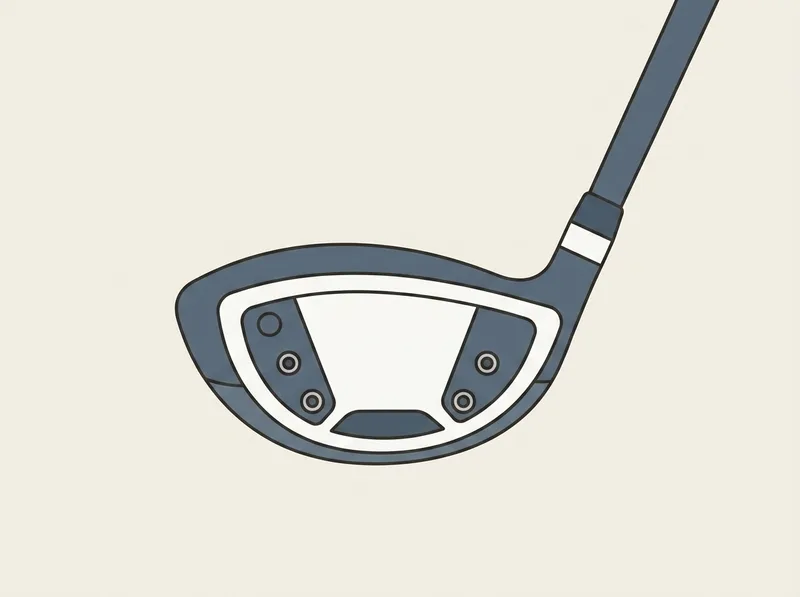
The TaylorMade Qi4D is the most configurable head here by a distance. Four moveable weights sit in the sole, two at 9g and two at 4g, and TaylorMade publish what each arrangement does: both heavy weights forward drops spin, both back raises forgiveness and tightens dispersion, both in the toe leans the head toward a fade and both in the heel leans it toward a draw.
On top of that sits a 4° loft sleeve with twelve positions, which changes loft, lie and face angle together. In practical terms a 10.5° head can be played anywhere from about 8.5° to 12.5°, which is a wider range than most golfers will ever need and a genuinely useful one if your swing changes over a season.
 Around £525 to £550
TaylorMade Qi4D
- Lofts
- 8°, 9°, 10.5°, 12°
- Adjustment
- 4° loft sleeve, 12 positions
- Weighting
- Four moveable weights, 9g x2 and 4g x2
- Stock shaft
- TaylorMade REAX
- Head
- 460cc, 45.75 inches, D4
- Face
- 60X Carbon Twist Face
- Four moveable weights instead of one, so the head can be set low-spin, high-forgiveness, fade or draw without a new club.
- The widest loft range here, from 8° to 12°, which covers a genuinely broad set of swing speeds.
- A 12-position sleeve on top of the weights, so the same head can be made to sit open or shut at address.
- All that adjustability is useless if nobody sets it up for you, and most people never touch it.
- TaylorMade publish the REAX shaft by name rather than by weight, so the stock build weight is not obvious from the listing.
- The four-weight sole is the fiddliest system here to change on the range.
VerdictThe default pick for a golfer who wants one head that can be tuned rather than replaced, and the right buy if you have access to a fitter or a launch monitor. Bought blind off a shelf and never adjusted, it is no better than anything else here and you have paid for a feature you are not using.
The catch is the obvious one. A driver with four weights and twelve sleeve positions bought online, set to standard and never touched is just a driver. This head rewards a session on a launch monitor and does nothing for someone who will not have one. If that describes you, the Callaway or the Ping below cost less and ask less.
Callaway Quantum Max: the fewest decisions
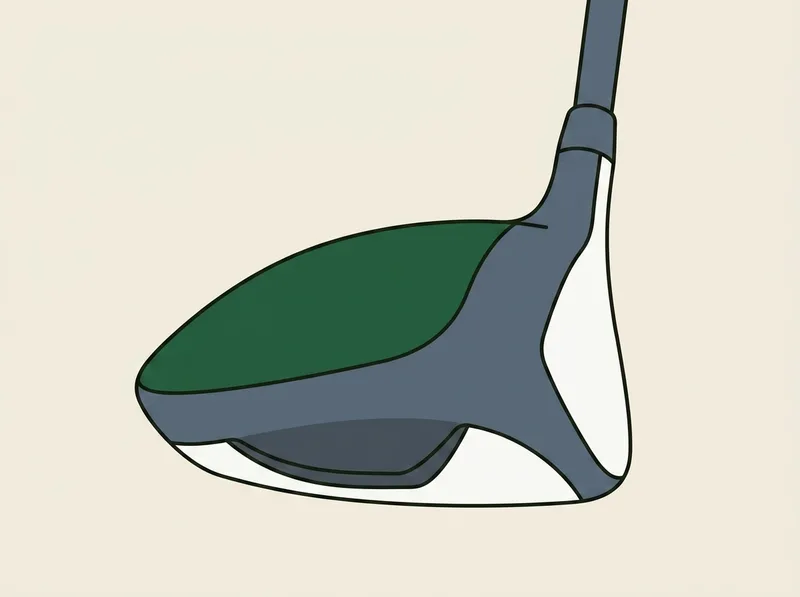
The Callaway Quantum Max is the opposite design philosophy and it is not a lesser one. A single 10g weight sits at the back of the head in either a neutral or a draw position, and the hosel gives eight independent loft and lie settings. That is the whole adjustment story, and for most club golfers it covers everything they would actually change.
Callaway publish more of the specification than the others do, including the 460cc head, the 45.75 inch length, the 57.0° lie and even the weight of the stock grip. The lie figure matters more than it looks. At 57.0° this is the flattest head here, and a flatter lie tends to hold off a left miss, which is a specification-level answer to a problem most golfers try to fix with a swing thought.
 Around £529 to £599
Callaway Quantum Max
- Lofts
- 9°, 10.5°, and 12° in left hand custom
- Adjustment
- Independent loft and lie, 8 settings
- Weighting
- 10g rear weight, neutral or draw
- Stock shaft
- Project X Denali Frost Silver 50
- Head
- 460cc, 45.75 inches, 57.0° lie
- Face
- Tri-Force Face with Ai-optimised mapping
- The simplest weighting system here. One weight, two positions, and neither of them can be set badly.
- Callaway publish loft, lie, length and grip weight on the product listing, which is more than most makers bother with.
- A 57.0° lie is the flattest of the four, which suits taller players and anyone who fights a left miss.
- Only two shot-shape settings, so there is no fade bias at all if that is what you need.
- 12° is a custom order in left hand only, which is an odd gap in the range.
- The rear weight is compact and easy to lose if you take it out on a range mat.
VerdictThe pick for a golfer who wants a modern driver head without a fitting appointment attached to it. The neutral and draw options cover the two settings most club golfers ever want, and nothing about the set-up can be got badly wrong. If your miss is a hook, look elsewhere.
The gap is at the other end. There is no fade setting at all, so a golfer whose miss is a hook has nothing to move. That is a small population, but if it is you, the Qi4D's toe weighting is the reason to pay attention.
Ping G440 Max: the easiest to launch
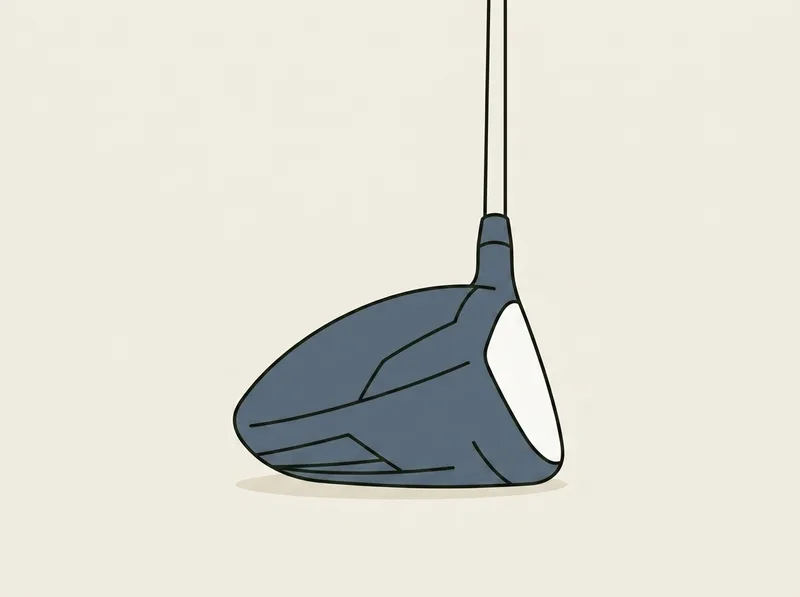
Ping's approach is to make the whole club lighter and longer rather than to make the head adjustable. The Ping G440 Max is built at 46 inches with the ALTA CB Blue 50 shaft, which starts at 49g in soft regular, and Ping publish the head weight at 203g. That combination produces clubhead speed for golfers who do not have much of it to spare.
Forty six inches is at the edge of what is sensible. The Rules allow 48 inches, and since 2022 there has been a Model Local Rule capping length at 46 inches for elite competitions, which tells you where the governing bodies think the useful limit sits. A longer shaft raises potential speed and lowers the odds of finding the middle of the face, and for many golfers trimming half an inch off is the cheapest improvement available.
 Around £529 to £575
Ping G440 Max
- Lofts
- 9°, 10.5°, 12°
- Adjustment
- ±1.5° loft, up to 3° flatter lie
- Weighting
- Interchangeable back weight, 14g to 38g
- Stock shaft
- PING ALTA CB Blue 50, 49g to 55g
- Head
- 460cc, 203g head weight, 58.5° lie
- Length
- 46 inches with the ALTA CB Blue 50
- Ping publish a full weight and length table, including the 203g head, which almost nobody else does.
- The back weight comes in nine tungsten options from 14g to 38g, so swing weight can be dialled in rather than accepted.
- The lightest stock shaft here at 49g in soft regular, which is the specification that most often unlocks speed.
- The 46 inch build is longer than standard and harder to find the middle of the face with.
- The back weight tunes swing weight rather than shot shape, so slice correction means moving to the SFT model instead.
- ±1.5° of loft is the narrowest hosel range of the four.
VerdictThe right buy for anyone whose problem is getting the ball in the air and keeping it on the planet rather than shaving spin off a good strike. The long, light build is the whole argument, and it is also the reason a slightly shorter aftermarket shaft suits a lot of people better.
The back weight is worth understanding correctly, because it is frequently described wrongly. It comes in tungsten options from 14g to 38g and it tunes swing weight and total head mass. It does not move the centre of gravity toward the heel to fight a slice. That is what Ping's SFT model in the same family is for, and it is a different club.
Titleist GTS2: the one to be fitted for
The GTS2 arrived in June 2026 with a full thermoform body made from Titleist's own polymer, which they call a Split Mass Frame: mass pushed backward for stability and forward for speed at the same time. Whether that is meaningfully different from what carbon crowns already do is the sort of claim only a robot test settles, and this page is not going to pretend otherwise.
What is measurable is the fitting resolution. The SureFit hosel offers sixteen loft and lie combinations in 0.75° steps, the lofts run 8°, 9°, 10° and 11° in single degree jumps rather than the 1.5° gaps everyone else uses, and the standard 11g forward and 5g back weights swap over to trade speed for stability.
 Around £629 in a stock shaft
Titleist GTS2
- Lofts
- 8°, 9°, 10°, 11°
- Adjustment
- SureFit hosel, 16 loft and lie settings
- Weighting
- 11g forward and 5g back as standard
- Stock shaft
- Project X Titan Black or Mitsubishi Tensei 1K
- Body
- Full thermoform body, Split Mass Frame
- Launched
- June 2026
- Sixteen hosel settings in 0.75° steps, which is finer control of loft and lie than anything else here offers.
- The forward and back weights swap over, so the same head can be set for speed or for stability.
- Loft steps of one degree between 8° and 11°, rather than the 1.5° jumps everyone else uses.
- Comfortably the most expensive of the four, and the premium shaft option widens the gap further.
- Titleist do not publish head volume, length or lie in the launch material, so the spec sheet is thinner than its rivals.
- Designed around being fitted. Bought off a shelf in a stock setting, most of what you paid for stays switched off.
VerdictThe pick for a golfer who is going to book a fitting and use it, because the hosel resolution and the swappable weights give a fitter more to work with than the others do. For anyone buying online in a standard build, the extra money buys options that will sit untouched.
All of that is aimed at a fitting bay. Titleist do not publish head volume, length or lie angle in their launch material, which is a genuine gap in the spec sheet and a reasonable sign of who the club is for: the number that matters is the one your fitter writes down, not the one on the website.
Loft: the specification most golfers get wrong
Almost every amateur plays too little loft, and the reason is that loft sounds like a trade against distance. It is not. Loft controls launch angle and spin together, and a ball that launches too low with too little spin falls out of the sky early no matter how fast it left the face.
TrackMan's published benchmarks put the average male amateur, around a 14.5 handicap, at a 12.6° launch angle with 3,275 rpm of driver spin, against 11.2° and 2,896 rpm for a scratch player. The average golfer is not launching too high. They are launching similarly and spinning more, because their strike is lower on the face and their attack angle is steeper.
| Driver swing speed | Typical carry | Loft to start from |
|---|---|---|
| Under 80 mph | Under 190 yards | 12° or higher |
| 80 to 90 mph | 190 to 220 yards | 10.5° to 12° |
| 90 to 100 mph | 220 to 250 yards | 9° to 10.5° |
| Over 100 mph | 250 yards and up | 8° to 9° |
Use this as a starting point and nothing more, because attack angle moves it as much as speed does. A golfer who hits down on the ball needs more loft at the same speed than one who hits up on it. Which driver loft to play works through that properly, including how the hosel setting changes face angle at the same time.
Shaft weight does more than the head does
If you change one thing on a driver, change the shaft. The head is subject to legal limits on size, spring and moment of inertia that every manufacturer has been sitting against for over a decade. The shaft has no such ceiling, and its weight and flex determine how much of your speed reaches the ball.
Stock driver shafts on this page run from 49g on the Ping to the 50g class on the Callaway and TaylorMade builds, which is light by historical standards and appropriate for most club golfers. Heavier shafts, in the 60g to 70g range, are steadier for faster swings and actively cost speed for slower ones.
Flex is the other half and it is the one people get wrong out of vanity. A shaft that is too stiff for your speed is harder to load and tends to leave the face open, which is one of the quieter causes of a slice that no amount of practice fixes. Which shaft flex you need sets out how to work it out from carry distance if you have never had your speed measured.
Tee height belongs in the same conversation. With a 460cc head the ball wants to sit so that its equator is level with the top edge of the crown, which for most people is higher than feels natural. Teeing low with a driver forces a downward strike into a club designed to be hit on the way up, and it is a large part of why some golfers never get on with the club at all. How to hit a driver covers the set-up that goes with it.
How head shape maps to your miss
Manufacturers describe head shape in terms of forgiveness, which is close to meaningless as a purchase criterion because every driver here is forgiving. The useful version is which direction the head wants to send the ball when you miss.
| What the head does | How it is achieved | Who it suits |
|---|---|---|
| Neutral | Mass split evenly across heel and toe | Golfers whose miss goes both ways |
| Draw bias | Mass concentrated toward the heel | A miss that starts right and keeps going |
| Fade bias | Mass concentrated toward the toe | A miss that turns left |
| Low spin | Mass low and forward in the head | Fast swings that balloon the ball |
| High stability | Mass low and as far back as it fits | Strikes that wander across the face |
Only the Qi4D covers all five of those with one head, which is the strongest argument for buying it. The Quantum Max covers neutral and draw. The G440 Max is a stability head and leaves slice correction to a different model. The GTS2 trades between speed and stability rather than between draw and fade.
If your ball starts left of target and curves hard right, that is a pull slice and it is a swing path problem rather than an equipment one. A draw-biased head reduces the symptom by a few yards and does not touch the cause. Fixing a slice is the honest first stop, and a new driver bought to cure one is money spent on a plaster.
What adjustability actually buys
Adjustable hosels and moveable weights are worth something, and considerably less than the marketing implies.
The hosel sleeve changes loft, and on every model here it changes face angle and lie at the same time, because they are mechanically linked. Adding loft closes the face slightly. That is why turning a driver up to fight a slice sometimes works and sometimes is simply a stronger tee shot going further left.
Moveable weights change where the ball tends to start and how much the head resists twisting. The effect is real and modest: a handful of yards of shot shape rather than a transformation. A weight in the heel does not turn a slice into a draw.
Face technology is the third pillar of driver marketing and the hardest to evaluate honestly. Carbon faces, variable thickness patterns and artificial intelligence in the design loop all aim at the same thing, which is holding ball speed on strikes away from centre. Smash factor, ball speed divided by clubhead speed, is what measures it, and a driver strike near 1.50 is close to the ceiling. Every head here produces that from the middle. The differences show up on the strikes you would rather not talk about.
Which of these pages you actually want
This is the general driver page, and general is doing real work in that sentence. Four of the most common searches around drivers deserve genuinely different answers, because the advice inverts rather than softens.
- If you have played fewer than about twenty rounds, the priority is a head you cannot set up badly and a shaft light enough to swing. Drivers built for beginners starts there.
- If you shoot in the high 90s or above, forgiveness on off-centre strikes outranks everything, including loft. High handicap driver picks is the page for that.
- If you are over about sixty, the whole conversation shifts to weight and flex before it gets to the head at all. Drivers for senior swings covers it.
- If your driver swing speed is under about 85 mph, more loft and a much lighter build change more than any head can. Slow swing speed drivers works through the specifications.
What a driver is realistically worth to you
Those numbers are the context for a £550 purchase. A new driver, fitted properly, is worth perhaps five to fifteen yards to a golfer coming out of an old or badly specified club, and close to nothing to someone already in a modern head that fits. The larger gain is almost always accuracy rather than distance.
Some retailers fit free against a purchase, independents usually charge and often refund it, and the fee varies enough by region that a single figure would mislead. Against the price of a driver it is the best value in this entire category. What a club fitting actually measures explains what happens in the bay.
Where all of this sits against your other clubs is worth a thought too. A driver you cannot keep in play is worth less than a 3 wood you can, and plenty of golfers score better leaving it in the bag on tight holes. Average driver distance puts realistic numbers to what you should expect, and it is usually lower and more encouraging than people fear.
Key takeaways
- The TaylorMade Qi4D is the default pick: four moveable weights, a 12-position sleeve and lofts from 8° to 12° cover more swings than any single head here.
- The Callaway Quantum Max asks the fewest questions. One weight, two positions, and nothing can be set badly.
- The Ping G440 Max is the easiest to launch, built at 46 inches with a 49g stock shaft. Slice correction lives in a different model in the same family.
- The Titleist GTS2 is built around being fitted, with 16 hosel settings in 0.75° steps. Bought in a stock build, most of that stays unused.
- Most amateurs play too little loft. Launch and spin are set together, and a low launch with low spin is the shortest combination there is.
- Shaft weight and flex change more than head choice does, and stock builds now run as light as 49g.
- Low spin is not a general upgrade. It is a fix for a specific measured problem and it costs distance to anyone who does not have that problem.
Common questions
What is the best golf driver to buy?
For most golfers the TaylorMade Qi4D, because its four moveable weights and 12-position loft sleeve let one head be set up for a wide range of swings. If you would rather not adjust anything, the Ping G440 Max launches the ball more easily and comes with the lightest stock shaft here.
How much should you spend on a golf driver?
Between about £280 and £630 covers everything that matters. Last season's model of any of these heads performs within a yard or two of the current one and typically sells for a third less. Spending above £650 buys premium shaft options rather than a better head.
Does a new driver really add distance?
Sometimes, and less than the advertising suggests. A golfer moving out of a ten year old or badly specified driver can pick up five to fifteen yards. A golfer already in a modern head that fits them will gain very little. The reliable gain from a new fitted driver is accuracy rather than raw distance.
What loft driver should I use?
More than you think. Under 90 mph of clubhead speed, 10.5° to 12° is usually right, and under 80 mph, 12° or more. Attack angle matters as much as speed: hitting down on the ball needs more loft at the same speed than hitting up on it does.
Are adjustable drivers worth it?
Only if you will adjust them. A hosel sleeve and moveable weights are genuinely useful for keeping a driver fitting you as your swing changes, and completely inert if the club is bought online, set to standard and never touched again. If nobody is going to put it on a launch monitor, buy a simpler head and save the money.
What driver shaft weight should I use?
Most club golfers are best served somewhere between 45g and 60g. Lighter shafts help slower swings produce speed, heavier shafts steady faster ones. The stock builds here run from 49g upward, which is light by historical standards and correct for the majority of buyers.
Will a draw-bias driver fix my slice?
It will reduce the curve by a few yards and it will not fix the cause. A slice comes from the clubface being open relative to the swing path, and moving mass into the heel of the head nudges that relationship rather than resetting it. Treat a draw-bias head as damage limitation while you work on the path.
What is a low spin driver and do I need one?
A low spin head has its mass set low and forward, which reduces backspin off the face. It suits golfers who spin the driver too much, usually faster swings that see the ball balloon and fall short. If you already launch low, a low spin head will cost you carry rather than add it.
Is 460cc the biggest a driver can be?
Yes. The Equipment Rules cap the head at 460cc plus a small manufacturing tolerance, which is why every model on this page is the same size. The rules also cap club length at 48 inches, and elite competitions can adopt a Local Rule reducing that to 46 inches.
How long does a golf driver last?
Mechanically, many years. Titanium faces can lose a little spring after very heavy use, but the far more common reason to replace a driver is that it no longer fits you rather than that it wore out. A driver bought at 25 mph slower than you swing today is the one worth replacing.
Should I buy this year's driver or last year's?
Last year's, unless you are being fitted into something specific. Driver performance has been sitting against the same legal limits for over a decade, and the year-on-year gain is small enough to be lost inside normal shot-to-shot variation. The discount on a one-year-old head is usually a third or more.
How we put this together
- Published manufacturer specifications for each driver, taken from the maker's own listing or launch material rather than a retailer's summary.
- What each specification changes at impact: loft against launch and spin, hosel range against face angle, moveable mass against shot shape, and shaft weight against the speed you can actually produce.
- TrackMan's published launch and spin benchmarks by handicap, which is what decides whether a low-spin head is an upgrade or a mistake.
- Arccos and Shot Scope amateur datasets on driving distance and accuracy, because a driver is bought on distance and scored on where the ball finishes.
- The R&A equipment position on driver heads and club length, which sets the outer limits every model on this page is built against.
On this page
- The four, compared
- TaylorMade Qi4D: the one to buy if you only buy one
- Callaway Quantum Max: the fewest decisions
- Ping G440 Max: the easiest to launch
- Titleist GTS2: the one to be fitted for
- Loft: the specification most golfers get wrong
- Shaft weight does more than the head does
- How head shape maps to your miss
- What adjustability actually buys
- Which of these pages you actually want
- What a driver is realistically worth to you
- How we put this together
Tom Ashworth
Tom Ashworth is a PGA Professional who has taught golf since 2012, working mainly with beginners and mid-handicappers at club level in Surrey. He reviews the instruction guides on Learn Golf for technical accuracy before they publish.
Most of his teaching is with players in their first three years of the game, and most arrive having been told too much: six swing thoughts collected from videos, half of them contradicting each other. His approach is to check the grip and the alignment before touching the swing, on the basis that most bad ball flight is decided at address.