Best Golf Wedges: Bounce, Grind and Four Picks
Two 56 degree wedges with different soles behave like different clubs. Here are four worth buying, what bounce and grind actually change, and why a wedge is the one club you should expect to wear out.
Some links here earn us a commission at no extra cost to you. It never changes what we recommend or the order we rank it. How this works.
A wedge is the only club in the bag you should expect to wear out, and the only one where the number stamped on the sole tells you least. Two 56 degree wedges with different soles behave like different clubs on the same lie. What follows is four worth buying, what bounce and grind actually change, and why the loft is the last thing to look at rather than the first.
The four, compared
All four are cast or forged single-piece heads built against the same legal ceiling on groove volume and edge sharpness, which the R&A groove rules have applied to every club of 25 degrees of loft or more manufactured since January 2010. That means none of them can out-spin the others by design. What separates them is the shape of the sole, what the maker is willing to publish about it, and what the club costs.
| Pick | Best for | Lofts | Grinds | Finishes | Stock shaft | Price |
|---|---|---|---|---|---|---|
| Titleist Vokey SM11 | Getting the sole right rather than settling | 44° to 60°, in 2° steps | Six, F S M D K T, in 27 configurations | Tour Chrome, Jet Black, Nickel, raw to order | Dynamic Gold, DG 105, or MMT graphite | Around £169 to £219 per wedge, steel to graphite or raw |
| Ping s259 | Published numbers you can actually compare | 46° to 60°, plus a 62° | Six, S-12 W-14 H-10 E-8 T-6 B-8 | Hydropearl 2.0 chrome and Midnight | PING Z-Z115 steel, 111g | Around £179 to £189 per wedge, steel to graphite |
| Cleveland RTZ | The widest loft range for the least money | 46° to 64° on the Tour Satin build | Four, Full Mid Low and Adapt | Tour Satin, Black Satin, Tour Rack raw | Steel only on the standard build | Around £109 to £159 per wedge |
| Mizuno Pro T-1 | Forged feel and the widest choice of finish | 46° to 60°, in 2° steps | Six soles, S M P C V X, 6° to 12° bounce | Soft White Satin, Black Ion, Blue Ion, Copper | Not published | Around £149 to £190 per wedge |
Wedge prices do not fall the way driver prices do. A wedge is replaced because it is worn rather than because it is old, so the deep end of season clearance that irons and drivers get does not really happen here. UK retail does discount them, by roughly a fifth to a third off recommended price on the models here, but that is where it stops rather than where it starts.
Titleist Vokey SM11: the deepest fitting matrix
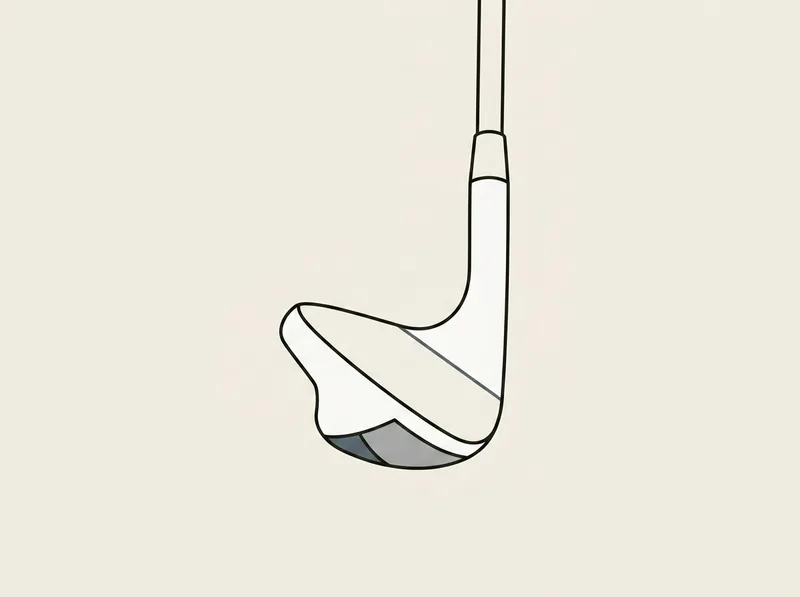
Vokey's argument has been the same for twenty years and it is still the strongest one in the category. The Titleist Vokey SM11 runs six grinds, F, S, M, D, K and T, across lofts from 44 to 60 degrees, and Titleist list 27 separate loft and grind configurations rather than a single sole per loft.
That matters because the sole is the part of a wedge that touches the ground. F is a full sole for full shots, S narrows the trailing edge for a faster feel through turf, M suits golfers who rotate the face open, D adds forward bounce for steeper swings, K is the wide high-bounce bunker sole, now at 12 degrees where it used to measure 14, and T is the low-bounce option for firm ground.
 Around £169 to £219 per wedge, steel to graphite or raw
Titleist Vokey SM11
- Lofts
- 44° to 60°, in 2° steps
- Grinds
- Six, F S M D K T, in 27 configurations
- Finishes
- Tour Chrome, Jet Black, Nickel, raw to order
- Stock shaft
- Dynamic Gold, DG 105, or MMT graphite
- Grip
- Titleist Universal 360
- Available
- Golf shops from February 2026
- Twenty seven loft and grind combinations, which is more ways to get the sole right than anyone else offers.
- Three stock shafts including a lightweight steel and a graphite, so the wedge can be matched to the irons above it.
- A 44° option, which is the only sensible answer to how strong modern pitching wedge lofts have become.
- The highest ceiling of the four in the UK once you leave the standard chrome finish, because the graphite and raw builds cost meaningfully more than the steel one.
- The choice is only worth paying for if somebody helps you make it, and most buyers pick from what is in stock.
- Raw is a custom order rather than a shelf finish, so the option most likely to suit a wet climate takes longer to arrive.
VerdictThe right buy for a golfer who is going to be fitted, or who already knows their attack angle and their turf. Bought blind in a standard 56 and 60, it is a very good wedge that cost more than it needed to, and the Cleveland below does the same job for less.
The 44 degree addition is the quietly important one. Modern pitching wedges have been strengthened to around 42 or 43 degrees, so the club that used to sit neatly above a sand wedge no longer does. Standard iron lofts shows how far the category has drifted, and a 44 degree wedge is the first mainstream response to it.
Three stock shafts are offered: Dynamic Gold, a lighter Dynamic Gold 105 and an MMT graphite. That range is unusual and it is the specification most worth using, because a wedge shaft 40 grams heavier than the 9 iron above it changes the club you are actually swinging.
Ping s259: the one that publishes everything
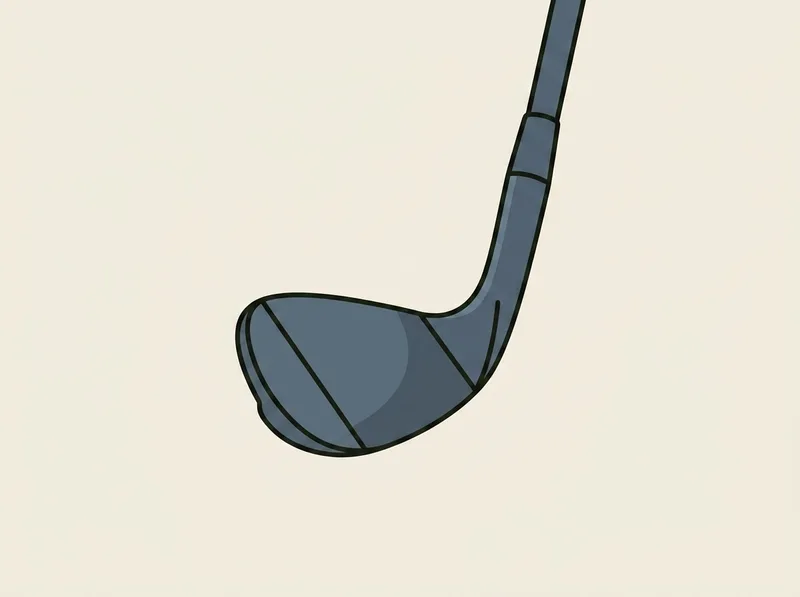
The Ping s259 names its grinds after their bounce. S-12, W-14, H-10, E-8, T-6 and B-8 tell you the number before you have opened a chart, which sounds like a small thing and removes most of the confusion in this category at a stroke.
Behind that sits a full specification table giving loft, length, lie, offset, effective bounce and swingweight for every head. Offset on a wedge is rarely published by anyone and it changes where the leading edge sits relative to your hands at address. The head is cast 8620 carbon steel with an elastomer insert behind the face, which is Ping's answer to the softness a forged head gets for free.
 Around £179 to £189 per wedge, steel to graphite
Ping s259
- Lofts
- 46° to 60°, plus a 62°
- Grinds
- Six, S-12 W-14 H-10 E-8 T-6 B-8
- Finishes
- Hydropearl 2.0 chrome and Midnight
- Stock shaft
- PING Z-Z115 steel, 111g
- Head
- Cast 8620 carbon steel with an elastomer insert
- Published
- Loft, length, lie, offset, effective bounce and swingweight for every head
- The grind names carry the bounce number, so S-12 tells you what it is without a chart.
- Ping publish a full specification table including offset and effective bounce, which almost nobody else does for wedges.
- The E grind is a direct descendant of the Eye2 sand wedge, and it is still the easiest bunker club in golf to use.
- One stock shaft at 111g, which is heavy if your irons are graphite or lightweight steel.
- Two finishes against four on the Mizuno, and no raw option at all.
- Ping build to order, so lead times are longer than taking a wedge off a shelf.
VerdictThe pick for a golfer who wants to compare wedges honestly rather than take a marketing description on trust, because the numbers are all there in one table. The single heavy stock shaft is the one thing to check before you commit.
The E grind is worth singling out. It descends from the Eye2 sand wedge, a club that has been getting golfers out of bunkers since the early 1980s, and it remains close to foolproof from soft sand. If bunkers are the part of your game that costs you shots, greenside bunker technique matters more than any wedge, but the right sole makes the technique easier to execute.
The gap is the shaft. One stock option at 111 grams is heavy, and if your irons run lightweight steel or graphite, the wedges will feel like different clubs from a different set.
Cleveland RTZ: the value pick
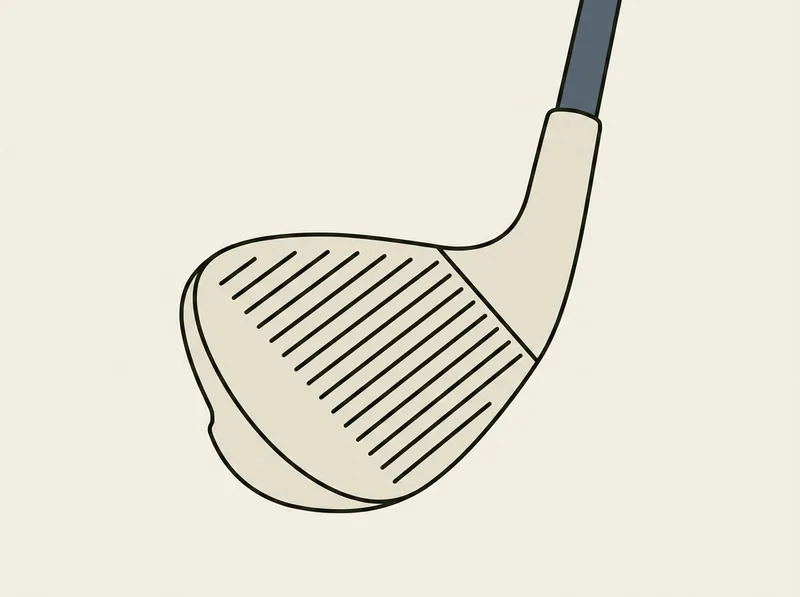
The Cleveland RTZ is the cheapest wedge here and the argument for it is straightforward. It covers 46 to 64 degrees in the Tour Satin finish, offers four soles, and comes in a raw Tour Rack finish that is on the shelf rather than a custom order. Cleveland build it from what they call Z-Alloy and sell it on rust resistance, which is a sensible thing to care about in a British climate.
The Adapt grind is the interesting one: the same sole roundness as the Mid, with full-face grooves and a higher toe. That helps on shots played with the face open, where the strike moves out toward the toe and a conventional groove pattern stops short of it.
 Around £109 to £159 per wedge
Cleveland RTZ
- Lofts
- 46° to 64° on the Tour Satin build
- Grinds
- Four, Full Mid Low and Adapt
- Finishes
- Tour Satin, Black Satin, Tour Rack raw
- Stock shaft
- Steel only on the standard build
- Face
- UltiZip grooves with a HydraZip blast
- Material
- Z-Alloy, sold on rust resistance
- The cheapest wedge here by a clear margin, and the price gap grows if you are buying three.
- Lofts run to 64°, and the Adapt grind adds full-face grooves and a higher toe for open-face shots.
- A raw Tour Rack finish is on the shelf rather than a custom order.
- Cleveland do not publish bounce figures for each loft and grind on their own product pages, which makes a like-for-like comparison hard.
- The loft range narrows on the Black Satin build, so the finish you want may not come in the loft you want.
- Steel is the only shaft listed as standard.
VerdictThe best value in wedges right now, and the sensible default for anyone replacing two or three at once. The gap against the Vokey is in how much help you get choosing, not in how the club performs once it is in the bag.
There is one genuine gap, and it is worth stating plainly rather than filling in from a review site. Cleveland's own product pages do not publish bounce figures for each loft and grind combination. Several third-party pages carry numbers anyway, and this page will not repeat them, because a bounce figure that the manufacturer has not stated is a number nobody can check. If you are buying an RTZ, ask the shop to read the bounce off the club or off Cleveland's fitting tool rather than trusting a table you found.
Mizuno Pro T-1: forged, and the finish question
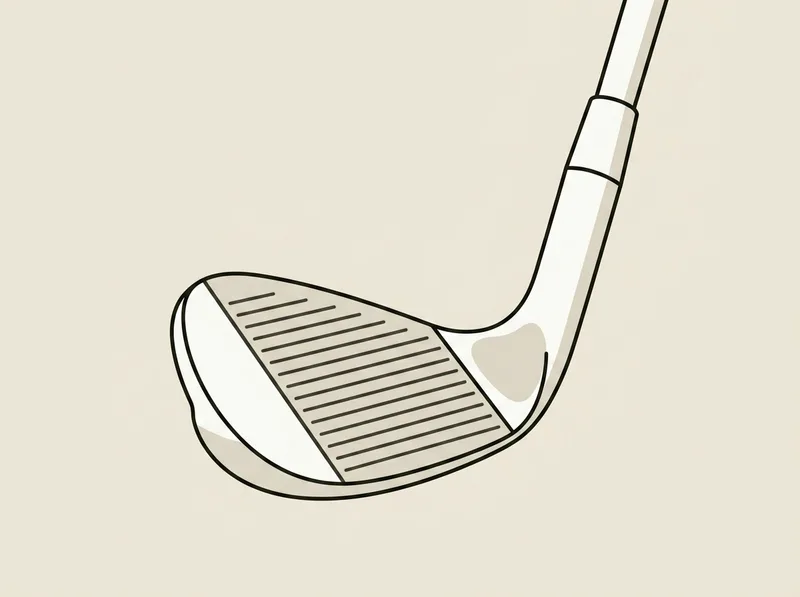
The T-1 is one-piece Grain Flow Forged from 1025 Pure Select carbon steel with a copper underlay, made at Mizuno's Hiroshima plant. That process is why Mizuno irons and wedges have the feel reputation they do, and it is a real difference rather than a marketing one: a soft forged head transmits a duller impact than a cast one.
Six soles, S, M, P, C, V and X, run across lofts from 46 to 60 degrees with bounce between 6 and 12 degrees. Four finishes are offered, including a Copper and a Blue Ion, which is more choice of appearance than anyone else here gives you.
 Around £149 to £190 per wedge
Mizuno Pro T-1
- Lofts
- 46° to 60°, in 2° steps
- Grinds
- Six soles, S M P C V X, 6° to 12° bounce
- Finishes
- Soft White Satin, Black Ion, Blue Ion, Copper
- Stock shaft
- Not published
- Construction
- Grain Flow Forged HD, 1025 Pure Select carbon steel
- Grooves
- Quad Cut + with Hydroflow micro grooves
- One-piece forged from a soft carbon steel, which is the reason this club has the reputation it has.
- Four finishes including two that are genuinely different colours rather than variations on chrome.
- Six soles across a set of lofts that only runs to 60°, so the choice is concentrated where it matters.
- Mizuno do not list a stock shaft on their own product page, so the build you receive depends on where you buy it.
- A soft forged head marks and wears faster than a cast one, which is the trade for the feel.
- No loft above 60°, so a genuine flop specialist has to look elsewhere.
VerdictThe pick for a golfer who cares how the club feels at impact and is buying one or two wedges rather than a set of three. The missing shaft specification is a real gap, so ask what is in the club before you pay for it.
The specification table above has a blank in it, and the blank is deliberate. Mizuno's own product page does not list a stock shaft for the T-1, so this page says "Not published" rather than borrowing a figure from a retailer's build sheet. That is not a criticism of the club. It is a warning that the shaft in the wedge you receive depends on who you buy it from, and on a club this short and this heavy the shaft is not a detail.
Bounce decides more than loft does
Bounce is the angle between the leading edge of the sole and the lowest point of the sole when the club sits square. High bounce lifts the leading edge further off the ground, so the sole hits the turf before the edge can dig. Low bounce sets the leading edge close to the ground so it cuts into it.
Almost every golfer who says a wedge digs has too little bounce for their strike, and almost every golfer who blades wedges off firm ground has too much. It is the most consequential wedge specification and the one buyers most often ignore in favour of loft.
| Your divot and your turf | Effective bounce to look for | Where it sits in these four |
|---|---|---|
| Deep divot, soft ground, plenty of sand | 12° and up | Ping W-14, Vokey K and D, Cleveland Full |
| Shallow divot, average conditions | 8° to 12° | Ping S-12, Vokey F and S, Cleveland Mid, Mizuno M |
| Sweeper, firm ground, tight lies | 4° to 8° | Ping T-6 and B-8, Vokey T, Cleveland Low |
Two things move you down this table that have nothing to do with your swing. Firm links turf in August wants less bounce than the same course in February, and a steep attack angle produces a deeper divot at the same swing speed, which is why two golfers hitting the ball the same distance can need soles two grinds apart. Vokey's grind explainer is the clearest free guide to how the shapes differ.
Grind is the part of the sole you cannot see from address
Grind is what has been ground away from the sole after the head is cast or forged: relief at the heel, at the toe, or along the trailing edge. Bounce tells you the angle. Grind tells you how much of the sole is still there when you open the face.
That distinction is the whole point. Open a wedge with a full sole and the effective bounce climbs sharply, so the club skids and the leading edge sits high. Open one with heel and trailing edge relief and the sole drops closer to the ground, which is what allows the face to sit open under the ball. It is the mechanism behind the flop shot, and no amount of technique substitutes for a sole that will not let the face open.
So the choice matters most in your highest lofted wedge and barely at all in the lowest. A 50 degree gap wedge is hit square on a full swing almost every time, so a standard sole is fine. A 58 or a 60 is used open, from sand, from rough and off tight lies, and that is where a grind earns its money.
How many wedges, and where the gap actually is
Most golfers carry two wedges and need three. Pitching wedge lofts have moved and sand wedge lofts have not, so the jump from a 43 degree pitching wedge to a 56 degree sand wedge is thirteen degrees in a part of the bag where every other gap is four or five.
Filling it is a buying decision before it is a practice one, and it is the cheapest scoring improvement available to a mid handicapper. What each wedge should be lofted at is set out in the wedge loft guide, and turning the set into numbers you can play to is covered in wedge distance control, which is a separate job and the one most people skip.
Those two numbers are the case for spending money here rather than on a driver. The wedge is in your hands for a large share of the shots that decide your score, and unlike the driver there is no legal ceiling holding every model to the same performance.
A wedge is a consumable, and that is not a sales pitch
Grooves wear. That is not a defect and no manufacturer can engineer it away, because the rules cap groove volume and edge sharpness, so every wedge starts at the legal maximum and can only move one way from there.
Wear comes from sand more than anything else, because a bunker shot drags the face through millions of small hard particles. Range balls are the second cause, since their harder covers scour the groove edges faster than a premium ball does. A wedge used for three bunker shots a round and forty range balls a week wears at several times the rate of one that only plays approach shots.
The symptom is not that the club stops spinning on a clean strike from the fairway. It is that spin becomes inconsistent from wet grass, rough and sand, which is exactly where you needed it. There is no universal replacement interval, and any page giving you one in rounds is guessing. Run a fingernail across the grooves at the centre of the face and then out at the toe: on a worn wedge the centre feels noticeably smoother. Replace the club you use most first, which is usually the sand wedge rather than the lob.
It is also why wedges are the one club category where buying used is normally a mistake. The wearing part is the face, and groove wear does not show in a listing photograph. If you do buy used, take the gap wedge rather than the sand wedge, and read buying used clubs before you commit.
Shafts, finishes, and the specifications nobody publishes
Wedge shafts are the last thing anyone thinks about and one of the first that goes wrong. A wedge is usually built with a heavier shaft than the irons above it, on the logic that a heavier club is steadier on a partial swing. That holds if your irons are steel. If they are graphite, a 111 gram wedge shaft is a different club from the 9 iron it follows, and the transition shows up as fat contact on the shorter swings.
Keep the wedge shaft within about 20 grams of the shaft in your 9 iron, and match the flex. Vokey offer three stock weights, Ping one at 111 grams, Cleveland list steel only, and Mizuno do not publish theirs. That spread is a bigger real difference between these four than anything on the face.
Lie angle is the other fitting number, and it is checked less often on wedges than on irons even though the club is shorter and the effect is the same. A wedge that sits too upright at impact points the face left of target for a right-hander. Ten minutes on a lie board settles it, and what a fitting measures covers what else is worth checking.
Which of these pages you actually want
This is the general wedge roundup, and it assumes you have some idea what the wedges you own already do.
- In your first season or two, the priority is one forgiving sand wedge with plenty of bounce, not a matched set of three. Wedges for beginners starts there and the picks are different.
- If the problem is contact around the green rather than which club to buy, chipping technique is free and will do more than any wedge here.
Key takeaways
- The Titleist Vokey SM11 offers 27 loft and grind configurations, which is the deepest fitting choice in wedges and only worth paying for if you use it.
- The Ping s259 names its grinds after their bounce and publishes loft, lie, length, offset and effective bounce for every head, which makes it the easiest range to compare honestly.
- The Cleveland RTZ is the cheapest here and runs to 64 degrees, but does not publish bounce per loft on its own pages. The Mizuno Pro T-1 is one-piece forged and does not list a stock shaft.
- Bounce matters more than loft. Soft turf and a deep divot want 12 degrees and up, firm ground and a sweeping strike want 4 to 8.
- Grind is how much sole remains when you open the face, which is why it matters most in your highest lofted wedge and barely at all in your gap wedge.
- Modern pitching wedges sit around 42 to 43 degrees, which leaves a thirteen degree hole above a 56. Three wedges beats two for most golfers.
- Grooves start at the legal maximum and only wear from there, and sand does most of the damage. Keep the wedge shaft within about 20 grams of your 9 iron shaft.
- Wedges are the one club category where buying used is usually a mistake, because the wearing part is the part you cannot inspect in a photograph.
Common questions
What are the best golf wedges to buy?
For most golfers the Titleist Vokey SM11, because 27 loft and grind combinations mean the sole can be matched to your turf and your strike rather than accepted as standard. If you are buying two or three at once, the Cleveland RTZ does the same job for noticeably less money.
How many wedges should I carry?
Three suits most golfers: a pitching wedge, something around 50 to 52 degrees, and a sand wedge around 56. A fourth makes sense if you miss a lot of greens from inside 120 yards. Two leaves a gap of twelve or thirteen degrees, which is more than any swing reliably covers.
What bounce wedge do I need?
Match it to your divot and your turf. A deep divot on soft ground wants 12 degrees or more, an average strike on average conditions wants 8 to 12, and a sweeping strike on firm ground wants 4 to 8. Most club golfers buy less bounce than they should because that is what tour players play.
What is the difference between bounce and grind?
Bounce is the angle that lifts the leading edge off the ground. Grind is how much of the sole has been shaped away at the heel, toe or trailing edge. Bounce tells you how the club behaves with the face square, grind tells you how it behaves once you open it.
Do more expensive wedges spin more?
No. Groove volume and edge sharpness are capped by the equipment rules for every club of 25 degrees of loft or more, so every wedge sold starts at the same legal ceiling. What you pay more for is choice of sole, finish and shaft, plus feel. A fresh cheap wedge out-spins a worn expensive one comfortably.
How often should you replace your wedges?
There is no honest figure in rounds, because wear depends on how much sand and how many range balls the face sees. The test is to run a fingernail across the grooves at the centre of the face and then at the toe: when the centre feels noticeably smoother, the club is done. Replace the wedge you use most first.
Are raw or rusty wedges better?
They reduce glare, and the theory is that a rusted face grips slightly better in the wet, but the effect is small next to the gap between a fresh groove and a worn one. Raw heads also transfer rust to golf balls. Buy one because you like the look.
Should I buy used wedges?
Usually not, and this is the one club category where the usual used-club logic reverses. The wearing part of a wedge is the face, and groove wear does not show in a listing photograph. If you do buy used, take the gap wedge rather than the sand wedge, because it has done far less work.
Does the wedge shaft matter?
More than most golfers expect. Wedges are usually built heavier than the irons above them, which is fine if your irons are steel and wrong if they are graphite. Keep the wedge shaft within roughly 20 grams of your 9 iron and match the flex, or the shortest swings in your bag will feel like a different set.
Is a 60 degree wedge worth carrying?
Only if you can use it. A 60 needs a clean strike and a reasonable amount of speed to be any use on a full shot, and from a bad lie it is the least forgiving club in the bag. Plenty of golfers score better with a 56 as their highest loft and a repeatable technique around the green.
How we put this together
- Published manufacturer specifications for each wedge, taken from the maker's own listing or launch material rather than a retailer's summary.
- What each specification changes at impact: loft against trajectory, bounce against how the sole interacts with turf and sand, grind against what the club allows you to do with the face open.
- The R&A position on groove volume and edge sharpness, which is the ceiling every wedge on this page is designed against and the reason grooves wear rather than improve.
- Shot Scope and Arccos amateur datasets on short game performance, because a wedge is bought on spin and scored on how often you get up and down.
- Which figures each manufacturer actually publishes, and which they leave off their own product pages.
On this page
- The four, compared
- Titleist Vokey SM11: the deepest fitting matrix
- Ping s259: the one that publishes everything
- Cleveland RTZ: the value pick
- Mizuno Pro T-1: forged, and the finish question
- Bounce decides more than loft does
- Grind is the part of the sole you cannot see from address
- How many wedges, and where the gap actually is
- A wedge is a consumable, and that is not a sales pitch
- Shafts, finishes, and the specifications nobody publishes
- Which of these pages you actually want
- How we put this together

Tom Ashworth
Tom Ashworth is a PGA Professional who has taught golf since 2012, working mainly with beginners and mid-handicappers at club level in Surrey. He reviews the instruction guides on Learn Golf for technical accuracy before they publish.
Most of his teaching is with players in their first three years of the game, and most arrive having been told too much: six swing thoughts collected from videos, half of them contradicting each other. His approach is to check the grip and the alignment before touching the swing, on the basis that most bad ball flight is decided at address.