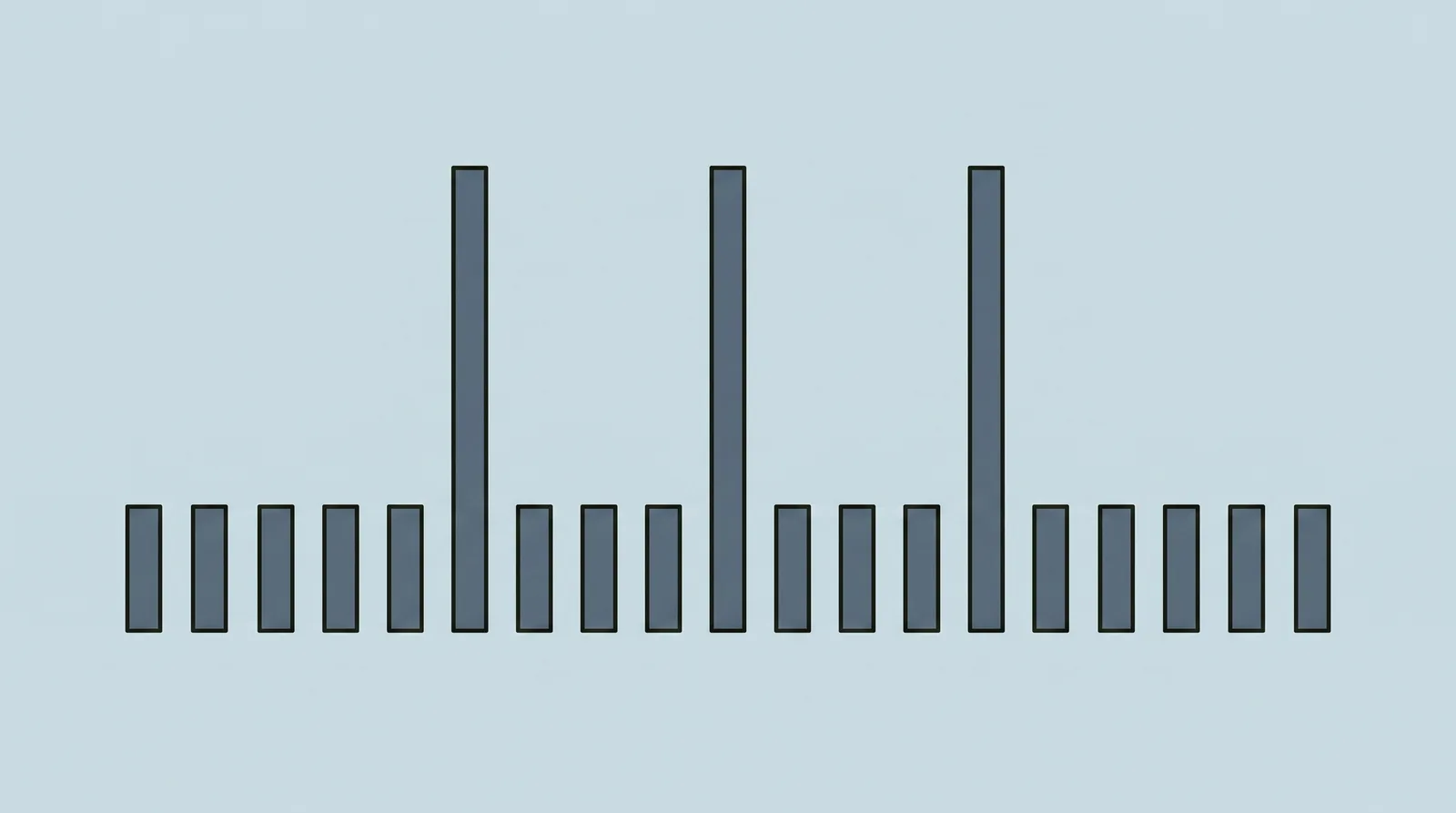
Breaking 90 means shooting 89 or better, which on a par 72 is seventeen over. That is bogey on every hole with one par, and it sounds achievable because it is. The reason most golfers stuck in the 90s stay there is not that they cannot make bogeys. It is that they make two or three holes a round that cost seven or eight, and those holes are not random. This guide covers what the tracked data says separates a 91 from an 88, and what to actually do about it.
The arithmetic nobody does
Write out what 89 actually looks like. On a par 72 you have seventeen shots to give away across eighteen holes.
| Scoring pattern | Result | Realistic? |
|---|---|---|
| 18 bogeys | 90 | One short. This is the trap |
| 17 bogeys, 1 par | 89 | Breaking 90 by the narrowest margin |
| 15 bogeys, 2 pars, 1 double | 89 | The realistic version |
| 12 bogeys, 4 pars, 2 doubles | 88 | What a good round looks like |
| 12 bogeys, 5 pars, 1 triple | 89 | Same score, different shape |
Look at the third and fourth rows. Both include doubles, which means you do not have to play a clean round. What you cannot do is have three or four of them, because each one has to be paid for with a par somewhere else and pars are the hard currency.
Where the shots actually go
Read that together and the shape of your round is clear. You will miss fourteen greens. You are not going to stop missing them this season. So breaking 90 is decided almost entirely by what happens after you miss, and by whether the miss was ordinary or catastrophic.
That reframes everything. The golfer who breaks 90 is not striking it better than you. They are missing in better places.
Cause one: the tee shot that removes your options
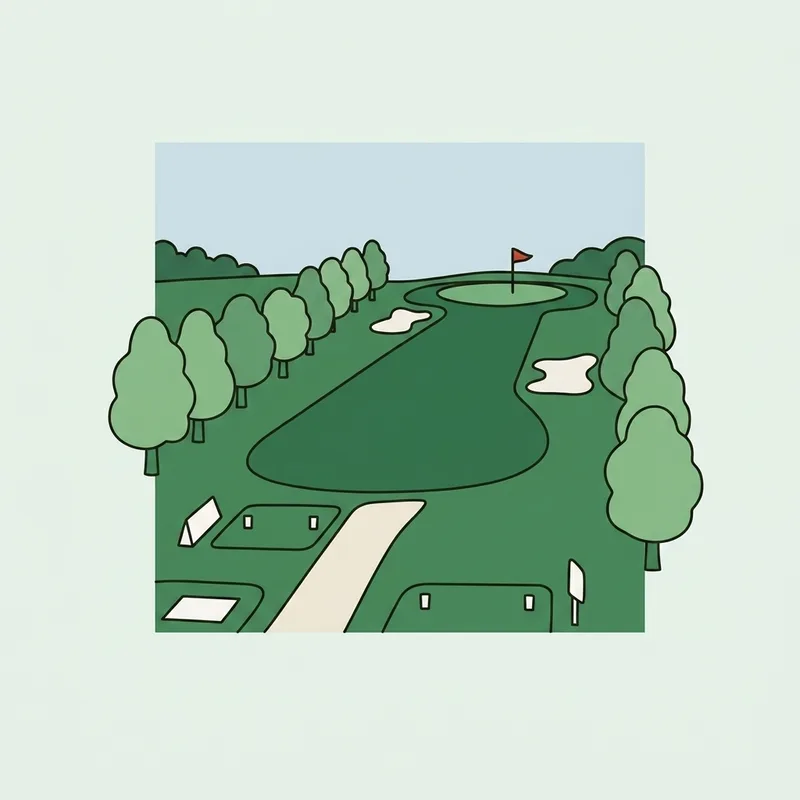
The single biggest source of doubles is a tee shot that leaves you unable to advance the ball meaningfully. Not a bad drive, an unplayable one: trees, out of bounds, deep rough behind a hazard.
The fix is not hitting it straighter. It is choosing a club whose bad miss is survivable.
Look at your last five rounds and count how many holes started with a driver you did not need. On most par 4s under about 380 yards, a 3 wood or a long iron leaves you a mid iron in and takes the worst outcome off the table entirely.
The rule to adopt: driver only when the trouble is genuinely out of reach, or when the hole is long enough that you need it. Everywhere else, take the club that keeps you in play. This is the core of golf course management and it is worth more strokes at this level than any technique change.
Cause two: the approach that shortsides you
Shortsiding means missing the green on the same side as the flag, leaving no green to work with. It turns a routine up-and-down into a genuinely hard shot, and it is the most common way a bogey becomes a double.
The flag position tells you where not to miss. A pin cut on the left edge means the miss is right, into the fat of the green. A pin at the back means the miss is short.
Aim at the middle of the green. Not sometimes, not when the pin is tucked. Always, until you are breaking 80.
| Pin position | What most golfers aim at | What to aim at | Why |
|---|---|---|---|
| Front, over a bunker | The pin | Middle, taking one more club | Short is in the bunker, long is a putt |
| Back of green | The pin | Middle | Long is usually dead, short is a putt |
| Tucked left | The pin | Middle, or right of centre | Left is shortsided, right is a chip with green to work with |
| Tucked right | The pin | Middle, or left of centre | Same logic mirrored |
| Middle | The pin | The pin | The one time they agree |
The other half of this is club selection. Amateurs come up short of the green far more often than they fly it, because they club off their best-ever distance rather than their average. Our golf club distance chart covers what an honest yardage looks like, and the short version is that your 7 iron goes as far as it goes on a normal swing, not on the one you remember.
Cause three: the penalty stroke you chose
Penalties come in two kinds. The ones you could not avoid, and the ones you elected to risk. Breaking 90 means eliminating the second kind entirely.
The classic version is the recovery shot from the trees. You are 160 yards out behind a trunk, there is a gap you think you can thread, and the hero shot brings a par into play. The maths is brutally against it: a successful attempt saves one stroke, a failed one costs two or three, and the success rate on that shot for a 90s golfer is well under half.
Take the punch out sideways. Every time. A bogey from a sideways chip-out is a perfectly good hole, and it is the shot that separates golfers who break 90 from golfers who nearly do.
The other elective penalty is the aggressive line over water or out of bounds when a safer route exists. If the safe line leaves you a longer approach, take the longer approach.
Cause four: the three-putt
Two three-putts a round is the average. Removing one of them is a free stroke, and it comes almost entirely from speed on the first putt rather than from holing more.
So the job on a 40-footer is to leave it inside three feet, not to hole it. Practise lag putting to a circle rather than to the cup, and the specific work is in putting distance control.
The second half is the short one that follows. The three to six foot band is where amateurs give away the most, at 59% against 92% for a tour player, and it is covered in how to make short putts.
The wedge game, which is the actual bottleneck
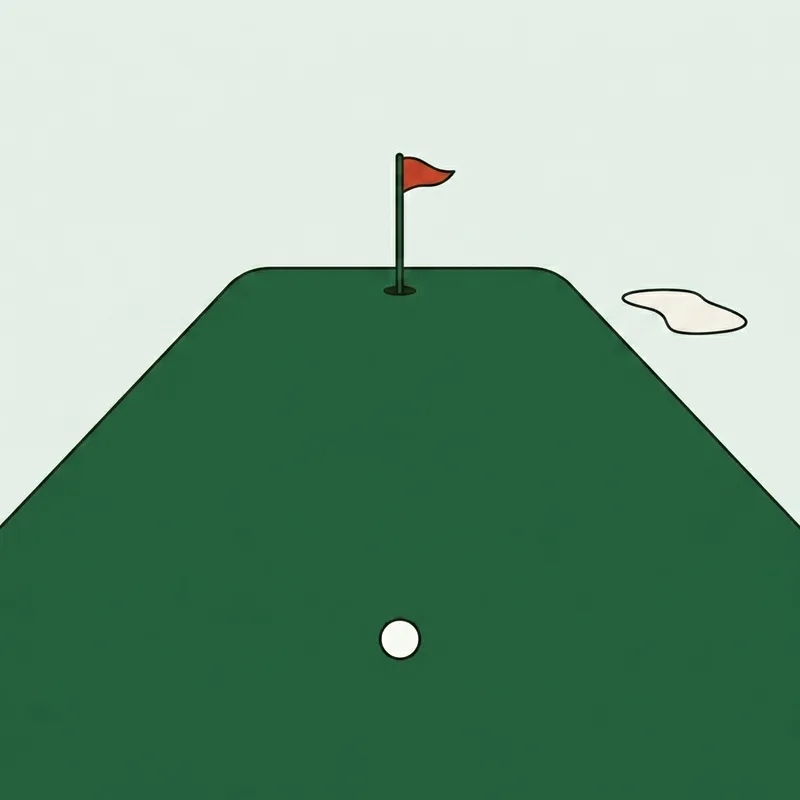
Everything above is decision-making, and decisions are free. The one skill that genuinely has to improve to break 90 reliably is the wedge from 40 to 100 yards.
You will face this shot several times a round, because a 250 yard drive on a 380 yard par 4 leaves 130, and a miss leaves a pitch. Most golfers in the 90s have exactly one wedge swing, full, and everything shorter is guesswork.
Build three. A full swing, a three quarter swing, and a half swing with your sand wedge, and know the yardage of each. That is three known distances instead of one, and it converts a guess into a shot. The system is in wedge distance control.
| Swing length | Sand wedge, typical | What it replaces |
|---|---|---|
| Full | Your longest wedge number | The only shot you currently own |
| Three quarter | About 80% of full | The shot you currently decelerate on |
| Half | About 55% of full | The shot you currently chunk or blade |
Write your three numbers on a piece of tape on the shaft. Nobody will notice and it removes the guess entirely.
What a round that breaks 90 actually feels like
It feels boring, and that is the part nobody warns you about.
You hit 3 wood off tees where you used to hit driver. You aim at the middle of greens with a pin tucked. You punch out sideways from the trees on the fifth and make bogey. You two-putt from 30 feet six times. You make one par on a short par 4 and one on a par 3, and you sign for 88.
There is no round in that description where you played brilliantly. That is the point. Breaking 90 is not a performance, it is the absence of three specific disasters, and the golfers who do it consistently have made peace with how unglamorous it is.
The practice that supports it
Given limited time, the allocation that fits this goal is not the one most golfers use.
| Area | Share of practice | Why at this level |
|---|---|---|
| Wedges, 40 to 100 yards | 30% | The one skill that genuinely has to improve |
| Chipping and pitching | 25% | You will miss fourteen greens a round |
| Putting, lag plus 3 to 6 feet | 25% | Two three-putts a round is a free stroke |
| Full swing irons | 15% | Maintenance, and centre strike |
| Driver | 5% | You are going to use it less anyway |
The structure of a session that transfers is in how to practice golf, and the short version is that randomised practice with a different club every few shots beats hitting forty 7 irons.
The order to work through it
- Count your disasters for five rounds and split them into decisions and mishits.
- Adopt the tee rule: driver only when trouble is out of reach or the hole demands it.
- Adopt the approach rule: aim at the middle of every green until you break 80.
- Adopt the recovery rule: no hero shots, punch out sideways every time.
- Build three wedge distances and write them on the shaft.
- Practise lag putting to a three foot circle and short putts from four to six feet.
- Recount your disasters. The number should have roughly halved.
Steps two through four are free and available this weekend. Steps five and six take a season. That order matters, because the free strokes arriving first is what makes the slower work feel worth doing.
Once you are breaking 90 consistently, the bottleneck changes completely. Breaking 80 is about scrambling and wedge precision rather than disaster avoidance, and that transition is covered in how to break 80. The wider skill set for this level is in intermediate golf tips.
Key takeaways
- Breaking 90 is subtraction. You need seventeen bogeys and one par, not a round full of pars.
- A double costs you a par, and pars are far harder to make than doubles are to avoid.
- You will miss about fourteen greens a round at this level. The game is decided by where you miss.
- Driver only when the trouble is out of reach. A 3 wood's miss is recoverable and a driver's often is not.
- Aim at the middle of every green until you break 80. Shortsiding is what turns bogeys into doubles.
- Never attempt a recovery that needs a gap, a curve or a carry you are not sure of. Punch out sideways.
- Two three-putts a round is average. Removing one is free, and it comes from lag speed, not from holing more.
- The one skill that genuinely has to improve is the wedge from 40 to 100 yards. Build three known distances.
Common questions
What handicap is breaking 90?
Shooting 89 on a par 72 is seventeen over, which corresponds roughly to a handicap index in the mid to high teens depending on the course rating. Breaking 90 occasionally usually means an index around 18 to 20, and doing it consistently means somewhere around 15 to 17.
How long does it take to break 90?
For a golfer already breaking 100 comfortably, the decision changes in this guide can produce it within a handful of rounds, because they cost nothing and take effect immediately. Doing it consistently rather than once usually takes a season, and most of that time goes into the wedge game.
Do I need to make pars to break 90?
One or two, not many. Seventeen bogeys and a par is 89. The realistic version is around twelve to fifteen bogeys, two to four pars, and no more than one or two doubles. It is the doubles that decide it, not the pars.
Should I stop using my driver to break 90?
Not entirely, but use it far less. Driver when the trouble is genuinely out of reach or the hole is long enough to need it, and a 3 wood or long iron everywhere else. The question is not which club is more accurate, it is which club's miss still leaves you able to advance the ball.
Why do I keep making double bogeys?
Almost always one of four things: a tee shot that left you unable to advance, an approach that shortsided you, a recovery attempt you elected to risk, or a three-putt. Track which of the four is costing you most over five rounds, because golfers are usually wrong about which one it is.
Should I aim at the flag or the middle of the green?
The middle, until you break 80. At a 23% greens-in-regulation standard the flag is not a realistic target, and aiming at it converts your ordinary miss into a shortsided one with no green to work with. Aiming at the centre produces the same number of pars and far fewer doubles.
How many putts should I take to break 90?
Around 32 to 34 is typical for a golfer in this range, and the number matters less than the three-putt count. Two three-putts a round is average, and removing one of them is a free stroke that requires no improvement in holing ability, only in first-putt speed.
What should I practise to break 90?
Wedges from 40 to 100 yards more than anything else, then chipping, then lag putting and short putts. Full swing work and driver practice deserve about a fifth of your time between them. Most golfers invert this completely.
Is breaking 90 harder than breaking 100?
Different rather than harder. Breaking 100 is about eliminating catastrophic holes and making contact reliably. Breaking 90 is about decisions and about owning one genuine skill, the wedge, and it demands more discipline where breaking 100 demanded more improvement.
Can I break 90 without changing my swing?
Many golfers can, and it is the most common way it happens. Everything in this guide except the wedge distances is a decision rather than a technique. Take the free strokes from better decisions first, then judge whether your swing is genuinely the limit.
Why do I shoot 91 so often?
Because the last two or three strokes are the hardest to remove and they usually sit in one bad hole rather than spread across the card. A golfer shooting 91 typically has a clean round plus one triple bogey. Find that hole in your last five cards and you will almost always find a decision rather than a mishit.
On this page
- The arithmetic nobody does
- Where the shots actually go
- Cause one: the tee shot that removes your options
- Cause two: the approach that shortsides you
- Cause three: the penalty stroke you chose
- Cause four: the three-putt
- The wedge game, which is the actual bottleneck
- What a round that breaks 90 actually feels like
- The practice that supports it
- The order to work through it

Tom Ashworth
Tom Ashworth is a PGA Professional who has taught golf since 2012, working mainly with beginners and mid-handicappers at club level in Surrey. He reviews the instruction guides on Learn Golf for technical accuracy before they publish.
Most of his teaching is with players in their first three years of the game, and most arrive having been told too much: six swing thoughts collected from videos, half of them contradicting each other. His approach is to check the grip and the alignment before touching the swing, on the basis that most bad ball flight is decided at address.