Best Game Improvement Irons: Forgiveness by the Numbers
Game improvement is a marketing phrase with a measurable definition hiding inside it. Here are the four numbers that separate the category from everything else, and four sets that publish them.
Some links here earn us a commission at no extra cost to you. It never changes what we recommend or the order we rank it. How this works.
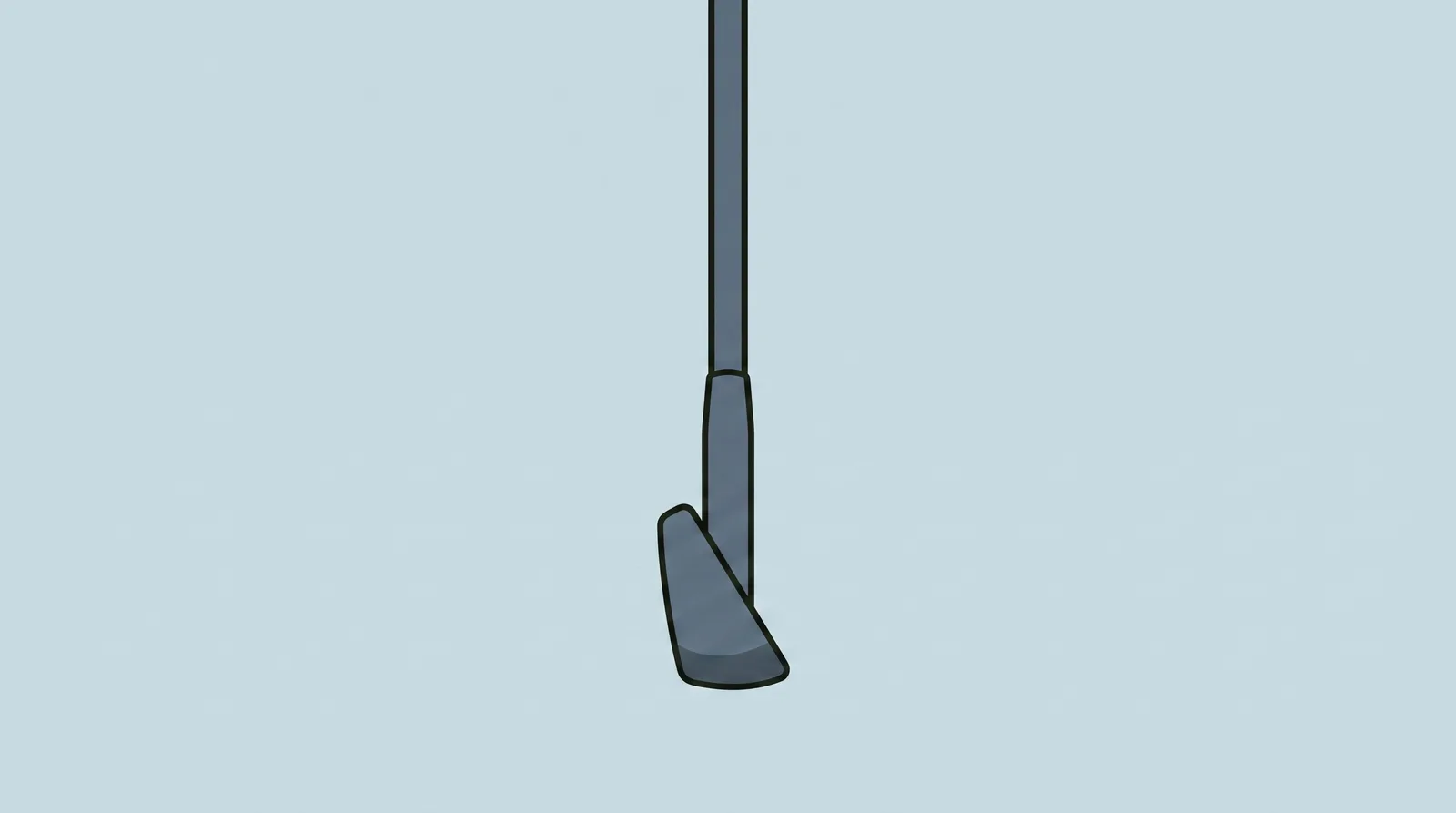
Game improvement is the most used phrase in iron marketing and almost nobody defines it. It has a definition, and it is four numbers: a weak enough loft to launch, enough offset to help a face that arrives open, a wide enough sole to survive hitting the ground first, and a shaft light enough to accelerate. What follows is four sets measured on those four, and who each one is actually for.
The four, compared
Every set here sits in what the industry calls game improvement, which in practice means a 7 iron between 28 and 29 degrees, a sole you could rest a coffee cup on, and enough offset to be visible at address. That is a narrow band, and the sets inside it are more alike than the marketing suggests.
| Pick | Best for | 7 iron | Offset | Set | Shafts | Price |
|---|---|---|---|---|---|---|
| Ping G740 | The most published specification in the category | 28.0° loft, 63.0° lie, 37 inches | 0.19 inch in the 7 iron | 5 to 9, PW, UW, plus 50° and 56° | PING AWT 3.0 96g to 114g, ALTA CB Blue 65g to 82g | Around £880 to £1,170 for six irons, steel to graphite |
| Srixon ZXiR | The most offset, and the maker saying so out loud | 28.5° loft, 62° lie, 37.25 inches | 3.5 mm in the 7 iron, 5.0 mm in the 4 iron | 4 iron to SW | Steel 95g to 96g, graphite 60g to 80g | Around £800 to £905 for six irons, steel to graphite |
| Mizuno JPX925 Hot Metal | Three builds of the same iron, so the fit is a choice | 28° loft, 62° lie, 37.25 inches | 0.189 inch in the 7 iron, 0.224 inch in the 4 iron | 4 iron to SW, in three builds | Not listed on Mizuno's specification page | Around £750 to £900 for six irons, steel or graphite |
| Titleist T350 | A hollow body that does not look like one | 29° | Not published where it can be read | 4 iron to W53 | True Temper AMT Tour Red, Mitsubishi MMT AMC Red 45 to 65 | Around £990 to £1,190 for six to seven irons in steel |
What separates them is not performance. It is how much each maker is willing to tell you, and how far each one pushes the head size before a golfer stops being able to look at it.
Ping G740: the one that publishes everything
The Ping G740 gives you loft, lie, length, offset, bounce and swingweight for every head in the set, plus a stronger and a weaker loft build as fitting options rather than special orders. The 7 iron is 28.0 degrees, 63.0 degrees of lie, 37 inches long, 0.19 inch of offset and 9.1 degrees of bounce. Nobody else on this page gives you all six.
That bounce figure is the one worth dwelling on, because it is the number that decides what happens when the club reaches the ground before the ball. It climbs steadily through the set, from 7.1 degrees in the 5 iron to 11.1 in the pitching wedge, which is a designer deliberately adding forgiveness to the clubs used from worse lies.
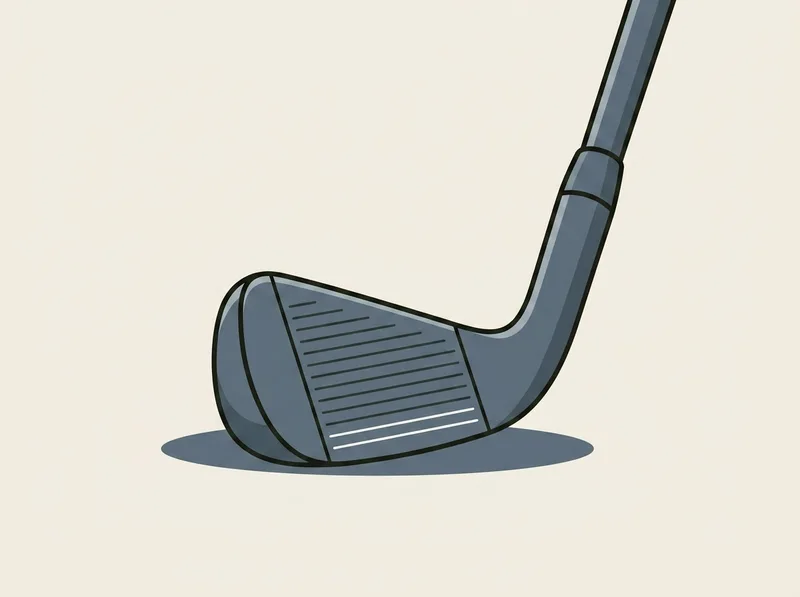 Around £880 to £1,170 for six irons, steel to graphite
Ping G740
- 7 iron
- 28.0° loft, 63.0° lie, 37 inches
- Offset
- 0.19 inch in the 7 iron
- Set
- 5 to 9, PW, UW, plus 50° and 56°
- Shafts
- PING AWT 3.0 96g to 114g, ALTA CB Blue 65g to 82g
- Bounce
- 9.1° in the 7 iron, 11.1° in the PW
- Pitching wedge
- 40.0°
- Loft, lie, length, offset, bounce and swingweight are published for every head, which makes this the only set here you can compare on all four numbers.
- The set starts at a 5 iron rather than a 4, which is a manufacturer quietly agreeing that the club above it does not belong in this bag.
- Stronger and weaker loft builds are a fitting choice rather than a special order, so the flight can be moved without changing model.
- The widest sole and thickest top line here, and some golfers never stop noticing it at address.
- Ping build to order, so lead times are longer than taking a set off a shelf.
- The lightest stock shaft listed is 65g, which is heavy next to what the slowest swings need.
VerdictThe right buy for a golfer who misses the middle often and wants the help measured rather than described. What you give up is the look, because nothing else on this page sits behind the ball quite as broadly as this does.
The set composition says something too. It starts at a 5 iron, and the longest club Ping build in this model is 21 degrees. There is no 4 iron, which is a manufacturer declining to sell you a club that the golfer buying this set will not hit well. That is worth more than any face technology on the page, and it is the same conclusion the hybrid case reaches from the other direction.
Srixon ZXiR: the most offset here
Srixon do something no other maker does, which is publish a five rung ladder across their own iron range and tell you which rung each model sits on. The Srixon ZXiR is rated highest for forgiveness and lowest for workability, with distance marked longest and trajectory high. A manufacturer stating plainly that their own iron is the least workable in the range is not something you see often.
The specification backs it. The 7 iron is 28.5 degrees with 3.5 mm of offset, and the 4 iron carries 5.0 mm. For comparison, the players iron at the other end of Srixon's own ladder runs 2.8 mm in the same club. That is the difference between a leading edge you can see behind the hosel and one you cannot.
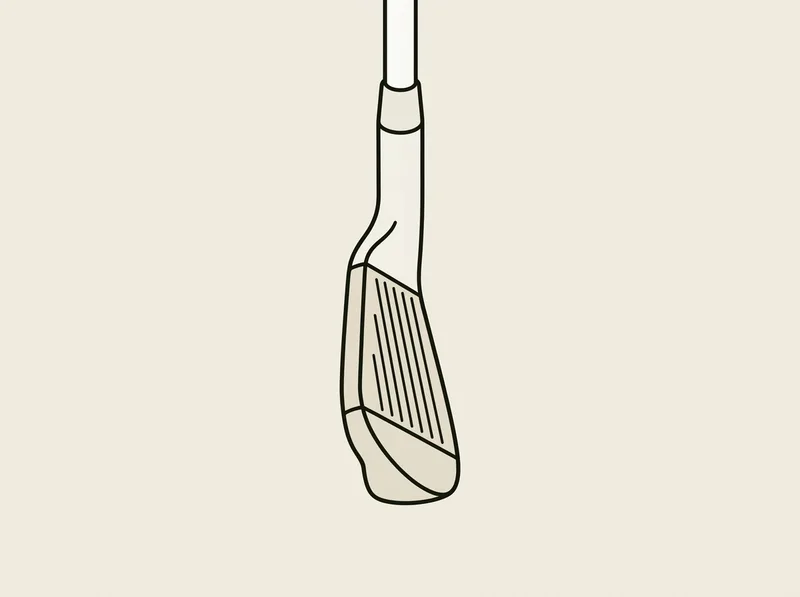 Around £800 to £905 for six irons, steel to graphite
Srixon ZXiR
- 7 iron
- 28.5° loft, 62° lie, 37.25 inches
- Offset
- 3.5 mm in the 7 iron, 5.0 mm in the 4 iron
- Set
- 4 iron to SW
- Shafts
- Steel 95g to 96g, graphite 60g to 80g
- Bounce
- Not published per club
- Pitching wedge
- 43°
- Srixon publish a five rung ladder across their own iron range and place this one at highest forgiveness and lowest workability, which is unusually plain.
- The stock steel shaft is 95g to 96g, lighter than most category rivals, and the graphite runs down to 60g.
- The full loft table runs to a 48° approach wedge and a 54° sand wedge, so the bottom of the bag is gapped rather than left to you.
- Bounce is not published per club, which is the one number of the four that is missing here.
- A 4 iron at 19.5° is still in the set, and most golfers buying these should not carry it.
- The newest set on the page in its category, so there is no discount cycle behind it yet.
VerdictThe pick for a golfer whose ball leaks right and who wants the offset doing the work rather than their hands. The missing bounce figures matter less on a wide soled iron than they would on a wedge, but they are still a gap.
The stock shaft is the quiet advantage. Steel comes in at 95g to 96g, which is lighter than the 96g to 114g range Ping list, and graphite runs from 60g to 80g. On a set bought because the swing is not fast, that difference does more than the face.
What is missing is bounce. Srixon publish loft, lie, offset, length and swingweight for every head and no bounce figure anywhere, so how the sole behaves through turf is something you have to find out by hitting it.
Mizuno JPX925 Hot Metal: three versions of the same idea
The Mizuno JPX925 Hot Metal is not one set. It is three, sharing a specification page: the standard build, a Hot Metal Pro with a more compact head, and an HM HL built weaker for slower swings. The standard 7 iron is 28 degrees with 0.189 inch of offset and a 62 degree lie.
Mizuno publish offset to three decimal places for every club in the set, which sounds like false precision and is not. Offset shrinks steadily from 0.224 inch in the 4 iron to 0.083 inch in the sand wedge, and seeing that progression written down tells you more about how the set is designed than any paragraph of copy.
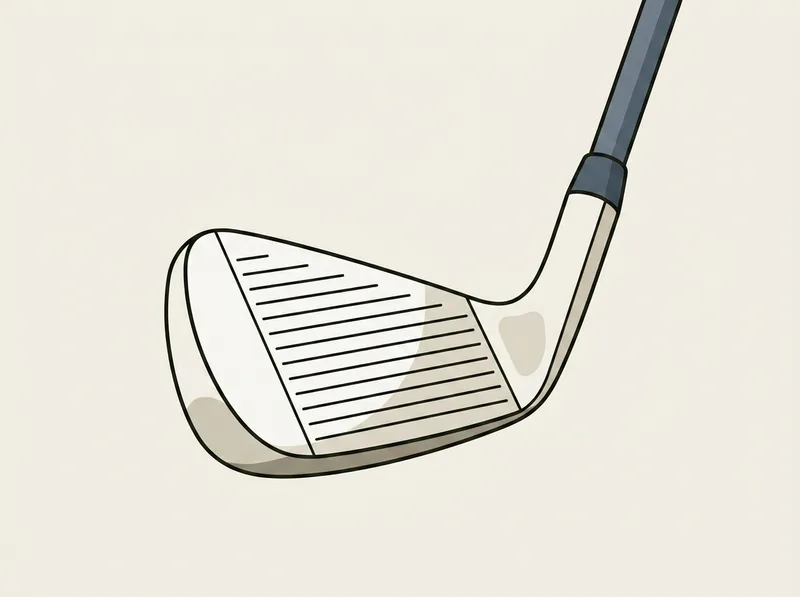 Around £750 to £900 for six irons, steel or graphite
Mizuno JPX925 Hot Metal
- 7 iron
- 28° loft, 62° lie, 37.25 inches
- Offset
- 0.189 inch in the 7 iron, 0.224 inch in the 4 iron
- Set
- 4 iron to SW, in three builds
- Shafts
- Not listed on Mizuno's specification page
- Bounce
- Not published per club
- Pitching wedge
- 42°, with a 48° GW and a 54° SW
- Three builds share one specification page: the standard Hot Metal, a more compact Hot Metal Pro and a weaker lofted HM HL for slower swings.
- Mizuno publish offset to three decimal places for every club, which is more precision than anyone else here offers on the number that matters most.
- The loft table runs cleanly from a 19° 4 iron to a 54° sand wedge with no gap wider than six degrees.
- No stock shaft is listed on Mizuno's own specification page, so what arrives depends on where you buy it.
- Bounce is not published, which makes turf behaviour a guess until you hit one.
- Three similarly named builds is genuinely confusing in a shop, and the differences between them are not small.
VerdictThe pick for a golfer who wants to be fitted into the right version rather than sold the only version. The unlisted shaft is a real gap on a set aimed at golfers whose swing speed is the reason they are shopping here at all.
The gap is the shaft. Mizuno's specification page lists loft, lie, length and offset and no stock shaft at all, so what you receive depends on whoever sells it to you. On a set aimed at golfers whose swing speed is why they are shopping here, that is the specification you would most want stated. Ask before you pay, and read what shaft weight and flex change first.
Titleist T350: the smallest head that still counts
The T350 is Titleist's largest iron and their most forgiving, an all steel hollow body with split high density tungsten weighting around the perimeter. The 7 iron is 29 degrees, the pitching wedge is 43, and the set runs to two wedges at 48 and 53 degrees so the bottom of the bag is handled inside the set rather than left as a separate purchase.
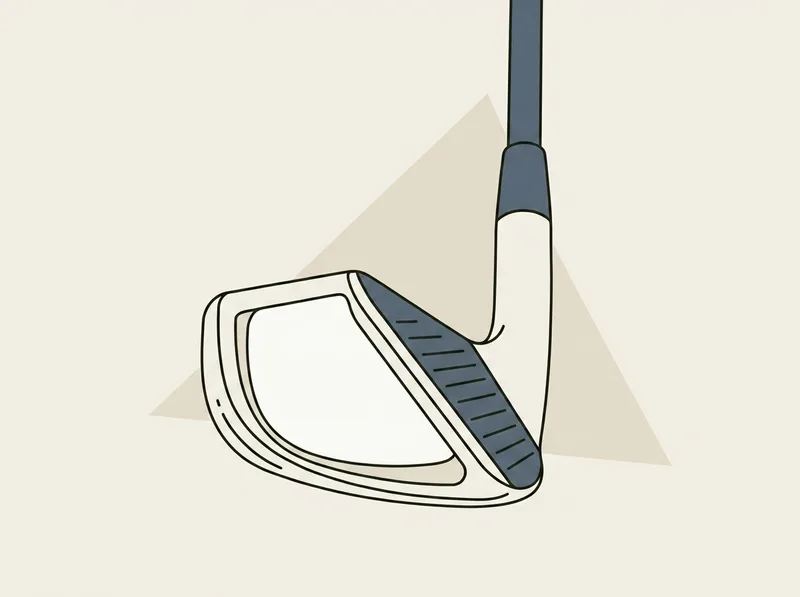 Around £990 to £1,190 for six to seven irons in steel
Titleist T350
- 7 iron
- 29°
- Offset
- Not published where it can be read
- Set
- 4 iron to W53
- Shafts
- True Temper AMT Tour Red, Mitsubishi MMT AMC Red 45 to 65
- Bounce
- Not published where it can be read
- Pitching wedge
- 43°, with a 48° and a 53° above it
- An all steel hollow body with split tungsten weighting, which is the largest head Titleist build and the deepest centre of gravity in their range.
- The set runs to two wedges at 48° and 53°, so the gap above the pitching wedge is covered inside the set.
- A graphite option down to 45g is offered as stock, which is the lightest shaft anywhere on this page.
- Titleist refuse automated requests, so only the lofts and shafts they announced could be read at source. Offset and bounce are not repeated here.
- The most expensive set on the page, and the price is the same as their tour iron.
- The largest head in the Titleist range is still smaller than the Ping, so the forgiveness ceiling is lower.
VerdictThe right buy for a golfer who wants game improvement help inside a head that does not announce it. The specification gap is real, and it is the reason this set sits where it does rather than higher.
There is a hole in the row above, and it is deliberate. Titleist's product pages refuse automated requests, so the only figures on this page are the ones they published themselves when the range launched: lofts, shafts and construction. Offset and bounce are not repeated here, because a specification nobody can check is not a specification. Numbers for both circulate on retailer sites and this page will not borrow them.
That is not a criticism of the iron. It is a warning that on a page about four numbers, this set only lets you read two of them.
What forgiveness actually is, and what it costs
Forgiveness has a mechanism, not a mood. Push mass out to the toe and heel and down toward the sole, and the head resists twisting when the ball hits it away from the middle. Less twist means less speed lost and less start direction thrown away. The category ladder sets out how far each construction takes that idea.
The cost is real and it is not distance. It is that the same design which stops the head twisting on your miss also stops it twisting when you want it to. These irons resist being worked, and every maker here says so in their own material.
Sixteen greens in a hundred is the number that should decide this purchase. A golfer missing 84% of greens is not being held back by an inability to hit a controlled fade. They are being held back by contact, and forgiveness is the only property in an iron that addresses contact at all.
Loft, launch and the thing the shop will get wrong
The shop will show you the strongest lofted set on the rack and call it the longest. It is worth knowing exactly why that is misleading before you stand behind a launch monitor with a salesperson.
TrackMan state it plainly: more loft generally increases spin rate, and more club speed increases it too. Their launch angle guidance puts the same relationship the other way round, describing launch angle as highly correlated to dynamic loft and always a little less than it. Loft is what makes the ball climb, and speed is what makes it spin enough to stay up.
The consequence for a slower swing is direct. TrackMan's own mid trajectory reference for a 6 iron at 80 mph of club speed is a 16.9 degree launch angle. A PGA Tour player averages 14.0 degrees with the same club and an LPGA Tour player 16.7, and both of those are produced with far more speed than the golfer buying these irons has. Take loft away from a slow swing and the ball does not go further, it goes flatter and lands hotter.
| Set | 7 iron loft | Pitching wedge | Gap to a 56 degree wedge |
|---|---|---|---|
| Ping G740 | 28.0° | 40.0° | Covered by a 45°, 50° and 56° in the set |
| Srixon ZXiR | 28.5° | 43° | Covered by a 48° and 54° in the set |
| Mizuno JPX925 Hot Metal | 28° | 42° | Covered by a 48° and 54° in the set |
| Titleist T350 | 29° | 43° | Covered by a 48° and 53° in the set |
Every one of these sets sells wedges as part of the set, which is the industry admitting what its own loft strengthening did. A 40 degree pitching wedge and a 56 degree sand wedge are sixteen degrees apart, and no swing covers that. How far iron lofts have drifted traces the whole move.
Offset is the number nobody checks
Offset is how far the leading edge of the face sits behind the hosel. It does two things: it gives the hands fractionally longer to rotate the face square before impact, and it shifts a little mass rearward, which raises launch. For a golfer whose miss starts right and stays right, it is the single most useful figure on a specification sheet.
The published spread across this page is larger than most buyers would guess.
| Set | 7 iron offset | Longest iron offset |
|---|---|---|
| Ping G740 | 0.19 inch | 0.25 inch in the 5 iron |
| Srixon ZXiR | 3.5 mm | 5.0 mm in the 4 iron |
| Mizuno JPX925 Hot Metal | 0.189 inch | 0.224 inch in the 4 iron |
Ping and Mizuno land within a thousandth of an inch of each other, around 4.8 mm, while Srixon carry the most in the long irons. Offset shrinks through every set for a reason: the long irons need the help and the wedges need the leading edge where your eye expects it.
Sole width finishes the job. A wide sole with the leading edge lifted clear of the ground lets the club skid rather than dig, which is why a strike two inches behind the ball still moves it forward here and barely moves it with a compact iron.
What should be in the set, and what should not
None of these should be bought as a full eight club set, and two of the makers here agree with that in their own set composition.
Ping do not build a 4 iron in the G740 at all. Srixon and Mizuno both do, at 19.5 and 19 degrees, and Shot Scope's tracked comparison of hybrids against long irons is the reason to leave them in the shop. Their data has a 20 handicap golfer finishing 16 feet closer to the hole with a hybrid than a long iron, with a 19 feet tighter miss dispersion and 11 yards more distance out of the rough.
That advantage does not disappear as you improve. The same dataset gives a scratch golfer a 6% higher chance of hitting the green with a hybrid, which is a larger gap than the 20 handicap sees. Long irons are difficult for everybody, and a game improvement head does not make a 19 degree club easy.
A sensible set here is 6 iron through pitching wedge with a hybrid above and the maker's own wedges below. That is five irons rather than eight, it removes the three hardest clubs in the bag, and it costs meaningfully less.
Which of these pages you actually want
Game improvement is a middle rung, and there are rungs either side of it. Being on the wrong one costs more than choosing the wrong set on the right one.
- If you have played fewer than about twenty rounds, the question is not which irons but whether to buy irons at all. Irons for a first set starts there and reaches a different answer.
- If your misses have become small and repeatable and your good shots are going a consistent distance, the category above this one gives you back some control without giving up much help. Irons for mid handicappers picks that up.
- If your strike is genuinely the problem rather than your equipment, why ball striking stays inconsistent is free and will move the numbers above further than any set here.
What to spend, and when to buy
Forgiving iron heads change slowly. The mass has been at the perimeter and the sole has been wide for fifteen years, and the yearly gains are small enough that a set three years old performs close to a current one for a third to a half of the money.
| Budget | What it buys | Who it suits |
|---|---|---|
| £250 to £450 | A used set three or four years old, regripped | A first move up from a package set |
| £550 to £800 | Last season's model new, often with a graphite option | Playing fortnightly and staying in the game |
| £850 to £1,200 | This year's release, fitted, with loft and lie set | Buying once and keeping it for five years |
Two checks decide whether a used set is worth it. Grooves wear from the centre of the face outward, so run a fingernail across the middle and then the toe. Grips harden with age and cost around £10 a club to replace. What a fitting measures covers what the top of that table is actually paying for, and how to strike an iron covers the part no money buys.
Key takeaways
- The Ping G740 publishes loft, lie, length, offset, bounce and swingweight for every head, which no other set here does, and it does not build a 4 iron.
- The Srixon ZXiR carries 5.0 mm of offset in the 4 iron and is rated by Srixon themselves as the most forgiving and least workable iron in their range.
- The Mizuno JPX925 Hot Metal comes in three builds sharing one specification page, and lists no stock shaft on it.
- The Titleist T350 is an all steel hollow body, and only its lofts and shafts could be read at source, so its offset and bounce are not quoted here.
- Game improvement has a definition: a 7 iron between 28 and 29 degrees, visible offset, a wide sole and a shaft light enough to accelerate.
- A 20 handicap golfer hits 16% of greens against 41% at 5 handicap, so the problem this category solves is contact, not shot shaping.
- Strong lofts do not add distance in any useful sense. TrackMan put launch angle as highly correlated to dynamic loft, so taking loft away from a slow swing flattens the flight.
- Buy six irons and a hybrid rather than eight. Shot Scope have a hybrid finishing 16 feet closer than a long iron for a 20 handicap, and 6% more greens for a scratch golfer.
Common questions
What are the best game improvement irons?
For most golfers the Ping G740, because it publishes every specification that matters and its set composition already leaves out the club you would not hit. If your miss curves right, the Srixon ZXiR carries more offset in the long irons and costs a little less.
What handicap are game improvement irons for?
Roughly 15 and above, though strike matters more than the number. The honest test is the gap between your average shot and your good shot with the same club. If it is a full club or more, you are in this category regardless of what your handicap card says.
What is the difference between game improvement and super game improvement irons?
Degree rather than kind. Super game improvement heads are larger still, usually hollow, with weaker lofts and even wider soles, and they look more like small hybrids than irons. Every maker here builds one, and Srixon rate their own super game improvement build above this one for trajectory and below it for distance.
Do game improvement irons really make a difference?
On off-centre strikes, yes and measurably. On a shot out of the middle of the face, barely at all. That is the whole mechanism: perimeter weighting stops the head twisting when you miss, so you keep more speed and more of your start direction. If you struck every shot flush, you would not need any of it.
Are game improvement irons longer?
They carry stronger lofts, which is not the same thing. A 28 degree 7 iron will fly further than a 33 degree 7 iron because it is effectively a 6 iron, and it will also fly lower and stop less. Compare lofts before you compare distances or you are comparing two different clubs.
How much offset do game improvement irons have?
Between roughly 3.5 mm and 5 mm in the 7 iron across the sets here, shrinking through the set toward the wedges. Ping quote 0.19 inch in the 7 iron and Mizuno 0.189 inch, which are the same figure in different units. It is visible at address once you know to look.
Should I get steel or graphite shafts in game improvement irons?
Graphite if your swing is slow enough that you are shopping in this category for that reason. Stock steel here runs 95g to 114g and stock graphite from 45g to 80g, and the weight you are not accelerating is speed you keep. Steel is the better choice if you already have plenty of speed and want a tighter dispersion.
Do I need a 4 iron in a game improvement set?
Almost certainly not. Ping do not build one in the G740 at all, and Shot Scope's tracked data has a hybrid beating a long iron on greens hit, proximity, dispersion and distance from the rough at every handicap they measured, including scratch. A 5 hybrid does the same job at a fraction of the difficulty.
Are game improvement irons worth buying used?
Yes, and this is the strongest used category in golf clubs. The design has moved slowly, so a set three or four years old performs close to a current one for a third to a half of the price. Check the grooves for wear from the centre outward and budget for new grips.
What is the difference between these and irons for mid handicappers?
Around four degrees of loft and half the offset. Game improvement 7 irons sit at 28 to 29 degrees with wide soles and thick top lines. The mid handicap category runs 29 to 31 degrees in a smaller head with roughly half the offset, and it gives back some control in exchange for a slightly smaller margin on a miss.
How we put this together
- Published manufacturer specification tables, read on the maker's own site rather than taken from a retailer's summary or a review roundup.
- The four numbers that define the category: 7 iron loft, offset, sole bounce and stock shaft weight, compared like for like across every set.
- Where a maker does not publish a figure, this page records the gap rather than borrowing a number from somewhere it cannot be checked.
- Shot Scope benchmark data by handicap, because the category only makes sense against how often the golfer buying it actually finds the green.
- TrackMan's published launch and spin relationships, which explain why loft and centre of gravity change flight more than any face technology does.
On this page
- The four, compared
- Ping G740: the one that publishes everything
- Srixon ZXiR: the most offset here
- Mizuno JPX925 Hot Metal: three versions of the same idea
- Titleist T350: the smallest head that still counts
- What forgiveness actually is, and what it costs
- Loft, launch and the thing the shop will get wrong
- Offset is the number nobody checks
- What should be in the set, and what should not
- Which of these pages you actually want
- What to spend, and when to buy
- How we put this together

Tom Ashworth
Tom Ashworth is a PGA Professional who has taught golf since 2012, working mainly with beginners and mid-handicappers at club level in Surrey. He reviews the instruction guides on Learn Golf for technical accuracy before they publish.
Most of his teaching is with players in their first three years of the game, and most arrive having been told too much: six swing thoughts collected from videos, half of them contradicting each other. His approach is to check the grip and the alignment before touching the swing, on the basis that most bad ball flight is decided at address.