Best Putters: Four Picks and the Fitting Logic
A putter is the club you use most and the one nobody gets fitted for. Here are four worth buying, what each specification changes, and which ones matter far less than the shop will tell you.
Some links here earn us a commission at no extra cost to you. It never changes what we recommend or the order we rank it. How this works.
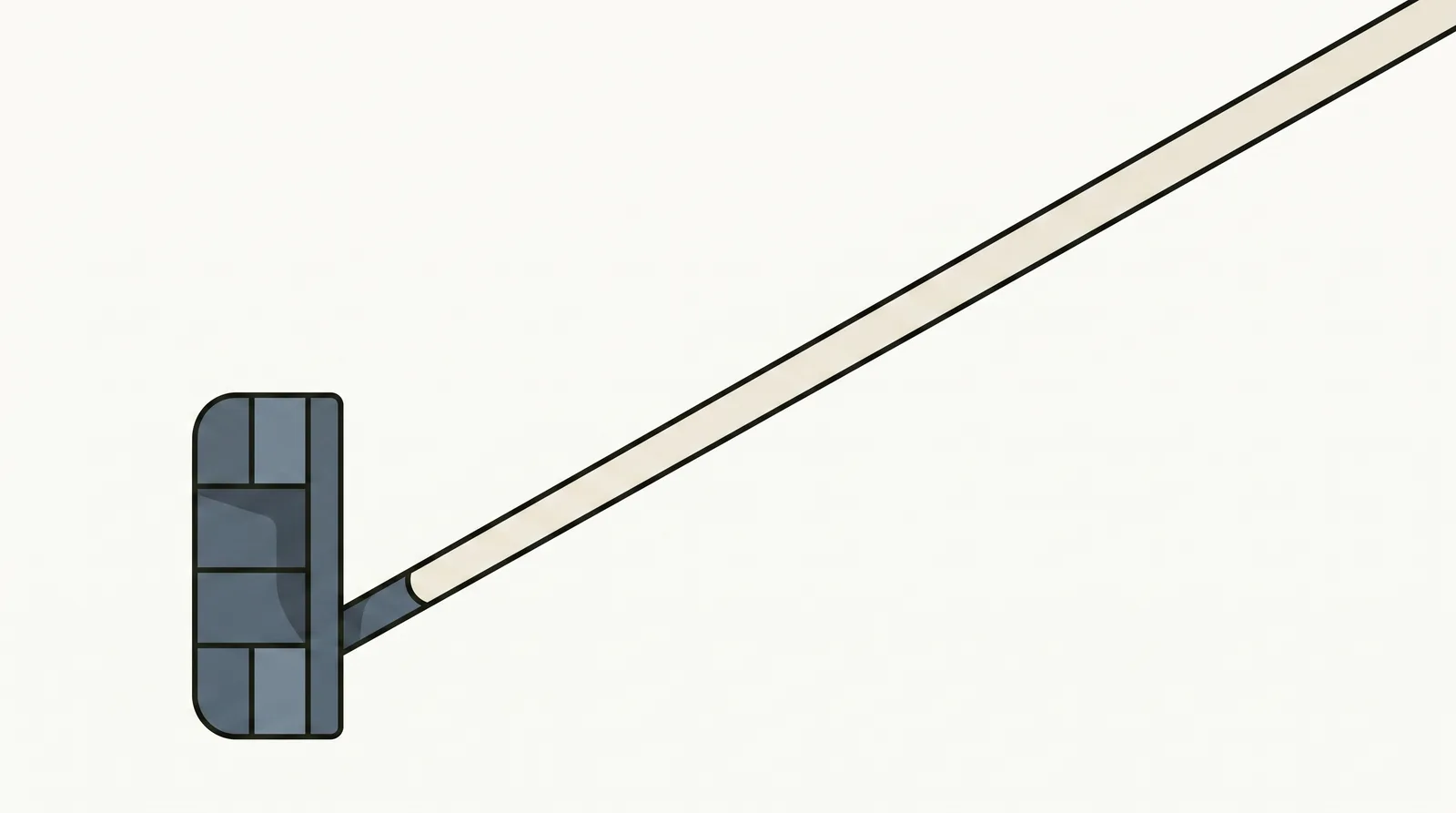
The putter is the club you use most and the one almost nobody gets fitted for. It is also the club where the marketing has least to work with, because a putter cannot be made to go further and the equipment rules give it more design freedom than any other club in the bag. What follows is four worth buying, what each specification actually changes, and which of them matter far less than the shop will suggest.
The four, compared
All four are legal by a wide margin, and putters get latitude no other club gets: the R&A Equipment Rules set a minimum club length of 18 inches and a maximum of 48, and putters are specifically exempt from that upper limit. The shaft may also be fixed at any point in the head, which is why centre-shafted and heel-shafted putters both exist and neither is a loophole.
| Pick | Best for | Face | Toe hang | Head weight | Lengths | Price |
|---|---|---|---|---|---|---|
| Odyssey Ai-DUAL | One family that covers every stroke shape | Dual-layer urethane insert, soft outer and firm inner | 40° on the #1, minimal on the Double Wide, zero on Square 2 Square | 350g on the #1 | 33, 34 and 35 inches | Around £230 to £260, more for the Cruiser builds |
| Ping Scottsdale | Being matched to a stroke type without paying for milling | One-piece PEBAX insert | Published as a stroke type per model, strong arc to straight | 365g on the Prime Tyne 4 | 35 inches standard on the listing | Around £230 to £250 |
| Scotty Cameron Phantom | Milled feel, and paying for it | Milled Studio Carbon Steel insert with chain-link milling | Described as toe flow per model, not given as a number | Not published | 33, 34 and 35 inches | Around £450 to £500 |
| TaylorMade Spider ZT | A stroke that wants the face to stay square | Pure Roll insert, Surlyn and aluminium, grooves at 45° | Zero torque, the head sits toe up | 370g standard, 395g counterbalance | 33, 34, 35, plus 36 and 38 counterbalance and a 46 long | Around £450 to £550 depending on build |
Prices here do not fall the way club prices normally do. A putter has no moving parts and no performance ceiling to chase, so last year's model is not discounted by a third the way last year's driver is.
Odyssey Ai-DUAL: the range that publishes toe hang
The Odyssey Ai-DUAL is the mainline Odyssey range and its face is a dual-layer urethane insert, soft on the outside and firm underneath. Odyssey have made inserts for thirty years and the argument has not changed: a softer face is quieter, more forgiving on a mishit, and produces less initial skid.
What makes this the default recommendation is not the insert. It is that Odyssey publish a toe hang figure in degrees for each model, alongside loft, lie, length and head weight. The #1 blade is listed at 40 degrees of toe hang, 350 grams, 3 degrees of loft and a 70 degree lie. The Double Wide has minimal toe hang and the Square 2 Square models are zero torque. That is one family covering the full spread of stroke shapes, with numbers attached.
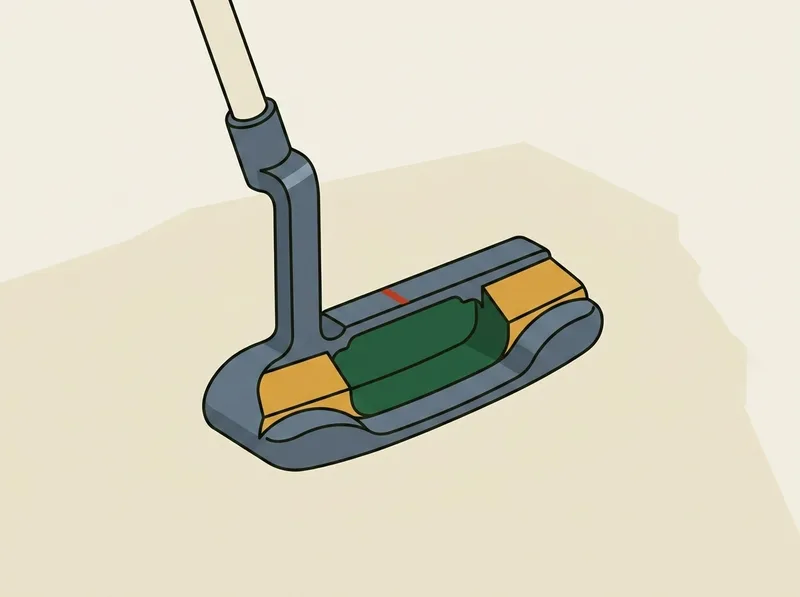 Around £230 to £260, more for the Cruiser builds
Odyssey Ai-DUAL
- Face
- Dual-layer urethane insert, soft outer and firm inner
- Toe hang
- 40° on the #1, minimal on the Double Wide, zero on Square 2 Square
- Head weight
- 350g on the #1
- Lengths
- 33, 34 and 35 inches
- Loft and lie
- 3° loft, 70° lie
- Shaft
- Ai-DUAL SL 90 stepless steel, SL 120 and SL 140 on some builds
- Odyssey publish a toe hang figure in degrees per model, which almost nobody else does and which is the number that should decide your choice.
- The range runs from a crank-neck blade to a zero torque mallet, so one family covers every stroke shape without changing brand.
- Priced below the milled options here while publishing more of the specification than they do.
- An insert face is a taste as much as a technology, and some golfers simply do not like the muted sound.
- The number of head, neck and shaft combinations is genuinely hard to navigate without help.
- The zero torque and Cruiser builds cost more than the standard models.
VerdictThe default pick for a golfer buying without a fitting, because the toe hang is published as a number and the range is wide enough that the right one exists. If you already know you prefer a milled face, the extra money buys feel rather than performance.
The catch is choice fatigue. Dozens of head, neck and shaft combinations is more than most buyers can process, and the standard advice of "pick the one that looks square to you" is genuinely good but does not narrow it much. If you want the shape decision made for you, the Ping below does that.
Ping Scottsdale: the fitting instruction, for less
Ping's approach is the opposite of publishing a number and letting you work it out. Every Ping Scottsdale head is labelled with the stroke type it fits, from strong arc through to straight, so the Prime Tyne 4 is marked strong arc and you are told rather than left to calculate. For a golfer who has never had their stroke measured, that is more useful than 40 degrees of toe hang.
The face is a one-piece PEBAX insert, the Prime Tyne 4 is listed at 365 grams, and the range runs to nine heads covering blades, mid mallets and mallets. All of it sits at roughly half the price of the Scotty Cameron.
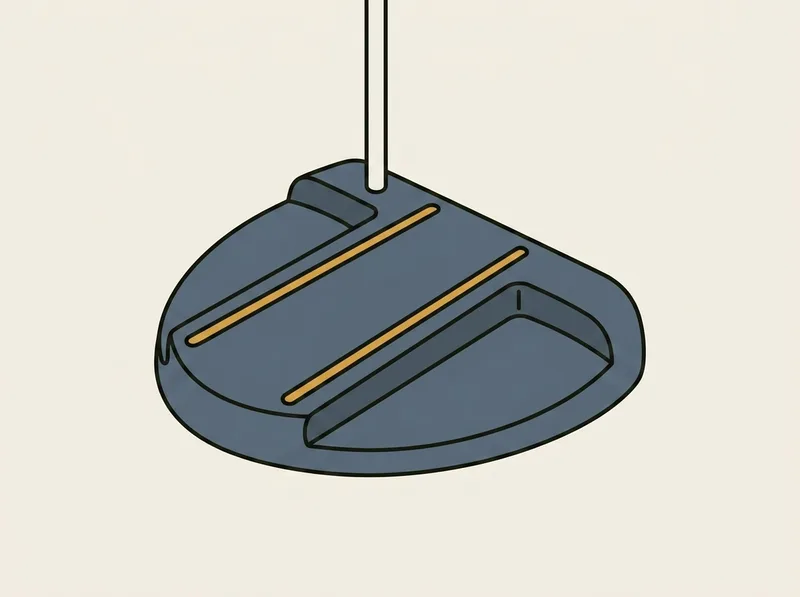 Around £230 to £250
Ping Scottsdale
- Face
- One-piece PEBAX insert
- Toe hang
- Published as a stroke type per model, strong arc to straight
- Head weight
- 365g on the Prime Tyne 4
- Lengths
- 35 inches standard on the listing
- Loft and lie
- 3° loft, lie quoted as 20° from the vertical
- Range
- Nine models, from the Anser blade to the Tyne 4 mallet
- Ping label every head with the stroke type it fits, which is a more useful instruction than a toe hang figure for anyone who has not measured their stroke.
- The lowest list price of the four, at half what the milled options cost, and it is not a budget build.
- Nine head shapes covering blades, mid mallets and mallets within one consistent fitting system.
- The published lie of 20° is measured from the vertical rather than the horizontal, which trips up anyone cross-shopping on numbers.
- One standard length on the listing, so anything else is a custom order.
- The Scottsdale name has been used on several unrelated Ping ranges over the years, so search results for it are a mess.
VerdictThe pick for a golfer who wants to be fitted properly and would rather spend the difference against a milled head on lessons or green fees. What you give up against the Odyssey is a toe hang number to compare, and what you gain is a plain instruction about which stroke each head suits.
One quirk is worth flagging because it confuses people who cross-shop on numbers. Ping quote putter lie angle from the vertical, so their 20 degrees and Odyssey's 70 degrees describe the same club sitting the same way. Nothing is wrong with either figure. They are measured from different reference lines, and it is the single most common misreading of a putter spec sheet.
Scotty Cameron Phantom: milled, and the gap in the spec sheet
The 2026 Scotty Cameron Phantom line is precision milled with a full-face Studio Carbon Steel insert and a chain-link milling pattern, which softens the sound relative to the solid milled faces it replaces. Three core head shapes, the 5, 7 and 9R, come in nine head, neck and shaft combinations, with the compact 3.2 mid mallet and the high-MOI 12 at either end of the range. Loft is 3.5 degrees, lie is 70, and stock lengths are 33, 34 and 35 inches.
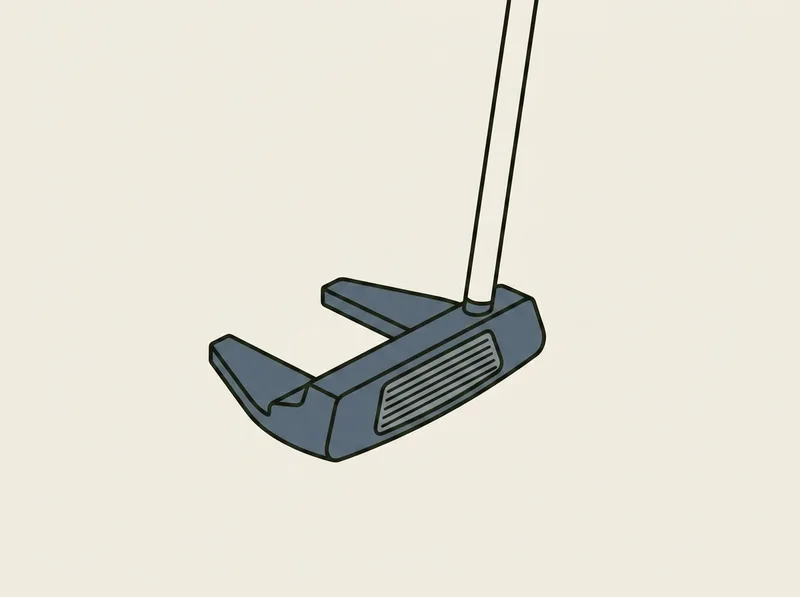 Around £450 to £500
Scotty Cameron Phantom
- Face
- Milled Studio Carbon Steel insert with chain-link milling
- Toe hang
- Described as toe flow per model, not given as a number
- Head weight
- Not published
- Lengths
- 33, 34 and 35 inches
- Loft and lie
- 3.5° loft, 70° lie
- Range
- Phantom 3.2, 5, 7, 9R and 12 in nine neck and shaft combinations
- Nine head, neck and shaft combinations built specifically so the same head shape can be had with different amounts of toe flow.
- A full-face carbon steel insert with chain-link milling, which is a softer face than the solid milled heads it replaces.
- Holds resale value better than anything else in this category by a wide margin.
- Titleist do not publish head weight for the Phantom line, which is one of the three numbers this page is about.
- Roughly double the Ping for a difference that is real but is mostly feel and finish.
- Toe flow is described in words rather than degrees, so cross-shopping against an Odyssey figure is guesswork.
VerdictThe right buy for a golfer who has putted well with a milled head before and knows that is what they want. As a first proper putter it is a lot of money committed to a preference you may not have formed yet, and the published specification is thinner than its price suggests.
The comparison table above has a blank in it and the blank is deliberate. Titleist do not publish head weight for the Phantom line in their own launch material or on their product pages. Figures circulate on retailer and review sites, and this page will not repeat them, because a head weight nobody has published is a number nobody can check. On a club where head weight is one of the three specifications that decide how it swings, that is a real gap rather than a pedantic one, and it is worth asking a fitter to weigh the head before you spend £450.
Toe hang is described in the same style. Scotty Cameron publish toe flow per model, as maximum or minimum rather than in degrees, which is a genuine fitting instruction and not directly comparable with Odyssey's figure.
TaylorMade Spider ZT: zero torque, and who it is for
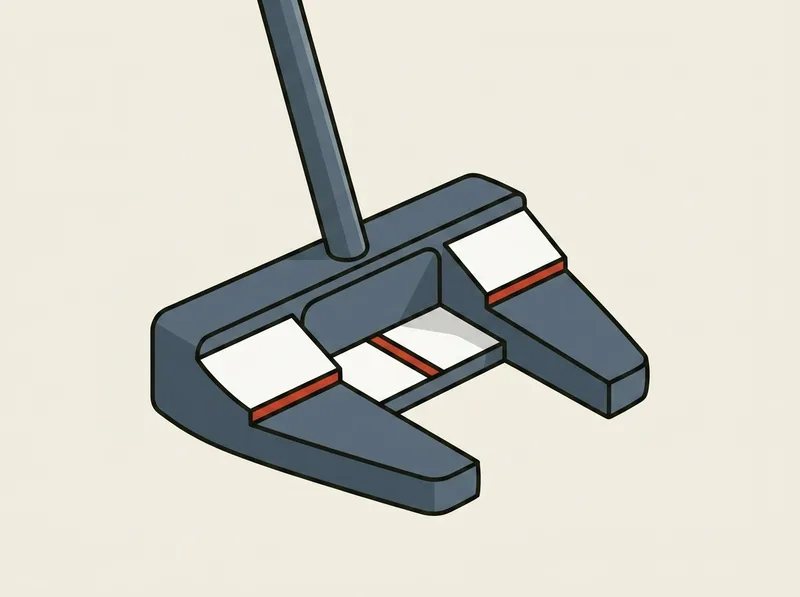
The Spider ZT is a high-MOI mallet built around a zero torque design, which means the centre of gravity sits almost directly under the shaft axis rather than out toward the toe. The practical effect is that the head has very little tendency to twist open going back, and it sits toe up at address rather than with the toe hanging down.
TaylorMade publish the numbers: 370 grams in the standard head, 395 in the counterbalance, 2.5 degrees of loft, a 70 degree lie, and lengths from 33 up to a 46 inch long build. The face is the familiar Pure Roll insert, a Surlyn and aluminium mix with grooves angled at 45 degrees to start the ball rolling forward sooner.
 Around £450 to £550 depending on build
TaylorMade Spider ZT
- Face
- Pure Roll insert, Surlyn and aluminium, grooves at 45°
- Toe hang
- Zero torque, the head sits toe up
- Head weight
- 370g standard, 395g counterbalance
- Lengths
- 33, 34, 35, plus 36 and 38 counterbalance and a 46 long
- Loft and lie
- 2.5° loft, 70° lie
- Shaft
- KBS CT Putter 120 stepless, graphite on the longer builds
- The zero torque design puts the centre of gravity almost under the shaft axis, which reduces how much the face wants to open going back.
- TaylorMade publish head weight for every build, including the 395g counterbalance and the long version.
- A genuinely large range of lengths, including builds at 38 and 46 inches that most makers do not offer at all.
- A zero torque head sits toe up at address and feels wrong to anyone used to a conventional putter, which is a real adjustment rather than a small one.
- The most expensive standard build here once you move to counterbalance or long.
- If your stroke has natural arc, this design is working against you rather than with you.
VerdictThe pick for a golfer whose miss is a face that opens through the stroke, and for anyone who has never got on with a conventional blade. If you already release the putter freely and hole your share, there is nothing here you need.
Zero torque putters are the most divisive thing in this category and the honest position is that they suit a specific problem. If your face is open at impact more often than it is shut, and your misses are pushes, a design that resists the face opening is working with you. If you already release the putter freely, it is working against you and it will feel like putting through treacle.
Blade or mallet, and what the choice actually decides
The blade against mallet question is asked as though it were about looks. It is mostly about where the weight sits and therefore how much the head resists twisting on a strike away from centre.
| Blade | Mid mallet | Full mallet | |
|---|---|---|---|
| Weight distribution | Heel and toe, close to the face | Split, some mass pushed back | Deep and far back from the face |
| Resistance to twisting | Lowest | Middle | Highest |
| Usual toe hang | Most | Some | Least, often face balanced |
| Alignment aid | Minimal | Moderate | Usually a long line or two |
| Suits | A stroke with clear arc | Most golfers | A stroke that stays straighter |
Forgiveness matters less on a putter than on a driver, because a small loss of speed on a 20 foot putt is a foot or two short rather than 30 yards offline. What a mallet buys is a slightly more consistent roll from a slightly less consistent strike, plus a bigger canvas to aim with. Neither is nothing, and neither is transformative.
Aim is the underrated half of it. A long alignment line helps some golfers and misleads others, because a line you cannot set square is worse than no line at all. If you consistently start putts left of your read, try a head with no line before you change your stroke. Reading greens covers the other half of that problem.
Toe hang, and whether it should be matched to your stroke
Toe hang is what the head does when you balance the shaft on a finger. Let a crank-neck blade go and the toe swings down toward the floor. A face-balanced mallet stays with the face pointing at the ceiling. The amount of hang is a proxy for how much the head wants to rotate open and shut through the stroke.
The conventional fitting rule is that an arcing stroke wants toe hang and a straighter stroke wants a face-balanced head, on the logic that the club should want to do what your hands are already doing.
The practical test costs nothing. Make ten strokes and have someone watch the putter head from behind you, or film it from directly behind the ball. If the head moves clearly inside the line going back, you have arc. If it barely deviates, you do not. That takes five minutes and is worth more than any amount of reading, including this. The putting stroke guide covers what path and face angle are doing in more detail.
Insert or milled, and why the question is going out of date
For twenty years this was a real binary. An insert was a soft polymer face fitted into a cast head, and a milled putter was one piece of metal cut on a machine with no insert at all. Insert meant quiet and forgiving, milled meant firm and precise.
That distinction has been quietly dissolving. The Phantom is a milled head carrying a milled carbon steel insert. The Ping uses a polymer insert in a cast body, the Odyssey a two-layer urethane one and the TaylorMade a mix of Surlyn and aluminium. All four putters here have an insert of some kind, and the most expensive of them has an insert made of metal.
What is left of the question is sound and feel, which are real and entirely personal. A firmer face gives more feedback on a mishit and a softer one gives less. Neither rolls the ball meaningfully better on a putt struck out of the middle, and the gap between them is smaller than the gap between morning dew and afternoon sun.
Length, lie and head weight
These are the fitting numbers, and they change where the ball starts before any technique does.
Length is the one most often wrong. Standard lengths run 33, 34 and 35 inches, and 34 is sold as the default because it fits the middle of the range rather than because it fits you. Too long and your hands are pushed away from your body, which lifts your eyes inside the line and turns straight putts into pulls. That is the single most common putter fitting error at club level. Putting setup covers how to find your own eye line.
Lie should let the sole sit flat at address. A toe-up putter tends to start the ball left for a right-hander and a heel-up one right, and either is easy to see if you look at the sole rather than at the face.
Head weight is the least standardised and the least published. The three figures here run 350, 365 and 370 grams, with 395 in the counterbalance build. Heavier heads tend to produce a slower, longer stroke and suit fast greens and golfers who decelerate. Lighter heads suit slow greens and golfers who leave putts short.
There is no consensus on the right head weight and no manufacturer publishes a fitting rule for it, which is why it is worth trying rather than reading about. The good news is that a putter is the one club a shop will always let you roll a few putts with before you buy.
What a new putter is realistically worth
That framing decides what a putter can and cannot do for you. A head that fits your stroke, at a length that lets your eyes sit over the ball, will help you start putts where you aimed, which shows up inside six feet. It will do very little for the 30 footer you left eight feet short, because that is a speed problem and no putter has ever fixed one. Putting distance control is where those strokes actually live, and average putts per round sets out what a realistic target looks like.
Which of these pages you actually want
This is the general putter roundup and it assumes you have some idea of what your stroke does.
- If you are in your first season or two, the choice is simpler than everything above and the budget should be smaller. Putters for beginners starts there.
- If your problem is short putts you know you should hole, that is usually a routine and a nerves problem rather than an equipment one. The putting yips covers it honestly.
- If you have never been taught the basics of the stroke, putting fundamentals will do more for you than any of the four clubs here.
A fitting for a putter costs less than a fitting for a driver and changes more, because the errors it catches are static ones that repeat on every stroke. What a fitting measures sets out what happens in the bay and what is worth paying for.
Key takeaways
- The Odyssey Ai-DUAL is the default pick: a dual-layer urethane insert, a published toe hang figure in degrees, and a range running from a crank-neck blade to a zero torque mallet.
- The Ping Scottsdale labels every head with the stroke type it fits and costs roughly half what the milled options do.
- The Scotty Cameron Phantom is milled with a carbon steel face insert, and Titleist do not publish head weight for the line, which is a real gap at this price.
- The TaylorMade Spider ZT is a zero torque design that resists the face opening. It suits a pusher and fights a golfer who already releases the putter.
- Blade against mallet is a question about where the weight sits, not about looks. Forgiveness matters less on a putter than on any other club.
- Toe hang matched to stroke arc is a sensible default and it inherits a genuine dispute in golf teaching. Do not buy a putter to impose a stroke you do not have.
- Insert against milled is going out of date. All four of these carry an insert of some kind, and the difference that remains is sound and feel.
- Length is the specification most often wrong. Too long lifts your eyes inside the line and turns straight putts into pulls.
- Head weights here run 350 to 395 grams with no published fitting rule, so it has to be tried. Long putters are legal, because Rule 10.1b bans anchoring rather than the club.
Common questions
What is the best putter to buy?
For most golfers the Odyssey Ai-DUAL, because Odyssey publish toe hang in degrees for every model and the range covers everything from a crank-neck blade to a zero torque mallet. If you would rather be told which stroke a head suits than work it out from a number, the Ping Scottsdale does exactly that for the same money or less.
Should I use a blade or a mallet putter?
Take the one that looks square to your eye at address, then check the toe hang matches your stroke. Blades usually have more toe hang and suit a stroke with visible arc. Mallets resist twisting more and usually have less toe hang, which suits a stroke that stays straighter. Both roll the ball fine.
What is toe hang and does it matter?
Balance the shaft on a finger: if the toe drops toward the floor, the putter has toe hang. It is a proxy for how much the head wants to rotate open and shut. Matching it to your stroke is the standard fitting rule and it is a reasonable default, though good coaches disagree about how much it really changes.
Is a face insert or a milled face better?
Neither, and the question is going out of date because several milled putters now carry a milled metal insert. What is left is sound and feel: firmer faces give more feedback on a mishit, softer ones give less. On a putt struck out of the middle the difference in roll is negligible.
What length putter do I need?
The one that lets your arms hang under your shoulders with your eyes over or just inside the ball. Standard is 33, 34 or 35 inches and 34 is the default because it fits the middle of the population, not because it fits you. Too long is far more common than too short and it pushes your eyes inside the line.
How much should I spend on a putter?
Between about £130 and £300 buys everything that changes how you putt. Above that you are paying for milling, finish and resale value, all of which are real and none of which roll the ball straighter. A correctly fitted length matters more than any amount of money spent on the head.
What head weight should a putter be?
Somewhere between about 340 and 380 grams covers most stock heads, with counterbalanced builds around 395. Heavier heads produce a slower, longer stroke and suit fast greens or a golfer who decelerates. Lighter heads suit slow greens. No manufacturer publishes a fitting rule for it, so it has to be tried.
Are zero torque putters worth it?
They suit a specific problem. A zero torque design puts the centre of gravity almost under the shaft axis, so the head resists twisting open going back. That helps a golfer whose face is open at impact and whose misses are pushes. If you already release the putter freely, it works against you.
Are long putters still legal?
Yes. The Equipment Rules exempt putters from the 48 inch maximum length that applies to every other club, so broomstick and arm-lock builds are entirely legal equipment. What Rule 10.1b bans is anchoring the club against your body, or bracing a forearm against the body to create an anchor point.
Will a new putter lower my score?
A little, and less than a fitting on your current one would. A putter that fits helps you start the ball where you aimed, which shows up on putts inside six feet. It does nothing for distance control on long putts, and that is where most amateur strokes are lost. A putter has no wearing parts either, so the reason to change is a bad fit rather than an old club.
How we put this together
- Published manufacturer specifications for each putter, taken from the maker's own listing or launch material rather than a retailer's summary.
- What each specification changes on the green: toe hang against the amount the face rotates, head weight against stroke length, length and lie against where the eyes sit, and face construction against how the ball leaves the putter.
- The USGA Equipment Rules on club length and the Rule 10.1b anchoring restriction, which together set what a legal putter can be and how it may be used.
- Shot Scope and Arccos amateur datasets on make percentages and three-putt rates, because those are the two numbers a putter purchase is supposed to move.
- Which figures each manufacturer actually publishes, since head weight and toe hang are the two specifications most often left off a product page.
On this page
- The four, compared
- Odyssey Ai-DUAL: the range that publishes toe hang
- Ping Scottsdale: the fitting instruction, for less
- Scotty Cameron Phantom: milled, and the gap in the spec sheet
- TaylorMade Spider ZT: zero torque, and who it is for
- Blade or mallet, and what the choice actually decides
- Toe hang, and whether it should be matched to your stroke
- Insert or milled, and why the question is going out of date
- Length, lie and head weight
- What a new putter is realistically worth
- Which of these pages you actually want
- How we put this together
Tom Ashworth
Tom Ashworth is a PGA Professional who has taught golf since 2012, working mainly with beginners and mid-handicappers at club level in Surrey. He reviews the instruction guides on Learn Golf for technical accuracy before they publish.
Most of his teaching is with players in their first three years of the game, and most arrive having been told too much: six swing thoughts collected from videos, half of them contradicting each other. His approach is to check the grip and the alignment before touching the swing, on the basis that most bad ball flight is decided at address.