Best Golf Rangefinders: Four Picks and How to Choose
A rangefinder does one job, which is to remove the guess between you and the flag. Here are four worth buying, what each specification changes on a golf course, and the case for not buying one yet.
Some links here earn us a commission at no extra cost to you. It never changes what we recommend or the order we rank it. How this works.
Every yardage on a golf course is a guess until something measures it. Sprinkler heads are approximate, the marker post gives the middle of the green and the flag is usually somewhere else, so most amateurs pick a club and hope. A laser rangefinder replaces that guess with a number, which is worth a great deal on some courses and surprisingly little on others.
The four, compared
All four are laser rangefinders, which means they fire an invisible beam at a target and time the return. That is a different job from a GPS device, which reads a pre-mapped course from a satellite fix. Lasers give the exact distance to whatever you point them at. GPS gives approximate distances to the front, middle and back of a green without you having to aim at anything.
| Pick | Best for | Magnification | Max range | Slope | Weather | Price |
|---|---|---|---|---|---|---|
| Bushnell Tour V7 Shift | The one to buy if you only buy one | 6x, 24 mm objective | 5 to 1,300 yards | Yes, Slope-Switch to disable | IPX6 | Around £380 to £400 |
| Shot Scope PRO L5 | The most rangefinder for the money | 7x | 1,300 yards | Yes, adaptive, switchable | Water resistant, no IP rating published | Around £210 to £220 |
| Garmin Approach Z30 | Hilly courses, and anyone already inside Garmin's ecosystem | 6x | 1,300 yards to a reflective target, 400 to the flag | Yes, PlaysLike, with an external indicator light | IPX7 | Around £330 to £350 |
| Nikon COOLSHOT 20i GIII | Walkers, glasses wearers and smaller hands | 6x, 20 mm objective | 6 to 800 yards | Yes, ID Technology | Rainproof | Around £180 to £200 |
Prices move constantly on this category, and the gap between recommended retail and street price is wider here than on almost any other golf product. Check two or three retailers before buying anything.
Bushnell Tour V7 Shift: the one to buy if you only buy one
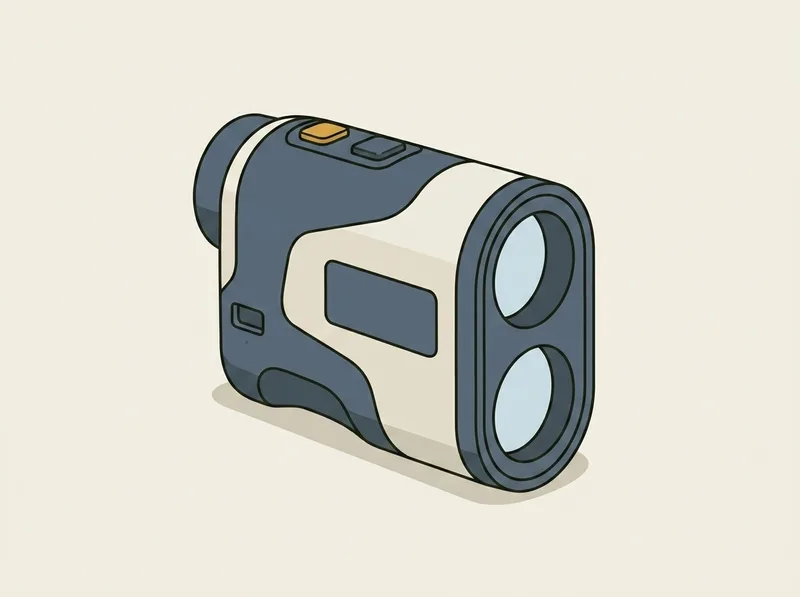
Bushnell make the rangefinder that professional caddies carry, and the Bushnell Tour V7 Shift is the version of it that a club golfer can justify. The specification reads much like the others: 6x magnification through a 24 mm objective, ranging from 5 to 1,300 yards, accuracy quoted at plus or minus a yard.
Three things separate it. The flag lock is quicker and more certain than the rest, and the visual confirmation in the display tells you when it has found the flag rather than the trees behind it. The display itself is a red and green OLED, which stays readable against a dark treeline in flat light where an LCD washes out. And the slope function is disabled by a physical switch on the body, which is both harder to forget and visible to anyone checking.
 Around £380 to £400
Bushnell Tour V7 Shift
- Magnification
- 6x, 24 mm objective
- Max range
- 5 to 1,300 yards
- Slope
- Yes, Slope-Switch to disable
- Weather
- IPX6
- Display
- Red and green OLED
- Flag lock
- To 500 yards, with vibration
- The flag lock is the most reliable of the four, and the visual confirmation removes any doubt you locked onto a tree.
- Slope is disabled by a physical switch on the body, which a referee can see at a glance.
- IPX6 sealing and a two year warranty, which matters more in a wet climate than the spec sheet suggests.
- The most expensive of the four by a clear margin.
- Heavier than the Nikon by roughly double, which you notice walking 18 holes.
- You are paying partly for the badge that every professional caddie carries.
VerdictThe default recommendation for a golfer who wants to buy once and not think about it again. Nothing here is unique to Bushnell on paper, but the lock speed, the switch and the sealing are the three things that decide whether a rangefinder gets used or left in the bag.
IPX6 sealing is the specification people ignore and then regret. It certifies resistance to powerful water jets, which is a reasonable proxy for a Tuesday in February. A rangefinder that stops working in the wet is a rangefinder you stop carrying. Sealing handles the weather and nothing handles a drop onto a cart path, which is what the supplied case is for, and replacement rangefinder cases covers the ones worth buying when the original wears out or you want a magnet.
Shot Scope PRO L5: the most rangefinder for the money
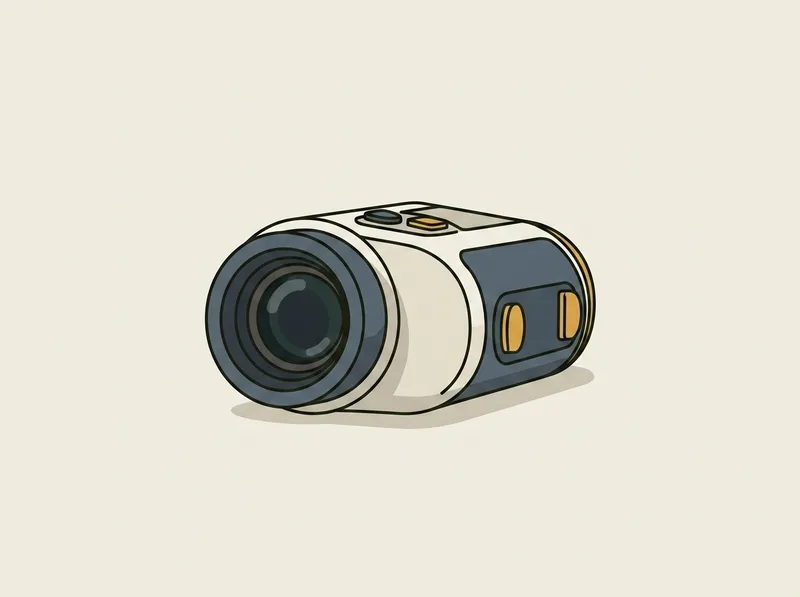
The Shot Scope PRO L5 is the strongest argument on this page against spending more. It runs 7x magnification, the highest of the four, ranges to 1,300 yards, uses an OLED display at a price where rivals still fit LCDs, and adds adaptive slope with a switch to turn it off. Shot Scope quote a CR2 battery good for 5,800 measurements, which is several seasons of normal use.
The 7x is a genuine advantage and a genuine complication. A flag 180 yards away is meaningfully bigger through this than through a 6x optic, which makes it easier to find in the first place. It also magnifies every tremor in your hands, so bracing an elbow against your ribs or resting the device on a cart bar stops being optional.
 Around £210 to £220
Shot Scope PRO L5
- Magnification
- 7x
- Max range
- 1,300 yards
- Slope
- Yes, adaptive, switchable
- Weather
- Water resistant, no IP rating published
- Display
- OLED
- Battery
- CR2, rated at 5,800 measurements
- 7x magnification, the highest here, which makes a distant flag noticeably easier to find.
- An OLED display at a price where competitors are still fitting LCDs.
- Just over half the price of the Bushnell for a specification sheet that reads almost identically.
- No published IP rating, so the weather sealing is a claim rather than a number.
- 7x amplifies hand shake, so bracing against something is close to mandatory.
- A smaller service network than Bushnell, Garmin or Nikon if something goes wrong.
VerdictThe value pick, and by a wide enough margin that it deserves consideration even if the budget stretches further. The compromise is the unpublished weather rating, which is a real gap on a device you will use in November drizzle.
The gap in the specification is the weather rating. Shot Scope describe the device as water resistant without publishing an IP number, and an unrated claim is not the same as a tested one. For a golfer who plays through a wet winter that is worth weighing against the price saving.
Garmin Approach Z30: for hills, and for Garmin owners
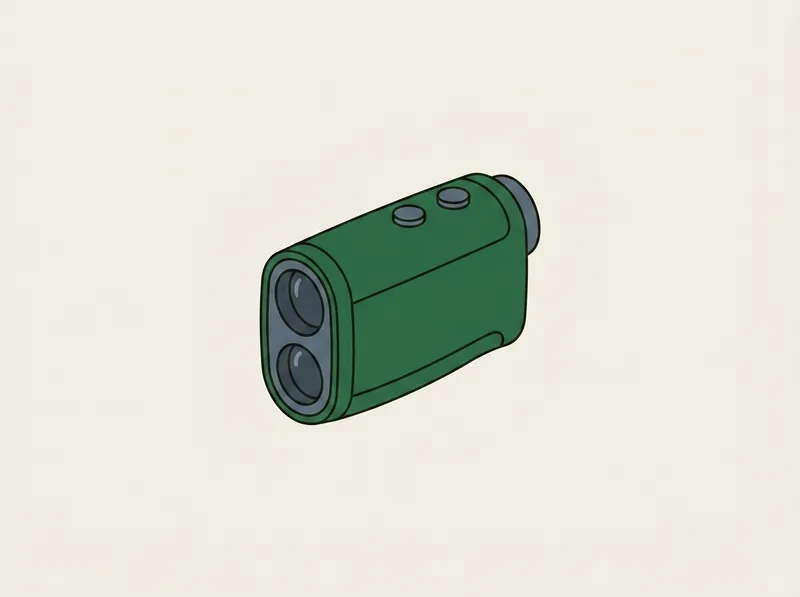
The argument for the Garmin Approach Z30 is PlaysLike. Every rangefinder with slope adds or subtracts yards for elevation, but Garmin's implementation goes further, and paired with some of their other devices it factors air density from pressure, temperature and humidity as well. On a course with 40 feet of elevation change between tee and green, that is the difference between a 7 iron and a 5 iron.
The rest of the specification is solid rather than remarkable: 6x magnification, 1,300 yards to a reflective target, 400 yards to a flag, a transparent OLED display and IPX7 sealing, which is the strongest weather rating here. It weighs 210 grams and takes a CR2 battery rated for up to a year.
 Around £330 to £350
Garmin Approach Z30
- Magnification
- 6x
- Max range
- 1,300 yards to a reflective target, 400 to the flag
- Slope
- Yes, PlaysLike, with an external indicator light
- Weather
- IPX7
- Display
- Transparent OLED
- Battery
- CR2, rated up to a year
- PlaysLike is the most sophisticated elevation adjustment here, and on some Garmin devices it also accounts for air density.
- Sends the ranged yardage to a paired Garmin watch or the phone app, so the number is still there over the ball.
- IPX7, the highest weather rating of the four, and a battery rated for up to a year.
- Most of the interesting features need a second Garmin product to be worth anything.
- Close to Bushnell money without matching its flag lock range.
- The external tournament indicator light is useful to a referee and irrelevant to a casual round.
VerdictThe right buy for two specific golfers: anyone playing a genuinely hilly course, where elevation adjustment changes club selection several times a round, and anyone who already wears a Garmin golf watch. On a flat parkland course, bought on its own, it is more device than the job needs.
The catch is that the best features assume you own other Garmin equipment. Range relay puts the yardage you just shot onto a paired watch, which is genuinely useful over the ball, and useless if you do not have the watch. Bought alone, on a flat course, it is an expensive way to get an ordinary laser.
Nikon COOLSHOT 20i GIII: the small one
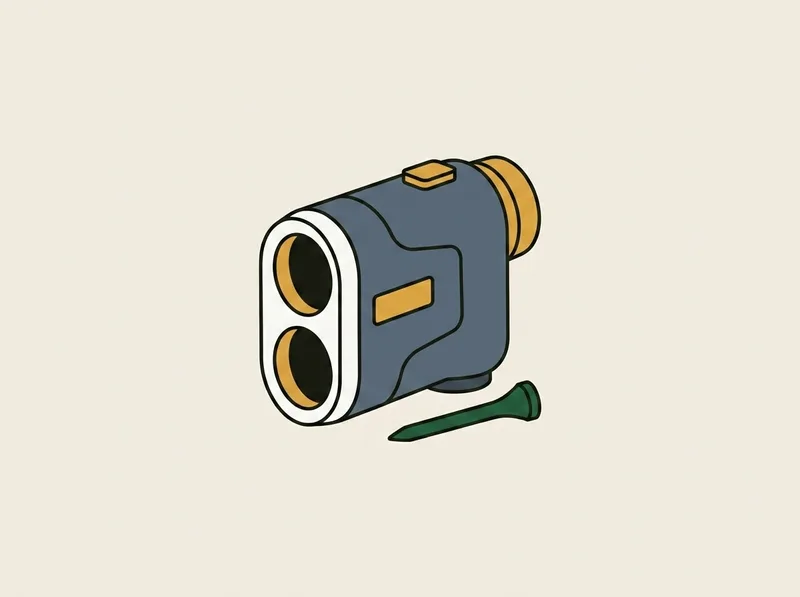
Nikon have been making optics for a century longer than anyone else on this page, and it shows in the view. The 20i GIII is a 6x device through a 20 mm objective with ID Technology, which is Nikon's name for slope, and it ranges from 6 to 800 yards with a maximum flagstick distance of 300 yards.
Those numbers look short next to the others and are not. Nobody hits an approach shot from 800 yards. What the device actually gives you is size: at around 130 grams it is roughly half the weight of the Bushnell, small enough to live in a trouser pocket, and it has the long eye relief that makes a rangefinder usable with glasses on. If you walk and you wear glasses, that combination outranks everything else here.
 Around £180 to £200
Nikon COOLSHOT 20i GIII
- Magnification
- 6x, 20 mm objective
- Max range
- 6 to 800 yards
- Slope
- Yes, ID Technology
- Weather
- Rainproof
- Flag lock
- First Target Priority, to 300 yards
- Accuracy
- Plus or minus 1 yard under 100 yards
- By far the smallest and lightest here, at around 130 grams, which is the difference between carrying it and leaving it.
- Long eye relief, so it works properly with glasses on, which most rangefinders do badly.
- Nikon optics, and the view through it is the clearest of the four.
- 800 yards maximum and 300 yards to a flag, the shortest here, although both are more than enough.
- No cart magnet on the body, only a magnetic clip on the case.
- Only a little cheaper than the Shot Scope while giving up range, magnification and the OLED display.
VerdictThe pick for anyone who walks and resents carrying anything else, and the clear pick for glasses wearers. The trade is a shorter maximum range and a plainer display, neither of which changes a single shot you will actually hit.
What the specifications actually change
Rangefinder marketing leans on numbers that sound impressive and change nothing. Here is what each one does on a golf course.
| Specification | What it changes | What to look for |
|---|---|---|
| Magnification | How large a distant flag appears, and how much hand shake you see | 6x suits most people, 7x if you brace the device |
| Maximum range | Almost nothing. It is measured to a large reflective target | Check the flag lock distance instead |
| Flag lock range | The furthest it will confidently find a thin flagstick | 300 yards covers every approach you will play |
| Slope | Adds or subtracts yards for elevation change | A physical switch, not a buried menu setting |
| Weather rating | Whether it survives three winters | IPX6 or better, and be wary of unrated claims |
| Display type | Readability against trees and grey sky | OLED holds contrast where LCD fades |
The one specification worth paying up for is the lock. A rangefinder that takes four attempts to find the flag is slower than pacing off a sprinkler head, and a group waiting behind you notices. That is a pace of play issue before it is a technology one.
Slope, and the rule that decides whether you can use it
Slope is the feature everyone wants and the one that carries a rule attached to it.
In practice this makes the switch design matter. A model where slope is disabled by a visible physical switch, or shown by an external indicator light, removes any argument with a marker. A model where it is a menu setting three presses deep is one you will eventually forget to change.
Rangefinder or GPS watch?
They solve different halves of the same problem, and plenty of golfers eventually carry both.
A laser is exact and requires you to aim. It gives the distance to the flag, to the front edge, to the bunker you are trying to carry, to anything you can see. It is useless for a target you cannot see, which is most blind tee shots and any dogleg.
A GPS watch is approximate and requires nothing. It gives front, middle and back of the green from your wrist without you breaking stride, and it works when the flag is hidden. It is also the better tool for pace of play, because reading a watch takes a second. The full comparison of a rangefinder against a GPS walks through the decision properly, and the GPS watch options covers that side of the category.
Do you need one yet?
This is the question a gear page is not supposed to ask, so here is the honest version.
There is a second condition, and it matters more. A rangefinder is only useful if you know how far you hit each club, and most golfers do not. Knowing the flag is 147 yards away changes nothing until you know what 147 yards is in your bag. Building a distance chart for each club is the prerequisite, and it costs nothing but a range session with a notepad.
Once you do own one, the value shows up in decisions rather than in yardages. Knowing the front edge is 132 and the flag is 147 tells you the shot is a full club longer than it looks, which is exactly the kind of judgement course management is built on. Cheaper models cover the same job with fewer features, and budget laser options is the page for that. Phone-based alternatives exist too, and the golf apps worth having covers what they can and cannot do.
Key takeaways
- The Bushnell Tour V7 Shift is the default pick: fastest flag lock, an OLED display that stays readable in flat light, IPX6 sealing and a physical slope switch.
- The Shot Scope PRO L5 gives up very little for a large price saving. Its one real gap is an unpublished weather rating.
- Buy the Garmin Approach Z30 for hilly courses or if you already own a Garmin golf watch. On a flat course, alone, it is more device than the job needs.
- The Nikon COOLSHOT 20i GIII is the pick for walkers and for glasses wearers, and its shorter range costs you nothing real.
- Quoted maximum range is measured to a large reflective target and means almost nothing. Flag lock distance is the number to compare.
- Slope is legal to carry in competition and not legal to read. Prefer a physical switch over a menu setting.
- A rangefinder is worth buying after you know your club distances, not before.
Common questions
Are golf rangefinders allowed in competition?
Yes, by default. Rule 4.3a(1) permits a device that gives distance and direction. A Committee can prohibit distance devices entirely through a Local Rule, so check the notice board, but most clubs allow them.
Do you need slope on a golf rangefinder?
Only if your course has real elevation change. Slope adjusts the yardage for an uphill or downhill shot, which can be worth two clubs on a severe hole and nothing at all on flat parkland. Note that you may carry a slope model in competition but must not read the adjusted number.
Is a rangefinder or a GPS watch better?
Neither, and they are not really competing. A laser is exact and needs a line of sight. A GPS gives front, middle and back of the green without aiming and works on blind shots. Golfers who play a lot of unfamiliar courses tend to prefer GPS, and those who play one course they know tend to prefer a laser.
How much should you spend on a golf rangefinder?
Somewhere between £150 and £400 buys everything that matters. Below about £100 the flag lock becomes unreliable, which is the one thing you cannot compromise on. Above £400 you are buying convenience features rather than better distances.
What magnification do you need on a golf rangefinder?
6x is right for most people. It makes a flag 200 yards away comfortably findable without turning small hand movements into a moving picture. 7x is better if you can brace the device against something, and worse if you cannot.
How accurate are golf rangefinders?
Every model here quotes plus or minus one yard, and in practice that is accurate enough that the error is never the reason a shot missed. The larger risk is not accuracy but locking onto the wrong thing, which is why flag lock confirmation matters more than the accuracy figure.
Do beginners need a rangefinder?
Not in a first season. A precise yardage only helps once you know what each club does, and early on the shot dispersion is wide enough that a ten yard error in the number is lost in the noise. Money spent on lessons at that stage does far more.
What does flag lock or pin seeking actually do?
It tells the device to prioritise the nearest thin object over the large mass behind it, so it reads the flagstick rather than the trees. Most models confirm the lock with a vibration, and some add a visual signal in the display. Without it, a rangefinder aimed at a green regularly returns the distance to the treeline.
Do golf rangefinders work in rain and fog?
Rain reduces effective range and heavy fog can defeat a laser entirely, because the beam scatters off water droplets. Every model here still works in normal drizzle. What varies is whether the housing survives it, which is what the IP rating measures.
How long does a rangefinder battery last?
Most take a single CR2 lithium cell and quote thousands of measurements or up to a year of typical use. Carrying a spare costs a pound or two and removes the one failure mode that leaves you guessing on the ninth tee.
Can you use a phone app instead of a rangefinder?
A phone app can do the GPS job reasonably well, giving green distances from a mapped course. It cannot do the laser job, because a phone has no way to measure the distance to a specific object you point it at. The apps are a substitute for a GPS watch, not for a rangefinder.
How we put this together
- Published manufacturer specifications for each rangefinder, taken from the maker's own listing rather than a retailer's summary.
- What each specification changes on a golf course: magnification against hand shake, quoted maximum range against the distances a golfer actually hits, and how the slope function is disabled.
- The Rules of Golf position on distance-measuring devices and on elevation-adjusted yardages, which decides whether a model can be used in a competition at all.
- Shot Scope's published amateur data on greens in regulation by scoring bracket, because that is what decides how much an exact yardage is worth at a given standard.
On this page
- The four, compared
- Bushnell Tour V7 Shift: the one to buy if you only buy one
- Shot Scope PRO L5: the most rangefinder for the money
- Garmin Approach Z30: for hills, and for Garmin owners
- Nikon COOLSHOT 20i GIII: the small one
- What the specifications actually change
- Slope, and the rule that decides whether you can use it
- Rangefinder or GPS watch?
- Do you need one yet?
- How we put this together

Tom Ashworth
Tom Ashworth is a PGA Professional who has taught golf since 2012, working mainly with beginners and mid-handicappers at club level in Surrey. He reviews the instruction guides on Learn Golf for technical accuracy before they publish.
Most of his teaching is with players in their first three years of the game, and most arrive having been told too much: six swing thoughts collected from videos, half of them contradicting each other. His approach is to check the grip and the alignment before touching the swing, on the basis that most bad ball flight is decided at address.