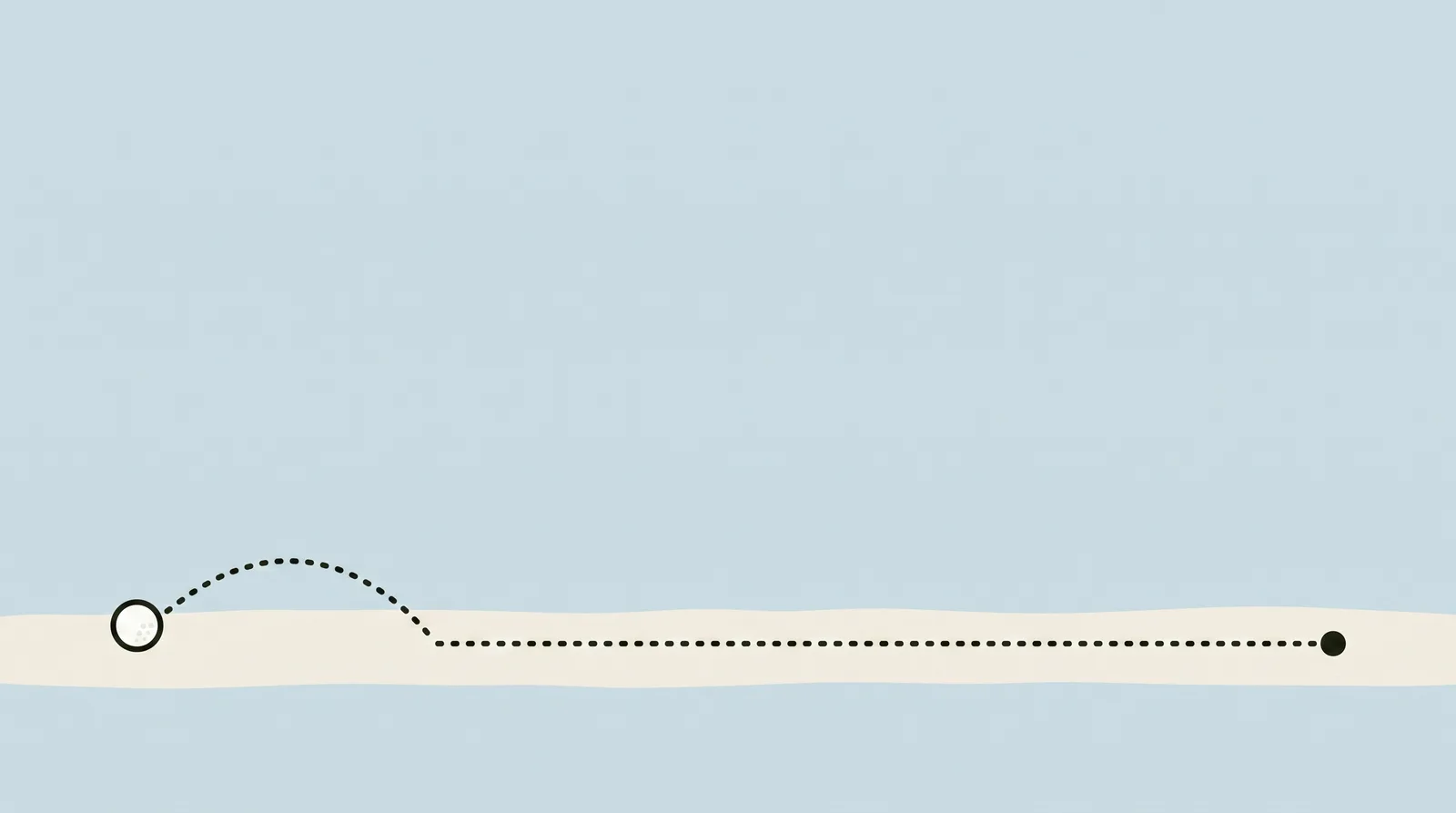
You have missed the green by six feet and you are about to take three more shots to hole out. That is the round quietly leaking away, and it is almost never a swing problem. A chip is the shortest shot in golf and the one most beginners are taught last. This guide covers the setup, the stroke, how to pick the club, and the two misses that cause most of the damage.
What a chip actually is
A chip is a short shot played from just off the green that spends most of its journey rolling. It flies low, lands early, and behaves like a putt for the rest of the way. The swing is small, the wrists stay quiet, and the club does the lifting.
That is the whole definition, and it matters because the alternative shot has a different job. A pitch is the longer, higher shot with wrist hinge and a fuller swing, and the two are compared side by side in chipping and pitching explained. If the ball is on or near the fringe with green to work with, you are chipping. This page is only about that shot.
The chipping setup
Almost all of the shot is decided before you move. A chip setup is deliberately narrow, deliberately close, and deliberately leaning forward, because all three of those make the low point of the swing land in front of the ball instead of behind it.
- Grip down the handle until your lower hand is close to the steel. This shortens the club and gives you control.
- Narrow your stance to about the width of one foot, with your toes closer together than for a full shot.
- Set roughly 60 to 70 percent of your weight on your lead foot and leave it there for the whole shot.
- Play the ball just back of centre in that narrow stance.
- Push the handle slightly toward the target so the shaft leans forward and your hands sit ahead of the ball.
- Stand close enough that the club sits more upright than usual, with the toe of the club slightly down.
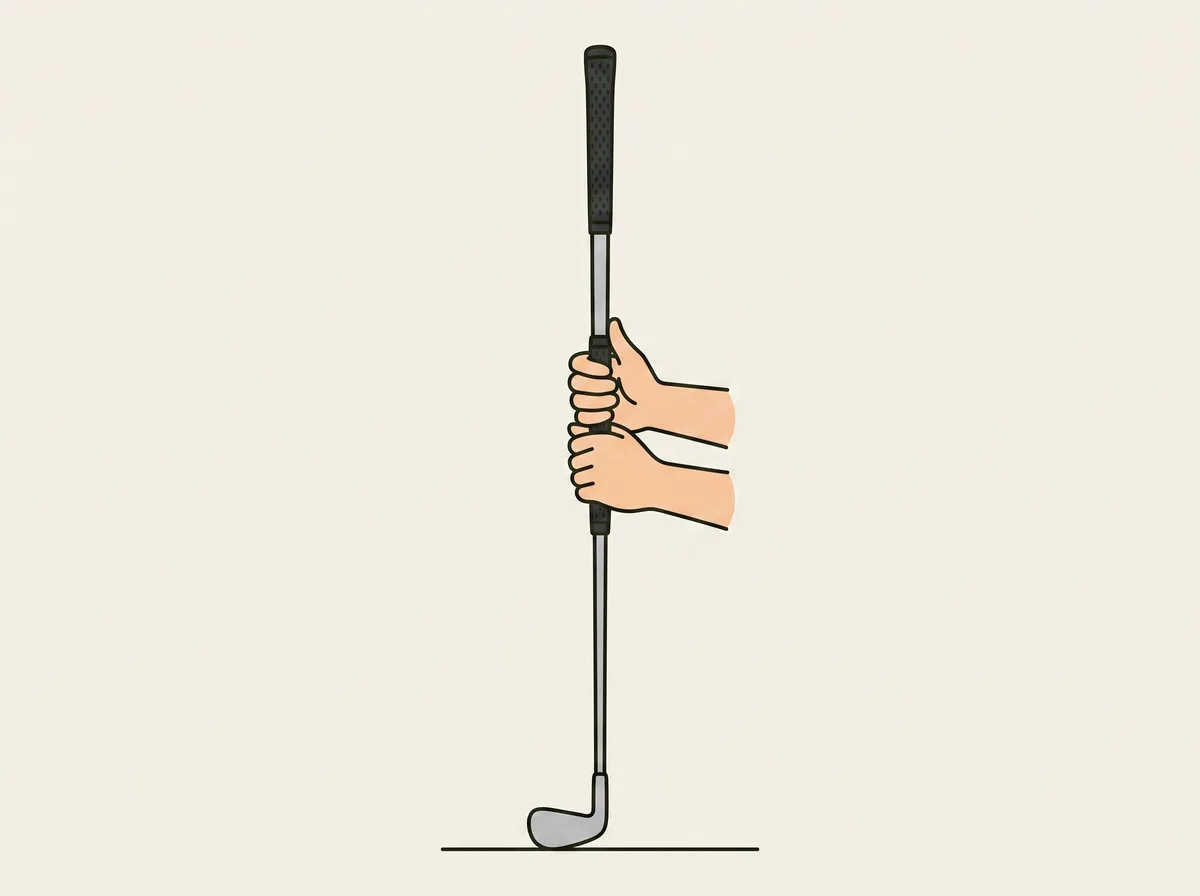
Those six checkpoints are one position, not six thoughts. Rehearse them at home until the whole thing takes two seconds, because standing over a chip running a checklist is how tension gets into the hands.
| Setup element | Chip position | What it does |
|---|---|---|
| Stance width | About one foot wide | Stops the lower body swaying, keeps the strike consistent |
| Weight | 60 to 70 percent on the lead foot | Moves the low point of the swing ahead of the ball |
| Ball position | Just back of centre | Encourages a slightly descending strike |
| Hands | Ahead of the ball, shaft leaning forward | Delofts the club and stops the wrists flipping |
| Grip | Down the handle, near the steel | Shortens the club and reduces clubhead speed |
| Distance from ball | Closer than a full shot | Makes the club sit upright and the stroke more upright |
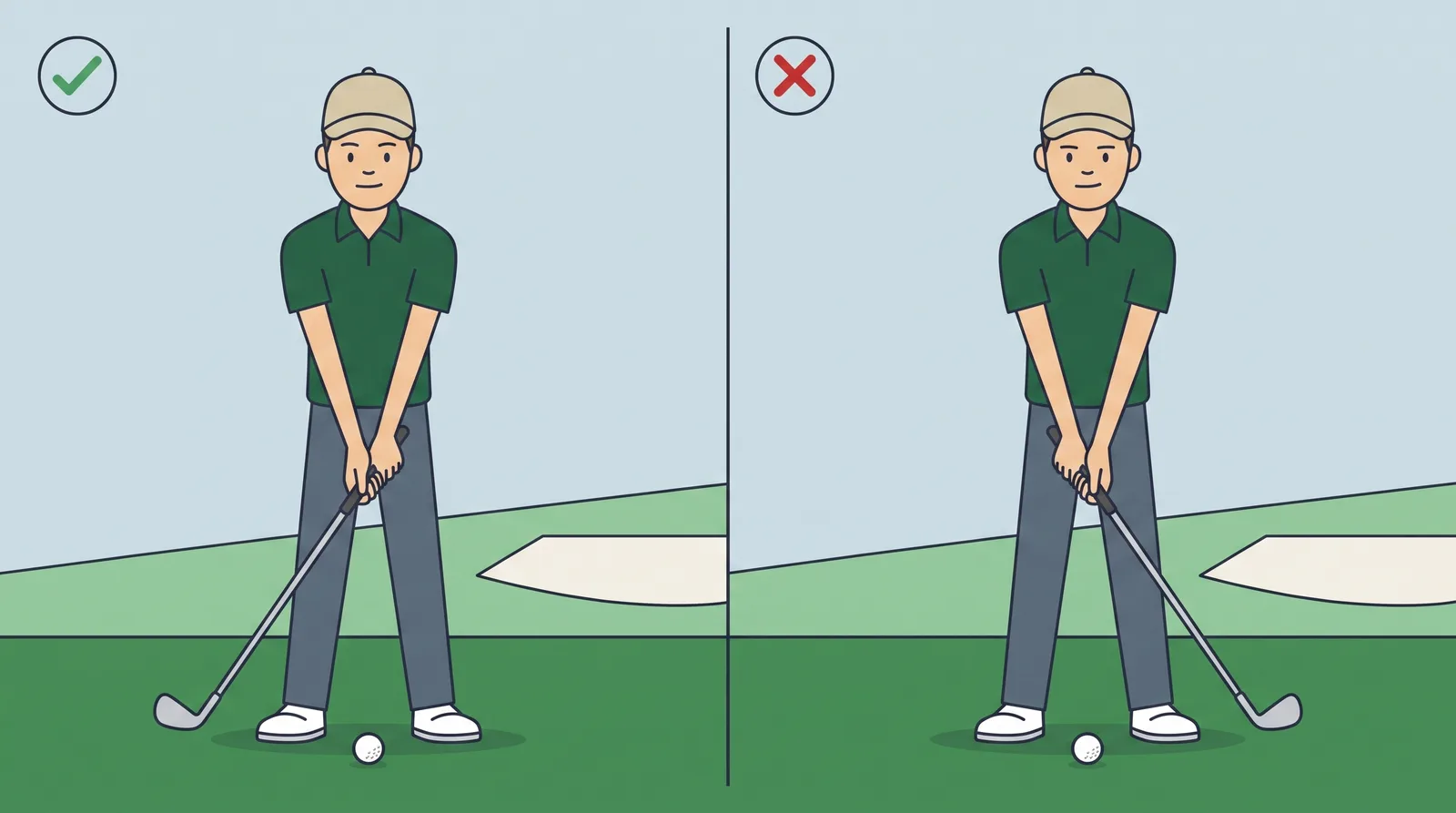
The stroke: a putt with loft on it
Once the setup is right, the motion is almost boring. The shoulders rock, the arms and club move with them, and the wrists hold whatever angle they started with. There is no hinge, no scoop, and no attempt to lift anything.
Length of stroke controls distance. Speed of stroke stays the same. If you need the ball to go further, make the backswing longer rather than hitting the same short swing harder, because a short hard swing is where deceleration and fat contact come from.
Let the chest turn a little. A chipping stroke driven only by the arms tends to lose its low point, whereas a small body turn keeps the club moving through the ball rather than at it. The finish is short and low, with the hands still ahead of the clubhead.
Choose the club before you choose the shot
The single biggest improvement available to most golfers is putting the sand wedge away. A chip that lands early and rolls is easier to judge than one that flies most of the way, because a rolling ball behaves like a putt and a flying ball has to be flown to the right yardage.
Shot Scope's tracked data on what to use around the green makes the case better than any coach can. Their 15 handicap golfers were 8 percent more likely to get up and down with an 8 iron, 9 iron or pitching wedge than with a gap, sand or lob wedge, and they finished around six feet closer to the hole with the lower lofted club. Amateurs are roughly twice as likely to reach for the high lofted option anyway.
Six feet closer is not a rounding error. Shot Scope's putting make percentages by handicap have every handicap group holing between 82.5 and 92.8 percent from inside six feet, and between 35.0 and 42.8 percent from six to twelve. The club you chip with decides which of those two brackets you putt from.
| Club | Rough carry to roll | Use it when |
|---|---|---|
| 7 iron | 1 part air, 4 parts ground | Just off the fringe, flag a long way away |
| 8 iron | 1 part air, 3 parts ground | Standard chip with plenty of green |
| 9 iron | 1 part air, 2 parts ground | A little fringe to carry, medium run out |
| Pitching wedge | 1 part air, 1 part ground | Short-sided, or a downhill green |
| Sand wedge | Mostly carry, little run | Only when something must be flown over |
Pick a landing spot, not a target
Amateur golfers aim chips at the hole. Good chippers aim at a spot on the green and let the roll do the rest, which is why they can use the same stroke for shots of very different lengths.
Walk to the side of the shot and look at it from there. Find the place where you want the ball to touch down, usually a couple of paces onto the putting surface where the grass is even. Then pick the club whose roll pattern takes the ball from that spot to the hole.
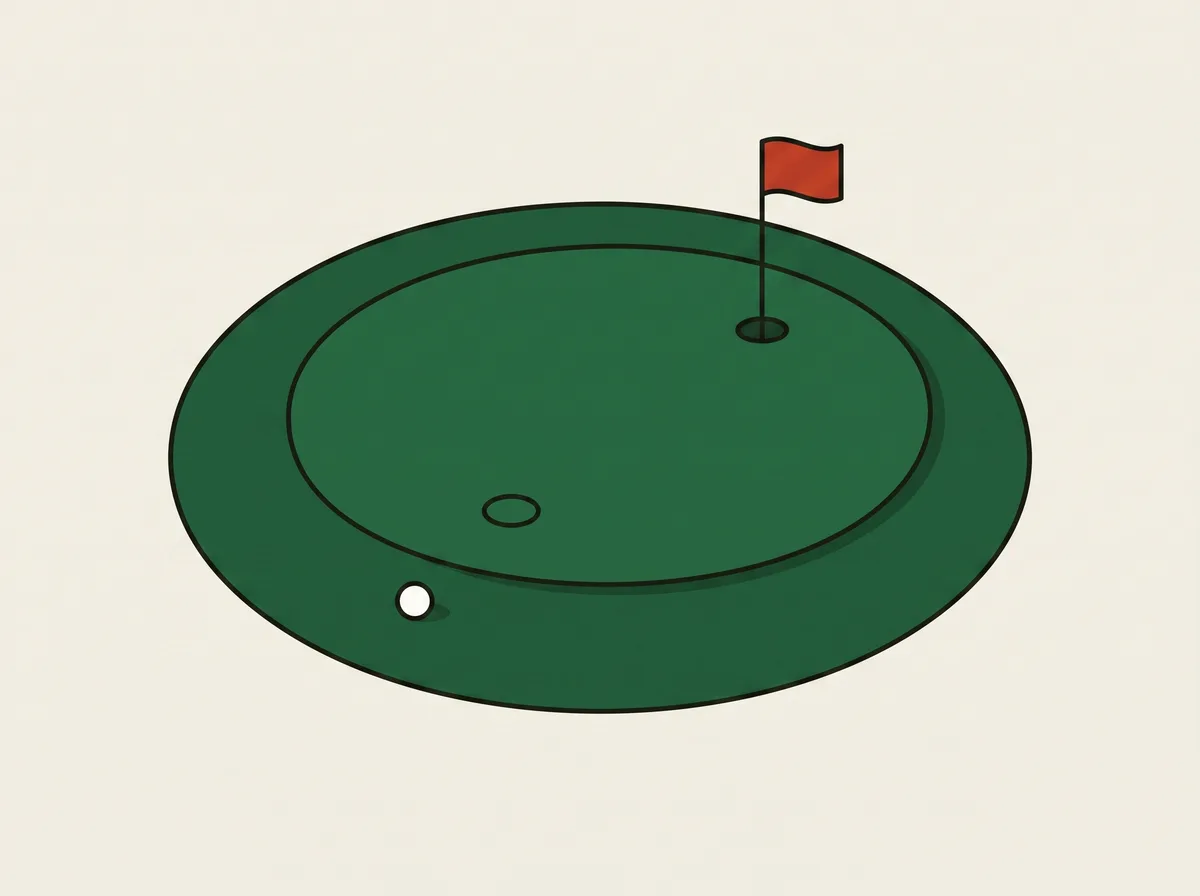
The lowest shot that gets the job done is almost always the right one, which is the same principle behind the bump and run. Height is risk. A ball that spends longer in the air has more ways to finish in the wrong place, and a ball on the ground is already behaving like a putt.
When the lie changes the plan
Chipping advice tends to assume a clean lie on short grass. Most chips are not that.
From thicker grass, the club will snag and the ball will come out slower with less spin, so expect more roll and use a touch more loft to get it out cleanly. From a bare or very tight lie, the leading edge becomes dangerous and the temptation to lift is strongest, so keep the handle forward and pick the ball off the surface. Those situations get proper treatment in chipping from rough and tight lies.
Ball position is the smallest adjustment with the biggest effect, and if you are not sure where centre is on a given club, the reference points are in the ball position guide.
Fixing the two chip misses
Almost every bad chip is one of two shots, and they have the same cause.
The fat chip is the one that travels a few feet, with the club taking turf before the ball. The thin chip races across the green because the club caught the ball on the upswing. Both come from the low point of the swing being behind the ball, which is why golfers who fix one usually fix the other at the same time. The full diagnosis is in how to stop chunking chips.
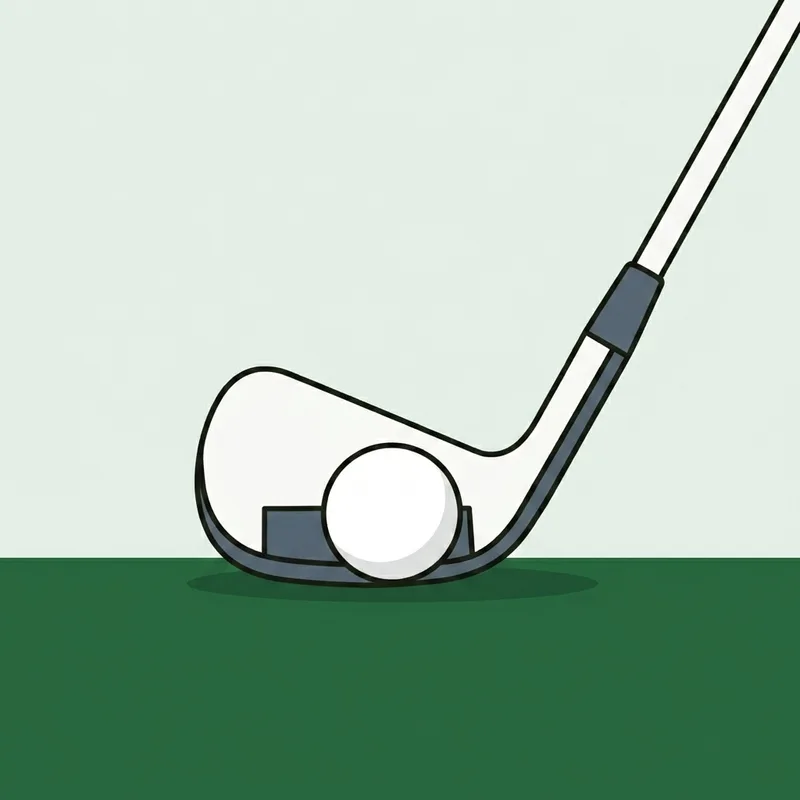
Deceleration is the other half of it. A golfer who is worried about hitting the ball too far makes a big backswing and then slows down before impact, which drops the low point behind the ball and produces the exact fat shot they were afraid of. Shorter back, same speed through.
How to practise chipping
Chipping is the cheapest skill in golf to build because the movement is small and you can do most of it on any patch of grass.
Both of these work better than hitting fifty balls to the same flag. Variety is what transfers to the course, because you never get the same chip twice out there. More structured sessions are laid out in chipping drills.
When chipping is not the shot
Two situations call for something else. If there is a bunker, a bank or long grass between you and the green, the ball has to fly, and that is a pitch rather than a chip. If you are more than about 30 yards out, the stroke gets too long to stay wristless and you need the pitching action instead.
The other one is more common than golfers admit. If the ball is sitting on the fringe with nothing in the way, a putter is often the better club. A poor putt from the fringe finishes ten feet away. A poor chip can finish anywhere.
Key takeaways
- A chip is a low shot that lands early and rolls most of the way, played with a quiet-wristed stroke.
- Set up narrow, close, with weight on the lead foot, ball just back of centre and the hands ahead.
- The loft lifts the ball. Trying to lift it yourself causes both the fat chip and the thin one.
- Stroke length controls distance. Never hit a short swing harder to make the ball travel further.
- Shot Scope's data has amateurs getting up and down 8 percent more often with an 8 iron, 9 iron or pitching wedge than with a lofted wedge.
- Pick the landing spot first, then choose the club whose roll takes the ball from there to the hole.
- Carry to roll ratios are a starting point, not a rule. Slope, speed and moisture all change them.
- Deceleration through impact is what turns a nervy chip into a chunk.
- When the ball is on the fringe with clear ground ahead, the putter is often the safer club.
Common questions
What club should a beginner chip with?
An 8 iron or 9 iron for most chips, and a pitching wedge when you are short-sided. Shot Scope's tracking has amateurs getting up and down more often and finishing around six feet closer with those clubs than with a sand or lob wedge. Learn one club properly before adding a second.
Why do I keep hitting my chips fat?
The low point of your swing is behind the ball, almost always because you are trying to help the ball into the air. Move your weight onto your lead foot, push the handle ahead of the ball, and keep it there through impact. Deceleration makes the same fault worse.
Why do I thin my chip shots across the green?
Same cause as the fat one. The club is bottoming out before the ball and catching it on the way up, so the leading edge strikes the middle of the ball. Fix the low point and both misses usually go together.
Where should the ball be in my stance for a chip?
Just back of centre in a narrow stance. Too far forward and the club reaches its low point before the ball. Too far back and you deloft the club so much the ball comes out low and hot with no control.
Should my wrists hinge when chipping?
No. Keep whatever wrist angle you set at address and rock your shoulders instead, which is why the motion feels like a putting stroke. Wrist hinge belongs in the longer pitch shot, not the chip.
How far back should I take the club on a chip?
Far enough that you can accelerate smoothly through the ball without hitting at it. As a guide, back and through should be roughly the same length. A long backswing followed by a short decelerating strike is the most common cause of a poor chip.
What is the difference between a chip and a pitch?
A chip is low, short and mostly roll, played with quiet wrists. A pitch is higher, longer and mostly carry, played with wrist hinge and a fuller swing. The two are set out properly in the chipping and pitching comparison.
Can I chip with my putter?
If the ball is on the fringe or the first cut and the ground between you and the green is smooth, the putter is often the better club. It removes the fat and thin misses entirely. The rule of thumb is to use the least lofted club that can do the job.
How do I chip from thick grass?
Use a little more loft, open the face slightly, and expect the ball to come out slower with less spin and more run. The grass grabs the hosel, so grip a touch firmer than usual and keep the club moving through the ball rather than trying to pick it clean.
How much should I practise chipping?
Fifteen minutes three times a week does more for your score than an hour of driver practice. Chipping is a motor skill that responds to frequency rather than volume, and short frequent sessions with a defined target beat long unfocused ones.
Tom Ashworth
Tom Ashworth is a PGA Professional who has taught golf since 2012, working mainly with beginners and mid-handicappers at club level in Surrey. He reviews the instruction guides on Learn Golf for technical accuracy before they publish.
Most of his teaching is with players in their first three years of the game, and most arrive having been told too much: six swing thoughts collected from videos, half of them contradicting each other. His approach is to check the grip and the alignment before touching the swing, on the basis that most bad ball flight is decided at address.