Clubs are sold in a standard build that suits a fairly narrow range of golfers, and everyone else compensates. A shaft too heavy to accelerate, a lie angle that points the face off line, a set with a hole in the middle of its yardages: none of those are swing faults, and none of them get better with practice. A fitting is the hour that finds them.
What actually gets measured
Fitting sounds like one thing and is really a series of decisions taken in order, from the ones that change most to the ones that change least.
| Specification | What it changes | How it is decided |
|---|---|---|
| Shaft weight | How much of your speed reaches the ball | Trial across weights, watching speed and dispersion |
| Shaft flex | How the shaft loads and unloads through impact | Speed and tempo, then confirmed by ball flight |
| Club length | Where the low point of the swing sits, and strike location | Height and wrist to floor, then impact tape |
| Lie angle | Where the face points at impact, and start direction | A lie board or impact tape under the sole |
| Loft | Launch angle and spin, and the gaps through the set | Launch monitor, plus the gaps you actually need |
| Grip size | How freely the hands can release the club | Hand and finger measurement, then feel |
| Head model | Forgiveness, and which way a miss tends to go | Dispersion across several heads at the same spec |
The order matters more than the list. Shaft weight comes first because it moves everything downstream: change the weight and your speed, launch and dispersion all move, so a lie angle set against the wrong shaft has to be set again.
Flex is the specification golfers arrive most worried about, and it is one line in a fitting rather than the point of it. Which flex you need covers that decision on its own.
What happens in the bay
A competent fitting follows the same shape wherever you have it done.
- A conversation first. What you play, how often, what your miss is, what you want the clubs to do and what you are prepared to spend. A fitter who skips this is selling rather than fitting.
- Static measurements. Height, wrist to floor and hand size, which set the starting point for length, lie and grip.
- Warm up and baseline. You hit your own clubs so the fitter has a picture of what you currently produce, and so the session has something to compare against.
- Shaft testing. Several weights and flexes in the same head, watching clubhead speed, ball speed, launch, spin and dispersion.
- Head testing. Two or three heads at the specification you have arrived at, chosen on where the misses finish rather than where the good ones do.
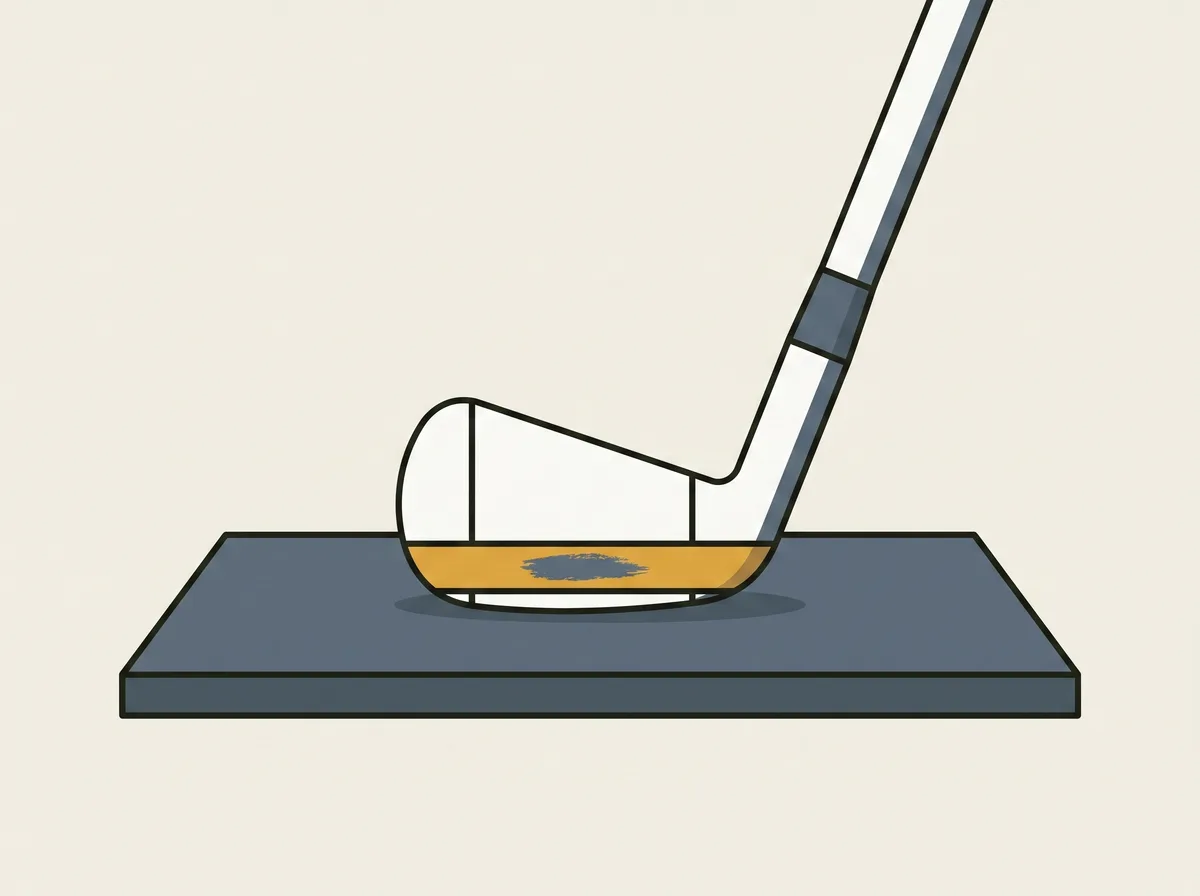
- Lie and length. Impact tape or a lie board on the sole, adjusted until the strike mark sits in the middle of the sole rather than at the toe or heel.
- A build sheet. Every number written down, including the ones you did not change, so the set can be reproduced or checked later.
American Golf describe their own process on their custom fitting page as six steps beginning with a consultation, run on a GCQuad launch monitor. Ping's fitters work from static measurements before anything is hit. The details differ. The structure does not.
Static fitting and dynamic fitting are not the same thing
Static fitting measures your body. Dynamic fitting measures your swing. Both are useful and they answer different questions.
The best known static system is Ping's colour code chart, devised by Karsten Solheim and in use for around fifty years. It takes two measurements, your height and your wrist to floor distance, and returns one of ten colour codes running from five degrees upright to four degrees flat, plus a recommended length. It takes two minutes and no equipment.
That is a starting point rather than an answer, because two golfers of identical build can deliver the club very differently. A golfer who drops the hands at impact needs a flatter lie than their static measurement suggests, and one who stands up through the ball needs a more upright one. That is what the lie board finds and the tape measure cannot.
So a static fitting is worth doing for free and not worth paying much for. If you are buying online or buying used, run the static numbers first, because they will catch a club that is obviously the wrong length before you spend anything. Buying used clubs covers what else to check.
The numbers on the screen, and which ones matter
A launch monitor produces a wall of data and a good fitter uses about six of it.
TrackMan's club data definitions set out what the club side reports: club speed, attack angle, club path, face angle and dynamic loft, all measured at the club's centre of gravity. Club speed, attack angle and club path reflect player-controlled movement before impact rather than anything the ball did afterwards.
Dynamic loft is the one worth understanding, because it explains why the number stamped on a club is only a starting point. It is the loft actually presented to the ball, and shaft lean, attack angle and strike location all change it, which is why two golfers can need different lofts in the same head. How much the static number varies to begin with is covered in iron lofts and the drift.
Spin loft is where a fitting shows you something a lesson would take longer to. TrackMan's published benchmarks put driver spin loft at 14.7 degrees on the PGA Tour, 15.0 on the LPGA Tour and 14.8 for a scratch amateur, against 18.3 degrees for the average golfer. That gap is a delivery problem rather than an equipment one, and seeing it on a screen is often the most valuable thing a session produces.
Is it worth it?
This is where the honest answer has to come with a caveat rather than a yes.
The resolution is to match the depth of the fitting to how settled your golf is.
| Where you are | What is worth doing |
|---|---|
| First season, borrowed or package clubs | A free static check on length and lie. Nothing more |
| Playing regularly, buying a first proper set | A shaft weight and length session, and a lie board check |
| Consistent strike, buying a driver or irons | A full launch monitor fitting for that club |
| Settled game, buying once for five years | A full bag fitting, including gapping |
Money has an order too. A fitting is worth more than the difference between a good club and a very good one, and a lesson is worth more than either if your strike is genuinely inconsistent. What a beginner actually needs makes that case, and it does not point at a fitting bay.
What a fitting cannot fix
A fitting matches equipment to a delivery. It does not change the delivery, and the gap between those two things is where most disappointment lives.
A slice caused by an out-to-in path is not fixed by a draw-biased head, which reduces the curve by a few yards and leaves the cause untouched. Thin contact is not fixed by a wider sole. And no specification will make an inconsistent strike consistent, because forgiveness measures how little a mishit costs rather than preventing one.
Read those figures honestly and the value of a fitting comes into focus. It will not turn 16% into 40%. What it can do is stop a golfer whose approaches already finish short from playing strong lofts on a heavy shaft, which is exactly the set most shops will show them.
What it costs, and how to get value from it
Fitting fees vary enough that the only reliable answer is to ask when you book. Some large retailers run a fitting bay as part of the shop and charge nothing for the session, on the basis that you are likely to buy from them. Independent studios and specialist fitters usually charge, frequently refunding it against a purchase, and the fee scales with how many clubs are covered.
Three things get you value out of whatever you pay.
Bring your own clubs. A fitting with no baseline compares new clubs against each other rather than against what you actually play, and the most useful outcome is sometimes that your current club is fine.
Hit enough balls. A specification chosen from six swings is chosen from noise. Ten to fifteen shots per configuration is the minimum before a pattern means anything.
Take the build sheet home, including the numbers that stayed standard. It is what lets you replace a club years later or check a set you bought used. Wedge gapping is the part of the bag most often left out of a fitting and the part where a written record helps most.
When to go back is the last question, and the answer is not annually. Speed, tempo and flexibility change with age, fitness and injury, so a set that fitted at forty may not at fifty-five. The signals worth acting on are a flight that has gone lower and weaker with no change in strike, a distance gap that has opened or closed between two clubs, or a club that has started to feel heavy.
If you would rather understand the equipment before paying anyone to measure you, what each club family does is the overview and the club distance chart sets out what tracked amateur data says each one travels. If the driver is what you are replacing, our driver picks works through which specifications a fitting is choosing between.
Key takeaways
- A fitting decides shaft weight, flex, length, lie angle, loft, grip size and head model, and it takes them in that order because each one moves the ones after it.
- Shaft weight changes more than head choice does, which is why it is settled first and why a fitting is worth more than an upgrade between two heads.
- Static fitting measures your body and takes two minutes. Ping's colour code system uses height and wrist to floor to return one of ten lie codes from five degrees upright to four degrees flat.
- Dynamic fitting measures what you actually deliver, and only a lie board or impact tape settles lie angle.
- Dynamic loft, not the number on the sole, is what the ball responds to. Shaft lean, attack angle and strike location all change it.
- Whether a high handicapper should pay for a full fitting is genuinely contested. Nobody argues against a free static check on length and lie.
- A fitting matches equipment to a delivery. It does not fix a path problem, a strike problem or an inconsistent swing.
- Bring your own clubs, hit at least ten to fifteen balls per configuration, and take the build sheet home. The numbers outlive the equipment.
Common questions
Is a golf club fitting worth it?
For a golfer whose strike is repeatable enough to produce a pattern, yes, and the gain is usually accuracy rather than distance. For a first-season beginner it is premature, because the swing being fitted will change substantially within a year. The exception at every level is a free static check on length and lie, which is worth doing whatever your standard.
What happens at a golf club fitting?
A conversation about your game, static measurements of height and wrist to floor, a warm up on your own clubs to establish a baseline, then trials across shaft weights and flexes on a launch monitor, head testing on dispersion, and a lie and length check with impact tape. It finishes with a written build sheet.
How long does a club fitting take?
Around 45 minutes for a driver, an hour or so for a set of irons, and roughly two hours for a full bag. Anything much shorter is not hitting enough balls per configuration for the result to mean anything.
How much does a golf club fitting cost?
It varies enough that you should ask when booking. Some large retailers run the bay as part of the shop and charge nothing, on the basis that you will buy from them. Independent studios usually charge a fee and frequently refund it against a purchase, with the amount scaling by how many clubs are covered.
Should a beginner get fitted for clubs?
Not a full fitting. Your swing will change substantially over a first year and the specifications chosen for it will expire. What is worth doing straight away is a static check on club length and a sensible shaft weight, both of which most shops will do free or as part of a purchase.
What is the difference between static and dynamic fitting?
Static fitting measures your body, usually height and wrist to floor, and returns a starting point for length and lie. Dynamic fitting measures what you deliver at impact using a launch monitor and a lie board. Static is free and fast. Dynamic is what actually settles the specification.
Does club fitting really make a difference?
To dispersion, yes, reliably. To distance, sometimes and less than the marketing suggests, and mostly for golfers coming out of a badly specified club. What a fitting most consistently does is remove a specification that was fighting you, which shows up as more shots finding the middle rather than as a longer best drive.
Can I get fitted for used clubs?
You can be fitted and then shop for the specification, which is the sensible order. Take the build sheet from the fitting and buy against it, checking shaft, flex, length and lie on any candidate. A lie angle can usually be bent afterwards on a carbon steel head, but a shaft that is wrong is an expensive fix.
What is the most important thing in a club fitting?
Shaft weight, in almost every case. It decides how much of your speed reaches the ball, it affects launch and dispersion at the same time, and stock builds now span a very wide range. Everything else in the fitting is chosen against whatever weight you settle on.
How often should I get refitted?
Not on a schedule. Go back when something changes: a flight that has become lower and weaker without a change in strike, a gap between two clubs that has opened or closed, or a club that suddenly feels heavy. Speed and flexibility change with age and fitness, so a set that fitted at forty may not at fifty-five.
Do I need a fitting for wedges and a putter too?
They are the two most commonly skipped and the two with the highest usage. Wedges need lofts gapped off your pitching wedge and a lie check, and a putter fitting starts with length and alignment rather than physics. Neither needs the full launch monitor session that a driver does.

Tom Ashworth
Tom Ashworth is a PGA Professional who has taught golf since 2012, working mainly with beginners and mid-handicappers at club level in Surrey. He reviews the instruction guides on Learn Golf for technical accuracy before they publish.
Most of his teaching is with players in their first three years of the game, and most arrive having been told too much: six swing thoughts collected from videos, half of them contradicting each other. His approach is to check the grip and the alignment before touching the swing, on the basis that most bad ball flight is decided at address.