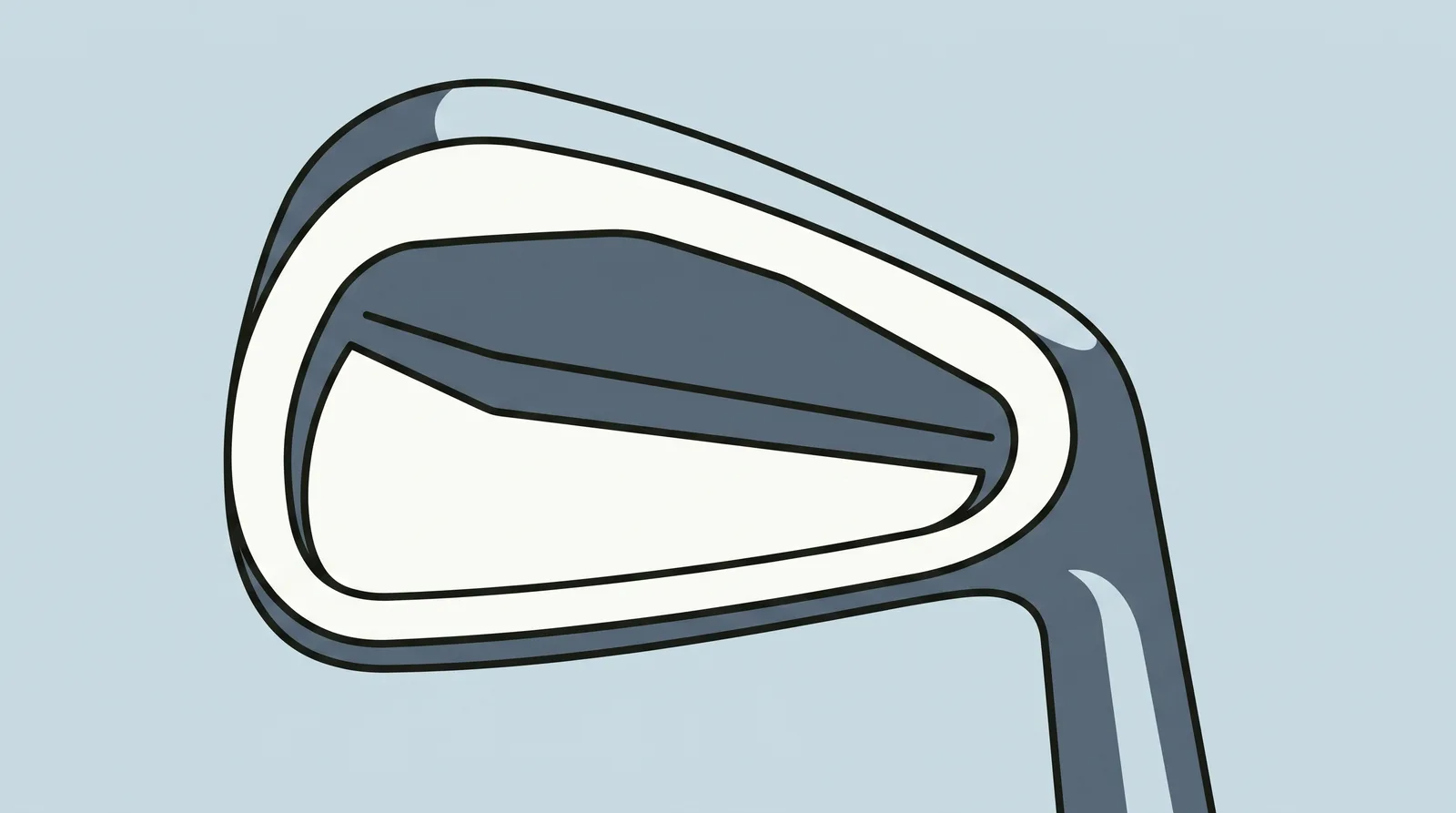
Ask which is better and you will get an argument about feedback, feel and shotmaking that has been running since perimeter weighting was invented. It is a fun argument and it is almost entirely irrelevant to the person asking, because the answer for anybody outside single figures has been the same for two decades. The question worth spending time on is the one underneath it.
What actually differs between the two
Both are made of steel, both are the same length, and in plenty of cases both carry the same loft. What changes is where the mass sits.
A blade, properly a muscle back, puts its weight in a solid bar directly behind the middle of the face. Ping describe their Blueprint T as a single piece 8620 carbon steel forging with a muscle back design, built for the highly skilled golfer who relies on workability. That is a manufacturer being unusually plain about who a club is for.
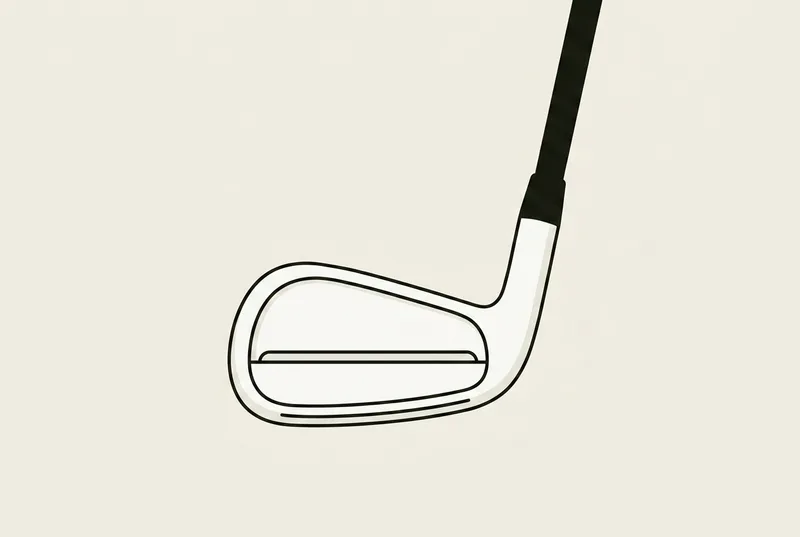
A cavity back hollows that bar out and moves the metal to the perimeter, which raises the head's resistance to twisting. Their G740 does it as far as the category goes, with a wider sole, a longer blade length and a thicker topline pushing the centre of gravity low and the moment of inertia high. Same manufacturer, same steel, opposite philosophy.
The useful detail is that the loft is not the variable. Ping's Blueprint T 7 iron is 33 degrees with a 62.0 degree lie, and their i230 players cavity 7 iron is also 33 degrees with a 62.0 degree lie. Two clubs, identical specification on paper, and the only difference is where the metal went.
What perimeter weighting actually buys you
Moment of inertia is the head's resistance to twisting when the ball hits it away from the centre. Push mass out toward the toe and heel and that number goes up.
On a centred strike, the two heads behave almost identically. Ball speed comes from the face and the swing, not from the badge, and a blade struck flush is not slower than a cavity back struck flush. Every advantage on either side lives in what happens when you miss.
Miss the middle with a high MOI head and it twists less, so the face stays closer to where you aimed and the ball keeps more of its speed. Miss the middle with a blade and it twists more, so you lose distance and direction together. That is the entire mechanism, and it explains why the difference feels invisible on the range and expensive on the course.
The strike question, and why it settles the argument
Everything above assumes you know how often you find the centre of the face. Most golfers do not, and most golfers overestimate it, because a slightly thin 7 iron that finishes 10 yards short feels like a good shot that came up short rather than a mis-hit.
Shot Scope's analysis of what the best amateur iron players carry gives a sense of the gap involved. Their top ten percent of iron players hit 53% of greens and finish an average of 49 feet from the hole with a 7 iron. An average golfer hits roughly one green in five with the same club and finishes an average of 144 feet away.
A golfer three times further from the hole than the good players is not being held back by a lack of workability. They are being held back by strike, and forgiveness is the only equipment property that addresses it. Why your ball striking is inconsistent covers the swing side of the same problem, which is where most of the available improvement actually sits.
The middle ground is where the real decision lives
Once you accept the blade answer, the interesting problem appears, because "cavity back" now describes four quite different kinds of club.
| Category | Construction | Forgiveness | Typical 7 iron loft | Suits |
|---|---|---|---|---|
| Muscle back blade | One piece forging, mass behind the centre | Lowest | 33 to 35° | Consistent centre strikers, low single figures |
| Players cavity | Forged or cast, modest cavity, thin sole | Moderate | 33 to 35° | Good ball strikers who want feedback and control |
| Players distance | Hollow head, thin face, internal filler | High | 30 to 33° | Mid handicaps who want speed without a shovel |
| Game improvement | Deep cavity, wide sole, low centre of gravity | High | 28 to 30° | Most club golfers |
| Super game improvement | Cavity plus hollow body, very wide sole | Highest | 27 to 29° | High handicaps and slower swings |
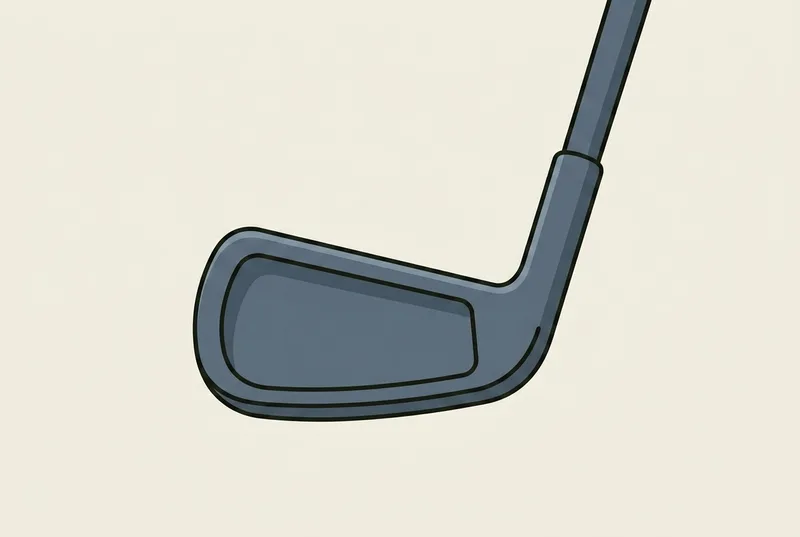
Players distance is the category that did not exist twenty years ago and now dominates the middle of the market. These are hollow heads with a thin, fast face and a polymer or foam filling inside to support it and damp the noise, wrapped in a shape close to a players iron. They look like a compact cavity back and behave like something considerably more forgiving.
Ping's Blueprint S sits at the other end of the same idea: fully forged 8620 carbon steel with a clean cavity, and a pocket forged into the long irons specifically to save weight and add forgiveness where a compact head struggles most. The industry has spent fifteen years quietly adding forgiveness to clubs that still look like players irons, which is the most honest thing it has done.
What the good amateurs actually play
The most useful evidence available is not a lab test. It is what the best amateur iron players have chosen for themselves.
Shot Scope's data on their strongest iron players lists the TaylorMade P790, Srixon ZX7, TaylorMade P770, Titleist T100 and Titleist T200 as the models turning up most often. Not one of them is a muscle back blade. They are players cavity and hollow bodied players distance irons, chosen by the group with the best claim to be able to play anything they like.
The same source puts the most common 7 irons among 15 handicap golfers as the P790, Ping G410, TaylorMade M2, Callaway Rogue and TaylorMade M4, which is a mix of players distance and game improvement. The gap between what good amateurs play and what mid handicappers play is much narrower than the marketing implies, and neither group has gone anywhere near a blade.
Combo sets, and the part of the bag that actually hurts
The top of an iron set is where category choice matters most, and it is the reason combo sets exist.
A 4 iron is long, low lofted and hard to launch, and it punishes a poor strike more than any other club in the set. A 9 iron is short, heavily lofted and forgiving almost regardless of how it is built. So the argument for forgiveness gets stronger as the numbers get lower, and plenty of manufacturers now build sets that shift construction through the set for exactly that reason.
If your long irons are the problem rather than the category, the answer is often not a different iron at all. What each club family does covers the alternatives, and hybrid picks covers the replacement most golfers should have made two seasons ago.
How to choose without a fitting bay
The honest route is to hit them, and what a club fitting measures sets out what a good one covers beyond the head. Failing that, three questions get most golfers to the right shelf.
How often do you find the middle? If your good shots and your average shots go noticeably different distances, you want forgiveness rather than feedback. If your dispersion is tight and your misses are small, the compact end of the range is open to you.
Where do your approach shots finish? Consistently short of the green points at launch and carry, which points at a lower centre of gravity and a stronger lofted head. Consistently long points the other way.
What do the long irons do? If the 4 and 5 iron are unusable, that is a launch problem, and it is solved by category or by replacing them, not by practising harder with a club that was never going to work.
Whatever category you land in, the specifications matter more than the shape once you are inside it. How iron lofts have drifted explains why a set's distance claim is mostly a loft claim, and lie angle is the cheap adjustment that moves start direction on any head you buy. If you are shopping second hand, what to check before buying is worth reading first, because hollow bodied irons in particular are harder to inspect and harder to bend.
And the largest available gain is still free. Striking your irons better moves the numbers above further than any category change will, and forgiving iron sets is the shortlist if you have decided the equipment is genuinely holding you back.
Key takeaways
- A blade puts mass behind the centre of the face. A cavity back moves it to the perimeter, which raises resistance to twisting on an off-centre strike.
- On a flush strike the two are close to identical. The whole difference lives in the misses.
- Loft is often not the variable. Ping's blade and their players cavity 7 iron both carry 33 degrees and a 62.0 degree lie.
- Shot Scope put an average golfer's 7 iron approach at 144 feet from the hole against 49 feet for their top ten percent, which is a strike gap rather than a shotmaking gap.
- The genuinely interesting choice is players cavity against hollow bodied players distance against game improvement, not blade against cavity.
- Players distance irons hide high forgiveness inside a compact shape, and are the fastest growing part of the market for that reason.
- None of the models Shot Scope name among the best amateur iron players is a muscle back blade.
- Forgiveness matters most in the long irons, which is why combo sets and hybrid replacements exist.
Common questions
Are blades harder to hit than cavity backs?
On a centred strike, no. Away from the centre, yes, and noticeably so, because a blade twists more and loses more ball speed. Since most amateurs miss the middle far more often than they think, the practical answer is that blades are harder to score with.
Should a high handicapper play blades?
No. A high handicapper's dominant problem is strike consistency, and a blade is the one head design that makes the consequences of a poor strike worse. There is no compensating benefit at that level, because the workability a blade offers requires a repeatable strike to access.
What handicap should you be to play blades?
There is no threshold, but the honest test is strike rather than handicap. If your mis-hits are frequent enough to cost you clubs of distance, forgiveness is worth more to you than feedback. Most golfers who can genuinely use a blade are low single figures, and even most of them now play a players cavity.
What is a players distance iron?
A hollow headed iron with a thin, fast face and an internal filler supporting it, wrapped in a compact players shape. It launches high, goes a long way for its size and forgives a lot more than it looks like it should. It is the fastest growing iron category and the most common answer for mid handicappers who dislike the look of game improvement heads.
Are hollow body irons any good?
Yes, and they solved a real problem: how to get forgiveness into a head small enough that good players will look at it. The trade-offs are that they are usually strongly lofted, they can spin less than a solid head, and they are more limited when it comes to bending loft or lie.
Do blades give better feel and feedback?
They give a different feel, and whether it is better is genuinely argued. A blade does transmit a clearer difference between a centre strike and a toe strike. A can of impact spray gives you the same information with no ambiguity and no cost to forgiveness, which is why plenty of coaches consider the feedback argument to have been overtaken.
Do blades go shorter than cavity backs?
Not on a flush strike at the same loft. They go shorter on average, because mis-hits lose more speed and because blades are usually built with weaker lofts than game improvement sets. Compare the loft before you compare the distance, or you are comparing two different clubs.
Can you shape shots more easily with blades?
A little, and less than the folklore suggests. Shot shape is mostly a function of face angle relative to club path, which is the swing. A smaller head with less perimeter weighting resists your intentions slightly less, which helps if you can already work the ball and does nothing if you cannot.
What is the difference between a muscle back and a cavity back?
A muscle back has a solid mass of metal behind the centre of the face. A cavity back hollows that area out and redistributes the metal around the perimeter of the head. Muscle back and blade are used interchangeably in practice, though strictly a blade describes the shape and a muscle back describes the weighting.
Should I get a combo set?
If your long irons are unreliable and your short irons are fine, yes. Combo sets pair a more forgiving construction in the 4, 5 and 6 irons with a more compact one below, which puts the help where the difficulty actually is. Most manufacturers will build one, and many now sell them as standard.
Are forged irons better than cast?
Neither is better, they are different manufacturing processes. Forging produces a denser grain structure that many golfers describe as softer, and forged carbon steel bends more readily for loft and lie work. Casting allows more complex shapes, which is how deep cavities and hollow bodies get made at a reasonable price.
On this page
- What actually differs between the two
- What perimeter weighting actually buys you
- The strike question, and why it settles the argument
- The middle ground is where the real decision lives
- What the good amateurs actually play
- Combo sets, and the part of the bag that actually hurts
- How to choose without a fitting bay

Tom Ashworth
Tom Ashworth is a PGA Professional who has taught golf since 2012, working mainly with beginners and mid-handicappers at club level in Surrey. He reviews the instruction guides on Learn Golf for technical accuracy before they publish.
Most of his teaching is with players in their first three years of the game, and most arrive having been told too much: six swing thoughts collected from videos, half of them contradicting each other. His approach is to check the grip and the alignment before touching the swing, on the basis that most bad ball flight is decided at address.