Best Irons for Beginners: Four Sets, and a Caveat
Irons bought on their own are the second most expensive decision in a beginner's bag and the one made with the least information. Here is what a beginner's iron has to do, four sets that do it, and the case for not buying any of them yet.
Some links here earn us a commission at no extra cost to you. It never changes what we recommend or the order we rank it. How this works.
Irons are where a beginner's round is actually decided and where the wrong purchase does the most damage. A set that will not get the ball airborne turns every par 4 into a series of low skidding shots, and no amount of practice fixes a club that is too heavy, too strong in loft or too small in the face. What follows is what a beginner's iron has to do, four sets that do it, and an honest answer to whether you should be buying irons on their own at all.
The four, compared
All four sit in what the industry calls game improvement or super game improvement, which means wide soles, deep cavities, low centres of gravity and a lot of offset. That is the correct category for a beginner and there is no argument about it. Where they differ is how far each maker has pushed it and what they are willing to publish.
| Pick | Best for | Set | Lofts | Head | Shafts | Price |
|---|---|---|---|---|---|---|
| TaylorMade Qi Max HL | Slower swings, and lofts that are actually correct | Seven-piece sets | 3° weaker than Qi Max through the set | Larger profile, thicker top line, more offset | KBS Max 85 MT steel, REAX by KBS graphite in 55g, 65g and 75g | Around £850 to £940 for six irons, steel to graphite |
| Callaway Quantum Max OS | Maximum forgiveness that still looks like an iron | 4 iron through to SW | 4 iron 19°, 7 iron 29°, PW 42° | Oversize, with a 360° undercut cavity | True Temper Elevate 85 steel | Around £835 to £900 for six irons, steel or graphite |
| Ping G440 HL | Buying once, through a proper fitting | 4 to 9, PW, UW, 52° and 56° | 4 iron 19°, 7 iron 29°, PW 42° | High launch build with lighter toe and tip weights | PING ALTA Quick graphite, 38g and 41g | Around £1,040 for six irons in graphite |
| Cleveland Halo XL Full-Face | Getting the ball airborne, while stock lasts | 4 iron to PW, with GW and SW available | 4 iron 20°, 7 iron 29°, PW 43° | Hollow hybrid-iron with full-face grooves | KBS Tour Lite steel 110g, UST Helium Nanocore 60 graphite 63g to 65g | Around £400 to £590 for five to eight irons, steel or graphite |
Iron prices move on a predictable cycle. A set is full price for roughly nine months and then falls by a third when its replacement is announced, and the clubs do not change in the meantime. What that produces in UK pricing is not a neat line from oldest to newest. The Cleveland is the oldest set here and by some distance the cheapest, because it is being cleared rather than sold. The Ping is not the newest and is the dearest, because it is built to order against a fitting. Age sets the floor, and how a set is sold sets the rest.
TaylorMade Qi Max HL: the lofts nobody else will give you
HL stands for high launch, and TaylorMade get there in the only way that reliably works, which is by making the lofts weaker. The TaylorMade Qi Max HL is built 3° weaker through the set than the standard Qi Max, with a larger profile, a thicker top line, more offset and a wider sole on top of that.
Weaker lofts read as a downgrade on a spec sheet and are the opposite for the golfer buying this set. A 7 iron that is three degrees weaker goes a little shorter and considerably higher, and height is what makes an approach shot stop rather than run through the back of the green. Almost every other manufacturer has spent twenty years strengthening lofts to win distance comparisons in shops.
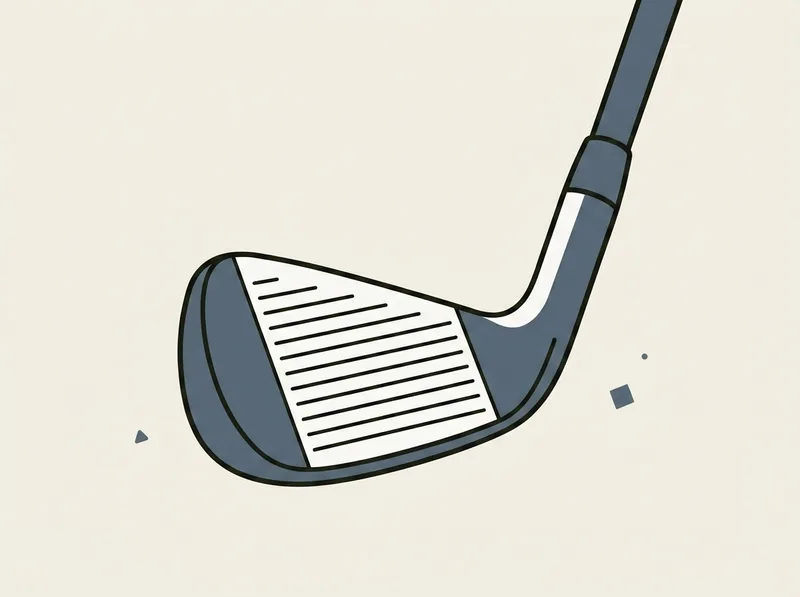 Around £850 to £940 for six irons, steel to graphite
TaylorMade Qi Max HL
- Set
- Seven-piece sets
- Lofts
- 3° weaker than Qi Max through the set
- Head
- Larger profile, thicker top line, more offset
- Shafts
- KBS Max 85 MT steel, REAX by KBS graphite in 55g, 65g and 75g
- Sole
- Wider than Qi Max, with a Speed Pocket
- Build
- Lighter components throughout
- The whole point of the HL build is weaker lofts, which is the correct direction for a slow swing and almost nobody offers it.
- Three graphite weights from 55g to 75g as stock, so the shaft can be matched to your speed without a custom order.
- TaylorMade dealer coverage is the widest of the four, so this is the set you can actually hit before buying and still buy in a year.
- TaylorMade describe the lofts relative to the Qi Max rather than publishing the set's own numbers, so comparing it against the others takes work.
- HL builds are frequently understocked in shops, so trying one often means ordering it.
- The larger profile and extra offset are a step past the standard Qi Max, and some golfers dislike both.
VerdictThe right buy for most beginners, because it does the two things that actually raise a ball flight, which are weaker lofts and a lighter shaft, and it is the one set here you can rely on still being stocked when you come to add to it. What you give up is the published loft table, and that is a smaller loss than it looks.
The stock shaft range is the other reason this set leads. Three graphite weights at 55g, 65g and 75g cover most swing speeds without a custom order, alongside a KBS Max 85 MT in steel. The honest gap is that TaylorMade describe the lofts as three degrees weaker than another set rather than publishing the numbers, which makes a direct comparison harder than it should be.
The unglamorous argument is distribution. A first set of irons is a set you will add to, regrip and possibly extend a year later, and TaylorMade have the widest dealer network of the four here. That matters more than a spec sheet when the club you want is a 6 iron to match the five you already own.
Callaway Quantum Max OS: the biggest head that still looks like an iron
The Callaway Quantum Max OS is Callaway's oversize build and the best documented set here. Loft, lie, length and offset are published for every club from the 4 iron to the sand wedge, which is unusual enough to be worth saying out loud. The 7 iron runs 29° of loft, 62.25° of lie and 4.80 mm of offset, and the sole geometry changes progressively through the set.
That offset figure is the headline. At 4.80 mm it is more than double the Cleveland, which means the leading edge sits noticeably behind the shaft and the face has slightly longer to square up before impact. For a golfer whose ball leaks right, that is real help built into the club rather than something to be worked on.
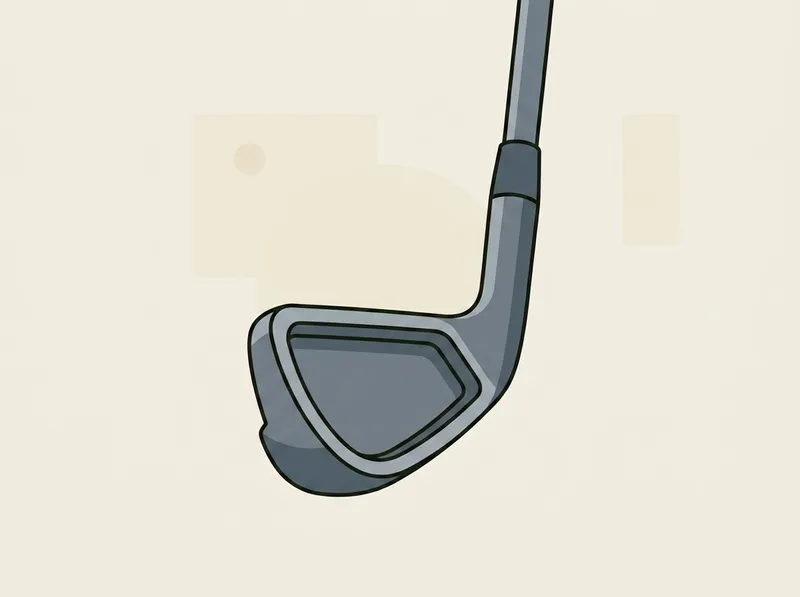 Around £835 to £900 for six irons, steel or graphite
Callaway Quantum Max OS
- Set
- 4 iron through to SW
- Lofts
- 4 iron 19°, 7 iron 29°, PW 42°
- Head
- Oversize, with a 360° undercut cavity
- Shafts
- True Temper Elevate 85 steel
- Offset
- 4.80 mm in the 7 iron
- Sole
- Progressive Tri-Sole through the set
- Callaway publish loft, lie, length and offset for every club in the set, which makes this the easiest of the four to compare honestly.
- The most offset here at 4.80 mm in the 7 iron, which is real help for a ball that leaks right.
- An oversize head that still reads as an iron rather than a hybrid at address.
- The most recent launch here, so the discount cycle has barely started and the same clubs will cost less in a year.
- Only a steel shaft is listed as stock, so graphite is a custom order and an extra step.
- A 4 iron in an oversize head is still a 4 iron. Most beginners should not carry one.
VerdictThe pick for a beginner who wants the forgiveness without the hybrid silhouette, and the best documented set on this page. What you are paying for is being new, so anyone patient will get the same clubs for meaningfully less in a year.
The catch is timing. This is the newest set on the page, so the discounting that exists is shallow and comes off a high recommended price. The identical clubs will cost meaningfully less in twelve months and will not have changed.
Ping G440 HL: the one to be fitted for
Ping publish more numbers than anyone else in golf, and the Ping G440 HL is the proof. Loft, lie, length, offset and bounce are given for every club: the 7 iron is 29° of loft, 62.0° of lie, 37 inches long, 0.175 inch of offset and 9° of bounce, and the pitching wedge is 42° with 13° of bounce. Stronger and weaker loft builds are a fitting choice rather than a special order.
The specification that matters most is the shaft. The stock ALTA Quick comes in at 38g and 41g, roughly half the weight of a standard steel iron shaft and lighter than anything else here. For a golfer short of clubhead speed, that single number does more than every other feature combined.
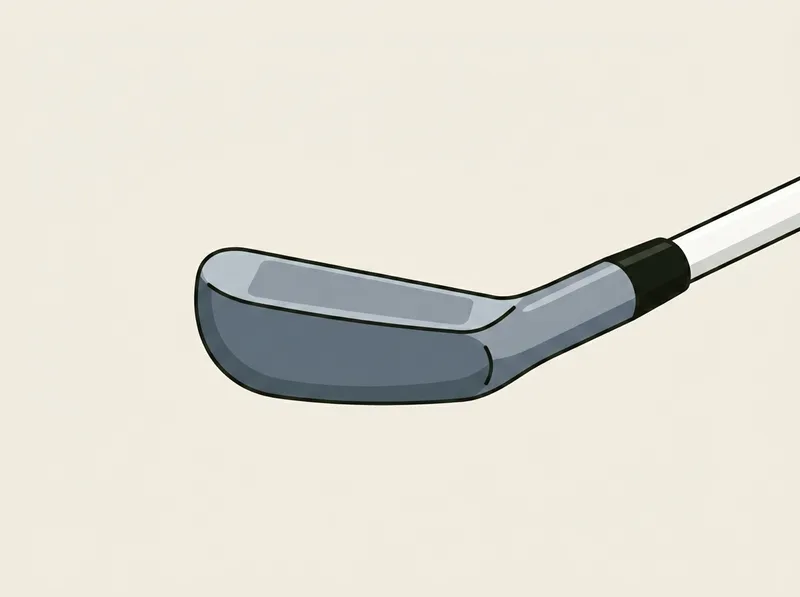 Around £1,040 for six irons in graphite
Ping G440 HL
- Set
- 4 to 9, PW, UW, 52° and 56°
- Lofts
- 4 iron 19°, 7 iron 29°, PW 42°
- Head
- High launch build with lighter toe and tip weights
- Shafts
- PING ALTA Quick graphite, 38g and 41g
- Offset
- 0.175 inch in the 7 iron
- Bounce
- 9° in the 7 iron, 13° in the PW
- A 38g stock graphite shaft, which is by a wide margin the lightest here and the easiest thing to swing.
- Ping publish loft, lie, length, offset and bounce for every club, plus stronger and weaker loft options as a fitting choice.
- The set runs all the way to a 56° wedge, so gapping into the short game is handled rather than left to you.
- Comfortably the most expensive of the four, and the assumption is that you are being fitted.
- Ping build to order, so lead times are longer than taking a set off a shelf.
- Almost certainly more club than a first-year golfer needs, and the money would do more elsewhere.
VerdictThe right buy for someone who has played a season, knows they are staying, and wants irons they will not replace for five years. For a genuine beginner it is a lot of money committed before your swing has settled into anything worth fitting.
What you are buying alongside it is a fitting. Ping build to order against a measured lie angle and length, which is genuinely valuable and genuinely premature if your swing is three months old and changing weekly.
Cleveland Halo XL Full-Face: the easiest to launch, while it lasts
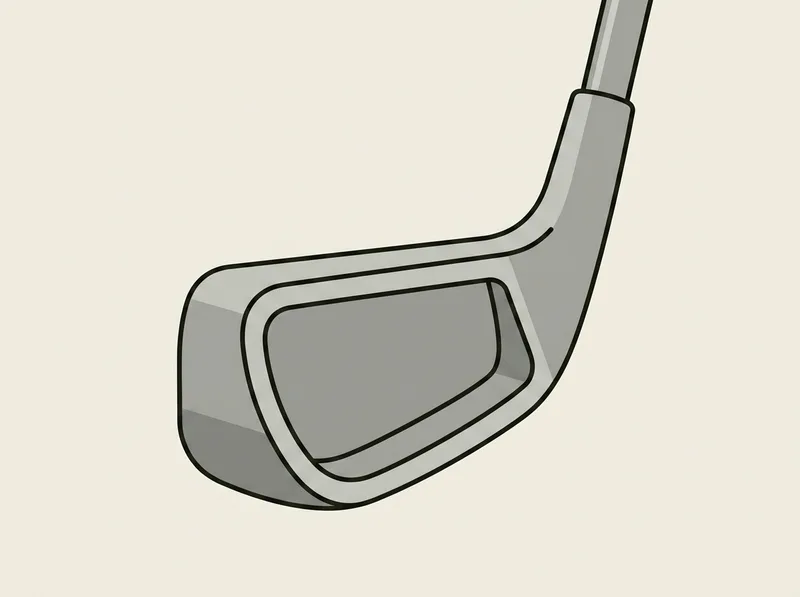
The Cleveland Halo XL Full-Face is barely an iron. The heads are hollow, deep and shaped much more like small hybrids than like traditional irons, and the whole design is aimed at one outcome: getting the ball into the air from a strike that does not deserve it. Cleveland publish the 7 iron at 29° with 2.0 mm of offset and the pitching wedge at 43°, the weakest pitching wedge of the three sets here that publish a full loft table.
Two details are worth more than the marketing. The grooves run the full width of the face rather than stopping short of the toe, which means a strike out toward the end of the club still grips the ball instead of sliding up the face. And there is an 8 gram counterweight at the top of the grip, which makes the club feel lighter through the takeaway without removing mass from where it does work.
 Around £400 to £590 for five to eight irons, steel or graphite
Cleveland Halo XL Full-Face
- Set
- 4 iron to PW, with GW and SW available
- Lofts
- 4 iron 20°, 7 iron 29°, PW 43°
- Head
- Hollow hybrid-iron with full-face grooves
- Shafts
- KBS Tour Lite steel 110g, UST Helium Nanocore 60 graphite 63g to 65g
- Offset
- 2.0 mm in the 7 iron
- Counterweight
- 8g Action Mass CB at the top of the grip
- The hollow hybrid-style body launches the ball more easily than anything else here, which is the single thing a beginner needs from an iron.
- Grooves run the full width of the face, so a strike out toward the toe still grips the ball.
- A 43 degree pitching wedge, the weakest of the three sets here that publish a full loft table, which sounds like a loss and is the reason the ball goes up.
- On run-out in the UK, which is why it sits here rather than higher. Cleveland's own European store lists it as not available, their European range no longer carries irons at all, and several UK retailers have dropped the category outright.
- What is left is clearance stock at a single retailer, the steel build has already sold out there, and a set you cannot add to or replace is a poor first set.
- The steel shaft is 110g, which is heavy for a slow swing, and the head is large enough that some golfers never get comfortable looking down at it.
VerdictThe best iron on this page for a beginner who genuinely cannot get the ball airborne, and the reason it is ranked fourth has nothing to do with how it performs. It is being cleared rather than sold, so the price is excellent and the club may not be buyable in a month. Worth taking if you find the build you need in stock, and not worth waiting for.
On performance alone this would be the pick, because nothing here launches a poor strike as easily. It is ranked fourth for a reason that has nothing to do with the club. Cleveland's own European store lists it as not available, their European range no longer carries irons at all, and the UK retailers that stocked it have mostly dropped the category. What survives is clearance stock in whichever builds a shop still holds, and the steel version has already gone at the one retailer still listing it.
That matters more for a first set than for any other purchase. Beginners add a club, replace a bent one and regrip a year in, and a set you cannot buy a matching 6 iron for is a set that fights you later. If the build you want is in stock at a price like this, take it. Do not plan around it.
Should you be buying irons on their own at all?
Probably not, and this is the part a gear page is not supposed to say.
A set of irons bought separately covers seven or eight clubs out of the fourteen you are allowed. It does nothing about a driver, a fairway wood, a putter or a bag, and most of the sets on this page cost more than a complete package set that includes all of them. If you have played fewer than about twenty rounds, a complete beginner set is the better purchase by a wide margin and it is not close.
Buying irons on their own makes sense in three situations. You already own a driver, woods and a putter you are happy with. You have outgrown a package set, which usually happens around a 20 handicap. Or you are tall or short enough to sit outside the range a standard set fits, in which case a fitted set solves a problem no amount of forgiveness will.
If your irons are fine and the rest of the bag is not, what each club is for is a better place to start than a shopping list.
Forgiveness, and what it actually means
Forgiveness is the most overused word in golf equipment and it does have a specific meaning. An iron is forgiving when a strike away from the middle of the face loses less ball speed and stays closer to the intended line than it would in a smaller head. That is achieved by pushing mass out to the edges of the head and down toward the sole.
That single figure should shape the whole purchase. If two thirds of your approach shots are finishing short, the iron that helps is the one that launches highest and carries furthest from an average strike, which points at weak lofts, a low centre of gravity and a light shaft. It does not point at the set with the strongest lofts and the biggest distance claim, which is what the shop will show you first.
Arccos data makes the same point from the other direction. A 20 handicapper hits the green half the time from 92 yards, a 15 handicapper from 110 yards and a scratch player from 165. A beginner is not missing greens from 160 yards because their 6 iron lacks technology.
Offset, sole width and the two numbers that do the work
Offset is the amount the leading edge of the face sits behind the hosel. More offset gives the hands a fraction longer to rotate the face closed before impact, and it moves the centre of gravity slightly further back, which raises launch. It is the single most useful specification for a beginner and almost nobody checks it.
The published figures on this page run from 2.0 mm in the Cleveland 7 iron to 4.80 mm in the Callaway. Ping quote in inches at 0.175, which is around 4.4 mm. That is not a rounding difference. It is more than double the offset between the least and the most, and it is visible at address.
Sole width does the other half of the job. A wide sole with the leading edge lifted slightly off the ground lets the club skid through turf rather than digging into it, which is why a beginner can hit slightly behind the ball with one of these and still move it forward.
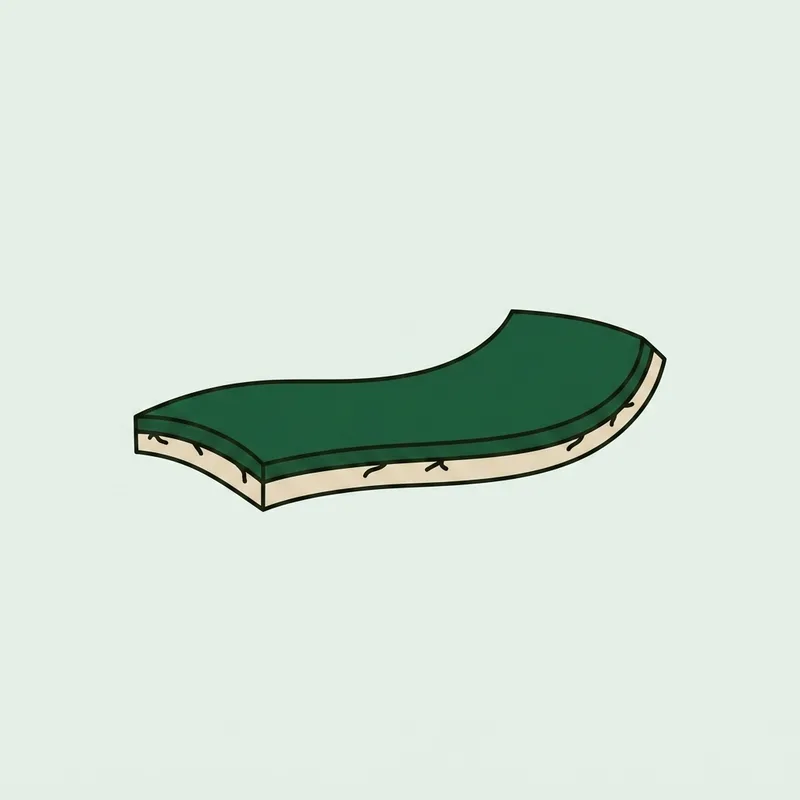
That is the mechanism behind fat shots hurting less with a game improvement iron. The club is not preventing the mistake. It is reducing the punishment, which is a fair description of what every specification on this page is doing.
Lofts are stronger than they look
Three of the four sets here publish a full loft table, and they land in almost exactly the same place. Manufacturers have strengthened iron lofts steadily to win distance comparisons on shop floors, and this is where that has arrived.
| Club | Cleveland Halo XL | Callaway Quantum Max OS | Ping G440 HL |
|---|---|---|---|
| 4 iron | 20° | 19° | 19° |
| 7 iron | 29° | 29° | 29° |
| 9 iron | 38° | 37° | 37° |
| Pitching wedge | 43° | 42° | 42° |
The consequence is not that you hit it further, because a 29° club is a 29° club whatever is stamped on the sole. The consequences are that the ball flies lower and stops less, and that the gap between a 42° pitching wedge and a 56° sand wedge is fourteen degrees, in a part of the bag where every other gap is four or five. That is the hole a gap wedge fills, and it is the reason Ping include a 47° UW in the set and Callaway list an AW. Standard iron lofts sets out how far the whole category has drifted.
The TaylorMade HL build is the counter-move, and it is the correct one for a beginner even though it makes the set look shorter on paper.
Set composition and shafts
None of these sets should be bought complete by a beginner. A 4 iron in a game improvement head is still around 19° to 20° of loft on a face you have to strike well, and Shot Scope's data on which clubs good iron players actually use is a reasonable check on whether it earns a place. A 5 hybrid does the same job at a fraction of the difficulty.
A sensible beginner iron set is 6, 7, 8, 9 and pitching wedge, with a hybrid replacing everything longer and a sand wedge bought separately. That is five irons, not eight, and it removes about a quarter of the cost along with the three hardest clubs in the bag.
Shaft weight is the last decision and the one worth most. Stock steel on this page runs from 85g to 110g and stock graphite from 38g to 75g, which is an enormous range. If your driver carries less than about 200 yards, take graphite and take the lighter end of it. The weight you are not accelerating is speed you get to keep.
What to spend, and the used option
Iron technology at the forgiving end moves slowly. A set from three or four years ago performs close to identically to this year's equivalent for a third to a half of the money, which makes irons one of the strongest used buys in golf.
| Budget | What it buys | Who it suits |
|---|---|---|
| £200 to £400 | A used game improvement set, three or four years old | A first set of irons on their own |
| £400 to £700 | Last season's model new, or the current value option | Playing fortnightly, staying in the game |
| £830 to £1,050 | This year's release, fitted, with graphite options | Already through a season and buying once |
The two things to check on a used set are the grooves and the grips. Grooves wear from the middle of the face outward and cost you spin on the short irons first, and grips harden with age at around £10 a club to replace. Buying used clubs covers the inspection properly.
Where to go from here
Once your misses become consistent rather than random, the category shifts and so does the advice. Game improvement irons covers the sets that trade a little forgiveness for a better look, and irons for mid handicappers picks that up for anyone in the low teens.
If you want to know why a blade exists at all, blades against cavity backs explains the trade. And if you would rather spend the money on your swing than your bag, how to hit irons is free. A fitting is the middle path, and what a fitting measures sets out what you get for the fee.
Key takeaways
- The TaylorMade Qi Max HL is the default pick: built three degrees weaker through the set, three stock graphite weights from 55g, and the widest dealer network here, so it is the set you can still buy from in a year.
- The Callaway Quantum Max OS is the most forgiving set that still looks like an iron, and the best documented on the page at 4.80 mm of offset in the 7 iron.
- The Ping G440 HL comes with a 38g graphite shaft, the lightest here, and assumes you are being fitted.
- The Cleveland Halo XL Full-Face launches a poor strike more easily than anything here and is on UK run-out, so it is ranked fourth on availability rather than on performance.
- Most beginners should not buy irons separately at all. A complete set covers fourteen clubs for less than most of the sets here.
- Two thirds of a high handicapper's approach shots finish short of the green, so launch and carry matter far more than the distance claim on the box.
- Offset varies by more than double across these four and is the specification that most directly helps a ball that leaks right.
- Buy five or six irons rather than eight, and put the saving into a lighter shaft.
Common questions
What are the best irons for a beginner?
For most people the TaylorMade Qi Max HL, because weaker lofts and a light graphite shaft are the two things that actually get a beginner's ball into the air, and it is the easiest of these to buy and add to. If you would rather have every specification published, the Callaway Quantum Max OS gives you that and carries the most offset here.
Should a beginner buy irons on their own?
Usually not. A set of irons covers seven or eight clubs and usually costs more than a complete package set that includes a driver, woods, a putter and a bag. Buying irons separately makes sense once you have outgrown a package set, already own the rest of the bag, or need a fitted length that no standard set offers.
How much should a beginner spend on irons?
Between £200 and £400 for a used set three or four years old, or £400 to £700 for last season's model new. Above that you are buying a current release and a fitting appointment, both of which are worth more once your swing has settled.
Which irons does a beginner actually need?
Six, seven, eight, nine and pitching wedge, with a hybrid instead of the 4 and 5 irons and a sand wedge bought separately. Long irons carry around 19° to 22° of loft on a small face and are the hardest clubs in golf to strike, which is why they sit in bags unused.
Are game improvement irons better for beginners?
Yes, unambiguously. Wide soles, deep cavities, low centres of gravity and generous offset all reduce the punishment for a poor strike. There is no argument in golf teaching about this. The only real decision is how far into the category to go, which is a question about how the head looks to you at address.
What is offset on a golf iron and does it matter?
Offset is how far the leading edge of the face sits behind the hosel. It gives the hands slightly longer to square the face and raises launch a little, so it helps a ball that starts or curves right for a right-hander. Published figures on this page run from 2.0 mm to 4.80 mm in the 7 iron, which is a visible difference at address.
Should beginners use steel or graphite iron shafts?
Graphite for most beginners. Stock graphite here runs from 38g to 75g against 85g to 110g for steel, and that weight has to be accelerated by you. If your driver carries under about 200 yards, graphite is not a luxury but the specification that makes the set work.
Why are modern iron lofts so strong?
Because distance sells and shops compare 7 irons. Three of the four sets here have a 29° 7 iron, where the traditional figure was around 34°. It does not make you longer in any meaningful sense, since a 29° club is a 29° club. What it does is lower the flight, reduce stopping power and open a large gap between the pitching wedge and the sand wedge.
Do beginners need to be fitted for irons?
A full fitting is premature in the first year, because your swing will change substantially. A ten minute lie angle check on a lie board is worth doing at any stage and most shops will do it free or against a purchase. Get fitted properly once your ball striking has become repeatable.
Are used irons a good idea for a beginner?
Yes, and irons are the strongest used buy in golf. Forgiving iron heads have barely changed in four years, so a used set performs close to identically for a third to a half of the price. Check the grooves for wear from the centre of the face outward, and budget around £10 a club if the grips have gone hard.
How we put this together
- Published manufacturer specifications for each set, taken from the maker's own listing rather than a retailer's summary.
- What a beginner's iron actually has to do: launch the ball from a poor strike, survive hitting the ground first, and not punish a miss toward the toe.
- The four specifications that decide that, which are loft, offset, sole width and shaft weight, compared as published rather than as described in marketing copy.
- Shot Scope and Arccos amateur datasets on greens in regulation and approach distance, because they show what an iron is realistically being asked to do at this level.
- The case against buying irons separately at all, measured against what a complete set costs and covers.
On this page
- The four, compared
- TaylorMade Qi Max HL: the lofts nobody else will give you
- Callaway Quantum Max OS: the biggest head that still looks like an iron
- Ping G440 HL: the one to be fitted for
- Cleveland Halo XL Full-Face: the easiest to launch, while it lasts
- Should you be buying irons on their own at all?
- Forgiveness, and what it actually means
- Offset, sole width and the two numbers that do the work
- Lofts are stronger than they look
- Set composition and shafts
- What to spend, and the used option
- Where to go from here
- How we put this together
Tom Ashworth
Tom Ashworth is a PGA Professional who has taught golf since 2012, working mainly with beginners and mid-handicappers at club level in Surrey. He reviews the instruction guides on Learn Golf for technical accuracy before they publish.
Most of his teaching is with players in their first three years of the game, and most arrive having been told too much: six swing thoughts collected from videos, half of them contradicting each other. His approach is to check the grip and the alignment before touching the swing, on the basis that most bad ball flight is decided at address.