The good shot is the problem. It arrives often enough to convince you the swing is fine and rare enough that you cannot repeat it, so you spend every round chasing a feeling that came from something you never identified. Inconsistent striking has a pattern, and the pattern is readable. This guide covers how to find yours and what actually stabilises it.
Consistency is a low point, not a swing
The club travels on an arc. It comes down, reaches a lowest point, and goes back up. Where that lowest point sits relative to the ball decides your strike, and it decides it far more than anything happening at the top of the backswing.
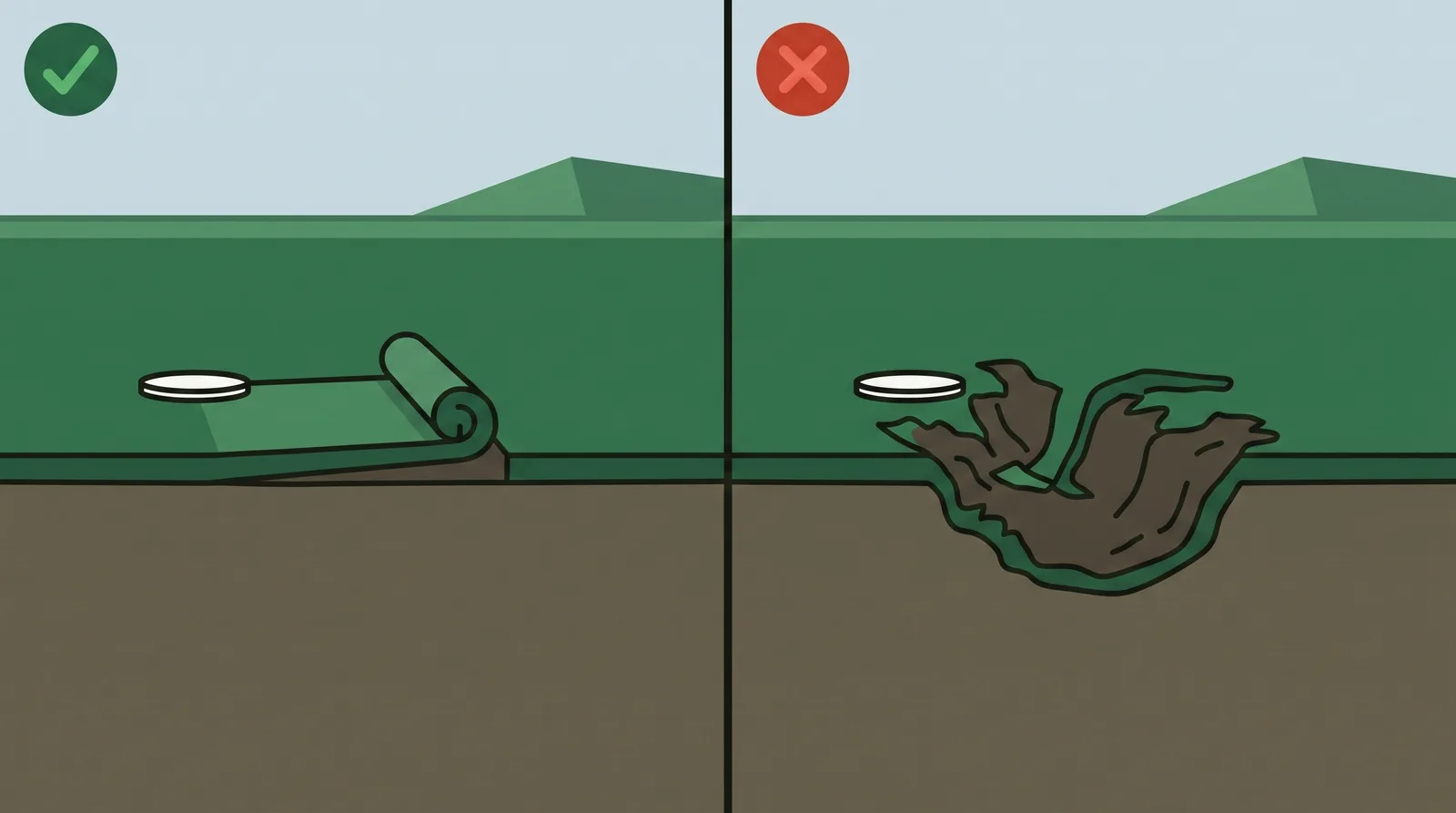
For an iron off the turf, the low point should sit a few inches ahead of the ball. Ball first, turf second, divot starting after where the ball was. Move that low point backward and you hit the ground first. Move it forward and you catch the ball on the way up, thin.
The four strikes and what each one tells you
Every mishit sits somewhere on two axes: too early or too late, and too close to the heel or too far toward the toe. Read them together and the diagnosis is nearly automatic.
| What you see | Where the club hit | The low point was | Usual cause |
|---|---|---|---|
| Fat, heavy, short | Ground before the ball | Behind the ball | Weight hanging on the trail foot |
| Thin, low, stingy | Top half of the ball | Ahead of the ball | Standing up through impact |
| Toe strike, weak and right | Outer end of the face | Too far from you | Body moving away, arms shortening |
| Heel or shank | Inner end of the face | Too close to you | Body moving toward the ball |
The two on the left of that table are the same fault with the low point on either side of correct, which is why golfers who fix fat shots often start thinning it. Our separate guides on fat shots and topping the ball cover each extreme, and the heel version has its own guide under fixing a shank.
Why your good shots are hiding the pattern
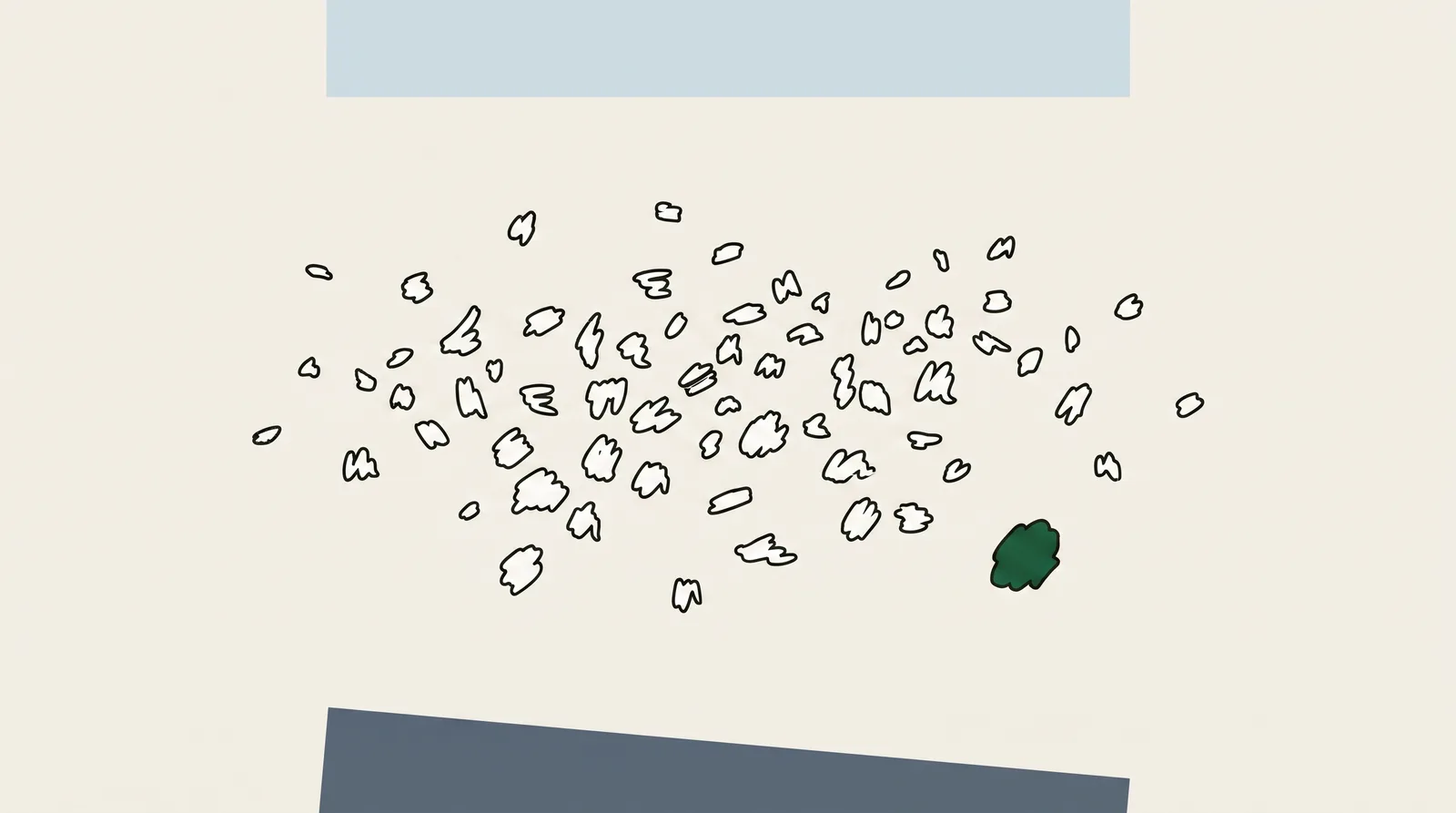
The pure shot is memorable, so it dominates your sense of how you are playing, and it makes any pattern look random. It is not random. It is a distribution, and you can only see it by counting.
This matters because it changes what you are trying to fix. You are not trying to make every shot the good one. You are trying to make the bad one less bad, which is a much more achievable target and drops more shots.
Find your pattern before changing anything
Twenty shots, one club, written down. Do not skip this and do not do it from memory.
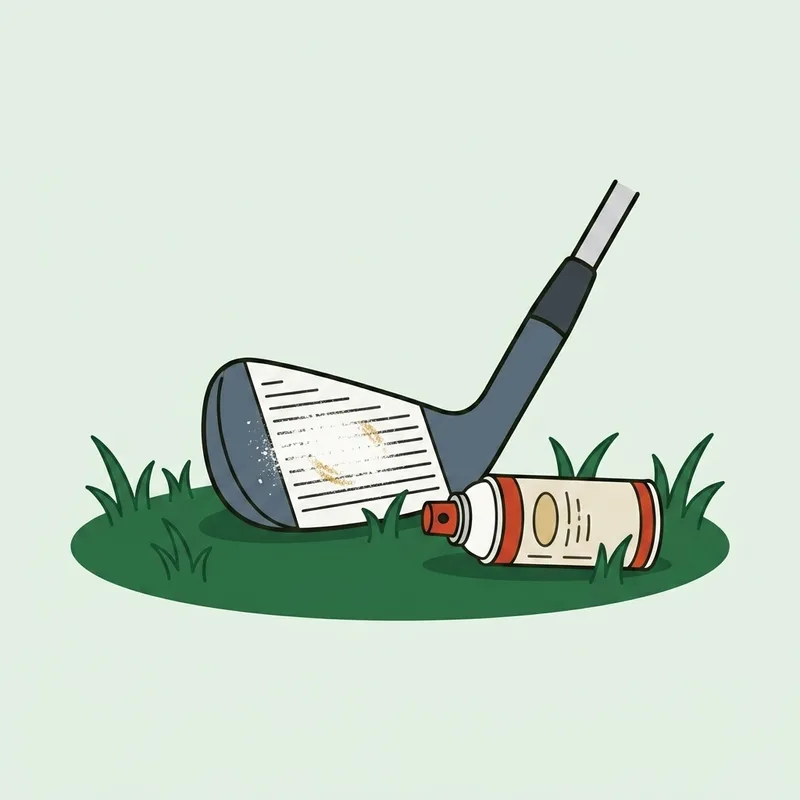
- Take a 7 iron and spray the face with foot powder, or use a strip of impact tape.
- Hit 20 shots at a normal target, at your normal pace, no rehearsal swings.
- After every shot write one letter: F for fat, T for thin, H for heel, O for toe, C for centre.
- Reapply the powder every four or five shots so the marks stay readable.
- Count them at the end.
Twelve or more centre strikes out of 20 means your striking is fine and your problem is somewhere else, most likely aim or club selection. A cluster of eight or more in any single category is your fault, and it is the only one to work on.
A spread across three or four categories with no cluster usually means setup is changing between shots rather than the swing. Check ball position and distance from the ball first, since both drift and both move the low point.
The three things that actually move a low point
Almost every low point problem traces back to one of these, in this order of frequency.
Weight at impact. If your weight is still on the trail foot when the club arrives, the arc bottoms out behind the ball. At impact roughly 80% of your weight should be into the lead side. Not at the finish, at impact.
Chest position. The low point sits roughly under the middle of your chest. If your chest hangs back, the low point goes back with it. If you stand up out of your posture through impact, the whole arc lifts and you thin it.
Ball position. The arc does not move but the ball does, and the effect is identical. A ball creeping backward in the stance produces thin shots. Creeping forward produces fat ones. Our golf ball position guide has the reference points, and it is worth resetting them every session.
The drills, in order
Two weeks on the first before adding the second. The point is to make one change stick, not to collect drills.
The drill order matters. Weight and low point first, face contact second. Working on where the ball sits on the face while the arc is still moving around gives you two variables changing at once and no way to tell which one improved.
Practice that builds consistency, and practice that does not
Hitting 60 balls with the same club at the same target, one after another, produces a feeling of consistency that does not survive the first tee. The swing gets grooved, the memory of the last shot does the work, and none of it transfers.
What transfers is changing club or target every few shots, and taking a full routine before each one. It feels worse on the range and it holds up better on the course. Our driving range routine guide has a session structure, and golf drills covers the wider set.
Give any change three weeks before you judge it. A change that improves your strike immediately is usually a compensation, and compensations expire.
Once contact is repeatable, the ball starts behaving predictably enough that distance control becomes possible, which is where the golf club distance chart starts being useful rather than aspirational.
Key takeaways
- Inconsistent striking is a low point problem, not a broken swing. One variable is moving, not five.
- For an iron, the low point sits a few inches ahead of the ball. Ball first, then turf.
- Fat and thin are the same fault with the low point on opposite sides of correct.
- Count 20 shots with foot spray on the face before changing anything. The pattern is the diagnosis.
- Weight into the lead side at impact, not at the finish, is the most common single fix.
- Even a 10 handicap hits only about a third of greens. The goal is a better worst shot, not a repeated best one.
- Block practice feels consistent and does not transfer. Change club or target every few shots.
Common questions
Why is my golf swing so inconsistent?
Almost always because the low point of your swing arc moves between shots, so the club sometimes reaches the ball before bottoming out and sometimes after. That produces fat shots, thin shots and everything between from what feels like the same swing. Stabilise the low point and the rest tightens up on its own.
Why do I hit one good shot then three bad ones?
The good shot is the one where the low point happened to land in the right place. It feels like proof the swing works, which stops you looking for the pattern. Count 20 shots and write down each strike type, and the distribution will show you a fault that a highlight memory hides.
How do I know if I am hitting it fat or thin?
Look at the ground and the ball flight together. Fat means the club took turf before the ball, the shot flew short and felt heavy. Thin means contact was on the ball's upper half, the flight was low and the hands stung. If there is turf missing before where the ball sat, it is fat.
Should I take a divot with my irons?
Yes, with mid and short irons off the turf. It should be a shallow strip that begins after the ball, not a deep gouge that begins before it. Long irons and hybrids take much less, and off a range mat you are looking for where the club brushes rather than a divot at all.
Where should my weight be at impact?
Roughly 80% into the lead side. This is the point golfers miss most often, because they think about weight at the finish rather than at impact. Weight hanging on the trail foot at contact moves the low point behind the ball and produces fat shots almost every time.
Is inconsistency a grip problem?
Rarely, when the fault is strike quality. Grip governs the clubface, which governs direction and curve. If your bad shots are inconsistent in contact quality rather than direction, look at low point and weight first. If they are inconsistent in curve, then grip is worth checking.
How long does it take to strike the ball consistently?
Expect about three weeks of two or three focused sessions before a low point change holds under normal swing speed, and a full season before it holds under pressure. Anything that improves inside a single session is usually a compensation rather than a fix.
Why am I consistent on the range and inconsistent on the course?
Because range practice is usually blocked: same club, same target, shot after shot, with the previous swing still fresh. That produces reliability that does not survive one shot with a different club after a five minute walk. Change club and target every few balls and take a full routine each time.
Do I need lessons to fix inconsistent striking?
Not necessarily, since the diagnosis in this guide is something you can do alone with foot spray and a phone. A coach is worth it when you know your pattern and cannot change it, because at that point you are paying for a specific fix rather than a general assessment.
Can the wrong clubs cause inconsistent contact?
Lie angle can, genuinely. An iron too upright for you drags contact toward the heel and pushes the face left, and too flat does the reverse. Shaft weight and length matter less than most golfers think. Get lie angle checked before spending on anything else.
Should I slow my swing down to strike it better?
For practice, yes. Working at around 70 to 80% effort lets you feel where the club bottoms out, which is impossible at full speed. On the course, swing at your normal pace but pick a target you can reach comfortably. Reaching for distance is what moves the low point in the first place.
On this page

Tom Ashworth
Tom Ashworth is a PGA Professional who has taught golf since 2012, working mainly with beginners and mid-handicappers at club level in Surrey. He reviews the instruction guides on Learn Golf for technical accuracy before they publish.
Most of his teaching is with players in their first three years of the game, and most arrive having been told too much: six swing thoughts collected from videos, half of them contradicting each other. His approach is to check the grip and the alignment before touching the swing, on the basis that most bad ball flight is decided at address.