Best Drivers for High Handicappers: Four Forgiving Picks
If you shoot in the high 90s, the driver decision is not about distance. It is about how far offline the bad ones go, and that is a specification you can actually shop for.
Some links here earn us a commission at no extra cost to you. It never changes what we recommend or the order we rank it. How this works.

Shooting in the high 90s is not a distance problem. It is a dispersion problem, and the tee shot is where dispersion turns into an unplayable lie, a reload or a hole nobody wants to write down. The driver worth buying at this level is the one that keeps the bad ones inside the property, and that is a specification you can shop for.
The four, compared
Three of these four are built to curve the ball left. The fourth is deliberately neutral, and it is on the list because a lot of golfers who shoot 100 are not slicing at all, they are simply missing the middle of the face by half an inch in random directions.
| Pick | Best for | Lofts | Shot bias | Adjustment | Stock shaft | Price |
|---|---|---|---|---|---|---|
| Ping G440 SFT | The only draw bias here with a published number attached | 9°, 10.5° | 23g back weight, Draw and Draw+ positions | ±1.5° loft, lie up to 3° flatter | PING ALTA CB Blue, 49g in soft regular | Around £529 to £575 |
| Cobra OPTM MAX-D | The most upright head, and the lightest shaft options | 10.5°, 12° | Draw bias head, 61° upright lie | FutureFit33 hosel, 33 loft and lie settings | MCA Kai'li Dark Waves Red 50, 53.5g in R and 51.5g in A | Around £479 at UK retail |
| TaylorMade Qi4D Max | A miss that goes both ways rather than one way | 9°, 10.5°, 12° | Neutral. Two moveable weights, 13g and 4g | 4° loft sleeve plus weight positions | TaylorMade REAX | Around £525 to £550 |
| Cobra Baffler Offset | Slice correction at not much over half the price | 10.5°, 11.5° | Offset hosel plus a fixed heel weight | None. Fixed hosel | Cobra Ultralite 50g, regular or Lite flex | Around £299 at UK retail |
Every one of these heads is 460cc, and every one of them is close to the legal ceiling on stability. That ceiling is worth knowing about before you read another forgiveness claim.
Ping G440 SFT: the only bias with a number on it
The Ping G440 SFT carries a 23 gram adjustable back weight with two positions, and Ping publish what each one does: Draw produces a 13 yard draw bias and Draw+ produces 20 yards. Nobody else in this category puts a figure on it, and the figure is the useful part, because it tells you that a driver is worth about one club width of correction rather than a transformation.
The rest of the build is aimed at the same golfer. The stock ALTA CB Blue runs 49g in soft regular, which is the lightest stock shaft on this page, the head is 199g, and the club is built at 46 inches. Ping have also moved mass out of the hosel to drop the centre of gravity, which raises launch on a strike low on the face, and a strike low on the face is what a high handicapper's average drive actually is.
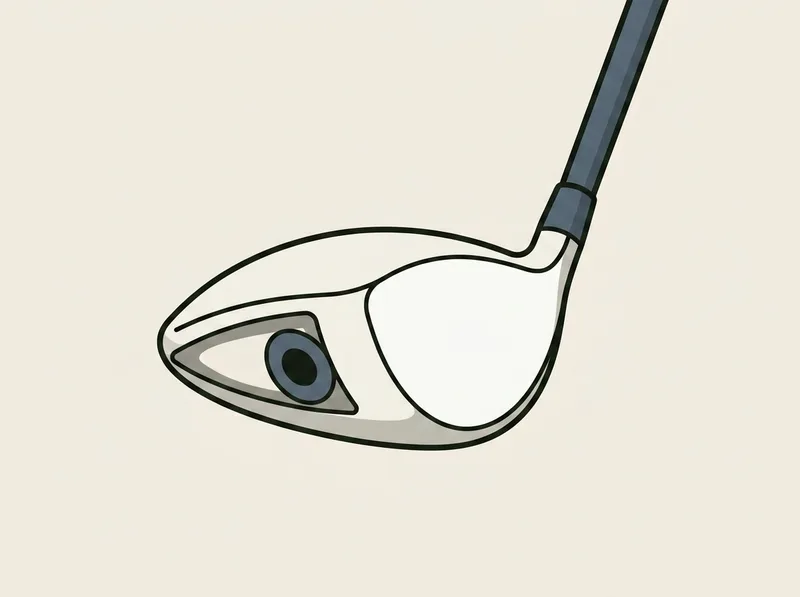 Around £529 to £575
Ping G440 SFT
- Lofts
- 9°, 10.5°
- Shot bias
- 23g back weight, Draw and Draw+ positions
- Adjustment
- ±1.5° loft, lie up to 3° flatter
- Stock shaft
- PING ALTA CB Blue, 49g in soft regular
- Head
- 460cc, 199g head weight, 58.5° lie
- Length
- 46 inches, D0 swing weight
- Ping publish the bias in yards: 13 yards of draw in the standard position and 20 yards in Draw+, which nobody else quantifies.
- The bias is adjustable rather than fixed, so it can be dialled back as the swing improves.
- A 49g soft regular stock shaft is the lightest here and the specification that most often unlocks speed.
- No 12° head, so the highest launch option in the family sits in a different model.
- 46 inches is long, and a long club is harder to strike near the middle of the face.
- The weight tunes shot shape only. It does nothing for a strike that wanders across the face.
VerdictThe pick for a high handicapper whose miss is consistently right, because it is the only club here that tells you how much correction you are buying. If your misses go both ways rather than one way, the TaylorMade below is the better shape.
The gap in the range is loft. The SFT stops at 10.5°, so a golfer who both slices and launches the ball too low has to look at the high launch build or at a different model. That is a real limitation and it is the reason the Cobra below exists on this list.
Cobra OPTM MAX-D: the most upright head here
Cobra's OPTM MAX-D attacks a right miss from a different direction. Rather than concentrate mass in the heel, it sets the head at a 61° lie, which is two degrees more upright than the Ping and three more than a neutral head. An upright lie presents the face left of where a flatter lie would, and it does so without any weight being moved anywhere.
The lofts are 10.5° and 12°, both adjustable across a 4° range through the FutureFit33 hosel, and the shaft options are where this club separates itself. The stock MCA Kai'li Dark Waves Red 50 runs 53.5 grams in regular and 51.5 in A flex, and the MCA Vanquish 40 is offered as an alternative at 40 grams, which is lighter than anything else on this page.
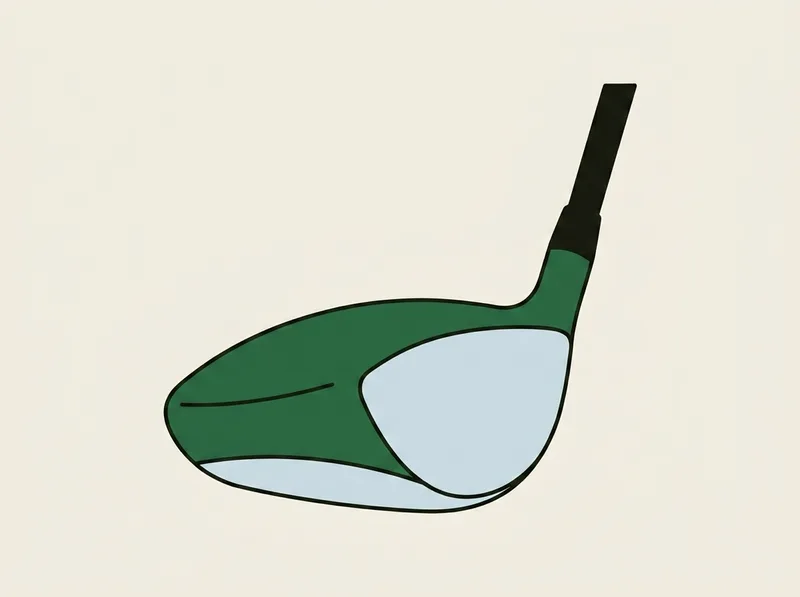 Around £479 at UK retail
Cobra OPTM MAX-D
- Lofts
- 10.5°, 12°
- Shot bias
- Draw bias head, 61° upright lie
- Adjustment
- FutureFit33 hosel, 33 loft and lie settings
- Stock shaft
- MCA Kai'li Dark Waves Red 50, 53.5g in R and 51.5g in A
- Head
- 460cc, 45.5 inches
- Flexes
- S, R and A
- A 61° lie is the most upright head here by at least two degrees, and lie angle fights a right miss without touching the swing.
- An A flex stock build at 51.5g, with a 40g MCA Vanquish offered as a no-cost alternative for slower swings.
- The hosel covers 4° of loft, so a 12° head can be set as low as 10°.
- Thirty three settings is more resolution than most golfers will ever use, and more ways to end up in the wrong one.
- No 9° option, so faster swings are pushed to a different model in the family.
- The draw bias is fixed in the head and cannot be turned down as you improve.
VerdictThe right buy if your right miss comes with a low, weak ball flight, because the 12° head and the 40g shaft attack both problems at once. The fixed bias is the trade: this club will still be curving the ball left in two years whether you want it to or not.
The trade is permanence. The Ping's bias can be wound back by moving a weight, and this one cannot, because it is built into the geometry of the head. If your slice improves, the club will keep correcting for it.
TaylorMade Qi4D Max: neutral, and deliberately so
The TaylorMade Qi4D Max is the first TaylorMade Max head with adjustable weight, using two Trajectory Adjustment System weights of 13g and 4g plus a 4° loft sleeve. Heavy weight forward buys speed, heavy weight back buys stability, and the sleeve moves loft, lie and face angle together. Lofts run 9°, 10.5° and 12° at 45.75 inches with a D0 swing weight.
What it does not do is curve the ball left, and that is the point of including it. A large number of golfers shooting 100 do not slice. They hit a reasonable drive, then a heel strike, then a toe strike, then something off the top of the crown, and the average sits nowhere in particular.
 Around £525 to £550
TaylorMade Qi4D Max
- Lofts
- 9°, 10.5°, 12°
- Shot bias
- Neutral. Two moveable weights, 13g and 4g
- Adjustment
- 4° loft sleeve plus weight positions
- Stock shaft
- TaylorMade REAX
- Head
- 45.75 inches, 58° to 62° lie range
- Swing weight
- D0
- The first TaylorMade Max head with moveable weight, so stability and speed can be traded against each other.
- The widest loft range here, 9° to 12°, on a head built for forgiveness rather than for speed.
- A neutral head is the right answer for a golfer whose bad shots go in both directions.
- No draw bias at all, so a settled slice gets no help from the head.
- TaylorMade publish the REAX shaft by name rather than by weight, so the stock build weight is not obvious.
- The weights need a wrench and a reason, and most owners will never move them.
VerdictThe pick for a high handicapper whose scorecard is ruined by strike quality rather than by curve. If you slice every drive, this head does nothing about it and one of the two above will serve you better.
Cobra Baffler Offset: the cheap version of the same idea
The Baffler Offset applies its correction with shape rather than settings. The hosel is offset, which sets the face behind the shaft and buys a fraction of a second more time to square it, and a fixed weight sits in the heel of the head. There is no sleeve, no moveable weight and no wrench. It comes in 10.5° and 11.5° at 46 inches on a 58° lie, with the Cobra Ultralite shaft at 50 grams in regular or Lite flex.
For a golfer losing three balls a round to the right, that combination does the job for a little over half what the Ping costs. The caveat is the same one that applies to every club in this category, and it is worth repeating: this is a lot of correction built permanently into a head, and a mild slice met with this much help becomes a hook. The other thing to note is the lie. At 58° it is a neutral angle, so unlike the Cobra above it is not stacking upright lie on top of the offset, which makes it the gentler of the two despite looking like the more aggressive one at address.
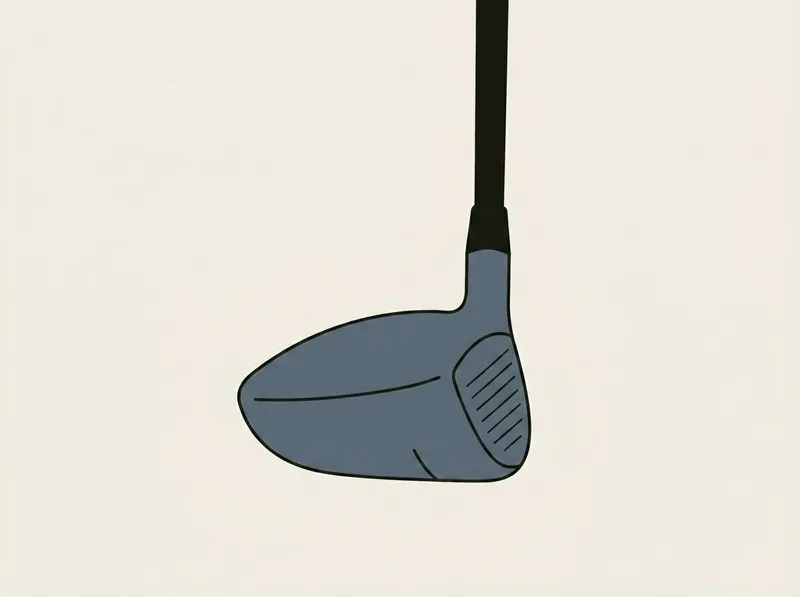 Around £299 at UK retail
Cobra Baffler Offset
- Lofts
- 10.5°, 11.5°
- Shot bias
- Offset hosel plus a fixed heel weight
- Adjustment
- None. Fixed hosel
- Stock shaft
- Cobra Ultralite 50g, regular or Lite flex
- Head
- 58° lie, 46 inches, D1.5
- Flexes
- Regular and Lite
- Offset and a fixed heel weight working together, and neither can be switched off by accident or left in the wrong position.
- Costs a little over half what the Ping does while giving up less correction than that gap suggests.
- A 50 gram Ultralite shaft with a Lite flex option, which suits the slow, wide swing this club is built for.
- Nothing adjusts, so the bias is permanent and so is the loft.
- A 58° lie, so unlike the Cobra and the old offset heads it does not add any upright help on top of the offset.
- Stops at 11.5°, and at 46 inches it is tied for the longest club here, which works against strike quality.
VerdictThe sensible buy if a slice is costing you three balls a round and you would rather not spend £550 on the problem. It applies its correction through geometry rather than adjustment, so there is nothing to set and nothing to get wrong. If your slice is mild, this is still a lot of help and you will start missing left.
What forgiveness actually means, and why 10,000 is not what it sounds like
Every driver in this category is sold on forgiveness, and the number usually quoted is moment of inertia. It is worth understanding what is and is not capped.
The R&A Rules of Equipment limit the moment of inertia around the vertical axis through the head's centre of gravity to 5,900 g cm² plus a 100 g cm² test tolerance. Every legal driver sold today sits at or very close to that number, because there is no advantage in stopping short of it. When a manufacturer advertises 10,000, they are adding a second axis to the regulated one, which is a real measurement but not the one the rules restrict and not one you can use to rank two conforming heads against each other.
Distance still beats accuracy, even at your handicap
The instinct at 100 is to club down off the tee, hit a 3 wood, and take the driver out of play. The data does not support it as a general policy.
That is the argument for buying a driver you can hit rather than avoiding the club. Two percentage points of accuracy is not worth 30 yards, and the rough is a much smaller penalty than it feels like. What is not covered by that data is out of bounds and lost balls, which is where the real cost sits, and that is exactly what the bias and lie specifications above are for.
If the tee shot is what turns a bogey round into a blow-up round, the fix is partly equipment and largely decision making. Avoiding big numbers works through the choices that cost the most strokes, and breaking 90 treats the same problem from the scoring end.
Loft, and why the standard advice inverts here
The usual line is that high handicappers need more loft. That is true on average and it is worth checking rather than assuming, because at this level the reason for a low ball flight is often a steep attack angle rather than a low lofted head.
| What your drives do | Likely cause | What to change |
|---|---|---|
| Low, and falling fast | Too little loft or a steep strike | Add loft, then tee it higher |
| High, short, and ballooning | Too much spin from a steep strike | Fix the strike, not the loft |
| Straight then curving hard right | Face open to path | Bias and lie help, path is the cause |
| Random left and right | Strike wandering across the face | Shorter shaft, neutral head |
The right way through that table is to work out which row you are in before you shop. Which driver loft to play sets out how attack angle changes the answer, and it changes it more than swing speed does.
Shaft length is the cheapest change you have
Every club here is built at 45.5 inches or longer, and the Ping and the Baffler are both 46. Longer shafts raise potential clubhead speed and lower the odds of finding the middle of the face, and for a golfer whose central problem is strike quality, that is a bad trade.
Trimming half an inch off a driver costs very little at any club repair bench. It reduces swing weight slightly, which most people compensate for with a heavier grip or a small tip weight, and it is the single most reliable way to tighten dispersion without changing anything about your swing. Which shaft flex you need covers the weight and flex side of the same decision.
Expectations matter too, because a lot of driver purchases at this level are chasing a number that was never realistic. The honest figures by handicap are lower and more reassuring than most golfers fear, and a driver that finds the short grass at 210 yards outscores one that reaches 240 and the trees.
Which of these pages you want
This page assumes you have played long enough to have a settled miss and that you shoot in the high 90s or worse. Three neighbouring pages answer differently.
- If you have played fewer than about twenty rounds, you do not have a settled miss yet and a draw-biased head is the wrong first purchase. Drivers for beginners explains why.
- If you are over about sixty, total club weight and flex come before the head, and this page barely touches them. Drivers for senior swings starts there.
- If your driver speed is under about 85 mph, loft and build weight change the ball flight more than any bias can. Slow swing speed drivers works through it.
- For the fitting logic without a segment attached, the main driver roundup covers it.
None of these clubs fixes a slice. They reduce it by a measurable and modest amount while the cause sits untouched, and the cause is the relationship between face and path. Fixing a slice is the work that actually moves the number, and a strike that wanders is treated in inconsistent ball striking.
Key takeaways
- The Ping G440 SFT is the pick because it publishes the correction in yards: 13 yards of draw in the standard weight position, 20 in Draw+.
- The Cobra OPTM MAX-D uses a 61° upright lie rather than heel mass, and pairs a 12° head with a 40g shaft.
- The TaylorMade Qi4D Max is deliberately neutral, and it is the right buy if your misses go both ways rather than one way.
- The Cobra Baffler Offset pairs an offset hosel with a fixed heel weight for a little over half the money, and nothing on it can be set wrong.
- Advertised 10,000 MOI figures add two axes together. The regulated one is capped at 5,900 g cm² and every legal driver sits close to it.
- Distance still beats accuracy at high handicaps. Shot Scope put fairway rates at 47% with a driver and 45% with a 3 hybrid.
- Trimming half an inch off the shaft is the cheapest dispersion improvement available and none of these clubs come short enough as standard.
Common questions
What is the most forgiving driver for a high handicapper?
For a settled slice, the Ping G440 SFT, because its 23 gram back weight is the only bias in the category with a published figure attached: 13 yards of draw in the standard position and 20 in Draw+. For a strike that wanders across the face rather than a consistent curve, the neutral TaylorMade Qi4D Max is the better shape.
Will a draw-biased driver fix my slice?
No. It reduces the curve by a measurable amount, which Ping put at 13 to 20 yards, and leaves the cause untouched. A slice comes from the face being open relative to the swing path, and moving mass into the heel nudges that relationship rather than resetting it.
What does 10,000 MOI mean on a driver?
It is the sum of two moment of inertia measurements rather than the single regulated one. The Rules of Equipment cap the vertical axis figure at 5,900 g cm² plus tolerance, and every conforming driver sits close to that limit, so the number cannot be used to rank two legal heads.
What loft should a high handicapper use?
Usually 10.5° or 12°, but check your ball flight first. If your drives are low and dropping fast, add loft. If they balloon and fall short, the problem is spin from a steep strike and more loft makes it worse. Attack angle changes the answer more than swing speed does.
Should high handicappers hit a 3 wood off the tee instead?
Not as a policy. Shot Scope's data has driver fairway rates at 47% against 45% for a 3 hybrid, which is almost no gain, while the distance loss is substantial. The exception is a specific hole where the driver reaches trouble and the 3 wood does not.
How much does a good high handicap driver cost?
Between about £300 and £580. The Cobra Baffler Offset sits at the bottom and does most of what the Ping does for a golfer with a slow, wide swing. Above roughly £600 you are buying premium shaft options rather than a more forgiving head.
Does an upright lie angle help a slice?
Yes, modestly. A more upright lie presents the face slightly left of where a flatter lie would, which reduces a right miss without any weight being moved. The Cobra OPTM MAX-D is 61°, against about 58° to 59° for the neutral heads on this page. It is worth knowing which lever a club is pulling: the Baffler corrects with offset and heel weight at a neutral 58° lie, while the MAX-D uses lie angle instead.
Is a shorter driver shaft worth it?
For a high handicapper, almost always. Length raises potential clubhead speed and lowers the odds of a centred strike, and at this level strike quality is worth more than speed. Half an inch off is cheap, reversible only by buying a new shaft, and usually tightens dispersion immediately.
Should I buy a new driver or take lessons?
Lessons, if you can only do one. A driver bought to cure a slice buys a few yards of correction. A lesson that changes the path changes the shot itself. The equipment case is strongest when the club you are using is genuinely wrong for you rather than when your swing is.
Why do I hit my irons fine and slice the driver?
Because the driver is the longest club with the flattest lie and the least loft, and it is the only one struck off a tee on the way up. All four make it easier to arrive with the face open relative to the path, and less loft means less of the gear effect that hides the same fault in an iron.
How often should a high handicapper replace a driver?
When it stops fitting rather than on a schedule. If your swing speed or your typical miss has changed noticeably, or the club is more than about ten years old, there is a real gain available. Replacing a modern, correctly specified driver with a newer one is worth very little.
How we put this together
- Published manufacturer specifications for each driver, taken from the maker's own listing rather than a retailer's summary, with unpublished figures recorded as unpublished.
- Where a maker quantifies a draw bias in yards, that figure is used and attributed. Where they only claim one, it is described as a claim.
- The R&A Rules of Equipment limit on moment of inertia, which is what makes most published forgiveness numbers less impressive than they sound.
- Shot Scope amateur datasets on driving accuracy and shots-to-finish from the fairway against the rough, which decide whether accuracy is worth paying for at all.
- TrackMan's published launch and club speed benchmarks by handicap, used to sanity check loft recommendations.
On this page
- The four, compared
- Ping G440 SFT: the only bias with a number on it
- Cobra OPTM MAX-D: the most upright head here
- TaylorMade Qi4D Max: neutral, and deliberately so
- Cobra Baffler Offset: the cheap version of the same idea
- What forgiveness actually means, and why 10,000 is not what it sounds like
- Distance still beats accuracy, even at your handicap
- Loft, and why the standard advice inverts here
- Shaft length is the cheapest change you have
- Which of these pages you want
- How we put this together
Tom Ashworth
Tom Ashworth is a PGA Professional who has taught golf since 2012, working mainly with beginners and mid-handicappers at club level in Surrey. He reviews the instruction guides on Learn Golf for technical accuracy before they publish.
Most of his teaching is with players in their first three years of the game, and most arrive having been told too much: six swing thoughts collected from videos, half of them contradicting each other. His approach is to check the grip and the alignment before touching the swing, on the basis that most bad ball flight is decided at address.