Best Drivers for Seniors: Weight and Flex Before the Head
Almost every senior driver guide starts with the head. That is the last decision, not the first. What changes with age is how much club weight you can accelerate, and that is a specification with a number on it.
Some links here earn us a commission at no extra cost to you. It never changes what we recommend or the order we rank it. How this works.
Senior driver guides almost always start with the head, which is the last thing that matters. What changes as a golfer gets older is not which crown looks best at address. It is how much total club weight can still be accelerated, how much wrist and grip comfort the club demands, and whether the shaft in it can be loaded at all.
The four, compared
Read this table from the right hand columns inward. Flex and length decide whether you can swing the club at all, stock shaft weight decides how much of your speed reaches the ball, and loft is the easy part.
| Pick | Best for | Lofts | Stock shaft | Flexes | Length | Price |
|---|---|---|---|---|---|---|
| XXIO 14 Driver | The lightest complete build any major maker publishes | 9.5°, 10.5°, 11.5° | XXIO MP1400 graphite, 36g in R2 and R | R2, R, SR, and S to custom order | 46 inches, D3 swing weight | Around £749 at UK retail |
| Callaway ELYTE | Most of the weight saving for around half the money | 9°, 10.5°, 12° | Mitsubishi Vanquish PL 40, 40g in R2, or Denali Charcoal 50 | R2, R, S and X depending on shaft | 45.75 inches | Around £379 to £569 |
| Ping G440 K HL | A light build without giving up head stability | 9°, 10.5°, 12° | PING ALTA Quick, 38g in 35 flex and 45g in 45 flex | 35 and 45, Ping's two lightest designations | 46 inches | Around £579 to £630 |
| Titleist GT1 | Buying light through a fitting rather than off a shelf | 9°, 10°, 12° | Multiple options, weights not published in launch material | Set at fitting rather than published as a stock list | Not published | Around £499 to £579 |
The head shapes here are all fine. Every one of them is 460cc and sitting at or near the legal stability ceiling, so if you find yourself comparing crowns you have already finished the decisions that matter.
Age is not a swing speed, and senior flex is often wrong
The single most common mistake in this category is treating a birthday as a fitting. Plenty of golfers over sixty-five still swing a driver at 95 mph, and plenty of golfers in their forties swing it at 80. Buying a soft flex because of the number on your driving licence is guessing.
That last point is worth stating plainly, because the internet is full of confident numbers about speed loss with age and none of them trace back to a published dataset. What is measurable is your own speed, and it costs nothing to find out. How to measure your swing speed covers the ways to do it, including the ones that do not involve a launch monitor.
XXIO 14: the lightest build anybody publishes
The XXIO 14 driver is the only club on this page with a total club weight printed on the maker's own specification table, and the number is 283 grams. For context, a conventional modern driver with a 50 gram shaft and a standard grip lands somewhere around 305 to 315 grams. Twenty five grams does not sound like much until you try to accelerate it.
The weight saving is spread across the whole club rather than hidden in one component. The head is 200 grams, the MP1400 stock shaft is 36 grams in both R2 and regular, and the build comes out at D3 swing weight over 46 inches. Lofts are 9.5°, 10.5° and 11.5°, all at a 59° lie, and the flex ladder runs R2, regular, SR and stiff, with stiff a custom order.
 Around £749 at UK retail
XXIO 14 Driver
- Lofts
- 9.5°, 10.5°, 11.5°
- Stock shaft
- XXIO MP1400 graphite, 36g in R2 and R
- Flexes
- R2, R, SR, and S to custom order
- Length
- 46 inches, D3 swing weight
- Club weight
- 283g total, 200g head
- Head
- 460cc, 59° lie
- 283 grams of total club weight, published on the maker's own spec table, which is lighter than anything else here by a wide margin.
- A 36 gram stock shaft in both R2 and regular, so the light build is not conditional on taking the softest flex.
- Four flexes including R2, which is a genuine step below regular rather than a marketing label.
- Comfortably the most expensive driver on this page, and XXIO price the rest of the set the same way.
- No adjustable hosel at all, so the loft you buy is the loft you keep.
- The lofts stop at 11.5°, which is less than the 12° several rivals offer.
VerdictThe right buy for an older golfer whose problem is that a modern driver simply feels heavy to swing, because nothing else published gets near 283 grams. If your swing speed is still comfortably over 90 mph, this is a lot of money for lightness you do not need.
R2 is the specification worth understanding. It is not marketing for regular. It sits a genuine step below it, and for a golfer whose speed has dropped into the low eighties it is often the flex that finally lets the shaft do something at impact. The price is the honest objection: this is a driver that costs what a set of irons costs.
Callaway ELYTE: most of the saving, around half the money
The Callaway ELYTE is the value answer to the same problem and it is not a token one. The lightest stock build pairs the head with a Mitsubishi Vanquish PL 40 in R2, a 40 gram shaft that is a catalogue option rather than a special order. Against the XXIO's 36 grams that is a difference of four, and against a conventional 50 to 60 gram build it is the whole argument.
Being last season's flagship is what makes the sum work. The head is current-generation in everything but the year on the box, and the discount that comes with being superseded is what puts a 40 gram build within reach of a golfer who was never going to spend XXIO money.
 Around £379 to £569
Callaway ELYTE
- Lofts
- 9°, 10.5°, 12°
- Stock shaft
- Mitsubishi Vanquish PL 40, 40g in R2, or Denali Charcoal 50
- Flexes
- R2, R, S and X depending on shaft
- Length
- 45.75 inches
- Head
- 460cc, 57° lie
- Grip
- Golf Pride Tour Velvet 360, 50g
- A 40 gram Vanquish PL in R2 is a stock option rather than a custom order, and it is the lightest shaft on this page after the XXIO's 36.
- Being last season's model it sells for roughly half what the XXIO does, for a shaft four grams heavier.
- 45.75 inches is the shortest build here, which is worth more to a slower swing than the length it gives up.
- Callaway do not publish a total club weight, so the build cannot be checked against the XXIO's 283 grams.
- The stock grip is a standard 50 gram Tour Velvet, which quietly gives back some of what the shaft saves.
- Last season's model, so stock is finite and the R2 flex is usually the first specification to sell out.
VerdictThe value pick, and a genuinely good one: a 40 gram stock shaft in R2 at around half the XXIO's price gets most of the way there for a golfer whose problem is that the club is too heavy to accelerate. Two things keep it off the top spot. There is no published total club weight to check, and the 50 gram grip is the one place this build hands weight back rather than saving it.
The head is 460cc at a 57° lie in 9°, 10.5° and 12°, built to 45.75 inches, which is the shortest club on this page and the right direction for anyone whose strike has started to wander.
Two things keep it second. Callaway do not publish a total club weight, so the build cannot be checked against the XXIO's 283 grams, and everything visible suggests it lands close rather than proving it. The other is the grip. A standard driver grip is around 50 grams and a midsize can be 60, so a maker who fits a light shaft and then a standard grip has handed back a share of what they saved. The Tour Velvet 360 fitted here is a full 50 grams, and that is exactly what it does. Swapping it is cheap, and on this build it is the first change worth making.
Ping G440 K HL: light without losing the head
Ping's approach is to take their deepest, most stable head shape and rebuild the club around it in lighter components. The Ping G440 K HL uses the ALTA Quick shaft at 38 grams in the 35 flex and 45 grams in the 45 flex, a Lamkin UTx Lite grip, and a back weight lighter than the one in the standard K head, which brings the head to 198 grams against 203.
Lofts are 9°, 10.5° and 12° at 58.5° lie over 46 inches, and the hosel gives 1.5° of loft either way plus up to 3° flatter lie. The back weight moves between neutral, draw and fade positions.
 Around £579 to £630
Ping G440 K HL
- Lofts
- 9°, 10.5°, 12°
- Stock shaft
- PING ALTA Quick, 38g in 35 flex and 45g in 45 flex
- Flexes
- 35 and 45, Ping's two lightest designations
- Length
- 46 inches
- Head
- 460cc, 198g head weight, 58.5° lie
- Adjustment
- ±1.5° loft, lie up to 3° flatter, 3-position back weight
- A 38 gram shaft and a Lamkin UTx Lite grip fitted as standard, plus a back weight 5 grams lighter than the standard K head.
- Ping's deepest front-to-back head shape, so the weight saving does not cost stability.
- The only club here with an adjustable hosel, which matters if your speed drops further over the next few years.
- Ping do not publish a total club weight, only the 198 gram head.
- Flexes are labelled 35 and 45 rather than A and R, which is clearer but makes cross-brand comparison harder.
- 46 inches, and a long club is harder to strike near the middle whatever it weighs.
VerdictThe pick for a golfer who wants a lighter build but is not ready to give up a modern adjustable head to get it. The hosel is the real argument: this is the only club on the page that can be re-lofted as your swing changes.
The adjustable hosel is the real argument for this club over the two above it. Swing speed at sixty-five is not swing speed at seventy-five, and a driver that can be re-lofted is a driver that can follow you down. Neither the XXIO nor the Callaway can be re-lofted at all once bought.
Titleist GT1: the fitting-first option
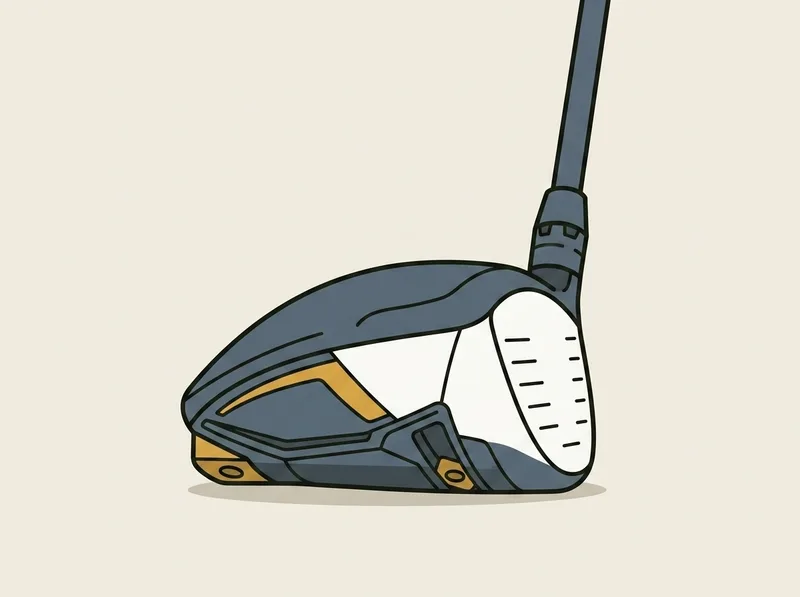
The GT1 is Titleist's lightest overall build combined with the deepest centre of gravity in the GT family, which is an unusual combination and a sensible one for this buyer. It runs 9°, 10° and 12° with a SureFit hosel offering sixteen loft and lie settings and swappable 11 gram aft and 5 gram forward weights.
What it does not do is tell you very much. Titleist's accessible launch material does not publish head volume, length, lie angle, total club weight or a stock flex list, which on a page about weight and flex is a significant gap. That is not an accident: this is a club designed to be specified in a fitting bay rather than chosen from a table.
 Around £499 to £579
Titleist GT1
- Lofts
- 9°, 10°, 12°
- Stock shaft
- Multiple options, weights not published in launch material
- Flexes
- Set at fitting rather than published as a stock list
- Length
- Not published
- Weighting
- 11g aft and 5g forward, swappable
- Adjustment
- SureFit hosel, 16 loft and lie settings
- Sixteen hosel settings in fine steps, which is more fitting resolution than anything else here.
- The lightest overall build in the GT family combined with the deepest centre of gravity, which is an unusual pairing.
- One degree steps between 9° and 10°, rather than the 1.5° jumps most makers use.
- Titleist do not publish head volume, length, lie or total weight in accessible launch material, so the spec sheet cannot be checked.
- Built around a fitting appointment, and bought off a shelf most of what you paid for stays switched off.
- No flex list to compare against the others, which is exactly the specification this page is about.
VerdictThe pick if you are going to be fitted and will use the appointment properly, because the hosel resolution gives a fitter more to work with than anything above. For anyone buying online in a stock build, the published information is thinner than its rivals and that is a real cost.
The two specifications nobody mentions: grip size and lie
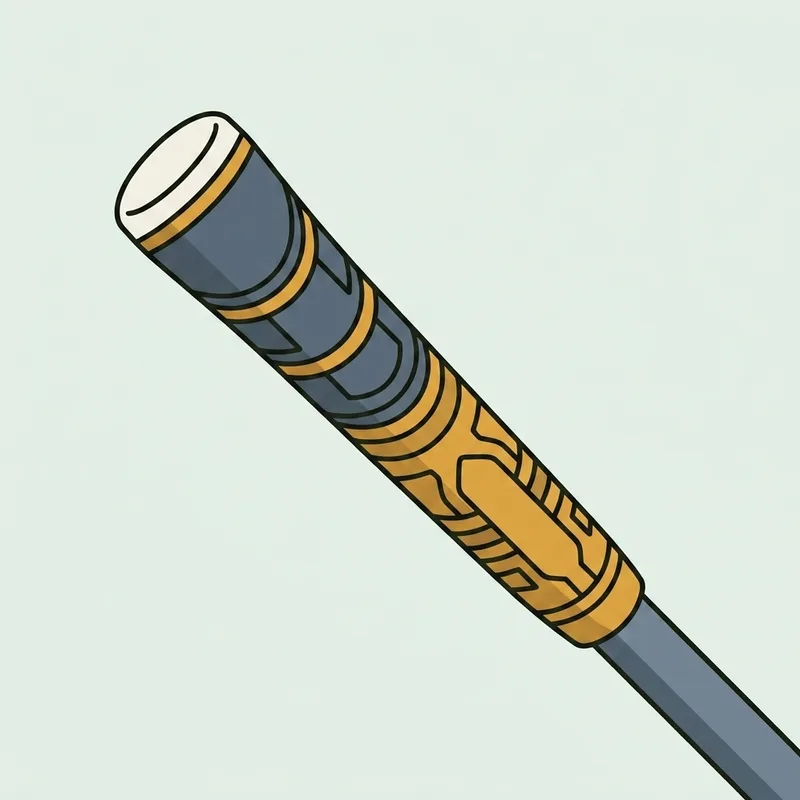
Grip size is the most under-discussed senior specification in golf. Hands stiffen, arthritis is common, and a grip that is too small encourages a tighter squeeze and more hand action than an older golfer usually wants. Midsize grips are a standard, cheap option on every club here, and they add roughly 10 grams, which is the one place on a light build where added weight is usually worth it.
Lie angle is the other. Posture changes with age, and a golfer who has lost some rotation and stands slightly more upright will present the club differently. The XXIO sits at 59° and the Ping at 58.5°, while the Callaway is a full two degrees flatter at 57°. That is a meaningful spread, and the flattest of them will tend to hold off a left miss. Choosing the right grip size covers the first, and both are things a fitter checks in five minutes.
Loft, and the one place age genuinely changes the answer
Slower swings need more loft, and the reason is not the swing speed on its own. It is that speed and spin fall together, and a ball that leaves at 78 mph of club speed with too little spin will not stay in the air long enough to reach anything.
| Driver club speed | Loft to start from | Flex to start from |
|---|---|---|
| Over 95 mph | 9° to 10.5° | Regular or stiff, normal weights |
| 85 to 95 mph | 10.5° | Regular, in a lighter shaft |
| 75 to 85 mph | 10.5° to 12° | A flex or Ping's 45, 45g or lighter |
| Under 75 mph | 12° or more | L or R2 flex, 40g or lighter |
Treat that as a starting point rather than a fitting. Which driver loft to play explains why attack angle moves it as much as speed does, and working out which shaft flex you need covers how to estimate flex from carry distance.
What actually gets speed back
Equipment recovers a few miles per hour at most. What recovers more is the thing nobody selling drivers is incentivised to mention, which is that rotation and sequencing decline faster than raw strength and both respond to work.
That is not a promise of yardage and it should not be sold as one. It is simply where the larger available gain sits for most golfers over sixty. Golf exercises for seniors covers the mobility side, and golf tips for seniors deals with how the swing itself should change rather than fighting to keep the one you had at forty.
Which of these pages you want
This page assumes age is the reason you are shopping and that you have not measured your swing speed. That is a different starting point from the neighbouring pages.
- If you have measured it and it is under about 85 mph, the argument becomes physics rather than comfort and the loft ceiling matters more than the total weight. Slow swing speed drivers is that page.
- If you have played for years, shoot in the high 90s, and your misses all go right, forgiveness and bias outrank weight. Drivers for high handicappers covers that.
- If you have taken the game up recently, the priority is a club with nothing on it to set wrong. Drivers for beginners starts there.
- For the fitting logic without a segment attached, the main driver roundup is the place.
Key takeaways
- The XXIO 14 is the pick on weight: 283 grams total, a 200 gram head, a 36 gram shaft and an R2 flex, all published on the maker's own table.
- The Callaway ELYTE gets close for around half the money with a 40 gram R2 stock shaft, but does not publish a total weight and fits a standard 50 gram grip.
- The Ping G440 K HL is the only one here with an adjustable hosel, which is what lets a driver follow your speed down over the next decade.
- The Titleist GT1 is built for a fitting bay and publishes very little, which on a weight and flex decision is a real cost.
- Age is not a swing speed. TrackMan publish benchmarks by handicap, not by age, and any per-decade speed loss figure you read is unsourced.
- Softening the flex without cutting the weight is a half-fix. Check shaft weight and grip weight before you look at the letter.
- Midsize grips add about 10 grams and are worth it for stiff hands, which is the one place on a light build where weight should go back in.
Common questions
What is the best driver for a senior golfer?
The XXIO 14, if the problem is that a modern driver feels heavy. At 283 grams of published total club weight with a 36 gram shaft and an R2 flex option, nothing else on the market publishes a lighter complete build. The Callaway ELYTE is the value alternative at around half the price, with a 40 gram stock shaft of its own.
Do seniors need a senior flex shaft?
Only if their swing speed says so. Age and flex are separate questions, and plenty of golfers over sixty-five still swing at 95 mph, which is regular or stiff territory. Measure the speed, or estimate it from carry distance, before buying anything softer than regular.
What loft driver should a senior use?
Usually 10.5° or 12°. Below about 85 mph of club speed the ball does not generate enough spin to stay airborne at a low launch, so loft is buying carry rather than costing it. Above 95 mph, age makes no difference to the answer and 9° to 10.5° still applies.
How light should a senior driver be?
Lighter than standard, and the number to look at is total club weight rather than shaft weight alone. A conventional driver is roughly 305 to 315 grams. The lightest published complete build is 283. Anywhere in between is a meaningful improvement if you are struggling to accelerate the club.
Is a lighter driver always better for an older golfer?
No. A lighter club is easier to swing and harder to feel, and some golfers lose all sense of where the head is. If you switch to a very light build and never regain your strike quality after a few weeks, the club is too light for you and going back up is the right call.
Does grip size matter for seniors?
More than most guides admit. Stiff hands and arthritis both push toward a larger grip, which reduces the tendency to squeeze and calms down excess hand action. A midsize adds roughly 10 grams, which is worth spending on a light build even though it works against the weight saving.
Should a senior driver have an adjustable hosel?
It is genuinely useful here, because swing speed changes over a decade and a fixed loft cannot follow it. Of the four clubs on this page only the Ping G440 K HL and the Titleist GT1 adjust at all. The two lightest builds are both fixed, which is a real trade.
How much should a senior spend on a driver?
Between about £380 and £750 covers the whole range here. The Callaway ELYTE sits at the bottom and delivers most of the weight saving. Above roughly £630 you are paying for the XXIO's published total weight and its full flex ladder, which is a real thing to pay for but not a small one.
Will a new driver get my distance back?
Some of it, and less than the advertising suggests. Moving out of a heavy or badly specified club into a correctly weighted one is worth a genuine amount. Moving from one modern fitted driver to another is worth very little, whatever your age.
How many yards do you lose per decade after sixty?
Nobody publishes a defensible number, which is why this page does not quote one. TrackMan's benchmarks are broken down by handicap rather than age. Your own measured speed is the only figure worth acting on, and it costs nothing to get.
Is 46 inches too long a driver for a senior?
Often, yes. The XXIO and the Ping here are both built at 46 inches, which is at the top end of what is sensible for any amateur, and the Callaway is only a quarter inch shorter. Trimming half an inch is cheap and usually tightens dispersion, and it is worth asking about at the point of purchase rather than later.
How we put this together
- Published manufacturer specifications for each driver, taken from the maker's own listing rather than a retailer's summary, with unpublished figures recorded as unpublished.
- Total club weight and stock shaft weight where the maker prints them, because that is the specification an older golfer feels first and almost nobody publishes.
- How many flexes each model is genuinely offered in, including anything below regular, since a senior flex that only exists as a custom order is not really available.
- TrackMan's published club speed benchmarks, used to show why age alone is a poor guide to which flex anyone needs.
- The R&A Rules of Equipment limits on head volume and club length, which set the outer boundaries every model here is built against.
On this page
- The four, compared
- Age is not a swing speed, and senior flex is often wrong
- XXIO 14: the lightest build anybody publishes
- Callaway ELYTE: most of the saving, around half the money
- Ping G440 K HL: light without losing the head
- Titleist GT1: the fitting-first option
- The two specifications nobody mentions: grip size and lie
- Loft, and the one place age genuinely changes the answer
- What actually gets speed back
- Which of these pages you want
- How we put this together

Tom Ashworth
Tom Ashworth is a PGA Professional who has taught golf since 2012, working mainly with beginners and mid-handicappers at club level in Surrey. He reviews the instruction guides on Learn Golf for technical accuracy before they publish.
Most of his teaching is with players in their first three years of the game, and most arrive having been told too much: six swing thoughts collected from videos, half of them contradicting each other. His approach is to check the grip and the alignment before touching the swing, on the basis that most bad ball flight is decided at address.