Every golfer has signed a card where one hole ruined the total. The frustrating part is that the swing which started it was usually ordinary, the kind that happens four or five times a round without consequence. What turns it into an eight is a chain of decisions afterwards, and that chain is far more controllable than the swing was.
The arithmetic of a seven
Take a par 4 that ends in a seven and work backwards. The drive found the trees, which cost about one shot. The recovery tried to thread a gap and hit a trunk, which cost another. The third came up short in a bunker, the fourth finished 40 feet away, and two putts closed it out.
Only one of those was a bad swing. The second shot was a bad decision executed exactly as intended, and it cost twice what the drive did. That is the whole shape of the problem: ordinary decisions are worth tenths of a shot, and a handful each round are worth two or three.
Where the chain starts
Shot Scope publishes a benchmark it calls a troublesome tee shot, defined as one that produces a lost ball, finds a hazard or the trees, or forces a positional shot rather than a real one. Their benchmarks by scoring milestone show a golfer who routinely scores in the 100s having three times as many of those as a golfer who scores in the 70s.
Three times as many starting points, not three times as many bad swings. The tee shot begins the chain most often because it is played with the least controllable club at the widest part of a golfer's pattern, and because it is the only mistake that can cost a stroke and the distance at once. What removes most of them is not accuracy in the abstract. It is deciding, before the swing, which club cannot reach the thing that would cost two shots, a framework set out in golf course management.
The most predictable link in the chain
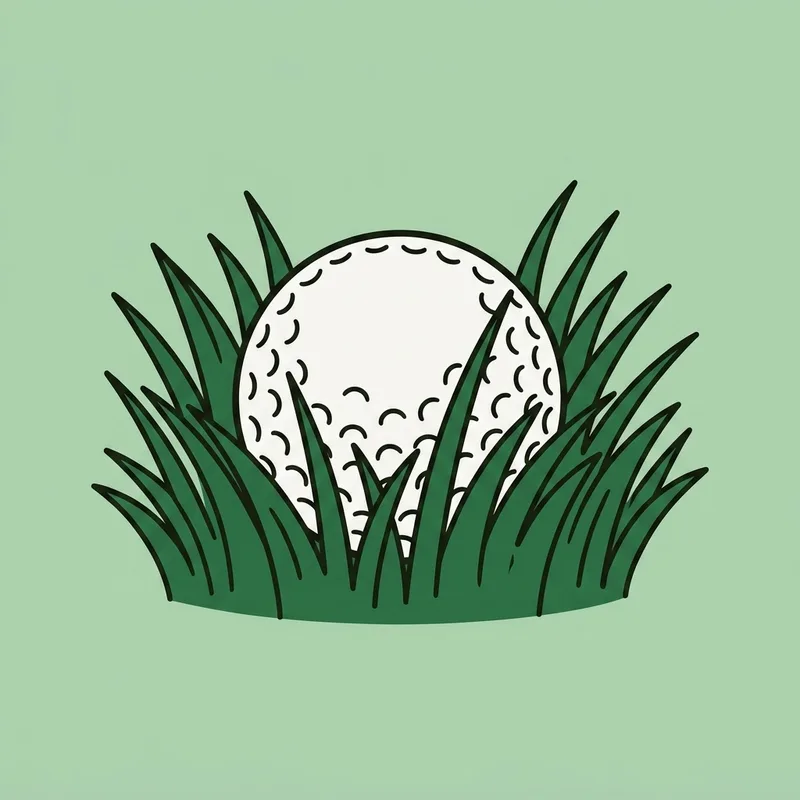
Golfers assume their misses are random. One of them is not. Shot Scope's analysis of golf's fifty-fifty scenarios found a 20 handicap finishing short of the green from 150 yards half the time.
That single tendency does more damage than its share, because course architects know about it. Bunkers, run-offs, thick collars and water are placed short of greens precisely because that is where the average golfer misses. Half of all 150 yard approaches from a 20 handicap are being fed into the most penal ground on the hole. Clubbing up costs nothing, needs no practice and works on the next round, and it belongs with the rest of the decision in golf club selection.
The recovery rule
There is only one instruction that matters after a bad shot, and it is not about the club. Ask what the ball needs in order to be played with an ordinary swing from an ordinary lie, and do that thing.
| The trouble | The instruction | What it usually costs |
|---|---|---|
| Trees with a clear gap and a flat lie | Advance towards the green through the gap | One shot, sometimes none |
| Trees with no gap | Sideways or backwards to the fairway | One shot, reliably |
| Thick rough, ball sitting down | Wedge it out to a full swing number | One shot |
| Fairway bunker with a lip | Enough loft to clear the lip, aimed at grass | One shot |
| Penalty area | Take the drop and play the next one properly | One shot plus the drop |
| A short-sided chip over a bunker | Play to the fat of the green, not the flag | Nothing, and it removes the double |
The technique for the middle rows, including how much the ball will run when it comes out of long grass, is in how to hit out of the rough.
Around the green, plan for the bogey
The most common way a double bogey is signed for is not a disaster. It is a missed green followed by two chips and two putts, and the reason it happens is that the golfer was playing for par.
Shot Scope's figures make the expectation clear. A 20 handicap converts an up and down three times out of ten, a 15 handicap 35 percent of the time, and even a scratch golfer only 54 percent. Seven times out of ten at 20 handicap, the greenside shot is not saving par. Its actual job is to guarantee the bogey.
That changes the club. Data on club performance found the typical 15 handicap using a lob wedge for 23 percent of their up and down attempts and converting only one in four. It is the least forgiving club anyone carries and the one most reached for by the golfer least able to use it. The lower running option is in how to chip a golf ball.
The putt that adds the last stroke
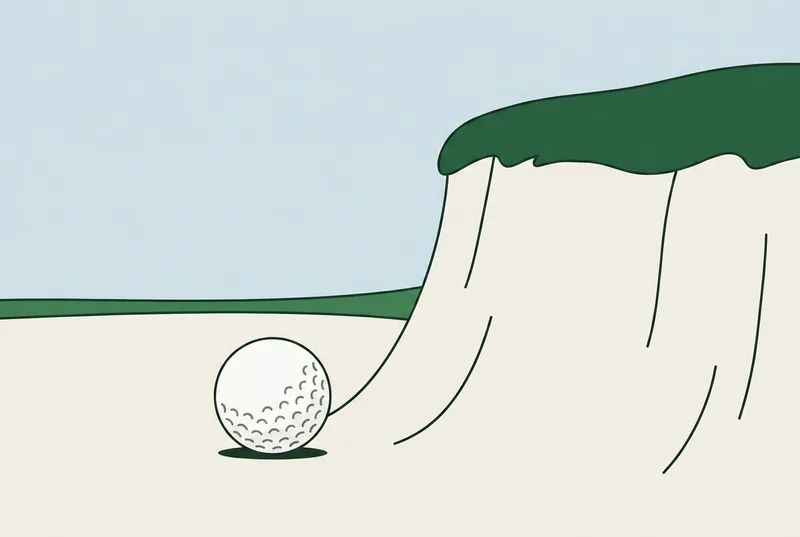
A three-putt turns a bogey into a double without any drama at all, and it is usually created two shots earlier by an approach that finished a long way away.
Shot Scope's putting data has a 20 handicap holing 84 percent from inside six feet and only 37 percent from six to twelve. A 15 handicap three-putts on about 10 percent of greens, roughly one green in ten, and when they do, the second putt averages eight feet.
There is one tendency underneath most of it. Across the database, 60 percent of a 20 handicap's putts finish short of the hole. A putt left short has no chance of dropping and often leaves the exact length, three to six feet, that a 25 handicap holes slightly worse than half the time according to Shot Scope's three-putt analysis. That is the last link in the chain, and the fix is pace rather than line. The short ones themselves are in how to make short putts.
Par 5s produce the most of them
If your card has a pattern, look at the long holes first. Shot Scope's analysis of scoring by hole type found the gap between a scratch golfer and a 25 handicap is widest on par 5s, at 2.22 shots, more than on any other hole type.
The reason is structural. A par 5 asks for two long swings in a row before the short game gets involved, which doubles the number of places the chain can start, and it is the only hole where a golfer can be in trouble twice and still have 300 yards to play. The full strategy, including where the data genuinely disagrees with itself, is in how to play a par 5.
The rules will cap it for you
Most golfers grinding out a nine do not know the score they are fighting for does not count.
Under Rule 3.1b of the Rules of Handicapping, once a Handicap Index is established, the maximum score recorded on any hole for handicap purposes is a net double bogey: par plus two, plus any handicap strokes received on that hole. There is no limit to how many holes the adjustment applies to. A golfer posting to GHIN who takes a nine on a par 4 where they get a stroke has a seven recorded regardless.
In a casual round that makes picking up the correct play rather than a concession. It protects the pace of play and costs the handicap nothing. In a competition you finish the hole, but even then the total that reaches your index is capped. The wider rules picture is in golf rules for beginners.
- Notice the moment. The instant a shot finds trouble, the hole has changed from a par attempt into a damage control exercise. Say so to yourself.
- Name the score you are now playing for. Usually bogey, sometimes double. It is the number you are protecting, not chasing.
- Find the shot you can play with your normal swing from the lie you have. If there is not one, the next shot's job is to create one.
- Take the drop when the alternative needs a miracle. A penalty stroke you choose is cheaper than a penalty stroke plus a lost ball.
- Aim the approach at the largest part of the green, never at a flag guarded on the short side.
- Get the first putt past the hole. Short putts left short are how a double arrives on a green you reached in regulation.
The hole after the hole
A second chain starts once the first finishes, and it runs through the next two tee shots. A golfer who has just signed for a seven makes the next decision while still arguing with the last one, and the aggressive option looks unusually attractive from there. The reset, and how long to give yourself before the next shot, is in the golf mental game.
Key takeaways
- A big number is a chain of decisions, and only the first link is a bad swing.
- The shot after the bad shot is worth more than the bad shot. Its job is to restore a normal lie and a normal swing.
- Golfers scoring in the 100s put roughly three times as many tee shots into trouble as golfers scoring in the 70s.
- A 20 handicap finishes short of the green from 150 yards half the time, and courses put the trouble short for that reason.
- A 20 handicap gets up and down three times in ten, so the greenside shot's real job is to guarantee bogey rather than to chase par.
- Sixty percent of a 20 handicap's putts finish short, which manufactures the three to six footers that fall barely half the time.
- Par 5s carry the widest scoring gap of any hole type, so look there first for a pattern.
- For handicap purposes every hole is capped at net double bogey, so a casual round has no reason to record anything worse.
Common questions
How do I stop making big numbers in golf?
Change the shot after the bad one rather than trying to eliminate bad shots. A blow-up hole almost always contains a recovery attempt that needed a perfect strike. Returning the ball to a normal lie with a normal swing, even sideways, converts most would-be triples into bogeys.
What causes a blow-up hole?
A chain rather than a single event: a tee shot in trouble, an ambitious recovery, an awkward lie, then a long putt. Tracked data shows the frequency of the first link, the troublesome tee shot, is roughly three times higher for golfers scoring in the 100s than for those in the 70s.
Should I always chip out sideways?
Not always, and coaches genuinely disagree here. The useful rule is about the swing rather than the direction: play the shot you can make with your normal motion from that lie, and reject anything needing a strike you would not bet on. Sometimes that shot goes forward through a gap, often it does not.
Is it better to take a penalty drop than to attempt the shot?
Frequently, yes. A penalty stroke you choose is a known cost. An attempt that fails costs a stroke anyway and usually leaves the same problem, sometimes from a worse lie. When the alternative needs a miracle, take the drop and play the next shot properly.
How many double bogeys is normal?
More than most golfers expect at every level. A 20 handicap misses most greens and converts only three up and downs in ten, which arithmetically produces several doubles a round before anything has gone badly wrong. Treating them as normal, rather than as failures, is what stops the next one becoming a triple.
What is net double bogey?
The maximum score that counts on any hole for handicap purposes: par plus two, plus any handicap strokes you receive on that hole. It applies to every hole in a round once you have an established Handicap Index, which is why grinding out a nine gains nothing for your index.
Should I pick up after a bad hole?
In a casual round, yes. Once you have exceeded net double bogey the extra shots do not count towards your index, and picking up helps pace of play. In a formal competition you must hole out, though the score submitted to your index is still capped.
Why do I always come up short of the green?
Because clubs get chosen for the best strike rather than the ordinary one. Half of all 150 yard approaches from a 20 handicap finish short in tracked data. Taking one more club and making a smoother swing corrects most of it without any practice.
How do I stop one bad hole ruining the whole round?
Separate the two chains. The hole itself needs damage control, and the two holes afterwards need a reset before the next decision gets made while you are still irritated. The aggressive option looks unusually attractive from that state, which is how one seven becomes two.

Tom Ashworth
Tom Ashworth is a PGA Professional who has taught golf since 2012, working mainly with beginners and mid-handicappers at club level in Surrey. He reviews the instruction guides on Learn Golf for technical accuracy before they publish.
Most of his teaching is with players in their first three years of the game, and most arrive having been told too much: six swing thoughts collected from videos, half of them contradicting each other. His approach is to check the grip and the alignment before touching the swing, on the basis that most bad ball flight is decided at address.