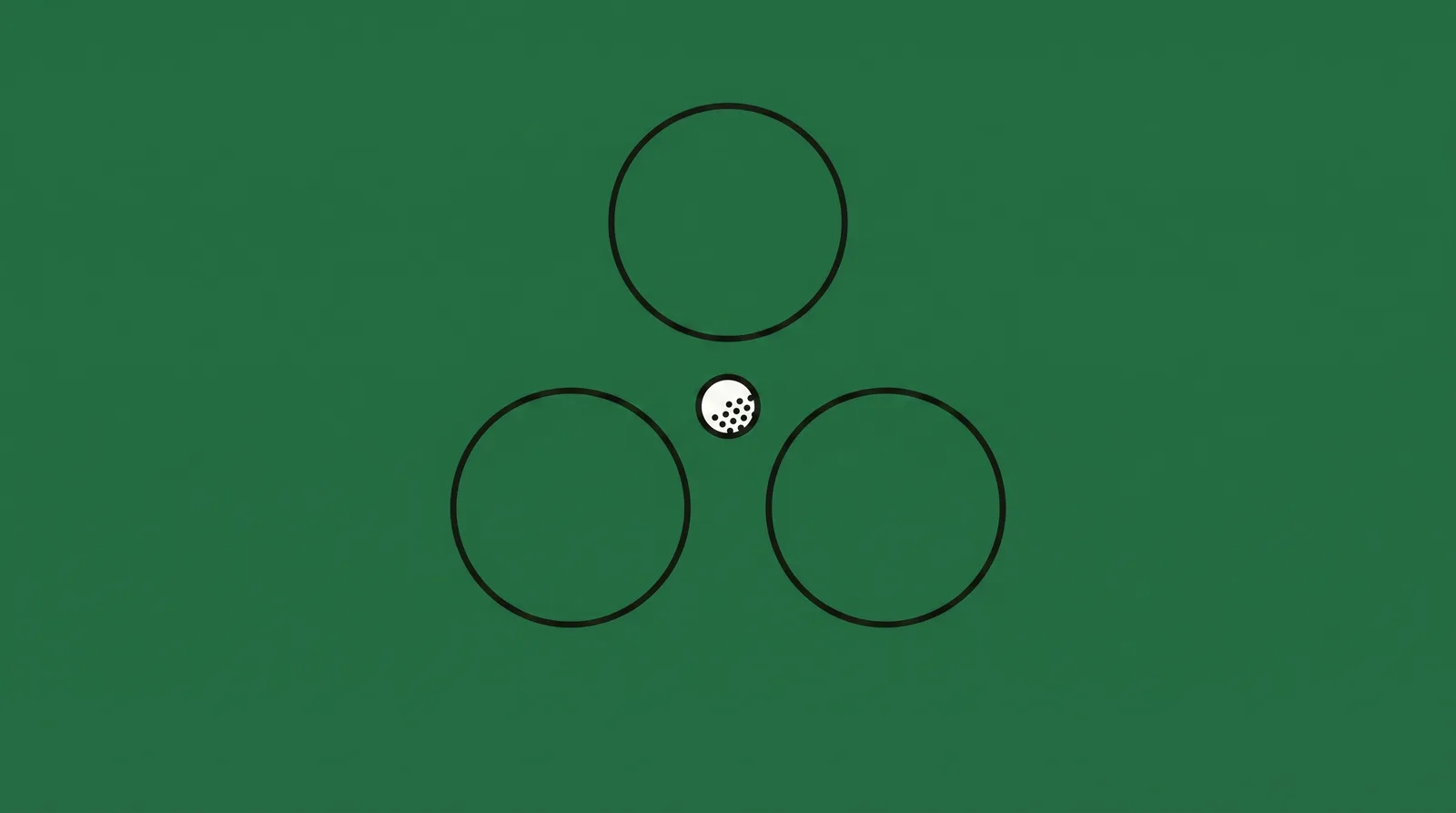
The ball is wedged against a root, sitting in a bush, or plugged under the lip of a bunker. Most golfers respond by swinging at it, moving it four feet, and swinging again. Rule 19 offers a way out that costs one stroke and takes about forty seconds, and the reason it is so rarely used is that almost nobody knows there are three doors.
It is your call, and only yours
Rule 19.1 puts the decision entirely with the player. No opponent, marker or partner can require it, and no committee has to agree, because the standard is not whether the ball is objectively unplayable. If you would rather pay a stroke than try the shot, that is the whole test.
The one place it does not exist is a penalty area. A ball inside red or yellow stakes has no unplayable option at all, and your choices are the ones Rule 17 gives you, covered in red and yellow penalty areas. Everywhere else is available, including the teeing area, a bunker and the putting green.
There is also no guarantee attached. The R&A is direct about this: once the dropped ball comes to rest in the relief area you have a new situation, and if you do not like it you may declare unplayable again for another penalty stroke. Taking lateral relief repeatedly, paying each time, is a legitimate way out of somewhere genuinely awful.
The three options, side by side
Every option costs one penalty stroke. What separates them is the reference point and how much room it buys.
| Option | Rule | Reference point | Relief area | Key limit |
|---|---|---|---|---|
| Stroke and distance | 19.2a | The spot of the previous stroke | Set by Rule 14.6 for the area you played from | Only the last stroke, never an earlier one |
| Back-on-the-line | 19.2b | The spot of the original ball, kept between the hole and where you drop | One club-length in any direction from where the dropped ball first touches the ground | Not nearer the hole than the ball's spot, and no limit on how far back you go |
| Lateral | 19.2c | The spot of the original ball | Two club-lengths from that point | Not nearer the hole than the reference point |
Two practical notes fall out of the table. The stroke and distance option works even when the ball was never found and identified, which is why it is the only route open to a golfer who has genuinely lost track of the ball. Back-on-the-line and lateral relief both need the ball's actual spot, so if you have not found it you cannot use either, and the R&A says that using them off a ball that is not yours is treated as stroke and distance anyway.
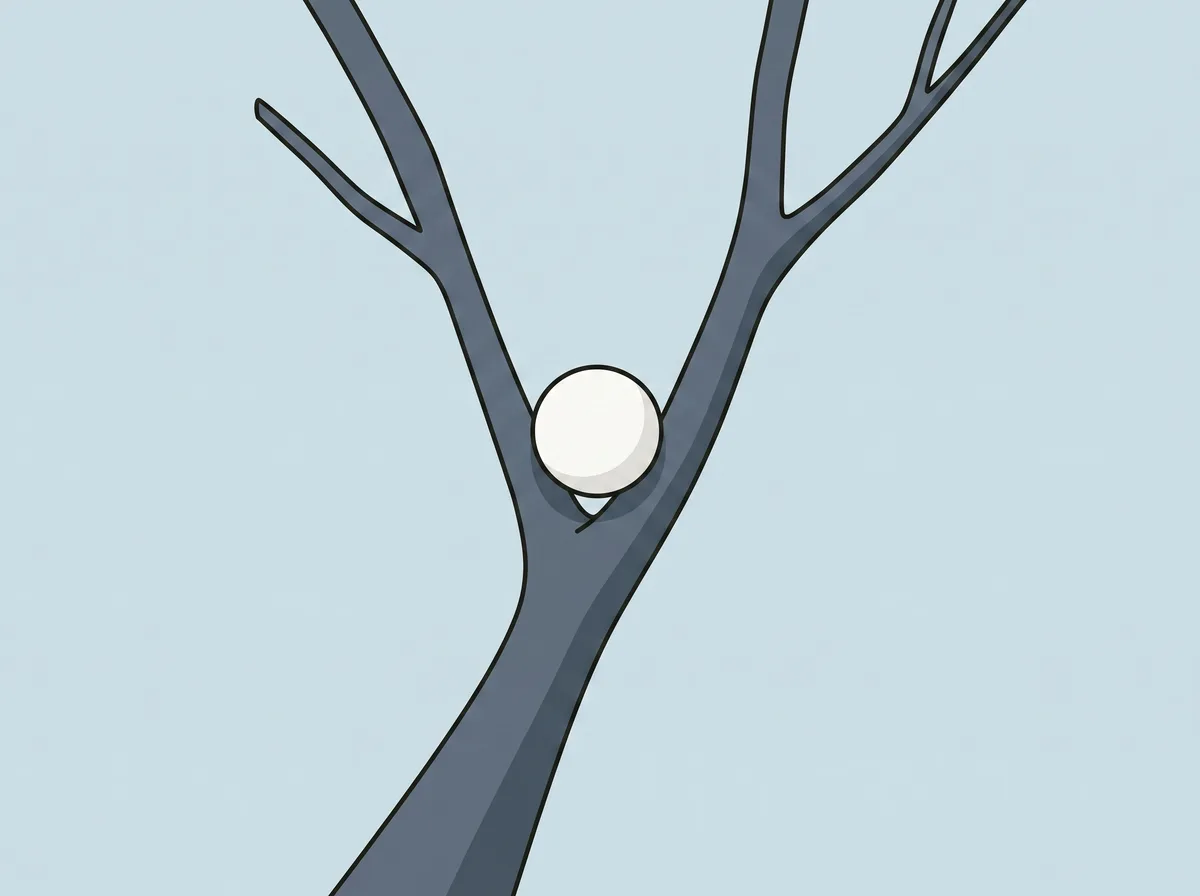
The lateral option carries the rule's most useful special case. Where the ball is above the ground, the classic being a ball wedged in a tree, the reference point is the spot on the ground directly below it. That is what makes a ball you can see but cannot reach a two club-length drop rather than a walk back.
The relief area can be almost anywhere
This is where Rule 19 turns out to be broader than the folklore version. The R&A confirms that unplayable relief may be dropped into any area of the course, so a drop from the general area may land in a bunker, in a penalty area, on a putting green, in a no play zone, or on a wrong green.
The last two come with a condition. Drop into a no play zone or onto a wrong green and you must then take the further relief those situations require, so it is a legal move rather than a free one. The rest are simply choices, and choosing to drop into a bunker rather than replay a tee shot is sometimes the cheaper hole.
The limit that trips people is which area the ball must finish in. Under lateral relief, if more than one area of the course sits within two club-lengths of the reference point, the ball must come to rest in the same area of the course that it first touched when dropped. Under back-on-the-line relief, the same rule applies to the spot where the dropped ball first hits the ground. A ball that lands on the fairway side and trickles into the bunker has not finished the job.
The bunker, where a fourth option exists
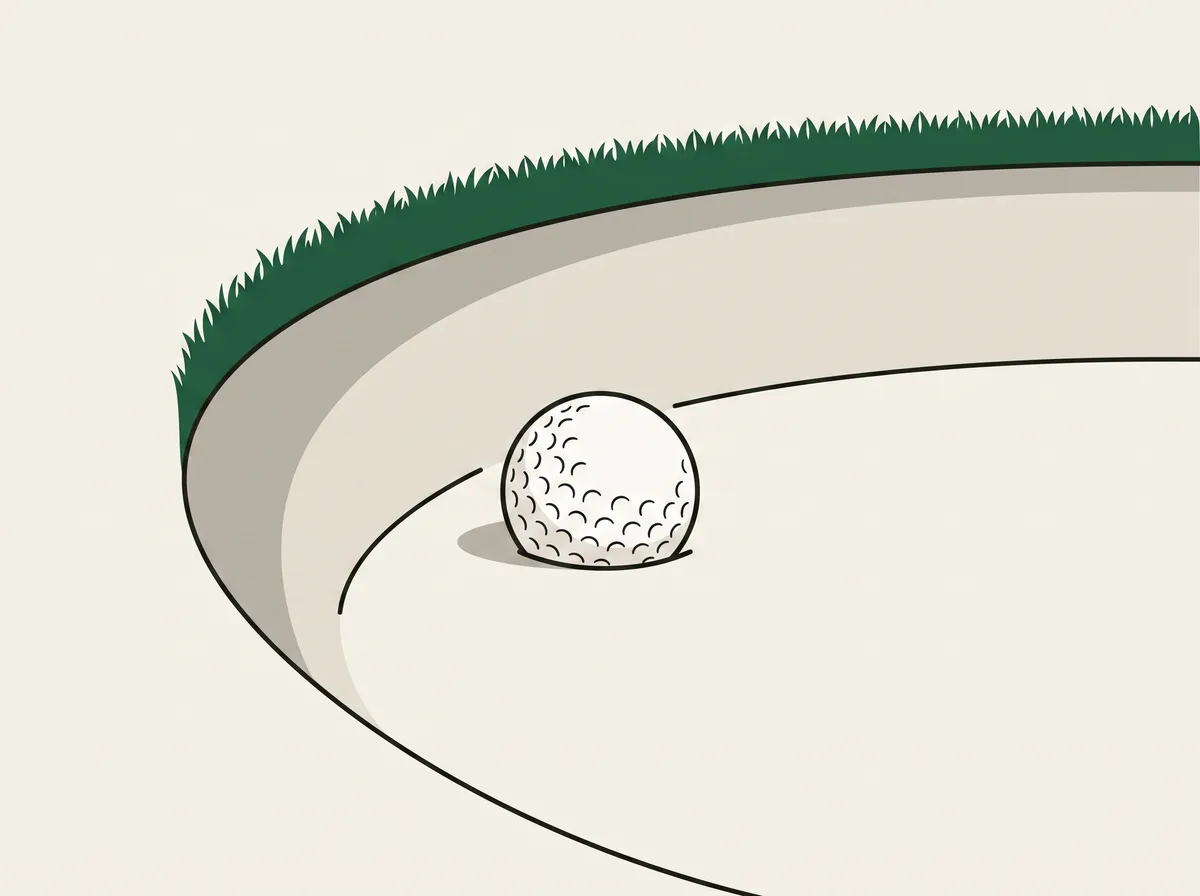
A ball in a bunker keeps all three normal options for one penalty stroke, with one restriction that changes everything. If you take back-on-the-line or lateral relief, Rule 19.3a requires the ball to be dropped in and come to rest in the bunker. You may move it around inside the sand, but you may not leave.
That is why the fourth option exists. For a total of two penalty strokes you may take back-on-the-line relief outside the bunker, dropping on the line from the hole through where the ball lay, as far back as you want. The R&A introduced this in the 2019 modernisation as a new unplayable ball relief option, and it is the answer to a ball plugged under a face too steep to escape.
| Where the ball is | Option | Total cost |
|---|---|---|
| In a bunker | Stroke and distance | 1 stroke |
| In a bunker | Back-on-the-line, dropped in the bunker | 1 stroke |
| In a bunker | Lateral, two club-lengths, dropped in the bunker | 1 stroke |
| In a bunker | Back-on-the-line, dropped outside the bunker | 2 strokes |
Two strokes to walk out of a bunker sounds expensive until you count the alternative. A ball buried under a lip that takes three attempts to clear has cost three, and the fourth shot is still in sand. Where the lie is bad but the face is not, the technique in greenside bunker play is usually cheaper, and a ball only half buried is often a plugged lie rather than a rules problem.
When taking the stroke is the cheap option
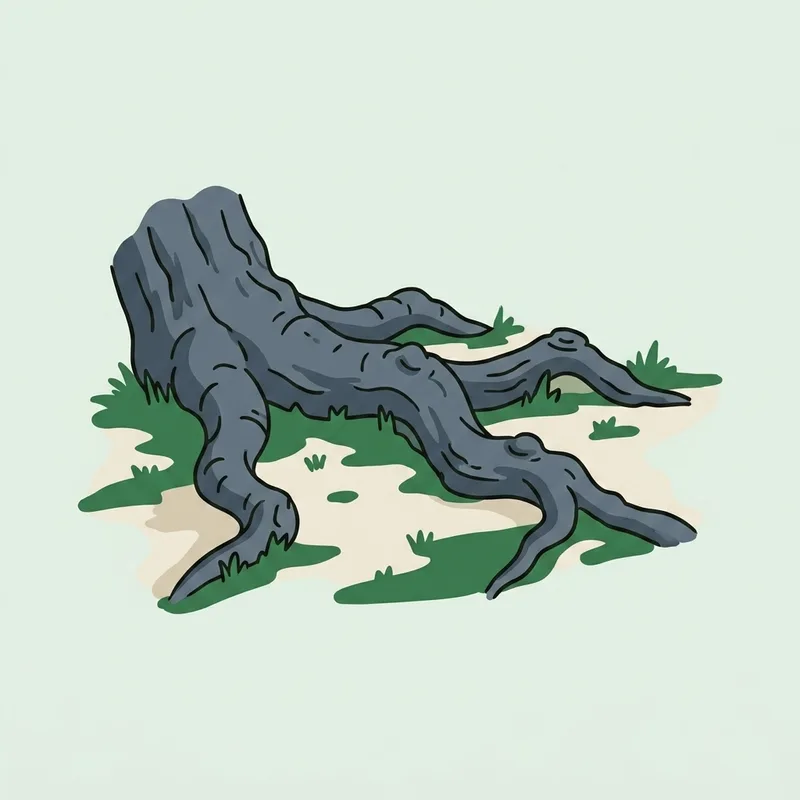
The arithmetic is what makes this rule worth learning. A ball fifteen yards into thick trees with no gap is not a recovery shot, it is a coin toss on a punch out that most golfers lose twice before they get out. One penalty stroke and a two club-length drop into playable grass buys a clean swing from a known distance.
The case for playing it exists too, and it is mostly about the gap rather than the lie. If there is a genuine window, a low punch shot out to the fairway costs nothing and keeps the hole alive. If there is no window, taking relief is not weakness, it is the whole point of avoiding big numbers.
Every one of these options ends in a drop, and the height, the relief area and what happens when the ball rolls out are set out in how to take a drop. For where the penalty sits, what each breach costs has the full table, and the search rules for a ball you cannot find at all are in the three minute search. If the ball is gone past the white stakes instead, that is stroke and distance, and the wider structure sits in how the rulebook works.
Key takeaways
- Only the player may declare a ball unplayable, and no test has to be met.
- Unplayable relief is available anywhere on the course except in a penalty area.
- The three options each cost one penalty stroke: stroke and distance, back-on-the-line, or lateral within two club-lengths.
- Back-on-the-line has no limit on how far back you go, and the spot where the ball first lands creates a one club-length relief area.
- Stroke and distance is the only option available if the ball was never found, since the other two need its spot.
- For a ball above the ground, such as in a tree, the lateral reference point is the spot directly below it.
- Relief may be dropped into any area of the course, including a bunker or a penalty area.
- In a bunker, back-on-the-line and lateral relief must be dropped in and come to rest in the bunker.
- A fourth bunker option lets you drop back on the line outside the bunker for a total of two penalty strokes.
- You may declare a ball unplayable again after taking relief, for another penalty stroke each time.
Common questions
Who decides if a golf ball is unplayable?
The player, and nobody else. Rule 19.1 gives the decision entirely to you, and there is no requirement to show that the ball was genuinely impossible to play. A lie you do not want to attempt is enough.
What are the three options for an unplayable ball?
Stroke and distance, which is a replay from where you last hit. Back-on-the-line, which is a drop anywhere on the line from the hole through the ball's spot, going back as far as you like. Lateral, which is a drop within two club-lengths of the ball, no nearer the hole. Each costs one penalty stroke.
How much does an unplayable lie cost?
One penalty stroke for any of the three standard options. The only exception is the extra bunker option, which lets you drop outside the bunker for a total of two penalty strokes.
Can I declare my ball unplayable in a bunker?
Yes, and you get four options rather than three. The three normal ones cost one stroke, but back-on-the-line and lateral relief must both be dropped in and come to rest in the bunker. Dropping back on the line outside the bunker costs two strokes.
Can I declare a ball unplayable in a penalty area?
No. Rule 19.1 excludes penalty areas entirely, so a ball inside red or yellow stakes only has the relief options in Rule 17. That is also true of embedded ball relief and relief from abnormal course conditions.
What if my ball is stuck up a tree?
You may treat it as unplayable, and the reference point for lateral relief becomes the spot on the ground directly below the ball. You must be able to identify the ball as yours, which usually means seeing your own mark on it.
Can I take unplayable relief if I never found my ball?
Only stroke and distance. Back-on-the-line and lateral relief both use the spot of the original ball as their reference point, so both are unavailable when you do not know where the ball is.
Can the drop land in a bunker or a penalty area?
Yes. The R&A confirms unplayable relief may be dropped into any area of the course, including directly into a bunker or a penalty area, onto a putting green or onto a wrong green. If it lands on a wrong green or in a no play zone you must then take the further relief those require.
What if the ball is still unplayable after I drop it?
You have a new situation and may take unplayable relief again, using any of the available options, for an additional penalty stroke. The R&A specifically allows taking lateral relief repeatedly until the ball is somewhere you can play from.
Is an unplayable lie the same as ground under repair?
No. Ground under repair is an abnormal course condition and relief from it is free under Rule 16.1. An unplayable ball is a choice you make about a lie the course is entitled to present, so it always costs a penalty stroke.

Tom Ashworth
Tom Ashworth is a PGA Professional who has taught golf since 2012, working mainly with beginners and mid-handicappers at club level in Surrey. He reviews the instruction guides on Learn Golf for technical accuracy before they publish.
Most of his teaching is with players in their first three years of the game, and most arrive having been told too much: six swing thoughts collected from videos, half of them contradicting each other. His approach is to check the grip and the alignment before touching the swing, on the basis that most bad ball flight is decided at address.