Every golfer ends up under a tree, and most of them make it worse. They take a wedge because it is the club they trust, launch it into the branch above their head, and turn one bad drive into a triple. The punch shot is the answer, and it is far simpler than it looks. This guide covers the setup, the club to take, what the Rules allow you to move, and how the same shot works into wind.
Left and right below assume a right-handed golfer. The lead foot is the one nearest the target, so a left-handed golfer reads it as the right foot and nothing else changes.
Two shots, one technique
Golfers use punch and knockdown as though they were the same word. They are the same motion doing two different jobs, and knowing which one you are hitting stops you overdoing it.
The punch is an escape. You are under a branch or behind a trunk, the target is somewhere back on the short grass, and the only requirement is that the ball stays below something. Distance is a secondary concern and run is welcome.
The knockdown is a scoring shot. You are in the fairway with a full shot into a headwind or a firm green, and you want a lower, flatter flight that holds its line and lands without ballooning. Distance matters exactly, so the club selection is deliberate rather than defensive.
Both are produced the same way, and both live or die on the same idea.
Where the low flight actually comes from
Two measurements explain the whole shot, and they are worth understanding because they stop you from trying to steer the ball down.
TrackMan defines dynamic loft as the loft on the face at the moment of maximum compression, measured against the horizon rather than against the shaft. It is not the loft on the club. A PGA Tour 6 iron delivers around 20.2 degrees of dynamic loft on a normal shot, against a driver at 12.8 degrees. Moving the ball back and letting the hands lead reduces that number, and a lower dynamic loft produces a lower launch.
The second one is why the ball also behaves differently once it is up. TrackMan defines spin loft as the angle between where the club head is travelling and where the face is pointing, roughly dynamic loft minus attack angle, and reports that a higher spin loft produces more spin. Take loft off at impact and you reduce spin loft too, so the ball climbs less on the way out and holds its line better in wind.
That is the entire mechanism. A punch is not a half swing. It is a normal delivery with less loft on the face, made with a shorter swing so you can control it.
The setup
Five things, none of them a swing change. Set them and the swing looks after itself.
- Take two or three clubs more than the yardage would normally need. The shorter swing and the lower flight both cost distance.
- Grip down an inch or two on the handle. This shortens the club, which shortens the arc and improves control at the same time.
- Narrow your stance slightly and play the ball one to two balls back of centre.
- Set about 60 percent of your weight on the lead foot at address and leave it there. Do not let it drift back in the backswing.
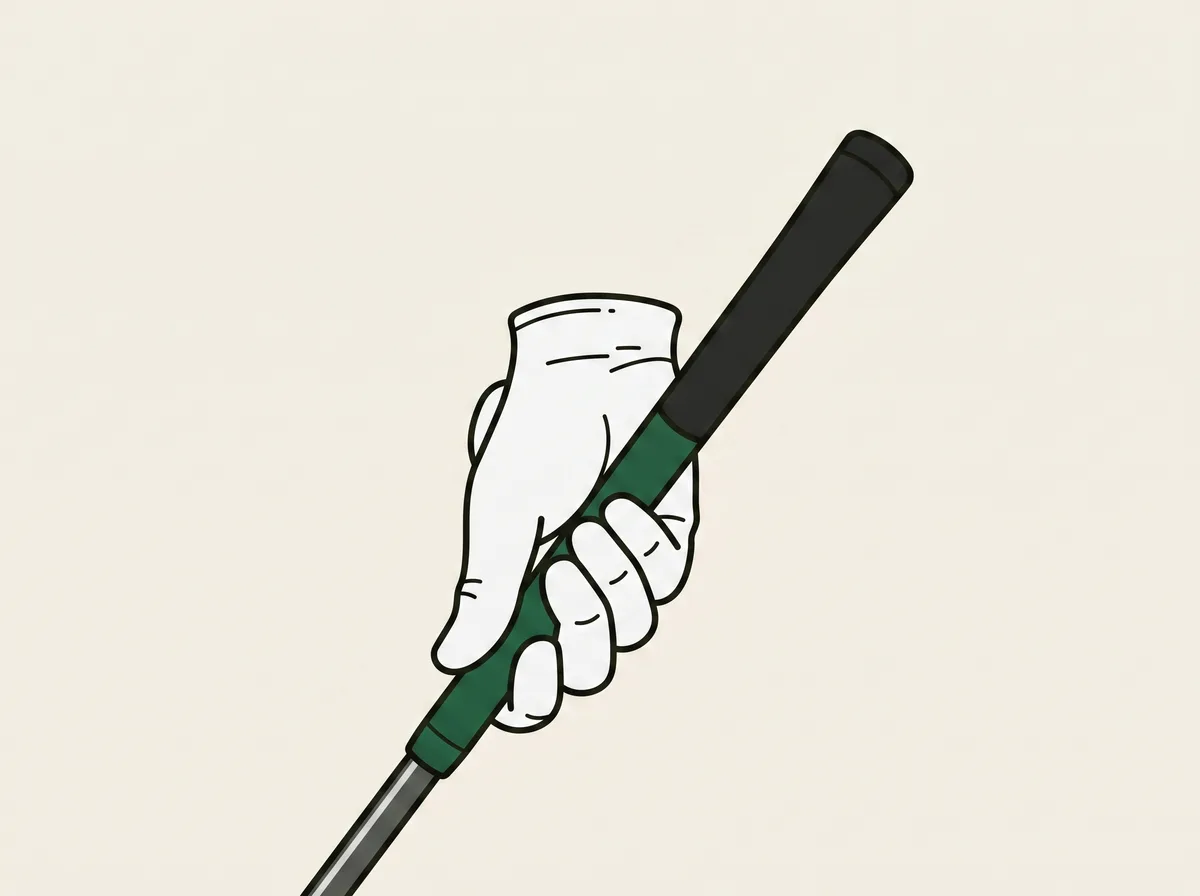
- Let your hands sit ahead of the ball so the shaft leans toward the target, and keep that relationship through impact.
The swing itself is short on both ends. Waist to waist for a full punch, shorter still if you are only trying to advance the ball fifty yards. The finish is the tell: the hands stay low and the club never gets up around your head.
| Shot | Ball position | Swing length | What you should expect |
|---|---|---|---|
| Normal 7 iron | Middle of the stance | Full | Usual height, usual carry, usual roll |
| Knockdown 7 iron | One ball back of centre | Waist to waist | Lower flight, less spin, a few yards shorter |
| Punch 7 iron | Two balls back of centre | Half, finishing low | Low, running, considerably shorter |
| Emergency punch | Back of centre, weight well forward | Short and controlled | Very low, mostly roll |
Ball position is doing a great deal of that work, and moving it is the fastest way to change flight without changing anything else. The chart for every club and every shot is in ball position by club.
Choose the club before you choose the shot
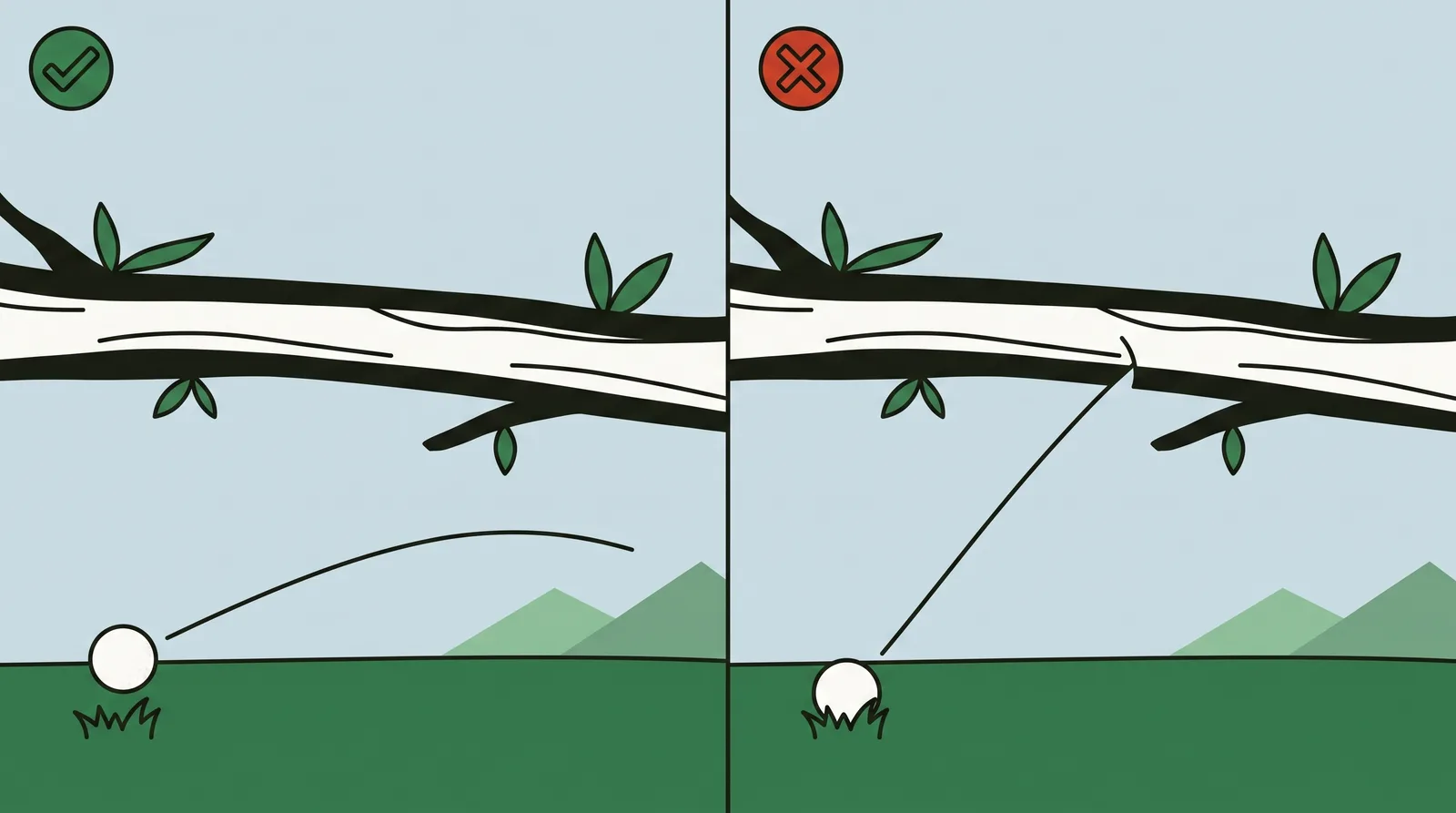
Under a tree, the club is the decision and the swing is an afterthought. Most punch shots fail at the moment somebody pulls a wedge out of the bag because it feels like a safe club.
This is a rough guide to what each club does when it is played back in the stance with a short swing. Your own numbers will differ, and the only way to know them is to hit the shot on a range.
| Club | Rough trajectory when punched | Typical use |
|---|---|---|
| 4 to 6 iron | Very low, long release | Getting out from under a low branch with distance to cover |
| 7 to 8 iron | Low, still runs a long way | The standard escape club, and the standard knockdown |
| 9 iron to pitching wedge | Medium low, some stopping power | Knockdown approach into wind |
| Sand wedge or lob wedge | Still climbs, even punched | Almost never the right club under a tree |
Knowing which of those to take is where escaping trouble becomes a scoring skill rather than a swing skill, and the way to think about it on the course is set out in golf course management. If the ball is also sitting in thick grass rather than sitting cleanly under the tree, the lie changes the club choice again, and that is covered in how to hit out of the rough.
What the Rules let you move
This is where good intentions cost strokes, and it is worth knowing before you are standing in it.
If the shot genuinely is not there, the alternative is to declare the ball unplayable rather than to gamble. Rule 19 gives you three options anywhere except a penalty area, each for one penalty stroke: play again from where you hit the last shot, drop back on a line keeping the original spot between you and the hole, or drop within two club lengths of the spot no nearer the hole. One shot for a clean swing is often a better trade than a punch into a trunk. The rest of the on-course basics sit in golf rules for beginners.
The knockdown into wind
The same shot has a completely different job in the open. Into a headwind, a normal full iron climbs, the wind gets under it, and it drops out of the sky short of everything.
Club up two, grip down, ball a fraction back, and swing at what feels like three-quarter effort with a shorter finish. The ball comes off lower with less spin, which is exactly what a headwind punishes least. The old line about swinging easy in the wind is right for the wrong reason: a softer swing lowers spin, and spin is what the wind is amplifying.
It is worth practising as a distance shot rather than only as an escape, because a reliable knockdown gives you a second yardage with every iron. That is the same skill as controlling partial wedges, and the framework for building it is in wedge distance control.
Three drills with a dose
Each one attaches a height limit to the shot so you can see whether it worked.
Key takeaways
- A punch shot is loft removed at impact, not a swing held back.
- Grip down, narrow the stance, play the ball back of centre and keep your weight on the lead foot.
- Take two or three clubs more than the yardage, because the shot flies lower and shorter.
- Reducing dynamic loft lowers launch, and reducing spin loft lowers spin, which is why the ball holds its line.
- The swing is short at both ends, and the club must still accelerate through the ball.
- Under a tree the club choice is the shot. A wedge climbs even when punched.
- Rule 8.1a means you cannot bend or break branches to make room for a swing.
- Rule 19 gives you three unplayable options for one stroke, which often beats a hero shot.
- The same technique becomes a knockdown into wind, and it gives every iron a second yardage.
Common questions
How do you hit a punch shot in golf?
Take more club than the distance needs, grip down an inch or two, play the ball one to two balls back of centre with your weight on the lead foot, and make a short swing that finishes low. Keep the hands ahead of the club head through impact, and keep accelerating. The low flight comes from reduced loft at impact.
What club should I use to punch out from under a tree?
Usually a 6, 7 or 8 iron. Enough loft to get the ball off the ground, little enough that it stays under the branch. The instinct to take a wedge is the single most common mistake here, because 56 degrees of loft still climbs when it is punched.
What is the difference between a punch and a knockdown?
They are the same motion doing different jobs. A punch is an escape where the only requirement is staying under something, and run is welcome. A knockdown is a controlled full shot into wind or at a firm green, where the distance has to be right. The knockdown uses a slightly longer swing and slightly less exaggerated setup.
Why does my punch shot keep going too high?
Usually one of three things. The ball is not far enough back in your stance, your weight drifts onto the trail foot in the backswing, or you decelerate through impact so the club head passes your hands and adds loft back. The third one is the most common and it feels like being careful.
How much distance do I lose on a punch shot?
Enough that you should be taking two or three extra clubs, and the exact amount depends on how short you make the swing. The other half of the answer is roll. A punched 7 iron carries much shorter than a normal one and then releases a long way, so total distance can be closer than you expect on firm ground.
Can I break a branch that is in the way of my backswing?
No. Rule 8.1a prohibits moving, bending or breaking a growing or attached natural object where doing so improves the conditions affecting your stroke, and the penalty is two strokes in stroke play. You are entitled to fairly take a stance and to make the backswing for a stroke you then make, but you are not entitled to a normal swing.
Should I use a punch shot into the wind?
Yes, as a knockdown. A headwind exaggerates spin and height, so a normal full iron balloons and drops short. Clubbing up two, gripping down and swinging at three-quarter effort lowers both launch and spin, which is exactly what the wind punishes least.
Can you punch a hybrid or a fairway wood?
You can punch a hybrid, and it is a useful shot from under a high branch when you have a long way to go. A fairway wood is harder, because the long shaft makes the shortened swing awkward and the shallow sole is unhappy anywhere but a clean lie. Under a low branch, neither is the answer.
What is the lowest shot I can hit?
A very short swing with a 5 or 6 iron, ball well back and hands well forward, which comes out barely above the grass and runs like a putt. It is a specialist escape rather than a shot to aim for, and it is closely related to the low running chip described in the bump and run.
Is there a shot that does the opposite?
Yes, the flop, which adds loft at impact rather than removing it and sends the ball almost straight up with very little roll. It is the mirror image of everything on this page and it is covered in how to hit a flop shot.
Does the punch shot change for left-handed golfers?
Only in the naming. Lead foot means the foot nearest the target, so a left-handed golfer sets the weight on the right foot and the hands ahead in the mirror direction. Ball position, club selection, swing length and every drill are identical.
Tom Ashworth
Tom Ashworth is a PGA Professional who has taught golf since 2012, working mainly with beginners and mid-handicappers at club level in Surrey. He reviews the instruction guides on Learn Golf for technical accuracy before they publish.
Most of his teaching is with players in their first three years of the game, and most arrive having been told too much: six swing thoughts collected from videos, half of them contradicting each other. His approach is to check the grip and the alignment before touching the swing, on the basis that most bad ball flight is decided at address.