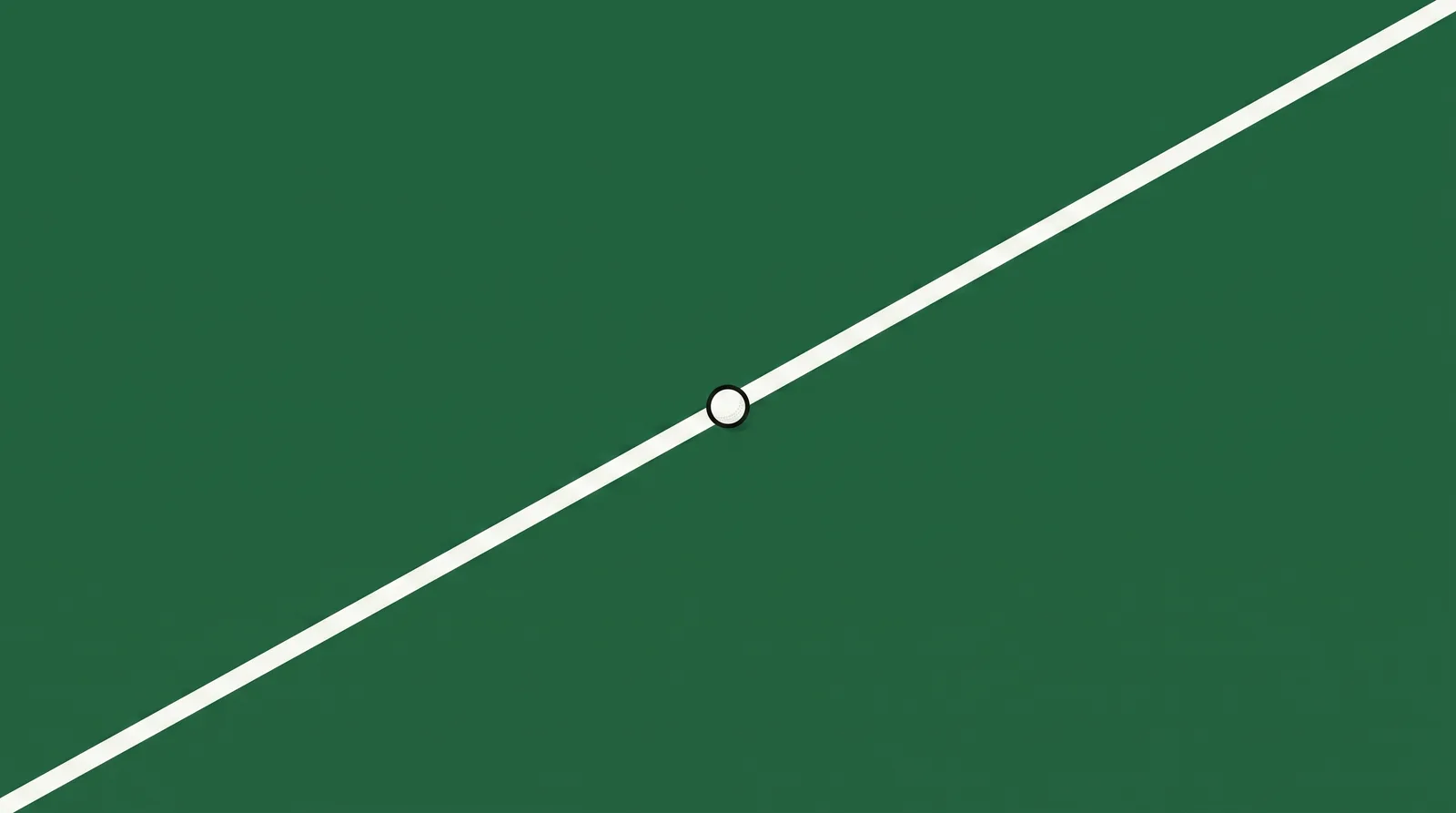
Out of bounds is the only ruling in golf that costs you a stroke and your position at the same time. It is also the one amateurs improvise around most, dropping a ball near where it vanished and adding one, which is not a rule and never has been. The actual procedure is short, and the trick that makes it painless takes four seconds on the tee.
Where the boundary edge actually sits
The committee sets the boundaries, and the definition of out of bounds is specific about how the edge is drawn. The R&A specifies that boundary stakes or lines should be white, which is why white is the colour that means "gone" rather than "penalty".
| Marked by | Where the boundary edge is | Are the markers in or out |
|---|---|---|
| Stakes or a fence | The line between the course-side points of the stakes or fence posts at ground level, excluding angled supports | The stakes and fence posts themselves are out of bounds |
| A painted line on the ground | The course-side edge of the line | The line itself is out of bounds |
| A wall, or a fence the committee treats differently | The committee must define it | Stated in the local rules |
Two consequences follow. The edge runs between the stakes, so a ball in the gap between two of them is judged against that imaginary line rather than against the stakes individually. And because the edge extends up above the ground and down below it, a ball under a branch overhanging from an out of bounds tree is still in bounds if the ball itself is inside the line.
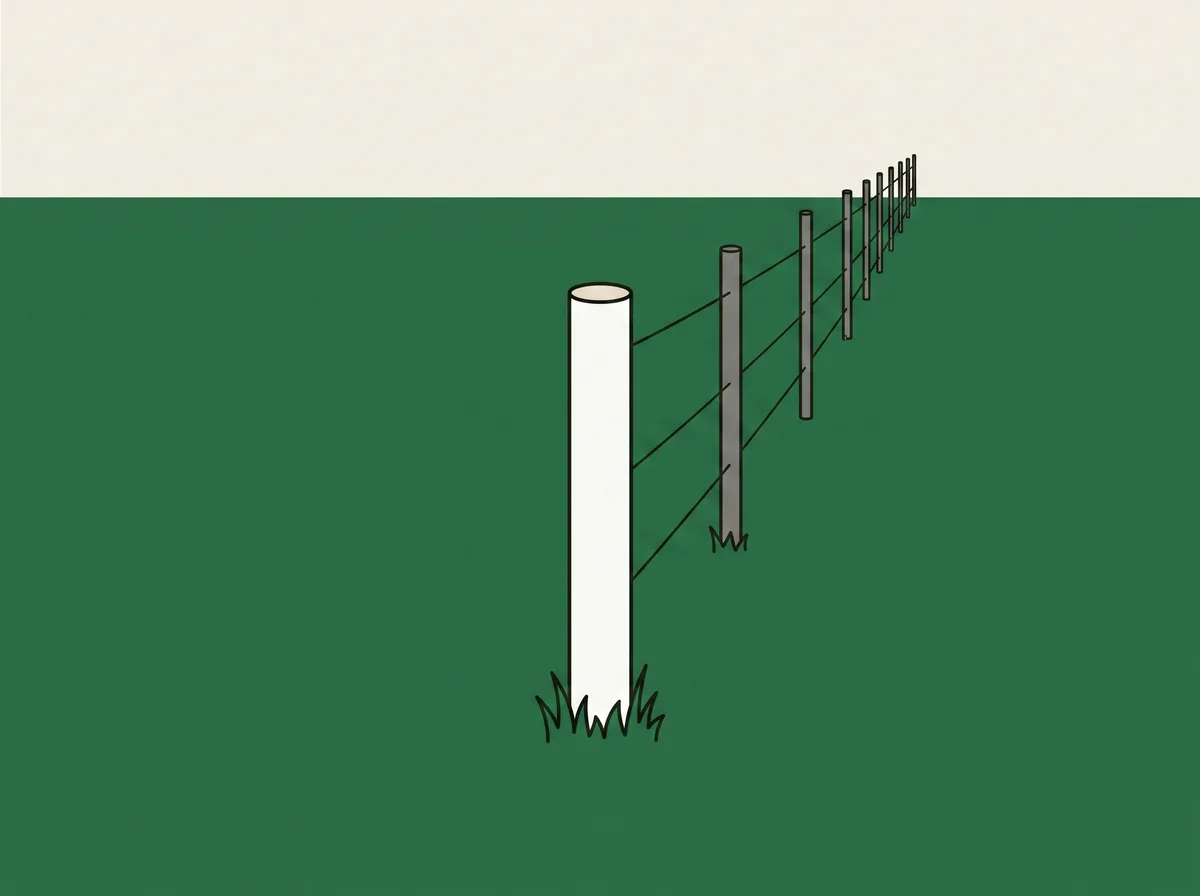
Boundary objects are the harshest things on a golf course. There is no free relief from them at all, even when a fence post sits directly in your swing, and they are treated as immovable even when loose in the ground. That matters before you pull a wobbly stake out of the turf: doing so improves the conditions affecting your stroke and carries the general penalty under Rule 8.1a. Angled supports, guy wires and any gate, steps or bridge used to get over the fence are not boundary objects, so relief from those is available.
All of it outside
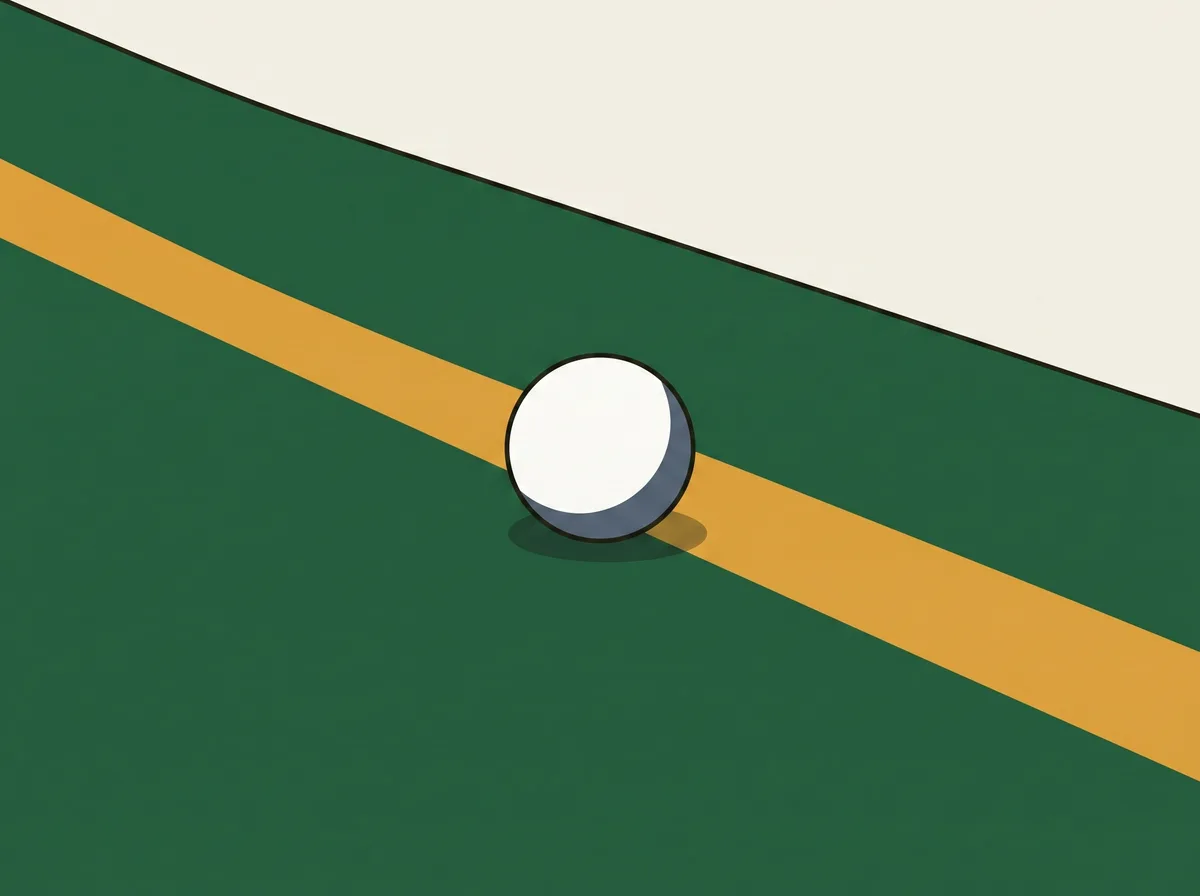
Rule 18.2a(2) contains the sentence that decides most disputes: "A ball at rest is out of bounds only when all of it is outside the boundary edge of the course."
The ball is in bounds if any part of it touches or lies above anything inside the edge, so half a ball hanging over a white line is in bounds and playable. That is the opposite of the intuition most golfers carry, which treats the line as a threshold the ball crosses. The rule also permits you to stand out of bounds to play a ball on the course, because where your feet are has never mattered.
Stroke and distance, and where you actually replay from
Stroke and distance means both words. You add one penalty stroke, and you give up the distance by returning to the previous spot. A tee shot out of bounds means your next shot from the tee is your third.
Where "the previous spot" is depends on which area of the course you played from, and Rule 14.6 sets three different procedures. This is the detail almost nobody knows.
| Previous stroke made from | How you put the ball back in play |
|---|---|
| The teeing area | Play from anywhere inside the teeing area, and you may tee it |
| The general area, a bunker or a penalty area | Drop in a relief area of one club-length from the spot of the previous stroke, in the same area of the course, not nearer the hole |
| The putting green | Place the ball on the spot of the previous stroke |
Getting this wrong is expensive, because playing from a wrong place in breach of Rule 18.2 is the general penalty under Rule 14.7a, two strokes on top of the one you already added. If the previous stroke was from the fairway you drop, and you may drop anywhere in that one club-length area, which often means a better lie than the one you hit from.
A quirk in Rule 18.1 is worth knowing. If you replay from the teeing area and the original is found within the three minute window before you have struck the teed ball, you may abandon the new ball and play the original with no penalty, because a teed ball is not in play until you swing at it. Do the same from the fairway, where you had to drop, and the dropped ball is already in play. Playing the original then is a wrong ball.
The provisional ball is the whole trick
If a shot might be lost outside a penalty area or might be out of bounds, Rule 18.3 lets you play a second ball immediately and walk forward once. Find the original in bounds within three minutes and you pick the provisional up at no cost.
The announcement is not a formality. Rule 18.3b requires you to tell someone before the stroke, using the word "provisional" or otherwise clearly indicating what you are doing. The R&A gives worked examples of both sides of the line. "I'm playing a ball under Rule 18.3" and "I'm going to play another just in case" are enough. "I'm going to re-load" and "I'm going to play another" are not, and a ball played after either of those becomes your ball in play under stroke and distance, whatever the original turns out to be doing.
You may keep playing a provisional as long as each stroke is made from a spot the same distance or farther from the hole than where the original is estimated to be. Play it from nearer the hole than that estimate and it becomes your ball in play automatically.
The local rule that replaces the walk back
Model Local Rule E-5 exists because pace of play collapses when a golfer with no provisional has to walk back 250 yards. It is optional, and it only applies where the committee has put it in place, so check the scorecard.
Where it is in force, a ball lost or out of bounds comes back into play for two penalty strokes using two reference points: where the ball is estimated to have come to rest or crossed the boundary, and the nearest point of fairway to that spot that is not nearer the hole. You may drop anywhere between the line from the hole through the first point and the line from the hole through the fairway point, with two club-lengths of margin outside each. Fairway here means any grass in the general area cut to fairway height or less.
Two limits matter. It cannot be used when the ball is known or virtually certain to be in a penalty area, and The R&A states it is "not appropriate for competitions limited to highly skilled players (that is, professional competitions and elite amateur competitions)".
The cheapest fix is not a rule at all
Every legal option costs at least one stroke, so the real saving is in not needing them. Out of bounds is overwhelmingly a tee shot problem, and usually a shape problem rather than a distance one, which is what fixing a slice and driving off the tee both address. Where a hole has boundary down one side, aiming at the far edge of the safe half is a strategy question covered in course management. Playing a provisional whenever a ball might be gone is also the single biggest thing a group can do for pace of play.
For the levels these penalties sit at, what each breach costs has the full table, and how the rulebook is organised covers the five areas of the course. A shorter starting list is in the beginner rules checklist.
Key takeaways
- A ball is out of bounds only when all of it is outside the boundary edge. Touching or overhanging the line is in bounds.
- With stakes or a fence, the boundary edge runs between the course-side points at ground level, and the stakes are out of bounds.
- With a painted line, the boundary edge is the course-side edge of the line, and the line itself is out of bounds.
- Boundary objects give no free relief and are treated as immovable even when loose.
- Out of bounds is stroke and distance: one penalty stroke and replay from the previous spot.
- From the tee you re-tee. From the general area, a bunker or a penalty area you drop within one club-length of the previous spot. From the green you place.
- Playing from a wrong place adds the general penalty on top, so the procedure matters.
- Announce a provisional with the word "provisional" or an equally clear phrase, before the stroke.
- Model Local Rule E-5 gives a two stroke fairway drop instead, but only where the committee has adopted it.
Common questions
What is the penalty for hitting a ball out of bounds?
One penalty stroke, plus replaying from where you made the previous stroke. A tee shot out of bounds means your next shot is your third from the tee. The distance you lose is part of the penalty, which is why it is called stroke and distance.
Can I drop where my ball went out of bounds?
Not under the Rules of Golf. The only options are stroke and distance, or, where the committee has adopted Model Local Rule E-5, a drop near the fairway for two penalty strokes. Dropping where the ball crossed and adding one stroke is playing from a wrong place.
What do white stakes mean in golf?
White marks the boundary of the course, so a ball entirely beyond them is out of bounds. The stakes themselves are out of bounds and you get no free relief from them, unlike yellow and red stakes which mark penalty areas.
Is a ball touching the out of bounds line still in play?
Yes. Rule 18.2a(2) says a ball is out of bounds only when all of it is outside the boundary edge, so any part touching or overhanging the course side keeps it in bounds and playable.
Can I stand out of bounds to hit my ball?
Yes. There is no restriction on where you stand, only on where the ball lies. You may stand outside the boundary to play a ball that is on the course.
What is a provisional ball?
A second ball played under Rule 18.3 when the original might be lost outside a penalty area or out of bounds, to save the walk back. You must announce it before playing. If the original is found in bounds within three minutes, you abandon the provisional at no cost.
What happens if I do not say provisional?
The ball becomes your ball in play under penalty of stroke and distance, and the original is out of play even if it turns up sitting in the fairway. The R&A specifically rules that "I'm going to play another" and "I'm going to re-load" are not clear enough.
Can I get relief from a boundary fence?
No. Boundary objects give no free relief, and moving or bending one to improve your stroke is the general penalty under Rule 8.1a. Angled supports, guy wires and any gate or steps over the fence are not boundary objects, so relief is available from those.
Is out of bounds the same as a lost ball?
The procedure is identical, but the triggers differ. A lost ball is one not found within three minutes. Out of bounds applies wherever the ball ends up beyond the boundary, found or not. Both cost one stroke and a return to the previous spot.
Tom Ashworth
Tom Ashworth is a PGA Professional who has taught golf since 2012, working mainly with beginners and mid-handicappers at club level in Surrey. He reviews the instruction guides on Learn Golf for technical accuracy before they publish.
Most of his teaching is with players in their first three years of the game, and most arrive having been told too much: six swing thoughts collected from videos, half of them contradicting each other. His approach is to check the grip and the alignment before touching the swing, on the basis that most bad ball flight is decided at address.