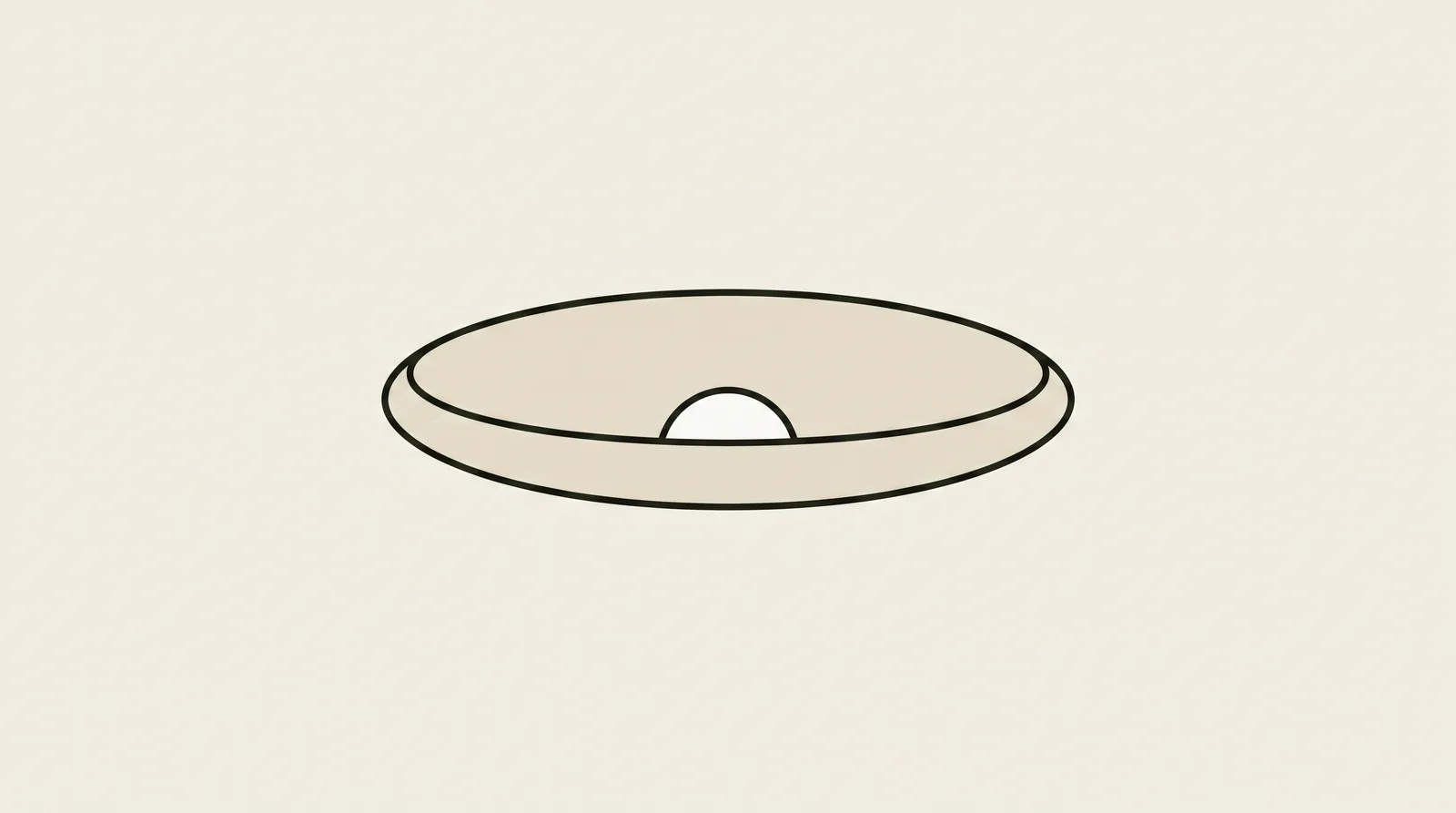
The ball has come down steeply, dug its own crater and settled at the bottom of it. Every technique you learned for a normal bunker shot is now working against you, because a shallow splash cannot reach a ball sitting below the surface. This guide covers what changes, the method that works, and the outcome you should be aiming for rather than the one you want.
Why the normal technique fails
A standard greenside bunker shot works by bounce. You open the face, which exposes the wedge's sole to the sand, and the sole skids through a shallow layer under the ball and throws sand and ball out together. Nothing touches the ball at all.
That entire mechanism depends on the ball sitting on top of the sand with a layer of sand beneath it to splash. A plugged ball sits in the sand with the surface at or above its equator. There is no thin layer to slide through, and an open face with active bounce will simply skid off the surface and into the middle of the ball.
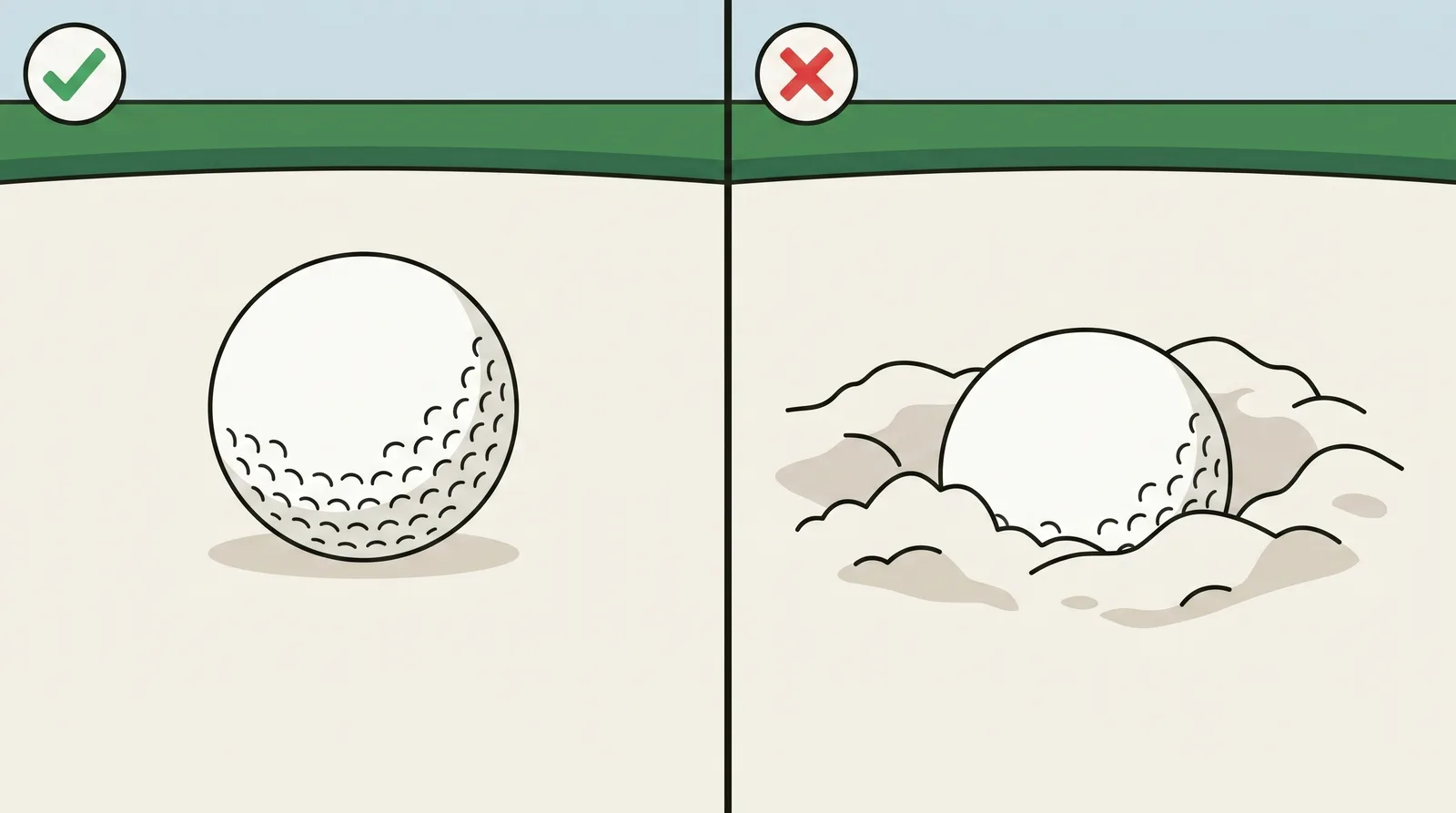
Reading how bad it is
Not all plugged lies are equal, and the depth decides which method applies and how much you should expect.
| How it sits | Common name | What is realistic |
|---|---|---|
| Half buried, top half visible | Fried egg | Green, with run. Playable to a middle target |
| Sand at the equator | Plugged | On the green if there is room. No spin at all |
| Only the top of the ball showing | Buried | Out of the bunker is the goal. Anywhere is a good result |
| Below the surface, under a lip | Unplayable territory | Consider the penalty option |
That bottom row is a real decision rather than an admission of defeat. Under Rule 19 of the Rules of Golf, you may declare a ball unplayable anywhere on the course, and in a bunker there are options within the bunker for one penalty stroke and an option outside it for two. A golfer who takes a sensible penalty from a genuinely buried lie under a lip beats a golfer who takes three to get out.
The method
Five changes from a standard bunker shot, and they compound.
- Square the clubface. Not open. The leading edge should point at the target with the sole flat or slightly toe-down, which takes the bounce out of play and lets the edge cut in.
- Play the ball back of centre in your stance, which steepens the angle the club arrives at.
- Set your weight on your lead foot, about 60 to 70%, and keep it there. No shifting back.
- Grip down slightly and grip a little firmer than normal. The sand is going to fight the club and a loose grip lets the face turn.
- Swing steeply, hitting the sand about an inch behind the ball, and drive down and through rather than trying to follow through. On a deep lie the club may barely finish at all.
The swing feels like a chop rather than a splash, and that is correct. You are excavating the ball rather than lifting it.
What comes out, and how to plan for it
The ball will come out lower than a normal bunker shot, with substantially more roll and essentially no spin. This is not a technique flaw, it is physics: the ball never touches the face cleanly, so there is nothing to generate spin with.
Plan for a shot that lands early and runs. If the pin is tight to your side of the green, aim for the middle and take the two-putt. If there is a bunker or water beyond the green, take even less risk than that.
The exception is the fried egg, where enough of the ball is above the surface that you can use a slightly less extreme version: face square but not shut, ball just back of centre, and a normal follow through. That one comes out with modest run and can be aimed at a flag if there is green to work with.
Wet and firm sand changes the calculation
Wet sand is denser and holds together, which cuts both ways. A ball plugs less readily in wet sand because the surface is firmer, but when it does plug it is genuinely harder to move because the sand around it is compacted rather than loose.
In wet or heavily compacted sand, commit harder rather than swinging more steeply. Extra steepness in firm sand tends to bounce the club rather than dig it. Speed is what gets you out.
The other wet-sand adjustment is that the ball comes out even hotter, because there is less loose sand to cushion it. Expect more run again, and take a club with more loft than you think if you have the choice.
Once you are out, the recovery is a normal one. Long-range speed control is what saves the hole from here rather than a holed putt, and that is covered in putting distance control.
Key takeaways
- Square the clubface, do not open it. Bounce is the enemy from a plugged lie.
- Ball back of centre, weight forward, and a steep descending strike about an inch behind the ball.
- Expect a low ball with heavy run and no spin. Aim for the middle of the green, not the flag.
- The club stopping in the sand is normal here. The energy is moving sand, not the ball.
- Read the depth first. A fried egg is playable to a target, a fully buried ball is an escape.
- Under a lip and genuinely buried, taking an unplayable penalty under Rule 19 is often the lower score.
- Wet or compacted sand needs more commitment rather than more steepness, and runs out further still.
Common questions
How do you hit a plugged lie in a bunker?
Square the clubface rather than opening it, play the ball back of centre, put your weight on the lead foot and swing steeply down into the sand about an inch behind the ball. The leading edge needs to dig under the ball, which is the opposite of the sliding action used from a clean lie.
What is a fried egg lie in golf?
A ball that has landed steeply and sits in a small crater of its own making, with roughly the top half still visible and a ring of displaced sand around it. It is the mildest form of plugged lie and is usually playable to a target on the green, with more run than a normal bunker shot.
Why should I not open the face on a buried lie?
Opening the face exposes the wedge's bounce, which is the rounded sole designed to stop the club digging. From a clean lie that is exactly what you want. From a plugged lie you need the club to dig, so the bounce causes the sole to skid off firm sand and the leading edge to catch the middle of the ball.
Will a plugged lie shot have any spin?
Essentially none. The ball is struck through a layer of sand and never contacts the face cleanly, so there is nothing to generate spin. Plan for a ball that lands and runs, and pick a target that accounts for it.
Can I take relief from a plugged lie in a bunker?
Not free relief, since a plugged lie in a bunker is part of the game. You may declare the ball unplayable under Rule 19 and take a penalty, with options inside the bunker for one stroke and an option outside it for two. From a genuinely buried lie under a lip that is often the lower-scoring choice.
What club should I use from a plugged lie?
A sand wedge with the face square works for most golfers and keeps the decision simple. If you carry a low-bounce lob wedge it has a sharper leading edge and digs more readily, which suits a deeply buried ball. Avoid anything with a lot of bounce and an open face.
How do I stop the ball plugging in the first place?
You mostly cannot, because it depends on how steeply the ball came down and how soft the sand is. Soft, freshly raked, dry sand plugs more than firm or wet sand. The one thing within your control is landing the ball on the green rather than in the bunker.
Is a plugged lie harder in wet sand?
Yes, when it happens. Wet sand is compacted, so there is more resistance around the ball and it takes more speed to move it. The upside is that balls plug less often in wet sand because the surface is firmer. When they do, commit harder rather than swinging steeper.
How far back should the ball be in my stance?
Back of centre, roughly where you would play a low chip. Far enough back to steepen the angle of attack, not so far that you cannot deliver any loft at all. Combined with weight on the lead foot, that produces the descending strike the shot needs.
Should I follow through on a plugged bunker shot?
Try to, but do not force it. On a deep lie the sand will stop the club and a short finish is normal. What matters is that you are accelerating into the sand rather than decelerating before it, because a club that slows down before impact will not move the sand on top of the ball.
Tom Ashworth
Tom Ashworth is a PGA Professional who has taught golf since 2012, working mainly with beginners and mid-handicappers at club level in Surrey. He reviews the instruction guides on Learn Golf for technical accuracy before they publish.
Most of his teaching is with players in their first three years of the game, and most arrive having been told too much: six swing thoughts collected from videos, half of them contradicting each other. His approach is to check the grip and the alignment before touching the swing, on the basis that most bad ball flight is decided at address.