Golfers avoid the rulebook because they imagine hundreds of pages of legalese, then spend years guessing and losing strokes to guesses. The Rules of Golf are 25 rules built on five areas of the course and three penalty levels. Learn that skeleton and any situation you meet becomes a lookup rather than an argument.
Twenty five rules, in four blocks
The rulebook is not a list of situations. It is a sequence, and knowing the sequence tells you roughly where to look before you look.
Rules 1 to 4 set the frame: the game and player conduct, the course, the competition, and the player's equipment. Rules 5 and 6 cover playing a round and playing a hole. Rules 7 to 13 cover playing the ball, from searching for it through to the two special areas that carry their own restrictions, bunkers and putting greens.
Rules 14 to 19 are the engine room. They cover the mechanics of marking, lifting and dropping, free relief from loose impediments and abnormal course conditions, and the three penalty relief rules: penalty areas, stroke and distance, and an unplayable ball. If a ball has gone somewhere you do not want it, the answer is in that block.
Rule 20 handles disputes and rulings. Rules 21 to 24 cover other formats such as foursomes, four-ball and team events. Rule 25 modifies certain rules for players who are blind, players who are amputees, players who use assistive mobility devices, and players with intellectual disabilities.
The five areas decide almost everything
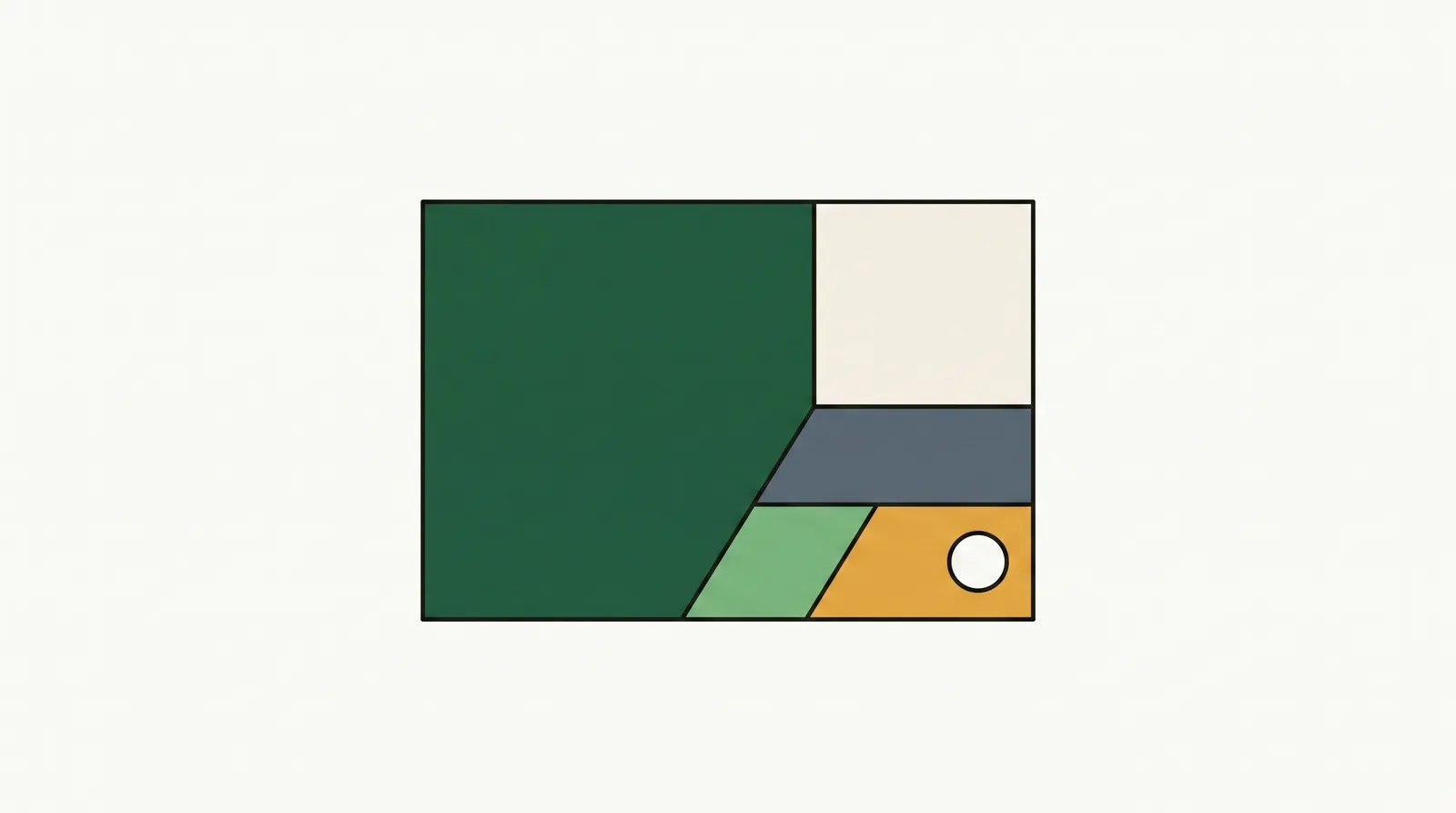
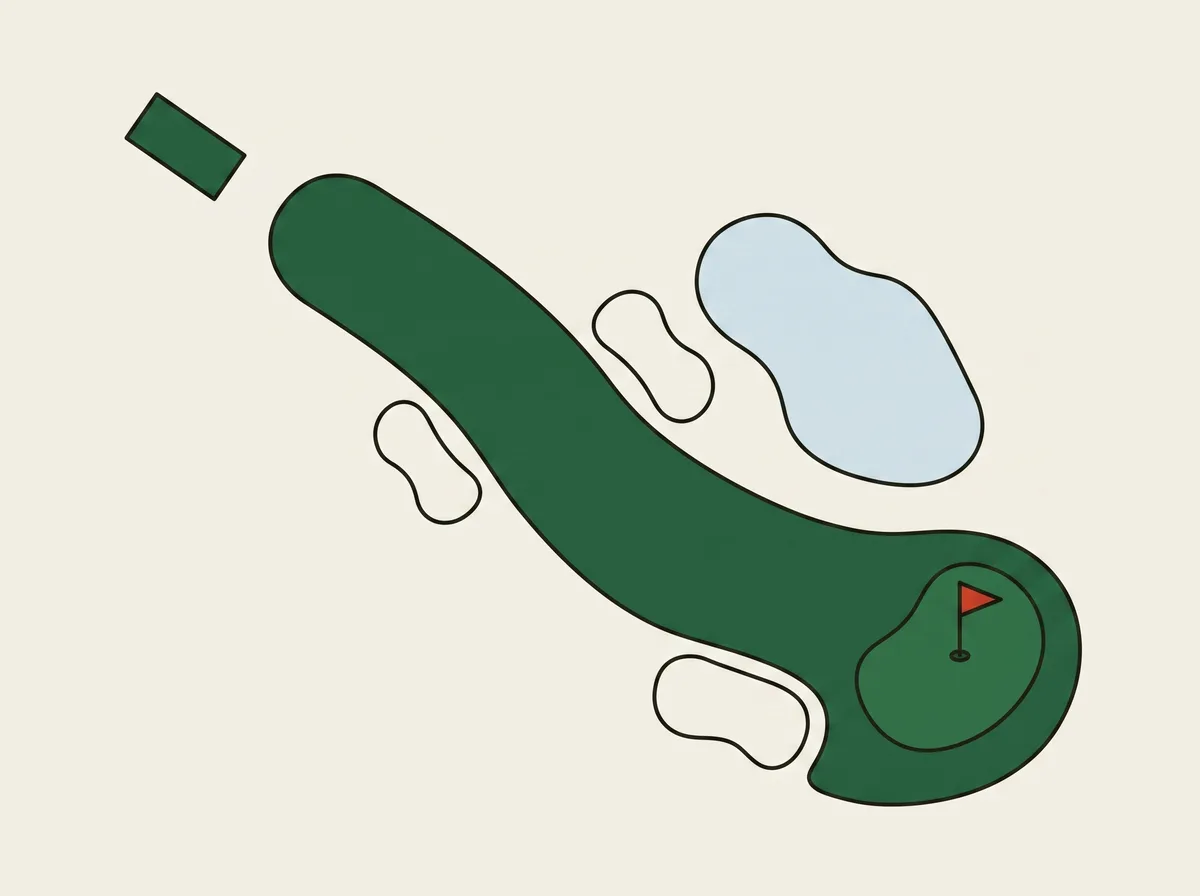
Rule 2.2 divides the course into five defined areas, and your relief options change depending on which one the ball is in. This is the single most useful concept in the rulebook.
| Area | What it covers | What is different about it |
|---|---|---|
| General area | Everything that is not one of the other four, including fairway, rough, trees and all wrong greens | Free relief from abnormal course conditions and embedded balls is available here |
| Teeing area | The rectangle you must start the hole from, two club-lengths deep | You may tee the ball and improve the ground surface |
| Penalty areas | Water and any other area the committee defines as one | Penalty relief only, and no free relief for abnormal conditions or an unplayable ball |
| Bunkers | Prepared areas of sand | Restrictions on touching the sand before the stroke |
| Putting green | The green of the hole being played | You may mark, lift, clean and replace the ball, and repair damage |
The general area is the one to internalise, because it is where most golf happens and because the pre-2019 name for it, "through the green", still turns up in older books and older playing partners.
Three penalty levels, and nothing in between
Rule 1.3c sets out exactly three penalties. There is no half stroke and no warning.
A one-stroke penalty applies where the advantage is minor or where the player is taking penalty relief. The general penalty is loss of hole in match play and two penalty strokes in stroke play. Disqualification is reserved for serious misconduct or for breaches where the potential advantage is too large to correct.
The useful consequence is that you never have to remember a penalty amount, only a category. Working out which category a breach falls into is the whole job, and what each penalty actually costs walks through the common ones by situation.
Rule 1.3c(4) adds a wrinkle worth knowing. Breach several rules between intervening events and you get one penalty. Breach a rule, have an intervening event such as making a stroke, then breach again, and you get both.
The definitions do more work than the rules
Roughly seventy terms are formally defined, and a defined term means exactly what the definition says rather than what it sounds like. Three of them decide more rulings than any rule does.
A club-length is the longest club you are carrying other than the putter, measured from the toe to the butt end of the grip. It is not a yard, and it is not your driver if your driver is in the car.
"Known or virtually certain" is the standard for deciding what happened to a ball. It means conclusive evidence, or, allowing a very small degree of doubt, that all reasonably available information shows the event was at least 95% likely. Only information found within the three minute search time counts.
Temporary water is an accumulation you can see before or after taking your stance without pressing down excessively with your feet. Ground that is merely wet, muddy or soft does not qualify, which is why the puddle that appears under your shoe and vanishes is not relief.
The vocabulary changed in 2019 and the old words persist
The 2019 revision rewrote the terminology, and the old terms still circulate in clubhouses, older instruction books and a great deal of online advice. Using the old word usually means applying the old procedure too, which is where the strokes go.
| Old term or procedure | Current term or procedure | Rule |
|---|---|---|
| Water hazard | Penalty area | 17 |
| Through the green | General area | 2.2 |
| Shoulder height drop | Knee height drop | 14.3b |
| Casual water | Temporary water | Definitions |
| Five minute search | Three minute search | 18.2a(1) |
| Flagstick must be removed for a putt | Flagstick may be left in | 13.2a |
| No grounding the club in a water hazard | No restriction in a penalty area | 17.1b |
That last row surprises people. Rule 17.1b states that a ball in a penalty area may be played as it lies under the same rules that apply to a ball in the general area, "which means there are no specific Rules limiting how a ball may be played from a penalty area". Grounding the club and moving loose impediments are both fine, a point covered in full in red and yellow penalty areas. The bunker restrictions were never lifted and remain in Rule 12.2b.
Local rules are real rules
Every course can modify how the rules apply through local rules, and the committee's local rules sit alongside the 25 rules with equal force. They are usually printed on the back of the scorecard or on a notice by the first tee, and almost nobody reads them.
The one worth checking every time is whether the club has adopted Model Local Rule E-5, the alternative to stroke and distance for a ball lost or out of bounds. Where it is in place it gives a two stroke drop near the fairway instead of the walk back. The R&A describes it as appropriate for general play and specifically "not appropriate for competitions limited to highly skilled players". The mechanics are in the out of bounds rule.
Finding a ruling in under a minute
The skill is triage, not memory. Ask where the ball is, then what you want to do, then what it costs.
If the ruling is genuinely unclear in a stroke play competition, Rule 20.1c(3) lets you play two balls, announce which one you want to count before you play either, and let the committee decide afterwards. It is the correct answer to "we could not agree, so we guessed".
From there, how a golf score is built covers par and bogey, how a handicap works explains what those scores turn into, and the bunker restrictions make more sense alongside greenside bunker technique. How often penalty areas feature at all depends on the type of course you play.
Key takeaways
- The Rules of Golf are 25 rules, jointly published by The R&A and the USGA and revised every four years.
- Five defined areas of the course determine your relief options: general area, teeing area, penalty areas, bunkers and putting green.
- There are exactly three penalties: one stroke, the general penalty of two strokes or loss of hole, and disqualification.
- Rules 14 to 19 hold every relief procedure, so that is where to look when a ball is somewhere bad.
- A club-length is your longest club other than the putter, not a fixed distance.
- The 2019 revision replaced water hazard with penalty area, through the green with general area, and the shoulder height drop with knee height.
- Local rules on the scorecard have the same force as the rules in the book.
- For a shorter list aimed at a first season, start with the beginner rules checklist.
Common questions
How many rules of golf are there?
Twenty five. Rules 1 to 4 cover the game and equipment, 5 and 6 cover playing a round and a hole, 7 to 13 cover playing the ball, 14 to 19 cover relief procedures, 20 covers rulings, 21 to 24 cover other formats, and Rule 25 covers modifications for players with disabilities.
Who writes the Rules of Golf?
The R&A and the USGA write and publish them jointly, and they apply worldwide. The full text is free on The R&A website, and the rules are reviewed on a four year cycle.
What are the five areas of the course?
The general area, the teeing area you must start the hole from, all penalty areas, all bunkers, and the putting green of the hole you are playing. The general area is everything else, including fairway, rough and any wrong green.
What is the general penalty in golf?
Two penalty strokes in stroke play, or loss of hole in match play. It applies to more serious breaches such as playing a wrong ball, testing the sand in a bunker, or carrying more than fourteen clubs.
What replaced the water hazard rule?
Penalty areas, under Rule 17. The change went further than the name: committees can now define dry areas such as desert or dense scrub as penalty areas, and the old prohibition on grounding your club in a hazard was removed.
Do I have to know all the rules to play?
No. A short list covers almost every round, and the rest is lookup. What matters more is knowing when a situation is unusual enough to be worth checking, because the rules are often more generous than the version golfers invent.
Can a golf club change the rules?
A committee can add local rules that modify how the rules apply at that course, and those local rules carry full force. They cannot waive a rule of golf, and they are usually printed on the scorecard or posted near the first tee.
What is a club-length used for?
Measuring relief areas and defining the teeing area. It is the longest club you have with you during the round other than the putter, measured from the toe to the butt end of the grip, so it changes if you leave the driver behind.
What does known or virtually certain mean?
It is the standard for deciding what happened to a ball. It requires conclusive evidence, or at least 95% likelihood based on all reasonably available information. Only what you discover inside the three minute search window counts toward it.
What happens if two players disagree about a ruling?
In stroke play, Rule 20.1c(3) lets you play two balls, announce before playing which one you want counted, and report the facts to the committee, which decides afterwards. In match play the players settle it between themselves or ask for a ruling before anyone plays.

Tom Ashworth
Tom Ashworth is a PGA Professional who has taught golf since 2012, working mainly with beginners and mid-handicappers at club level in Surrey. He reviews the instruction guides on Learn Golf for technical accuracy before they publish.
Most of his teaching is with players in their first three years of the game, and most arrive having been told too much: six swing thoughts collected from videos, half of them contradicting each other. His approach is to check the grip and the alignment before touching the swing, on the basis that most bad ball flight is decided at address.