Free relief from a cart path, a penalty drop by a pond, a ball declared unplayable in the trees: all three end in exactly the same procedure. It is one of the few things in the rulebook you can learn once and use forever, and it is also where a saved stroke quietly turns into a two stroke penalty for playing from a wrong place.
Measure the relief area before you drop anything
The relief area is the whole ball game, and it is defined by three things every time. Work them out before the ball leaves your hand and the rest is mechanical.
| Element | What it means | Where it comes from |
|---|---|---|
| Reference point | The single spot everything is measured from | The rule you are taking relief under |
| Size | How many club-lengths out from that point | One for free relief and back-on-the-line, two for lateral relief |
| Limits | Which areas of the course qualify, and how near the hole you may get | Always includes "not nearer the hole than the reference point" |
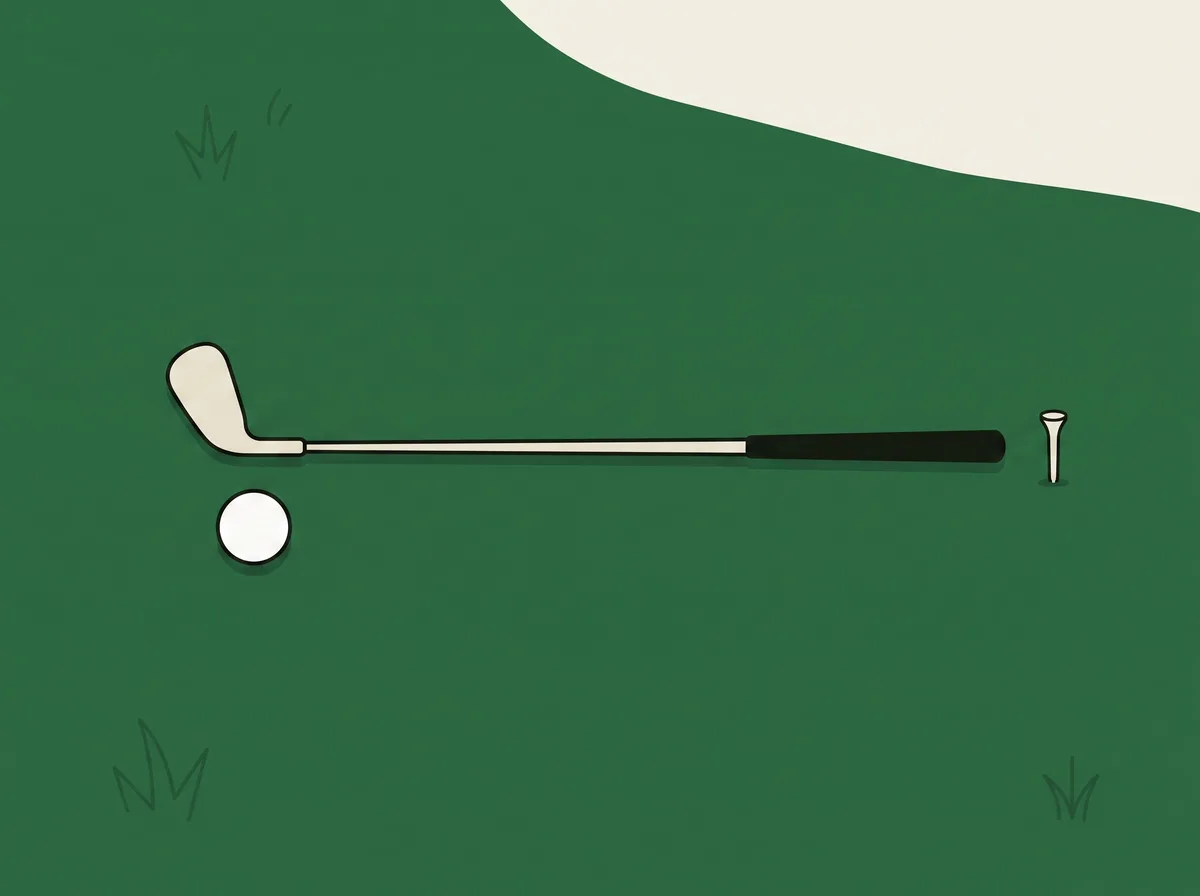
A club-length is your own longest club other than the putter, measured from the toe to the butt end of the grip. It is not a yard and it is not a fixed distance, so a golfer carrying a driver has a bigger relief area than one who left it in the car, and how many clubs you carry quietly changes the geometry.
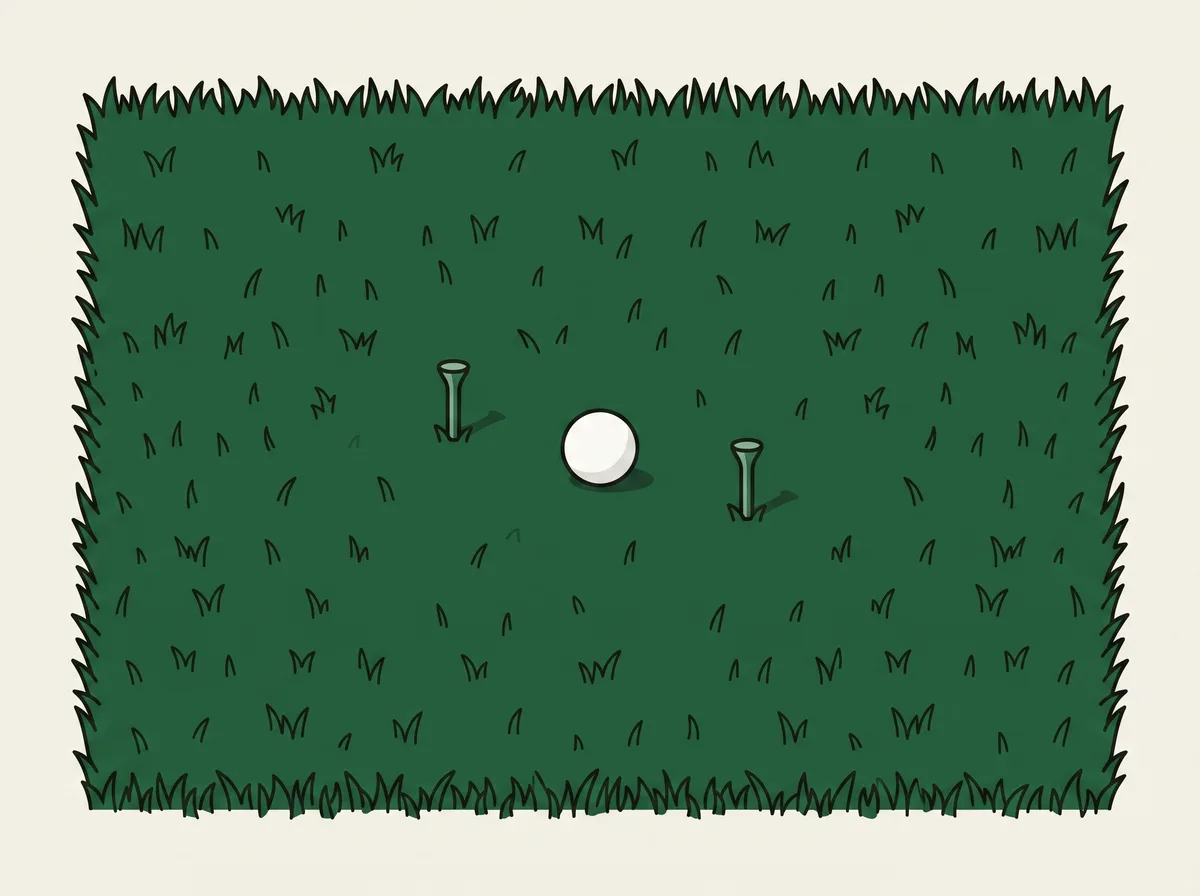
Mark the edge of the area with a tee before you drop. It costs five seconds, and it removes the argument about whether the ball finished inside, which is the argument that turns into a penalty.
The procedure itself
Rule 14.3 sets out the whole thing in three requirements, and all three have to be met for the drop to count.
- Establish the reference point and the relief area, and mark it.
- Take the ball, which may be the original or any other ball, and stand wherever you like. You may stand inside or outside the relief area.
- Hold the ball at knee height. That means the height of your own knee when standing, and you do not have to be standing to do it.
- Let go so the ball falls straight down. No throwing, no spinning, no rolling, nothing that could influence where it finishes.
- Make sure it touches nothing on you or your equipment before it hits the ground.
- Check where it comes to rest. Inside the relief area, you are done and you play it as it lies.
Only the player may drop, never a caddie or a partner, though Rule 25 relaxes that for players with certain disabilities by allowing general authorisation for someone else to drop. Substituting a different ball is always allowed at this point, so a scuffed ball can be swapped for a fresh one at no cost.
Back-on-the-line relief is the one variation. There the ball has to be dropped on the line itself, and the spot where it first touches the ground becomes the reference point for a one club-length relief area. Dropping even slightly to one side of the line puts the ball in a wrong place no matter where it finishes, including if it rolls back onto the line, and the R&A states that plainly.
Knee height, and why the old habit still costs strokes
Knee height is defined as the height of the player's knee when they are standing up, which is not the same as the height of your hand while you are crouching. The R&A confirms the player does not have to be standing to make the drop, so kneeling and holding the ball at what would have been standing knee height is legal.
On slopes it gets a small extra allowance. Where the ground is uneven, the ball counts as dropped from knee height provided it falls a distance corresponding to knee height from a position where you could have stood to drop on that spot. The one absolute is that the ball must fall through the air. Setting it down is placing, not dropping.
| The old procedure | The current rule | Rule |
|---|---|---|
| Drop from shoulder height at arm's length | Drop from knee height | 14.3b(2) |
| Ball could roll a set distance out of the area and stay in play | Ball must come to rest in the relief area | 14.3c(1) |
| Re-drop, then place at the point it struck the course | Two drops, then place where the second drop first touched the ground | 14.3c(2) |
The R&A made knee height the standard in the 2019 modernisation, describing it as a new dropping procedure and pairing it with a single defined relief area that the ball has to be played from. Both changes exist to keep the ball near where relief was taken, and the shoulder height habit is still visible on any Saturday morning.
When the ball rolls out
This is the sequence worth memorising, because a ball on a slope rarely settles first time and improvising here is expensive.
Drop it correctly and it rolls out of the relief area, drop again. If the second correct drop also rolls out, you stop dropping and place a ball on the spot where that second drop first touched the ground. If the placed ball will not stay there, place it on the same spot a second time. If it still will not stay, place it on the nearest spot where it will stay at rest, and the R&A notes that this may end up outside the relief area.
There is no penalty for the ball hitting you, your bag or anyone else after it lands. Rule 14.3c(1) is explicit that a correctly dropped ball which touches a person, equipment or an outside influence before coming to rest is judged only on where it finishes. Deliberately deflecting or stopping it is a different matter and carries the general penalty under Rule 14.3d, which survives even if you then drop again properly.
What it costs when it goes wrong
The penalty scales with how far outside the rules you finished, and the split catches people out.
| What happened | Penalty | Rule |
|---|---|---|
| Dropped in a wrong way, then played from inside the relief area | 1 stroke | 14.3b(4) |
| Dropped in a wrong way, then played from outside the relief area | General penalty | 14.3b(4) |
| Placed when the rule required a drop, wherever you then played from | General penalty | 14.3b(4) |
| Dropped correctly but played from outside the relief area | General penalty | 14.7a |
| Deliberately deflected or stopped your own dropped ball | General penalty | 14.3d |
The general penalty is two strokes in stroke play and loss of hole in match play, which is set out alongside every other breach in what each penalty costs. In stroke play, a wrong place that amounts to a serious breach has to be corrected before you finish the hole, so a drop that was badly wrong is worth fixing on the spot rather than discovering later.
The drop you never take: playing from where you last hit
Several rules send you back to the previous spot rather than to a relief area, and Rule 14.6 sets three different procedures depending on where that stroke came from. From the teeing area you play from anywhere in the teeing area and may tee it. From the general area, a bunker or a penalty area you drop in a one club-length relief area from that spot, in the same area of the course, no nearer the hole. From the putting green you place. The detail sits with stroke and distance, which is where most golfers meet it.
Knowing the procedure is also a pace of play question, since the golfer measuring and marking while others putt is not the one holding anyone up, which sits alongside the rest of on-course convention. If a ball has simply vanished, start with the three minute search instead, and the structure all of this hangs off is in how the rulebook works. A shorter version for a first season is in the beginner rules checklist.
Key takeaways
- Every relief option, free or penalty, ends in the same drop under Rule 14.3.
- Work out the reference point, the size in club-lengths and the limits before you drop, and mark the edge with a tee.
- A club-length is your longest club other than the putter, so it changes with what is in the bag.
- The ball is dropped from knee height, which is your knee height standing, and you may kneel to do it.
- It must fall straight down and touch nothing on you or your equipment before hitting the ground.
- Only the player may drop, never a caddie, and you may substitute a different ball.
- For back-on-the-line relief the ball must be dropped on the line, and where it first lands creates a one club-length relief area.
- The ball must come to rest in the relief area. Two correct drops that roll out are followed by placing.
- Place on the spot where the second drop first touched the ground, then twice more if it will not stay.
- A dropped ball hitting a person or equipment after it lands carries no penalty.
Common questions
What height do you drop a golf ball from?
Knee height, under Rule 14.3b(2). That means the height of your knee when you are standing up, and the ball must fall straight down without touching you or your equipment. The shoulder height drop was replaced when the rules were modernised in 2019.
Do I have to be standing up to drop a ball?
No. The R&A confirms knee height refers to the height of your knee in a standing position, but you may kneel or crouch when you make the drop as long as the ball falls the right distance and falls through the air.
What happens if my dropped ball rolls out of the relief area?
Drop again. If the second correct drop also comes to rest outside the relief area, you place a ball on the spot where that second drop first touched the ground. If it will not stay there, place it again, then on the nearest spot where it will stay at rest.
Can my caddie drop the ball for me?
No. Rule 14.3b(1) requires the player to drop, and nobody else may do it. Rule 25 relaxes this for players with certain disabilities, who may give general authorisation to another person.
How big is the relief area?
It depends on the rule. Free relief from an abnormal course condition and back-on-the-line relief both give one club-length, while lateral relief from a red penalty area or an unplayable ball gives two. Every relief area is limited to being no nearer the hole than the reference point.
What is a club-length in golf?
The length of the longest club you have with you during the round other than the putter, measured from the toe of the club to the butt end of the grip. It is a personal measurement, not a fixed distance.
Is there a penalty if the dropped ball hits me?
Not if it hits you after landing. Rule 14.3c(1) says a correctly dropped ball touching any person, equipment or outside influence before it comes to rest carries no penalty. The ball must not touch you before it hits the ground, and deliberately stopping it is the general penalty.
Can I change to a different ball when I take relief?
Yes. Rule 14.3a lets you use the original ball or another ball each time you drop or place, so relief is a legitimate moment to retire a damaged or scuffed ball.
What is the penalty for dropping in the wrong place?
If you dropped in a wrong way but played from inside the relief area, one stroke. If you played from outside the relief area, or placed when you should have dropped, the general penalty of two strokes in stroke play or loss of hole in match play.
Do I drop or place when I go back to where I last hit?
It depends on the area. From the teeing area you play from anywhere in it and may tee the ball. From the general area, a bunker or a penalty area you drop within one club-length of the spot. From the putting green you place the ball on the spot.
Tom Ashworth
Tom Ashworth is a PGA Professional who has taught golf since 2012, working mainly with beginners and mid-handicappers at club level in Surrey. He reviews the instruction guides on Learn Golf for technical accuracy before they publish.
Most of his teaching is with players in their first three years of the game, and most arrive having been told too much: six swing thoughts collected from videos, half of them contradicting each other. His approach is to check the grip and the alignment before touching the swing, on the basis that most bad ball flight is decided at address.