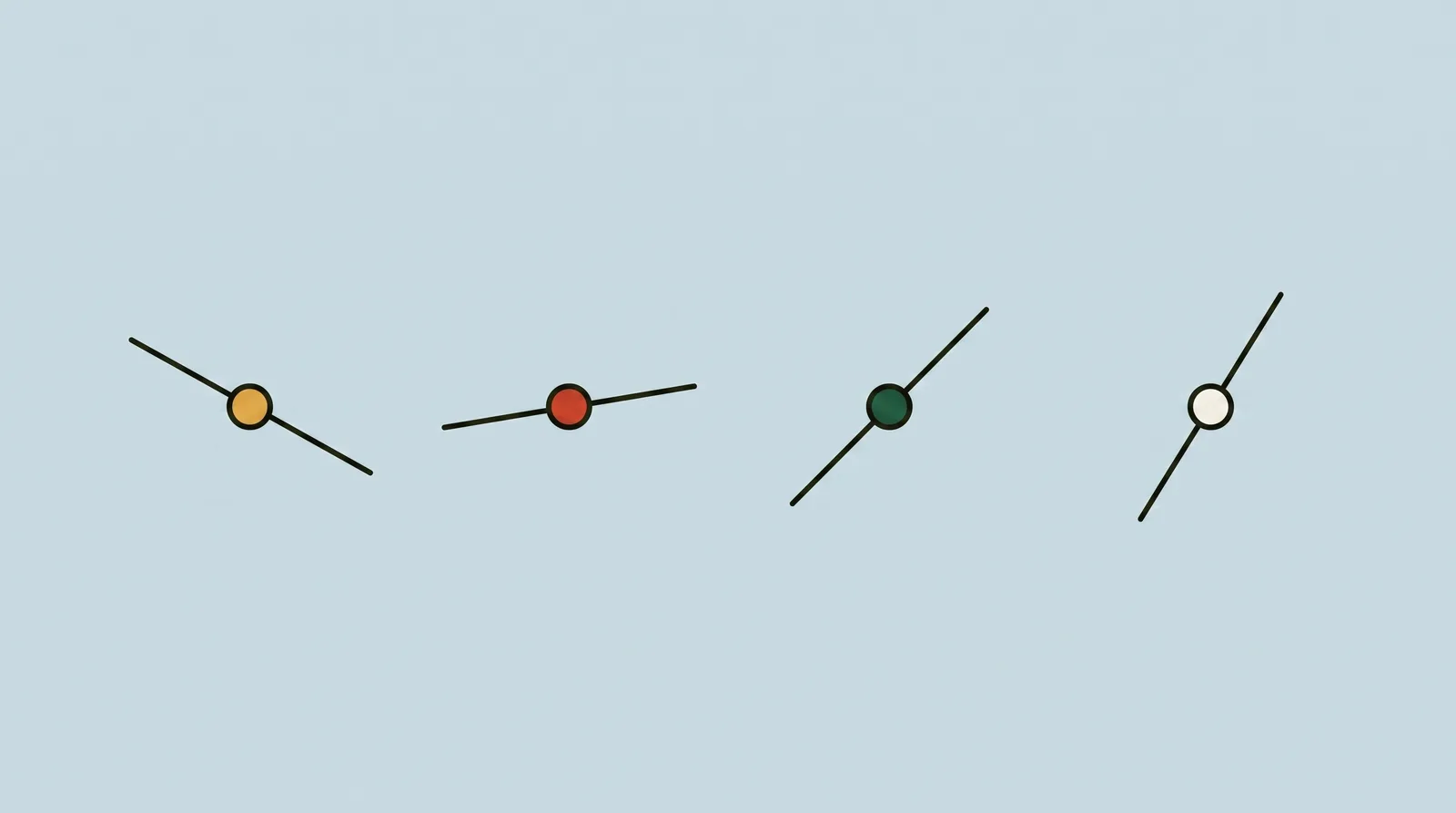
The ball is above your feet and you pull it 30 yards left, again. Uneven lies change what your club does before you have made a single decision about the swing, and most golfers play them as though the ground were flat and then wonder why the ball misbehaved. This guide covers the four slopes, what each one does, and the single principle underneath all of them.
The principle that covers all four
Your swing arc is built around your body. If your body is set up square to a flat world while standing on a slope, the arc and the ground disagree, and the ground wins. It either gets in the way early or it disappears from under the ball.
So the universal adjustment is to match your body to the ground: shoulders tilted parallel to the slope, and a swing that travels along the surface instead of into or over it.
The second half of the principle is that slopes change loft and face aim, and those are two different problems. Up and down slopes change how much loft you are effectively delivering. Side slopes change where the face points at impact. Knowing which problem you have tells you whether to change club or change aim.
Ball above your feet
The most common slope on a course and the one that produces the biggest miss.
Standing on ground that rises to your right puts the ball closer to your hands, which makes the swing flatter and more around your body. A flatter swing closes the clubface relative to the target, so the ball starts left and often draws further left.
What to do:
- Grip down on the club, by an inch or more on a steep slope. The ball is effectively closer to you and the club is effectively longer.
- Stand a touch taller and let the swing be flatter. Do not fight it.
- Aim right of your target. On a moderate slope with a mid iron that is roughly 10 to 15 yards of allowance, and more with a longer club.
- Take one more club than the distance suggests, because gripping down costs you distance.
- Balance is on your toes, so make a smoother swing at about 80%.
Ball below your feet
The awkward one. The ball is further away and lower, which makes the swing more upright, and an upright swing opens the face. The ball goes right.
What to do:
- Use the full length of the grip.
- Bend more from the hips and flex the knees more to get down to the ball, and keep that flex. The commonest fault here is standing up during the downswing, which produces a thin shot.
- Aim left of your target, roughly the same allowance as above in the opposite direction.
- Widen your stance for stability, since your weight is on your heels and you are being pulled forward.
- Swing at 80% again. This lie punishes effort more than any other.
| Lie | Swing becomes | Face effect | Ball goes | Aim |
|---|---|---|---|---|
| Ball above feet | Flatter, more around | Closes | Left | Right of target |
| Ball below feet | More upright | Opens | Right | Left of target |
| Uphill | Steeper into the hill | Adds loft | Higher, shorter | At target, more club |
| Downhill | Shallower, chases | Removes loft | Lower, running | At target, less club |
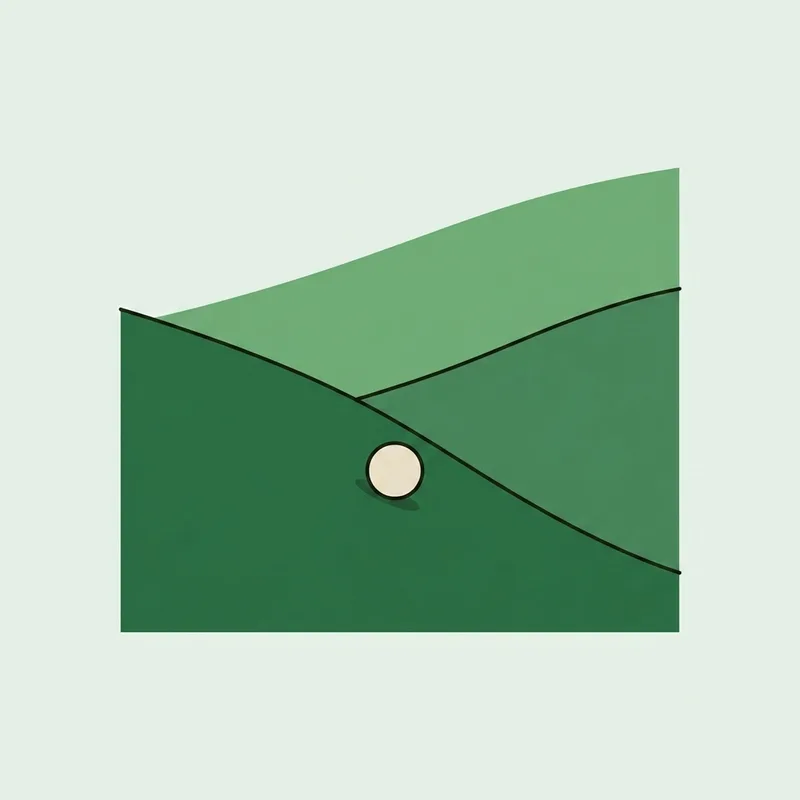
Uphill lie
The ground rises toward the target. This is the friendly one, and the mistake golfers make is not accounting for how much loft it adds.
Setting your shoulders parallel to the slope tilts you back, which effectively adds loft to whatever club you are holding. A 7 iron off a meaningful uphill lie behaves like an 8 or a 9. The ball flies higher, lands softer and travels a good deal shorter.
What to do:
- Shoulders parallel to the slope, so your lead shoulder is higher than your trail shoulder.
- Weight favouring the low foot, which here is the trail foot, and it will feel unusual.
- Ball position slightly forward, toward the high foot.
- Take one or two more clubs than the yardage says.
- Swing along the slope, up the hill. Trying to drive down into an upslope buries the club.
Downhill lie
The hard one. The ground falls away toward the target, which delofts the club and makes clean contact difficult, because the ground disappears from under the ball just as you arrive.
What to do:
- Shoulders parallel to the slope, so your lead shoulder is lower.
- Weight on the low foot, which here is the lead foot, and keep it there.
- Ball position back of centre, toward the high foot.
- Take one or two fewer clubs, because loft has been removed and the ball will run.
- Chase the club down the slope after impact. The instinct is to lift, and lifting is what produces the thinned downhill shot that scuttles away.
Club selection and the honest expectation
Slopes cost accuracy, and the sensible response is to reduce what you are asking for.
Take one more club than you need and swing at 80%. That combination gives you the distance with a shorter, more controllable motion, and a controlled swing on unstable footing is worth more than a full one.
Aim at the fat part of the green, not the flag. A sidehill lie with a tucked pin is a two-putt situation, and treating it as one is the difference between a par and a double. The wider logic is in golf course management.
The related situation worth knowing is a slope inside a bunker, where the same principles apply but the sand removes most of your margin. That is covered in fairway bunker shots. If your uneven lies mostly produce heavy contact, the underlying low point issue is in how to stop hitting fat shots.
Key takeaways
- Set your shoulders parallel to the slope and swing along the ground, not into it.
- The ball moves toward the low ground on every sidehill lie. Aim uphill of your target.
- Ball above feet flattens the swing and closes the face, so the ball goes left. Aim right and grip down.
- Ball below feet steepens the swing and opens the face, so the ball goes right. Aim left and keep your knee flex.
- Uphill adds loft. Take one or two more clubs and expect a higher, shorter shot.
- Downhill removes loft. Take one or two fewer clubs and expect it to come out low and run.
- Take more club and swing at 80%. Balance is worth more than power on any slope.
Common questions
How do I hit a ball above my feet?
Grip down on the club, aim right of your target, and take one more club than the distance suggests. The lie makes your swing flatter, which closes the face, so the ball starts left and often curves further left. Swing at about 80% because your balance is on your toes.
How do I hit a ball below my feet?
Use the full grip, bend more from the hips and knees to reach the ball, and hold that flex through impact. Aim left, because the more upright swing opens the face and sends the ball right. Widen your stance, since your weight is on your heels.
Which way does the ball go on a sidehill lie?
Toward the low ground, almost always. Ball above your feet sends it left for a right-hander, ball below sends it right. Aiming uphill of the target and letting the slope bring it back is the single most useful adjustment on any slope.
Should I take more or less club on an uphill lie?
More. Setting your shoulders parallel to an upslope effectively adds loft to the club, so the ball flies higher and lands shorter. One or two extra clubs is typical, depending on how steep the slope is.
Why do I thin the ball on downhill lies?
Because the slope removes loft and the ground falls away, so the instinct is to lift the ball into the air. Lifting raises the low point of your swing and you catch the ball's equator. Keep your weight on the low foot and chase the clubhead down the slope after impact.
Where should the ball be in my stance on a slope?
Toward the high foot. On an uphill lie that means slightly forward, and on a downhill lie it means back of centre. That puts the ball where the club can reach it while travelling along the slope rather than digging into it.
Should I swing harder on uneven lies?
No, the opposite. Take one more club and swing at about 80%. Unstable footing makes a full swing much harder to control, and the balance you lose costs more than the distance you gain. This is the most reliable adjustment for any slope.
How much should I aim off on a sidehill lie?
Roughly 10 to 15 yards with a mid iron on a moderate slope, more with a longer club and more on a steeper slope. Treat published numbers as a starting point and calibrate against your own results, because a golfer who naturally draws the ball will see far more movement than one who fades it.
Do uneven lies affect distance as well as direction?
Yes, and it is often the larger effect. Uphill lies add loft and cost distance. Downhill lies remove loft and add run. Sidehill lies mostly cost distance through the compromised balance and the gripping down, which is why an extra club is the default on all four.
What is the hardest uneven lie in golf?
A downhill lie with the ball below your feet, because both slopes work against you at once: loft is removed and the face opens, so the ball comes out low, right and running. Play for a low ball well left of your target and be satisfied with anywhere on the putting surface.

Tom Ashworth
Tom Ashworth is a PGA Professional who has taught golf since 2012, working mainly with beginners and mid-handicappers at club level in Surrey. He reviews the instruction guides on Learn Golf for technical accuracy before they publish.
Most of his teaching is with players in their first three years of the game, and most arrive having been told too much: six swing thoughts collected from videos, half of them contradicting each other. His approach is to check the grip and the alignment before touching the swing, on the basis that most bad ball flight is decided at address.