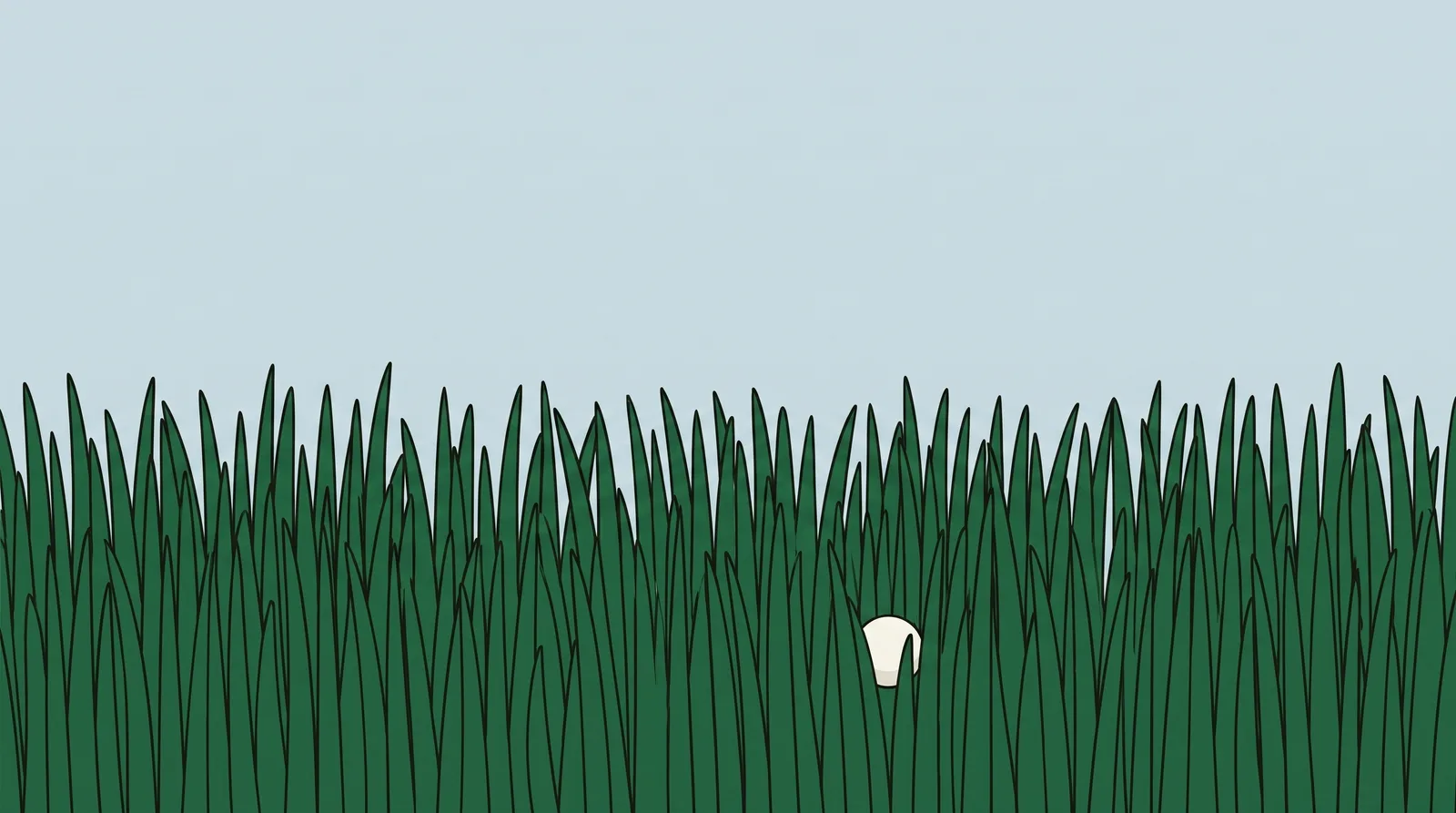
Missing a fairway is not the mistake. Playing the shot you would have played from the fairway is the mistake. The rough takes away spin, takes away control and takes away a large share of your club speed, and none of that shows up on a rangefinder. This guide covers how to read a lie, the club that actually cuts grass, and what the Rules allow you to touch.
Left and right below assume a right-handed golfer, though almost nothing on this page depends on it. Where it does, the lead side is simply the side nearest the target.
Read the lie before you read the yardage
Golfers walk into the rough already holding a number from a rangefinder. The number is the second question. The first is what the grass will do to the club.
Look at three things. How much of the ball you can see. Which way the grass is lying, since grass growing toward the target lets the club through and grass growing back at you grabs it. And how wet it is, because wet grass wraps the hosel and shuts the face.
| What you can see | What it means | What to expect |
|---|---|---|
| The whole ball, sitting up on the tops | A flyer lie | Less spin, a lower launch off the face, and a shot that flies and runs further than the number |
| Most of the ball, grass around the bottom | A normal semi rough lie | Slightly less spin, slightly less distance, mostly playable |
| Half the ball or less | A heavy lie | Significant speed loss, no spin, and a real chance of the face closing |
| Only the top of the ball | Buried | An escape shot only, with a lofted club, and no thought of distance |
That table is the whole page in four rows. Everything below is what to do once you have decided which row you are in.
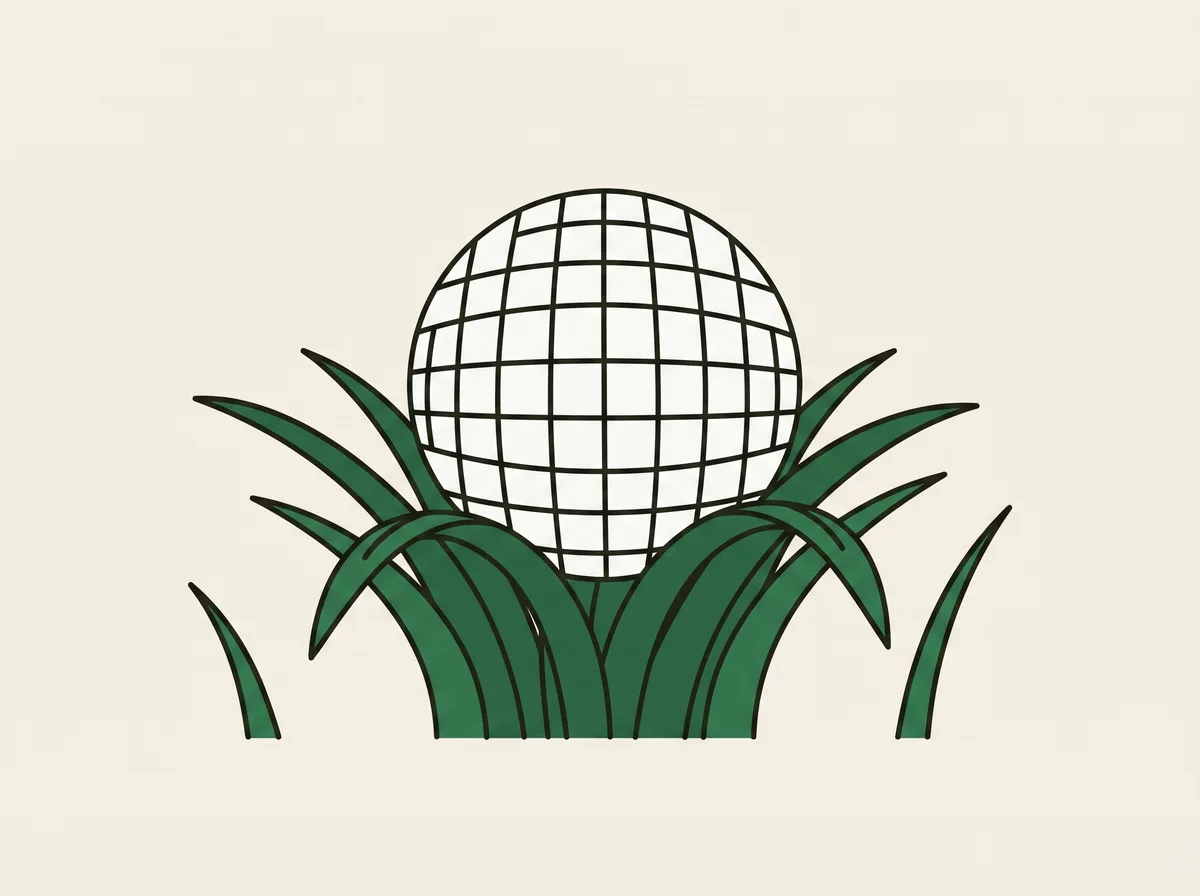
The flyer lie, and why it goes too far
A ball sitting up in light rough looks like a gift. It is the lie that most often finishes over the back of a green.
The mechanism is simple. Grass gets trapped between the club face and the ball at impact, so the grooves never grip. Without that friction the ball comes off with far less backspin than normal. Less backspin means less lift, so the flight is flatter, and it means nothing to stop the ball when it lands, so it releases. The shot leaves the club feeling normal and finishes twenty yards past where you aimed.
Two adjustments deal with it. Take one club less than the number suggests, and aim at the front portion of the green rather than the flag. If there is trouble long, take two less. The one thing you cannot do is add the spin back, so a harder swing simply produces a longer flyer.
The heavy lie, where the club has to cut
Once the ball is sitting down, the problem changes completely. Now the club has to travel through grass before it reaches the ball, and every blade it meets is slowing it down and twisting the head.
- Choose more loft than the distance suggests. Loft is what cuts down through grass rather than skidding over it.
- Play the ball an inch or so further back than usual, which steepens the arc and reduces the amount of grass the club meets on the way in.
- Grip a touch firmer than normal, especially with the lead hand. Grass grabs the hosel and turns the face closed, and a loose grip lets it.
- Put a little more weight on the lead foot and leave it there, so the club descends rather than sweeps.
- Swing with commitment and keep the club accelerating. Deceleration in thick grass is how a shot moves ten yards.
Expect the ball to come out lower and to run when it lands. That is not a mistake in the strike, it is the missing spin doing exactly what it does.
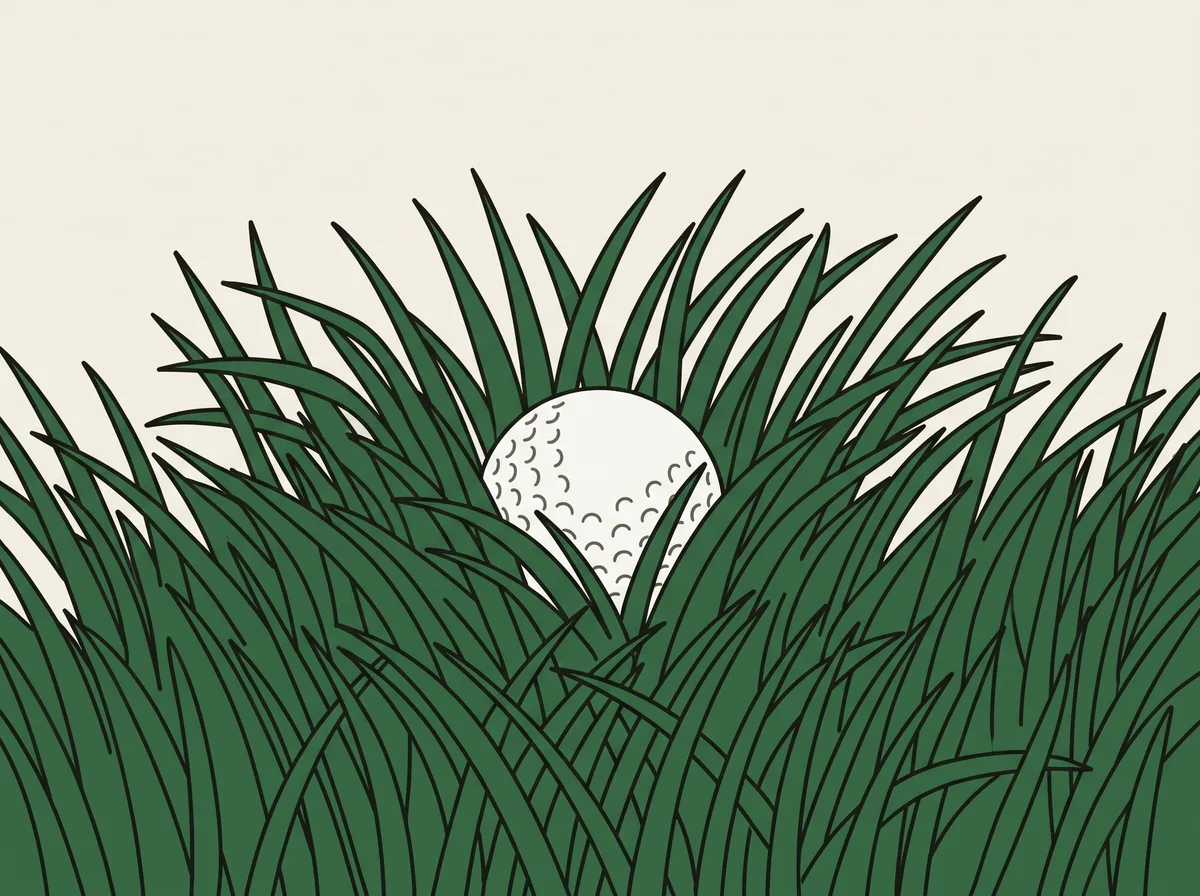
The club that cuts grass
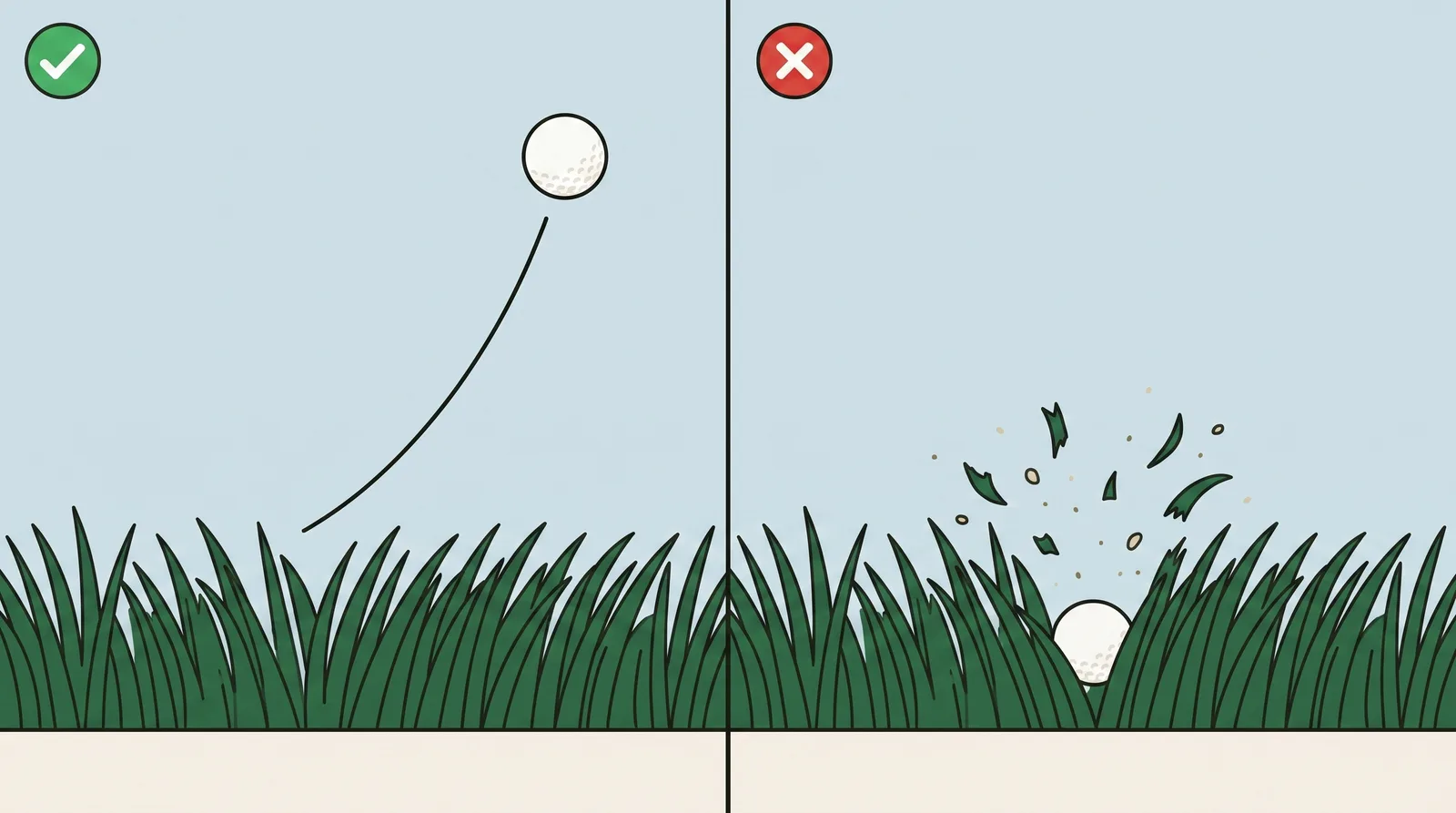
Loft cuts, and a wide sole slides. That combination is why a hybrid is the best long club in the rough and a long iron is one of the worst.
The reason is the leading edge. A long iron presents a thin blade that snags in grass and twists, while a hybrid presents a broad rounded sole that pushes through it. The setup that gets the most out of that shape is in how to hit a hybrid.
A fairway wood is the opposite case and it is worth being blunt about. The wide flat sole that lets it glide across a good fairway lie is exactly what makes it skid off the grass behind a sitting-down ball. From light rough with the ball on top it can work, and from anything heavier it should stay in the bag. The reasoning behind that, and what the club actually needs, is in how to hit a fairway wood.
| Situation | Reach for | Avoid |
|---|---|---|
| Ball sitting up, long way to go | Hybrid, or a fairway wood if the ball is genuinely on top | Long iron |
| Ball down, 150 to 190 yards left | Hybrid or a mid iron, aimed at short grass | Anything that needs a perfect strike |
| Ball down, inside 140 yards | 8 iron to pitching wedge | Long clubs of any kind |
| Buried, thick wet grass | Sand wedge or lob wedge, straight out sideways if needed | Every other club in the bag |
What the Rules let you touch
This is where a shot becomes two shots without anybody swinging.
The safest habit is to hover the club rather than sole it at all in deep grass. It removes any argument about pressing down and the risk of the ball moving as you settle in. The wider set of on-course rules is in golf rules for beginners.
Knowing when to just wedge out
The hardest part of rough play is not technical. It is accepting a shot that goes sideways.
Light rough is not a disaster and does not need a rescue attempt. Heavy rough is a different category, and the damage compounds on the second shot rather than the first. The way to make that call the same way every time is in golf course management, and the sand version of the same problem is in fairway bunker shots.
Three drills with a dose
Rough play is almost impossible to practise on a range, which is why most golfers arrive at it with no plan at all.
Key takeaways
- Read the lie before you read the number. How much of the ball you can see decides the shot.
- The rough removes spin, and every strange rough outcome follows from that.
- A ball sitting up is a flyer. Take one club less and aim at the front of the green.
- A ball sitting down needs more loft, the ball back an inch, a firmer grip and a steeper strike.
- Thick grass takes a large share of the club speed before the face reaches the ball.
- Shot Scope has hybrids 11 to 14 yards longer than long irons from the rough for mid handicaps.
- A fairway wood is the wrong club from anything heavier than a ball sitting on top.
- Rule 8.1a means you cannot flatten grass behind the ball, and Rule 8.1b stops short of pressing the club down.
- Light rough is close to a non-event on the tracked data, and heavy rough is where scores are lost.
Common questions
How do you hit out of thick rough?
Take more loft than the yardage suggests, move the ball back an inch, grip a little firmer, put a bit more weight on the lead foot and swing steeply with commitment. The aim is to reach the ball with as little grass in the way as possible. Expect a low flight, no spin and plenty of run.
What is a flyer lie in golf?
A ball sitting up on top of light rough, where grass gets between the face and the ball at impact and prevents the grooves gripping. The shot comes off with far less backspin, flies flatter and runs a long way on landing, so it finishes well past the intended number. Take one club less, or two if there is trouble over the back.
What club should I use from the rough?
From a ball sitting up, a hybrid or, at a push, a fairway wood. From a ball sitting down, a hybrid or a mid iron if there is distance to cover, and a wedge if there is not. From a buried lie, the most lofted club you own, played straight back to short grass.
Why is a hybrid better than a long iron from the rough?
The leading edge. A long iron presents a thin blade that snags in grass and twists the face, while a hybrid pushes a broad rounded sole through it. Shot Scope measured mid handicap golfers as 11 to 14 yards longer with the hybrid from the same lies.
Can I press the grass down behind my ball?
No. Rule 8.1a treats that as improving the conditions affecting your stroke, and the penalty is two strokes in stroke play or loss of hole in match play. Rule 8.1b lets you ground the club lightly so that it rests on the grass, but it specifically excludes pressing the club on the ground.
Should I open the clubface in the rough?
It depends on the grass, and good coaches disagree. In wet, grabby rough the grass wraps the hosel and closes the face, so starting slightly open cancels that out. In dry, wispy rough an open face mostly adds loft and produces a short weak shot. A square face with a firm lead hand grip is the safer default.
How much distance do I lose from the rough?
More than feels reasonable, and it varies with how deep the grass is and which way it is growing. A heavy lie can take a large share of the club speed out of the shot before the face reaches the ball. The only reliable way to know your own numbers is to play a set of shots from real lies and record what happened.
Can I hit a fairway wood out of the rough?
Only when the ball is genuinely sitting on top of the grass. The wide flat sole that helps the club glide on a fairway lie is what makes it skid off the grass behind a ball that is sitting down, so the leading edge arrives at the middle of the ball. A hybrid does the same job with far more margin.
When should I just chip out sideways?
Whenever the escape shot has a lower chance of working than the recovery shot has of failing. In practice, that is any lie where you cannot see most of the ball, any lie where the club has to travel through grass and then over something, and any hole where the alternative to a sideways wedge is another shot in the same rough.
Is the ball allowed to move while I am standing over it?
If you cause it to move in the general area, that is a penalty stroke under the Rules and the ball must be replaced. Deep rough is where this happens most, because the ball is balanced on grass rather than sitting on soil. Hovering the club rather than soling it removes most of the risk.
What about punching out from under a tree in the rough?
Then you have two constraints instead of one and the more severe one wins. If the ball is sitting down, loft is compulsory and the low flight is unlikely, so take relief or play sideways. If it is sitting cleanly with a branch overhead, the low escape shot in how to hit a punch shot is the one to use.
Tom Ashworth
Tom Ashworth is a PGA Professional who has taught golf since 2012, working mainly with beginners and mid-handicappers at club level in Surrey. He reviews the instruction guides on Learn Golf for technical accuracy before they publish.
Most of his teaching is with players in their first three years of the game, and most arrive having been told too much: six swing thoughts collected from videos, half of them contradicting each other. His approach is to check the grip and the alignment before touching the swing, on the basis that most bad ball flight is decided at address.