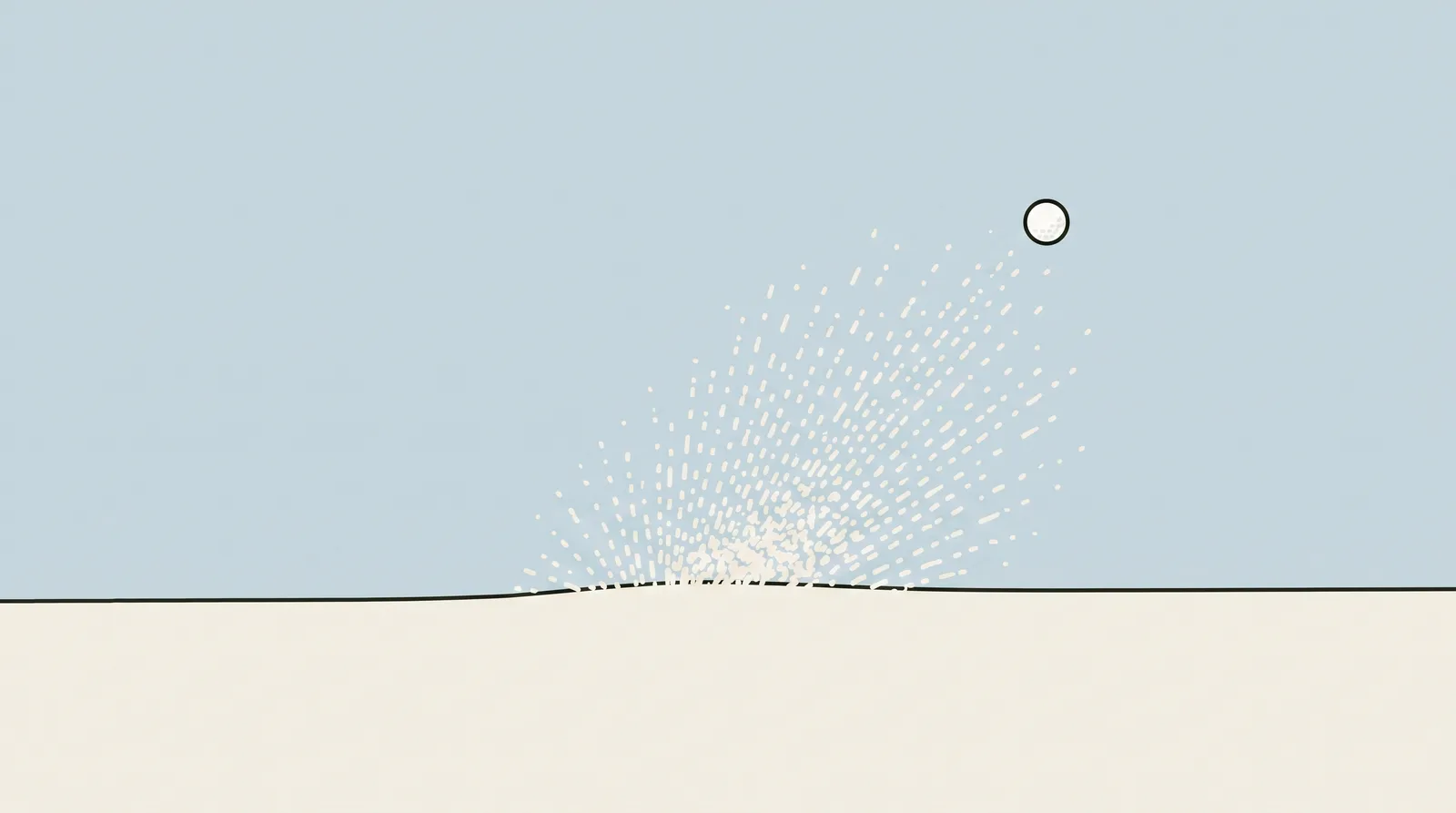
Two shots to get out, and one of them went twenty yards past the flag. The greenside bunker shot has a reputation it does not deserve, and it survives because the technique is genuinely counterintuitive: this is the only shot in golf where the club is never meant to touch the ball. This guide covers the standard shot from good sand, from setup to swing length.
Why the sand shot is different
Every other shot in golf is a contest between you and the ball. This one is not. The club enters the sand behind the ball, a wedge-shaped cushion of sand is thrown forward, and the ball rides out on top of it without ever being struck.
That is why bunker shots feel unlearnable. Every instinct built over thousands of other shots is telling you to find the ball, and that instinct is exactly what buries the leading edge and leaves the ball in the sand.
The numbers say this shot deserves respect but not fear. Arccos, tracking amateur rounds, found that from 15 yards a 10 handicap golfer finishes inside 10 feet 28 percent of the time from sand against 42 percent from rough, and that the same bunker shot carries a scoring average about a quarter of a stroke higher than the shot from rough. A quarter of a stroke is a real cost and it is nothing like the disaster most golfers expect.
The club is doing the work
A sand wedge is built for exactly this shot. The sole is angled so the trailing edge sits lower than the leading edge, and that angle is bounce. Titleist's breakdown of wedge bounce puts low bounce at roughly 4 to 6 degrees, mid bounce at about 7 to 10, and high bounce above 10 degrees, with the high numbers built for soft sand and steep swings.
In the sand, bounce is what stops the club from digging a trench. The angled sole hits the surface and skids forward through it rather than burying itself, which is why a wedge with almost no bounce is such hard work out of a fluffy bunker.
| Sand condition | Bounce that suits it | What happens with the wrong club |
|---|---|---|
| Soft, dry, deep | High, above 10 degrees | Low bounce digs in and the ball stays put |
| Normal, medium | Mid, 7 to 10 degrees | Almost anything works from a good lie |
| Firm, wet, compacted | Low to mid, 4 to 8 degrees | High bounce skips off the surface into the ball |
Opening the face adds effective bounce on top of whatever the club already has, which is why opening it is the first move rather than a stylistic choice. Open the face before you take your grip, never after: opening it once your hands are already on the club simply twists your wrists into a position they will unwind out of on the way down, and the face arrives square.
The setup
Setup does most of the work here, and every element has one purpose: making the club enter the sand at a consistent point behind the ball.
- Open the clubface first, so it points slightly up and right, then take your grip on the already-open club.
- Dig both feet into the sand until they are stable. This lowers you slightly, which builds the shallow entry in automatically.
- Widen your stance to a little more than shoulder width and flex the knees.
- Play the ball forward of centre, roughly opposite the inside of your lead heel.
- Open your stance so your feet and hips aim slightly left of the target, with the clubface still pointing at the flag.
- Set most of your weight on your lead foot and keep it there. There is no weight shift back in this swing.
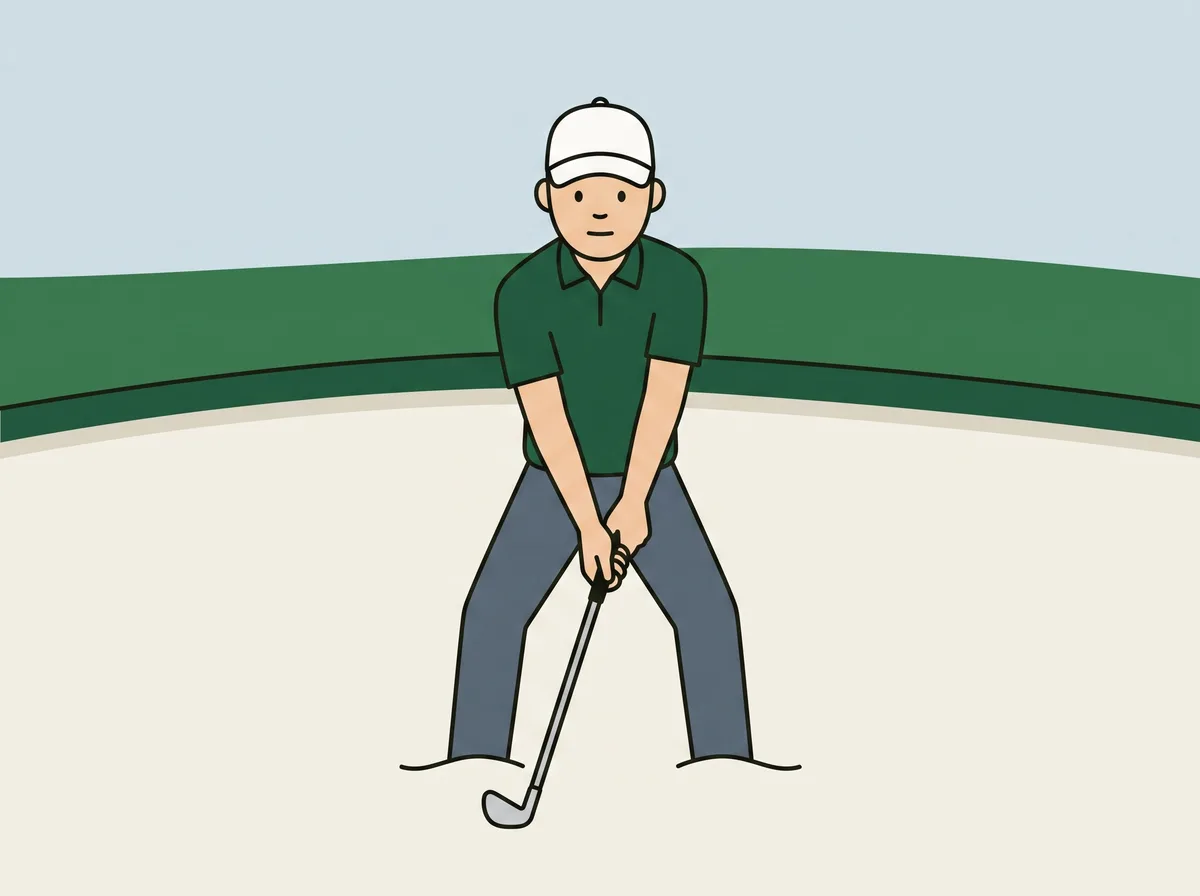
Digging your feet in is also legal, which surprises people. What is not legal is testing the sand deliberately.
How much sand to take
This is the question every golfer asks and the one most advice fudges. The honest answer is that the entry point behind the ball is your main distance control, and the numbers below are starting points to calibrate against, not measurements.
| Shot you want | Enter behind the ball | Swing length |
|---|---|---|
| Standard greenside shot, good sand | About 2 inches, or 5 cm | Three quarters |
| Short and high, close pin | About 3 to 4 inches, or 8 to 10 cm | Three quarters, fuller finish |
| Longer, 20 to 30 yards | About 1 inch, or 2 to 3 cm | Three quarters with a squarer face |
| Firm or wet sand | About 1 inch, or 2 to 3 cm | Three quarters, less bounce |
More sand between the club and the ball means less energy reaches the ball, so more sand equals a shorter shot. That relationship is the whole distance system. Change how far behind the ball you enter and keep the swing the same, rather than changing how hard you swing.
The swing
A bunker swing is longer than golfers expect and slower than they fear. Because the sand absorbs so much energy, a shot of 10 yards needs a swing that would send a ball 40 yards off grass. That mismatch between how the swing looks and how far the ball goes is what makes the shot feel wrong the first few dozen times you play it properly.
Hinge the wrists early, keep the lower body quiet, and swing along the line of your feet rather than at the flag. Then keep the club accelerating through the sand. The finish should be high, with the chest turned to the target, exactly as it would be on a normal pitch shot.
The two bad bunker shots
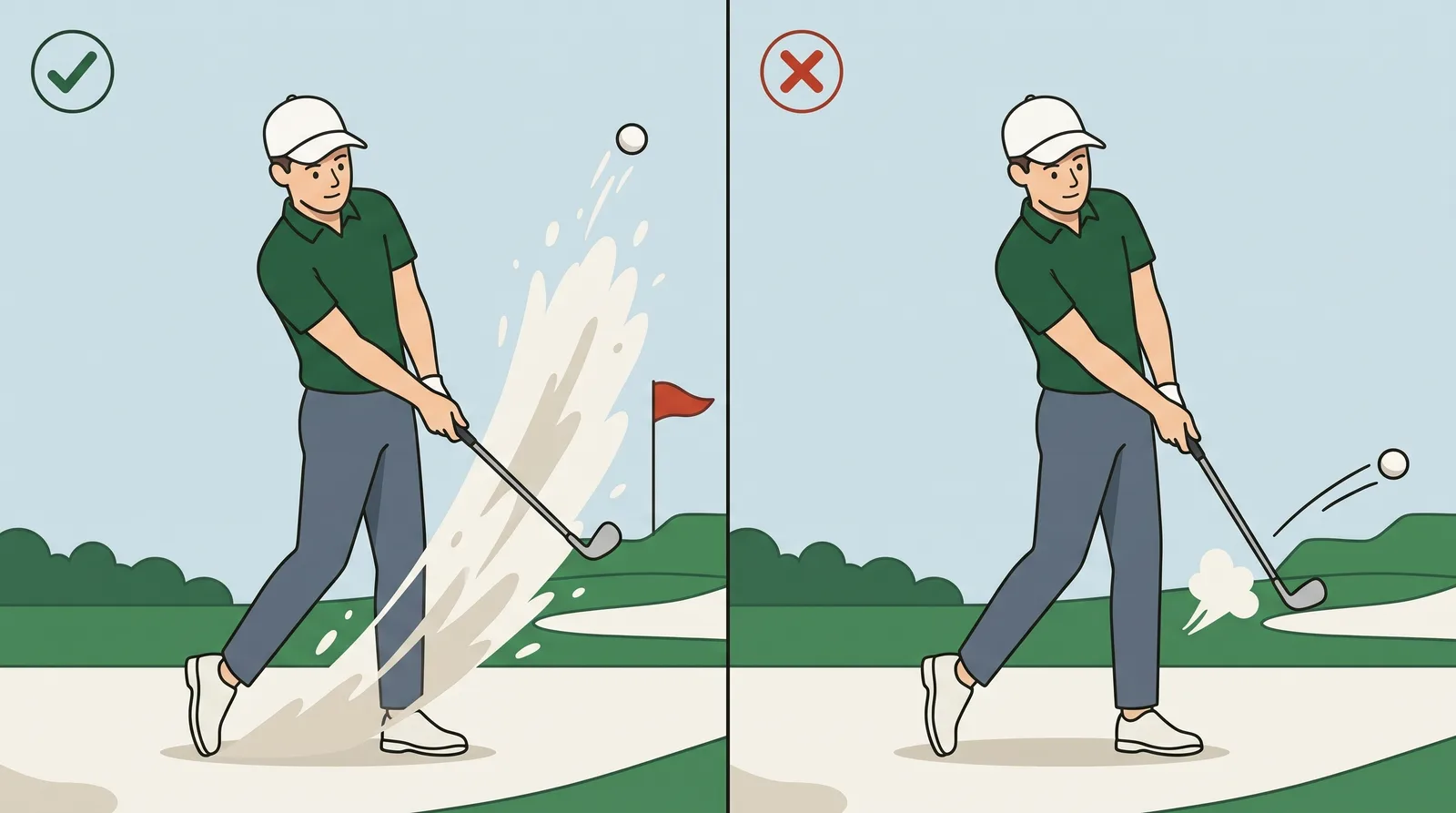
Both are failures of entry point, and they are opposites. Knowing which one you have matters, because the corrections pull in different directions and applying the wrong one makes the other miss more likely.
Digging happens when the club enters too steeply or too far behind the ball, or when the leading edge is closed enough to cut down instead of skidding. The ball travels a few feet or stays in the bunker. Open the face more, take a shallower swing, and check that your weight is not falling backwards.
Thinning is the more painful one. The club catches the ball directly, usually because the golfer decelerated and the club rose, or because they tried to lift the ball out. The ball comes out low and fast and often finishes further away than where it started. The related fault of catching the hosel is common here too, since an open face brings it into play, and that is covered in how to fix a shank.
Practising the shot
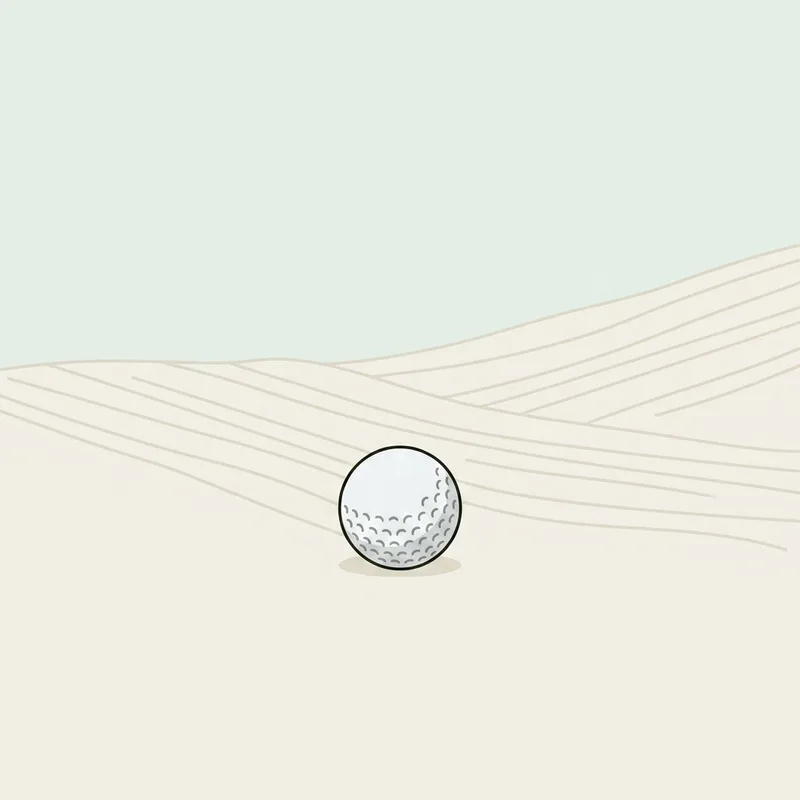
Bunker practice is the most avoided practice in golf, partly because the shot is intimidating and partly because most golfers never learn what a good one is supposed to feel like.
Both drills work because they give you feedback you can see. A bunker is the only place in golf where the club leaves a perfect record of what it did, and ignoring that evidence is why golfers practise bunker shots for years without improving. Structured short game sessions are set out in chipping and short game drills.
When this technique does not apply
The shot above assumes a good lie in reasonable sand and a normal greenside distance. Four situations change the plan.
A ball buried in its own crater needs a square or closed face and a steep, digging swing, which is the opposite of everything here, and it is covered in the plugged lie. A ball in sand a long way from the green is a completely different shot played with a longer club and clean contact, set out in fairway bunker shots. A ball on a slope inside the bunker follows the same rules as any uneven lie, with the shoulders matching the slope. And a ball sitting on firm wet sand needs less bounce and a shallower entry, because a high bounce wedge will skid off a hard surface straight into the ball.
If the lip in front of you is steep and the flag is a long way off, playing out sideways is not a failure. It is the shot that turns a probable double bogey into a probable bogey, which is the whole of good course management in one decision.
Where the standard shot fits
For a golfer who lands in one or two bunkers a round, the standard splash shot covers almost everything. Learn it properly and the specialist shots become variations rather than new skills. It is also the shot that makes the rest of the short game less frightening, because a golfer who is not scared of sand aims at flags that are worth aiming at, and stops steering approach shots away from one side of every green.
The alternative to sand is often short grass on the wrong side, which brings its own problems. Where you have both options, the running chip shot is the lower risk play, and the very high flop shot is the highest risk one.
Key takeaways
- The club never touches the ball on a standard bunker shot. It cuts sand from underneath and the ball rides out.
- Open the clubface before taking your grip, never after.
- Dig your feet in, widen the stance, and play the ball forward of centre with the weight on the lead foot.
- Entry point behind the ball controls distance. More sand means a shorter shot.
- Swing at about three quarters length and keep accelerating. A club that stops in the sand leaves the ball there.
- Bounce is what stops the club digging. Soft sand needs more of it, firm or wet sand needs less.
- Arccos data has a 10 handicap finishing inside 10 feet 28 percent of the time from 15 yards in sand, against 42 percent from rough.
- Rule 12.2b lets you dig your feet in but not test the sand or ground the club behind the ball.
- Deceleration is the fault behind most failed bunker shots, and fear of hitting it too far is the cause.
- Plugged lies, fairway bunkers and wet sand all need different technique to the standard splash shot.
Common questions
How much sand should you take in a bunker?
About two inches behind the ball for a standard greenside shot in good sand. Take more for a shorter, higher shot and less for a longer one or from firm sand. Entry point is your distance control, so keep the swing the same and change where the club enters.
Why can I not get out of the bunker?
Almost always because the club is stopping in the sand rather than passing through it, which comes from decelerating. The other common cause is a closed clubface, which lets the leading edge dig instead of the sole skidding. Commit to a high finish on every bunker shot.
Should the clubface be open in a bunker?
Yes for the standard greenside shot. Opening the face adds effective bounce so the sole skids through the sand rather than digging. Open the face first and then take your grip, otherwise your hands will simply return it to square through impact.
What club do you use in a greenside bunker?
A sand wedge, usually 54 to 56 degrees, with 10 to 14 degrees of bounce for typical sand. A lob wedge works for very short shots but often has less bounce, and a pitching wedge has too little loft and too little bounce for a soft lie.
Why do I thin bunker shots over the green?
The club caught the ball directly instead of the sand, normally because you decelerated and the club rose, or because you tried to help the ball up. Focus on where the club enters the sand rather than on the ball, and commit to the finish.
Can you ground your club in a bunker?
No. Rule 12.2b(1) prohibits touching the sand with your club immediately in front of or behind the ball, in a practice swing, or in the backswing, and the penalty is two strokes in stroke play. You are allowed to dig your feet in for a stance and to lean on a club outside the bunker.
How hard should you swing in a bunker?
Longer and smoother than feels necessary, at about three quarters of a full swing for a standard shot. The sand absorbs most of the energy, so a 10 yard bunker shot needs a swing that would carry a ball far further off grass. Never swing hard and short.
How do you play a bunker shot from wet or firm sand?
Take less sand, entering about an inch behind the ball, and use a wedge with less bounce or square the face slightly. A high bounce wedge skids off compacted sand and catches the ball directly, which is the classic thinned shot from a hard bunker.
Where should the ball be in my stance for a bunker shot?
Forward of centre, roughly opposite the inside of your lead heel. That position encourages the club to reach the bottom of its arc after it has entered the sand, which is exactly what the shot needs.
Is it ever right to play out sideways?
Yes, whenever the lip in front of you makes a shot at the green a coin toss. Playing out sideways to flat ground turns a likely double bogey into a likely bogey, and the decision costs far less than a second attempt from the same bunker.

Tom Ashworth
Tom Ashworth is a PGA Professional who has taught golf since 2012, working mainly with beginners and mid-handicappers at club level in Surrey. He reviews the instruction guides on Learn Golf for technical accuracy before they publish.
Most of his teaching is with players in their first three years of the game, and most arrive having been told too much: six swing thoughts collected from videos, half of them contradicting each other. His approach is to check the grip and the alignment before touching the swing, on the basis that most bad ball flight is decided at address.