A putting stroke has almost nothing in it. There is no weight shift, no rotation and no speed, which means there is also nothing to cover up a bad starting position. Set up badly and the stroke has to compensate every single time. This guide covers where to stand, where the ball goes, where your eyes belong, and the three checks that prove it.
Posture: bend from the hips, not the waist
The single most common putting posture fault is standing too upright with the arms reaching out toward the ball. It feels comfortable and it puts the hands outside the shoulder line, which forces the stroke to travel on a path the shoulders cannot produce.
Bend forward from the hip joints with a straight back until your arms hang freely straight down. Let them hang. If they hang somewhere other than where the putter grip is, you are standing at the wrong distance from the ball, and the answer is to move your feet rather than to reach.
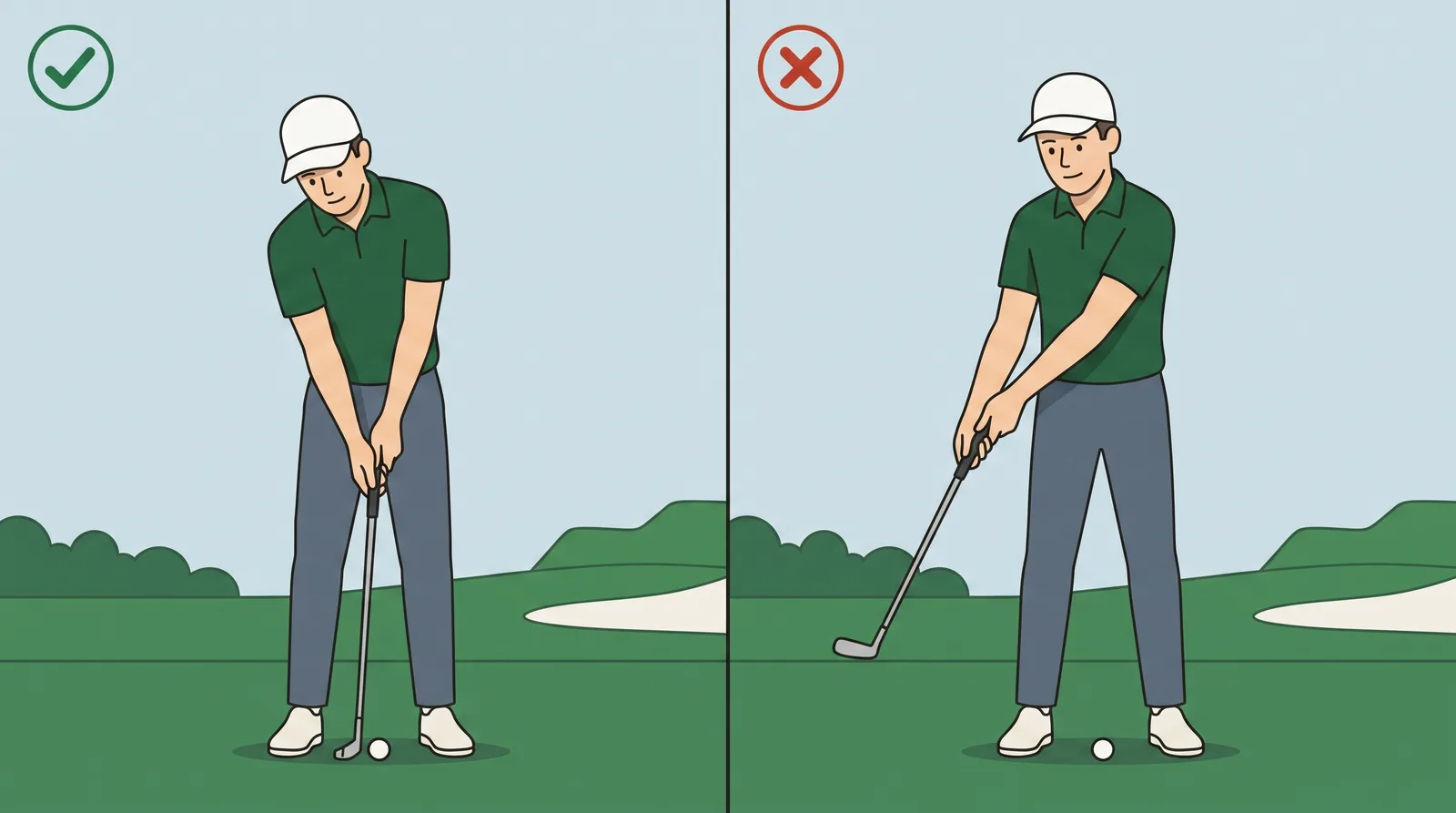
The amount of bend is set by your build rather than by a number. Taller golfers with longer arms bend less, and the check is always the same: arms hanging, hands under the shoulders, no reaching and no crowding. The wider principles are in the golf posture guide, though putting is the one shot where the bend is deeper than anywhere else in the bag.
Eyes over the ball, and why fractionally inside is fine
Your eyes decide what you see, and what you see decides where you aim. Set them outside the ball, over the target side of it, and you will consistently see the line further left than it is. Set them well inside and you will see it right.
Directly over the ball or a fraction inside is the working range. Not outside.
- Take your normal address position over a ball on the practice green.
- Hold a second ball against the bridge of your nose, between your eyes.
- Drop it.
- It should land on the ball you are addressing, or an inch or two inside it, toward your feet.
- If it lands outside the ball, stand a little closer and repeat.
This is the fastest setup check in golf and it takes ten seconds. Do it at the start of every practice session for a fortnight and it stops needing checking.
Ball position: forward of centre, and why
Play the ball roughly one ball width forward of the centre of your stance, which for most golfers puts it just inside the lead heel line.
The putter travels on a very shallow arc, dropping to a low point and then rising. Striking the ball slightly after that low point, while the putter is beginning to rise, gets the ball rolling forward earlier and reduces the initial skid and bounce. Too far back and you strike it on the way down, which drives the ball into the green and produces a hop before the roll.
| Ball position | Strike | What the ball does |
|---|---|---|
| Well back of centre | Descending | Hops, skids, then rolls late. Distance control suffers |
| Centre | At the low point | Acceptable, and where most poor putters end up |
| One ball forward of centre | Slightly ascending | Rolls earliest and holds its line best |
| Well forward, off the lead foot | Rising steeply | Struck thin or on the upswing, comes up short |
Set your hands level with the ball or a fraction ahead of it, never behind. Hands behind the ball adds loft, lifts the ball into the air and costs you the roll you just bought with the ball position. The same idea applies across the bag, and golf ball position covers the full-swing version.
Stance width, weight and alignment
Feet roughly shoulder width, or slightly narrower. Wide enough to be stable, narrow enough that nothing wants to move.
Weight even between the feet, or very slightly favouring the lead side. What matters more than the exact split is that it does not change during the stroke, since any weight movement in a motion this small moves the low point and changes the strike.
Aim the putter face at your target line first, then build your body around it. Almost every golfer does this the other way round: they set their feet, then aim the face to match, which locks in whatever error was in the feet. The face is the only part that touches the ball, so the face goes first.
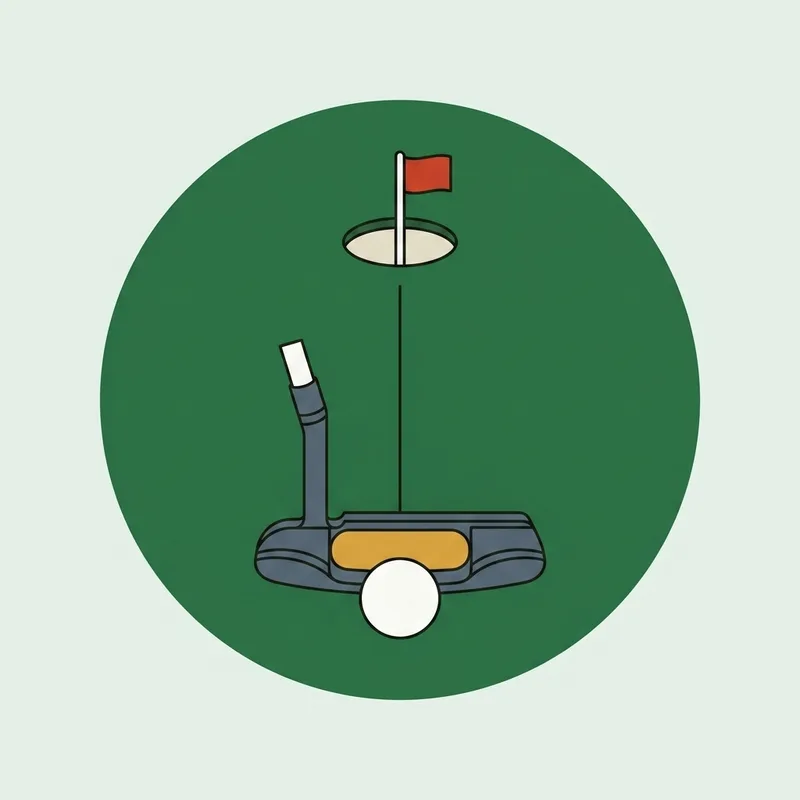
Shoulders matter more than feet here, exactly as they do in the full swing. An open shoulder line pulls the stroke across the ball no matter where the feet point. If you have worked through golf alignment for the full swing, the check is identical and easier to make on a flat green.
The three checks that make it repeatable
Setup drifts. It drifts for everyone, it drifts within a single round, and it drifts fastest when you are putting badly and start experimenting. These three checks take under a minute together.
What good setup buys you
Nothing dramatic, which is why it gets skipped. What it buys is that the stroke you already own starts producing the same result twice.
The other thing it buys is a stable base for everything else on the green. Green reading is worthless if you cannot start the ball where you decided, which is why how to read greens assumes the setup work is already done. The same is true of putting distance control, where an inconsistent strike position produces inconsistent speed no matter how good the stroke length is.
Key takeaways
- Bend from the hips until the arms hang straight down under the shoulders. Do not reach for the ball.
- Set your eyes over the ball or fractionally inside it, never outside. Check it with the ball drop test.
- Play the ball about one ball width forward of centre so the putter is starting to rise at impact.
- Hands level with or just ahead of the ball. Behind the ball adds loft and kills the roll.
- Aim the face at the target first, then build the stance around it, not the other way round.
- Feet about shoulder width, weight even, and nothing moves once you are set.
- If good posture is impossible, measure the putter. Most off-the-rack putters are too long.
Common questions
Where should my eyes be when putting?
Directly over the ball or up to about two inches inside it, toward your feet. Outside the ball is the position to avoid, because it makes you see the target line left of where it actually is. Check it by dropping a second ball from between your eyes at address.
Where should the ball be in my stance when putting?
About one ball width forward of centre, which usually puts it just inside your lead heel. That lets the putter strike the ball as it starts to rise, which gets the ball rolling sooner and reduces the initial skid.
How far apart should my feet be when putting?
Roughly shoulder width or slightly narrower. Wide enough that you feel stable and cannot sway, narrow enough that nothing wants to move during the stroke. Exact width matters far less than keeping it the same every time.
Should my weight be forward when putting?
Even, or very slightly toward the lead foot. What matters more than the split is that it does not change during the stroke. Any weight movement in a stroke this small shifts the low point and changes the strike.
Why do I keep pulling my putts left?
Usually eye line or shoulder alignment. Eyes set outside the ball make you see the line left of true and aim accordingly, and open shoulders pull the stroke across the ball. Check the ball drop test first, since it is faster and it is the more common cause.
Should my hands be ahead of the ball when putting?
Level with the ball or a fraction ahead. Hands behind the ball at impact adds loft, which lifts the ball and delays the roll. Pressing the hands too far forward removes loft entirely and drives the ball into the ground, so a small amount is the target.
Is my putter too long?
If you cannot bend forward far enough to hang your arms under your shoulders, yes. Most rack putters are 34 or 35 inches, which suits a golfer around 6 feet with a fairly upright posture. Plenty of golfers putt better an inch or two shorter, and a fitter can check it in minutes.
Does putting setup change on a slope?
The reference points do not, but you adjust to stay balanced. On a side slope, keep your eyes in the same relationship to the ball and let your stance width change if you need stability. Read the break first, then set up square to the line you have chosen rather than to the hole.
How do I stop my setup drifting during a round?
Use one physical reference rather than a feeling. Most golfers use the ball drop check on the practice green before teeing off, then a single alignment cue over each putt, usually setting the face first. Drift happens fastest when you start experimenting mid-round after a couple of misses.
Does a different putter grip change the setup?
Some. A claw or arm-lock grip changes where the hands sit and can change the shaft lean, but posture, eye line and ball position stay the same. Get the setup right with a conventional grip first, then change grip style if you want, since putting grip options are a solution to a specific problem rather than an upgrade.
Tom Ashworth
Tom Ashworth is a PGA Professional who has taught golf since 2012, working mainly with beginners and mid-handicappers at club level in Surrey. He reviews the instruction guides on Learn Golf for technical accuracy before they publish.
Most of his teaching is with players in their first three years of the game, and most arrive having been told too much: six swing thoughts collected from videos, half of them contradicting each other. His approach is to check the grip and the alignment before touching the swing, on the basis that most bad ball flight is decided at address.