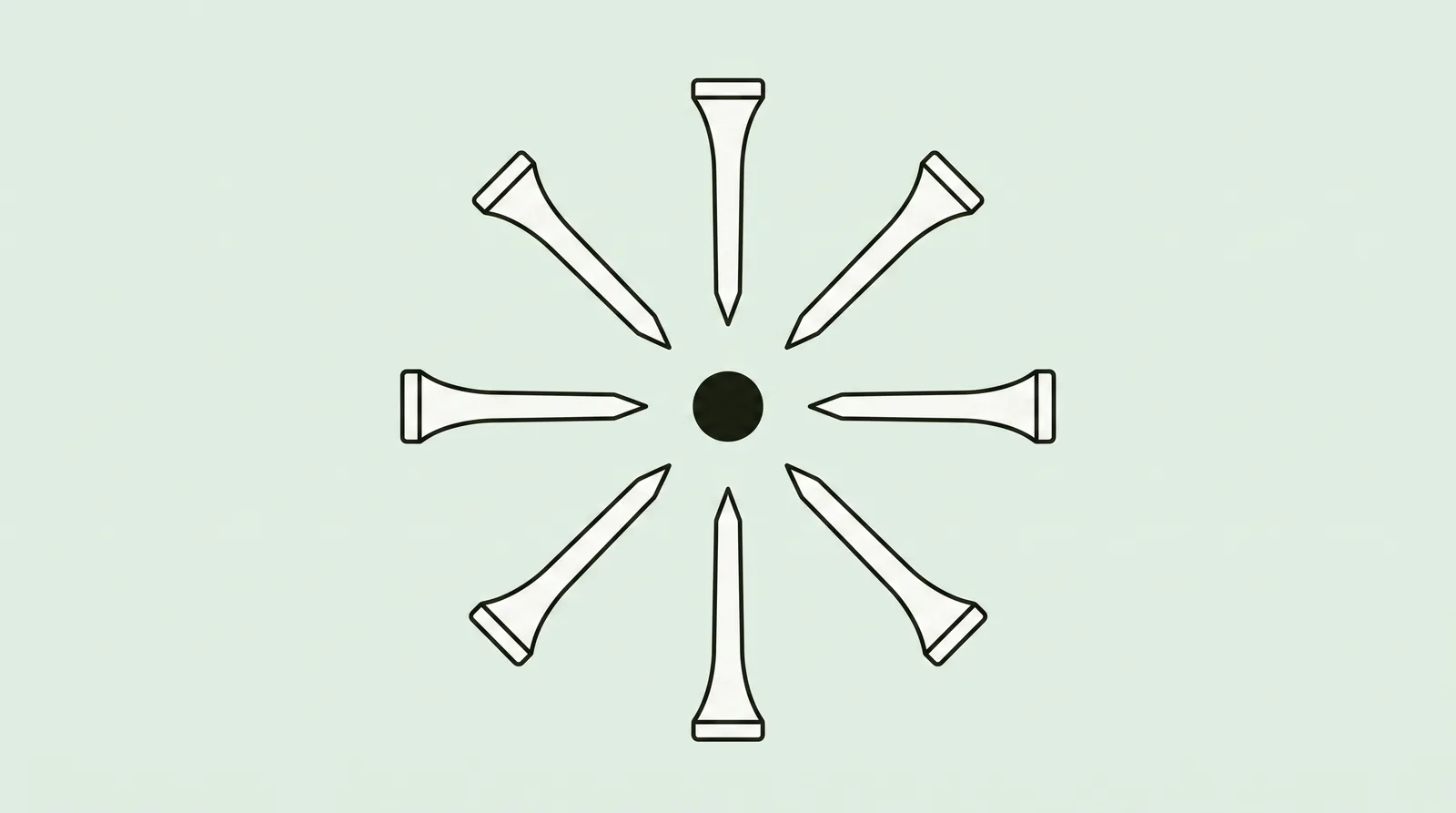
Putting is the only part of golf you can practise properly at home, and it is still the part almost nobody practises properly. The usual session is twenty minutes of three-footers, which feels productive because most of them go in and teaches you nothing you did not already know. Here are six drills with a rule, a score and a dose attached to each.
What to practise, and in what proportion
Putting is three separable skills and they respond to completely different practice. Working out which one is costing you is a five minute job and it saves you months.
| Skill | What it looks like when it fails | Share of practice time |
|---|---|---|
| Pace on long putts | First putts finishing well short or racing past, lots of three-putts | About half |
| Start line from short range | Confident reads that miss on the same side every time | About a third |
| Holing out under pressure | Fine on the practice green, twitchy over a four-footer that matters | The rest |
Most amateurs invert that entirely, spending nearly all of it on the third row. The reason to weight it toward pace is where the strokes actually are. Arccos, from more than 75 million tracked shots across nearly a million rounds, has golfers in the 1 to 5 handicap bracket averaging 1.6 three-putts a round against 3.2 for the 15 and above bracket. That is a shot and a half sitting in the first row of the table.
Three drills for the practice green
These need grass, a hole and about fifteen minutes. Do not do all three in one session.
Two drills for the carpet
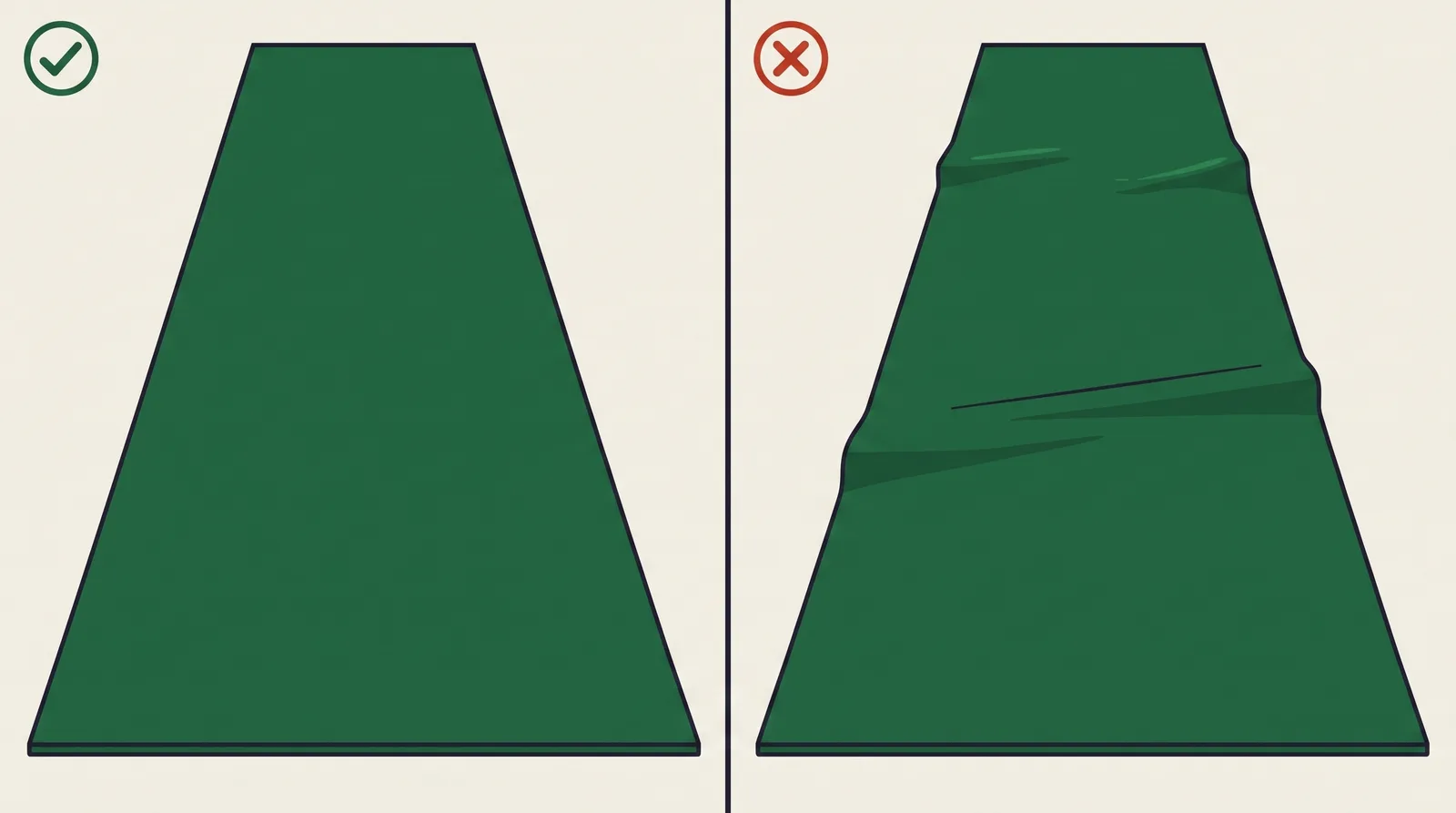
Indoor putting has a hard limit and it is worth knowing before you start. A carpet is one surface at one speed, so it can build a repeating stroke and a reliable start line, and it cannot teach you pace on a green you have never played. Work on the parts that transfer.
The scored game
One session a week should have a score you can compare against last week's. Skill only shows up under a small amount of pressure, and a game supplies it without needing anyone else there.
Building a week
Here is the whole thing as a dose. The right-hand column is when the drill should start to feel different, not a promise about your scoring.
| Drill | Trains | Reps | Sessions a week | Feels different after |
|---|---|---|---|---|
| Around the clock | Holing out, pressure | Until a clean circle | 4 | 2 to 3 weeks |
| The coin | Start line, face | 10 putts | 3 | 3 to 4 weeks |
| Leapfrog | Pace on long putts | 5 balls, repeated | 2 | 4 to 6 weeks |
| Lead arm only | Quiet wrists | 10 plus 10 | 4 to 5 | 2 weeks |
| Eyes closed | Feel and feedback | 10 putts | 4 | 3 weeks |
| Par 18 | All three, scored | 9 putts | 1 | Keep six weeks of cards |
That looks like a lot until you add it up. It is about seventy minutes a week, most of it in five and ten minute blocks, and two of the six can be done on a carpet in socks.
Frequency is doing the work here rather than volume. A putting stroke is a small motor pattern, and small motor patterns respond to being repeated often and briefly far better than to one long session. Ten minutes on four evenings beats forty minutes on Sunday, every time.
What each drill is actually worth
Practice moves the parts of putting that are technically fixable, and it moves them at different speeds.
Shot Scope's comparison of a tour professional with amateur golfers has make rates from three to six feet of 92 percent for the tour player, 76 percent for a scratch golfer and 59 percent for a 15 handicap. From zero to three feet the same groups sit at 100, 98 and 94 percent, and putts per round run 27.7, 29.3 and 31.8.
That shape tells you where practice pays. Nobody has much room to improve inside three feet. The three to six foot band is enormous and is a start line and nerve problem, which is what the coin and around the clock address. And the putts per round spread is mostly first putts, which is what leapfrog addresses.
What none of it does is teach you to read a green, because a drill with a known break stops being a reading exercise on the second ball. That skill needs its own work and it has its own guide.
Where to fit the practice in
The most valuable ten minutes of putting practice in the week is the ten before you tee off, and most golfers spend it on the range instead.
That last clause is a genuine free option that most club golfers never use. A single putt from the fringe of the green you have just finished, at the pace of the day, is calibration you cannot get anywhere else, and it is entirely legal as long as nobody is waiting.
If your practice green work is not moving anything, the fault is usually upstream of the drills. Grip that lets the wrists work is covered in the putting grip, the mechanics of the motion in the putting stroke, and the pace system that leapfrog is training in putting distance control. Drills for the rest of the game sit in the golf drills hub, and the three-footer that keeps costing you has its own page in short putts.
Key takeaways
- A drill needs a rule, a score and a dose. Without a number you cannot tell whether anything changed.
- Weight practice toward pace on long putts, then start line, then holing out. Most golfers do the reverse.
- Around the clock, with a restart on any miss, adds consequence to a putt you would otherwise hit carelessly.
- The coin drill trains face angle, which accounted for 80 percent of directional consistency in the Karlsen research.
- Leapfrog is the best pace drill because there is no hole to react to and you must produce a specific distance.
- Indoor work builds stroke and start line only. A carpet is one speed and cannot teach pace on grass.
- Lead arm only exposes a wrist that breaks down within a fortnight.
- Blocked versus random practice is genuinely contested. Use blocked for mechanical changes and random for everything else.
- The whole weekly plan is about seventy minutes, in five and ten minute blocks, four or five days a week.
- Rule 5.5b lets you putt on the green of the hole you have just finished, which is free calibration during a round.
Common questions
What are the best putting drills?
The three that cover the most ground are a circle of balls around a hole with a restart on any miss, a coin placed on the line to check the start direction, and a leapfrog drill on a stretch of green with no hole in it. Between them they train holing out, face control and pace, which are the three separable skills in putting.
How often should I practise putting?
Ten to fifteen minutes, four or five times a week, rather than one long session. A putting stroke is a small motor pattern and those respond much better to frequent short repetition. Two of the drills on this page can be done indoors, which is what makes that frequency realistic.
How long before putting practice shows up?
Two to three weeks for anything mechanical, such as a quieter wrist or a more reliable start line. Four to six weeks for pace, because it depends on feedback you can only get on grass. Track three-putts per round rather than total putts, because total putts is distorted by how many greens you hit.
Can I practise putting at home without a mat?
Yes, for start line and stroke shape. A flat stretch of carpet, a coin as a target and a one-handed drill will do most of the work. What you cannot do is practise pace, because your carpet has one speed and no green does. A mat with a published roll speed narrows that gap without closing it.
What is the gate drill in putting?
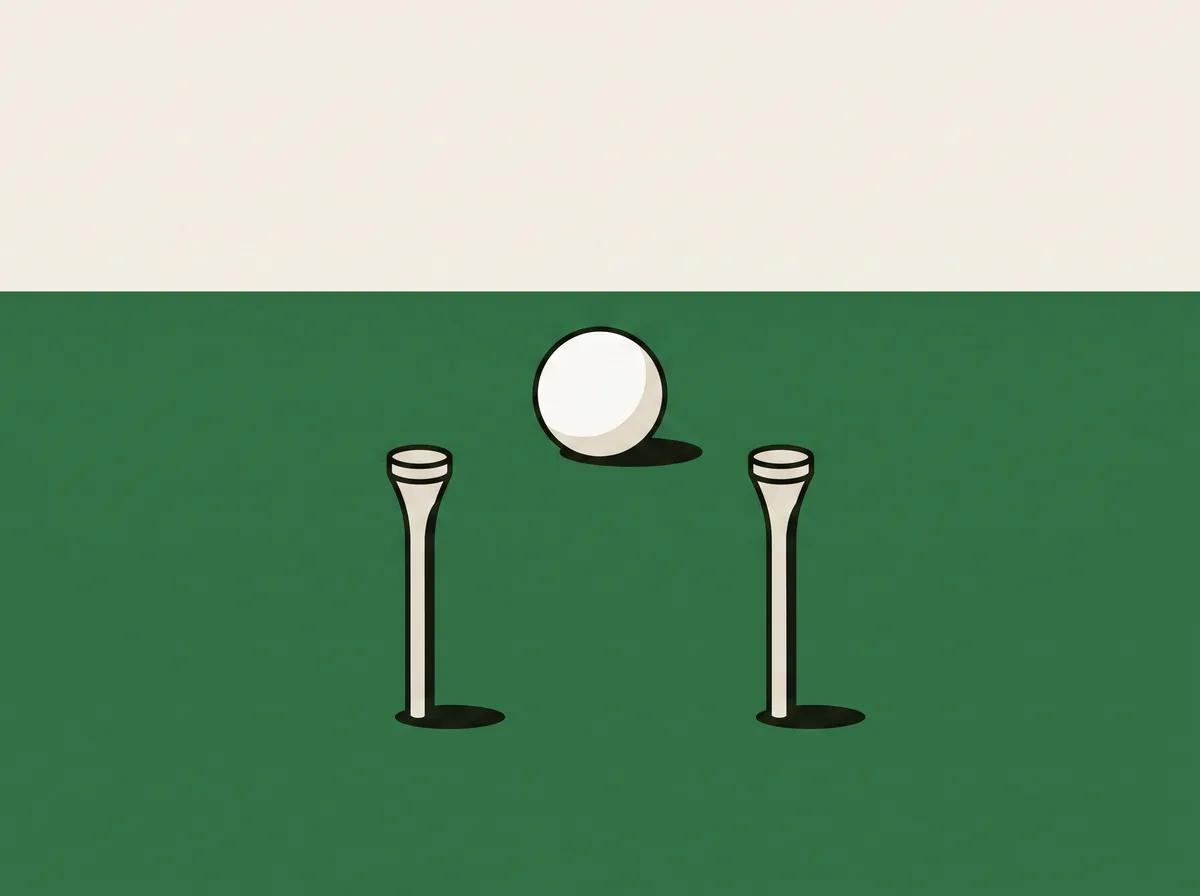
Two tees pushed into the green just wider than your putter head, placed about a foot in front of the ball, which you then putt through without touching either. It gives a pass or fail on every stroke, which is why it is the most widely used start line drill there is.
How many putts should I hit in a practice session?
Fewer than you think, with a rule attached to each. Ten focused balls with a score beats fifty rolled absent-mindedly. The drills here run to between ten and about thirty balls, in sessions of five to twenty minutes, and the completion rule rather than the ball count decides when to stop.
Should I practise short putts or long putts?
Long putts, mostly. Arccos data has the gap between low and high handicaps sitting at around 1.6 versus 3.2 three-putts a round, and a three-putt starts with a first putt left in the wrong place. Short putts feel more productive to practise precisely because you already hole most of them.
Am I allowed to practise putting during a round?
Yes, within limits. Rule 5.5b permits putting or chipping on or near the green of the hole just completed, any practice green, and the next teeing area, as long as you are not in a bunker and do not delay play. Rolling one putt on the green you have just finished is useful calibration and entirely legal.
Does practising on a putting mat make you better on grass?
Partly. It builds a repeating stroke and a consistent start line, both of which transfer. It does not build pace, because a mat is identical every time and a green never is. Golfers who putt well indoors and badly outdoors are almost always fine on line and lost on speed.
What is a good putting practice routine before a round?
Five minutes of long putts on a flat stretch to calibrate the day's green speed, then five minutes of four-footers to see the ball going in. Do the long ones first. If you only have ten minutes, spend all of them on pace, because that is the adjustment that changes from course to course and day to day.
Should I use a putting drill if I have the yips?
Volume drills can help and they are not the whole answer. High repetition on a surface that behaves the same way every time takes some of the fear out of the movement, but a stroke that only breaks down over a real hole is a different problem, and coaches genuinely disagree about whether that one is technical or psychological.

Tom Ashworth
Tom Ashworth is a PGA Professional who has taught golf since 2012, working mainly with beginners and mid-handicappers at club level in Surrey. He reviews the instruction guides on Learn Golf for technical accuracy before they publish.
Most of his teaching is with players in their first three years of the game, and most arrive having been told too much: six swing thoughts collected from videos, half of them contradicting each other. His approach is to check the grip and the alignment before touching the swing, on the basis that most bad ball flight is decided at address.