You hit a good drive, a decent approach, and then take three putts from 30 feet. Putting accounts for a bigger share of your score than any other club in the bag, and most golfers give it about five minutes before a round. This guide covers the fundamentals of the stroke, what the amateur numbers actually look like, and which part of your putting is worth working on first.
Why putting decides your score
Roughly two shots in every five are played with the putter, and unlike every other club, none of them are recoverable. A missed drive can be rescued. A missed three foot putt is gone.
The amateur data is also less bleak than golfers assume from inside six feet and far worse than they assume from further out. Shot Scope's tracked dataset on putting make percentages by handicap shows where the strokes actually go.
| Distance | Scratch | 15 handicap | 25 handicap |
|---|---|---|---|
| 0 to 6 ft | 92.8% | 84.4% | 82.5% |
| 6 to 12 ft | 42.8% | 39.6% | 35.0% |
| 12 to 18 ft | 25.1% | 20.2% | 16.0% |
| 18 to 24 ft | 14.5% | 11.2% | 10.1% |
| 24 to 30 ft | 8.3% | 7.8% | 6.3% |
| 30 ft and over | 4.3% | 3.2% | 2.3% |
Two things jump out. The gap between a scratch golfer and a 25 handicap from inside six feet is about ten percentage points, which is small. And beyond 12 feet, nobody holes very much, which means the real difference between good and poor putting is not how many long putts drop. It is how often the first putt finishes close enough that the second one is a formality.
The grip
The putting grip has one job that the full swing grip does not: keeping the wrists out of the stroke. That is why it looks so different from the grip you use everywhere else.
Set the handle in the palms rather than the fingers, running up the lifelines of both hands. Point both thumbs straight down the flat front of the grip so the palms face each other. That arrangement makes the hands work as one unit and takes the small wrist hinges out of a stroke that has no use for them.
Grip pressure should be light and constant. Squeezing the putter is the fastest way to make a short putt jump off the face, and pressure that changes during the stroke is what produces the jab.
Beyond that, the choices are genuinely open. Conventional, left hand low, the claw and the pencil grip all appear on tour, and each solves a different problem with the hands or the shoulders. Which one suits you, and what each is actually fixing, is set out in the putting grip guide.
One detail is worth checking whichever style you use. A putter grip has a flat front, and it is there so your thumbs have a reference. If your thumbs are sitting on the rounded sides rather than on that flat, your hands are rotated and the face will open or close through the stroke without you feeling it.
The setup
Putting setup is easier to get right than full swing setup because nothing is moving fast. Three things matter.
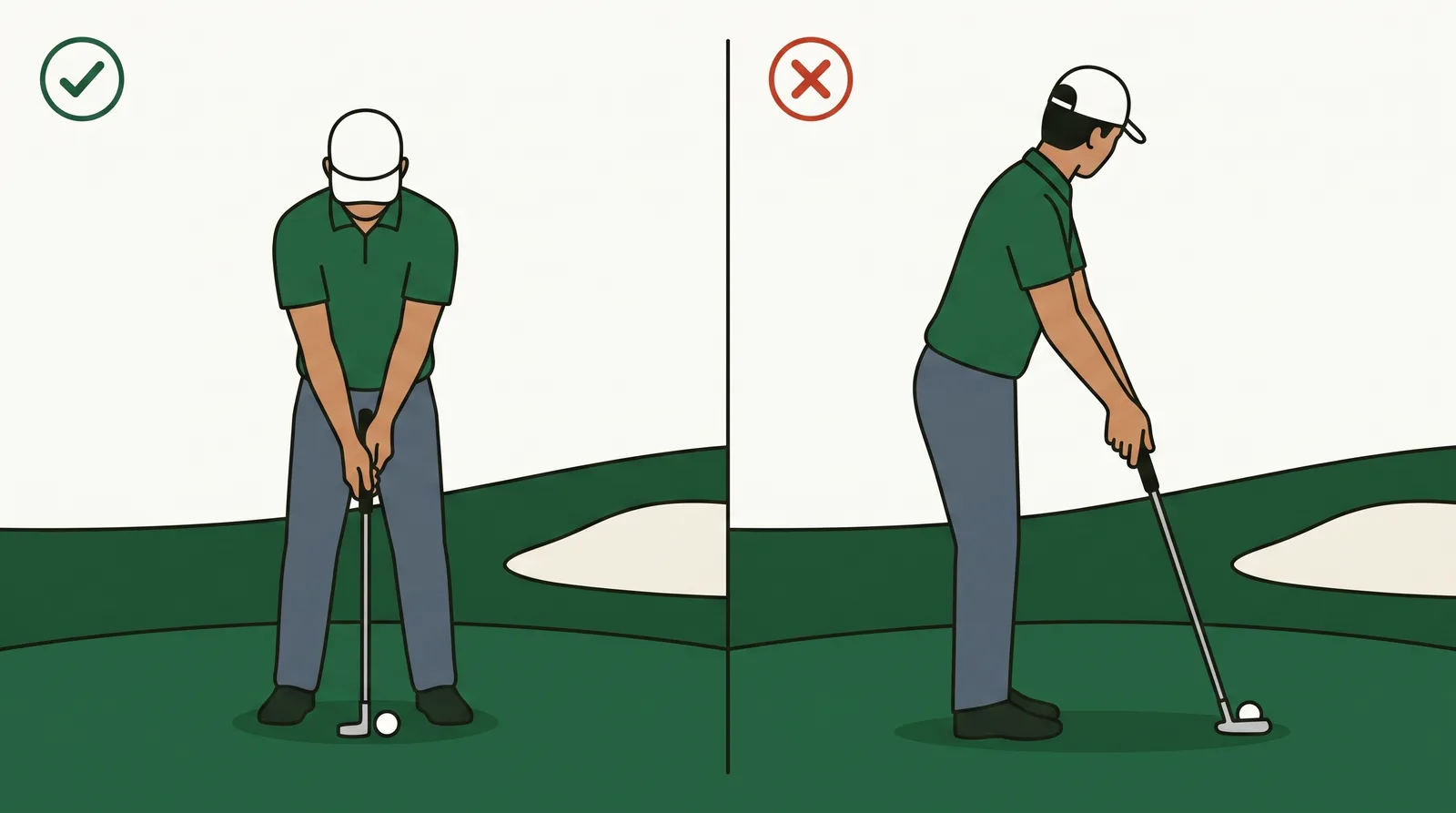
Your eyes should sit over the ball or just inside it. From directly above, a ball dropped from between your eyes should land on or just inside the ball on the ground. Eyes well outside the line make the putter travel out to in, and eyes a long way inside make you pull putts to the left.
The ball goes slightly forward of centre, roughly under your lead eye, so the putter is travelling level or fractionally upward at contact. That produces a ball that rolls rather than skids.
Your weight sits even or slightly forward, your arms hang under your shoulders, and your hands sit level with or a fraction ahead of the ball. Stance width is personal and does very little. The full checklist, including how to find your own eye line, is in the putting setup guide.
The stroke
The putting stroke is a shoulder movement. The shoulders rock the arms, the arms move the putter, and the wrists and hands do nothing except hold on.
Length controls distance. A longer stroke sends the ball further, and the pace of the stroke stays the same for a three footer and a forty footer. The backstroke and the through stroke should be roughly the same length, which is the simplest guard against deceleration.
Keep the head and lower body still. Almost every pushed or pulled short putt comes from the head moving to watch the ball early, which pulls the shoulders open before the ball has left the face.
The mechanics, including how face angle at impact and path interact, are covered properly in the putting stroke guide.
Speed comes before line
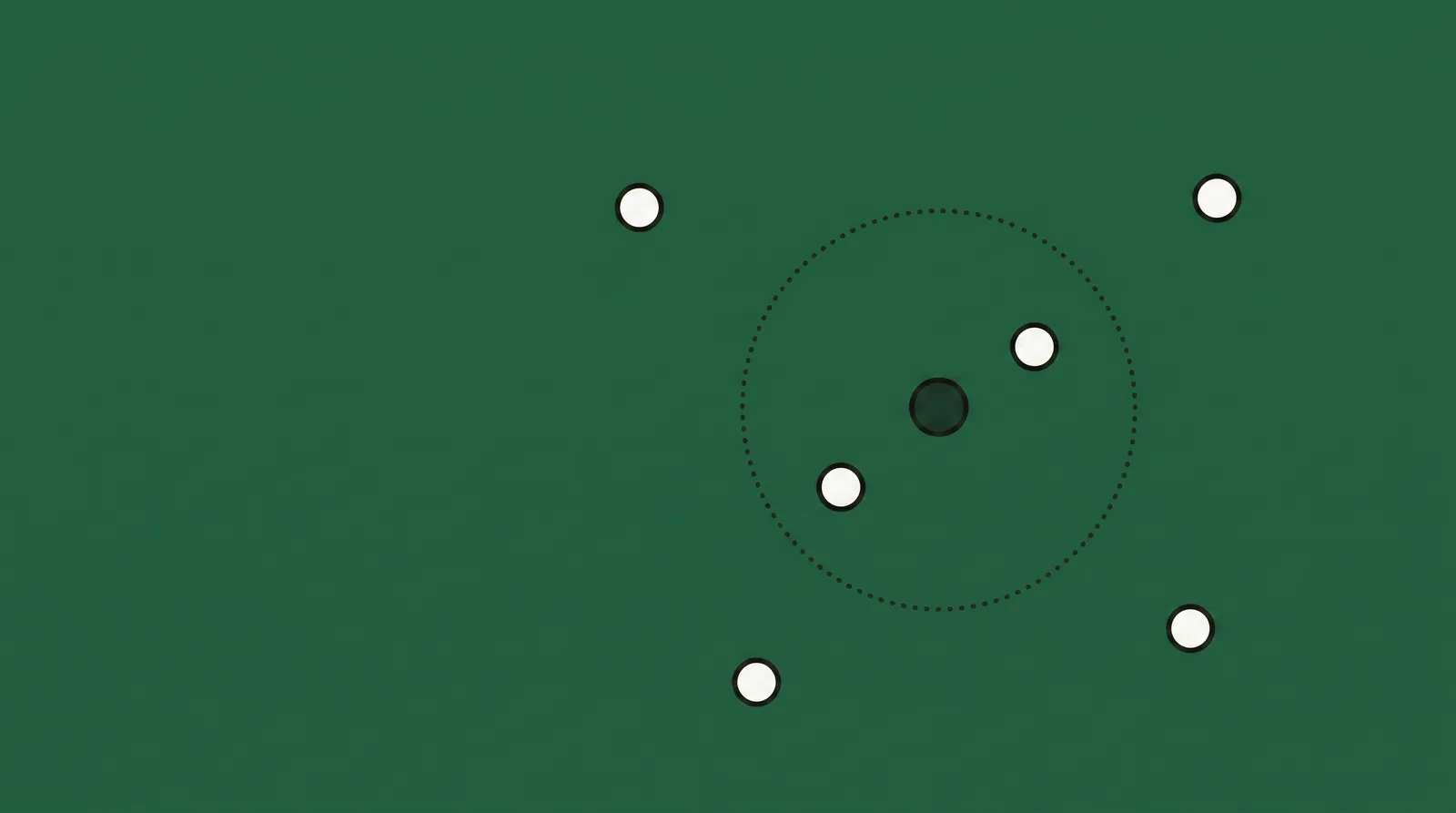
Most golfers practise line and then wonder why they three-putt. The Shot Scope numbers above explain why that is backwards: beyond 12 feet, even scratch golfers hole fewer than one in four, so the job of a long putt is not to go in, it is to finish inside a tap-in.
The target on a long putt is a circle around the hole about three feet across, not the hole itself. Judged that way, a 40 foot putt that finishes two feet away is an excellent shot rather than a miss.
Since 55 percent of amateur putts finish short of the hole, the safe error is long. A putt that runs two feet past has been given a chance of going in for its whole journey. A putt left two feet short never had one. Building a reliable speed system, including how to calibrate stroke length to distance, is the subject of putting distance control.
Reading the green, briefly
Green reading is a large subject and it has its own guide. At this level, three things are worth knowing.
Break is a product of slope and speed together. The same slope takes far more break from a slow putt than a firm one, which is why speed and line cannot be chosen separately. Pick the pace first and read the break for that pace.
Look at the ground on your walk up to the green, not just from behind the ball. The general tilt of a green is usually obvious from thirty yards away and almost invisible when you are crouched over your marker.
Greens also tend to drain toward the low point of the property, so putts often break more toward water or away from high ground than the surface itself suggests. The full method, including grain and why most amateurs under-read, is in the dedicated guide.
Short putts
Anything inside six feet should be a different mental exercise from a long putt. The line is nearly straight, the speed is nearly fixed, and the whole thing comes down to starting the ball where you aimed.
Two habits cause most short misses. Looking up early, which opens the shoulders and pushes the ball, and decelerating, which lets the face twist. Both are fixed by keeping the head still until the ball has clearly gone and by making the through stroke at least as long as the backstroke.
Hitting a short putt firmly enough to take out most of the break is usually the better choice, because a firm putt is less affected by footprints, spike marks and grain. The full treatment, including how to build the routine that stops the yips taking hold, is in making short putts.
How to practise putting
Putting is the only part of golf you can practise properly at home, and it is a motor skill that responds to frequency rather than volume. Ten minutes several times a week beats an hour on a Sunday.
More sessions, including games with a score attached and the ones that work indoors, are in putting drills.
The putter itself
Fitting matters more in putting than most golfers expect, and it is cheap to get right. Length decides whether your arms can hang under your shoulders, and a putter that is too long is the single most common reason a golfer's eyes sit inside the ball.
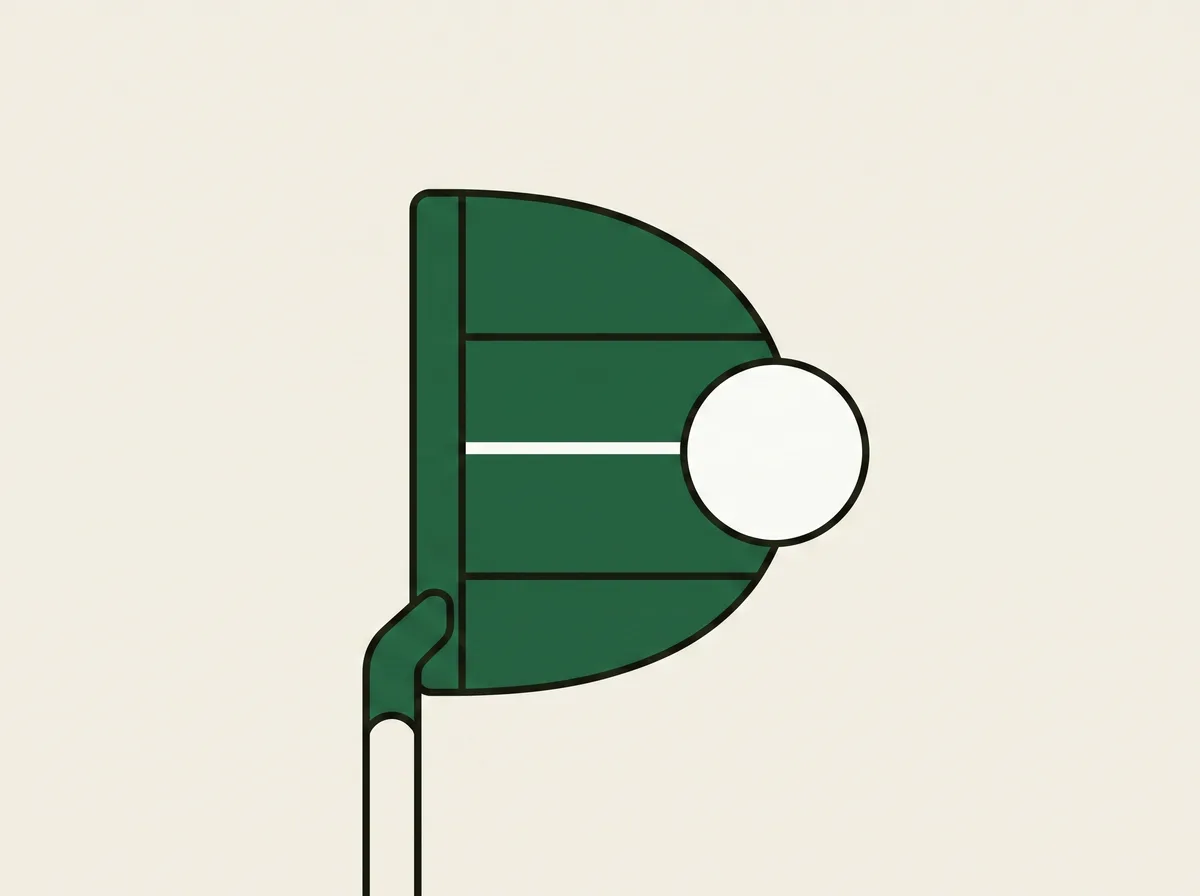
Head shape is mostly about what looks square to your eye. Blades tend to suit strokes with more arc, mallets tend to suit straighter strokes and are more forgiving off centre. Neither is better, and confidence in what you are looking at is worth more than either.
What good putting actually looks like
Golfers chase a number for putts per round without knowing what a realistic one is, and the raw figure misleads anyway: a round with lots of missed greens produces lots of chips and therefore fewer putts. Good putting is fewer three-putts, more first putts finishing inside three feet, and almost everything holed from inside four. The benchmarks by handicap are in average putts per round.
Improvement here is faster than anywhere else in golf because the movement is small, the feedback is immediate, and you can practise it on a carpet. Ten minutes on speed control four evenings a week shows up on the course within a month, which is not true of anything you do with a driver.
Key takeaways
- Putting is roughly two shots in every five, and none of them are recoverable.
- Hold the putter in the palms with both thumbs down the flat of the grip so the wrists stay out of it.
- Set your eyes over or just inside the ball, with the ball slightly forward of centre.
- The stroke is a shoulder rock. Length controls distance, and the pace of the stroke never changes.
- Shot Scope data has every handicap group holing over 82 percent inside six feet and under 43 percent from six to twelve.
- Three-putts are a speed fault. A 25 handicap three-putts every 7.6 holes, a 5 handicap every 16.7.
- Amateurs leave 55 percent of putts short, so the safe error on a long putt is past the hole.
- Arc versus straight back and through is genuinely contested. Pick one, stop switching, and do not steer the putter.
- On long putts the target is a three foot circle, not the hole.
- Ten minutes four times a week beats one long session, because putting is a motor pattern.
Common questions
How do you putt for beginners?
Hold the putter in your palms with the thumbs down the flat of the grip, set your eyes over the ball, and rock your shoulders back and through with quiet wrists. Match the length of the stroke to the length of the putt and keep the pace constant. Everything else is refinement.
Should the putter go straight back or on an arc?
Coaches genuinely disagree. A putter shaft that leans inward will naturally move the head slightly inside on a longer stroke, and on short putts the arc is small enough to be irrelevant either way. Let it happen naturally rather than steering it, and do not keep switching between methods.
Where should my eyes be when putting?
Over the ball or just inside it. A ball dropped from between your eyes should land on or just inside the one on the ground. Eyes outside the line push the putter out to in, and eyes well inside tend to produce pulls.
Where should the ball be in my stance when putting?
Slightly forward of centre, roughly under your lead eye. That lets the putter contact the ball as it is levelling out or moving fractionally upward, which produces a true roll instead of a skid.
How do I stop three-putting?
Work on speed rather than line. Practise from 20 to 40 feet with the aim of stopping every ball inside a three foot circle rather than holing it. Amateur data has most three-putts starting with a first putt left short, so err past the hole.
How far should I hit a putt past the hole?
Around a foot to eighteen inches is a reasonable target on a putt of any length. A ball travelling at that pace is still finding the hole if the line is close, and it does not leave a testing return putt when it misses.
How much of putting is speed and how much is line?
Beyond about six feet, mostly speed. Break is a function of pace, so choosing the speed effectively chooses the line. Inside six feet the balance flips and starting the ball on your intended line becomes the whole task.
Can you leave the flagstick in when putting?
Yes. Rule 13.2a allows the flagstick to be left in the hole with no penalty if the ball hits it. Whether it helps or hurts depends on the pace of the putt and how the flagstick sits, and there is no rules reason to take it out.
What grip should I use for putting?
Start with a conventional grip, palms facing each other and both thumbs down the flat of the handle. If you consistently pull short putts, left hand low is worth trying, and the claw suits golfers whose trail hand takes over. All are legal and all are used at the highest level.
How often should I practise putting?
Ten to fifteen minutes, three or four times a week, split between distance control and short putts. Frequency matters more than duration because a putting stroke is a motor pattern. A carpet at home is enough for the start line work, though pace needs a real green.
Tom Ashworth
Tom Ashworth is a PGA Professional who has taught golf since 2012, working mainly with beginners and mid-handicappers at club level in Surrey. He reviews the instruction guides on Learn Golf for technical accuracy before they publish.
Most of his teaching is with players in their first three years of the game, and most arrive having been told too much: six swing thoughts collected from videos, half of them contradicting each other. His approach is to check the grip and the alignment before touching the swing, on the basis that most bad ball flight is decided at address.