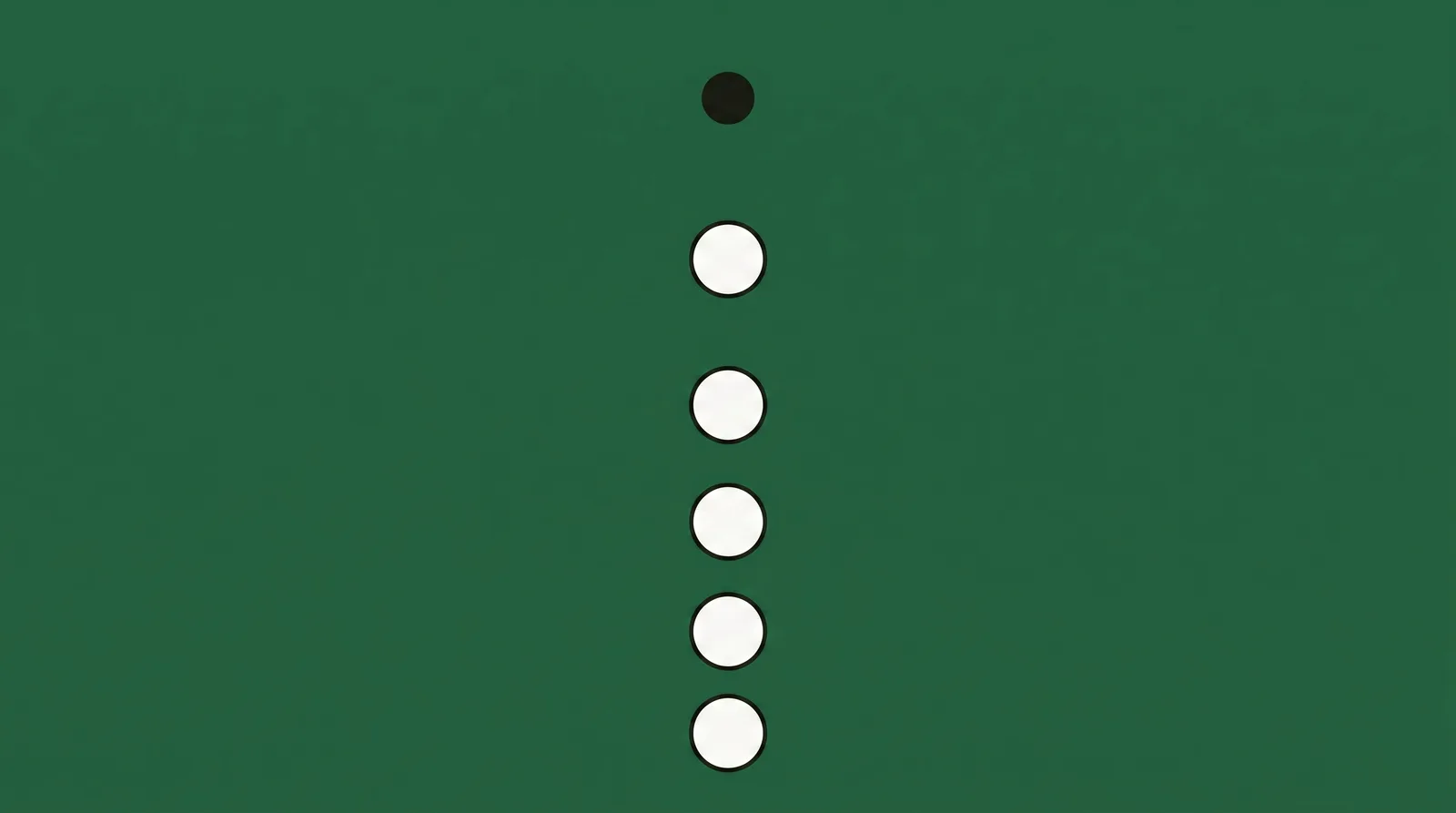
You read the putt, pick a good line, and leave it eight feet short. The line was never the problem. Distance control is the part of putting that separates handicaps, and it is also the part almost nobody practises, because rolling balls at a hole from six feet feels more like progress. This guide covers how to calibrate pace, where to aim to leave the ball, and what actually causes a three-putt.
Three-putts are a distance problem
The evidence for this is not subtle. Arccos, drawing on more than 75 million tracked shots across nearly a million rounds in 115 countries, breaks three-putt rates down by the length of the first putt.
| First putt length | 1 to 5 handicap | 6 to 10 handicap | 11 to 15 handicap | PGA Tour |
|---|---|---|---|---|
| 20 to 25 ft | 9.43% | 15.08% | 16.20% | 2.36% |
| 25 ft and over | 19.61% | 25.59% | 26.90% | 9.46% |
Read the bottom row again. A tour professional three-putts from beyond 25 feet less than once in ten, and a mid-handicap golfer does it more than once in four. Neither group is holing many of those putts, so the entire gap is in where the first one finishes.
The same dataset has golfers in the 1 to 5 bracket averaging 1.6 three-putts a round against 3.2 for the 15 and above bracket. That is a shot and a half a round available to anyone who improves nothing except the pace of their long putts.
Most amateurs are short, and it is not close
Shot Scope's tracked data on how often golfers three-putt has a 15 handicap leaving 55 percent of putts short of the hole, rising to 59 percent for a 25 handicap. When that golfer does three-putt, the average second putt they leave themselves is eight feet.
Eight feet is not a tap-in for anybody. It is squarely in the range where make percentages collapse, so a first putt left short does not cost you a stroke occasionally, it costs you one about half the time.
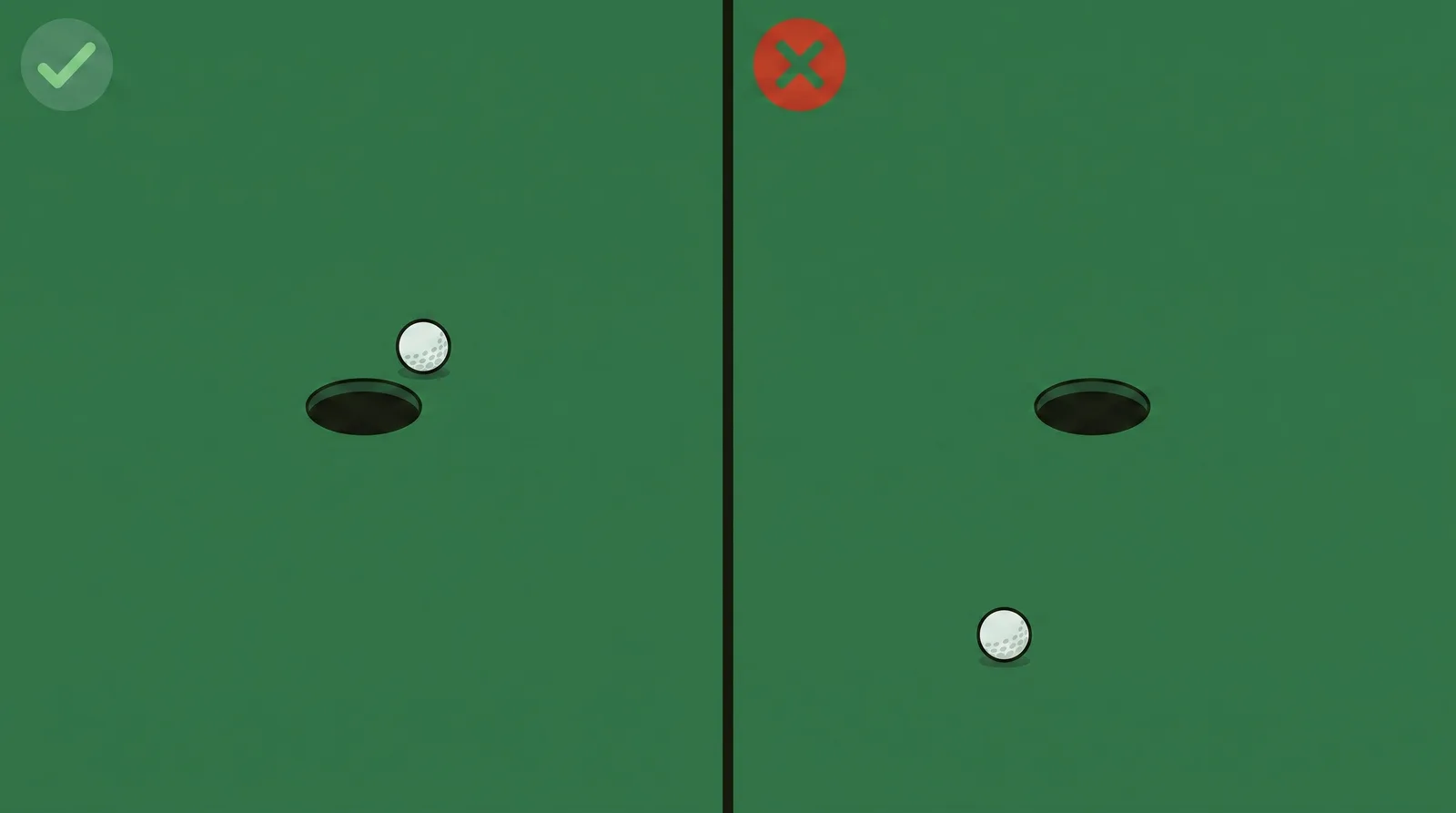
The correction is not "hit it harder", which is how golfers usually hear it and why it rarely sticks. It is to move the target from the hole to a point a foot beyond it, so that the pace you are aiming for is a pace you can actually picture.
Calibrating stroke length, not effort
Distance comes from how far back you take the putter, at a tempo that never changes. Golfers who instead keep the stroke the same length and vary how hard they hit it are calibrating a variable that has no scale on it.
The way to build a scale is to attach the backstroke to something you can see without looking. Your feet are already there, so use them.
| Stroke | Backstroke ends around | Roughly covers |
|---|---|---|
| One | Inside your trail instep | Short putts, up to about eight feet |
| Two | The outside of your trail foot | The middle range |
| Three | A putter head beyond your trail foot | Long putts and lag putting |
The distances each of those produces are yours, not anybody else's, and they change with green speed, grass type and how wet the morning was. That is the point of the system: it gives you three repeatable lengths, and calibration turns those lengths into distances on the day.
The pre-round calibration that actually works
Every green has a speed and you do not know what it is until you roll a ball on it. Five minutes on the practice green before a round is worth more than any amount of technique work you could do in the same time.
- Find a flat stretch of the practice green with no hole in the way.
- Roll six balls with your longest normal stroke and note where they finish relative to where you expected. That is your day's error, and it will be consistent.
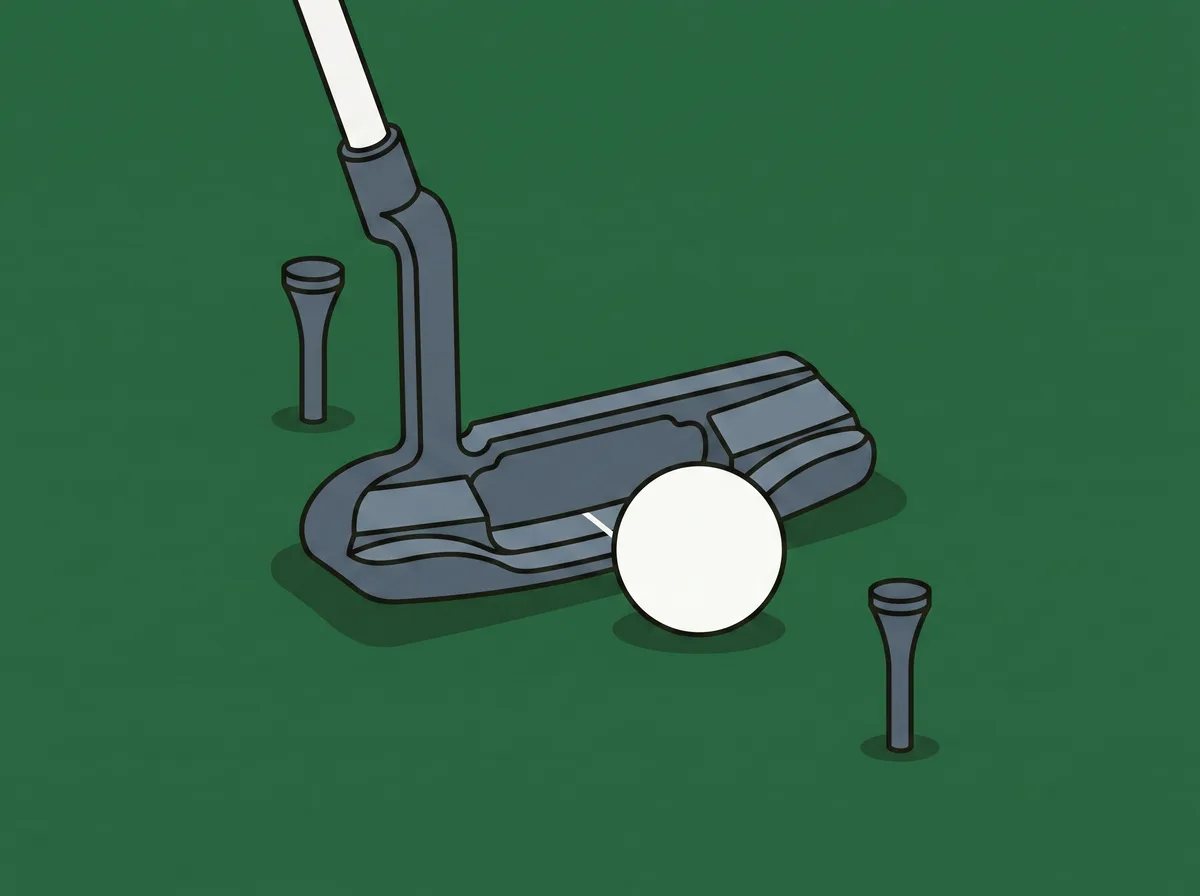
- Roll six more from around fifteen feet at your middle stroke, aiming to finish a foot past a tee rather than at it.
- Carry one adjustment onto the course: today is quick, today is slow, or today is what you expected. Do not try to remember three numbers.
Green speed does more to your pace than almost anything else, and it changes how much a putt breaks at the same time. All you need from this page is that a quicker surface needs a shorter stroke for the same distance, and that the adjustment is one you make once and apply all round.
Slope is a pace instruction
Uphill and downhill do more to the pace of a putt than anything except the length of it, and most golfers under-adjust in both directions.
| The putt is | Play it as | Because |
|---|---|---|
| Uphill | Longer than it measures | Gravity is taking speed off the ball for its whole journey |
| Downhill | Much shorter than it measures | Gravity is adding to it, and the ball keeps rolling after it should have stopped |
| Across a slope | Longer than the straight-line distance | The ball travels a curved path, which is further than the direct one |
The third row is the one golfers miss. A putt with three feet of break is not a twenty-foot putt, it is a twenty-two-foot putt that happens to end up twenty feet away, and playing it as twenty is why so many breaking putts finish below the hole and short.
Sideslope also means the amount of break you play depends on the pace you choose, which is a green reading question rather than a pace one. That relationship is set out fully in reading greens, and it is worth reading alongside this page rather than instead of it.
Long putts have a different job
Beyond about fifteen feet, stop trying to hole it. Not as an attitude, as a strategy: the make percentages at that range are low for everybody, and the cost of a first putt that races six feet past is far higher than the value of the occasional one that drops.
Shot Scope's comparison of a tour professional with amateur golfers puts putts per round at 27.7 for the tour player, 29.3 for a scratch golfer and 31.8 for a 15 handicap. That spread of roughly four shots is not made of holed forty-footers. It is made of second putts that were three feet rather than eight.
Two habits do most of the work here. Look at the hole rather than the ball while you make your practice strokes, so your eyes feed the distance to your hands. And walk the putt if it is long enough that you cannot judge it from behind the ball, because pacing gives you a real number where your eye gives you a guess.
Where the strokes come back
Distance control is also an approach-play skill, which is why the same golfers tend to be good at both. Leaving yourself an uphill twenty-footer instead of a downhill twelve is a decision made from the fairway, and that decision belongs in course management. The same calibration logic applied to partial wedges is in wedge distance control.

Drills that move the number
All three of these remove the hole, because the hole is what stops you learning pace.
More sessions, including what a mat can and cannot do for you indoors, are in putting drills. Be honest about the indoor limit: a putting mat is one surface at one speed, so it builds a repeating stroke and teaches you nothing about a green you have not rolled a ball on. Pace work finishes on grass.
What to expect
Pace improves faster than almost anything in golf because the feedback is immediate and the movement is not the limiting factor. Give the ladder drill a month and the change you should look for is not more holed putts, it is fewer second putts outside three feet.
The number worth tracking is three-putts per round rather than total putts, because total putts is distorted by how many greens you hit. Average putts per round sets out what a realistic figure looks like by handicap, and short putts covers the other half of the same problem, which is holing what your lag putting leaves you.
Key takeaways
- Three-putts are a pace fault. Arccos data has mid-handicaps three-putting from beyond 25 feet more than once in four, against under one in ten on tour.
- Golfers in the 1 to 5 handicap bracket average 1.6 three-putts a round, and the 15 and above bracket average 3.2.
- Shot Scope has a 15 handicap leaving 55 percent of putts short and a 25 handicap 59 percent, with an eight-foot average second putt.
- The target on a long putt is a three-foot circle centred a foot past the hole, not the hole.
- Distance comes from the length of the stroke at a constant tempo, never from hitting harder.
- Three repeatable backstroke lengths, referenced to your feet, beat trying to remember distances.
- Calibrate to the day's green speed with five minutes on the practice green and carry one adjustment.
- A putt across a slope travels further than the straight-line distance, which is why breaking putts finish short.
- Whether a long putt should die at the hole or finish past it is genuinely contested. A foot past is the better default.
- Practise pace to a tee rather than a hole, and score yourself on balls finishing within three feet.
Common questions
How do I improve my distance control in putting?
Control distance with the length of the backstroke at a constant tempo, and practise to a tee rather than a hole so you are scored on where the ball finishes rather than whether it drops. Build three repeatable stroke lengths referenced to your feet, then calibrate them to the green speed before each round.
Why do I always leave putts short?
Because almost everyone does. Shot Scope's tracked data has a 15 handicap leaving 55 percent of putts short of the hole and a 25 handicap 59 percent. The instinct is to protect against the return putt, and the result is a first putt that never had a chance and a second putt from the range nobody holes reliably.
How far past the hole should a putt finish?
Around a foot, or up to eighteen inches. At that pace the ball is still finding the hole if the line is close, it takes a predictable amount of break, and it does not leave a testing return putt when it misses. Anything much beyond that starts costing you second putts.
What is lag putting?
Lag putting is any long first putt where the aim is to finish close rather than to hole out. In practice that means anything from about fifteen feet, where make percentages are low for every handicap including tour professionals, and the whole job of the putt is to leave a tap-in.
Should I hit long putts harder or take the putter back further?
Further back, at the same tempo. Hitting harder from the same stroke length means calibrating effort, and effort has no scale you can repeat. A longer stroke at an unchanged tempo delivers more speed in a way you can measure against your own feet.
How do I judge the speed of an unfamiliar green?
Roll six long putts on the practice green before you tee off and note whether they finish past or short of where you expected. Carry one adjustment for the round: quick, slow, or as expected. Do not try to memorise distances, because they will change again by the afternoon.
Do downhill putts need less break or more?
More. A downhill putt is travelling more slowly for longer, and gravity acts on it for the whole of that time. The same slope will move a downhill putt considerably further sideways than an uphill one, which is why a downhill breaking putt is the hardest shot on the green.
How much longer is a putt across a slope?
Longer than the straight-line distance, because the ball travels a curved path. A putt measured at twenty feet with a few feet of break is really a twenty-two or twenty-three foot putt. Playing it as twenty is a common reason breaking putts finish short and on the low side.
Can I practise distance control indoors?
Only partly. A mat is a single surface at a single speed, so it builds a repeating stroke and a reliable start line but teaches you nothing about a green you have not played. The pace half of putting has to be finished on grass, ideally on the practice green of the course you play.
How many three-putts is normal?
It depends on your handicap. Arccos data puts the 1 to 5 bracket at 1.6 a round and the 15 and above bracket at 3.2. If you are well above the figure for your bracket, the fault is nearly always a first putt left short rather than a missed short one.
Should I look at the hole while putting?
As a drill, yes, and some golfers keep it permanently. Looking at the target while you stroke a long putt feeds distance information to your hands the same way it does when you throw a ball. Try ten putts each way from thirty feet and compare where they finish before deciding.
Tom Ashworth
Tom Ashworth is a PGA Professional who has taught golf since 2012, working mainly with beginners and mid-handicappers at club level in Surrey. He reviews the instruction guides on Learn Golf for technical accuracy before they publish.
Most of his teaching is with players in their first three years of the game, and most arrive having been told too much: six swing thoughts collected from videos, half of them contradicting each other. His approach is to check the grip and the alignment before touching the swing, on the basis that most bad ball flight is decided at address.