Alignment is the fundamental golfers check least and get wrong most, because it is the only one you cannot feel. A grip feels different when it changes, and so does posture. Aim feels identical whether you are pointed at the flag or thirty yards right of it, and the swing spends the next two seconds compensating for whatever you set.
Left and right below assume a right-handed golfer, and on this page it matters more than on any other. A right-handed golfer whose shoulders are open is aiming left; a left-hander in the same position is aiming right. Every direction on this page mirrors, so if you play left-handed, swap them throughout and read the left handed golf guide alongside it.
You are aiming two different things
The most common alignment error is not aiming badly. It is aiming the wrong thing.
The clubface points at the target. Your body does not, because it is standing to the side of the ball. Point your feet, hips and shoulders directly at the flag and you are standing on a line that converges with the target line, which means your whole swing is aimed right of where you think.
This matters because the face is what decides where the ball sets off. TrackMan describes face angle as the most important number when determining the starting direction of the golf ball, and states plainly that the ball launches very closely to the direction the face is pointing at impact. The body then decides the direction the club is travelling, and the gap between those two is what curves the shot. TrackMan measures that gap as face to path, and the whole relationship is unpacked in ball flight laws.
So a golfer with a square face and a body aimed thirty yards right does not hit the ball thirty yards right. They hit a ball that starts near the target and curves, because the club is travelling one way and the face is pointing another.
The railway tracks
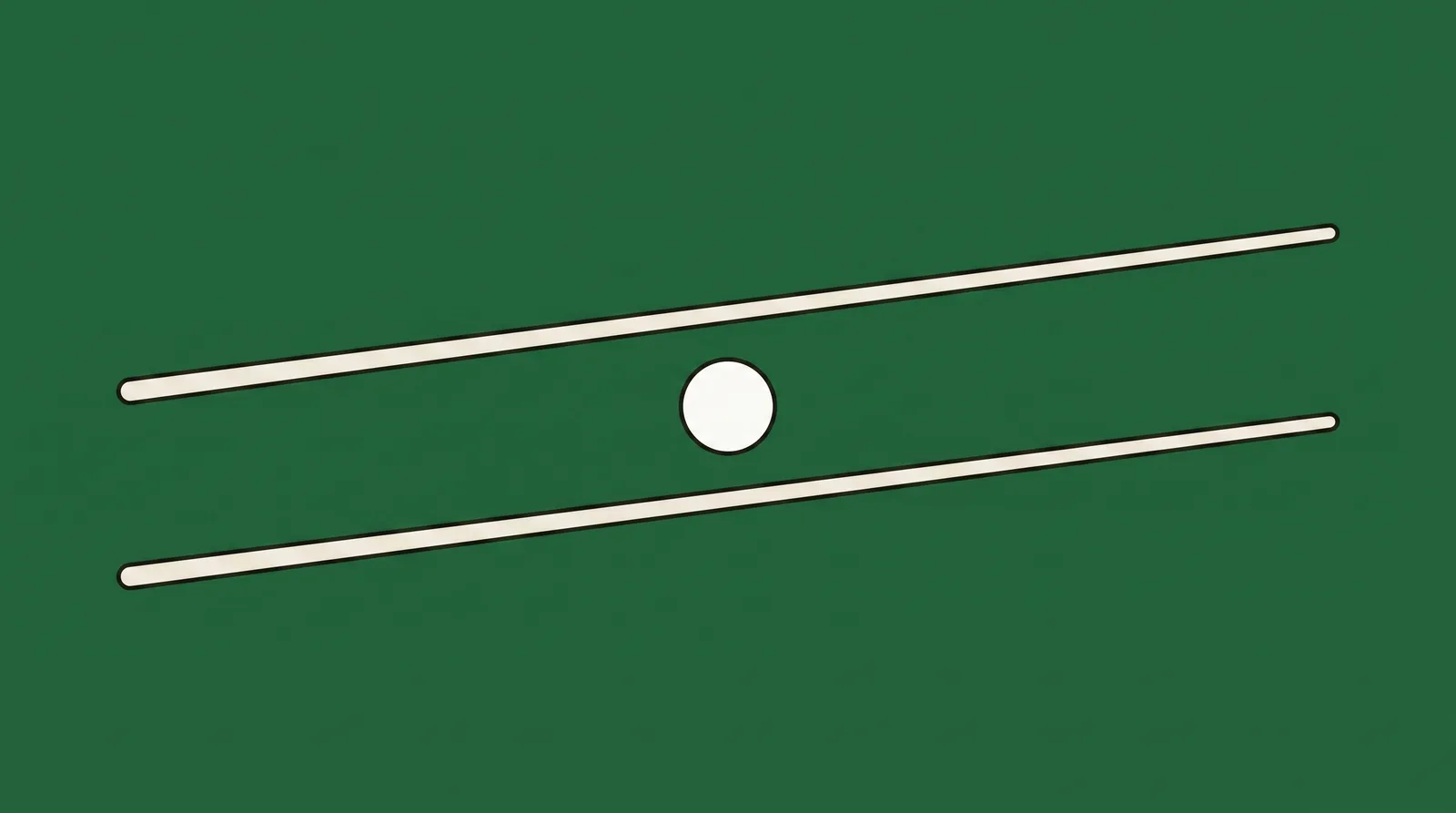
The picture that fixes this is two parallel rails. The far rail runs from the ball to the target and the clubface sits on it. The near rail runs along your toes and your body sits on that. They never meet.
Two consequences follow, and both surprise people. Your body genuinely does aim left of the flag for a right-handed golfer, by an amount that grows with the length of the shot. And standing square never means facing the target, it means being parallel to a line that goes there.
The feet are the easy part. The shoulders are where alignment breaks, because they can be open or closed by a large amount without the feet moving at all, and the golfer feels nothing.
Open shoulders are by a distance the most common version, and they are the reason so many golfers who have "checked their alignment" still slice. Checking the feet finds nothing wrong. The club follows the chest.
The opposite exists too, usually in golfers who have been fighting a slice for a while and have been told to swing more from the inside. They close the shoulders instead, which points the whole swing right and produces pushes and hooks depending on what the hands do to rescue it.
Aim in this order, every time
Order matters more than effort here. Almost every misaim comes from doing these steps in the wrong sequence.
- Stand behind the ball, looking down the line at the target, before you go anywhere near your stance.
- Pick something on the ground on that line, within a yard or two of the ball.
- Walk in and set the clubface so it looks at your target, using the near marker to get it right.
- Only now build your stance around the club, feet parallel to the line the face is on.
- Check the shoulders last, because they are the ones that will be wrong.
The reason the club goes down first is that a clubface is easy to aim when you are looking at it and impossible to aim once you are already standing over the ball with your feet planted. Golfers who set their feet first are guessing at the face angle from a position where they cannot see it. That order is one of the main things a pre shot routine exists to protect.
Why your eyes lie to you
There is a physical reason alignment feels correct when it is not. You stand to the side of the ball with your head turned, looking at the target from an angle rather than from behind it. From there, a target line that is genuinely parallel to your feet looks like it is aimed right of the flag, so the natural correction is to shuffle your body until it looks right, which aims you right. The more you trust your eyes, the further off you get.
This is also why alignment is not something you can check by feel later. It has to be checked with an object on the ground, because the only reliable reference is one you did not judge with your eyes from beside the ball.
The intermediate target
Every good aimer uses the same trick, which is to stop aiming at something 150 yards away.
From behind the ball, find a mark on the ground on your target line, no more than a yard or two ahead of it. An old divot, a discoloured blade of grass, a small twig. Aim the clubface at that instead. It is far easier to point a face at something two feet away than at a flag you can barely see, and the geometry is identical.
It works in reverse for the body too. Once the face is set on the near mark, your feet only have to be parallel to a line joining two points you can both see.
Alignment sticks, and what they can and cannot do
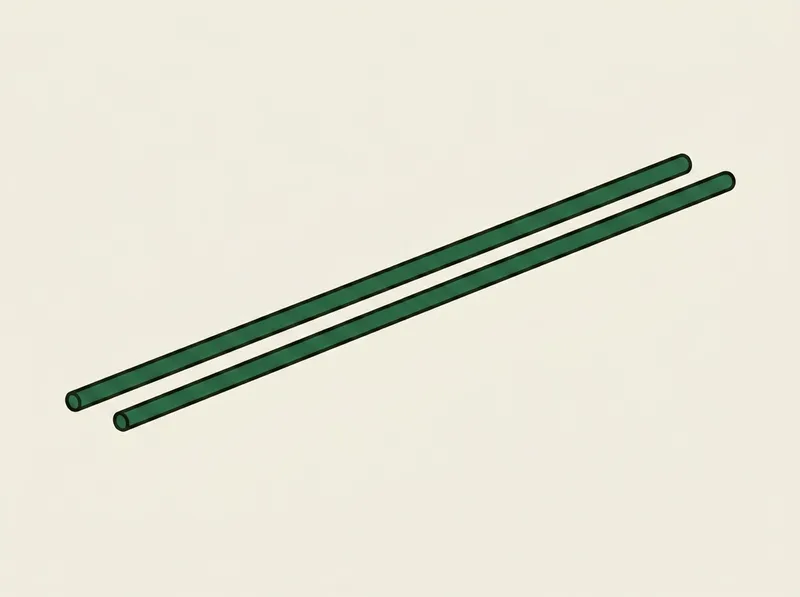
Two thin fibreglass rods are the most useful practice tool in golf and the least well used. The basic setup is one stick on the ground pointing at your target, laid a few inches outside the ball so you do not hit it, and a second along your toe line, parallel to the first. That gives you both rails at once. Hit balls, and check the toe stick after each shot to see whether your feet have crept.
| Setup | Where the sticks go | What it checks |
|---|---|---|
| The basic rails | One on the target line outside the ball, one along the toes | Feet and face alignment together |
| The shoulder check | Hold one stick across the front of both shoulders at address | Whether the shoulders match the feet |
| The single rail | One stick on the target line only | Face aim, when space is tight |
| The station | Rails plus a third stick pushed into the ground beyond the ball | Aim plus a visual target for start direction |
The shoulder check is worth doing most often, because it catches the fault the other setups miss. Take your normal address, freeze, and lay a club across the front of your shoulders. Where it points is where your swing is going.
What misaim actually costs
Alignment errors do not show up as wild shots. They show up as a pattern, which is why they survive for years without being noticed.
A right-biased miss across thousands of tracked amateur shots is what an aim problem looks like at scale, alongside club selection. The individual version is easier to spot: if your good swings finish on one side of the target more often than the other, look at where you were pointed before you look at what you did.
The second cost is harder to see. A golfer aimed right who still finds the target has taught themselves a compensation, and that compensation is now part of the swing. Fix the aim without knowing it is there and the ball goes further off line than before, which is why alignment changes often feel like they are making things worse for a week or two.
Aim by shot type
Not everything is aimed the same way, and treating a putt like a full shot is a common error.
| Shot | What you aim | Reference to use |
|---|---|---|
| Full shot | Face at the target, body parallel left | Intermediate mark within two yards |
| Tee shot | Face at your chosen line, not the middle of the fairway | Use the tee markers to check your feet |
| Chip and pitch | Face at the landing spot, body often slightly open | The landing spot, not the flag |
| Greenside bunker | Face open to the target, body aimed left of it | Face and body deliberately disagree here |
| Putt | Face square to the start line, which is rarely at the hole | The line on the ball, or a spot a foot ahead |
Putting is worth calling out because aim there is judged over a distance where a fraction of a degree matters, and the setup rules are different enough that it has its own page in how to putt.
Two drills that actually change aim
Neither of these is exciting and both work, which is roughly the trade in golf practice.
Keeping it from drifting
Aim decays, because nothing about it feels wrong when it changes and because the swing quietly adapts around it. Three habits keep it honest. Put a stick down at the start of every range session, even if you take it away after ten balls, because the first ten are what calibrate your eye. Set the club behind the ball before your feet, always. And check the shoulders rather than the feet when something starts leaking one way.
The rest of the setup is only as useful as the direction it is pointed. Where the ball sits within it is in golf ball position, the shape of the body above it is in golf posture, and the width and foot angles underneath it are in golf stance.
Key takeaways
- The clubface aims at the target. The body aims parallel to the target line, which for a right-handed golfer means left of the flag.
- The face decides where the ball starts, and the gap between face and swing direction decides how much it curves.
- Feet are the easy part. Shoulders are where alignment actually breaks and where nobody looks.
- Set the clubface first, then build the stance around it. Feet first makes aim an accident.
- Correct alignment looks wrong from beside the ball because you are judging a line you are standing next to.
- Use an intermediate target within a yard or two of the ball instead of aiming at something 150 yards away.
- Two alignment sticks, one on the target line and one along the toes, check both rails at once.
- Setting an object down to help you aim is a two-stroke penalty during a round, so sticks are for practice only.
- Fixing aim can make things worse briefly, because the compensation built around it is still there.
Common questions
How do I aim correctly in golf?
Stand behind the ball and pick a mark on the ground on your target line within a yard or two. Walk in, set the clubface at that mark, then build your stance so your feet, hips and shoulders sit parallel to the line rather than pointing at the target. Check the shoulders last.
Should my feet point at the target in golf?
No. Your feet sit parallel to the target line, which means they point left of the target for a right-handed golfer and right of it for a left-hander. Pointing the feet directly at the flag aims your whole swing to the far side of it.
Why do I aim right without realising it?
Because you judge the target line from beside the ball with your head turned, and from that angle a genuinely parallel stance looks like it is pointing right. Correcting what you see aims you further right. It is a perceptual effect rather than a technique fault, which is why it needs an object on the ground to fix.
How do I set up alignment sticks?
Lay one on the ground pointing at your target, a few inches outside the ball so you cannot hit it, and a second parallel to it along your toes. Hit balls and check the toe stick after each one. Add a third across the front of your shoulders occasionally to catch the fault the other two miss.
Are my shoulders or my feet more important for alignment?
Shoulders, comfortably. The club follows the chest far more closely than it follows the feet, so a golfer with perfect foot alignment and shoulders open by fifteen degrees swings across the ball anyway. Feet are simply easier to check, which is why they get all the attention.
What is an intermediate target in golf?
A mark on the ground on your target line, usually within a yard or two of the ball, that you aim the clubface at instead of aiming at the distant target. It is easier to point a face at something close, and the direction is identical because both sit on the same line.
Does bad alignment cause a slice?
Frequently, though indirectly. Aiming the body right of target sends the club out to the right, and most golfers subconsciously pull it back across the ball to keep the shot on line. That across-the-ball path with an open face is the classic slice, so the aim is the cause and the path is the mechanism.
Should I aim differently for a draw or a fade?
Yes, and it follows the same rules. For a fade with a right-handed golfer, the body aims further left with the face still on the target line. For a draw, the body aims right of it. The face stays aimed at where you want the ball to finish, or slightly inside it, and the body sets the curve.
Why did my alignment change make my shots worse?
Because you had built a compensation around the old aim, and it is still there. A golfer aimed twenty yards right who pulls the club across the ball to compensate will start pulling shots badly once the aim is corrected. Give it two or three sessions before judging it.
Tom Ashworth
Tom Ashworth is a PGA Professional who has taught golf since 2012, working mainly with beginners and mid-handicappers at club level in Surrey. He reviews the instruction guides on Learn Golf for technical accuracy before they publish.
Most of his teaching is with players in their first three years of the game, and most arrive having been told too much: six swing thoughts collected from videos, half of them contradicting each other. His approach is to check the grip and the alignment before touching the swing, on the basis that most bad ball flight is decided at address.