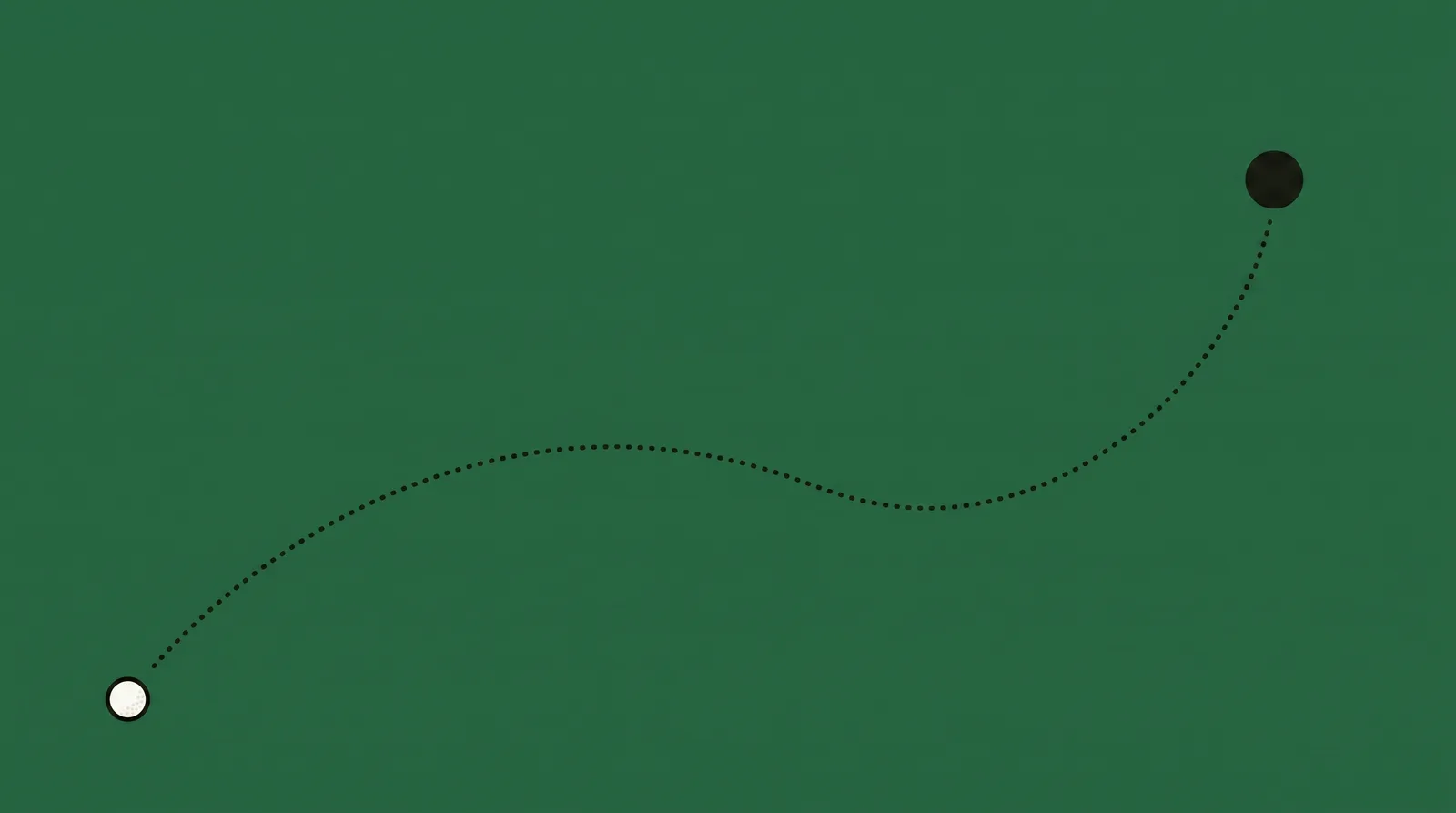
You crouch behind the ball, decide it moves a cup to the left, hit it there, and watch it miss on the low side. Your playing partner then hits the same putt harder on a straighter line and holes it. Both reads were defensible. This guide covers what break actually is, a method for reading a green in the time you have, and what grain does.
Break is slope and speed together
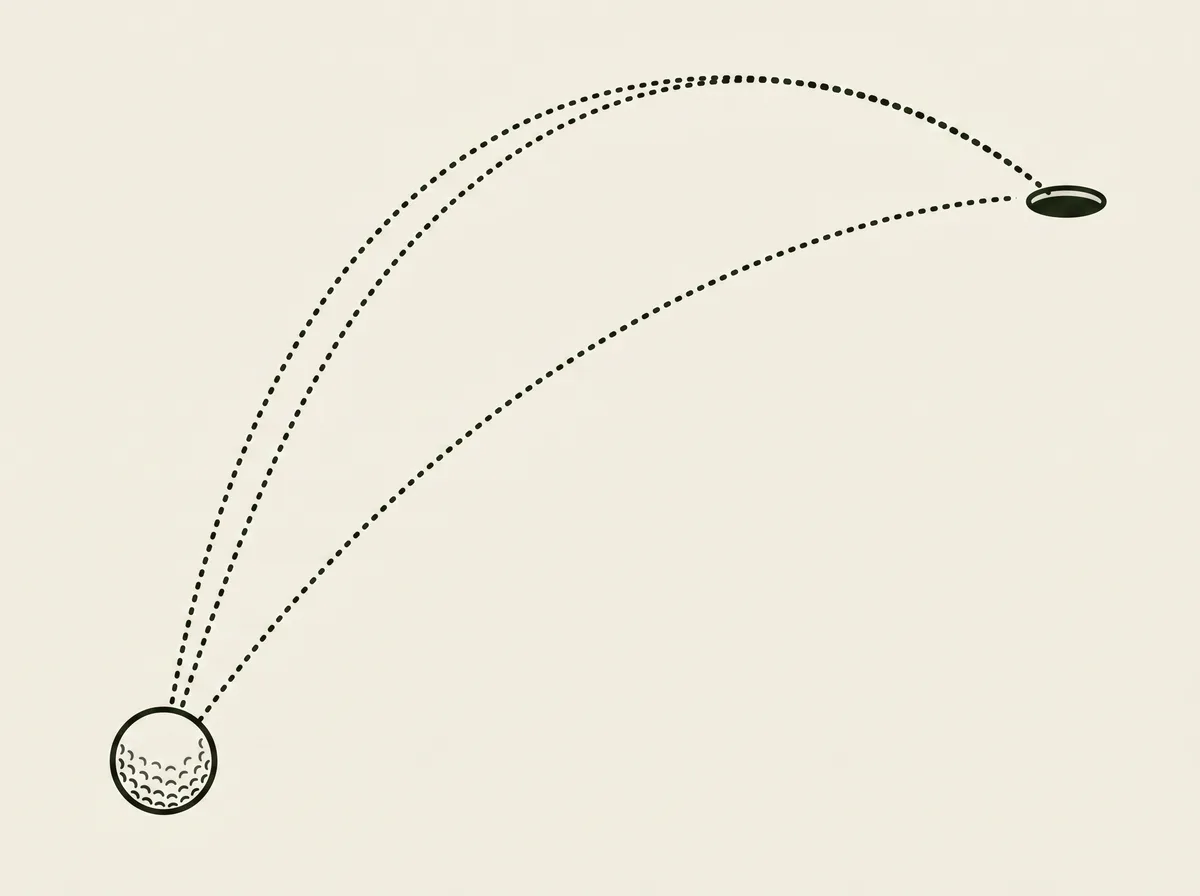
A putt breaks because gravity pulls the ball sideways for as long as it is moving. The longer the ball takes to reach the hole, the longer gravity has to work, so a putt struck softly on a given slope turns much more than the same putt struck firmly.
That explains why green reading feels so slippery. There is no correct amount of break on a putt. There is only the amount that matches the pace you have chosen, and a different pace gives you a different correct line.
Most amateurs default to a dying pace without deciding to, because the instinct is to avoid the return putt. Shot Scope's tracked data on three-putt frequency has 55 percent of amateur putts finishing short of the hole, so the average golfer's real pace is slower than the one in their head and their real break is bigger than the one they read.
| Pace you choose | Break to play | Suits |
|---|---|---|
| Dying at the hole | The most | Fast downhill putts, slick greens, anything above the hole |
| A foot past | Moderate, and the default | Most putts of any length |
| Firm, taking out break | The least | Short uphill putts, spiked-up greens late in the day |
The middle row is where almost every putt should live. A ball rolling at that pace has a chance of dropping for the whole of its last few feet, and it removes most of the guesswork about how much the green will move it.
The method, in the order you should use it
Green reading fails on the course because golfers try to do all of it from one crouched position behind the ball, in eight seconds, after their partner has played. Split it into four steps and most of it happens before your turn.
- Read the whole green on the walk in, from thirty or forty yards out. The overall tilt of a putting surface is obvious from a distance and almost invisible from a crouch. Note which end is high.
- Look at the putt from behind the ball, standing rather than crouching first, so you see the whole path rather than the first two feet of it.
- Walk to the low side of the putt, roughly halfway along its length, and look across it. Slope reads far more clearly from below than from either end.
- Pick your pace, then pick the point where the ball will start to turn and aim the face there. Commit to it and stop reading.
Step three is the one most golfers skip and the one that adds the most. From behind the ball you are looking down a line, which flattens everything. From the low side you are looking across the slope, and a tilt of one or two percent that was invisible becomes plain.
Read the property, not just the putt
Water runs downhill and golf courses are built so that water leaves the greens, which gives you a free read before you look at anything.
Greens drain toward the low point of the site, so putts tend to break toward water, toward the lowest ground you can see, and away from any hill that dominates the property. This is drainage engineering rather than folklore, and it explains reads that look wrong from behind the ball.
Most greens also tilt slightly toward the fairway to hold approach shots, so a putt from the back is usually quicker than it looks and one from the front edge slower. Thinking about that before you play the approach is one of the cheapest gains in golf course management, because an uphill twenty-footer beats a downhill twelve.
Green speed changes every read you take
The same slope produces a different putt on a slow green than on a fast one, which is why a read that worked at your home course fails on holiday.
Green speed is measured with a Stimpmeter, and the reading is not a speed at all. As the USGA explains in its guide to measuring green speed, it is the average distance in feet a ball rolls after leaving a standard ramp, measured in both directions and averaged. A higher number means the ball rolls further for the same start, so it takes longer to stop, so gravity gets longer to act on it.
Faster greens therefore break more, not less. Golfers usually expect the opposite because a fast green feels like it gives the ball less time. It gives it more.
You do not need a number. Roll three or four long putts before you go out, note whether the ball finishes past or short of where you expected, and carry that one adjustment for the round. Building that calibration properly is the subject of putting distance control.
Grain, and where it actually matters
Grain is the direction the grass leaves lie rather than stand, and it is over-applied by golfers who have read about it and ignored by golfers who have not.
The USGA's explanation of grain on putting greens is blunt about where it matters. Greens built on Poa annua, colonial bentgrass and fine fescue grow predominantly upright and show little grain. Bermudagrass, and ultradwarf bermudagrass in particular, grows laterally and develops grain as a matter of course. In northern Europe it is a minor factor on most days. On bermuda in the American south it is a major one.
Where it exists, the effect is simple. A ball rolls faster down the grain and slower into it, and on a sideslope grain either adds to the break or fights it. Two cues tell you which way it runs:
- The surface looks shiny and light when the grain runs away from you, dark and dull when it runs toward you.
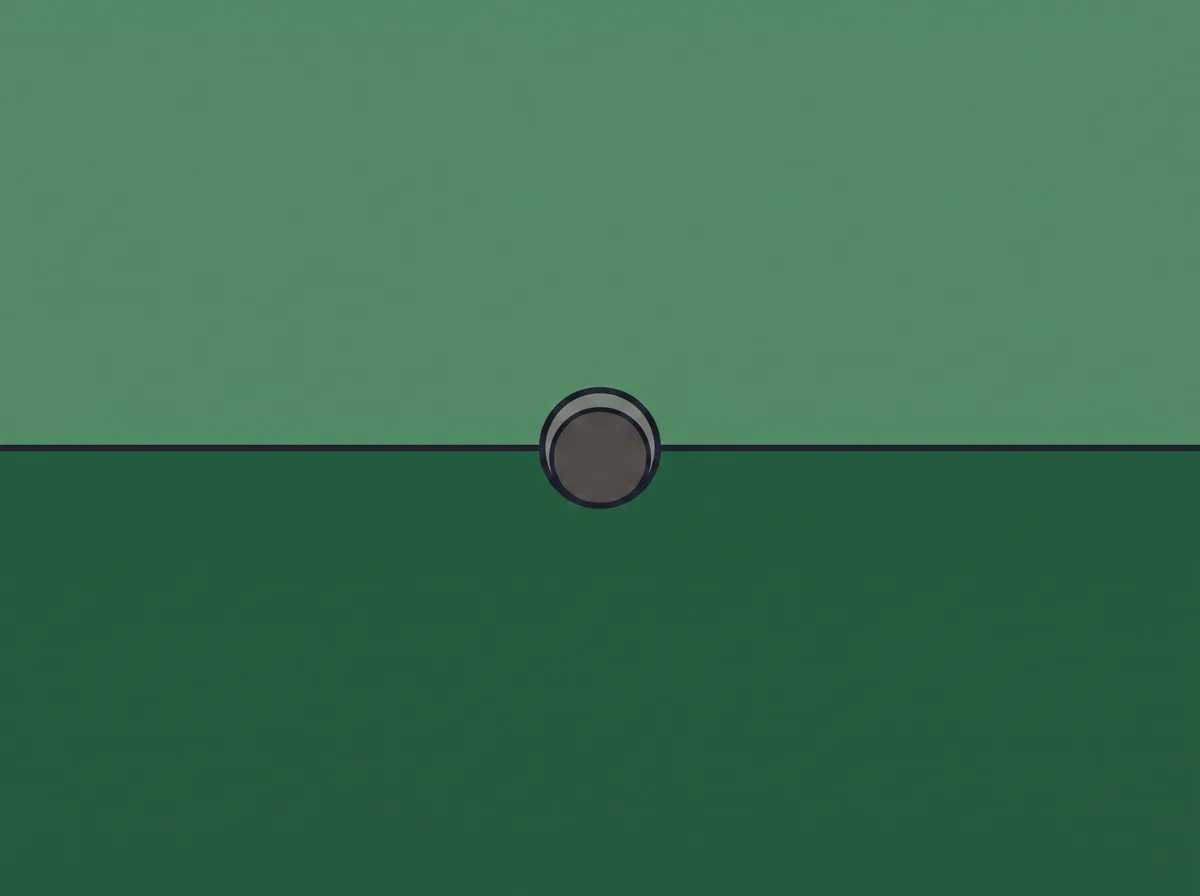
- The edge of the hole is clean and sharp on the side the grain grows into, and slightly ragged or browned on the side it grows away from.
Grain tends to follow the setting sun and to run toward water, though superintendents fight it by rotating mowing directions, brushing and topdressing, so the modern version is far weaker than older instruction books describe.
The last three feet decide it
A ball on a slope is always accelerating sideways while it is slowing down forwards, so the sideways movement makes up more and more of the total as the putt runs out. Most of the break on any putt happens in its final few feet.
Two things follow. Pace errors look exactly like read errors, because a putt arriving too fast will not take the break you played and one arriving dying will take more. And the high side is always the better miss: a putt above the hole spends its last few feet moving toward it, so a speed error can still drop it, while a low-side putt was moving away from the hole from the moment it turned. Golfers call the low side the amateur side for a reason.
Aiming, then starting the ball there
A read is worth nothing if the ball does not set off on it, and the most common cause of a good read producing a bad result is the face pointing somewhere else at address.
Pick a spot on your line no more than a foot or two in front of the ball, set the putter face square to it, and build your stance around the face rather than the other way round. Marking the ball with a line suits some golfers and paralyses others, so try it for a few rounds before deciding.
Where your eyes sit and how the face returns are covered in putting setup and the putting stroke. If the ball consistently starts off a line you were confident about, the fault is there and not in your reading.
Practising a read
Green reading is trainable, but only with feedback, and the practice green is the only place you get any. Both drills below tell you immediately whether the read was right.
More structured sessions are in putting drills. Reading also belongs inside your routine rather than alongside it, and where it sits is covered in the pre-shot routine guide.
What to expect
Reading improves faster than most parts of golf because the feedback is immediate and the movement is not the limiting factor. Give it a month of the two drills above and most golfers find their misses move from the low side to the high side, which is the change worth watching for.
What will not happen is that you start holing long putts. Nobody does. The gain shows up as first putts finishing above the hole and inside three feet, which is why short putts and green reading are the same subject in practice even though they are taught as different ones.
Key takeaways
- Break is slope and speed together. Choose the pace first, then read the line that matches it.
- A pace that finishes a foot past the hole is the default, and it takes a moderate amount of break.
- Read the general tilt on the walk in from thirty yards, not from a crouch behind the ball.
- Look at every putt from the low side, halfway along its length. Slope is invisible down a line and obvious across one.
- Greens drain toward the low point of the property, so putts break toward water and away from high ground.
- Faster greens break more, not less, because the ball takes longer to stop.
- Grain is a bermudagrass issue, minor on bent, Poa and fescue. Shiny and light means down grain, dark and dull means into it.
- Most of the break happens in the last three feet, where the ball is slowest.
- Miss on the high side. A low-side miss is moving away from the hole from the moment it turns.
- Aim the face at a spot a foot in front of the ball, then build the stance around it.
Common questions
How do you read a green for beginners?
Start on the walk up. From thirty yards away, work out which end of the green is high and which is low. Then stand behind your ball and look at the whole putt, walk to the low side and look across it, and pick the point where you think the ball will begin to turn. Aim at that point rather than at the hole.
Which way will my putt break?
Toward the lowest ground you can see. Greens are built to drain, so water and the low point of the property pull the ball, and high ground pushes it away. On a sideslope, the ball turns downhill and turns most in its final few feet, when it is moving slowest.
Should I read the putt before or after choosing the speed?
Speed first, always. The same slope produces a different line for a putt that dies at the hole and a putt that finishes a foot past. Reading the line before deciding the pace means committing to a line that may not match the putt you actually hit.
Do faster greens break more or less?
More. A faster surface means the ball is still rolling for longer, and gravity acts on it the whole time. That is why a read that works on your slow home greens leaves putts on the low side when you play somewhere quicker.
What is grain and does it matter where I play?
Grain is the direction the grass lies rather than grows upright. The USGA notes it is mainly a bermudagrass characteristic, with Poa annua, bent and fescue greens showing very little. On bermuda it changes both speed and break noticeably. On a northern European course it is a minor factor most days.
How do I tell which way the grain is running?
Look at the sheen. A surface that appears light and shiny has grain running away from you and will play quicker. A surface that looks dark and dull has grain running toward you and will play slower. The edge of the hole also wears differently, looking cleaner on one side than the other.
Why do I keep missing on the low side?
Almost always because the putt was hit more softly than intended, so it took more break than you played for. Amateur data has most putts finishing short of the hole, which means the real pace is slower than the planned one and the real break is bigger. Fix the pace before adding more borrow.
How long should reading a putt take?
Very little, if the work is spread out. Take the general slope in on your walk to the green, look from the low side while someone else is playing, and leave only the final aim for your turn. A read that takes a long time standing over the ball is usually a read that was never committed to.
Is AimPoint better than reading by eye?
Coaches and tour players are split, and the honest answer is that neither has been shown to beat the other. A system gives you a repeatable number on unfamiliar greens; an eye read is faster and works well for golfers with good feel. For most amateurs, pace control returns more strokes than either.
Can I use a green reading book in a competition?
Usually not the detailed slope books sold online. The Rules limit the size and scale of green maps, and committees often apply a local rule restricting players to an approved yardage book with minimal green detail. Check the competition conditions rather than assuming.

Tom Ashworth
Tom Ashworth is a PGA Professional who has taught golf since 2012, working mainly with beginners and mid-handicappers at club level in Surrey. He reviews the instruction guides on Learn Golf for technical accuracy before they publish.
Most of his teaching is with players in their first three years of the game, and most arrive having been told too much: six swing thoughts collected from videos, half of them contradicting each other. His approach is to check the grip and the alignment before touching the swing, on the basis that most bad ball flight is decided at address.