Best Putting Mats: Four Picks and What Roll Speed Buys
A putting mat is only worth the floor space if its roll is honest and it is long enough to cover the putts that actually cost you shots. Here are four that qualify, and what each specification changes.
Some links here earn us a commission at no extra cost to you. It never changes what we recommend or the order we rank it. How this works.
Putting is the only part of golf you can practise properly indoors, which is why a putting mat is the training aid people actually keep using. It is also the category where the specification that matters is the one nobody prints on the box. Roll speed, length and whether the surface is honest about pace decide whether a mat improves your putting or quietly teaches you a stroke that does not work on grass.
The four, compared
Three of these four are roll-out mats rather than modular greens, which is almost always the right format at home: they store in a cupboard, they need no assembly, and they cost a fraction of a putting green you have to lay. The fourth, the AirBreak, is a mat on a folding platform, and it is here because it does the one thing a flat mat cannot. This page is only about mats. The wider category, including swing trainers, alignment tools and impact aids, is covered in the training aid roundup.
| Pick | Best for | Length | Green speed | Targets | Ball return | Price |
|---|---|---|---|---|---|---|
| PuttOUT Large Putting Mat | Most golfers, and the longest roll for the money | 367 cm, about 12 ft | Reads 10 on the Stimpmeter | Five, plus distance marks to 10 ft | None | Around £100 |
| Wellputt 10ft Performance Mat | The truest roll, and a structured practice plan | 3 m, 10 ft | 10 to 11.5 ft, published | Multiple start points and target zones | None | Around £130 |
| PuttOUT AirBreak | The only mat here that breaks, with the ball coming back | 240 cm, 8 ft | Reads 10 on the Stimpmeter | One 4.25 in regulation hole | Yes, battery powered | Around £290 to £320 |
| PGA Tour Indoor and Outdoor Putting Mat | A ball return in the narrowest space, for the price of a green fee | 200 cm, about 6 ft 7 in | Not published | One regulation cup, with a flag | Yes, a ball channel and a built-in ramp | Around £35 |
Two of the four carry the same British badge, and that is not laziness. PuttOUT dominate what British shops actually stock in this category, and the two products are doing genuinely different jobs: one is the longest flat surface you can reasonably own, the other is the only one that can be given a slope.
PuttOUT Large Putting Mat: the one to buy
Length is the specification that decides what a mat can teach, and the PuttOUT Large Putting Mat has the most of it. At 367 cm it covers putts out to around eleven feet, which is the range where amateur putting actually falls apart.
Shot Scope's tracked data on putting make percentages by handicap has handicap groups holing between 82.5% and 92.8% of putts from inside six feet. From six to twelve feet that collapses to between 35.0% and 42.8%. A mat that stops at eight feet is working almost entirely in the bracket you already hole. A mat that reaches eleven is working in the bracket that costs you shots.
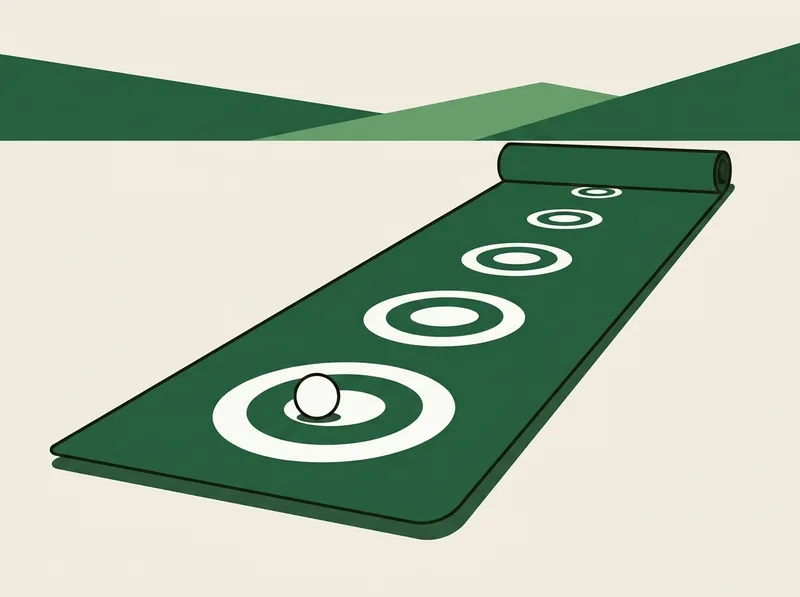 Around £100
PuttOUT Large Putting Mat
- Length
- 367 cm, about 12 ft
- Width
- 67 cm
- Green speed
- Reads 10 on the Stimpmeter
- Targets
- Five, plus distance marks to 10 ft
- Alignment aids
- Printed alignment lines and graphics
- Ball return
- None
- Backing
- Extra thick TPR rubber
- The longest surface here by a clear margin, which is the specification that decides what you can practise.
- A published stimp reading, so the roll speed is a stated number rather than an adjective.
- Five separate targets and distance marks to 10 ft, so a session has structure without a book.
- No ball return, so every putt is a walk unless you drop three balls down and go again.
- 67 cm wide and 367 cm long needs real floor, which rules out a lot of hallways.
- The published stimp figure is the maker's own and nobody independent has checked it.
VerdictThe default pick for anyone with the space, because length is the specification that most changes what a mat can teach and this one has the most of it. Golfers working in a narrow hallway or a small office should look at the shorter versions of the same mat instead.
The stimp reading of 10 is the other reason it leads. It is a stated number rather than a claim about realism, and a golfer who reads a stimp figure can work out whether the mat is quicker or slower than the greens they play. The thick rubber backing is what stops that number becoming meaningless, because a mat that ripples is a mat with a different speed in every foot of its length.
Wellputt 10ft Performance: the truest roll
The Wellputt 10ft Performance Mat is published at a roll speed of 10 to 11.5 feet, quoted as a range rather than a single figure, which is a more honest way to describe a fabric surface than any single number. It is also the quickest surface here, and quick is the useful direction to err in: a mat slower than your greens teaches you to hit putts too hard.
The printed aids are the second argument. They mark eye position, putter face alignment, start line and stroke length, which between them cover most of what goes wrong in a stroke before the ball has moved. Putting fundamentals explains what each of those is meant to look like, which is worth reading before you start using the lines as a scoring system.
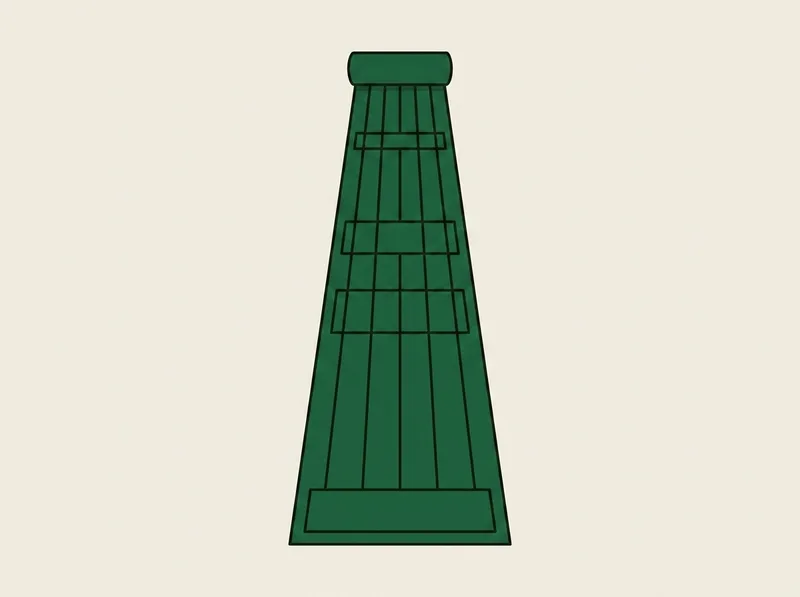 Around £130
Wellputt 10ft Performance Mat
- Length
- 3 m, 10 ft
- Width
- 0.5 m
- Green speed
- 10 to 11.5 ft, published
- Targets
- Multiple start points and target zones
- Alignment aids
- Eye position, face alignment, start line, stroke length
- Ball return
- None
- Backing
- Premium latex
- The fastest published roll here, and the only one quoted as a range rather than a single number.
- The printed aids cover eye position, face alignment, start line and stroke length, which is four faults on one surface.
- Comes with a 54-exercise book and an app, so a session has a defined start and finish.
- Half a metre wide, so a putt that wanders is off the mat rather than just off line.
- Costs more than the PuttOUT for a shorter surface, so you are paying for roll quality and the exercise book.
- No ball return, and no hole either, so every rep ends with a walk.
VerdictThe pick for a golfer who wants the surface itself to be the closest thing to a real green and who will actually work through a structured plan. Anyone who intends to roll putts absent-mindedly in front of the television is paying for a book they will not open.
The catch is width. Half a metre is narrow, and a putt struck badly enough runs off the side rather than finishing visibly offline, which removes the feedback you were paying for. It is also the more expensive of the two roll-out mats at the top of this page, for a shorter surface, and the PuttOUT gives you more than a foot extra for less money.
PuttOUT AirBreak: the only one that breaks
The PuttOUT AirBreak is an eight foot mat on a folding, inflatable platform with eight adjustment points, and it will set up to 7.5% of side slope and up to 3% of uphill or downhill. The mat reads 10 on the stimp, sits on TPR rubber, and puts a full 4.25 inch hole into the base with a battery powered returner behind it and a retractable foam bumper behind that.
The break is the whole point and it is worth being clear about what it changes. Every other mat in this roundup produces a dead straight putt, which means it can train a stroke and a start line and nothing else. A mat that tilts asks the question a real green asks: where does this one start, and how hard.
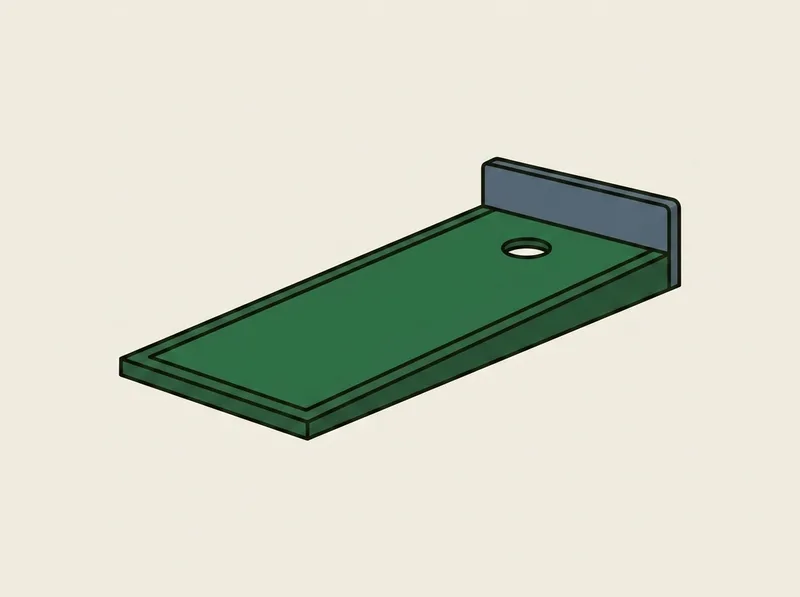 Around £290 to £320
PuttOUT AirBreak
- Length
- 240 cm, 8 ft
- Width
- 60 cm of mat on a 67 cm platform
- Green speed
- Reads 10 on the Stimpmeter
- Targets
- One 4.25 in regulation hole
- Alignment aids
- Alignment clips, plus a green-reading app
- Ball return
- Yes, battery powered
- Break
- Up to 7.5% side slope, up to 3% up or downhill
- Backing
- TPR rubber
- Weight
- 15 kg, folds to 82 by 30 by 67 cm
- The only mat on this page that can be given a break, at up to 7.5% of side slope across eight adjustment points.
- A full 4.25 in hole sunk into the base, so a putt can lip out the way a real one does rather than being swallowed by a ramp.
- The ball comes back on its own, which roughly doubles the reps you get in the same ten minutes.
- Three times the price of the top pick, and more than the other three mats here put together.
- Eight feet of putting distance, so it stops short of the 10 to 12 ft bracket where amateur putting actually falls apart.
- Fifteen kilos, a battery and a folding platform, which is a piece of furniture rather than something that lives behind a door.
VerdictThe answer for a golfer whose putting is fine on line and lost on break, because it is the only mat in this roundup that can pose the question a real green poses. The length is the honest limit: at eight feet it is working just below the range that costs most amateurs their strokes, so it complements a longer flat mat rather than replacing one.
The hole matters almost as much. It is regulation sized and sunk into the base rather than being a ramp or a cup sitting proud of the surface, so a putt arriving with too much pace can lip out the way it would outdoors. Every mat that feeds balls in with a slope is quietly telling you your speed was fine when it was not.
Two things sit against it. The first is the money: at around £300 it costs three times the top pick and more than the other three mats on this page combined, which puts it firmly in the category of a considered purchase rather than an impulse one. The second is length. Eight feet stops just below the six-to-twelve-foot range where the Shot Scope numbers say amateur putting collapses, so it works alongside a longer flat mat rather than instead of one. Fifteen kilos and a folding platform also make it furniture rather than something you slide behind a door.
PGA Tour Indoor and Outdoor mat: the cheap way in
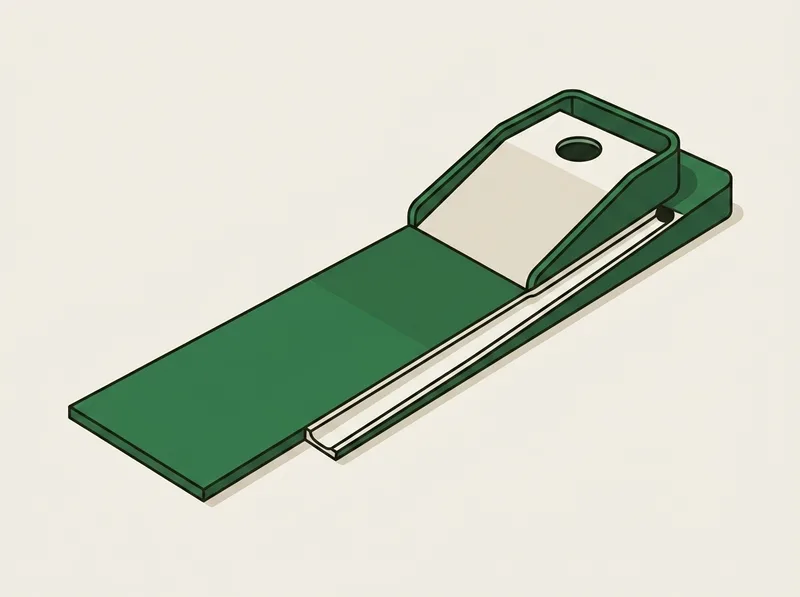
This is the mat to reach for if you are not yet sure you will use one. It returns the ball down a built-in ramp and channel, it puts a regulation cup and a flag at the end of 200 cm of simulated grass, and at 30 cm wide it lives along a skirting board without anyone objecting. It costs about the same as a round.
 Around £35
PGA Tour Indoor and Outdoor Putting Mat
- Length
- 200 cm, about 6 ft 7 in
- Width
- 30 cm, about 1 ft
- Green speed
- Not published
- Targets
- One regulation cup, with a flag
- Alignment aids
- A ball alignment tool is included
- Ball return
- Yes, a ball channel and a built-in ramp
- Surface
- Simulated grass, material not published
- It returns the ball, which the two mats at the top of this page do not, for a fifth of what the AirBreak costs.
- Thirty centimetres wide, so it lives permanently along a skirting board without anyone objecting.
- A regulation sized cup and a flag, so the target is the size of the target you are aiming at on Saturday.
- No published roll speed at all, and the surface is the part a cheap mat compromises first.
- The ramp in front of the cup helps a ball drop, which flatters your speed control.
- Six and a half feet of mat and a printed bunker and pond, which is a novelty rather than a training tool.
VerdictThe sensible first mat for someone who is not yet sure they will use one, and at this money that is exactly the right way to buy it. Understand what it is, though: under about forty pounds you are buying carpet with a hole cut in it, and the ramp feeding balls in is the reason to do your pace work somewhere else.
The ramp in front of the cup is the thing to understand before you buy. It exists so that balls drop rather than running past, which makes the mat satisfying and makes it lie to you about pace. A putt that a real hole would spin out of will disappear on this one. Use it for stroke repetition and line, and do your speed work somewhere with a flat run-out. The printed bunker and pond are decoration; ignore them.
The two mats you will have read about, and cannot buy here
Almost every roundup of this category is written for American readers, and two names dominate them: the Perfect Practice Putting Mat and the SKLZ Accelerator Pro. Both are good products. Neither has a British route to purchase.
Perfect Practice sell from the United States and no UK stockist could be found. SKLZ sell plenty of other training aids here, but not that mat. If you have been sent to this page after reading about either one, that is the reason it is not ranked, and the AirBreak and the PGA Tour mat are the two products on this page that do the job each of them is famous for.
What actually decides a putting mat
Almost every putting mat is sold on how realistic it feels, which is not a specification. Five things are.
| What to look at | What it changes | What good looks like |
|---|---|---|
| Published stimp | Whether the pace is a number or an adjective | A stated figure, ideally 10 or above |
| Length | The longest putt you can practise | 9 ft minimum, 12 ft if the room allows |
| Backing | Whether the mat lies flat or ripples | Thick rubber or latex, not foam |
| The hole | Whether a bad putt is punished or fed in | A regulation 4.25 in cup sunk flush, not a ramp |
| Ball return | How many reps you get per session | Any return at all roughly doubles them |
Roll speed is the one worth understanding properly. A Stimpmeter reading is simply the distance in feet a ball rolls after being released from a standard ramp, which is why the USGA's own Stimpmeter guidance treats it as a measurement of consistency rather than a quality score. A mat quoted at 10 rolls a ball ten feet under that test. If your home course runs slower than that, the mat is teaching you a lighter stroke than you need, which is the safer error. A mat slower than your greens is the dangerous one.
Length matters more than any of it. Shot Scope's data on how often golfers three-putt has a 25 handicap three-putting once every 7.6 holes against once every 16.7 for a 5 handicap, and finds the average golfer leaving 55% of putts short of the hole. Leaving putts short is a distance-control fault, and distance control cannot be practised on six and a half feet of carpet.
What a putting mat cannot do
A flat mat is indoors and the same every time. That is the whole point of it and also the entire limit.
It cannot teach you to read a green, because on three of the four mats here there is no break to read: every putt is dead straight. Green reading is a separate skill covered in reading greens, and the AirBreak is the only product on this page that makes a start on it, by letting you set a slope and then asking you to pick a start line. Even that is a clean, uniform tilt rather than the compound movement of a real green, and none of them reproduce grain, moisture, or the way a green firms up through an afternoon.
What a mat does well is repetition of a repeatable thing: a square face, a consistent start line, and a stroke that returns to the same place. That is enough to be worth the money, provided you know which half of putting you are buying. Distance control on long putts covers the other half, and most of that work has to happen on grass.
How to practise on one
Rolling balls at a target while watching television is not practice, it is fidgeting. The mats with printed zones exist because a session needs a score, and a score needs a rule.
Ten minutes four times a week beats an hour on a Sunday, because a putting stroke is a motor pattern and motor patterns respond to frequency. More structured sessions and what each one is for are in putting drills, and the wider case for indoor work sits in practising golf at home.
What to spend
The useful range in this category used to be narrow and is no longer, because the top of it now buys a mechanism rather than more carpet.
- Under about £40: carpet with a hole cut in it, usually with a ramp that feeds balls in. Fine for finding out whether you will use one.
- £40 to £60: a short mat from a maker who publishes a stimp figure.
- £100 to £130: the mat most people should own. Twelve feet of surface, a stated roll speed, and a backing that keeps it flat.
- £290 and up: a platform that tilts, a regulation hole and a powered ball return.
Length is where the middle of that ladder goes, and it goes there sensibly. PuttOUT sell the same surface as a slim mat at £39.99, a medium at £59.99 and the large at £99.99, so the decision is usually about the room rather than the product. Measure the floor before you choose the mat, including the space you need to stand behind the ball.
The jump to £290 is a different decision and worth naming plainly. It does not buy you a better roll, since the AirBreak and the PuttOUT Large both read 10 on the stimp. It buys break, a real hole and a return, and it costs you four feet of length. That is a good trade for a golfer who already owns a long flat mat and a bad one for a golfer buying their first.
A mat is still the cheapest purchase in golf measured per stroke affected. Putting is the largest single block of strokes in a round and the one nobody practises, and average putts per round sets out how that number moves with handicap. Very little else at this price touches that many shots.
Key takeaways
- The PuttOUT Large is the default pick: 367 cm long, a published stimp reading of 10, five targets and marks to 10 ft.
- The Wellputt 10ft Performance publishes the fastest roll here at 10 to 11.5 ft, and the most complete set of printed aids.
- The PuttOUT AirBreak is the only mat here that can be given a break, up to 7.5% of side slope, with a regulation 4.25 in hole and a powered ball return. It costs around £300 and is only eight feet long.
- The PGA Tour mat is the cheapest way in at around £35, with a ball channel return and a ramp that flatters your pace.
- Length is the specification that decides what a flat mat can teach. Aim for 9 ft minimum, 12 ft if the room allows.
- Shot Scope's data has make rates falling from above 82% inside six feet to below 43% from six to twelve, which is the range a mat has to reach.
- A mat quoted slower than your home greens teaches too firm a stroke. Quicker is the safer error.
- A ball return roughly doubles the reps in a session, which matters more than a small difference in surface.
- A ramp in front of the cup feeds in putts a real hole would reject, so any mat that has one is flattering your speed control.
- Perfect Practice and the SKLZ Accelerator Pro dominate American roundups of this category and neither has a British route to purchase.
Common questions
What is the best putting mat?
For most golfers the PuttOUT Large Putting Mat, because it is the longest here at 367 cm, publishes a stimp reading of 10, and prints five targets and distance marks to 10 ft. The Wellputt 10ft Performance is the pick if roll quality outranks price, and the PuttOUT AirBreak is the one to look at if break rather than stroke is what your putting is missing.
Do putting mats actually improve your putting?
They improve your stroke and your start line, which are the repeatable parts. A flat mat does not improve green reading or your feel for pace on an unfamiliar surface, because it is identical every time. Golfers who putt well indoors and poorly outside are usually losing it on speed and slope.
How long should a putting mat be?
Nine feet as a minimum and twelve if the room allows. Shot Scope's data shows make percentages collapsing between six and twelve feet, so a mat that stops at eight is working almost entirely in the range golfers already hole. That applies to the AirBreak as much as to a cheap one, which is why it is a second mat rather than a first.
What stimp should a putting mat be?
Around 10 or above. A mat slower than the greens you play teaches a stroke that is too firm, which is the error that carries onto the course. Quicker than your greens is the safer direction, and three of the four mats here publish a figure while the cheapest publishes none.
Are putting mats with a ball return worth it?
Usually yes, because a return roughly doubles how many putts you hit in a session. The compromise to watch for is the ramp or upslope that cheap returns need in front of the cup, which helps balls drop and therefore flatters your speed control. A powered return behind a hole sunk flush into the surface, as on the AirBreak, avoids that.
Can you practise distance control on a putting mat?
Only partly. A mat is one surface at one speed, so it teaches you the stroke length that produces a given roll on that mat and nothing about a green you have not played. Longer mats help, but distance control is the part of putting that has to be finished on grass.
Do putting mats have to be flat?
The surface does, and the backing is what decides it. A mat that ripples has a different roll speed every foot, which makes any pace feedback worthless. A deliberate, adjustable tilt is a different thing entirely and is the one feature the AirBreak has that nothing else here does.
How much should I spend on a putting mat?
Between £100 and £130 buys the mat most golfers should own. Under about £40 you are buying carpet with a hole in it, which is a perfectly sensible way to find out whether you will use one. Above about £290 you are buying break, a regulation hole and a powered return rather than a better rolling surface.
Is a putting mat better than a putting green mat with holes?
For home practice, a roll-out mat is usually the better buy: it stores away, needs no assembly and costs far less. A modular putting green earns its place only if you have a permanent room for it and want the compound undulation an adjustable mat can only approximate.
How often should you practise on a putting mat?
Ten minutes four or five times a week beats one long session, because a putting stroke is a motor pattern and motor patterns respond to frequency. Give the session a rule and a score rather than rolling balls aimlessly, and finish on a made putt.
Can a putting mat help with the yips?
Possibly, and it depends on the cause. A mat gives you high-volume repetition on a surface that behaves the same way every time, and a ball return makes that volume easy to get. A stroke that only breaks down over a real hole is a different problem, and coaches genuinely disagree about whether that one is technical or psychological.
How we put this together
- Published manufacturer specifications for each mat, taken from the maker's own listing rather than a retailer's summary. Where a maker publishes no figure, this page says so rather than borrowing one from elsewhere.
- What each specification changes in practice: a published stimp reading against the speed of a real green, mat length against the putt distances that actually cost strokes, and what the backing decides about whether the mat lies flat.
- Prices read in sterling at British sellers, and whether each mat can be bought here at all, which ruled two of the best known names in this category off the list entirely.
- Shot Scope's published amateur putting datasets, which set out where make percentages collapse by handicap and how far short the average golfer leaves a putt.
- Whether each mat is sold in more than one length, because the length you can use is set by the floor you have rather than by the product.
On this page
- The four, compared
- PuttOUT Large Putting Mat: the one to buy
- Wellputt 10ft Performance: the truest roll
- PuttOUT AirBreak: the only one that breaks
- PGA Tour Indoor and Outdoor mat: the cheap way in
- The two mats you will have read about, and cannot buy here
- What actually decides a putting mat
- What a putting mat cannot do
- How to practise on one
- What to spend
- How we put this together

Tom Ashworth
Tom Ashworth is a PGA Professional who has taught golf since 2012, working mainly with beginners and mid-handicappers at club level in Surrey. He reviews the instruction guides on Learn Golf for technical accuracy before they publish.
Most of his teaching is with players in their first three years of the game, and most arrive having been told too much: six swing thoughts collected from videos, half of them contradicting each other. His approach is to check the grip and the alignment before touching the swing, on the basis that most bad ball flight is decided at address.