Almost every golfer has been told to bend their knees and keep their back straight, and almost none has been told what the two instructions are for. Posture decides how much your body can rotate and where the bottom of the swing arrives. This guide covers the hip hinge, spine angle, knee flex and where the arms hang, plus how to check all four on your own.
Left and right below assume a right-handed golfer. If you play left-handed, swap them and everything else holds unchanged.
What posture is actually for
Posture has one job, which is to put your body in a shape it can rotate out of at speed while the club still reaches the ball. That splits into three requirements. The hips have to be free to turn, so they cannot be locked underneath you. The spine has to be long enough to rotate around, so it cannot be curled. And the arms have to hang in the place they will return to at 80 mph, because anything else means the club has to be steered back to the ball mid-swing.
Width, foot angle and how the weight splits between the feet are a different subject and are covered in the golf stance guide. How far to stand from the ball has its own page in distance from the golf ball, and the two settings interact. What follows is only the shape of the body above the feet.
The hip hinge, and why it is not a squat
The single move that builds golf posture is a hinge at the hip joints. Stand upright with your feet under you, put your hands on the crease at the top of your thighs, and push your hips backwards so your chest lowers. The lower back stays long, the backside travels back, and the shins stay close to vertical.
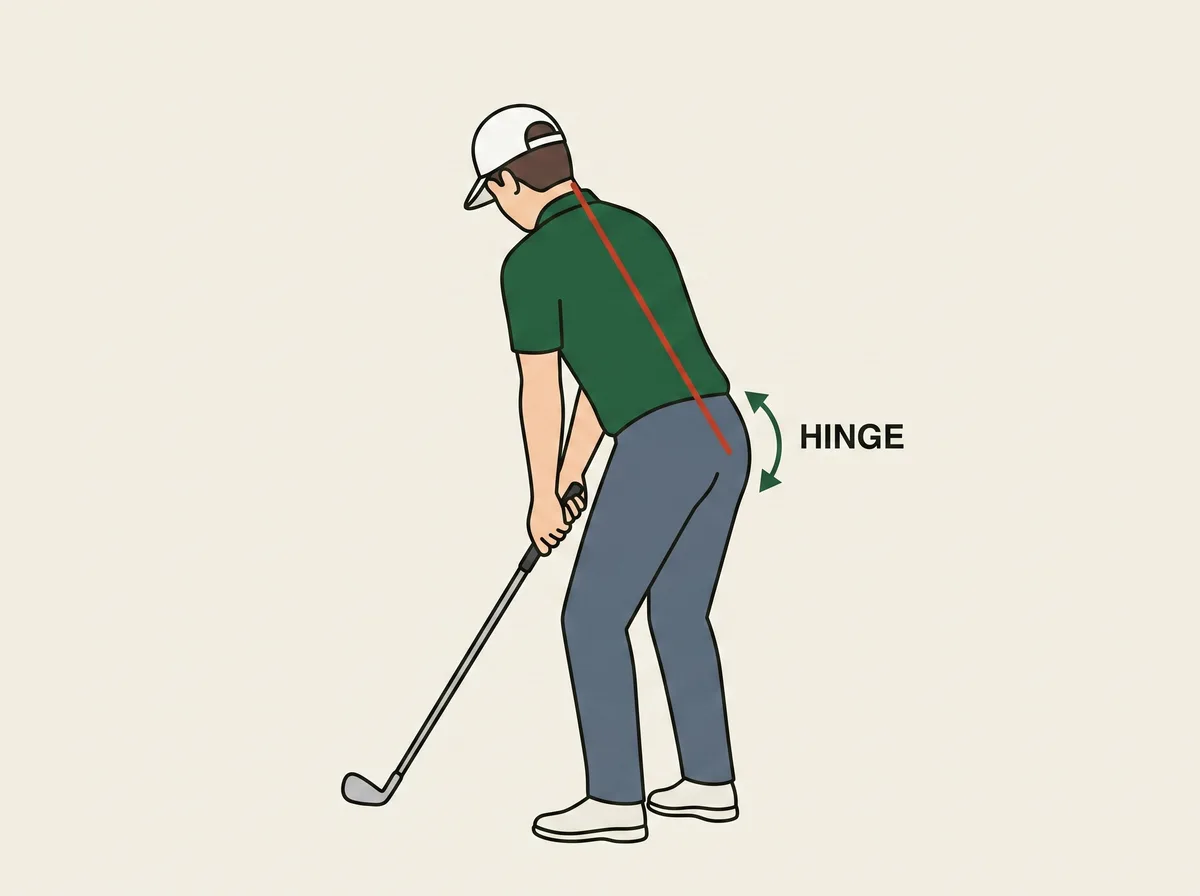
Two things go wrong here, and they are opposites. Some golfers squat, dropping the hips straight down with the chest staying tall, which leaves the arms nowhere to hang and the club too far away to reach. Others fold in the middle of the back, rounding the shoulders forward while the hips stay where they were. The second one has a name. The Titleist Performance Institute classifies it as C-Posture, which it describes as a posture where the shoulders are slumped forward at address with a definitive roundedness through the thoracic spine. Their correction is the sentence worth memorising from this whole page: learn to bend from the hip sockets rather than flex from the upper spine.
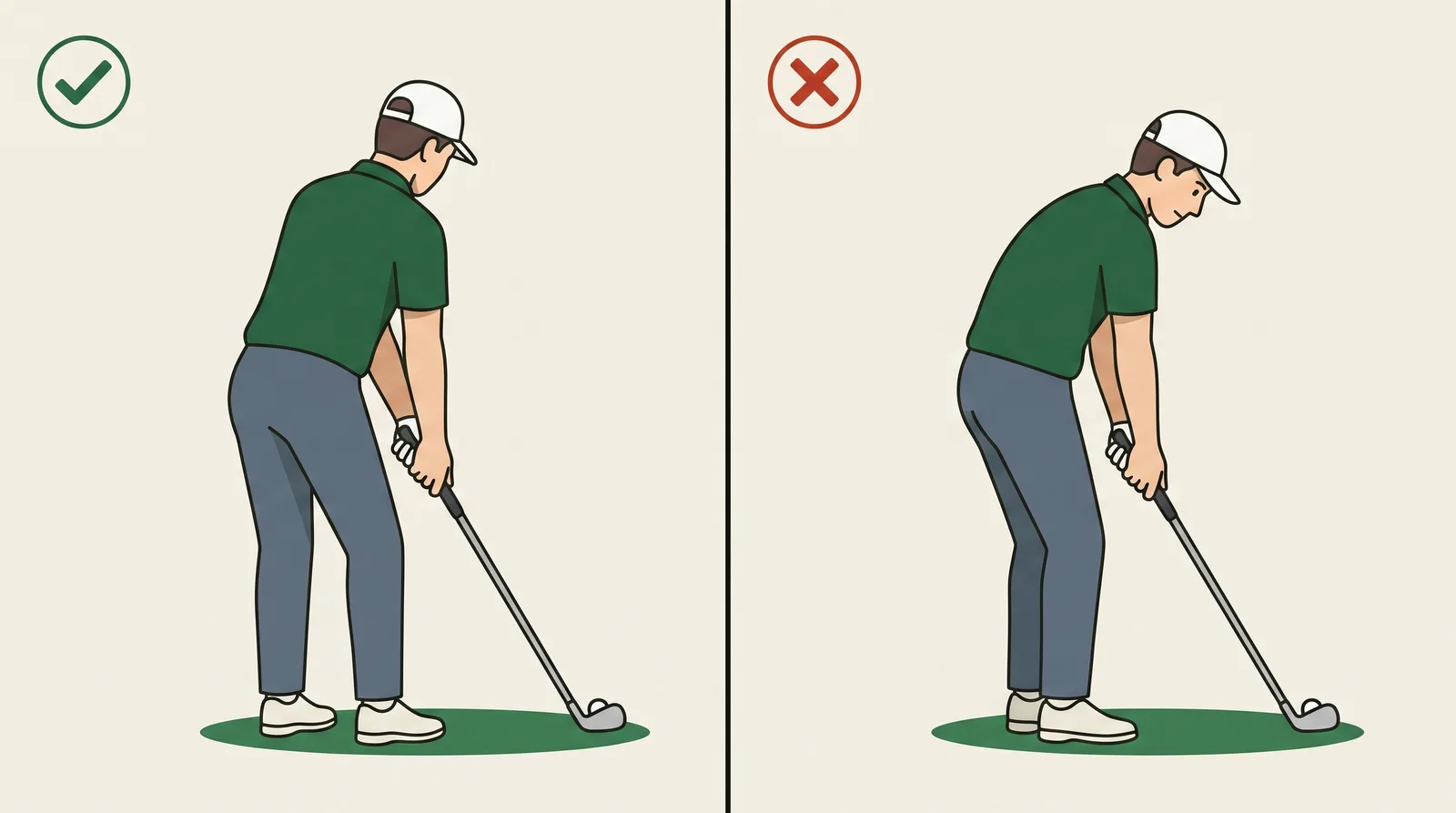
There is a third version, less common but harder to spot, where the golfer arches the lower back and pushes the tailbone out deliberately. TPI calls this S-Posture and traces it to sticking the tailbone out too far in the setup position, noting that it puts abnormally high stress on the lower back muscles and switches the abdominals off. A golfer who has been told to stick their backside out, and has taken the instruction enthusiastically, usually ends up here.
Spine angle, and the number nobody should chase
Spine angle is the amount your upper body tilts forward from vertical at address. Golfers ask what it should be, and the honest answer is that it is an output rather than a target. The tilt has to be whatever puts the club on the ground behind the ball while your arms hang freely, which depends on your height, your arm length, the club and how far away you are standing. Two golfers of the same height with different arm lengths will have measurably different spine angles and both will be correct.
What matters far more than the number is that the angle is a straight line from the hips to the base of the neck, and that whatever you set is still there at impact. TPI defines loss of posture as any significant alteration from your body's original set up angles during the swing, and reports that it typically produces two misses, blocks to the right and hooks to the left.
Knee flex, and how little you need
Knee flex is the most over-applied instruction in golf. "Bend your knees" is said so often that beginners arrive at a half-squat, which locks the hips and leaves them fighting to stay upright as they turn. The working amount is small: unlock the knee so it is not straight, feel the weight settle into the middle of the foot, and stop. From face on, the kneecap sits roughly above the middle of the foot rather than out over the toes.
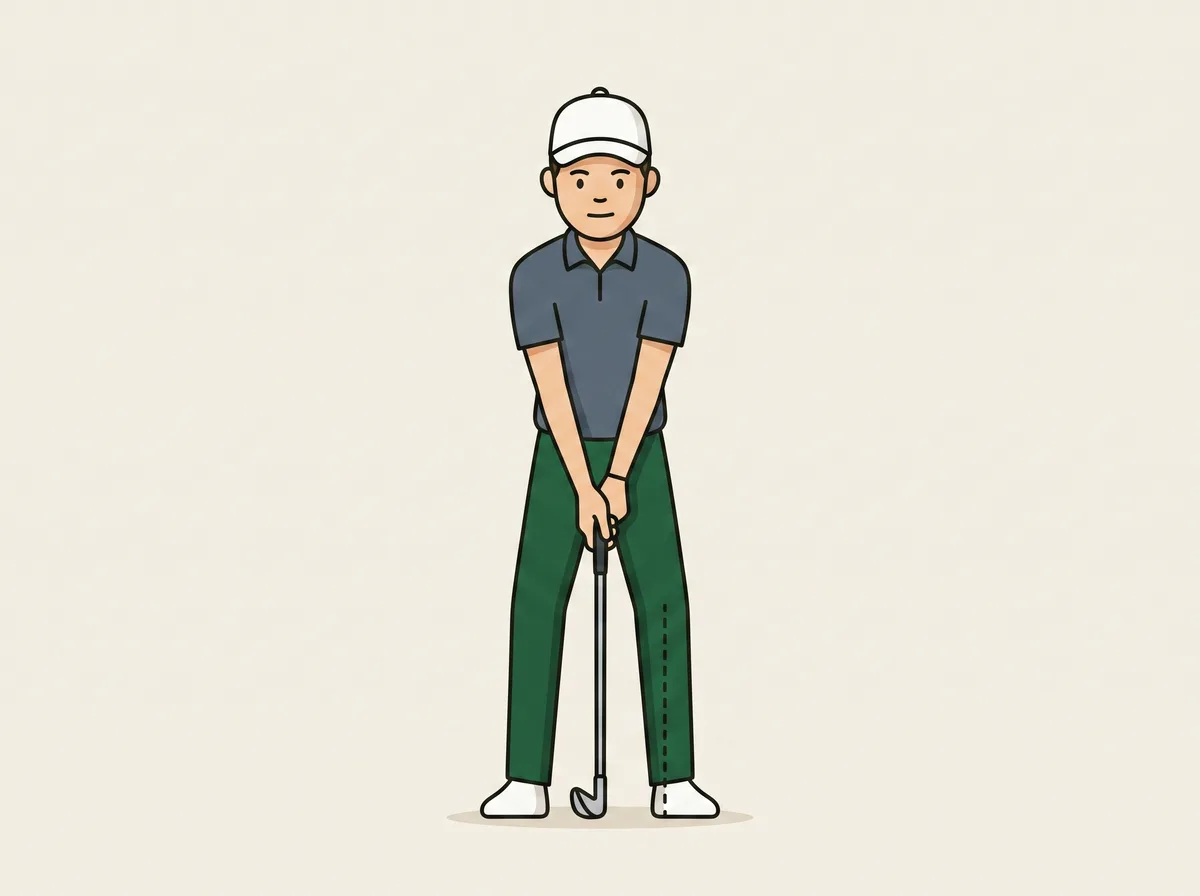
Too much flex is the more common error by a wide margin, and it produces a specific pattern: the golfer starts tall in the legs during the backswing to escape the crouch, then thrusts the hips towards the ball on the way down. TPI calls that thrust early extension and defines it as any forward movement of the lower body towards the golf ball during the downswing, which leaves the arms trapped behind the body and the torso rising through impact.
Where the arms hang
Once the hinge and the flex are set, the arms are not positioned. They are released.
Let them drop from the shoulder sockets and see where they land. From down the line, the hands hang more or less under the shoulders with a clear gap between the hands and the top of the thighs, roughly a hand's width for a mid iron. If you have to reach forward to get the club to the ball, you are standing too far away. If the hands are jammed against your legs, you are too close or too upright.
That gap is more reliable than any measurement because it adjusts itself to your build. Reaching for the ball pulls the upper body onto the toes, which is where a large share of heel strikes and shanks come from. Crowding it forces the arms to find room they do not have on the way down.
The head and the chin
The head sits on top of the spine and goes wherever the spine is pointing, so a golfer with a good hinge and a chin buried in their chest has just built a rounded upper back with extra steps.
Keep the chin off the chest so there is room for the lead shoulder to turn under it. Eyes look down at the ball, which they can do perfectly well without the head tipping forward. The instruction to keep your head down is one of the most damaging things said on a golf course, because a locked head stops the chest rotating and produces exactly the fat and thin strikes it was meant to prevent. There is more on how that plays out in golf swing basics.
Does posture change from club to club?
Barely, and the parts that change do so because of the length of the club rather than any decision you make.
| Club | What changes | What stays identical |
|---|---|---|
| Driver | Slightly more upright, because the club is longest and you stand furthest away | Hinge from the hips, arms hanging, chin up |
| Fairway wood and hybrid | Very close to the driver, a fraction more tilt | As above |
| Mid iron | The reference position for most golfers | As above |
| Short iron and wedge | Slightly more forward tilt, because the club is shortest | As above |
| Putting | A separate setup with its own rules, not covered here | Nothing, treat it as its own discipline |
The shorter the club, the more you tilt, and none of it is a conscious adjustment. Stand the right distance away for the club in your hand, hang the arms, and the tilt arrives on its own. Where the ball sits within that setup is covered in ball position by club, and aiming the whole arrangement is covered in golf alignment.
What poor posture costs you
Posture faults are worth ruling out before swing faults because they take ten seconds to change. Each row has other possible causes, so treat it as the first place to look rather than a diagnosis.
| What you notice | Posture cause to check first | Quick test |
|---|---|---|
| Thin shots and topped balls | Standing up out of the tilt through the downswing | Film one swing from down the line and compare address with impact |
| Heel strikes and the occasional shank | Reaching for the ball, weight drifting to the toes | Try the drop test above |
| The arms feel trapped coming down | Squatting, or too much knee flex closing the hips | Reduce the knee bend and re-check the hip hinge |
| Very short backswing with a long-feeling effort | Rounded upper back removing available turn | Set up beside a mirror and look for a straight back line |
| Lower back aching after a bucket of balls | Arched lower back and a tucked pelvis under load | Check whether your ribs are flared upwards at address |
| Ball struck heavy from a good-looking swing | Hips dropping and the low point moving behind the ball | Check knee flex first, then ball position |
Topping in particular tracks back to posture more often than golfers expect, and the full fault has its own page in topping the ball.
Two ways to check your own posture
Neither of these needs a coach or an aid you do not already own.
Posture, mobility and your back
Some of what looks like a posture fault is a mobility limit, and telling the two apart saves a lot of wasted practice. A golfer who cannot hinge from the hips because of tight hamstrings will round the upper back every time, however clearly the instruction is given. In that case the fix is not more repetitions of the address position, it is ten minutes of mobility work off the course and a setup that respects what the body currently does.
Reducing the demand is a legitimate answer. A slightly more upright setup and a fraction less forward tilt are reasonable accommodations rather than compromises. Persistent aching afterwards is worth taking seriously rather than swinging through, and it is covered separately in golf back pain.
The grip is the other setup element that silently shapes everything downstream, and it is covered in how to grip a golf club. What makes all the pieces repeat under pressure is a pre shot routine, which assembles them into the same order every time.
Key takeaways
- Posture exists to let the body rotate while the club still reaches the ball.
- The move is a hinge at the hip joints, not a bend at the waist and not a squat.
- Rounding the upper back removes most of the available shoulder turn before the club moves.
- Spine angle is an output of your build and your distance from the ball, not a number to chase.
- Knee flex should be small. Unlock the joint, do not sit down into it.
- Too much knee flex is the usual road to standing up and thrusting the hips towards the ball on the way down.
- The arms hang from the shoulders rather than being placed, about a hand's width clear of the thighs.
- Keep the chin off the chest so the lead shoulder has room to turn underneath it.
- Some posture faults are mobility limits, and those need stretching rather than more practice swings.
Common questions
What is the correct golf posture?
Tilt forward from the hip joints with the back long and the backside travelling back, add a small knee flex, let the arms hang straight down from the shoulders, and keep the chin off the chest. If those four are in place, the setup is correct regardless of what the angles measure.
What should my spine angle be at address?
There is no single correct figure, because the tilt depends on your height, arm length, the club and how far you stand from the ball. Set the hinge so the club reaches the ground while your arms hang freely, and whatever angle results is yours. Chasing a specific number usually produces a golfer standing at the wrong distance from the ball.
How much should I bend my knees in golf?
Far less than most golfers do. Unlock the knees so they are not locked straight, feel the weight settle over the middle of each foot, and stop there. From face on the kneecap should sit roughly above the middle of the foot rather than out over the toes.
Why do I stand up during my golf swing?
Usually because the address position was uncomfortable to rotate out of, which most often means too much knee flex or a rounded upper back. The body escapes the crouch by extending the legs on the way down, which raises the whole swing and produces thin contact. Fix the setup before treating it as a swing fault.
Should I stick my bum out at address?
Only as far as the hip hinge naturally sends it. The backside travels back because the chest travels forward, and that is the whole of the mechanism. Pushing it out deliberately arches the lower back, switches the abdominals off and loads the spine in a way that tends to ache after a bucket of balls.
Is it bad to keep my head down in golf?
Yes, if you take it literally. Pinning the chin to the chest rounds the upper back and stops the shoulders turning under the head, which causes the fat and thin strikes it is supposed to prevent. Keep the chin up and let your eyes look down at the ball instead.
How do I know if I am too far from the golf ball?
Let go of the club at address and let your arms drop. If they swing back towards your body, you were reaching for the ball and standing too far away. If they swing outwards, you were too close. It is a more reliable check than any measured distance because it adapts to your build.
Can bad posture cause back pain in golf?
It can contribute, particularly an arched lower back with the pelvis tipped forward, which loads the lower back muscles heavily and reduces how much the abdominals support the spine. Persistent pain is worth getting looked at properly rather than adjusting your setup and hoping.
How long does it take to change golf posture?
About three to four weeks of short daily repetitions before a new address position stops feeling strange, and a season before it holds up under a full-speed swing without you thinking about it. Rehearsing it at home for two minutes a day transfers faster than trying to fix it while hitting balls.
On this page
- What posture is actually for
- The hip hinge, and why it is not a squat
- Spine angle, and the number nobody should chase
- Knee flex, and how little you need
- Where the arms hang
- The head and the chin
- Does posture change from club to club?
- What poor posture costs you
- Two ways to check your own posture
- Posture, mobility and your back
Tom Ashworth
Tom Ashworth is a PGA Professional who has taught golf since 2012, working mainly with beginners and mid-handicappers at club level in Surrey. He reviews the instruction guides on Learn Golf for technical accuracy before they publish.
Most of his teaching is with players in their first three years of the game, and most arrive having been told too much: six swing thoughts collected from videos, half of them contradicting each other. His approach is to check the grip and the alignment before touching the swing, on the basis that most bad ball flight is decided at address.