Golfers spend more time arguing about the shape of the putting stroke than about anything else on the green, and the research says they are arguing about the wrong variable. Where a putt starts is decided overwhelmingly by the face, not the path. This guide covers how the stroke actually works, what the evidence says the priorities are, and where the genuine disagreement sits.
What actually decides where a putt starts
Before any argument about stroke shape is worth having, it is worth knowing what the numbers weight.
Karlsen, Smith and Nilsson measured 1,301 putts from 71 elite players at around four metres and published the result in the Journal of Sports Sciences. Face angle at impact accounted for 80 percent of directional consistency. Putter path accounted for 17 percent. Where the ball met the face accounted for 3 percent.
| What you control | Share of directional consistency | What it means in practice |
|---|---|---|
| Face angle at impact | 80% | Aim and face control are the whole job |
| Putter path | 17% | Shape matters, but far less than golfers assume |
| Impact point on the face | 3% | Barely affects direction, though it does affect distance |
Those were elite players on a flat surface, so the figures are not a promise about your own putting. What they do establish is the order of priority, and it is the reverse of how putting is usually taught.
The stroke is a shoulder movement
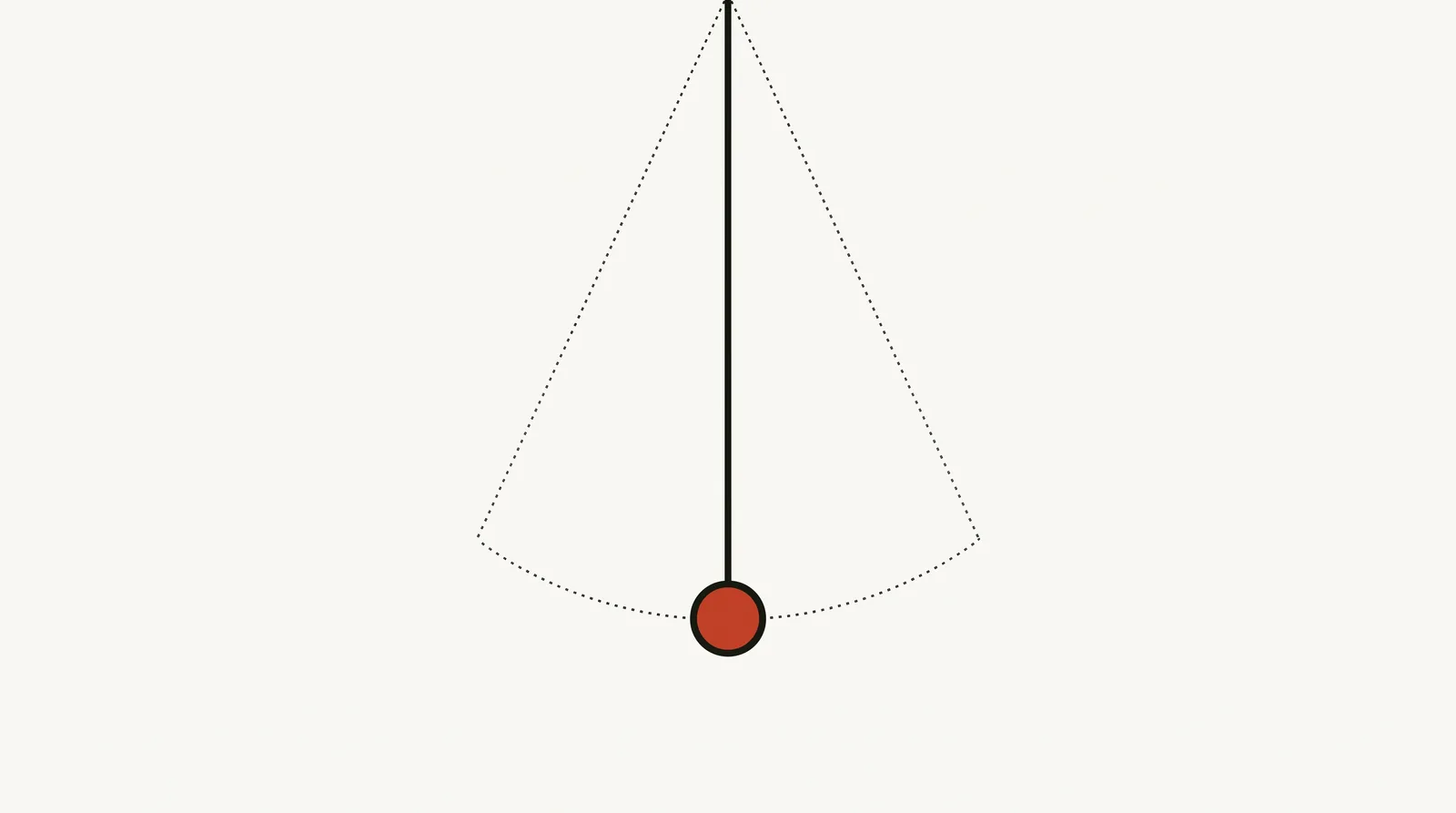
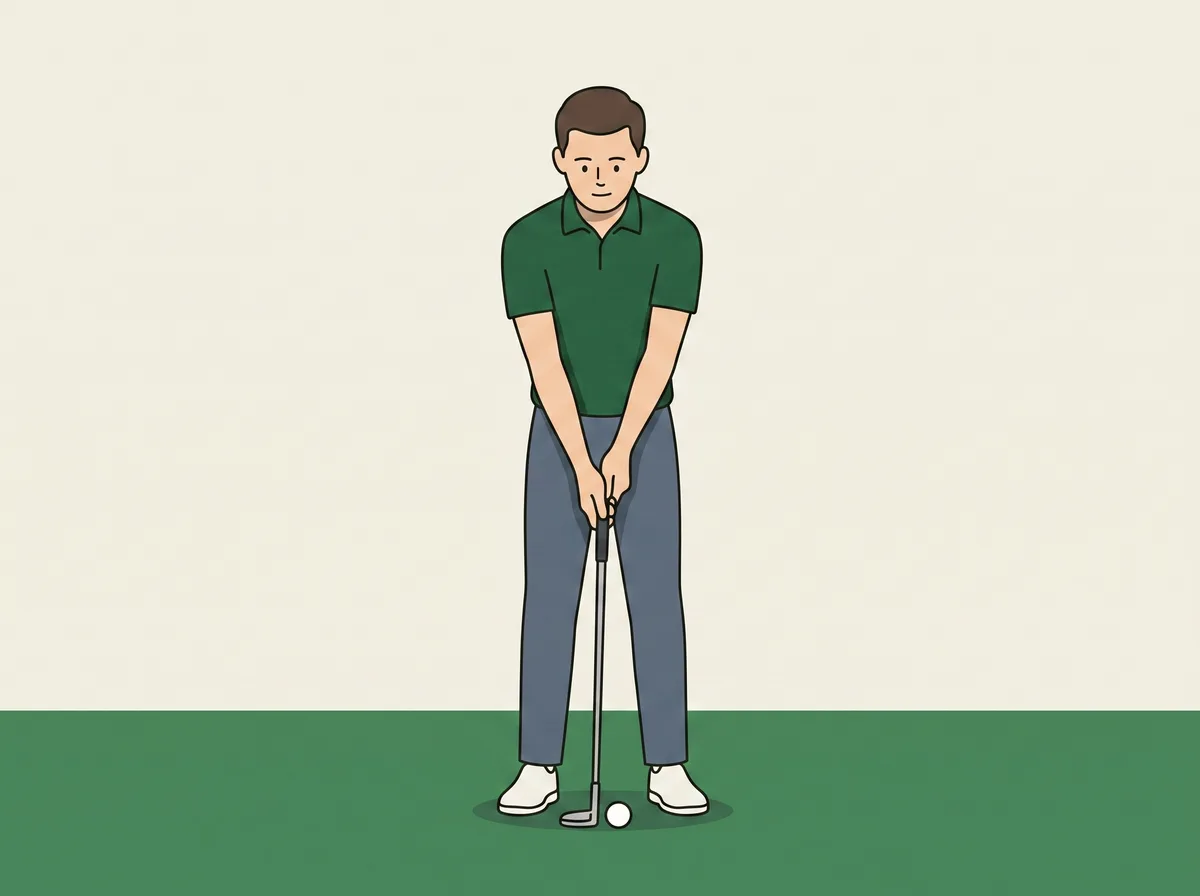
The pendulum image survives because the mechanics genuinely fit it. Your shoulders, arms and the putter form a triangle at address, and the stroke is that triangle rocking around a point roughly at the base of your neck. Nothing else moves on purpose.
The hands and wrists are the part to be strict about. A wrist that hinges adds an extra joint to a motion that already has enough of them, and every extra joint is another way for the face to arrive somewhere you did not intend. That is what the palms-facing, thumbs-down putting grip is built to prevent.
The head and lower body stay still. Most pushed or pulled short putts come from the head turning early to watch the ball, which drags the shoulders open before the ball has left the face.
Length controls distance, tempo does not
This is the single most useful mechanical idea in putting and the one most often ignored on the course. A longer stroke sends the ball further. The speed at which you make the stroke stays the same regardless of the length of the putt.
Golfers instinctively do the opposite: they make a short backstroke and then hit harder to get the ball there. That works when it works and produces a putt eight feet past when it does not, because a hit is much harder to calibrate than a length.
The backstroke and through-stroke should be roughly the same length, with the through-stroke never shorter. That symmetry is the simplest guard against deceleration, and deceleration is what lets the face twist on the short putts that matter most.
Calibrating length to distance is where most of the scoring gain lives, and it is a large enough subject to have its own page in putting distance control.
Arc versus straight back and straight through
This is golf teaching's longest-running argument about the smallest movement in the game, and it is genuinely unresolved.
The arc case is geometric. A putter shaft leans inward toward you rather than standing vertical, so the head swings on a plane that is tilted rather than flat. On a tilted plane the head must move slightly inside the target line going back, and slightly inside again through. Fighting that means manipulating the club with the hands, which reintroduces the exact variable the grip was built to remove.
The straight case is practical. On the short putts that decide rounds, the arc is a fraction of an inch and can be ignored. A simpler picture holds up better when a golfer is nervous, and a stroke aimed straight down the line is easier to check.
The practical test costs nothing and takes five minutes. Have someone film ten strokes from directly behind the ball, or watch the putter head themselves. If it clearly moves inside the line going back, you have arc. If it barely deviates, you do not. Either answer is fine, and the answer tells you which head shape suits you, which is covered in the putter roundup where toe hang gets its proper treatment.
Notice also what the Karlsen figures do to this argument. Path accounted for 17 percent of directional consistency, so the entire arc debate is a dispute over the smaller half of a minority share. It is worth settling for yourself and then never thinking about again.
Strike, and why the centre of the face matters
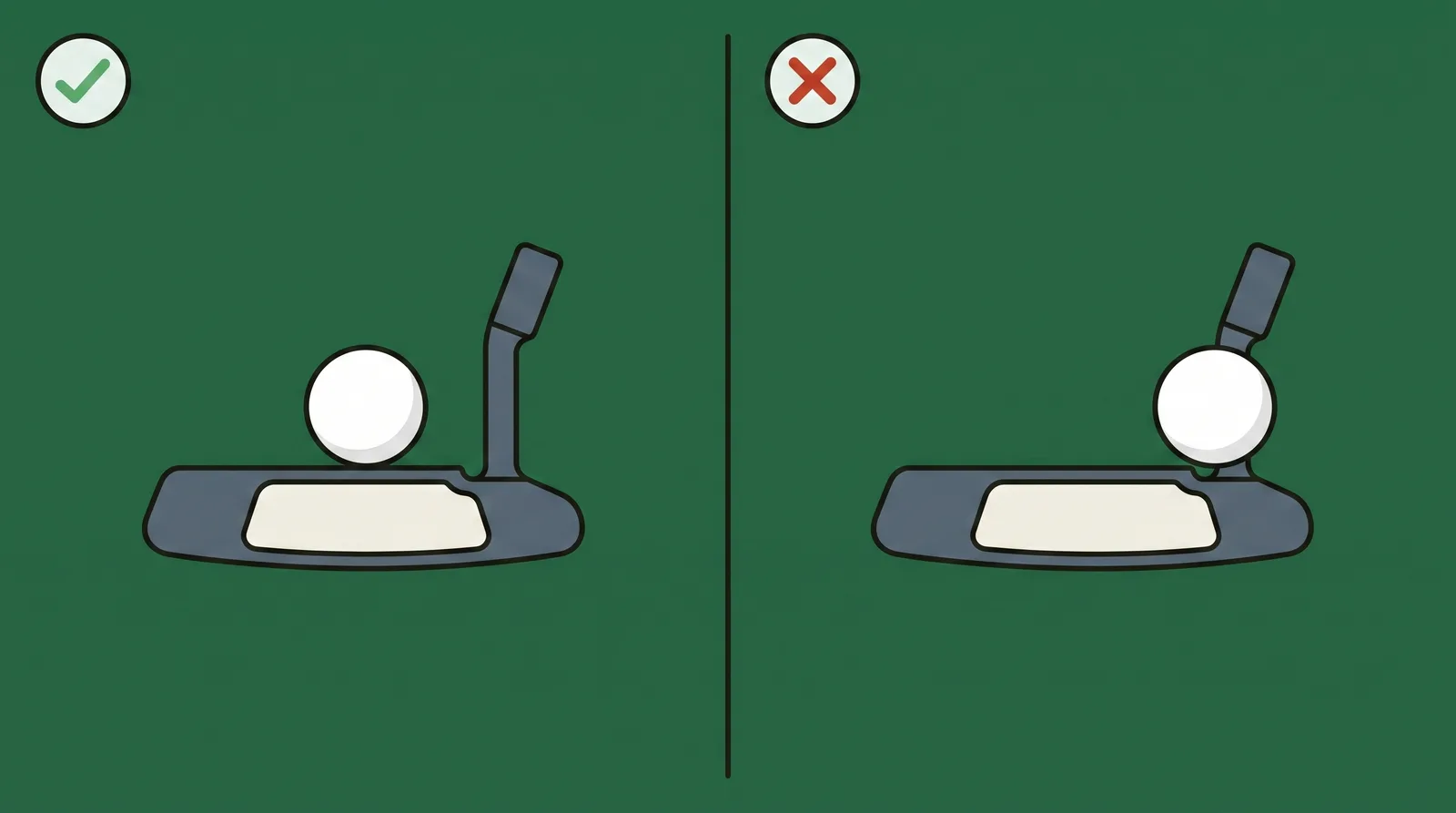
Impact point contributed only 3 percent to direction in that study, which sounds like permission to ignore it. It is not, because direction is only half of a putt.
A putt struck toward the toe or heel loses speed. The head twists slightly at impact and some of the energy that should have gone into the ball goes into that twist instead, so the ball comes up short of where the stroke length said it would. On a twenty-footer that is the difference between a tap-in and a four-footer you have to hole.
Modern mallets lose less to an off-centre strike than blades do, which is what high moment of inertia actually buys you. It reduces the cost of the miss rather than removing it.
The faults that actually appear
Three things go wrong in real strokes, and they are all easier to spot than to feel.
Deceleration is the most common. The backstroke is too long for the putt, the golfer realises it halfway down and slows the club, and the face twists. The fix is a shorter backstroke rather than a firmer hit.
The second is the head moving. Golfers turn to watch the ball go in, which opens the shoulders and pushes the ball right of the line. Listening for the ball dropping rather than watching for it is a genuine fix and it works within a session.
The third is the hands overtaking the shoulders, usually the trail hand adding a small hit at the last moment. It shows up as putts that occasionally run miles past from short range. That one is a grip problem more often than a stroke problem.
What a good stroke is worth, and what it is not
A repeating stroke shows up inside about ten feet and hardly at all beyond it.
Shot Scope's comparison of a tour professional with amateur golfers has one-putt percentages of 46 percent for the tour player, 37 percent for a scratch golfer and 30 percent for a 15 handicap, with three-putt rates of 0.97, 3 and 10 percent. From six to nine feet the make rates run 70, 49 and 45 percent. The stroke is doing most of the work in that six to nine foot band and almost none of it in the three-putt column.
Arccos, from more than 75 million tracked shots across nearly a million rounds, has golfers in the 1 to 5 handicap bracket averaging 1.6 three-putts a round against 3.2 for the 15 and above bracket. That gap is a distance-control gap, not a mechanics gap, which is why a golfer who has tidied up their stroke and still three-putts should move on rather than keep refining.
How to practise the motion
The stroke responds to frequency rather than volume, because it is a small motor pattern rather than an athletic movement. Ten minutes several times a week beats an hour at the weekend.
More sessions, including the ones that work on a carpet, are in putting drills. Where your eyes sit and how far you stand from the ball changes the shape of the stroke before you have moved, and that belongs in putting setup. If your stroke breaks down only on short putts over a real hole, that is a different problem, covered honestly in the putting yips and in making short putts.
Key takeaways
- Face angle at impact accounted for 80 percent of directional consistency in the Karlsen study, with path at 17 percent and impact point at 3 percent.
- The stroke is a shoulder rock. Arms and putter follow, hands and wrists hold on and do nothing else.
- Length of stroke controls distance. The tempo stays the same for a four-footer and a forty-footer.
- The through-stroke should be at least as long as the backstroke, which is the simplest guard against deceleration.
- Arc versus straight back and straight through is genuinely contested and good coaches take opposite sides.
- Let whatever arc your build and putter produce happen naturally rather than steering either shape.
- Off-centre strike costs distance rather than direction, so it shows up as putts left short.
- Deceleration, the head turning early and a late hit from the trail hand cause most missed short putts.
- The stroke shows up inside ten feet. Three-putts are a pace problem and refining mechanics will not touch them.
- Practise ten minutes several times a week rather than one long session, because this is a motor pattern.
Common questions
What is the correct putting stroke?
One where the shoulders rock the arms and putter while the wrists stay quiet, the stroke length rather than the hit controls distance, and the through-stroke is at least as long as the backstroke. Beyond that there is no single correct shape, and the arc question is genuinely disputed among good coaches.
Should my putter go straight back or on an arc?
Coaches disagree, and both methods produce excellent putters. A leaning shaft means the head naturally moves slightly inside the line on longer strokes, and on short putts the arc is small enough to be irrelevant either way. Let whatever arc appears happen rather than steering it, and stop switching between methods.
Is putting path or face angle more important?
Face angle, by a wide margin. Research on 1,301 putts by elite players attributed 80 percent of directional consistency to face angle at impact and 17 percent to path. Practise aiming and returning the face before you spend time on the shape of the stroke.
How do I stop decelerating on putts?
Shorten the backstroke rather than trying to hit through harder. Deceleration almost always comes from taking the putter too far back for the length of putt and then slowing it down to compensate. Match the two halves of the stroke, and let a longer putt have a longer backstroke instead of a firmer hit.
Should I use my wrists when putting?
No. A hinging wrist adds a joint to a motion that does not need one, and every extra joint is another way for the face to arrive somewhere unintended. If you can feel your wrists working, check the grip first, because a finger grip encourages exactly that.
How far back should I take the putter?
As far as the distance requires, with the through-stroke matching it. There is no fixed measurement, because green speed changes everything. What should stay fixed is the tempo, so a longer putt gets a longer stroke at the same speed rather than the same stroke hit harder.
Why do I keep pushing short putts to the right?
Usually the head turning early to watch the ball, which opens the shoulders before the ball has left the face. Try listening for the ball dropping instead of looking for it. If it persists, check whether your eyes are set well inside the ball, which pushes the whole stroke off line.
Does where I strike the putter face matter?
For direction, barely: impact point accounted for only 3 percent of directional consistency in the research. For distance it matters a lot, because an off-centre strike twists the head and the ball comes up short. That is why so many long putts finish shorter than the stroke length suggested.
Is a mallet or a blade putter better for my stroke?
Neither is better. The conventional fitting rule is that a stroke with visible arc suits a head with toe hang and a straighter stroke suits a face-balanced one. That rule inherits the arc argument rather than settling it, so film your own stroke first and fit the putter to what you already do.
How long does it take to change a putting stroke?
Two to four weeks of short, frequent sessions before it stops feeling foreign, and longer before pace on long putts recovers. Judge the change on whether the ball starts on your line rather than on how many putts drop, because holed putts over a short period tell you very little.
Can I practise my putting stroke indoors?
Yes, and it is the one part of golf that genuinely transfers. A flat carpet is enough for start line and stroke shape work, which is most of what this page covers. Pace is the part that does not transfer, because your carpet is one speed and no green is.
On this page
- What actually decides where a putt starts
- The stroke is a shoulder movement
- Length controls distance, tempo does not
- Arc versus straight back and straight through
- Strike, and why the centre of the face matters
- The faults that actually appear
- What a good stroke is worth, and what it is not
- How to practise the motion
Tom Ashworth
Tom Ashworth is a PGA Professional who has taught golf since 2012, working mainly with beginners and mid-handicappers at club level in Surrey. He reviews the instruction guides on Learn Golf for technical accuracy before they publish.
Most of his teaching is with players in their first three years of the game, and most arrive having been told too much: six swing thoughts collected from videos, half of them contradicting each other. His approach is to check the grip and the alignment before touching the swing, on the basis that most bad ball flight is decided at address.