Most golfers hold the putter the way they hold a 7-iron, then wonder why short putts jump off the face. The putting grip is built to do the opposite job to the full swing grip, and once you know what that job is, choosing between conventional, left hand low and the claw stops being a matter of taste. This guide covers how to build one, and what each style is actually fixing.
What the putting grip is actually for
Your full swing grip exists to let the wrists hinge and the face rotate. The putting grip exists to stop both. That is the whole difference, and it explains every strange-looking variation you see on a practice green.
It matters because of where the ball actually goes. Research by Karlsen, Smith and Nilsson, published in the Journal of Sports Sciences and covering 1,301 putts hit by 71 elite players from around four metres, found that face angle at impact accounted for 80 percent of directional consistency. Putter path accounted for 17 percent and where the ball struck the face for 3 percent.
If four fifths of your start line comes from the face, then the hands holding that face are not a detail. A grip that lets the wrists work is a grip that lets the face rotate, and a face that rotates by an unknown amount is a face you cannot aim.
Building a conventional grip
Conventional means lead hand above trail hand, the same order as every other club. It is where every golfer should start, because it is the easiest to aim and the easiest to build a stroke from.
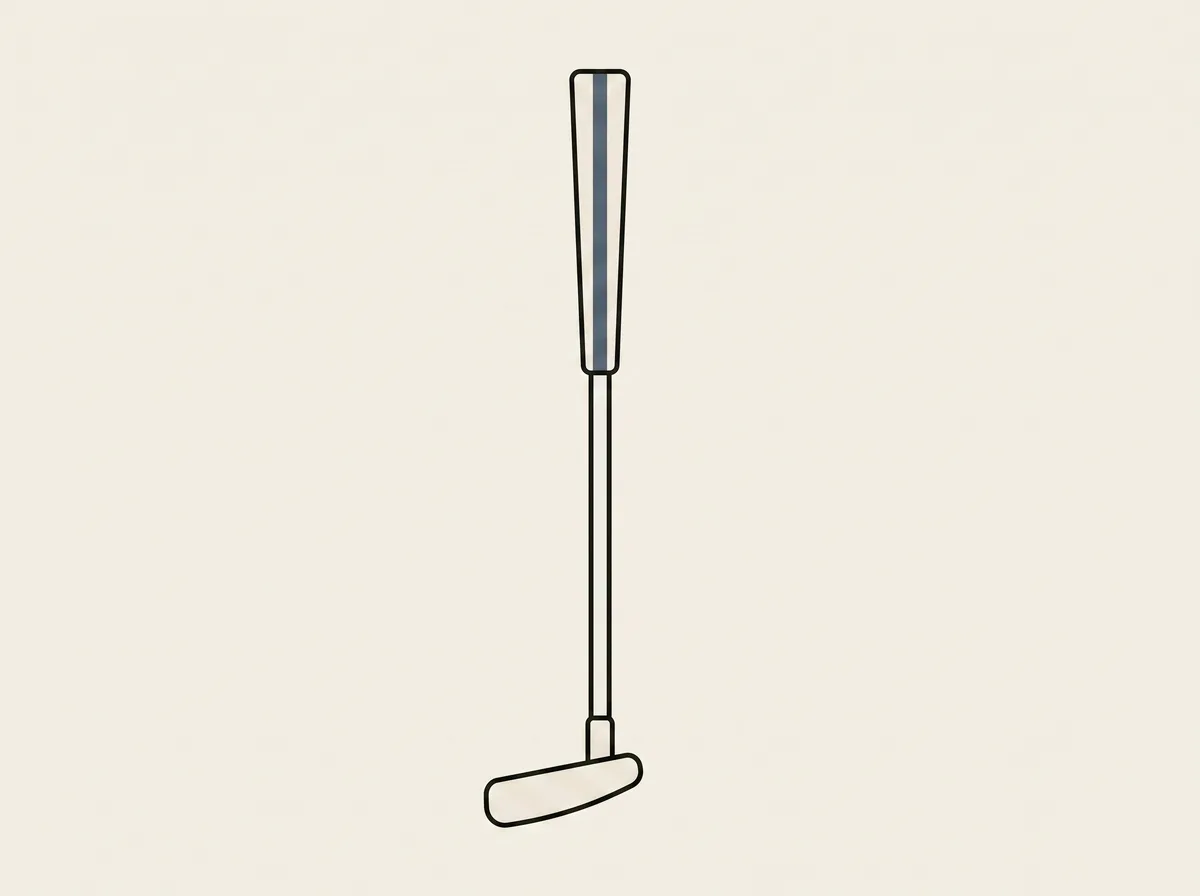
- Hold the putter out in front of you with the face square, and look at the grip. It has a flat front. That flat is a reference point put there by the manufacturer.
- Lay the handle across the palm of your lead hand so it runs up the lifeline toward the heel pad, not diagonally across the fingers.
- Close the hand and set your lead thumb straight down the middle of the flat front.
- Add the trail hand below it, palm facing the target, and set that thumb down the flat as well so both thumbs point at the putter head.
- Join the hands with whichever link feels least tense: the lead index finger laid over the trail fingers is the common one.
The check is the thumbs. Both should be on the flat, both pointing down the shaft, palms facing each other. If either thumb has slid onto a rounded side of the grip, that hand is rotated, and the face will open or shut through the stroke without you feeling a thing.
The four styles that matter
Everything beyond conventional exists to remove a specific fault. Trying a new grip because you are putting badly and have not worked out why is how golfers end up changing every fortnight.
| Style | How it sits | What it fixes | What it costs |
|---|---|---|---|
| Conventional | Lead hand above trail hand, thumbs down the flat | Nothing in particular. The default | Trail hand can take over under pressure |
| Left hand low | Trail hand above lead hand, hands swapped | Shoulders opening, a pulled short putt, a flicking lead wrist | Feel on long putts, at first |
| Claw | Lead hand normal, trail hand held like a pen from above or the side | A dominant trail hand, a jabbed stroke, the yips | Very little power, so it suits fast greens more than slow |
| Arm lock | Handle pressed along the lead forearm, needs a longer putter | Lead wrist breaking down entirely | A specific club, and a legality check on the putter length |
None of these is more advanced than the others and none is a last resort. They are four ways of holding a stick, and the only meaningful test is which one returns the face to the same place.
Left hand low, or cross handed
Left hand low simply swaps the hands: the trail hand goes to the top of the grip and the lead hand below it. Left-handers do the reverse and put the right hand low.
The reason it works is structural. With the lead hand lower down the handle, the lead wrist is much harder to bend, and the shoulders sit more level at address rather than with the lead shoulder high. Both of those changes attack the same fault, which is the lead wrist flicking or the shoulders turning open through impact and pulling the ball left of the aim.
It is the obvious thing to try if you miss short putts to the left and cannot work out why. Expect it to feel dreadful for a fortnight and to cost you a little feel on long putts before it comes back, which is why it is worth trying on a practice green rather than on the first green of a medal.
The claw
The claw keeps the lead hand exactly where it was and changes only the trail hand, which is held lightly from above or from the side, roughly the way you would hold a pen. Some versions run the trail fingers along the top of the grip and some tuck them underneath, and all of them do the same thing.
That thing is removing the trail hand's ability to push. A trail hand wrapped around the handle in the normal way can add speed, and on a putt you want the same speed every time rather than any added speed. Golfers who hit the occasional short putt four feet past the hole are usually feeling their trail hand arrive.
It is also the grip most often recommended to golfers whose stroke has developed a flinch. Whether the flinch is mechanical or psychological is genuinely disputed, and the honest version of that argument sits in the putting yips rather than here.
Grip pressure, and why it is the real variable
Grip pressure does more damage than grip style, and almost nobody checks it. Squeeze the putter and the forearms tense, the stroke shortens, and the ball leaves the face faster than the stroke length suggests. That is where a jabbed three-footer comes from.
Aim for light and, more importantly, constant. Pressure that changes during the stroke is worse than pressure that is slightly too high throughout, because a change mid-stroke arrives as a small acceleration you did not plan. The simplest check is whether a playing partner could pull the putter out of your hands without much resistance.
Size, the flat front, and what the rules allow
Putter grips are the one place in the bag where the equipment rules deliberately relax, which is why they look so different from everything else.
The R&A and USGA rules on club conformance allow a putter grip to have a non-circular cross-section, provided it has no concavity, is symmetrical and stays generally similar down its length. That is the clause that permits the flat front. The same rules cap any grip at 1.75 inches across in any direction, and uniquely allow a putter to carry two grips, provided each is circular, both align with the shaft axis, and they are at least 1.5 inches apart.
Thickness is a genuine variable rather than a fashion. A thicker grip fills the hands and reduces what the fingers contribute, which suits a golfer whose hands are too involved. A thinner grip gives more feel, which suits a golfer who struggles to judge pace. Neither is correct, so putt with both rather than buying a thick grip to cure a fault you have not identified.
Changing a grip without losing a season
A grip change is a two-week problem whichever direction you go, because your hands have a map of where the putter face is and you have just moved it. That is not evidence the new grip is wrong.
Do the changeover work at home if you can, because grip work needs no target at all and putting is the one part of golf that transfers properly from a carpet. The wider case for indoor practice is in practising at home, and structured sessions are in putting drills.
What the grip cannot fix
A grip decides what the face can do. It does not decide where you aim it, how far back you take it, or how hard you hit it.
Shot Scope's comparison of a tour professional against amateur golfers has the tour player holing 92 percent from three to six feet, a scratch golfer 76 percent, and a 15 handicap 59 percent. From zero to three feet the same three groups sit at 100, 98 and 94 percent. The gap opens almost entirely in the range where the face has to be aimed and returned, which is exactly the range a grip change can affect.
Beyond about ten feet the gap becomes a pace problem instead, and no grip has ever helped with that. Where your eyes sit is putting setup, the mechanics of the motion are the putting stroke, and the three-footer you know you should hole is covered in short putts.
Key takeaways
- The putting grip exists to stop the wrists working, which is the opposite of the full swing grip's job.
- Face angle at impact accounted for 80 percent of directional consistency in the Karlsen study of 1,301 elite putts, so the grip's job is face control.
- Set the handle in the palms with both thumbs down the flat front and the palms facing each other.
- Conventional, left hand low, the claw and arm lock are all legal and all used at the highest level.
- Left hand low levels the shoulders and quietens the lead wrist, so it suits golfers who pull short putts.
- The claw removes the trail hand's ability to push, so it suits golfers whose stroke jabs.
- Grip pressure that changes during the stroke does more damage than pressure that is slightly too firm throughout.
- Rule 10.1b bans anchoring, but the claw, left hand low and arm lock all remain legal.
- Putter grips may be non-circular and up to 1.75 inches across, which is why the flat front exists.
- Any grip change feels wrong for about two weeks, so judge it on the gate drill rather than on how it feels.
Common questions
What is the correct putting grip?
There is no single correct one. The requirement is that the wrists stay quiet and the face returns to the same place, and conventional, left hand low, the claw and arm lock all achieve that for different golfers. Start conventional, with both thumbs down the flat front of the handle and the palms facing each other.
Should I putt left hand low?
Try it if you miss short putts to the left. Putting left hand low sets the shoulders more level and makes the lead wrist much harder to bend, which are the two things that cause a pulled short putt. Give it two weeks before judging, because it feels alien at first and costs a little feel on long putts.
What is the claw grip in putting?
The claw leaves the lead hand in its normal position and holds the trail hand from above or the side, roughly the way you hold a pen. It removes the trail hand's ability to add speed, which is why it suits golfers whose stroke jabs or whose trail hand takes over under pressure.
Is the claw grip legal?
Yes. Rule 10.1b bans anchoring the club against the body or using a forearm as a fixed pivot, and the claw does neither. It is used regularly on tour and there is no restriction on it in the Rules of Golf.
Is cross handed the same as left hand low?
Yes, they are two names for the same grip. The trail hand goes above the lead hand on the handle, reversing the usual order. For a left-handed golfer the same grip means the right hand goes low.
How tight should I hold a putter?
Lightly, and above all consistently. A useful test is whether someone could pull the putter out of your hands without much resistance. Pressure that increases during the stroke adds speed you did not plan for, which is where a putt struck four feet past the hole comes from.
Should my thumbs be on the flat part of the grip?
Yes, both of them, pointing straight down toward the putter head. The flat front is the only alignment reference a grip gives you. If a thumb has slid onto a rounded side, that hand is rotated and the face will twist through the stroke.
Do thicker putter grips help?
They help if your hands are too active, because a thicker grip fills the palms and reduces what the fingers can contribute. They do nothing for a golfer whose problem is pace or aim, and they slightly reduce feel. The rules allow a grip up to 1.75 inches across in any direction.
Should I keep my glove on when putting?
Most golfers take it off, and the reason is feel rather than technique. A bare hand reads pressure and contact more clearly, which matters more on a putt than anywhere else in the bag. Nothing in the rules requires either, so use whichever gives you a more consistent grip pressure.
How long does it take to get used to a new putting grip?
About two weeks of regular practice before it stops feeling foreign, and a few weeks more before your pace on long putts returns. Judge it on whether the ball starts on your line rather than on how many drop, and make the change on a practice green rather than in a competition.
Tom Ashworth
Tom Ashworth is a PGA Professional who has taught golf since 2012, working mainly with beginners and mid-handicappers at club level in Surrey. He reviews the instruction guides on Learn Golf for technical accuracy before they publish.
Most of his teaching is with players in their first three years of the game, and most arrive having been told too much: six swing thoughts collected from videos, half of them contradicting each other. His approach is to check the grip and the alignment before touching the swing, on the basis that most bad ball flight is decided at address.