Chipping is where a mid handicapper has the most strokes available and the least competition, because almost nobody practises it properly. These drills come with reps, frequency and a definition of what good looks like, because a drill without a number attached is just hitting balls at a green.
Why chipping practice pays more than anything else
That is the whole argument. You will hit a driver fourteen times at most and chip on nearly every hole, and yet the range queue is at the driver bay and the chipping green is empty.
The three drills to start with
Those three cover strike, distance control and pressure. If you only ever do these, your chipping will improve.
Drills for a specific fault
Use these when you know what is going wrong rather than as general practice.
The games, because a consequence changes everything
Reps build a movement. Consequences build a shot you can play on the seventeenth. Every session should end with one of these.
Par 18. Nine chips from nine different spots around a green. Par is two shots each, chip and putt. Score against 18 and keep the card.
Three in a row. Chip until you have landed three consecutive balls on a towel. Miss and the count resets to zero. Do not leave until you have done it.
Worst ball. Chip two balls from the same spot, then play the worse of the two, and putt out. It removes the mulligan mentality that practice quietly builds.
How to structure twenty minutes
The realistic session, if you arrive at the course early or have a short game area nearby.
| Minutes | What | Why |
|---|---|---|
| 0 to 3 | Feet together, twenty chips | Balance and strike, no target pressure |
| 3 to 10 | Towel landing spot, two clubs | The core skill, and the one that transfers |
| 10 to 16 | Ten balls, ten different lies and targets | Randomised, closest to real golf |
| 16 to 20 | Up-and-down game or three in a row | A consequence to finish on |
That structure follows the same logic as any good session, which is set out in how to practice golf: a technical block first, randomised play second, pressure last.
Key takeaways
- A 15 handicapper plays a shot from around the green on roughly fourteen holes out of eighteen.
- Landing the ball on a chosen spot is the whole skill. Aim at a towel, not at the hole.
- The three core drills are the towel landing spot, the one-club ladder and the up-and-down game.
- Three out of ten up-and-downs is a fair mid handicap benchmark. Five is genuinely good.
- Every drill needs reps, frequency and a definition of what good looks like, or it is just hitting balls.
- Move after every second ball and use bad lies deliberately. Perfect lies teach nothing.
- Finish every session with a game that has a consequence attached.
Common questions
What are the best chipping drills?
The towel landing spot for controlling where the ball lands, the one-club ladder for distance control, and the up-and-down game for playing under a consequence. Those three cover the skills chipping actually needs and are enough on their own to improve most amateurs.
How often should I practise chipping?
Three sessions of about twenty minutes a week beats one long session, because short game skill responds to frequency. If you can only manage one, make it the twenty minute structure with a pressure game at the end rather than an hour of repetition.
How many up-and-downs should I get?
Three out of ten around a green is a reasonable standard for a mid handicapper and five is genuinely good. Track the number over a few months rather than judging a single session, since the lies you happen to draw make a big difference on any given day.
Should I practise chipping with one club or several?
One club until your strike is dependable, then add loft options. A single club played with different swing lengths builds reliable contact faster and removes a decision under pressure. Once contact is solid, using loft to change the roll is easier than changing the swing.
Where should I aim when chipping?
At a landing spot, not at the hole. Pick a spot about the size of a dinner plate, usually around a third of the way to the hole with a low-lofted club, and let the club's loft decide the roll from there. This single change improves most amateurs' chipping immediately.
Can I practise chipping at home?
Yes, into a net or at a target in a garden, and it is genuinely useful for strike and for the towel drill. What a garden cannot teach you is landing spot and roll, because you need a real green surface to see the ball release. Split your practice between both if you can.
What is the towel drill for chipping?
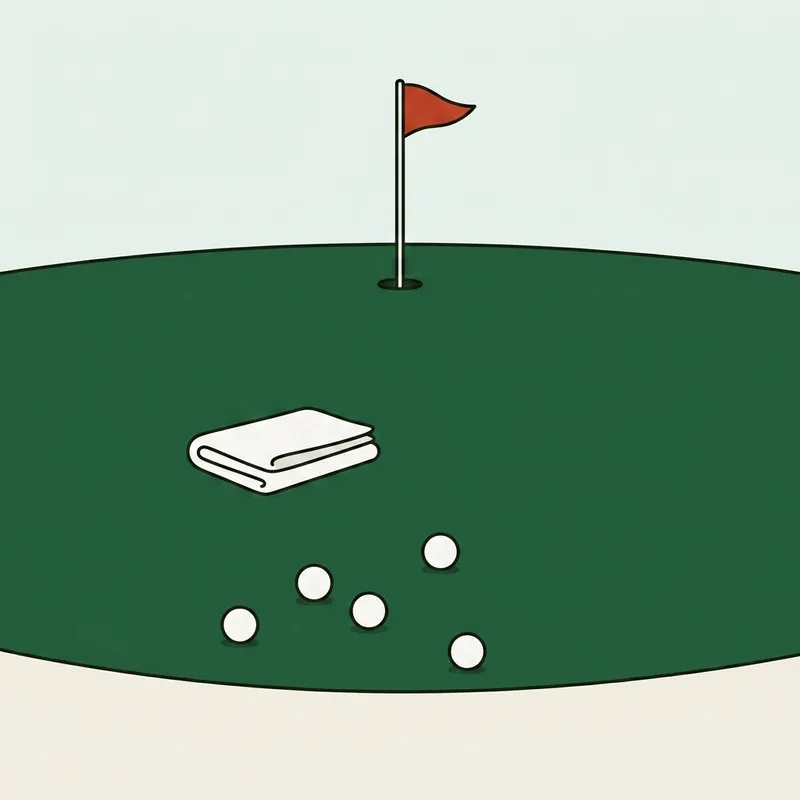
There are two. Laying a towel on the green as a landing target trains where the ball comes down. Laying a folded towel four to six inches behind the ball trains a forward low point and stops chunking. Both are worth doing and they train different things.
How do I stop decelerating on chip shots?
Use a shorter backswing so you do not have to slow down to control the distance. Deceleration usually comes from taking too long a backswing for the shot and then easing off, which lowers the low point and produces a chunk. Shorter and brisker beats longer and slower.
Should I practise from bad lies?
Yes, deliberately. Most golfers only ever chip from perfect grass in practice, so the first awkward lie of a round is an improvisation. Use rough, tight lies and uphill and downhill spots on purpose, since that is what the course actually gives you.
How long does it take to improve at chipping?
Faster than any other part of golf. The strike changes can show within a session and a genuine improvement in up-and-down percentage typically appears over four to six weeks of three sessions a week. It is the highest return per hour available to a mid handicapper.
Tom Ashworth
Tom Ashworth is a PGA Professional who has taught golf since 2012, working mainly with beginners and mid-handicappers at club level in Surrey. He reviews the instruction guides on Learn Golf for technical accuracy before they publish.
Most of his teaching is with players in their first three years of the game, and most arrive having been told too much: six swing thoughts collected from videos, half of them contradicting each other. His approach is to check the grip and the alignment before touching the swing, on the basis that most bad ball flight is decided at address.