Best Wedges for Beginners: Bounce First, Loft Second
A beginner does not need a set of wedges. They need one club that will not dig, and the honesty to admit which shot is actually costing them strokes.
Some links here earn us a commission at no extra cost to you. It never changes what we recommend or the order we rank it. How this works.
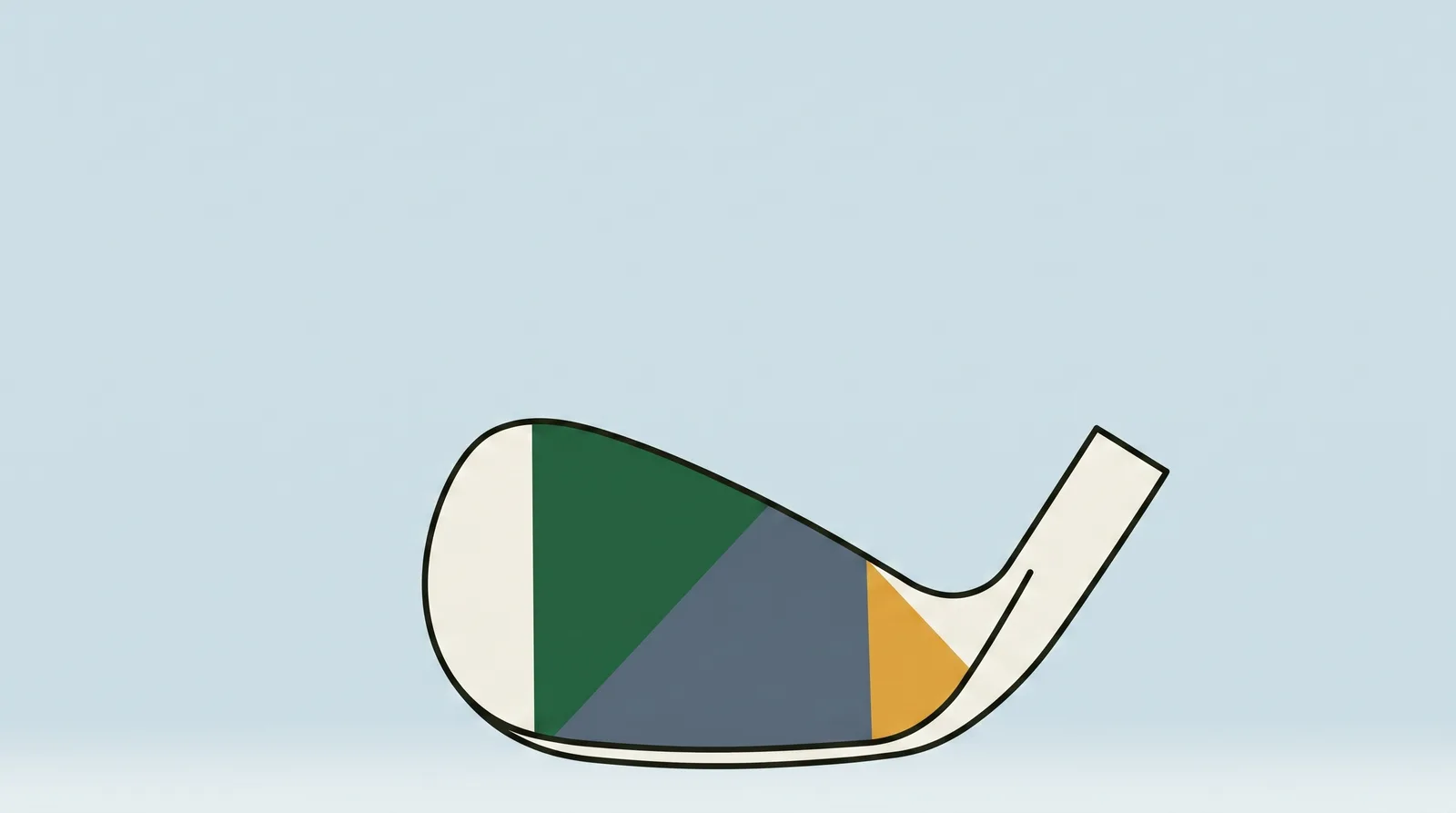
Almost every wedge sold is designed for a golfer who strikes the ball first and the ground second. A beginner frequently does the opposite, and the club that punishes that hardest is the one with the narrowest sole and the least bounce, which is exactly what a tour wedge is. What follows is four clubs built the other way, and an honest account of which one your scorecard actually needs.
The four, compared
These are not four versions of the same club. Two are wedges you would carry as a matter of course, and two are single purpose clubs that solve one problem and take a bag slot to do it.
| Pick | Best for | Lofts | Bounce | Sole | Stock shaft | Price |
|---|---|---|---|---|---|---|
| Cleveland CBZ | A cavity back wedge that matches forgiving irons | 44° to 60° in 2° steps | 12° on the V grind, 14° on the S, 10° or 12° on the C | Three grinds, V-Shaped, S-Shaped and C-Shaped | KBS HI-REV 2.0 115 steel, or graphite at 80g | Around £139 to £159 per wedge, steel or graphite |
| Cleveland Smart Sole Full-Face | A strike that is genuinely not there yet | 42°, 50°, 58° and 64° | Not published per club | Extra wide three-tiered sole | Steel at 106g or graphite at 90g | Around £119 to £139 per club |
| Ping BunkR | Bunkers, without changing your technique | 64°, and nothing else | 14.5° effective | Wide, with EYE2 style shaping | Z-Z115 111g, AWT 3.0 96g to 114g, ALTA CB Blue 65g to 82g, ALTA Quick 38g to 41g | Around £159 to £169, steel to graphite |
| Ping ChipR | Chipping, treated as a putting stroke | 38.5°, and nothing else | 8.0° effective | Iron shaped, on a putter length shaft | Z-Z115 111g steel or ALTA CB Slate 72g graphite | Around £149 at UK retail |
The number to read first is bounce, and it is the one specification a beginner is least likely to have heard of. The general wedge roundup covers what bounce and grind change for a golfer who already strikes the ball cleanly. This page is about the version of the problem that comes before that.
Cleveland CBZ: the cavity back wedge
The Cleveland CBZ is a cavity back, which sounds ordinary and is the whole point. Almost every wedge on a shop wall is a blade, because that is what tour players use, and almost every iron on the same wall is a cavity back, because that is what everybody else needs. The CBZ is the second thing built as a wedge.
Cleveland state the design moves the sweet spot toward the centre of the face rather than leaving it heel-sided, on the reasoning that a centre-of-face strike is what a golfer is most likely to produce. There is a TPU insert behind it to damp vibration, and Cleveland describe the head material as a new steel they call Z-Alloy, which they measure as 25% softer than the range it replaces on a hardness scale.
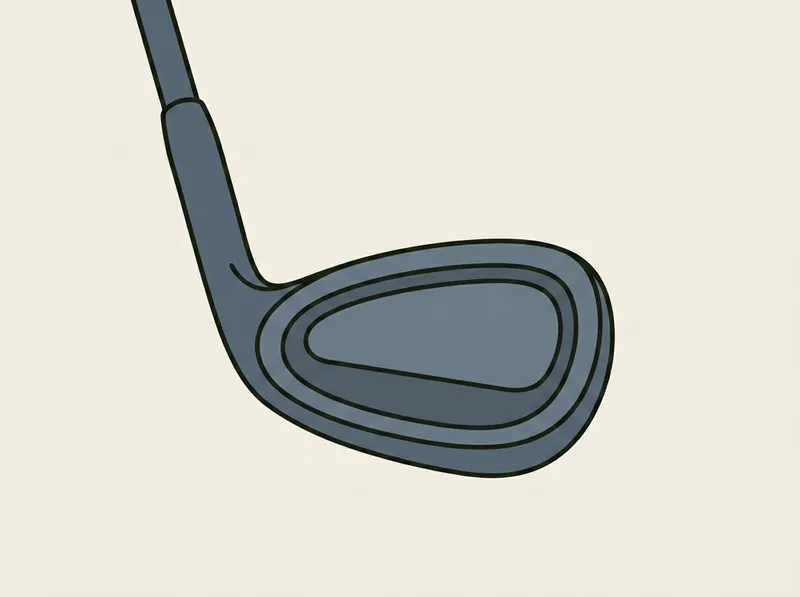 Around £139 to £159 per wedge, steel or graphite
Cleveland CBZ
- Lofts
- 44° to 60° in 2° steps
- Bounce
- 12° on the V grind, 14° on the S, 10° or 12° on the C
- Sole
- Three grinds, V-Shaped, S-Shaped and C-Shaped
- Stock shaft
- KBS HI-REV 2.0 115 steel, or graphite at 80g
- Lie
- 64° across the whole range
- Face
- Full-Face groove option from 50° upward
- Cleveland publish a bounce figure for every loft and grind combination, which they do not do on their tour wedge range.
- A cavity back with the sweet spot moved toward the centre of the face rather than the heel, which is where a poor strike usually lands.
- Lofts start at 44 degrees, so it gaps off a strong modern pitching wedge without leaving a hole.
- Only one steel shaft is offered as stock, at 115g, which is heavy alongside a graphite shafted iron set.
- The cavity is visible at address from behind and some golfers dislike how it looks next to a blade wedge.
- The grind is chosen for you by the loft rather than offered as a separate decision.
VerdictThe right first wedge for almost every beginner, because it is built for a strike that is not yet reliable and the bounce is stated rather than implied. If your irons are graphite, check the shaft weight before you order.
The genuinely useful part is the specification table. Lofts run 44 to 60 degrees in two degree steps, and every one of them carries a stated bounce: 12 degrees on the V-shaped sole through the gap wedges, 14 degrees on the S-shaped sole in the 54 and 56, and 10 or 12 degrees on the C-shaped sole at the top of the range. Cleveland do not publish that for their tour wedges, and it is the difference between choosing a sole and being sold one.
Fourteen degrees in a 56 is a lot of bounce and it is the correct amount for the golfer this page is written for. It lifts the leading edge clear of the ground so the sole strikes turf first, which turns a strike two inches behind the ball into a shot that still finishes on the green.
Cleveland Smart Sole Full-Face: the widest soles made
The Cleveland Smart Sole Full-Face is a four club system rather than a wedge: a 42 degree chipper, a 50 degree gap wedge, a 58 degree sand wedge and a 64 degree lob wedge, all built around what Cleveland call a three-tiered sole. The soles are extremely wide, the faces are large, and the grooves run the full width of each one.
Cleveland describe the 42 degree head as designed for bump and run shots played with a putting-like stroke from inside 30 yards, and the 58 as a one-and-done bunker club. Those are honest descriptions of single purpose tools rather than a matched wedge set.
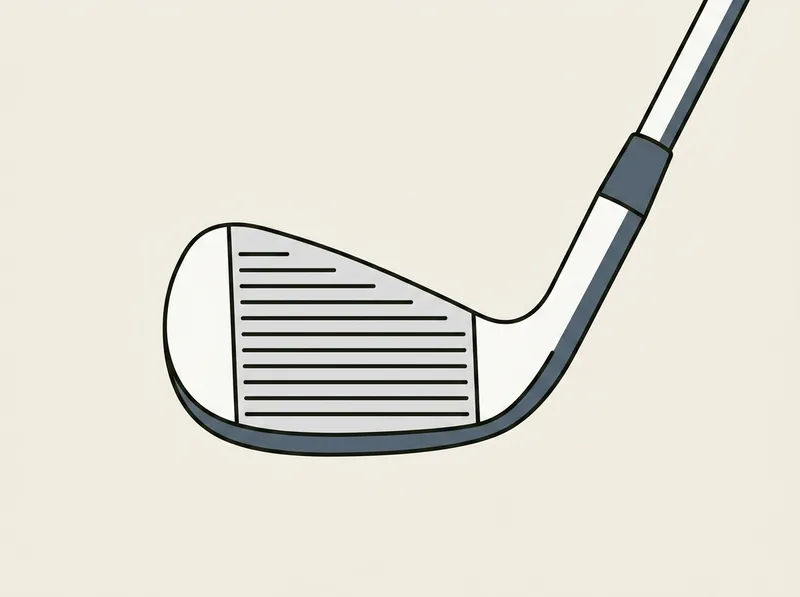 Around £119 to £139 per club
Cleveland Smart Sole Full-Face
- Lofts
- 42°, 50°, 58° and 64°
- Bounce
- Not published per club
- Sole
- Extra wide three-tiered sole
- Stock shaft
- Steel at 106g or graphite at 90g
- Lie
- 66° on the 42°, 64° on the other three
- Lengths
- 35 to 35.5 inches
- The widest soles of anything here, which is the single specification that stops a leading edge digging behind the ball.
- Four clubs covering a chipper at 42 degrees through to a 64 degree lob, so a whole short game can be built from one family.
- Graphite at 90g is offered as stock, which matches a lightweight iron set far better than most wedge shafts do.
- No bounce figure is published for any of the four, which is the number this whole category turns on.
- The heads are large enough that some golfers cannot get comfortable looking at them.
- Buying more than one of these eats bag slots that a hybrid or a fairway wood probably deserves more.
VerdictThe right buy for a golfer who chunks and thins wedges rather than merely missing greens with them. Take one, not four, and take the 58 rather than the 64 unless you have a specific reason.
The shaft options are better than the category norm. Steel at 106g and graphite at 90g are both stock, and the 90g graphite is a genuine match for a lightweight iron set in a way that a 115g wedge shaft is not. The lie angles are also worth noticing: 66 degrees on the chipper against 64 on the other three, which is the club being pushed toward a putting posture.
What is missing is bounce. Cleveland publish loft, lie, length and swingweight for all four and no bounce figure at all, which is odd on a range sold entirely on how the sole behaves. Numbers circulate elsewhere and this page will not repeat them.
Take one of these rather than four. A beginner carrying a chipper, a gap wedge, a sand wedge and a lob wedge has spent four of their fourteen slots on shots inside 100 yards and has nothing to hit off the tee.
Ping BunkR: one shot, done properly
The Ping BunkR is a 64 degree sand wedge with 14.5 degrees of effective bounce, a 64.5 degree lie, 0.06 inch of offset and a D4 swingweight, built around what Ping describe as EYE2 style shaping. Ping's own description is unusually direct: the loft, the wide sole and the shape are there so a golfer can use a normal square faced technique to get out of a bunker.
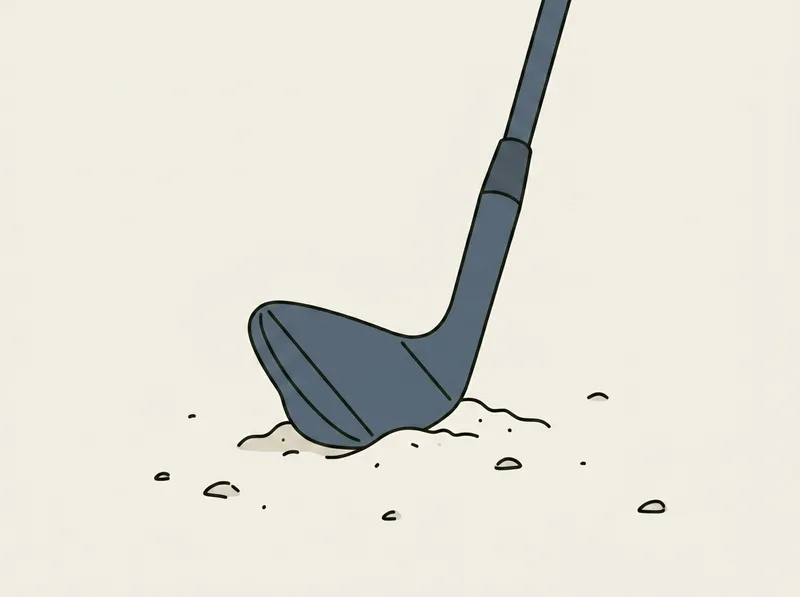 Around £159 to £169, steel to graphite
Ping BunkR
- Lofts
- 64°, and nothing else
- Bounce
- 14.5° effective
- Sole
- Wide, with EYE2 style shaping
- Stock shaft
- Z-Z115 111g, AWT 3.0 96g to 114g, ALTA CB Blue 65g to 82g, ALTA Quick 38g to 41g
- Lie
- 64.5°
- Offset
- 0.06 inch
- The highest published effective bounce here at 14.5 degrees, which is what makes a sole skid through sand rather than dig into it.
- Ping state it is designed to be used with a normal square faced technique, which removes the hardest part of a bunker shot for a beginner.
- The full Ping shaft range applies, including a 38g graphite, so the club can be matched to a slow swing.
- One loft only, and 64 degrees is close to unusable on a full shot from grass.
- It occupies a bag slot for a shot you may face two or three times a round.
- Ping build to order, so trying one before buying usually means a fitting appointment.
VerdictThe right buy for a golfer whose scorecard is being wrecked by bunkers specifically, and only for that golfer. If you get out of sand in one most of the time already, this is a club you do not need.
That is the argument, and it is a real one. The hardest thing about a standard bunker shot is not the swing, it is that the technique requires opening the face, which changes the aim and the effective bounce at the same time and feels wrong to anyone who has not been taught it. A club with enough loft and bounce built in removes the step. Greenside bunker technique covers what you would otherwise have to learn.
The shaft list is the best on this page. Ping offer their whole range including an ALTA Quick at 38g, which is roughly a third of a standard wedge shaft. For a slower swing that is a bigger difference than anything on the face.
The cost is a bag slot for a shot most golfers face two or three times a round, and a club that does very little else. Sixty four degrees from a fairway lie is not a shot most beginners should attempt.
Ping ChipR: a putting stroke with loft
The ChipR is 38.5 degrees of loft on a 35 inch shaft with a 70 degree lie. Those last two numbers are putter numbers, and they are the point: the club is set up to be swung with a putting stroke rather than a chipping one, so the wrist action that produces most duffed chips never gets a chance to happen.
Ping publish loft, lie, length, offset, effective bounce at 8.0 degrees and swingweight at E6, which is more information than anyone else gives about a club in this category.
 Around £149 at UK retail
Ping ChipR
- Lofts
- 38.5°, and nothing else
- Bounce
- 8.0° effective
- Sole
- Iron shaped, on a putter length shaft
- Stock shaft
- Z-Z115 111g steel or ALTA CB Slate 72g graphite
- Lie
- 70°
- Length
- 35 inches
- A 70 degree lie and a 35 inch shaft, which are putter numbers, so the club is used with a putting stroke rather than a chipping one.
- Ping publish loft, lie, length, offset, effective bounce and swingweight for it, which nobody does for a chipper.
- It removes the club selection decision around the green entirely, which is where most beginners lose the shot.
- It is one club for one shot, and the Rules allow you only fourteen.
- It does nothing from a bunker, from thick rough or from any lie that needs the ball to carry.
- Learning to chip properly with a wedge you already own costs nothing and travels further.
VerdictThe pick for a golfer who duffs or thins chips regularly and has decided to buy a solution rather than practise one. It genuinely works, and it is the club on this page most likely to become a crutch.
It works, and that is the honest problem with it. Chipping technique is free, transfers to every other club in your bag, and is a skill you keep. A ChipR is a purchase that solves the symptom and takes a slot. Both of those things are true at once, and which matters more depends on how much you are actually going to practise.
Bounce, and why a beginner needs more of it
Bounce is the angle between the leading edge of the sole and the lowest point of the sole when the club is set square to the ground. More bounce lifts the leading edge further clear, so the sole makes contact with the turf before the edge can dig in.
That mechanism is why bounce matters more to a beginner than to anybody else. A tour player takes a shallow divot starting at the ball. A beginner's strike arrives anywhere in a window several inches wide, and bounce is what makes the shots at the wrong end of that window survivable.
| Your typical wedge contact | Bounce to look for | Where it sits here |
|---|---|---|
| Frequently behind the ball, deep divots | 14° and up | Cleveland CBZ 54 and 56, Ping BunkR at 14.5° |
| Reasonable contact, occasional heavy strike | 12° | Cleveland CBZ V and C grinds |
| Clean contact, firm ground, thin misses | 8° to 10° | Cleveland CBZ 58 and 60 C grind, Ping ChipR |
The mistake that follows from not knowing this is expensive and extremely common. A beginner buys a 60 degree wedge with low bounce because that is the club they have seen used on television, then plays it off soft parkland turf where the leading edge digs in behind the ball. The result is a shot that travels three feet and a golfer who concludes they cannot chip.
How many wedges, and which one first
Two clubs above the pitching wedge is plenty at this stage, and one is defensible. The wedge loft guide sets out the gapping arithmetic properly, and the short version for a beginner is that it starts with the pitching wedge already in your iron set.
Modern pitching wedges run anywhere from 40 to 46 degrees depending on the set, so the first thing to do is find out what yours actually is. A 43 degree pitching wedge gaps into a 50 and a 56. A 46 degree one gaps into a 52 and a 58, or straight into a 56 with nothing in between.
The first purchase is a sand wedge, somewhere between 54 and 56 degrees, with 12 to 14 degrees of bounce. That single club covers bunkers, greenside chips, pitches from 40 yards and anything sitting down in rough. If you only ever buy one, buy that.
That second pair of numbers is the most useful thing on this page. Even a good amateur converts fewer than half as many recoveries from 40 yards as from 20. The shot that costs a beginner is not the delicate flop over a bunker, it is the ordinary pitch from 30 or 40 yards, and it is played with a wedge on a half swing. The difference between chipping and pitching is where those two shots separate.
Shafts, and the mistake nobody warns you about
Wedges are traditionally built with heavier shafts than the irons above them, on the theory that extra mass steadies a partial swing. That holds if your irons are steel and it is wrong if they are graphite.
A beginner who has bought a forgiving iron set with a 60g graphite shaft, then adds a wedge with a 115g steel shaft, has put a club in the bag that weighs half as much again as the 9 iron it follows. On a full swing that is manageable. On the delicate 30 yard shot it feels like a different sport, and the usual symptom is heavy contact.
Keep the wedge shaft within roughly 20 grams of your 9 iron and match the flex. The Cleveland Smart Sole offers graphite at 90g, Ping offer graphite from 38g upward, and the CBZ offers an 80g graphite alongside its 115g steel. Those options exist and almost nobody asks for them. What forgiving iron sets come with is worth checking before you order a wedge to sit under them.
The fourteen club problem
Two of the clubs on this page are single purpose, and that has a cost written into the Rules. Rule 4.1b sets the limit at fourteen clubs, so anything you add has to displace something.
For most beginners that is not a real constraint, because a typical bag contains at least two clubs that never get hit. A 4 iron and a 3 wood between them are often carried for a whole season without producing a good shot. What actually earns a place in the bag is the calculation worth doing before you add anything.
Where it becomes a real constraint is if you buy several of these. A chipper, a bunker club and three conventional wedges is five slots inside 100 yards, which is a bag built for a short game you have not developed yet at the expense of getting there in the first place.
What to spend
Wedges do not follow the discount cycle that irons and drivers do. They are replaced because the grooves have worn rather than because a new model exists, so last season's wedge sits close to full price and the sale you are waiting for tends not to arrive.
| Budget | What it buys | Who it suits |
|---|---|---|
| £100 to £130 | One forgiving sand wedge, often last season's finish | A first wedge, bought alongside a package set |
| £130 to £180 | A current cavity back wedge with the bounce and shaft you chose | Anyone playing regularly and keeping the club three years |
| £240 to £320 | Two wedges, gapped properly off your pitching wedge | A second season, once your distances have settled |
Buying used is the one piece of standard advice that reverses here. The wearing part of a wedge is the face, groove wear does not show in a photograph, and a worn wedge loses spin exactly where you needed it, which is from wet grass and sand.
The other thing worth knowing is that chunked chips are usually a setup problem rather than an equipment one, and no amount of bounce fixes a ball position that is too far forward. Why chips get chunked covers the cause, and it costs nothing to test before you spend anything at all. Once the wedges are sorted, the putter is the next decision and the cheaper one.
Key takeaways
- The Cleveland CBZ is a cavity back wedge with published bounce for every loft, and a 54 or 56 degree head carries 14 degrees of it.
- The Cleveland Smart Sole Full-Face has the widest soles here across a 42, 50, 58 and 64 degree family, and publishes no bounce figure at all.
- The Ping BunkR is 64 degrees with 14.5 degrees of effective bounce, built so a square faced technique works from sand.
- The Ping ChipR is 38.5 degrees on a 35 inch shaft with a 70 degree lie, which turns a chip into a putting stroke.
- Bounce matters more to a beginner than to anyone else, because it decides what happens when the club reaches the ground before the ball.
- Buy one sand wedge between 54 and 56 degrees with 12 to 14 degrees of bounce. Three wedges is a second season purchase.
- Keep the wedge shaft within about 20 grams of your 9 iron. Graphite wedge shafts exist from 38g upward and almost nobody asks for them.
- Shot Scope put a 5 handicap at 56% up and down from inside 25 yards and 25% from 25 to 50 yards, so the ordinary pitch costs more than the spectacular one.
Common questions
What wedge should a beginner buy first?
A sand wedge between 54 and 56 degrees with 12 to 14 degrees of bounce. That one club covers bunkers, greenside chips, short pitches and shots sitting down in rough. Everything else can wait until your distances are repeatable enough to be worth gapping.
How many wedges does a beginner need?
One or two above the pitching wedge in your iron set. Three is the right answer for a golfer who has settled distances and consistent contact, and it is a purchase that gets wasted before that. Start with the sand wedge and add a gap wedge when you notice a distance you have no club for.
What bounce should a beginner look for in a wedge?
Twelve degrees or more, and fourteen if your strike frequently arrives behind the ball. High bounce lifts the leading edge clear of the ground so the sole hits turf first and skids rather than digging. Most golfers buy less bounce than suits them because tour players play firm turf and shallow divots.
Should a beginner buy a 60 degree wedge?
Usually not. Sixty degrees needs a clean strike and a reasonable amount of speed to produce anything on a full swing, and from a poor lie it is the least forgiving club in the bag. A 56 with plenty of bounce covers more shots and punishes a bad strike far less.
Are cavity back wedges better for beginners?
Yes, for the same reason cavity back irons are. Moving mass to the perimeter raises the head's resistance to twisting on a strike away from centre, and the CBZ additionally moves the sweet spot toward the middle of the face rather than the heel. The trade is that they look bulkier at address than a blade wedge.
Is a chipper worth buying?
It depends on whether you intend to practise. A chipper with a putter length shaft and an upright lie removes the wrist action that causes most duffed chips, and it genuinely works. It also uses one of your fourteen slots for one shot, and the technique it replaces is free to learn and transfers to every other club.
Do I need a special wedge for bunkers?
No, but a wedge with enough bounce makes bunkers far easier. A conventional bunker shot requires opening the face, which changes both aim and effective bounce and is the part beginners find hardest. A club with the loft and bounce already built in lets you use a normal square faced swing.
What shaft should be in a beginner's wedge?
One within about 20 grams of the shaft in your 9 iron. If your irons are graphite at 60g, a 115g steel wedge shaft turns the shortest swings in your bag into a different club, and the usual symptom is heavy contact. Graphite wedge shafts are available from 38g upward.
Should I buy used wedges?
Usually not, and this is the one club category where the normal used-club logic reverses. The part that wears is the face, groove wear does not show in a listing photograph, and a worn wedge loses spin from exactly the lies where you needed it. If you do buy used, take the gap wedge rather than the sand wedge.
What is the difference between a gap wedge and a sand wedge?
Loft and sole width. A gap wedge sits around 50 to 52 degrees with a narrower sole and is hit on full or three quarter swings to fill the distance between a pitching wedge and a sand wedge. A sand wedge is 54 to 56 degrees with a wider sole and more bounce, and it is the club for sand, rough and short greenside shots.
How we put this together
- Published manufacturer specification tables read on the maker's own site, including the bounce figure for every loft where one exists.
- What a beginner's wedge actually has to do: survive a strike that arrives behind the ball, launch from a poor lie, and not require an open face to work.
- Shot Scope amateur benchmark data on up and down rates by handicap, because a wedge is bought on spin and scored on recoveries.
- The Rules of Golf position on the fourteen club limit, since two of the clubs here take a slot that something else currently occupies.
- Where a maker does not publish bounce per loft, this page says so rather than repeating a figure from a retailer's listing.
On this page
- The four, compared
- Cleveland CBZ: the cavity back wedge
- Cleveland Smart Sole Full-Face: the widest soles made
- Ping BunkR: one shot, done properly
- Ping ChipR: a putting stroke with loft
- Bounce, and why a beginner needs more of it
- How many wedges, and which one first
- Shafts, and the mistake nobody warns you about
- The fourteen club problem
- What to spend
- How we put this together

Tom Ashworth
Tom Ashworth is a PGA Professional who has taught golf since 2012, working mainly with beginners and mid-handicappers at club level in Surrey. He reviews the instruction guides on Learn Golf for technical accuracy before they publish.
Most of his teaching is with players in their first three years of the game, and most arrive having been told too much: six swing thoughts collected from videos, half of them contradicting each other. His approach is to check the grip and the alignment before touching the swing, on the basis that most bad ball flight is decided at address.