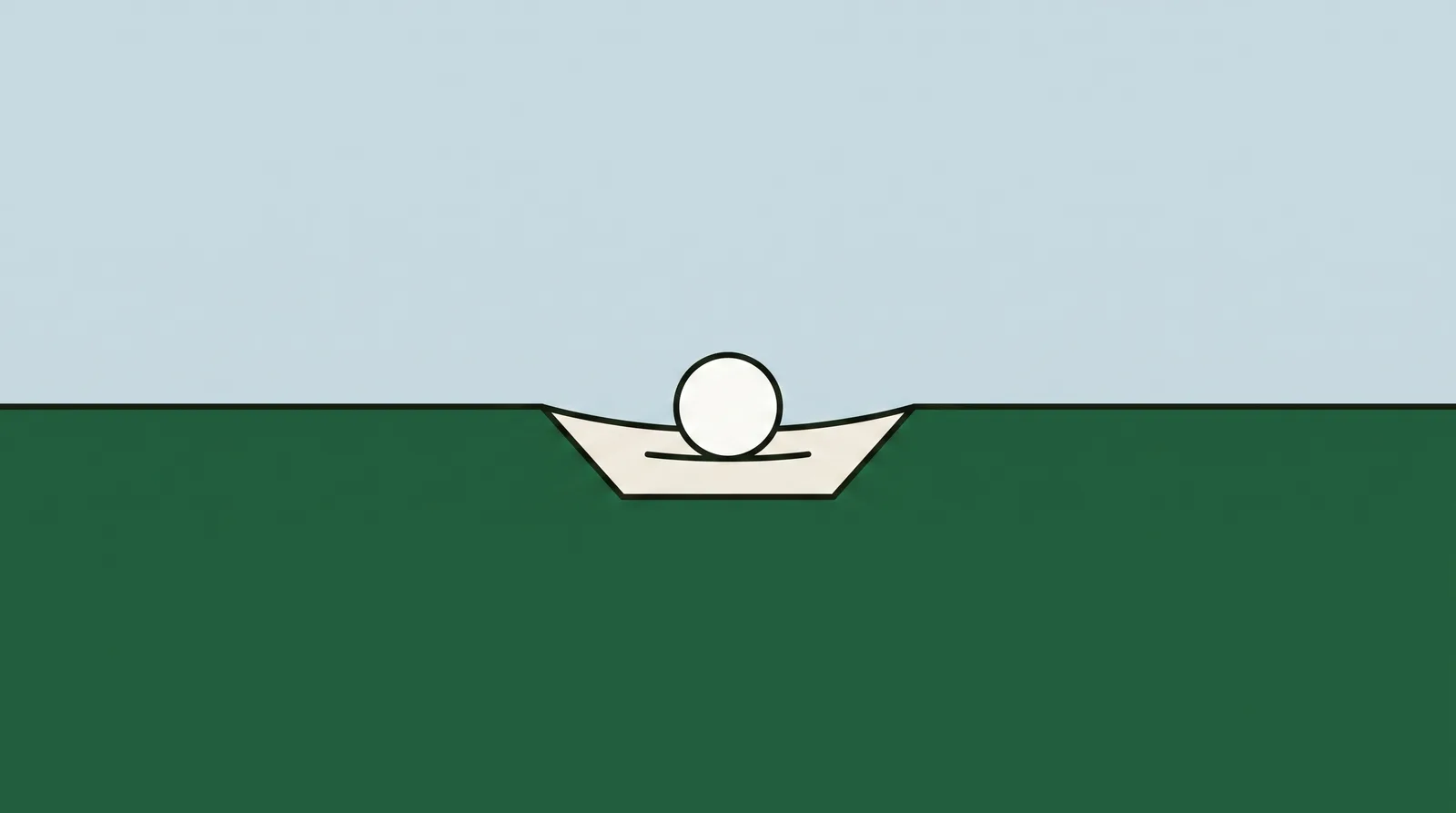
You have a simple chip from just off the green, and the club goes into the turf two inches early. The ball travels a fraction of the distance and the next shot is the same one again. Chunking is a low point problem with one dominant cause, and unlike most golf faults it responds quickly. This guide covers where it comes from and the drills that move contact forward.
The one cause behind almost every chunk
A chip is a tiny swing with an arc, and that arc has a lowest point. Hit the ball before that low point and you get clean contact and turf after the ball. Hit it after, and the club is already back in the ground.
Everything that causes a chunk moves the low point backward. There are three ways golfers do it, and they usually do all three at once.
Weight on the trail foot. If your weight is even or hanging back at impact, the bottom of the arc goes back with it. In a full swing the weight shifts forward naturally. In a chip there is no shift, so the weight has to start forward and stay there.
Hands behind the ball. The shaft leaning away from the target adds loft and drops the club head, which is exactly the geometry of a fat strike.
The scoop. The trail hand flicks under the ball at the last moment, trying to lift it. This is the root cause of the other two, and it comes from not trusting the loft.
The setup that removes it
Most of the fix is in the address position, before any swing thought applies.
- Narrow your stance to about half your normal width, with your feet close together.
- Set 60 to 70% of your weight on your lead foot, and leave it there for the whole shot.
- Play the ball in the centre of your stance, or just back of it.
- Push your hands forward so they sit ahead of the ball and the shaft leans toward the target.
- Grip down on the handle for control, and stand slightly closer to the ball than you would for a full shot.
That position pre-sets a forward low point. From there, the only requirement is that nothing moves backward during the stroke.
Why it gets worse the more you care
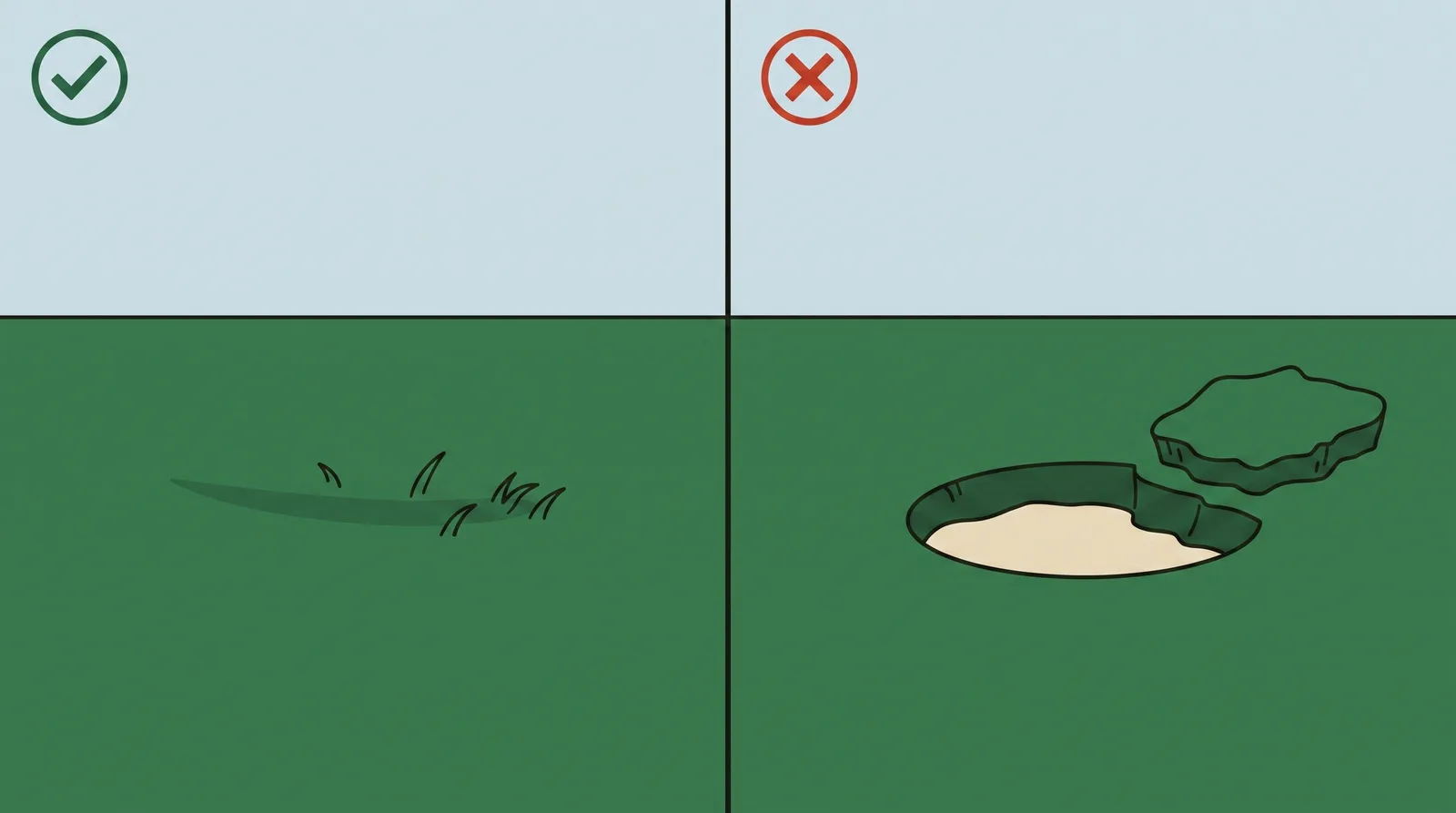
Chunking is unusual among golf faults because it has a strong psychological loop attached. Chunk one, and the next chip carries a fear of chunking, which produces exactly the tentative deceleration that causes another one.
Deceleration is the mechanism. A club slowing down through impact has a lower, earlier low point than a club accelerating through it, so easing off makes the fault more likely rather than less. The counterintuitive fix is a shorter backswing with full acceleration through the ball, rather than a long backswing you have to slow down.
The drills
Work in this order. The first one alone fixes most cases.
When it is the lie, not the swing
Before rebuilding your technique, check what the ball was sitting on. A chunk from a fluffy lie where the ball is sitting up in grass is a different problem from a chunk off a tight lie, and the second one is far less forgiving.
| Lie | Margin for error | What to change |
|---|---|---|
| Ball sitting up on cut grass | Reasonable | Normal technique, this is a genuine swing fault |
| Ball sitting down in rough | Small | More loft and a steeper strike, expect less spin |
| Tight or bare lie | Almost none | Less loft, hands well ahead, sweep it off the surface |
| Wet or soft ground | Small | The club digs more readily, so keep the strike shallower |
If most of your chunks come from tight lies, the technique in chipping from rough and tight lies is the more targeted fix, because a bare lie removes the cushion that hides a small error everywhere else.
The escape hatch worth knowing
While you are rebuilding the chip, use a club with less loft and a running shot. An 8 or 9 iron played with a putting-style stroke keeps the ball low, gets it rolling early and has a far bigger margin for error than a lofted wedge, because a slightly heavy strike still produces a usable result.
This is not a compromise, it is what most good players choose anyway when there is green to work with. The full method is in the bump and run.
Chunked chips share a mechanism with fat full shots, so if you are hitting the ground early with your irons too, the cause is the same and how to stop hitting fat shots covers the full-swing version.
Key takeaways
- A chunk means the low point of your swing was behind the ball. Everything else follows from that.
- The root cause is trying to lift the ball. The loft does that job, not your hands.
- Set 60 to 70% of your weight on the lead foot at address and keep it there.
- Hands ahead of the ball, shaft leaning toward the target, ball centre or just back.
- Deceleration lowers the low point. Use a shorter backswing with full acceleration, not a long slow one.
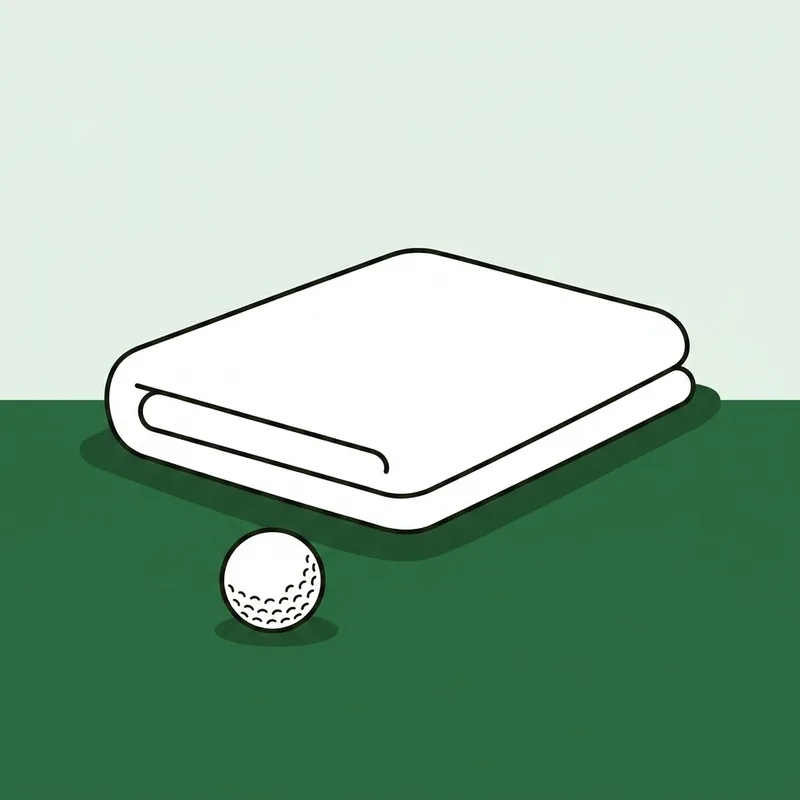
- The towel drill four to six inches behind the ball gives immediate honest feedback.
- While rebuilding, use an 8 or 9 iron and roll it. The margin for error is far bigger.
Common questions
Why do I keep chunking my chip shots?
The lowest point of your swing arc is behind the ball, so the club reaches the ground first. That is nearly always caused by trying to help the ball into the air, which hangs the weight back and drops the hands behind the ball. Get the weight forward and hit down on it.
What is a chili dip in golf?
Slang for a badly chunked chip, where the club digs into the turf behind the ball and the ball travels a few feet. It is the same fault as a fat chip, just the more colourful name for it.
Should I hit down on a chip shot?
Yes. Striking the ball first and the turf after is what produces both height and spin. The club's loft launches the ball, so trying to lift it with your hands is what causes the fault in the first place.
Where should the ball be in my stance when chipping?
Centre of stance or just back of it for a standard chip. Further back produces a lower, more running shot with a bigger margin for error. Very far forward is what most chunkers do, and it puts the ball past the low point of the arc.
How much weight should be on my front foot when chipping?
About 60 to 70%, set at address and held there throughout. Unlike a full swing there is no weight shift in a chip, so the weight starts forward and stays forward. Any movement back during the stroke drops the low point behind the ball.
Why do I chunk chips but hit my irons fine?
Because a full swing has a natural forward weight shift that puts the low point ahead of the ball automatically, and a chip has none. The chip requires you to pre-set that position at address. It is also a shorter, slower motion where a small hand movement has a proportionally much larger effect.
Does a shorter backswing help stop chunking?
Yes, considerably, because it lets you accelerate through the ball instead of decelerating. A long backswing on a short chip has to be slowed down, and a decelerating club bottoms out earlier. Control distance with backswing length and keep the acceleration the same.
Should I use a lob wedge for chipping?
Not while you are chunking. A lob wedge has the most loft and often the least forgiving sole, which magnifies a slightly early strike. An 8 or 9 iron played low and running is far more reliable and covers most greenside situations.
Are chunked chips the same as the chipping yips?
Not usually. A chunk is a mechanical low point error that responds to setup changes. The yips are an involuntary movement, typically a flinch or a freeze, that persists even when the mechanics are correct. If setup and drills produce no change at all over several weeks, it is worth reading about the putting yips, since the same principles apply.
How long does it take to stop chunking chips?
The setup change can work immediately, and most golfers see a difference within one session with the towel drill. Making it survive pressure takes about three weeks of two or three short sessions, because the underlying instinct to lift the ball takes longer to fade than the technique takes to learn.
Tom Ashworth
Tom Ashworth is a PGA Professional who has taught golf since 2012, working mainly with beginners and mid-handicappers at club level in Surrey. He reviews the instruction guides on Learn Golf for technical accuracy before they publish.
Most of his teaching is with players in their first three years of the game, and most arrive having been told too much: six swing thoughts collected from videos, half of them contradicting each other. His approach is to check the grip and the alignment before touching the swing, on the basis that most bad ball flight is decided at address.