
A good drive that finished four yards too far right, and now there is 150 yards to the green from flat sand with a low lip in front. Most golfers make this worse, because the only bunker shot they have been taught is the one where you deliberately miss the ball. This guide covers the shot that needs the opposite: clean contact, ball before sand, and a decision made before the club is chosen.
The opposite of the shot you already know
In a greenside bunker the club never touches the ball. It enters the sand a couple of inches behind, cuts a wedge of sand from underneath, and the ball rides out on top of it. That technique is set out in the greenside bunker guide and it is the right answer to that shot.
Here it is the wrong answer. Sand absorbs an enormous amount of energy, so any sand between the clubface and the ball costs distance you cannot afford over 150 yards. The club has to reach the ball first and the sand afterwards, or ideally barely at all.
That inversion is the whole difficulty. A golfer who has learned to splash a ball out of a greenside bunker has trained an instinct that is actively harmful here, and it does not switch itself off just because the bunker is further from the green.
The lip decides the club before anything else
The first decision is not what distance you want. It is what trajectory the bunker will allow, and the lip settles that before you have looked at a yardage.
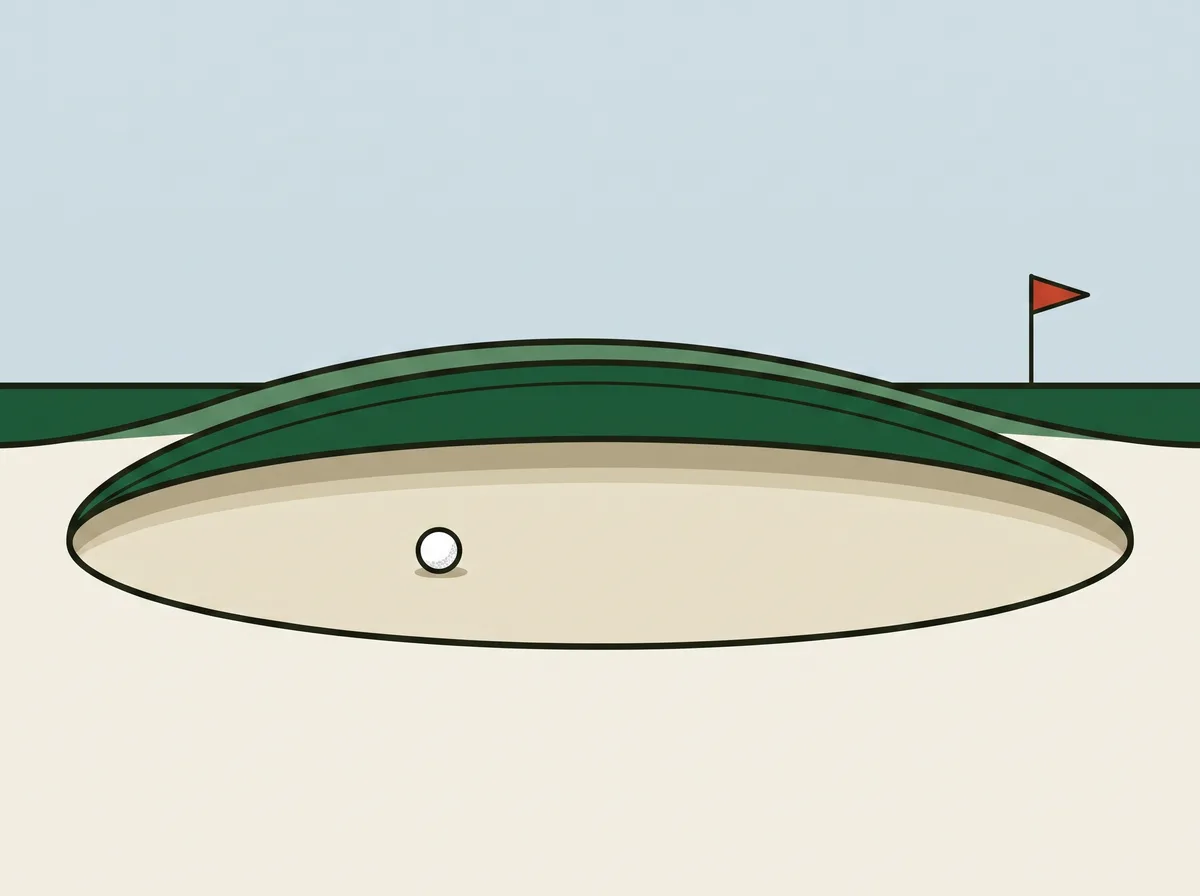
Stand behind the ball and look at the top of the lip, then at the ball. The steeper the lip and the closer the ball sits to it, the more loft you need and the less distance is available. That is a fact about the bunker rather than a judgement about your ability, and arguing with it is how one bunker shot becomes two.
| What is in front of you | Realistic play |
|---|---|
| Flat sand, no lip at all | Play the yardage with the club you would use from grass |
| Low lip, ball several paces back from it | Mid iron or long iron, checking the flight will clear it |
| Moderate lip, ball close to it | Short iron, advance the ball and give up the green |
| Steep lip within a pace or two | Wedge, out sideways or forward onto grass |
| Ball resting against the face | Play out backwards, or take relief under the Rules |
A useful check costs nothing. Hold the club you want to use out in front of you without touching the sand, sight along the face, and see whether that launch angle clears the top of the lip with room to spare. Most golfers find they need one or two clubs more loft than they assumed, and learning that before the swing rather than after is the difference between a bogey and a triple.
The setup
Every element aims at one thing: making sure the club arrives at the ball rather than behind it. Several are the exact reverse of the greenside setup.
- Press your feet lightly into the sand, just enough for a stable base and no further. Do not dig in.
- Grip down about an inch on the handle to compensate for having sunk slightly into the surface.
- Play the ball in the middle of your stance or a fraction back of where you would normally have it for that club.
- Stand a touch taller than usual with the weight even or slightly on the lead foot.
- Keep the stance square to the target. There is no open stance and no open face on this shot.
- Set your hands level with the ball or barely ahead, and pick a precise spot on the back of the ball to look at.
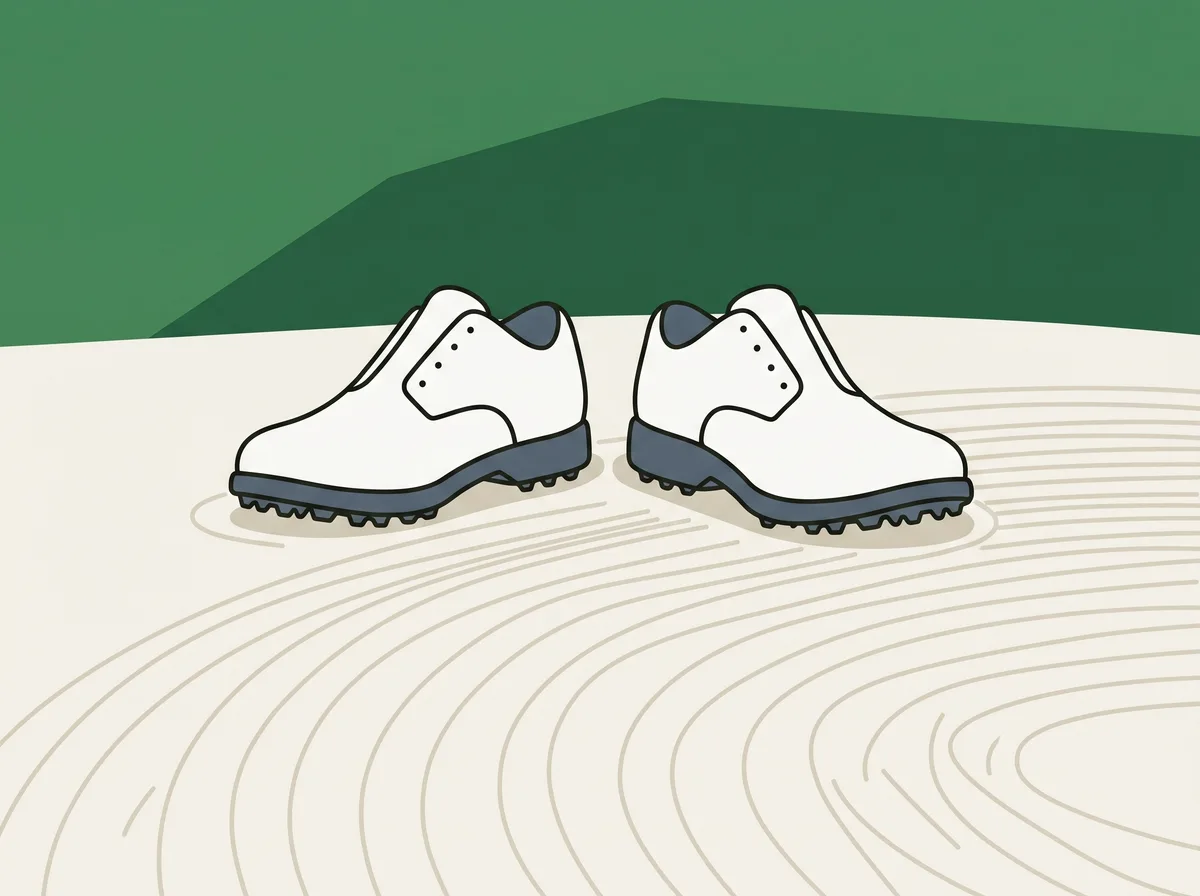
Digging in is the most common error and an understandable one. It is the first instruction in every greenside bunker lesson, it feels stable, and it lowers the bottom of your swing by however far you sank. From 150 yards that lowered arc puts the club into the sand behind the ball, and a fat strike here is close to a wasted shot.
What clean contact actually feels like
The strike this shot needs is one most golfers have spent years trying to avoid, and it feels wrong the first several times.
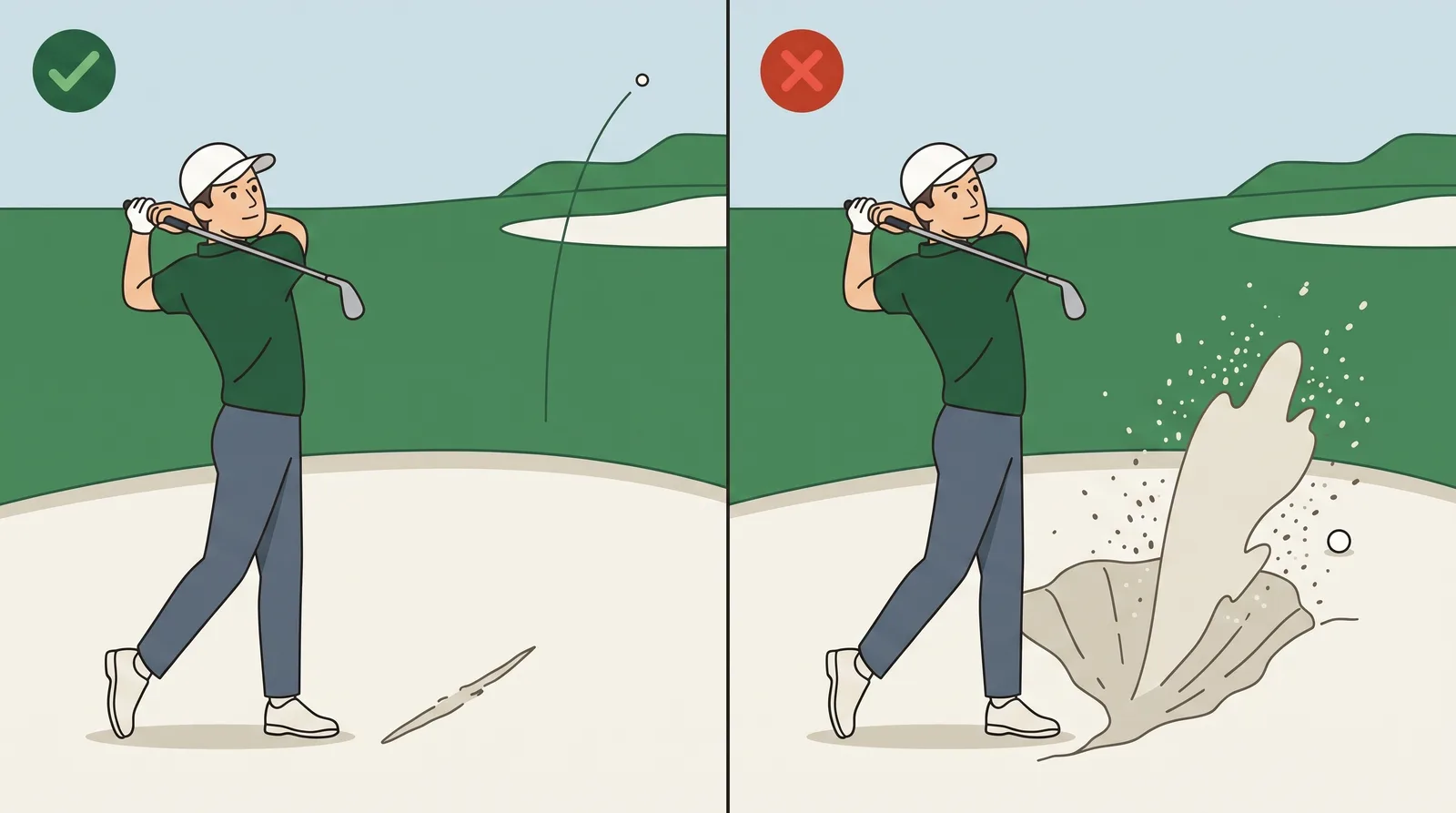
TrackMan describes low point as the lowest place on the swing arc, sitting after impact whenever the attack angle is negative. That is the position you are trying to produce here, and it is why the strike feels high on the ball.
The asymmetry is worth holding on to. On grass, thin and fat are roughly equally bad. In sand they are not close, because a fat strike loses most of the shot. If you are going to miss, miss thin.
The swing
Three adjustments, and none of them is about hitting the ball harder.
The legs go quiet. You cannot push against sand the way you push against turf, so a normal lower body drive simply slides your feet and moves the bottom of the swing. Keep the knees soft and let the arms and chest do most of the work.
The swing shortens to about three quarters, because a full swing from an unstable base is where the strike gets lost, and the distance lost to a shorter swing is far less than the distance lost to catching it fat.
The head stays level. Rising even slightly produces a thin one that catches the lip, and dropping produces the fat one. Steady height matters more here than anywhere else on the course, and it is the same demand made by every good iron strike, covered in how to hit irons.
| Strike | Where the club meets the sand | What it costs |
|---|---|---|
| Clean pick | At the ball, marking the sand just in front of it | Nothing, this is the shot |
| Slightly thin | Nothing before the ball, a low flight | Some height, very little distance |
| Slightly fat | An inch or so behind the ball | A large share of the distance |
| Properly fat | Two inches or more behind, as in a greenside shot | Most of the shot, and often the bunker again |
The rule that catches people out
A fairway bunker is a bunker in the eyes of the Rules however far it sits from the green, so every restriction that applies greenside applies here.
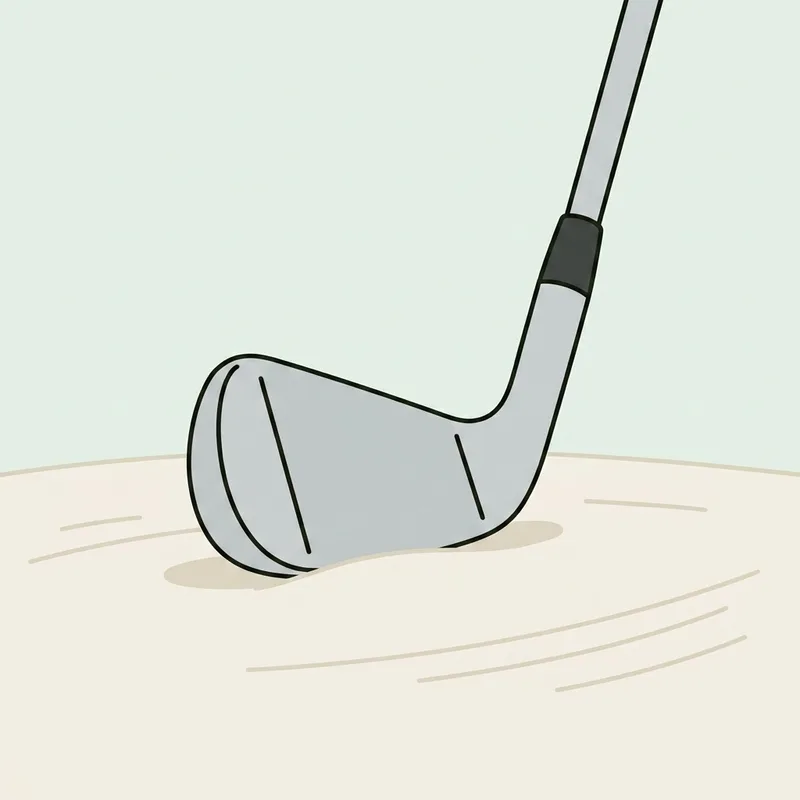
Two things follow. You cannot ground the club behind the ball at address, so hover it, which most golfers find easier than expected once they know it is required. And you cannot take a practice swing that brushes the surface, so rehearse outside the bunker where the club can touch grass.
Whether to attempt the shot at all
The honest answer, quite often, is no. This is one of the most expensive lies in amateur golf and the temptation to rescue the hole from it is where the real damage happens.
Read those together and the strategy writes itself. Being in the sand has already cost you, so the job is to stop it costing more rather than to win the shot back. A ball advanced 120 yards to the front of the green is a good outcome and a ball still in the bunker is how one poor drive becomes a triple bogey.
The practical version is one question asked before the club comes out: what is the worst realistic outcome of this shot. If the answer includes still being in the bunker, pick more loft. That is the most valuable piece of course management available on any hole with sand on it.
Choosing the club
Once the lip has ruled out the clubs it rules out, take one more club than the yardage suggests. You are gripping down, swinging at three quarter length and standing on an unstable surface, and all three take distance off.
Then check that extra club against the lip again, because one more club means less loft and a lower flight. Where the two demands conflict, the lip wins every time. If you cannot clear it with the club that reaches the green, the green is not available on this shot. Knowing what each club actually carries makes the decision quicker, and the reference points are in the golf club distance chart.
When the lie changes the plan
The technique above assumes a clean lie sitting on top of flat, reasonably firm sand. Three situations change it.
A ball half buried in its own crater cannot be picked clean at all and needs a steep digging swing with a square or closed face, which is the opposite of everything here. That is set out in the plugged lie, and it usually means the green is off the table whatever the yardage says.
A ball on a slope follows the same principles as any uneven lie, with the shoulders matching the slope. Bunkers are steeper than they look, and a downhill lie takes loft off the club just when the lip needs more of it.
Wet or compacted sand works in your favour. It gives a firm base, so the club skids rather than digs and a slightly heavy strike is far less punished. Dry powder is the opposite, and on a dry summer course a strike that would have been fine in April can lose almost the whole shot.
Practising it
Almost nobody practises this shot, which is part of why it costs so much. Any practice bunker with room to swing a full club will do, and the feedback is better here than anywhere else because the sand records exactly what the club did.
The mis-hit worth knowing about is the fat one, and its causes here are the same as everywhere else: weight hanging back, deceleration, and a low point behind the ball. The wider diagnosis is in how to stop hitting fat shots.
Key takeaways
- A fairway bunker shot is the opposite of a greenside one. The club must reach the ball before the sand.
- Check the lip before the yardage. The lip sets the maximum club and the distance is the second question.
- Press your feet lightly into the sand. Digging in lowers your swing arc into the sand behind the ball.
- Grip down about an inch, play the ball just back of your normal position and stand a touch taller.
- Keep the lower body quiet and swing at about three quarters. You cannot push against sand.
- A slightly thin strike costs very little here. A slightly fat one costs most of the shot, so miss thin.
- Take one more club for the shorter swing, then check that club against the lip again.
- Rule 12.2b prohibits grounding the club behind the ball or touching the sand in a practice swing, in any bunker.
- Shot Scope names the fairway bunker as the most expensive place to hit a tee shot, at 1.4 shots per round.
- Advancing the ball is usually the win. Trying to reach the green is how a poor drive becomes a triple bogey.
Common questions
How do you hit out of a fairway bunker?
Check that you can clear the lip, take one more club than the yardage, and set up with your feet barely pressed into the sand, gripped down about an inch, with the ball just back of your normal position. Keep the lower body quiet, swing at three quarters, and strike the ball before the sand.
Should you dig your feet in for a fairway bunker shot?
No, and this is the biggest difference from a greenside shot. Digging in lowers you by however far you sink, which drops the bottom of your swing arc behind the ball and produces the fat strike this shot cannot afford. Press in only enough to feel stable.
What club should I use from a fairway bunker?
Whatever the lip allows first, and then one more club than the distance suggests. Mid and short irons are safest, because they have enough loft to clear a low lip and a thin enough sole to cut into the sand. A ball advanced to the front of the green beats a ball still in the bunker.
Can you use a hybrid or fairway wood from a fairway bunker?
You can, and it is riskier than it looks. The wide rounded soles that make hybrids easy to hit from grass encourage them to skid on sand and catch the middle of the ball, and their lofts struggle with any lip. From flat sand with no lip they work, and otherwise an iron is safer.
Why do I hit fairway bunker shots fat?
Almost always because you dug your feet in and lowered your swing arc, or because your weight hung back through impact. Both put the low point behind the ball, and sand punishes that far more severely than turf does. Stand higher, grip down, and keep your head at a steady height.
How far back should the ball be in my stance?
In the middle of your stance or a fraction back of where you would normally play it with that club. Back of centre keeps the club descending when it meets the ball, which is the whole requirement of the shot. Too far back removes loft you may need for the lip.
Can you ground your club in a fairway bunker?
No. Rule 12.2b(1) applies to every bunker regardless of distance from the green, so you must not touch the sand with your club immediately in front of or behind the ball, in a practice swing, or in your backswing. Hover the club and rehearse outside the bunker.
Should I just chip out sideways from a fairway bunker?
Often, yes. If the lip demands more loft than the yardage allows, or the sand is soft, or the ball sits close to the face, advancing it onto grass protects the score. Tracked amateur data has the fairway bunker as the most costly tee shot miss, and the cost comes mostly from second attempts.
What if my ball is on a slope inside the bunker?
Treat it as an uneven lie first and a bunker shot second, with your shoulders matching the slope and the ball position moving with it. A downhill lie takes loft off the club, which is dangerous with a lip in front, and an uphill lie adds loft and costs distance.
Tom Ashworth
Tom Ashworth is a PGA Professional who has taught golf since 2012, working mainly with beginners and mid-handicappers at club level in Surrey. He reviews the instruction guides on Learn Golf for technical accuracy before they publish.
Most of his teaching is with players in their first three years of the game, and most arrive having been told too much: six swing thoughts collected from videos, half of them contradicting each other. His approach is to check the grip and the alignment before touching the swing, on the basis that most bad ball flight is decided at address.