
A hybrid is the easiest long club in the bag to hit and the easiest one to hit badly, because almost everybody sets up to it as though it were a small fairway wood. It is not. It is a long iron with a wider sole and a lower centre of gravity, and it wants an iron strike. This guide covers what the club actually is, the setup, the shots it is built for, and the data on whether it beats the iron it replaced.
Left and right below assume a right-handed golfer. The lead side is the one nearest the target, so a left-handed golfer reads lead foot as the right foot and nothing else changes.
What a hybrid actually is
The name causes the problem. Hybrid suggests half wood and half iron, so golfers split the difference in their setup and get neither.
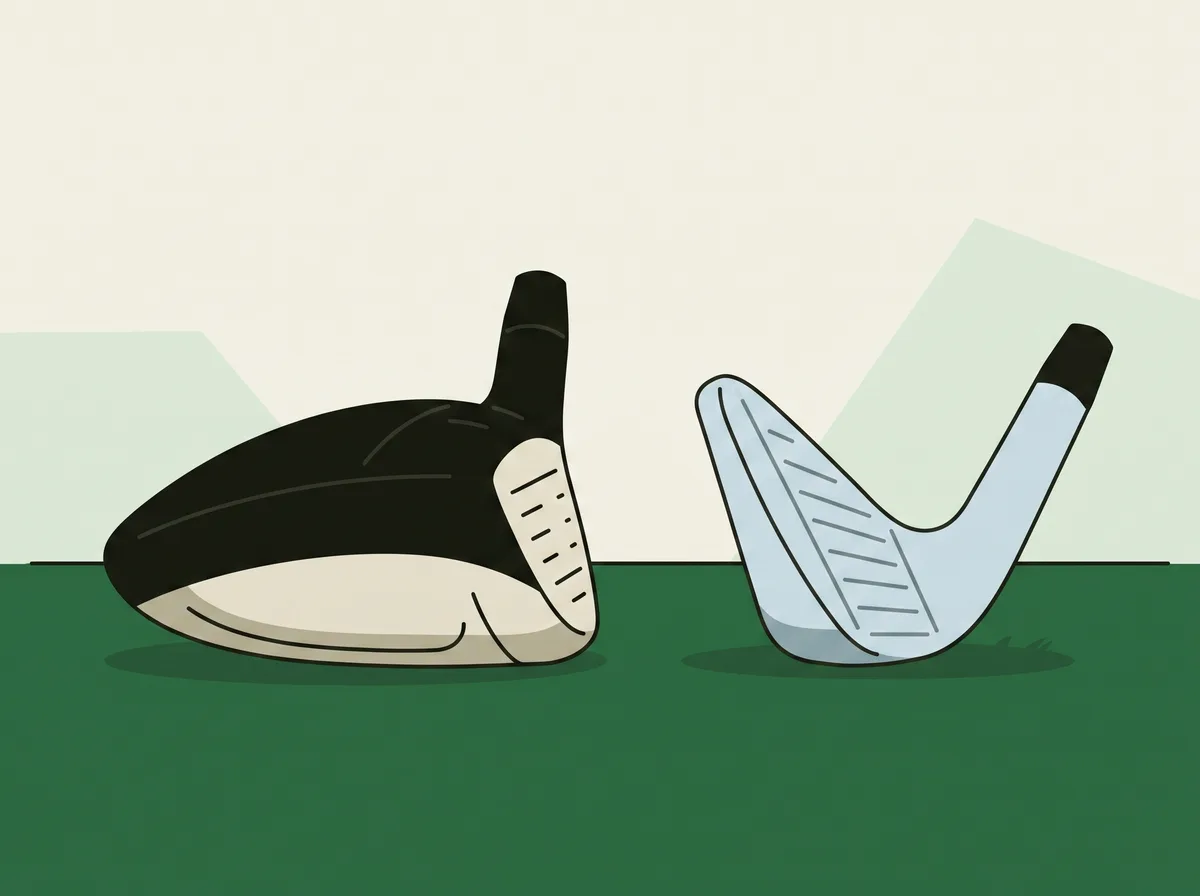
Look at the club instead of the name. A hybrid is built on an iron's shaft length, or very close to it, with an iron's lie angle and an iron's loft. What it borrows from a wood is the head: a deeper body that pushes weight low and back, and a wider sole that slides rather than digs. The shape is a long iron that has been made forgiving, which is exactly what it was invented for.
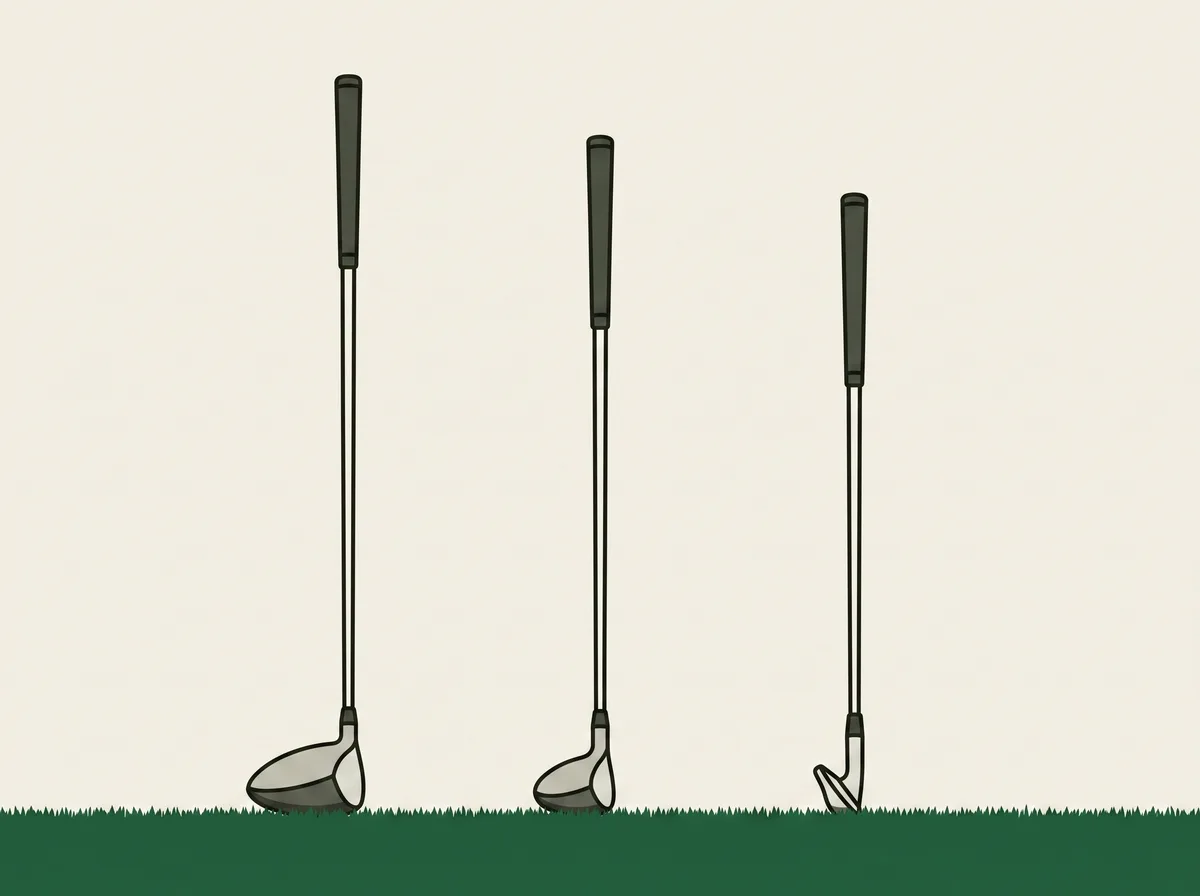
That matters because shaft length is what dictates how you stand to a club and where the ball has to sit. A hybrid is only an inch or so longer than the iron it replaces, and several inches shorter than a fairway wood. Everything about the setup follows from that one measurement.
The setup, which is an iron setup
Nothing here is a special technique. It is your 6 iron setup with the ball nudged a fraction forward.
- Stand with your feet about shoulder width apart, the same as a mid iron. Not driver width.
- Play the ball about one ball forward of centre, roughly where a 6 iron sits, and no further.
- Let your hands sit a fraction ahead of the ball so the shaft leans very slightly toward the target. This is the opposite of a fairway wood and it is deliberate.
- Sole the club so the wide base sits flat on the turf. If the toe is in the air you are standing too far away, which flattens the arc and produces thin strikes.
- Let your weight move onto the lead foot through the shot, exactly as with any iron. The low point has to arrive after the ball.
Held side by side, the three clubs sort themselves out.
| Setup point | Fairway wood | Hybrid | 6 iron |
|---|---|---|---|
| Shaft length | Longest of the three | Close to the iron | Shortest of the three |
| Ball position | Just inside the lead heel | About one ball forward of centre | About one ball forward of centre |
| Stance width | Close to driver width | Shoulder width | Shoulder width |
| Hands at address | Level with the ball | A fraction ahead | A fraction ahead |
| Strike | A brush, close to level | A small descending blow | A descending blow |
| What it leaves behind | A faint scuff | A bruise or a thin divot | A clear divot past the ball |
The full ball position chart for every club in the bag, including how far it moves for a driver, is in ball position by club.
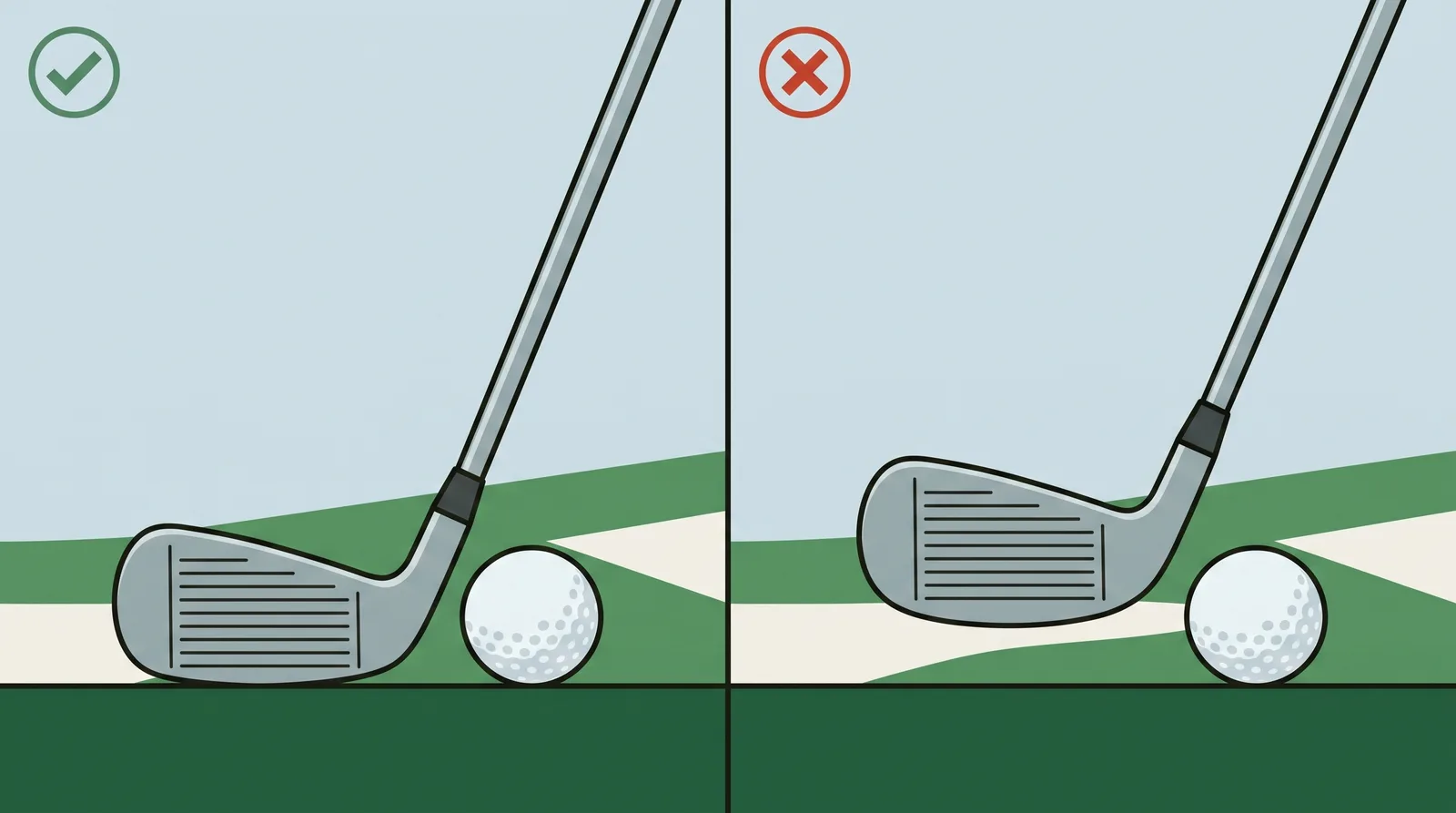
If the thin shot is the one you keep seeing, it has causes beyond ball position and they are worked through in how to stop topping the ball. The strike itself, and the four measurements that decide it, are in the golf impact position.
Does the hybrid actually beat the iron
This is the rare golf argument with tracked amateur data behind it, and the data is one sided.
Two things are worth pulling out of that. The first is that the hybrid gains most where the lie is worst, which is why the rough numbers are the biggest in the set. The second is that the club is longer than the iron it replaces, so a 4 hybrid does not slot straight into a 4 iron's yardage.
That has a practical consequence for the bottom of your bag. If you drop a 4 iron for a 4 hybrid without checking the numbers, you may end up with two clubs going the same distance and a gap somewhere else. Work out the real carries and lay them out properly using the golf club distance chart, and check the lofts you are actually carrying against the golf iron loft chart while you are at it.
Which iron does yours replace
There is no standard here, because loft numbering on hybrids is inconsistent between makers and iron lofts have crept stronger for years. The usual pairings are a starting point rather than a rule.
| Hybrid | Loft, roughly | Iron it usually replaces |
|---|---|---|
| 2 hybrid | 17 to 18 degrees | 2 iron, or a 5 wood slot |
| 3 hybrid | 19 to 21 degrees | 3 iron |
| 4 hybrid | 22 to 24 degrees | 4 iron |
| 5 hybrid | 25 to 27 degrees | 5 iron |
| 6 hybrid | 28 to 30 degrees | 6 iron |
Match the carry distance, not the number stamped on the sole. A 4 hybrid that flies your 3 iron's distance is a 3 hybrid as far as your bag is concerned.
The three shots a hybrid is built for
Owning the club is not the same as knowing when it earns its place. There are three situations where it is clearly the right answer.
The long approach is the obvious one. From 190 to 220 yards into a green, a hybrid launches higher than a long iron with the same loft, which means it lands steeper and stops sooner. That is the difference between holding a green and running through the back of it.
Out of the rough is the one most golfers underuse. The narrow leading edge of a long iron snags in thick grass and twists, while the wide sole of a hybrid pushes through it. That is exactly what the tracked distance gap from the rough describes, and the wider technique for those lies is in how to hit out of the rough.
Off the tee on a tight par 4 is the third. A hybrid is shorter and more lofted than a fairway wood, so it curves less for the same mistake and is far easier to keep in play. Tee it very low, barely clear of the turf, and play it exactly as you would off the ground.
Three drills with a dose
Each one trains the descending strike, because that is the only thing standing between most golfers and a usable hybrid.
Key takeaways
- A hybrid is a long iron with a forgiving head, not a small fairway wood.
- Its shaft length is close to an iron's, which is why it takes an iron setup.
- Ball about one ball forward of centre, stance at shoulder width, hands a fraction ahead.
- Strike it with a small descending blow and let the wide sole stop the club digging.
- Sweeping it like a wood moves the low point behind the ball and produces the thin shot.
- Shot Scope data has hybrids hitting more greens, finishing closer and missing tighter at every handicap.
- The gain is largest out of the rough, where a long iron's thin leading edge snags.
- A hybrid carries further than the iron it replaces, so re-check your gaps rather than assuming.
- Off a tight tee, tee it barely clear of the turf and play it exactly as you would off the ground.
Common questions
How do you hit a hybrid properly?
Set up to it as you would a 6 iron. Ball about one ball forward of centre, feet shoulder width, hands a fraction ahead of the ball, weight moving onto the lead foot through the shot. Then make a normal iron swing and let the club descend into the ball. The wide sole prevents it digging.
Where should the ball be in my stance with a hybrid?
About one ball forward of centre. That is roughly where a 6 iron sits and considerably back of where a fairway wood sits. Pushing it up toward the lead heel is the single most common hybrid error and it causes both the thin and the fat miss.
Do you hit down or sweep a hybrid?
You hit down, with a small descending strike that leaves a bruise or a thin divot. Sweeping is what a fairway wood wants. The confusion comes from the head shape, but the shaft length is what decides how a club is played, and a hybrid's shaft is an iron's shaft.
Is a hybrid easier to hit than a long iron?
On the tracked data, yes. Shot Scope found hybrids hit more greens, finished closer to the pin and produced tighter misses at 20 handicap, 10 handicap and scratch alike, with the biggest gains coming out of the rough. The head is deeper and the weight sits lower, so the ball launches higher for the same loft.
What iron does a 4 hybrid replace?
Usually a 4 iron, but check the carry rather than the number. Hybrid lofts are not standardised between makers, and modern iron lofts are stronger than they used to be. If your 4 hybrid flies past your 4 iron by fifteen yards, treat it as a 3 hybrid when you plan your gaps.
Why do I keep hitting my hybrid thin?
Almost always the ball is too far forward and your weight is hanging back, which puts the low point behind the ball. The club then arrives on the way up, the leading edge catches the middle of the ball, and it runs along the ground. Move the ball back to one ball forward of centre and let your weight travel through.
Can you hit a hybrid out of the rough?
Yes, and it is one of the club's best uses. The wide rounded sole pushes through grass that would snag the thin leading edge of a long iron. Move the ball back a fraction, grip a touch firmer, and expect the shot to come out lower and run more, because grass between the face and the ball kills spin.
Should I use a hybrid off the tee?
On a tight hole, often yes. It is shorter and more lofted than a fairway wood, so it curves less for the same face-to-path error. Tee it barely clear of the turf rather than at fairway wood height, because a high tee tempts you back into sweeping it.
How far should a hybrid go?
Somewhere between the iron it replaced and the fairway wood above it, and Shot Scope puts the gain over the equivalent iron at 8 to 12 yards. Measure yours from a good lie over ten shots and use that average, because a hybrid's higher launch makes the single best strike unusually flattering.
How many hybrids should I carry?
Most golfers are well served by one or two, replacing the 3 and 4 irons. Slower swing speeds often benefit from carrying three and starting the irons at a 6. The test is simple: if you avoid a club on the course, it is not doing a job.
Does hybrid setup change for left-handed golfers?
Only in the naming. Lead foot means the foot nearest the target, so a left-handed golfer moves the weight onto the right foot and plays the ball one ball forward of centre just the same. Ball position, strike and every drill are identical.
Tom Ashworth
Tom Ashworth is a PGA Professional who has taught golf since 2012, working mainly with beginners and mid-handicappers at club level in Surrey. He reviews the instruction guides on Learn Golf for technical accuracy before they publish.
Most of his teaching is with players in their first three years of the game, and most arrive having been told too much: six swing thoughts collected from videos, half of them contradicting each other. His approach is to check the grip and the alignment before touching the swing, on the basis that most bad ball flight is decided at address.