Impact lasts around half a millisecond, and in that time the ball receives everything it will ever know about your swing. Speed, direction, curve, height and spin are all set in that window and nothing after it matters. This guide covers what the club has to be doing when it arrives, what the phrases people use around it actually mean, and how to get feedback on something too fast to feel.
Left and right assume a right-handed golfer. What produces impact is the sequence covered in the golf downswing, and this page is about the quarter second that sequence delivers.
Impact is four measurements, not a pose
The photograph of a tour player at impact is a useful reference and a terrible practice target. What matters is not what the position looks like but what the club is doing, and that comes down to four numbers a launch monitor can read.
Attack angle is whether the club head is moving up or down when it reaches the ball. TrackMan's data puts the PGA Tour average at minus 3.7 degrees with a 6 iron and minus 0.9 degrees with a driver, against plus 2.8 degrees for LPGA Tour players with a driver. The average male amateur, at around a 14.5 handicap, hits down on the driver by 1.8 degrees, which is the wrong direction for a teed ball.
Dynamic loft is how much loft the face actually delivers, which is rarely what is stamped on the sole. TrackMan reports 20.2 degrees for a PGA Tour 6 iron and 12.8 degrees with a driver, and notes that shaft bend, release, face angle and strike location all change it.
| Club and player | Attack angle | Dynamic loft | Spin loft |
|---|---|---|---|
| PGA Tour, driver | -0.9° | 12.8° | 14.7° |
| PGA Tour, 6 iron | -3.7° | 20.2° | 24.3° |
| LPGA Tour, driver | +2.8° | 15.5° | 15.0° |
| Male amateur, 14.5 handicap, driver | -1.8° | 15.1° | Not published |
Spin loft is the third column and the one that explains compression. TrackMan defines it as the angle between where the club head is moving and where the face is pointing, roughly dynamic loft minus attack angle. A larger spin loft produces more spin and a lower smash factor, which is the technical way of saying the ball comes off softer and spinnier than it should.
Hands ahead, and what it actually does
Forward shaft lean is the visible part of a good iron impact and the most misquoted instruction in golf. The hands being ahead of the club head does not push the ball forward or add power on its own. What it does is reduce dynamic loft, so a 7 iron delivers something closer to a 6 iron of loft and the ball leaves lower and faster with less spin.
It is also not something the hands do. Lean appears because the body has already moved into the shot and the club is still trailing the hands when it arrives, so it is a position you are delivered into rather than one you push the handle towards. Golfers who manufacture it with the wrists get the shaft angle and none of the speed that was supposed to come with it.
Too much lean is a real fault, not a theoretical one. Strip enough loft off a wedge and the ball comes out low, running and impossible to stop, and the leading edge starts digging. Shaft lean is a range with an optimum in the middle rather than a quality you maximise.
Compression is a description, not an action
Golfers talk about compressing the ball as though it were something you do. It is not an instruction. It is a description of what happens when the club arrives with a low spin loft, a centred strike and enough speed, and the ball deforms against the face rather than glancing off it.
The practical version is that compression follows from the first three columns of the table above. Reduce spin loft by delivering less dynamic loft on a descending strike, hit the middle of the face, and the ball compresses. There is no separate compressing move, and any coach selling one is selling the outcome as the method.
Where the low point sits
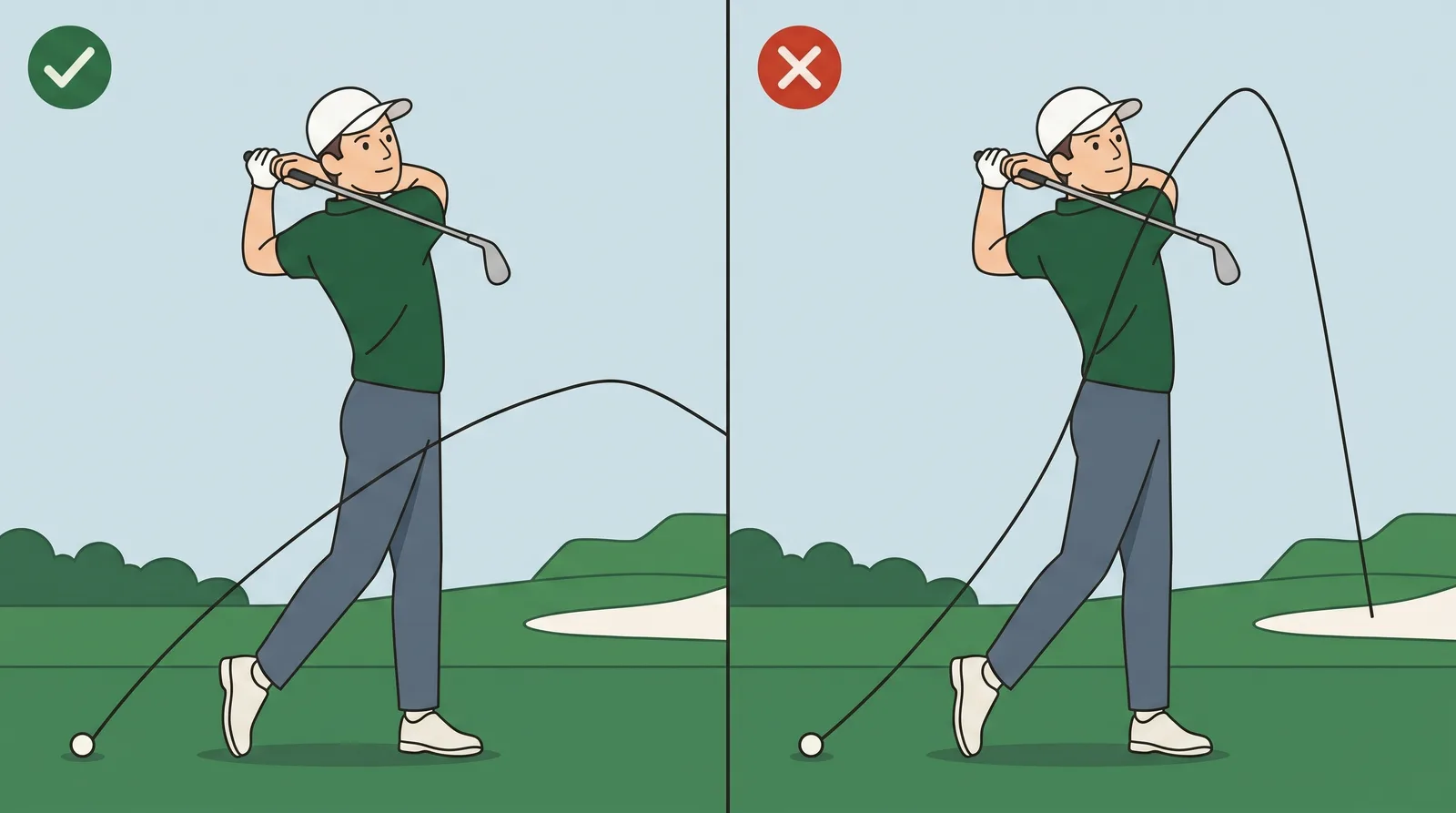
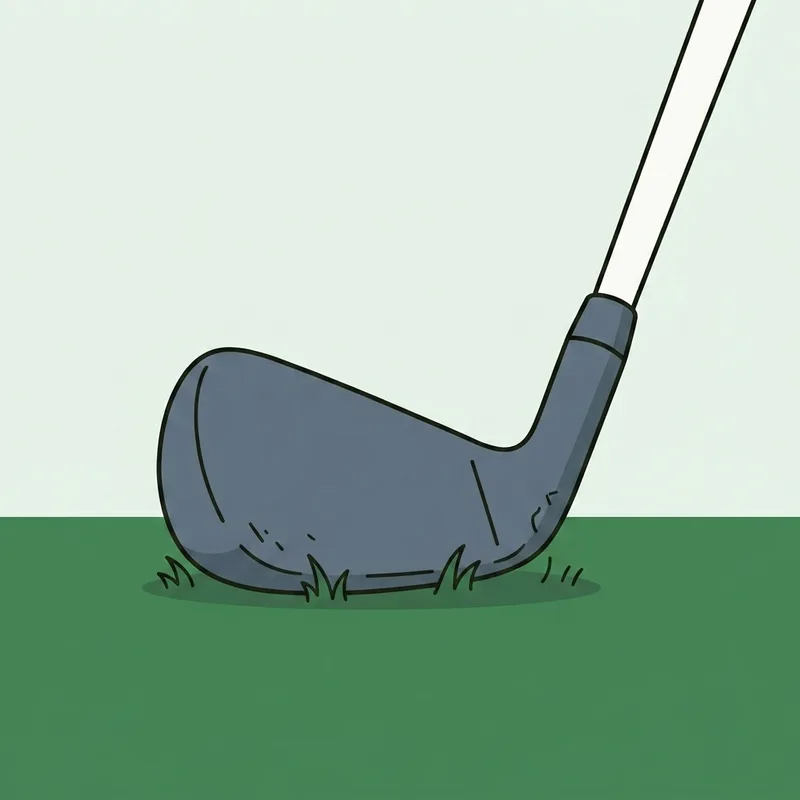
The bottom of the swing arc has to be in front of the ball for a ground strike. TrackMan describes low point as another way of expressing attack angle: a negative attack angle means the lowest point of the arc happens after impact, and a positive one means it happened before.
For most amateurs the low point is behind the ball, and everything follows from that. Behind the ball by an inch is a fat shot. Behind the ball with a compensating lift is a thin shot. Both come from the same error, which is why golfers who alternate fat and thin shots in the same session are not inconsistent so much as consistently wrong in one place. Those two misses have their own pages in how to stop hitting fat shots and how to stop topping the ball.
Ball position moves the low point without changing the swing, which is why it is the first thing to check and the cheapest thing to change. That is covered in ball position by club.
Strike location, the number nobody measures
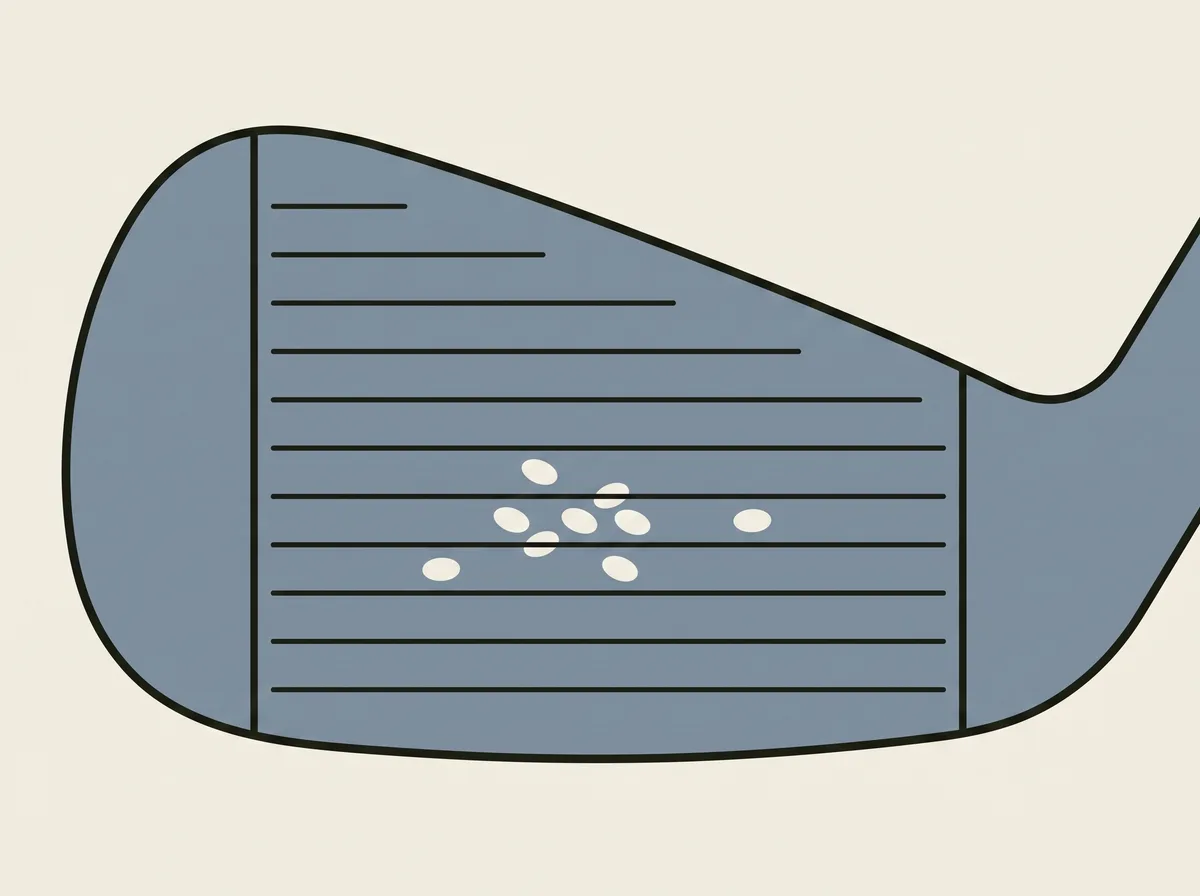
The fourth measurement is where on the face the ball made contact, and it is the one amateurs almost never check despite it being the easiest to see. Strikes low on the face launch lower and spin more; strikes towards the heel and toe lose speed and start the ball offline through gear effect.
This matters more than most technique changes because it is immediate. A golfer who moves their strike pattern half an inch towards the centre gains ball speed without changing anything about how they swing, and the feedback loop is a two pound can of spray.
| Feedback method | What it tells you | Cost |
|---|---|---|
| Foot spray or impact tape on the face | Exactly where the ball met the face | A few pounds, lasts months |
| A tee pushed almost flush two inches past the ball | Whether the low point is ahead of the ball | Nothing |
| Where the divot starts relative to the ball | Same, on turf rather than a mat | Nothing |
| Phone in slow motion, down the line, hip height | Shaft lean and body position at impact | Nothing |
| Launch monitor | All four measurements, in numbers | Varies widely |
Numbers only help if you know what they mean, and the vocabulary is worth learning before you buy anything. Start with launch monitor data explained.
Why you cannot practise impact directly
The club passes through impact at speed and there is no time to make a decision there, so any drill claiming to teach the position itself is really teaching something adjacent. This is where a lot of instruction quietly misleads people.
Three drills with real feedback
Each of these attaches a measurement to a swing, which is what separates practice that transfers from practice that passes the time.
What impact should feel like
Almost nothing, when it is right. A centred strike on a well-delivered iron sends very little back up the shaft, and the sound is a short dull thump rather than a click. Golfers frequently describe their best iron shots as the ones they barely felt.
The thing you will notice is what happens after the ball has gone. If the low point was ahead of the ball, the club continues down and forward into the turf and the swing finishes on the lead side without effort. That continuation is not decoration; it is evidence the club was still accelerating, and it belongs to the follow through.
Applying all of this to actual shots on the course, club by club, is covered in how to hit irons.
Key takeaways
- Impact reduces to four measurements: attack angle, dynamic loft, spin loft and strike location.
- Tour players hit down about 3.7 degrees with a 6 iron and roughly level with a driver.
- Hands ahead reduces the loft the face delivers; it does not add power by itself.
- Compression is a description of low spin loft plus a centred strike, not a move.
- The low point must sit ahead of the ball for any shot struck off the ground.
- Fat and thin shots are usually the same error with different compensations.
- Strike location is the easiest of the four to measure and the least often checked.
- You cannot rehearse impact directly, so every drill needs external feedback.
- A correct strike feels like less, not more, and sounds duller than a mishit.
Common questions
What is the correct impact position in golf?
With an iron, the club is still descending, the hands are ahead of the club head, the weight is on the lead foot and the ball is struck before the turf. With a driver from a tee, the club should be travelling slightly upward instead, which is a setup change rather than a swing change.
What does hands ahead at impact actually do?
It reduces the loft the club face delivers, so the ball leaves lower and faster with less spin. It is not a source of power in itself, and pushed too far it strips so much loft that wedges come out low and run.
How do I compress the golf ball?
By delivering a descending strike with low spin loft and hitting the middle of the face. Compression describes what happens when those conditions are met; there is no separate action, and any instruction that treats it as a move is describing the result rather than the method.
Should I hit down on the ball with every club?
No. Irons and wedges off the ground want a descending strike. A driver from a tee wants the opposite, and tour data shows LPGA players hitting up on it by nearly 3 degrees. Fairway woods off the turf sit between the two.
Why do I hit fat and thin shots in the same round?
Because both come from a low point behind the ball. Fat is the uncorrected version and thin is the version where you lifted to avoid the ground. It is one fault with two outcomes rather than two separate problems.
How can I tell where I am hitting the face?
Foot spray or impact tape. A light coat on the face and five shots without wiping shows the pattern immediately, and it costs a few pounds. Most golfers who try it are surprised, and low on the face is by far the most common cluster.
Is there a drill for the impact position?
There are drills that change the things producing it, which is not quite the same. Short hip-high swings, a tee placed just past the ball, and a strike audit all give feedback you can act on. Rehearsing the pose itself tends to produce a golfer who decelerates into the ball.
What is spin loft?
The angle between the direction the club head is travelling and the direction the face is pointing, roughly dynamic loft minus attack angle. More spin loft means more spin and less efficient energy transfer; less means a more penetrating, faster ball.
Does impact position change for a driver?
Yes, and it is the one genuine exception. The club should be travelling slightly upward at a teed ball, which comes from ball position and a small tilt away from the target at address rather than from a different swing.
How long does it take to change an impact position?
Six to eight weeks of consistent practice with feedback, because you are changing where the bottom of the arc sits rather than a position you can see. Without feedback it can take years, which is why the drills on this page all attach a measurement to the swing.
Tom Ashworth
Tom Ashworth is a PGA Professional who has taught golf since 2012, working mainly with beginners and mid-handicappers at club level in Surrey. He reviews the instruction guides on Learn Golf for technical accuracy before they publish.
Most of his teaching is with players in their first three years of the game, and most arrive having been told too much: six swing thoughts collected from videos, half of them contradicting each other. His approach is to check the grip and the alignment before touching the swing, on the basis that most bad ball flight is decided at address.