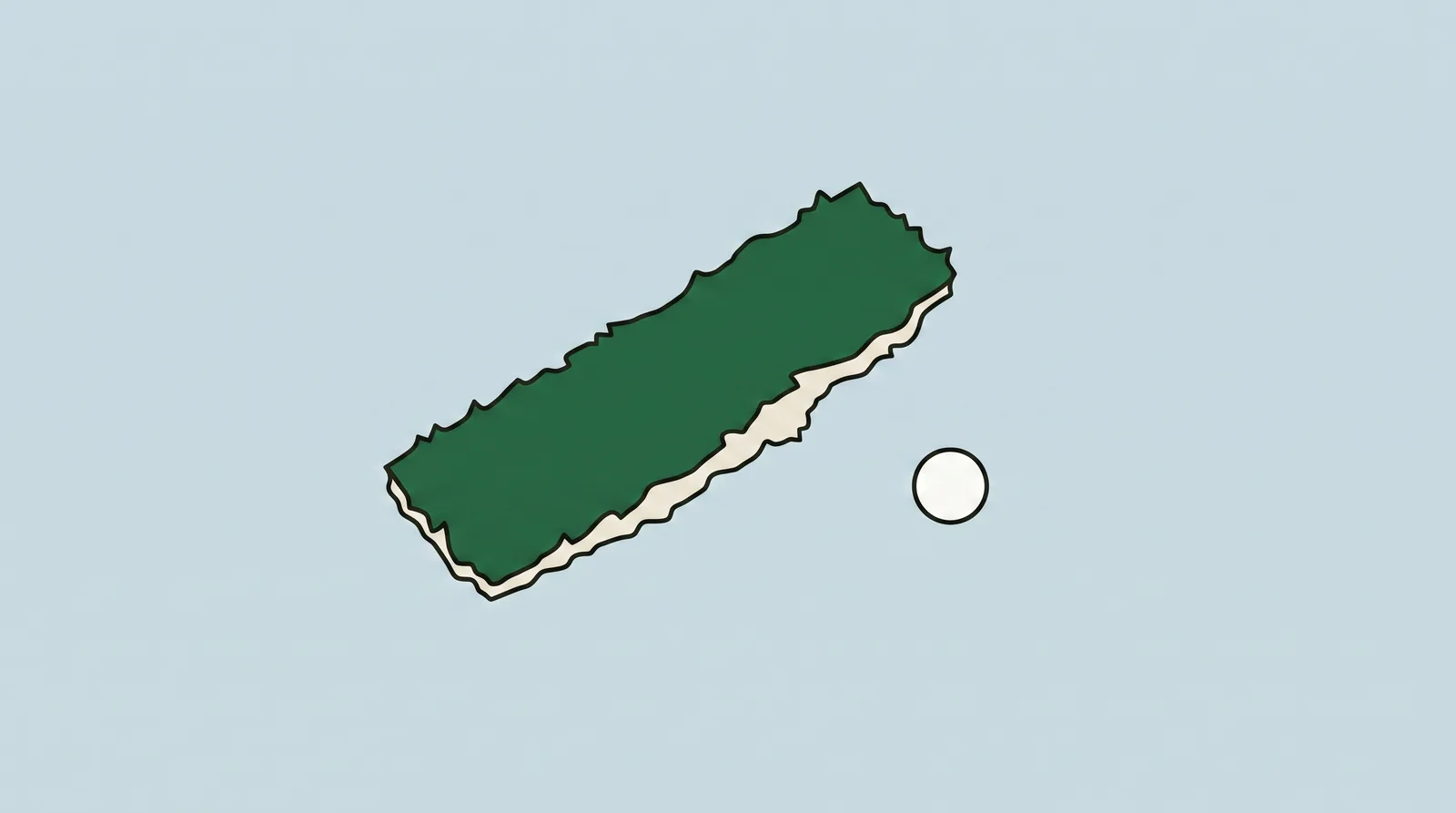
A fat shot takes a 150 yard club and produces 90 yards, and it takes the whole of your confidence with it. It is also the most mechanically simple fault in golf: the club reached the bottom of its swing before it reached the ball. This guide covers where that low point comes from, the four causes worth checking in order, and why the driving range often makes the problem invisible.
Every left and right below assumes a right-handed golfer. For a left-hander the whole fault mirrors: read lead foot as the right foot, trail foot as the left, and every drill works unchanged.
What a fat shot actually is
The club head travels on an arc, and that arc has a lowest point. Where that point sits relative to the ball decides everything about the strike.
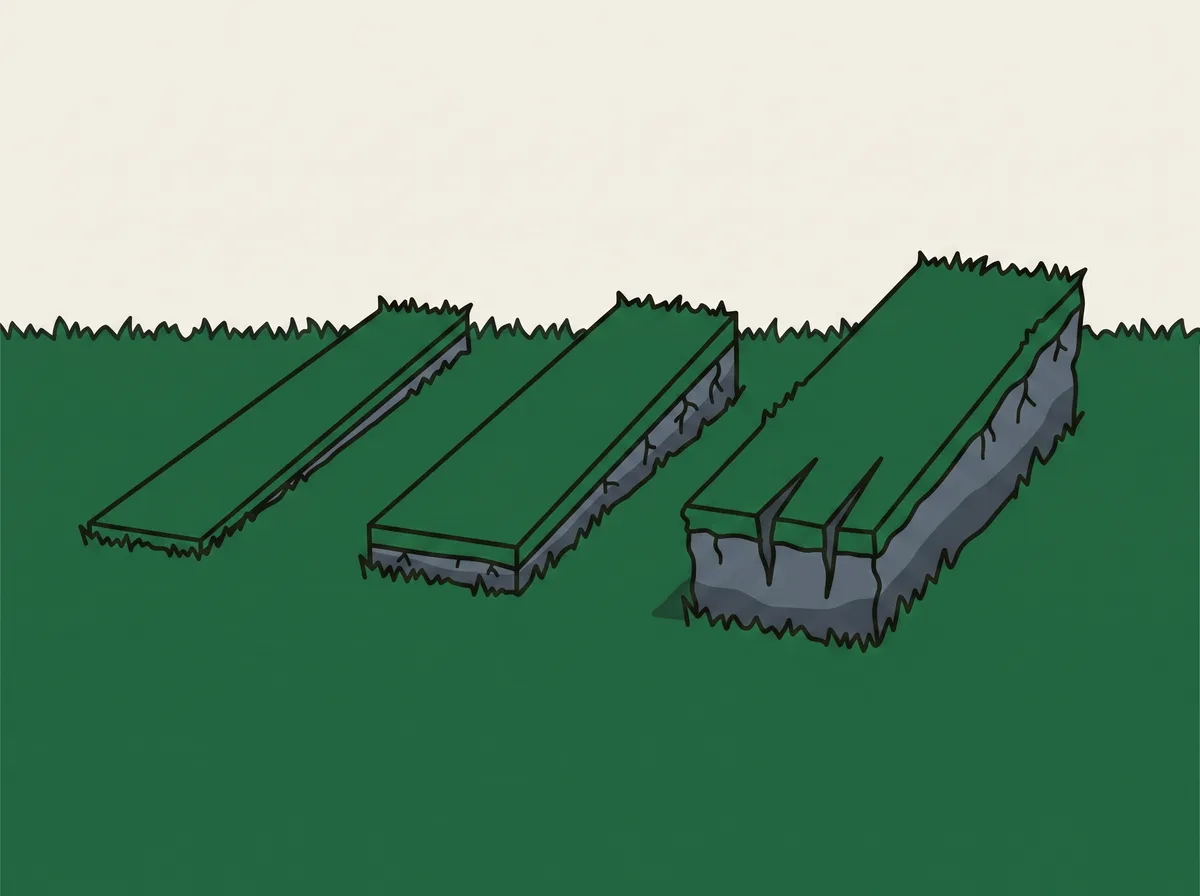
TrackMan measures it as low point and reports it as being before or after impact. With an iron you want it after the ball, so the sequence is ball first, then turf, and the divot begins on the target side of where the ball sat. A fat shot is the low point arriving before the ball instead, so the club digs in behind it and everything after that is deceleration.
Fat and thin are the same measurement pointing in opposite directions, and this is the only line in this guide about the other one. When the low point arrives too late, or the whole arc rises, the club catches the ball above its centre, and that is covered in how to stop topping the golf ball.
Low point is one of the six numbers TrackMan tells amateur golfers to learn, reported as a simple A or B for after or before. An iron should read A. A fat shot is a B where an A belonged.
The low point is not a mystery to locate. It sits roughly beneath your lead shoulder, and it goes wherever your lead shoulder goes. That single fact explains almost every cause below.
What a fat shot actually costs
Heavy contact loses more distance than any other miss, because energy goes into the ground rather than the ball.
The scoring damage is worse than the yardage suggests. A fat approach usually finishes short of the green in the collection area or the bunker guarding the front, which is where the hardest recovery shots live.
Cause one: your weight stays on the back foot
This is the cause in most amateur fat shots, and it is worth working on before anything else on this page.
At impact, a good ball striker has moved most of their pressure onto the lead foot and the chest is starting to turn towards the target. A golfer who hangs back keeps the chest behind the ball, which keeps the lead shoulder behind the ball, which drags the low point back with it. The club then bottoms out several inches behind where it needed to.
Why the weight stays back is usually the lift instinct in disguise. Golfers who believe they have to help the ball up lean away from the target to get underneath it, which is exactly the position that guarantees the ground gets struck first. What the weight and chest should be doing at the moment of contact is set out in golf impact position, and the pressure shift that produces it is in weight shift in the golf swing.
Cause two: you slide instead of turning
The second pattern looks like weight transfer and is not. The hips push towards the target while the upper body stays behind, and the two halves separate.
This is a hard one to feel, because it is genuinely a forward move and it delivers the sensation of getting to your lead side. What it actually does is tilt the upper body backwards, which is the exact thing that leaves the lead shoulder, and therefore the low point, behind the ball. A golfer sliding hard can be six inches ahead with their hips and still bottom out three inches behind the ball. The lateral version and how to test for it is covered in the golf swing sway fix.
Cause three: the ball has crept forward
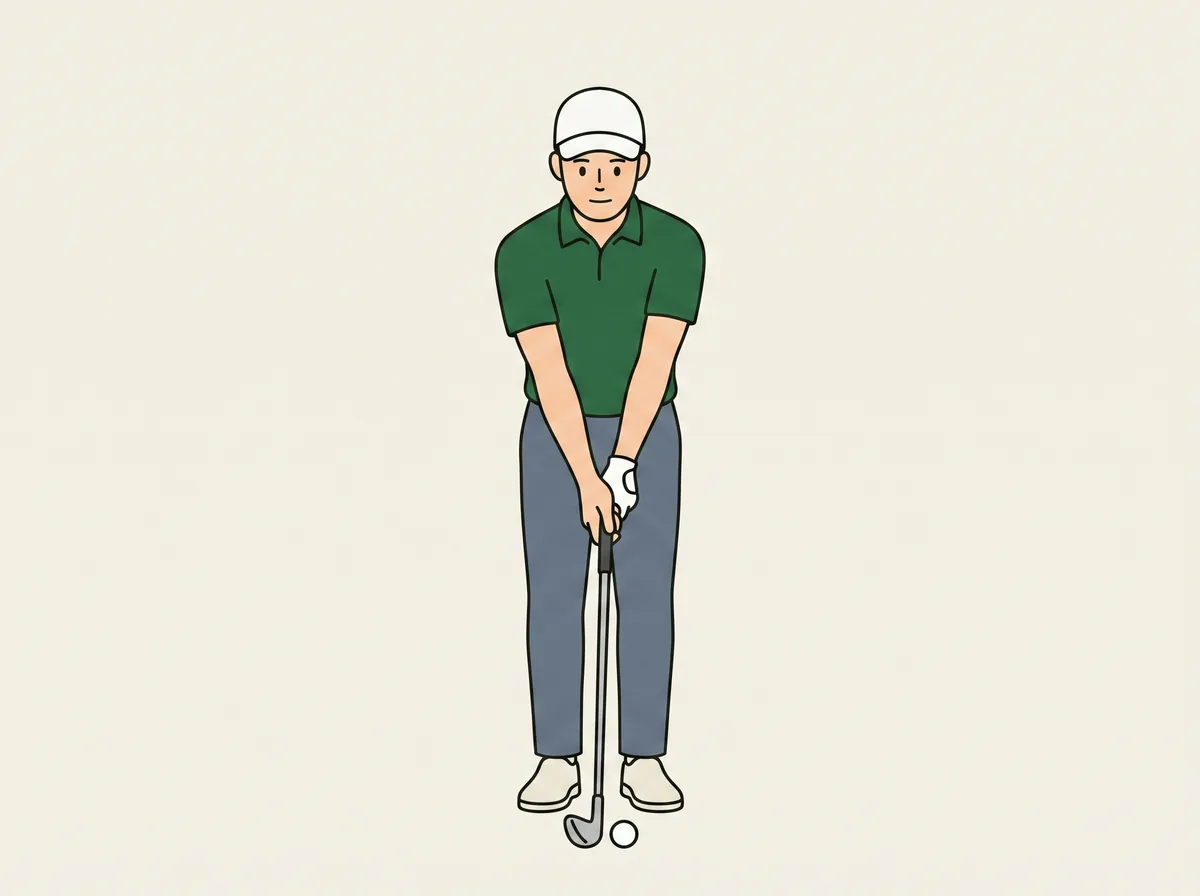
Ball position drifts without anyone noticing, and it drifts forward, because a ball nearer the target feels easier to reach.
Once the ball sits ahead of your low point, the club has already bottomed out by the time it arrives, and it will take turf on the way. This is the one cause that can be fixed in a single shot rather than a single month, which is why it is worth eliminating before you start rebuilding a weight shift.
Set a club or an alignment stick on the ground pointing at your feet from the ball, and check where it lands on your stance. A mid iron sits about one ball-width forward of centre, a wedge close to centre, and a fairway wood further forward again. The full reference by club, and how to keep it stable, is in golf ball position.
Cause four: the club is arriving too steep
A steep delivery narrows the margin for error. When the club comes down at a sharp angle, the difference between a perfect strike and a fat one is a matter of a centimetre or two rather than several.
Steepness has its own causes, and they already have a home. Coming over the top, casting the club from the top and an out-to-in path are covered as sections inside how to fix a slice, because a searcher meets them as one problem. If your fat shots come with a ball that curves hard right, start there rather than here: the steep delivery and the slice are the same fault, and fixing one fixes both.
Why the range hides the problem
This is the part almost nobody is told, and it explains why a golfer can strike the ball well for an hour and then chunk three shots on the first fairway.
A thick, lush artificial mat lets a club that has landed behind the ball skid or bounce forward into it. The result is a decent-looking shot from a swing that would have buried itself in turf. You are being told your strike is fine by a surface that cannot report otherwise.
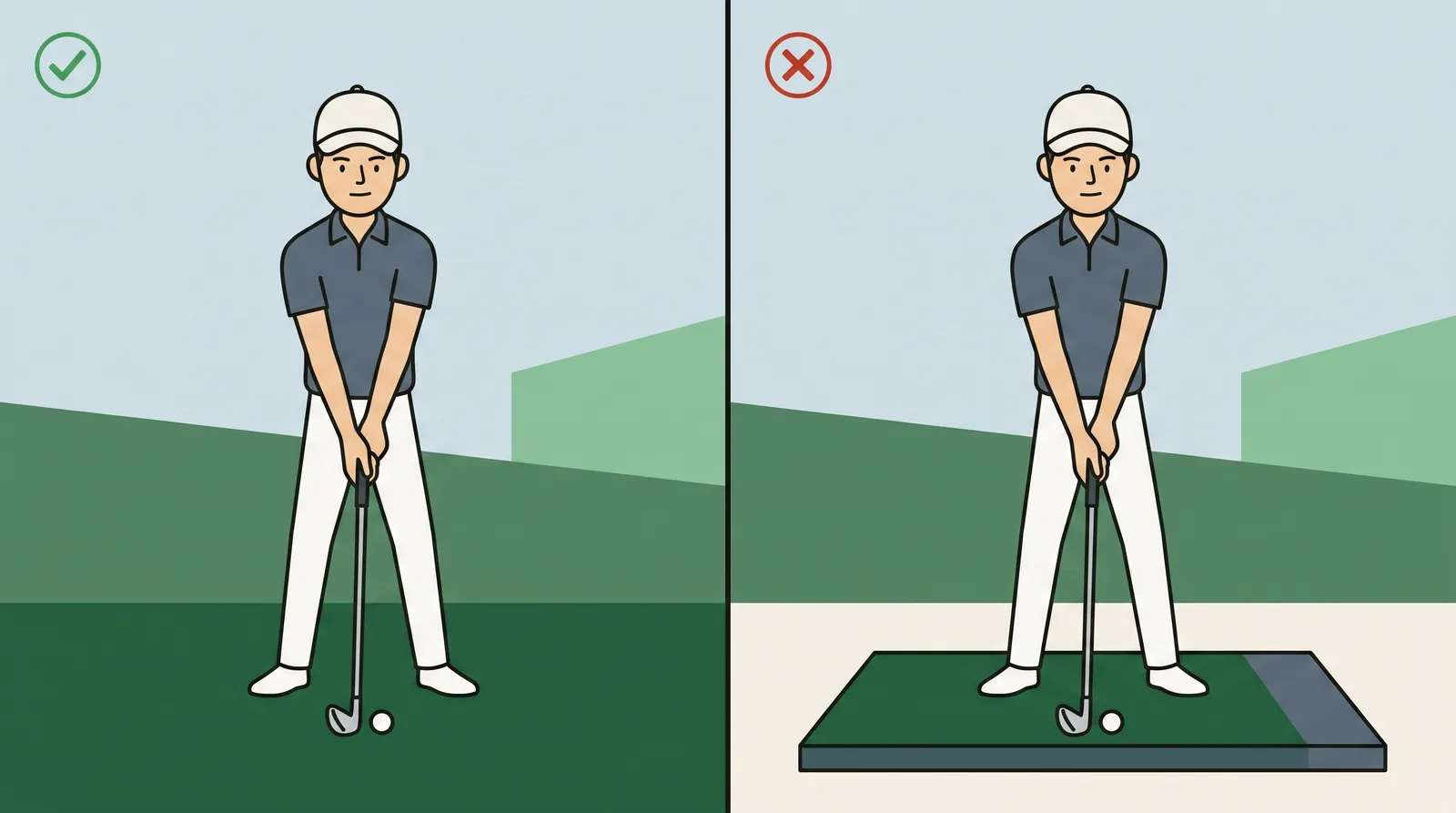
Two practical responses. Hit off grass whenever the range offers it, even if the bays are worse positioned. And when you are stuck on a mat, put a tee down flat on the surface an inch behind the ball and try to miss it, because a mat cannot hide a strike that starts a full inch early.
The order to work in
Take these one at a time. Working on pressure shift while your ball position is drifting forward gives you two variables and no feedback.
| Order | What to check | How long | You are done when |
|---|---|---|---|
| 1 | Ball position, measured every shot | 1 week | It is identical shot to shot with each club |
| 2 | Pressure onto the lead foot by impact | 3 weeks | You can hold a balanced finish on almost every swing |
| 3 | Turning rather than sliding | 3 weeks | The feet-together drill produces clean contact at half speed |
| 4 | Divot depth and where it starts | Ongoing | Divots are shallow strips that begin past the ball |
Three sessions a week is realistic. Judge nothing before three weeks, and expect the change to show up first as fewer heavy ones rather than a sudden run of pure strikes.
If the heavy contact only shows up on short shots around the green, the mechanism is different enough to need its own treatment, and it sits in how to stop chunking chip shots. If it is full swings and irons in particular, the strike sequence is broken down further in how to hit irons.
Key takeaways
- A fat shot is a swing whose lowest point arrives before the ball. Everything after that is deceleration.
- The low point sits under your lead shoulder and travels with it, so where your chest is at impact decides where the ground gets struck.
- Weight staying on the back foot is the most common cause and the first thing to fix.
- Sliding towards the target feels like weight transfer and produces the same fault, because the upper body tilts backwards.
- Ball position drifts forward over time and can be corrected in a single shot rather than a month.
- Good iron shots take turf on purpose. The aim is a shallow divot beginning past the ball, not avoiding the ground.
- A deep-pile mat lets the club skid into the ball, so heavy contact reads as acceptable and the fault survives.
- Shot Scope's data shows the amateur approach miss is overwhelmingly short, and heavy contact is the most expensive version of it.
Common questions
Why do I keep hitting behind the golf ball?
The lowest point of your swing arc is sitting behind the ball, so the club reaches the turf first. In most cases that is because your weight stayed on your back foot through impact, which keeps your chest and lead shoulder behind the ball and drags the bottom of the arc back with them.
What is the difference between a fat shot and a chunk?
Nothing beyond how it sounds. Both describe the club striking the ground before the ball. Chunk usually implies a heavier, more obvious version where a large piece of turf comes out and the ball travels a fraction of its normal distance.
Should the divot be before or after the ball?
After, on the target side of where the ball was sitting. That is the visible proof the ball was struck first. A divot that begins behind the ball is the definition of a fat shot, even on the occasions when the result looks acceptable.
Why do I hit fat shots with my irons but not my driver?
Because a teed driver is not being struck off the ground, so the low point can sit behind the ball without any consequence. The same fault is present, it simply has nothing to catch on. This is why a golfer can drive well and still hit heavy irons all day.
How do I fix fat shots quickly?
Check ball position first, because it takes one shot rather than one month, and it drifts forward without anyone noticing. Then work on getting pressure onto the lead foot by impact, using half-length shots with the trail foot lifted onto its toe.
Does hitting off a mat cause fat shots?
It does not cause them, but it hides them. A deep-pile mat lets the club bounce or skid into the ball after landing behind it, so heavy contact produces a reasonable-looking result. Practise on grass where possible, and put a tee flat on the mat an inch behind the ball when you cannot.
Why do I hit fat shots under pressure?
Tension shortens the swing and slows the body, so the arms arrive before the rotation does and the low point never moves forward. It is the same mechanism as the practice-ground version, arriving from a different direction. Swinging at around 80% with a fuller finish is more reliable than swinging carefully.
Can the wrong club length cause fat shots?
Clubs that are too long or too upright for you can encourage a setup that puts the low point in the wrong place, so it is worth checking. It is rarely the whole story though, and it is worth spending three weeks on ball position and pressure before spending money on a fitting.
Is a fat shot the same fault as a thin shot?
They are the same measurement in opposite directions. Both are a low point in the wrong place relative to the ball. Fat is the arc bottoming out early, thin is the club still being too high when it arrives, which is why a golfer chasing one often produces the other.
How long does it take to stop hitting fat shots?
Ball position corrections show up immediately. A genuine change in where your pressure sits at impact takes about three weeks of practice three times a week before it feels normal, and a couple of months before it holds up on the course under a real score.
Why do I hit the ground first even when I feel like I am hitting down?
Because feeling steep and being early are not the same thing. A golfer can drive the club downwards very aggressively and still have the arc bottom out behind the ball, if the chest never moved forward. The divot is the evidence that settles it, so look at where yours starts.
Tom Ashworth
Tom Ashworth is a PGA Professional who has taught golf since 2012, working mainly with beginners and mid-handicappers at club level in Surrey. He reviews the instruction guides on Learn Golf for technical accuracy before they publish.
Most of his teaching is with players in their first three years of the game, and most arrive having been told too much: six swing thoughts collected from videos, half of them contradicting each other. His approach is to check the grip and the alignment before touching the swing, on the basis that most bad ball flight is decided at address.