A used bag costs roughly half a new one and, chosen properly, plays within a few yards of it. Chosen badly it costs the same money and arrives with the wrong shaft, worn grooves and a grip that has gone hard. The decision worth getting right is not how to haggle. It is which clubs age well, which are consumables, and how much of the risk somebody else is carrying for you.
Why used works at all
Golf equipment is bounded by rules that have barely moved in over a decade. Driver heads are capped at 460cc with limits on spring effect and resistance to twisting, and every conforming model appears on the R&A's conforming club lists. Manufacturers have been sitting against those ceilings for years, which is why the year-on-year gain in a driver is small enough to disappear inside normal shot-to-shot variation.
At the forgiving end of the market the effect is stronger still. A game improvement iron from four years ago has the same wide sole, the same perimeter weighting and roughly the same loft as this year's equivalent. The genuine advances of the last decade have been in fitting and in shaft options rather than in the heads themselves.
What that means in practice: the performance you give up buying used is small, and the money you save is not.
What ages well and what does not
| Club | How fast it loses value | What a used one typically costs |
|---|---|---|
| Driver | Fastest in the bag. A replacement lands roughly every year | Half to two thirds of new, one generation back |
| Fairway woods and hybrids | Moderate. Fewer buyers chase the newest model | Half to two thirds |
| Irons | Price falls fast, performance does not | A third to a half for a set three or four years old |
| Wedges | Value looks stable, condition is not | Around half, and often worth less than that |
| Putters | Slowest of all. Nothing on it wears out | Two thirds, and desirable models hold value indefinitely |
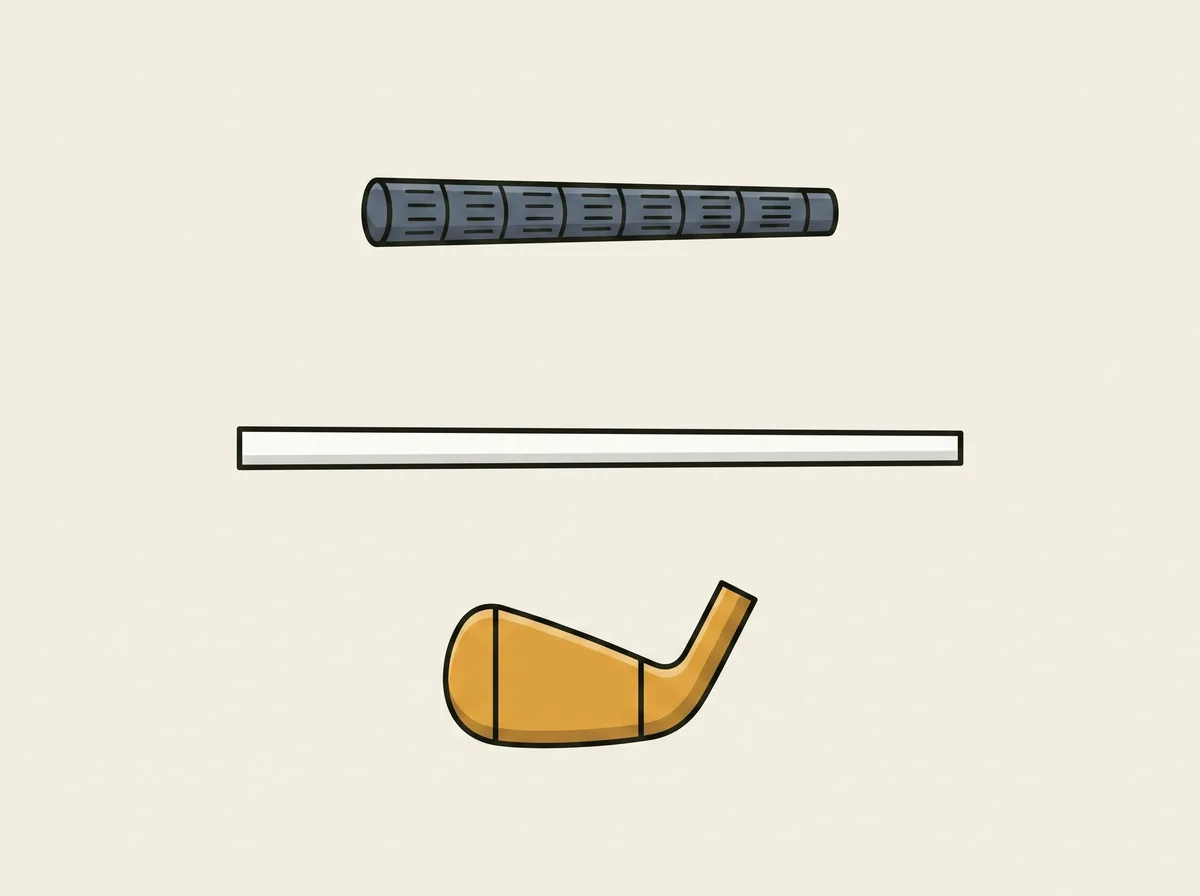
| Grips | No resale value. A consumable, like tyres | Budget £8 to £12 a club to replace |
Those are typical street prices rather than a measured dataset, and they move with the release cycle rather than with the calendar. The pattern behind them is consistent though: the clubs that depreciate hardest are the ones marketed hardest, and the clubs that hold value are the ones nobody replaces annually.
The driver line is the one worth acting on. A head one generation old has taken most of its depreciation and lost almost none of its performance, which makes it reliably the best value single purchase in golf.
Wedges are the exception, and it matters
Every other club on the list improves the case for buying used. Wedges undercut it.
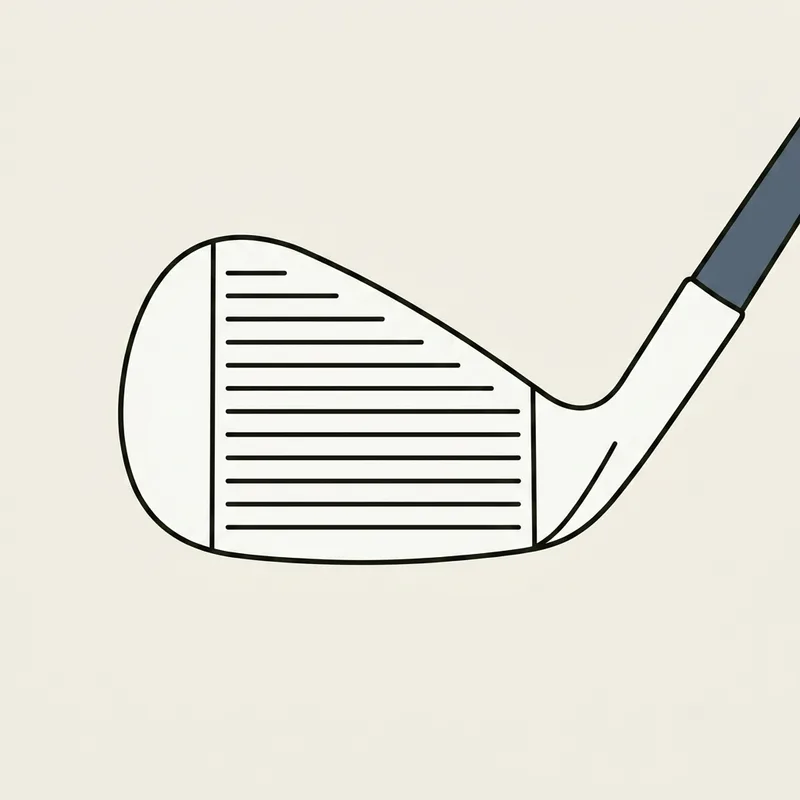
A wedge's grooves are what put spin on the ball, and they wear from the centre of the face outward under exactly the strikes a wedge is bought for. A wedge that has played two seasons of regular golf has measurably less bite than a new one, and there is no way to restore it.
It is also worth knowing that sharpening grooves at home makes the club illegal as well as worse. Rule 4.1a requires a club to conform, and deliberately altering its performance characteristics puts it outside the Rules for any round where you keep a score.
That does not make used wedges pointless. It makes them a short-life purchase to be priced accordingly, and it makes the face the only part of the club worth inspecting closely. If a used wedge costs 60% of new, it is a bad deal. At 30%, with visible groove life left, it is fine.
What condition grades actually mean
Every pre-owned seller uses a grading scale, and no two scales are the same. There is no industry standard, so the words are the seller's promise rather than a measurement.
| Typical grade | What it usually means | What to expect |
|---|---|---|
| New or mint | Unplayed or nearly so, often ex-demo | Full grooves, original grip, packaging sometimes missing |
| Excellent | Played lightly, one season at most | Minor sole scratches, grooves intact, grip usable |
| Very good | A normal club that has been used properly | Visible sole wear, some face marking, grip past its best |
| Good | Heavily played but sound | Significant cosmetic wear, grip needs replacing, check the face |
| Fair or poor | Function is not guaranteed | Only worth buying at a price that assumes work |
The useful move is to ignore the adjective and read what the grade specifically covers. A retailer who grades the head, the shaft and the grip separately is telling you far more than one who applies a single word to the whole club.
Anything sold without the shaft specification stated is a gamble, because the shaft is the part you cannot see and the part most likely to be wrong. Which shaft flex you need covers how to work out what you should be looking for before you start browsing.
Where the risk actually sits
Four places, in descending order of how often they cause regret.
The specification. By a distance the most common problem, and the one people notice last. A club bought in the wrong flex, the wrong length or the wrong lie angle will not perform however good the model is, and none of those are visible in a photograph. This is the reason a fitting is worth more on a used purchase than a new one: knowing your numbers turns a risky buy into a safe one. What a fitting measures sets out what you get for the fee.
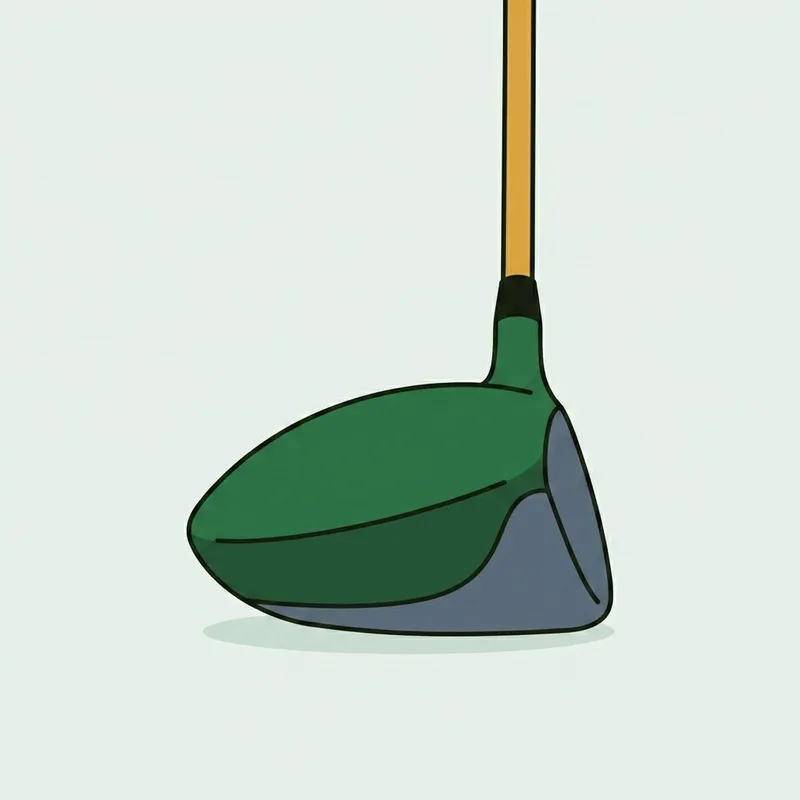
Wear you cannot see in a listing. Grooves, face damage on a driver, a loose head, a rattling weight. All of it is checkable in thirty seconds with the club in your hands, which is why a return policy matters more than a photograph. How to check a used golf club is the full inspection routine, and it is worth reading before anything arrives.
Counterfeits. Fake clubs are a real and well-documented industry, concentrated on marketplace listings, direct-to-consumer sites nobody has heard of, and anything shipping internationally at a price that makes no sense. The tell is almost always the price rather than the photographs, which are usually stolen from the manufacturer. Buying somewhere that authenticates what it sells removes this risk entirely, and it is most of what you are paying the extra for.
Conformance, occasionally. The groove specification changed for club models manufactured from 1 January 2010, and it applies to everything except drivers and putters. Older clubs remain legal for ordinary golf, and elite competitions can adopt a Local Rule requiring the newer specification. The governing bodies maintain an Informational Club Database covering irons, wedges, hybrids and fairway woods, and have said any wider change would come with at least four years of notice. For a club golfer buying a 2008 wedge this is a footnote. For anyone playing competitive amateur golf it is worth a check.
Where to buy, and what each option costs you
Every route trades price against protection, and no answer is wrong as long as the trade is deliberate.
Specialist pre-owned retailers are the safest. They grade condition consistently, authenticate what they sell, list shaft and flex, and take returns. You pay perhaps 15 to 25% more than a private sale for all of that, which is cheap insurance on a £300 purchase. Where to buy used clubs covers the options.
Trade-in programmes at larger retailers work in both directions and are worth knowing about before you buy, because your first set is a set you will outgrow. Trade-in and part-exchange sites covers how the valuations work, and where to sell used clubs covers the same route plus consignment and private sale for when it is time to move a set on.
A local pro shop or a club noticeboard is the cheapest sensible option, and the only one where you can hold the club before paying. General auction and marketplace sites are cheaper again and carry every risk on this page at once, with no recourse when something is wrong.
Building a used bag sensibly
The order that saves the most money is not the order most people buy in.
Start with irons, because they are the strongest used buy and the clubs you will hit most between tee and green. A set three or four years old at a third to a half of new is the single best value decision in this article. Add a putter next, which barely depreciates in performance terms at any age. Then a driver one generation old, then hybrids and fairway woods.
Buy wedges last and buy them newer, since they are the one category where age genuinely costs performance. Budget for new grips on everything, at around £8 to £12 a club, and treat that as part of the purchase price rather than an upgrade. How to regrip your clubs covers doing it yourself for the price of the grips.
If you are starting from nothing, the number of clubs matters more than the age of them. What a beginner actually needs makes the case for about seven, and how much golf costs puts the whole first year in context.
When new is the better buy
Used is the default, not the rule. Three situations invert it.
If you sit well outside standard dimensions, a custom-built set solves a problem no amount of shopping around will. Standard clubs suit roughly 5'7" to 6'1", and outside that range the compensations you make at address turn into swing faults.
If you want a specific adjustable driver setting and have access to a fitter, buying new with the fitting attached usually costs less than buying used and paying for adjustment afterwards.
And once the used price creeps above about 70% of new, which happens with current-season models, the warranty and the choice of shaft are worth the difference.
For everything else, and for almost every golfer under a 15 handicap of experience rather than index, the used market is where the sensible money goes. Once the bag is sorted, what each club is for is a better use of an evening than another browse through listings.
Key takeaways
- Irons are the strongest used buy in golf: a set three or four years old costs a third to a half of new and performs close to identically.
- Wedges are the weakest, because grooves wear from the centre of the face outward and cannot be restored legally.
- Drivers depreciate fastest, which makes a one-generation-old head reliably good value.
- Putters barely depreciate in performance at any age, and desirable models hold their price.
- Condition grades are seller-defined, not standardised. A listing that states shaft, flex, length and lie is worth more than one with five clean photographs.
- Specification mismatch causes more regret than wear does, and it is the one thing a photograph cannot show you.
- Budget £8 to £12 a club for new grips and treat it as part of the purchase price.
Common questions
Are used golf clubs worth buying?
For most golfers, yes. Equipment at the forgiving end of the market has moved slowly for a decade, so a set three or four years old plays within a few yards of the current equivalent for a third to a half of the price. The saving is real and the performance gap is small.
What used golf clubs should I avoid?
Wedges with worn grooves, anything sold without the shaft and flex stated, drivers with face damage or a rattle, and any listing priced far below the market that ships from overseas. Grips do not count as a reason to avoid a club, since they are cheap to replace and always will be.
How much should used golf clubs cost?
Roughly a third to a half of new for irons three or four years old, half to two thirds for a driver one generation back, and around two thirds for a putter. Above about 70% of the new price, buying new with a warranty and a shaft choice usually makes more sense.
Do used golf clubs lose performance?
Heads barely do. Faces on drivers can lose a little spring after very heavy use and wedge grooves wear measurably, but an iron head is essentially unchanged after several seasons. What ages is the grip, and that is a consumable replaced for a few pounds a club.
What do condition grades like excellent or very good actually mean?
Whatever the seller says they mean, since there is no industry standard. Excellent usually means lightly played with grooves intact, very good means normal use with visible sole wear, and good means heavily played but sound. Read the detail behind the word rather than the word itself.
Is it safe to buy used golf clubs online?
From a specialist retailer that grades condition, authenticates what it sells and takes returns, yes. From a general marketplace listing with stock photographs and no specification, considerably less so. The returns window is worth more than the discount you give up to get it.
How do I avoid counterfeit golf clubs?
Buy where the seller authenticates stock, and treat an unusually low price as the warning rather than the bargain. Counterfeits cluster on marketplace listings and unknown direct-to-consumer sites, and the photographs are frequently taken from the manufacturer, so the images tell you very little.
Are old golf clubs still legal to use?
Almost always. The groove specification changed for models manufactured from 1 January 2010 and applies to everything except drivers and putters, but older clubs remain legal for ordinary play and only elite competitions can adopt the Local Rule requiring the newer specification. Conforming club lists are published and searchable if you compete.
Should a beginner buy used clubs?
Used is the sensible default for a first set. Your swing will change substantially in the first year, so committing to a new fitted set before it settles spends money on specifications you will grow out of. Buy short, buy used, and put the difference into lessons.
Can I get fitted for used clubs?
Yes, and it is the smarter order. Get your flex, length and lie measured first, then shop for a used club that already matches. A fitting costs between £40 and £120 and is often refunded against a purchase, and turns the riskiest part of buying used into a solved problem.
What is the best used club to buy first?
Irons. They are the clubs you will hit most between tee and green, they age slowly in performance terms and quickly in price, and a set three or four years old is the single best value purchase in the used market.
Tom Ashworth
Tom Ashworth is a PGA Professional who has taught golf since 2012, working mainly with beginners and mid-handicappers at club level in Surrey. He reviews the instruction guides on Learn Golf for technical accuracy before they publish.
Most of his teaching is with players in their first three years of the game, and most arrive having been told too much: six swing thoughts collected from videos, half of them contradicting each other. His approach is to check the grip and the alignment before touching the swing, on the basis that most bad ball flight is decided at address.