A club with the wrong lie angle does not feel wrong. It sits fine at address, it swings fine, and it sends the ball somewhere other than where you aimed while everything about the strike says you did nothing unusual. That is what makes it the most quietly expensive specification in the bag, and the one almost nobody has ever had measured.
What lie angle actually is
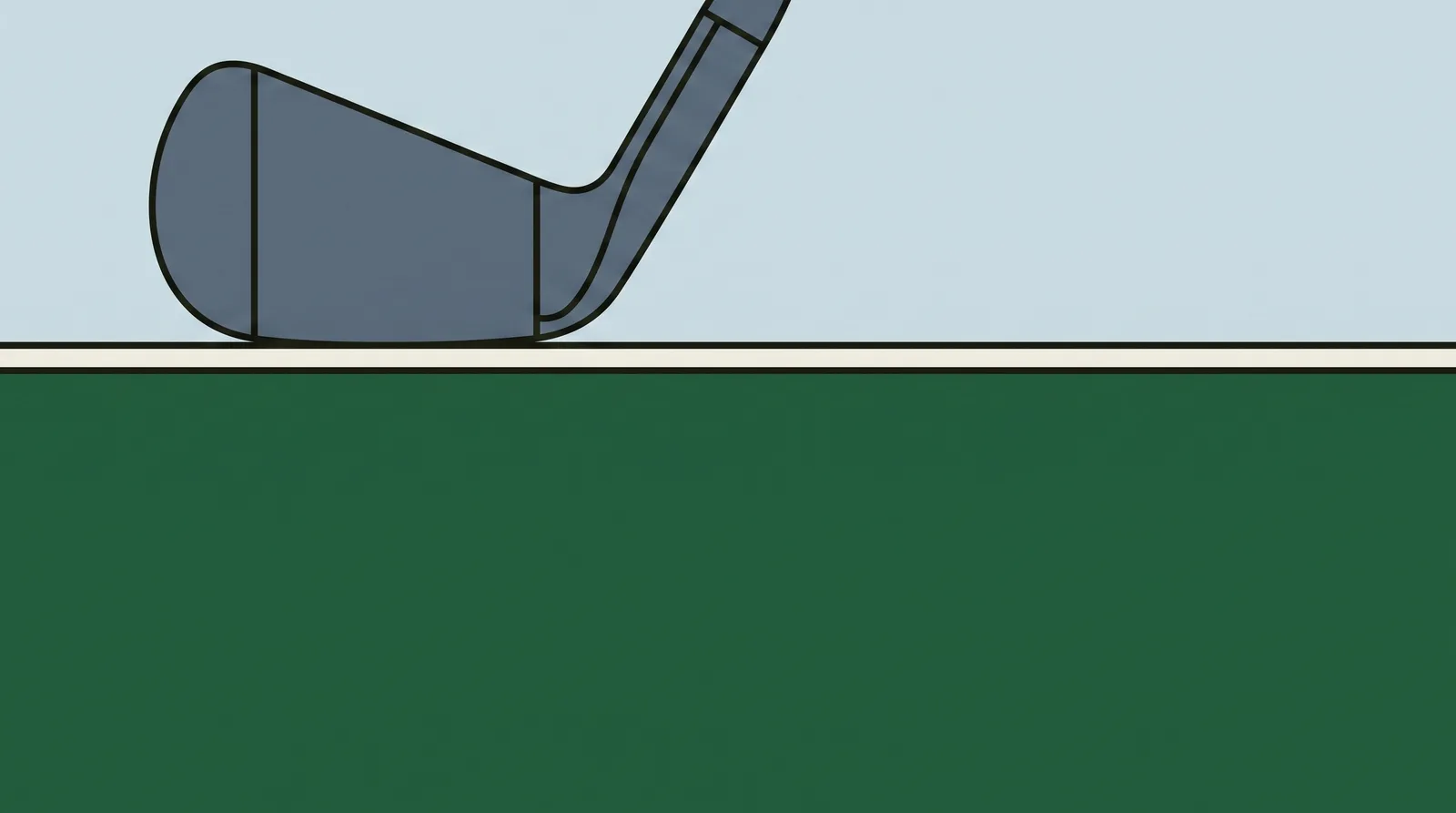
Stand a club on the ground the way it was designed to sit, with the whole sole flat, and look at the angle between the shaft and the ground. That is lie angle. It is quoted in degrees, and it rises through an iron set because the clubs get shorter and you stand closer.
Ping publish the figure for every club they sell. Their i230 irons run as follows, at standard length.
| Club | Lie angle | Length |
|---|---|---|
| 4 iron | 59.8° | 38 7/8 in |
| 5 iron | 60.5° | 38 1/4 in |
| 6 iron | 61.3° | 37 5/8 in |
| 7 iron | 62.0° | 37 in |
| 8 iron | 62.8° | 36 1/2 in |
| 9 iron | 63.5° | 36 in |
| Pitching wedge | 64.1° | 35 1/2 in |
Two details in that table matter more than the numbers themselves. Lie rises by a little under a degree per club, which mirrors the half inch of length coming off each time. And Ping note on the same page that these are design specifications that may vary because of manufacturing tolerances, which is a maker telling you the stamped figure is a target rather than a guarantee.
Drivers and fairway woods are much flatter, because they are longer and you stand further away. Ping quote an average lie of 58.5 degrees on the G440 Max driver, averaged across its adjustable hosel positions.
Why it changes where the ball starts
Here is the geometry, and it is the whole reason the specification exists.
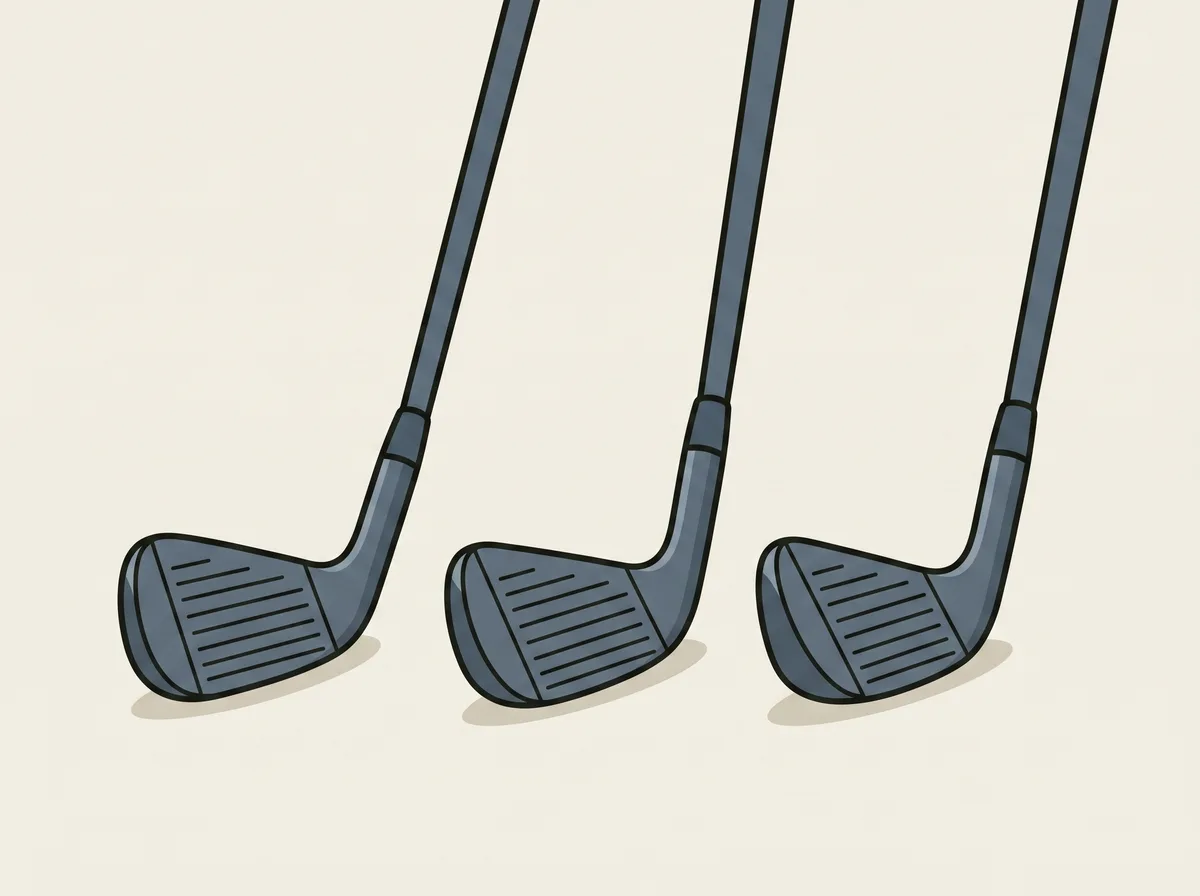
A clubface has loft, which means it is tilted back. Tilt a lofted face sideways and its aim moves sideways too. Lift the toe of a lofted club off the ground and the face swings left. Drop the toe down and the face swings right. Nothing about your aim, your grip or your path has changed. The club is simply pointing somewhere else.
So for a right-hander, a club that is too upright sends the ball left, and a club that is too flat sends the ball right. Left-handers invert both. Ping put it plainly on their own colour code chart, where lie angle and shaft length are described as influencing shot direction and consistency, and where the range on offer runs across ten codes from 5 degrees upright to 4 degrees flat.
The effect scales with loft, which is the part most explanations miss. A 4 iron has little loft, so a degree of lie error barely moves its aim. A pitching wedge has a lot, so the same degree of error moves it considerably more. If your long irons behave and your short irons start offline, lie angle belongs on the list of suspects.
Standard is a manufacturing convention, not a fit
There is no industry standard lie angle. Each manufacturer sets its own, and two 7 irons from different makers can sit more than a degree apart before either has been adjusted. Ping's own table is quoted against their black colour code, which is their reference point rather than golf's.
What that means in practice is that "standard" describes a golfer of average height with average arm length making an average swing. Very few people are all three. Height matters, arm length matters more, and posture matters most of all, because a golfer who stands tall at address needs a different lie from one who bends more at the hips even at identical height.
Static measurement gets you close. Fitters use height together with a wrist-to-floor measurement, which is the approach behind Ping's colour code chart, and it produces a sensible starting point in about a minute. It is one of the first numbers taken at a full club fitting for exactly that reason. It cannot see your swing, though, and that is where it stops being enough.
Dynamic lie is not static lie
The lie angle that matters is the one at impact, not the one at address, and they are rarely the same number.
The shaft bends under load. During the downswing the head lags and the shaft bows, and by impact the head has typically drooped downward relative to where it sat at address. The practical effect is that dynamic lie is flatter than static lie for most golfers, and how much flatter depends on shaft weight, swing speed and how hard the club is loaded from the top.
Which is why a club that sits perfectly flat when you set it behind the ball can still be striking the ground toe first. Measuring it standing still answers a different question from the one you are asking.
The lie board test
This is the test, and it is genuinely simple enough to do at a range that has one.
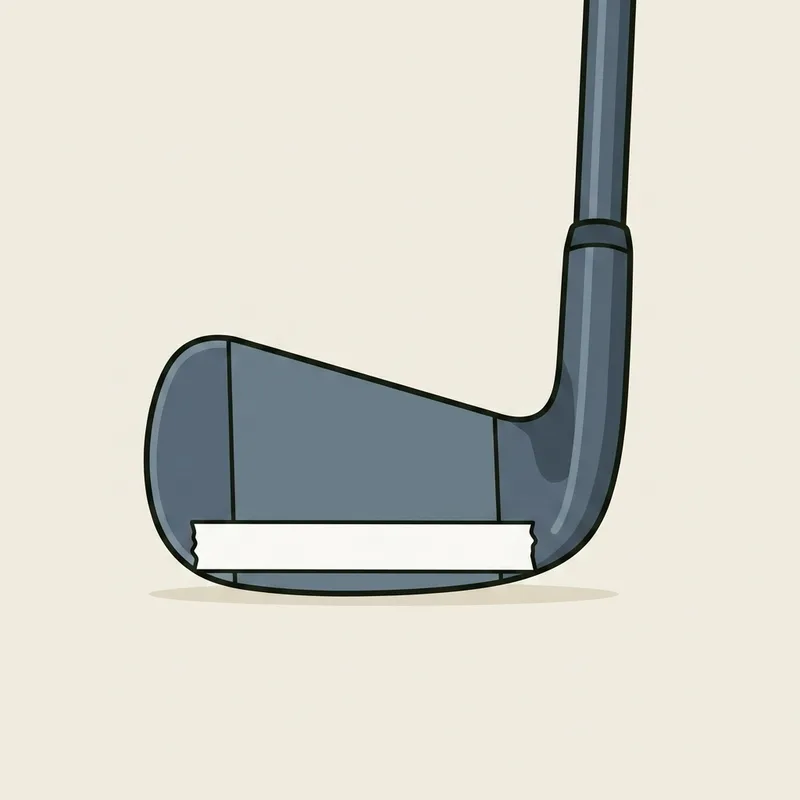
- Stick a strip of impact tape, or any plain masking tape, along the sole of a 7 iron. Ordinary tape works because you are reading a scuff, not a fingerprint.
- Put a hard flat lie board on the ground and set a ball on it. Most fitting bays and many ranges have one.
- Hit five or six normal shots. Not soft ones, and not your best swing. The delivery you actually make is the delivery being measured.
- Read the scuff mark on the tape. A mark near the centre of the sole means the lie is right for you.
- A mark toward the heel means the heel is contacting first, so the club is too upright. A mark toward the toe means the club is too flat.
- Repeat with a wedge and a 5 iron. A set does not always want the same correction through the whole bag.
Two honest caveats. A lie board is a hard flat surface and turf is neither, so a small amount of the reading is the board rather than your swing. And the test is only as good as the swings you put into it, which means a session where you are hitting it badly will produce a reading you should ignore.
Getting it changed
Most irons can be bent. Forged carbon steel heads bend easily and cast carbon steel heads bend well enough, and a club builder with a loft and lie machine can move most sets a degree or two either way in a few minutes per club. It is usually a few pounds a club, and plenty of shops include it with a set purchase.
Some heads resist. Cast stainless steel is more brittle and has less range before something goes wrong, and hollow bodied and multi-material irons are often limited or excluded entirely by the manufacturer. Ask before you assume, and ask specifically about the model rather than the category.
Drivers and fairway woods generally cannot be bent at all, which is why some adjustable hosels include an upright setting instead. Since loft rises here too, choosing a driver loft and choosing a hosel position are the same decision made twice.
Where it sits against everything else
Lie angle will not fix a swing. It corrects a small persistent bias in start direction and it improves ground contact, and neither of those is the reason most club golfers miss greens. Striking your irons better is where the bigger gains sit, and it costs nothing.
It earns its place because it is cheap, it is quick, and it is one of the very few things you can change about a golf club that has a direct, explainable effect on where the ball goes. Loft decides distance and height, and how iron lofts have drifted covers what has happened to those numbers. Shaft weight and flex change delivery, and working out your flex explains how. Lie changes aim, which is a separate job from both.
It matters most on second hand clubs. A set bought used has an unknown history, may have been bent for somebody else entirely, and may have been knocked around a car boot for a decade. What to check on a used club covers the rest of the inspection, and a loft and lie reading is worth adding to it before you play the set rather than after.
The rest of the setup is doing part of this job too, and it is free. How far to stand from the ball changes effective lie at impact as surely as bending the club does, and posture at address changes it again. Get a lie reading with the setup you actually use, not the one you produce when somebody is watching, or you will have fitted a club to a swing you do not own.
Key takeaways
- Lie angle is the angle between shaft and ground with the sole flat. It rises through an iron set as the clubs get shorter.
- Ping's published i230 figures run from 59.8 degrees at the 4 iron to 64.1 at the pitching wedge, a little under a degree per club.
- Too upright sends the ball left for a right-hander and too flat sends it right, because tilting a lofted face sideways moves where it aims.
- The effect scales with loft, so wedges and short irons are far more sensitive to a lie error than long irons.
- There is no industry standard. Ping alone offer ten colour codes from 5 degrees upright to 4 degrees flat.
- Dynamic lie is flatter than static lie for most golfers, because the shaft droops under load, so an address measurement is not the whole answer.
- The lie board test takes ten minutes: tape on the sole, hit off a board, read where the scuff sits. Heel mark means too upright, toe mark means too flat.
- Most carbon steel irons bend a degree or two cheaply. Cast stainless and hollow bodied heads are often limited, so ask about the specific model.
Common questions
What is lie angle on a golf club?
The angle between the shaft and the ground when the club is soled the way it was designed to sit. It is measured in degrees, rises through an iron set as the clubs shorten, and controls how the sole meets the turf and where the face aims at impact.
What is a standard lie angle for a 7 iron?
Around 62 degrees on most current sets, though there is no industry standard and makers differ by more than a degree. Ping publish 62.0 degrees for the i230 7 iron at standard length, which is a fair representative figure rather than a rule.
Does lie angle really matter?
Yes, and more than most golfers expect on short irons. Because tilting a lofted face sideways changes where it points, a club that is a degree or two out produces shots that start offline and then fly straight. On a 4 iron the effect is small. On a wedge it is not.
How do I know if my lie angle is wrong?
Put tape on the sole and hit shots off a hard lie board. A scuff toward the heel means the club is too upright for you and a scuff toward the toe means it is too flat. On the course, the clue is iron shots that start consistently left or right without curving.
Should my lie angle be upright or flat?
Whichever centres the mark on the sole. Taller golfers and golfers who stand closer to the ball tend to need more upright, shorter golfers and those who stand further away tend to need flatter, but posture and how the shaft loads matter enough that neither is a safe assumption.
What happens if my clubs are too upright?
The toe sits up and the heel digs at impact, and the face aims left of target for a right-hander. The typical pattern is a pull that flies straight, sometimes with a hook on top of it, plus heavier contact out of anything other than a perfect lie.
What happens if my clubs are too flat?
The toe digs and the heel lifts, and the face aims right of target for a right-hander. Shots tend to start right and hold that line, and the toe digging into turf can also open the face further through impact.
Can lie angle be adjusted?
On most forged and cast carbon steel irons, yes, by a club builder with a loft and lie machine. It takes minutes and usually costs a few pounds a club. Cast stainless steel and hollow bodied irons are often limited or excluded, so check the model before booking.
Does lie angle matter on a driver?
Far less. A driver has very little loft, so tilting the face sideways barely changes where it points, and the head rarely touches the ground anyway. Some adjustable hosels offer an upright setting, which is worth trying but is not in the same class of fix as bending an iron.
Does lie angle change how far the ball goes?
Only indirectly. A centred sole strike gives cleaner turf contact and a more consistent strike location on the face, and both help distance a little. The main effect is on direction, and anyone promising yardage from a lie adjustment is selling something.
How often should lie angle be checked?
Whenever you buy a set, especially second hand, and again after any significant change in posture, height or swing. Soft carbon steel heads can also move slightly over years of use, so a reading every few seasons is reasonable if you play a lot.

Tom Ashworth
Tom Ashworth is a PGA Professional who has taught golf since 2012, working mainly with beginners and mid-handicappers at club level in Surrey. He reviews the instruction guides on Learn Golf for technical accuracy before they publish.
Most of his teaching is with players in their first three years of the game, and most arrive having been told too much: six swing thoughts collected from videos, half of them contradicting each other. His approach is to check the grip and the alignment before touching the swing, on the basis that most bad ball flight is decided at address.