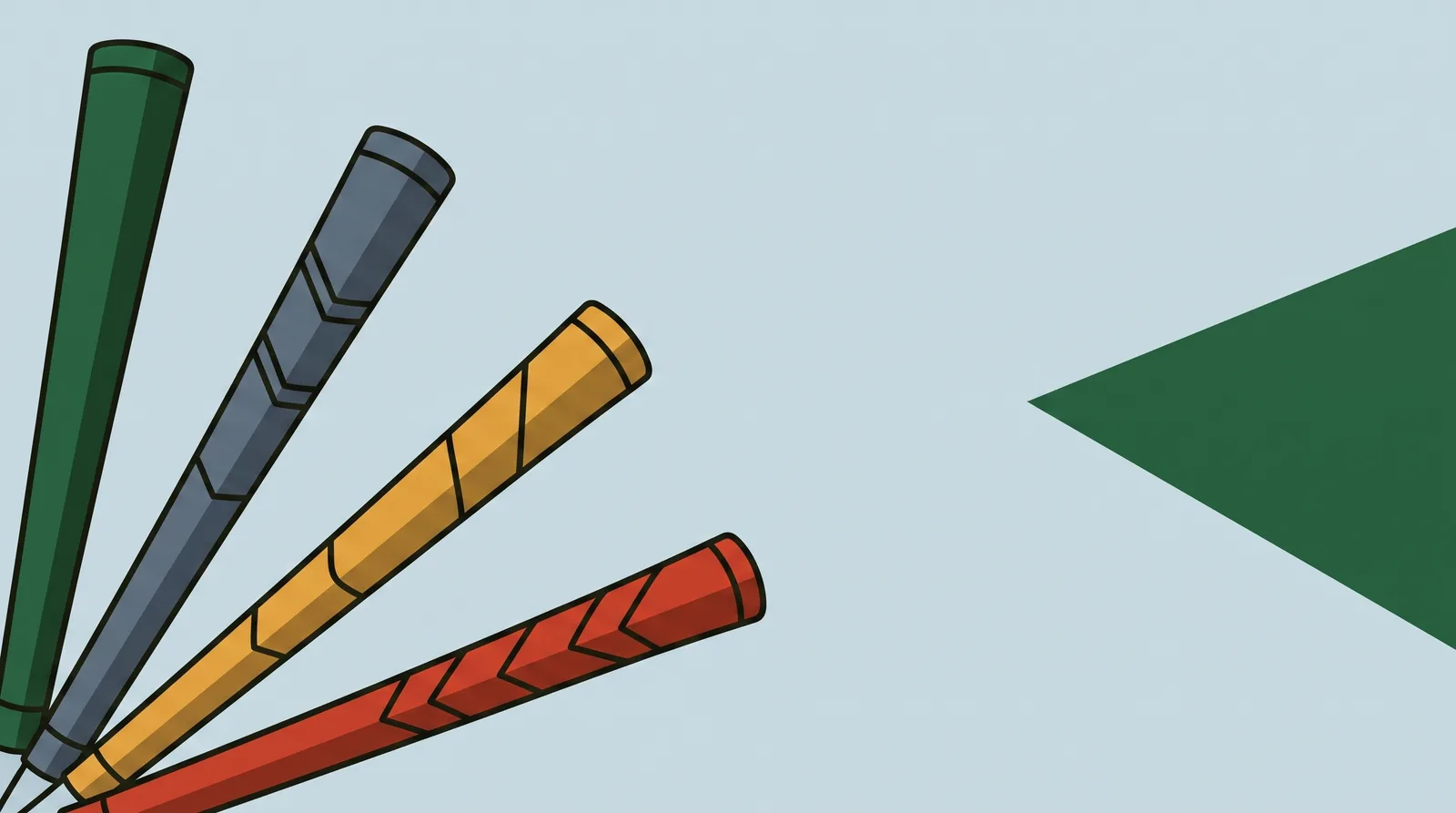
A set of grips costs less than a driver head cover and takes an afternoon to change, which is roughly the amount of attention most golfers give the subject. Meanwhile the grip is the only point of contact between a golfer and 250 grams of steel travelling at 90 miles an hour, and its diameter changes how freely the hands can work. That is not a small thing to leave to whatever the club came with.
How grip size is actually measured
Grip size is an outside diameter, measured at a fixed point rather than anywhere you fancy. The clubmaking convention is to measure two inches down from the butt cap, because grips are tapered and a number taken anywhere else is meaningless.
Mitchell Golf, who build the machines club builders use, publish the reference figures in that form.
| Size | Men's | Women's |
|---|---|---|
| 1/64 in undersize | 0.885 in | 0.835 in |
| Standard | 0.900 in | 0.850 in |
| 1/64 in oversize | 0.915 in | 0.865 in |
| 1/32 in oversize | 0.930 in | 0.880 in |
| 3/64 in oversize | 0.945 in | not commonly stocked |
| 1/16 in oversize | 0.960 in | not commonly stocked |
Two things fall out of that table. The steps are tiny: Mitchell put one grip size change at 0.015 inches, which is 0.0075 of an inch on each side of your hand. And the whole usable range, from undersize to the largest oversize, is under a tenth of an inch.
Manufacturers muddy this by naming rather than measuring. Standard, midsize, oversize and jumbo are marketing terms, and one brand's midsize can sit where another's standard does. If you want to know what you have, measure it or ask a builder to.
The core size, and why two identical grips fit differently
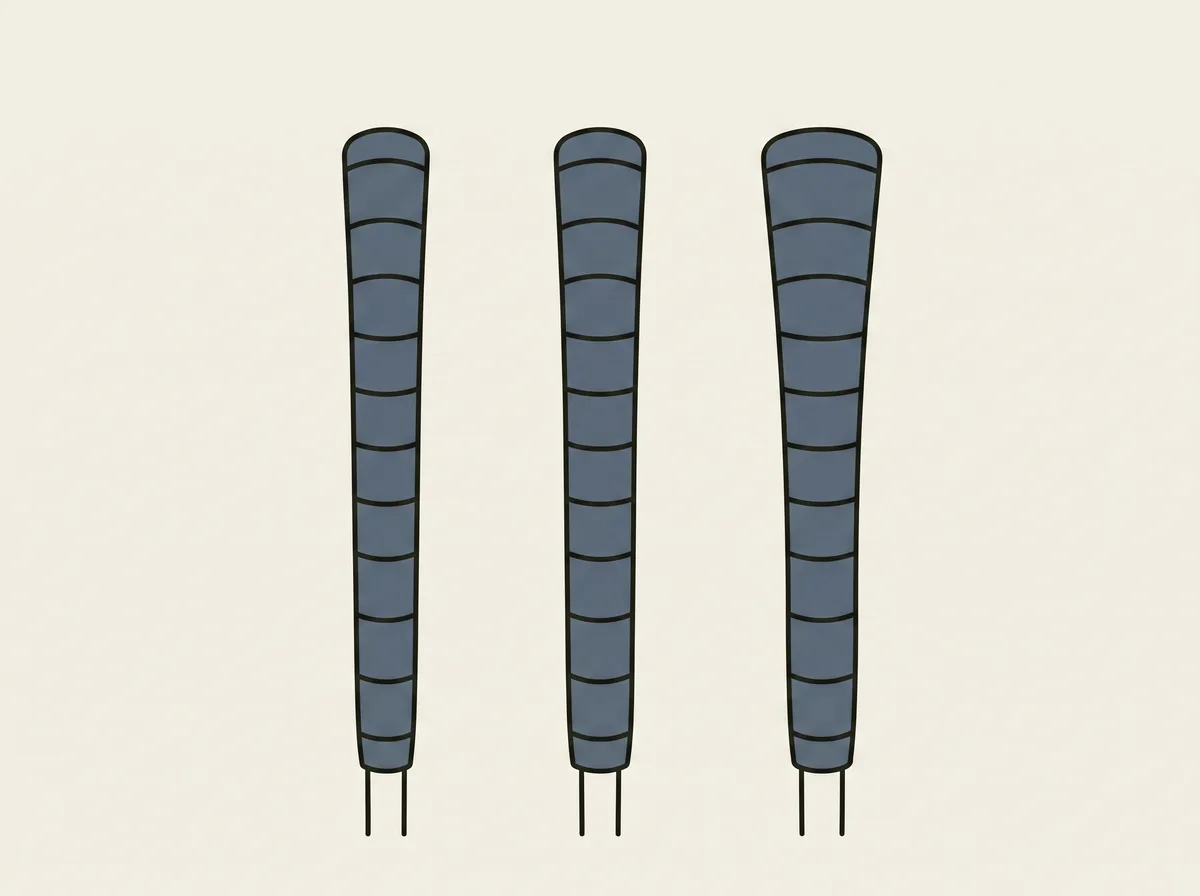
Every grip has a core size, which is the diameter of the hole that slides over the shaft. Common cores are 0.560, 0.580 and 0.600 inches, matched to the butt diameter of the shaft they are going on.
Put a grip on a shaft with a larger butt than the core was cut for and the rubber stretches, so the finished grip comes out bigger. Mitchell work the arithmetic through: a 0.580 core grip on a 0.600 shaft butt finishes at 0.920 inches, which is about one full size larger than standard without a single wrap of tape.
This is why a golfer can buy the same model of grip twice and end up with two different sizes. It is also the cheapest fitting lever available, because the size you want can often be built out of parts you already have.
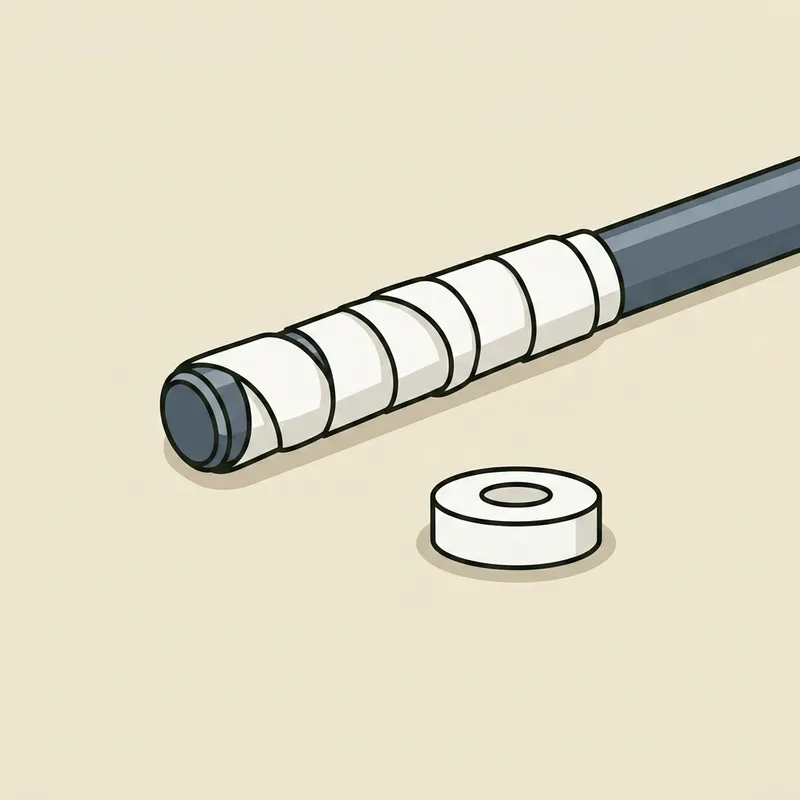
Build-up tape does the rest. A layer of tape wound under the grip raises the finished diameter in small increments, so a builder can land anywhere between the named sizes rather than jumping from one to the next. Ask for a specific finished diameter rather than a name and you will get what you meant.
The thirty second check
There is a well worn trade method that involves measuring hand length from the wrist crease to the tip of the middle finger and reading off a chart. It is a reasonable starting point, but the published charts differ between grip makers and none of them can see what your hands actually do on a club, so treat any of them as a suggestion rather than an answer.
The functional check is better and takes no equipment.
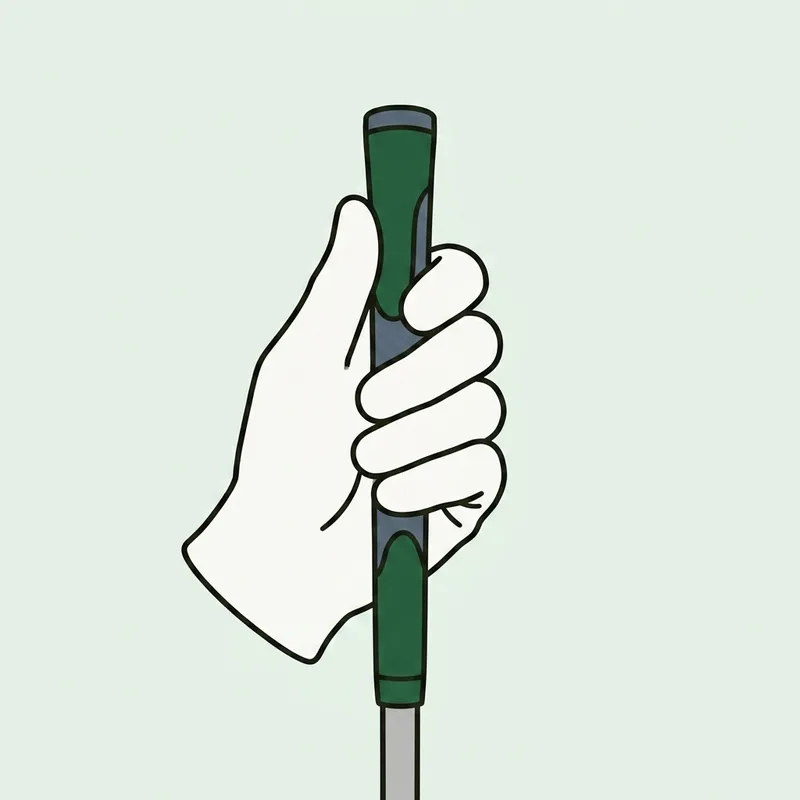
- Take your normal lead hand grip on a 7 iron, without the trail hand on the club. Left hand for a right-hander.
- Look at where the tips of your middle two fingers sit against the pad at the base of your thumb.
- Fingertips just barely touching the pad is a correctly sized grip.
- Fingertips digging into the pad, or wrapping past it, means the grip is too small.
- A clear gap between fingertips and pad means the grip is too large.
- Check a wedge and a driver as well. Grips wear at different rates through a bag and are not always the same size to begin with.
That check tells you what you have. It does not tell you what you should have, because hand size is not the only input, and the next section is why.
What grip size actually changes
The mechanism worth understanding is release. Through impact, the forearms rotate and the clubface rotates with them, and how freely that happens is influenced by how much of the grip your fingers can wrap around.
A smaller grip lets the fingers wrap further and the hands work more actively. That tends to produce more face rotation through impact, which for a right-hander leans toward a draw and, if the timing goes, a hook. A larger grip restricts that rotation. The face closes less, which leans toward a fade or a push.
Both of those are tendencies rather than laws, and the size of the effect is genuinely argued over. Nobody serious claims grip size will fix a slice. What it will do is nudge a bias you already have in one direction or the other, which makes it a useful last adjustment and a terrible first one.
The second effect is more reliable than the first, and it is the one most coaches actually care about. A grip that is too small gets squeezed, because your hands close past where they want to stop and the natural response is to grip harder. A grip that fits lets you hold the club lighter, and grip pressure influences tempo, wrist hinge and clubhead speed far more than a hundredth of an inch of diameter ever will. How to hold the club properly covers the placement side of the same problem.
When oversize is the right answer anyway
There is a category of golfer for whom the ball flight argument is beside the point.
Arthritis, joint pain, reduced grip strength and hand injuries all make a thin grip harder to hold and more painful to hold for four hours. A larger diameter spreads the load across more of the hand and needs less squeeze to stay secure, and for a lot of golfers that is worth more than any face rotation tendency.
The same applies to anyone whose hands simply give out late in a round. If your last four holes are worse than your first four and your hands are aching, the grip is a plausible suspect, and it is a cheaper thing to test than a lesson.
Wear matters here too. A grip that has gone shiny and hard has effectively become slippery, and the response is always to hold it tighter. Rubber hardens with age even on clubs that barely get used, so a set stored in a garage for five years is due regardless of how many rounds it has seen. A properly fitted glove does some of the same work, and the two are worth sorting together.
What the Rules allow
Grips are one of the more tightly specified parts of a golf club, which surprises people who assume you can put anything you like on the end of a shaft.
The practical consequence is that the grip you can legally play is a plain tapered cylinder in whatever diameter suits you. Everything interesting that grip makers do happens in the compound, the texture and the taper profile rather than the shape.
Reduced taper grips are worth knowing about for that reason. A conventional grip is noticeably thicker at the top than at the bottom, and a reduced taper build keeps the lower hand section closer to the upper. Plenty of golfers who think they want midsize actually want less taper, which is a different purchase.
Where it sits against everything else
Grip size will not rescue a swing, and it is the last specification to look at rather than the first. What it has going for it is cost. A full set of grips is one of the cheapest things you can do to a bag, and unlike most equipment changes it is fully reversible.
If your ball flight is the reason you are here, the swing has more of the answer than the rubber does. Fixing a hook and why the ball slices both deal with the face and path relationship that actually decides shot shape. If the whole bag feels wrong rather than one club, what a fitting measures covers the full list, and grip size will be on it alongside shaft weight and flex and lie angle.
Putters are their own conversation, since the Rules allow shapes there that nothing else in the bag can use, and what the putter grip is doing covers why so many of them have got fatter.
Key takeaways
- Grip size is an outside diameter measured two inches down from the butt cap. Men's standard is about 0.900 inches, women's about 0.850.
- One full size step is roughly 0.015 inches, which is under eight thousandths on each side of your hand.
- Core size matters. A 0.580 core grip on a 0.600 shaft butt finishes around 0.920 inches, about a full size larger, with no tape involved.
- Build-up tape lets a builder land between the named sizes, so ask for a finished diameter rather than a name.
- The functional check is the lead hand fingertips against the thumb pad. Digging in means too small, a gap means too large.
- Smaller grips allow more hand action and lean toward a draw. Larger grips restrict it and lean toward a fade. Both are tendencies, not fixes.
- The more reliable effect is grip pressure. A grip that fits can be held lightly, and light hands do more for tempo and speed than diameter does.
- Non-circular and moulded grips are illegal on everything except putters, and no grip may exceed 1.75 inches across.
Common questions
What size golf grip do I need?
Start with the fingertip check: take your lead hand grip and see whether the middle fingers just touch the pad of your thumb. Touching lightly is right, digging in means you want a size up, and a clear gap means a size down. Most men land on standard or one size over.
What is the difference between standard and midsize grips?
Diameter, and less of it than the names suggest. Standard men's measures about 0.900 inches two inches from the cap, and a midsize build typically adds a thirty second of an inch, which works out around 0.930. That is a difference of about fifteen thousandths on each step.
How do I measure my golf grip size?
Measure the outside diameter with callipers at exactly two inches down from the butt cap. Anywhere else and the taper makes the number meaningless. If you do not own callipers, any club builder will measure a club in a few seconds while you wait.
Do bigger grips reduce a hook?
They can nudge it. A larger diameter restricts forearm rotation slightly, so the face closes a little less through impact, which for a right-hander leans away from the hook side. It is a small effect and it does not address the face and path relationship causing the hook in the first place.
Do smaller grips help you draw the ball?
Marginally, by the same mechanism in reverse. A thinner grip lets the fingers wrap further and the hands work more freely, which allows more face rotation. Treat it as a finishing adjustment on a ball flight you already have rather than a way to build one you do not.
Should seniors use oversize grips?
Often, though for grip strength and joint comfort rather than age itself. If holding a standard grip requires real squeeze, or your hands ache by the closing holes, a larger diameter spreads the load and needs less pressure. That benefit usually outweighs any ball flight tendency.
How much does it cost to regrip a set?
Grips themselves run from a few pounds each for basic rubber to around fifteen for premium models, so a full set of thirteen is typically somewhere between thirty and one hundred and fifty pounds in parts. Shops charge a fitting fee per club on top, and many waive it if you buy the grips there.
How often should golf grips be replaced?
When the surface has gone shiny, hard or slick, whichever comes first. Rubber hardens with age as well as use, so a set that has sat in a garage for several years is due even if it has barely been played. The reliable test is whether you find yourself holding on tighter than you used to.
Are oversize grips legal?
Yes, within limits. No grip may exceed 1.75 inches across in any direction, and on every club except a putter it must be circular in cross-section and must not be moulded for the hands. Putters are exempt from the circular requirement, which is why the very large putter grips are allowed.
What are reduced taper grips?
Grips built with less difference in diameter between the top and the bottom, so the lower hand sits on a thicker section than it would on a conventional grip. Golfers who feel their trail hand is cramped often want this rather than a bigger grip overall, and it is a common outcome of a proper grip fitting.
Does grip size affect distance?
Not directly. The indirect route is grip pressure: a grip that fits can be held lightly, and lighter hands allow more wrist hinge and a freer release, both of which contribute to clubhead speed. Anyone quoting a yardage figure for a grip change is guessing.
Tom Ashworth
Tom Ashworth is a PGA Professional who has taught golf since 2012, working mainly with beginners and mid-handicappers at club level in Surrey. He reviews the instruction guides on Learn Golf for technical accuracy before they publish.
Most of his teaching is with players in their first three years of the game, and most arrive having been told too much: six swing thoughts collected from videos, half of them contradicting each other. His approach is to check the grip and the alignment before touching the swing, on the basis that most bad ball flight is decided at address.