Best Golf Training Aids: Four That Actually Get Used
Most training aids get used twice and then live in a garage. The ones that survive share a single property, and it is not the one on the packaging.
Some links here earn us a commission at no extra cost to you. It never changes what we recommend or the order we rank it. How this works.
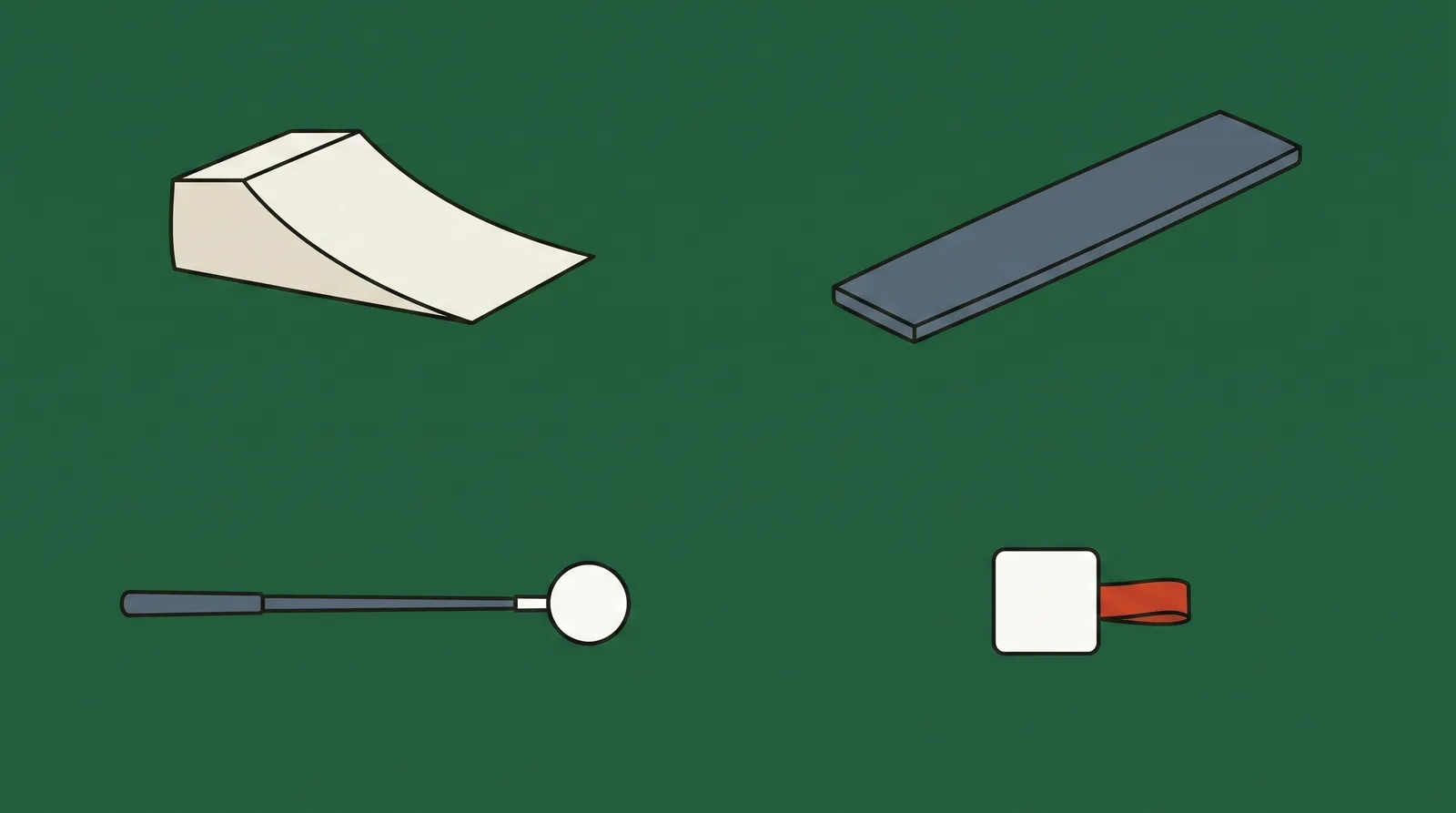
Almost every golfer owns a training aid and almost none of them own one they still use. The ones that survive share a property, and it is rarely the one the packaging leads with: they report what the swing just did, instead of holding the body in a position somebody decided it should be in. Four that pass that test are below, deliberately spread across four different parts of the game.
The four, compared
These four do not compete with each other. They address putting, strike, tempo and clubface, and the useful question is which of those is currently costing you the most, not which product is best.
| Pick | Best for | Trains | Feedback | Indoors | Ball needed | Price |
|---|---|---|---|---|---|---|
| PuttOUT Pressure Putt Trainer | The cheapest thing here that changes a scorecard | Putting stroke, start line and speed | Holed putts return the distance they would have run past | Yes, on carpet | Yes | Around £20 to £25 |
| Divot Board | Seeing where the club is actually meeting the ground | Low point control and swing path | The strike leaves a readable pale divot | Yes, on carpet or a mat | Optional | Around £90 to £120 |
| Orange Whip Trainer | Tempo, sequencing, and a warm-up you will actually do | Tempo, rhythm, balance and sequencing | The weighted head lags a rushed transition | Yes, with ceiling clearance | No | Around £85 to £100 by length |
| HackMotion Core | The clubface, which is what most bad shots are actually about | Lead wrist angles, and through them the clubface | Live audio plus wrist data in the app | Yes | No | Around £275 to £345 |
Prices in this category swing wildly and the same aid frequently appears at twice the money under a different name. Check what the manufacturer actually publishes before paying a premium for a rebadge.
Why most training aids end up in a garage
The honest version of this page starts here, because it decides everything below it.
Training aids fall into two groups. The first group measures something and reports it back: where the club hit the ground, how fast the putt was rolling, what the wrists did. The second group physically restricts you into a position: a strap that pins your arm to your chest, a brace that stops the elbow bending, a rod that blocks the club from moving off a plane.
The first group survives. The second group gets used twice, produces a swing that feels alien, and goes in the garage. The reason is not that the position it enforces is wrong. It is that a position held by an external object is not a skill, and the moment the object comes off, nothing transfers. Feedback teaches. Restriction only describes.
There is a second filter worth applying, and it is more brutal. An aid that takes five minutes to set up gets used on the days you were already going to practise. An aid that takes ten seconds gets used on the days you were not, and those are the days that matter.
PuttOUT Pressure Putt Trainer: buy this one first
The PuttOUT Pressure Putt Trainer is a curved elastomer ramp exactly as wide as a hole, at 4.25 inches, weighing 97 grams and folding flat enough to live in a bag pocket. A putt struck at the right pace runs up the parabolic ramp and returns to you the same distance it would have finished past the hole had it missed. Too hard and it fires back at you. Too soft and it does not climb at all.
That is the whole product, and it is why it works. The feedback is instant, unambiguous, and about the single variable amateurs get wrong most often. Distance control, not line, is what leaves three-putts on a card.
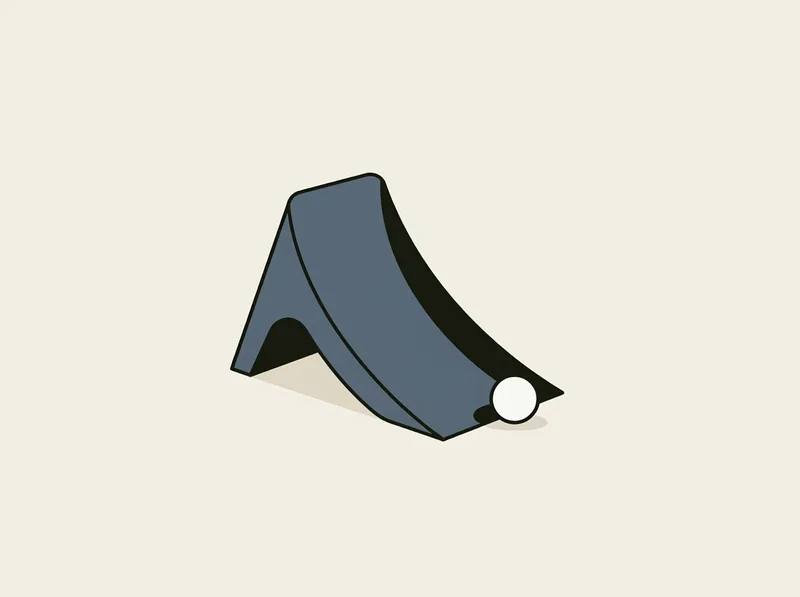 Around £20 to £25
PuttOUT Pressure Putt Trainer
- Trains
- Putting stroke, start line and speed
- Feedback
- Holed putts return the distance they would have run past
- Indoors
- Yes, on carpet
- Ball needed
- Yes
- Width
- 4.25 inches, the same as a hole
- Weight
- 97 g
- Made from
- Elastomer and translucent polycarbonate
- The feedback is the product. A putt that would have run four feet past comes back four feet.
- Folds flat, weighs under 100 grams and lives in a bag pocket rather than a garage.
- Costs less than a sleeve of premium balls, which is why it survives the first month.
- It reads speed and start line, and tells you nothing about your stroke path or face angle.
- Carpet is not a green, so the pace it teaches is the pace of your hallway.
- The target is a hole-sized mouth, so it rewards holing out rather than lag putting.
VerdictThe first training aid most golfers should own, and the one most likely to still be in use next season. It is limited to one part of one skill, but that skill is roughly a third of your shots and the feedback loop is immediate.
The limitation is real and worth naming. Carpet rolls at a pace of its own, so the speed it trains is the speed of your hallway rather than of your home green. It also reads only outcome, so it will not tell you whether a pushed putt came from the path or the face. If your problem is the stroke itself rather than the pace, a surface with a true roll does more, and the putting mats worth owning covers that side of it properly.
Divot Board: see where the club actually landed
The Divot Board is a flat board roughly 21 inches long by 6 wide and half an inch deep, with a short turf-like surface that goes pale where the club sweeps across it. Swing over it and you get a visible mark showing where the club reached its lowest point and which direction it was travelling. Wipe it with a hand and it resets.
Fat and thin shots are the same fault wearing different clothes: the club is bottoming out in the wrong place. Almost nobody knows where their low point actually is, because a divot on grass is gone by the time you look and a range mat hides the evidence entirely. The board makes it visible fifty times a session.
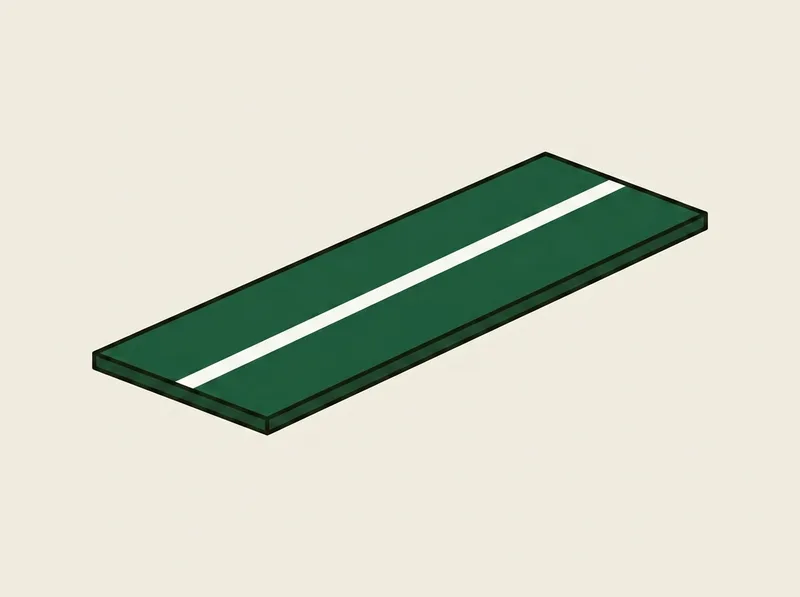 Around £90 to £120
Divot Board
- Trains
- Low point control and swing path
- Feedback
- The strike leaves a readable pale divot
- Indoors
- Yes, on carpet or a mat
- Ball needed
- Optional
- Size
- About 21 by 6 by 0.5 inches
- Life
- Around 2,000 swings, the maker's own estimate
- Guarantee
- 30 day performance guarantee
- Shows the two things that decide iron striking, where the club bottomed out and which way it was travelling.
- Works without a ball, so it is usable in a lounge at nine in the evening.
- The mark wipes off and resets, so a session is fifty readings rather than one.
- The maker's own estimate is around 2,000 swings, so it is a consumable rather than a purchase.
- It records the strike and offers no opinion on why the strike happened.
- Priced like a piece of equipment and priced per swing like a bucket of range balls.
VerdictThe best full swing feedback here for anyone whose misses are fat, thin or inconsistent, which covers most golfers above about a 15 handicap. Treat the swing count as the real price and it is still cheaper than the range sessions it replaces.
Two honest caveats. The maker estimates around 2,000 swings of useful life, so the real price is per swing rather than per unit, and it is worth doing that sum before buying. And it reports the strike without offering a reason for it, which means it pairs well with a plan and badly with hope. Golf drills worth doing is the other half of that, because feedback without a drill attached is just data.
Orange Whip Trainer: for the golfer whose tempo goes
The Orange Whip Trainer is a flexible shaft with a weighted head, made in four lengths from 35.5 inches up to 47, and swinging it is nothing like swinging a golf club. That is the point. The shaft is soft enough that a rushed transition sends the head lagging out of sequence and the whole thing wobbles, and there is no way to fake your way past it.
Tempo problems present differently from technique problems. If your bad shots arrive in clusters, usually after a good hole or a bad one, and your swing feels fine on the range and frantic on the course, the fault is more likely rhythm than mechanics. Golf swing tempo covers what the ratio actually is and why chasing it directly rarely works.
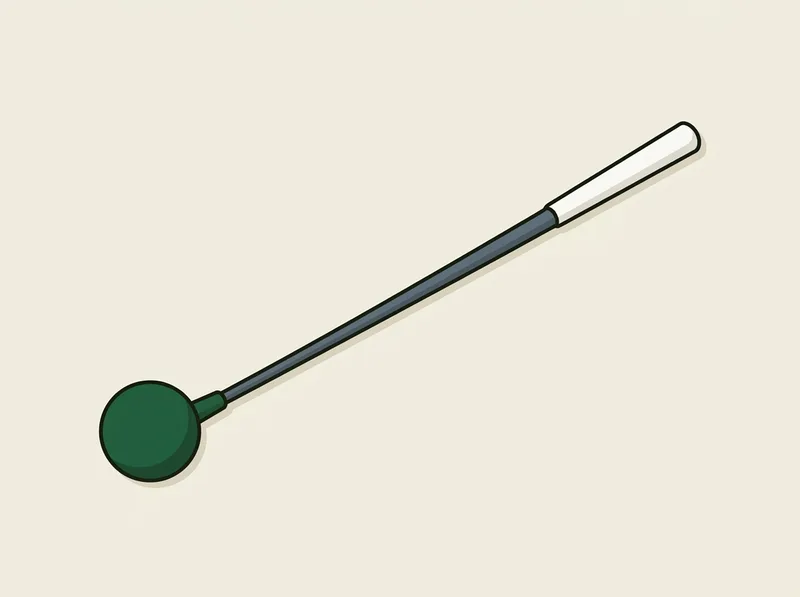 Around £85 to £100 by length
Orange Whip Trainer
- Trains
- Tempo, rhythm, balance and sequencing
- Feedback
- The weighted head lags a rushed transition
- Indoors
- Yes, with ceiling clearance
- Ball needed
- No
- Lengths
- 47 in full, 43 in mid, 38 in junior, 35.5 in compact
- Weight
- Not published by Orange Whip
- Built
- Handmade in the USA
- The flexible shaft punishes a fast transition immediately, which no verbal cue manages.
- Doubles as the only warm-up most amateurs will realistically do before a round.
- Four lengths, so it fits juniors, shorter players and anyone practising in a small room.
- Teaches a rhythm rather than a position, so it does nothing for a face or path problem.
- Orange Whip do not publish a weight figure for any size.
- Swinging it well and swinging a golf club well are related but not the same skill.
VerdictThe pick if your bad shots come in bursts rather than consistently, which usually means tempo rather than technique. It is also the aid on this page most likely to be used every week, because it takes ninety seconds and needs no setup.
Its quieter value is as a warm-up. Most amateurs arrive with eight minutes to spare and hit four drivers, which is close to the worst possible preparation. Ninety seconds with a weighted flexible shaft loosens the sequence without needing a ball, a net or a bay. Orange Whip do not publish a weight figure for any of the four sizes, which is a small gap on a product whose entire mechanism is weight.
HackMotion Core: the clubface, measured
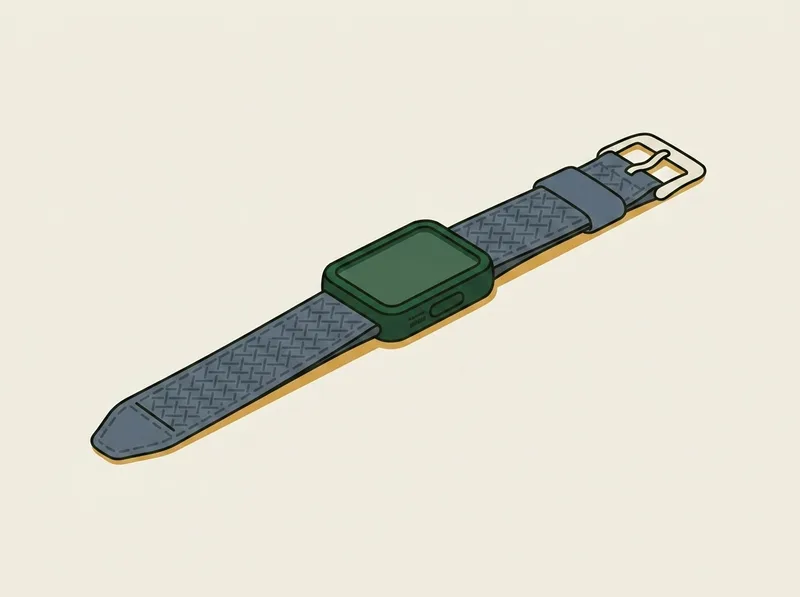
HackMotion is a sensor worn on the wrist that measures lead wrist angles through the swing, captures at 800 frames per second, runs about 10 hours per charge over USB-C, and comes with a lifetime licence rather than a subscription. It feeds back live through audio, so you hear whether the wrist is where you want it during the swing rather than reading about it afterwards.
Wrist angle matters because it is the closest thing to a direct handle on the clubface. TrackMan's explanation of club path sets out the relationship plainly: the face angle largely dictates where the ball starts, and the difference between the face and the path decides how much it curves. A slice is a face open relative to the path, and an open face at impact is very often a cupped lead wrist that the golfer has no idea is happening. Fixing a slice is mostly a face and path problem wearing a swing-plane disguise.
 Around £275 to £345
HackMotion Core
- Trains
- Lead wrist angles, and through them the clubface
- Feedback
- Live audio plus wrist data in the app
- Indoors
- Yes
- Ball needed
- No
- Battery
- About 10 hours, USB-C, 2.5 hours to charge
- Capture
- 800 frames per second
- Licence
- Lifetime, no subscription
- Measures the thing that actually decides where the ball starts, rather than a proxy for it.
- Real time audio means you get the feedback during the swing rather than after it.
- A lifetime licence with no subscription, which is increasingly rare in golf technology.
- The most expensive aid here by a wide margin, and the least casual.
- Wrist data without an idea of what to do with it is a number, not a lesson.
- It is a sensor and an app, so a flat battery ends the session.
VerdictThe right buy for a golfer who already practises regularly, has a persistent shot shape and wants to know why. For someone who plays twice a month and wants to enjoy it more, this is more instrument than the problem needs.
This is also the aid on this page with the highest chance of becoming an expensive paperweight, and it is worth being blunt about why. It produces numbers, not instructions. A golfer with a coach, or with the patience to work through the app's guided sessions, gets a great deal from it. A golfer hoping the sensor will diagnose them gets a chart.
Feedback aids and position aids
The distinction is worth being able to apply in a shop, so here it is in a form you can carry.
| Feedback aids | Position aids | |
|---|---|---|
| What they do | Report what the swing or stroke did | Physically prevent a movement |
| What you learn | Cause and effect, in your own swing | What a position feels like while restrained |
| Transfer to the course | Good, because the skill is yours | Poor, because the constraint is gone |
| Typical lifespan | Seasons | About a fortnight |
| Examples here | All four on this page | Straps, braces, plane rods, posture harnesses |
This is not a claim that every restricting aid is useless. Some are genuinely helpful in short doses with a coach watching, and connection aids in particular have a real place. It is a claim about what happens when one is bought online, used alone, and expected to do the teaching.
Which part of your game to buy for
An aid earns its space only if it addresses something you are currently losing shots to. Work out which of these you are before spending anything.
| Your problem | What to buy | Where the depth is |
|---|---|---|
| Three-putting and leaving putts short | A pressure putt trainer, then a rolling surface | Putting distance control |
| Fat, thin and inconsistent iron contact | A strike feedback board | This page and a drill plan |
| No time or space to hit balls | A net and a mat, at home | Golf nets |
| Aim and ball position drifting | Two alignment sticks, and nothing else | Alignment sticks |
| Rushed, out of sequence, wild on the course | A weighted flexible trainer | Swing trainers |
Alignment sticks deserve a specific mention because they are the cheapest genuinely useful thing in golf and they do not appear in the four above. Two rods, about a tenner, and they fix aim, ball position and swing path drills without a single moving part. They are excluded here only because they get a page of their own, not because they lost.
The rule that catches people out
This one costs golfers real strokes in real competitions every season, usually through pure ignorance.
The practical version: training aids are for practice, and a competition round is not practice. A weighted headcover on the driver during a warm-up on the range is fine. Carrying it onto the first tee is not.
What to spend, and in what order
The sensible order is cheapest and most used first, because the honest failure rate on training aids is high enough that a large first purchase is a bad bet.
- Under £20: two alignment sticks. Nothing else at this price competes.
- £20 to £35: a putting feedback trainer. Immediate, indoor, and aimed at a third of your shots.
- £85 to £150: one full swing aid, chosen for the miss you actually have.
- £275 and up: a sensor or a launch monitor, and only if you already practise weekly.
Anyone spending on the last line before the first two has bought the ceiling before the floor. A structured practice habit is worth more than all of it, and how to practise golf properly covers dose, frequency and why hitting fifty 7 irons in a row teaches almost nothing.
Space is the other constraint people underestimate. Every aid on this page works indoors, which is deliberate, and three of the four need no ball at all. If you have a garage or a spare corner, practising golf at home is worth more over a winter than a summer of range buckets, and it costs nothing per session. Putting in particular needs almost no room, and it is the one skill you can genuinely build on a carpet.
Key takeaways
- Buy aids that report what your swing did. Aids that hold you in a position teach a feeling that vanishes the moment the aid comes off.
- The PuttOUT Pressure Putt Trainer is the sensible first purchase: cheap, indoor, instant, and aimed at roughly a third of your shots.
- The Divot Board makes low point and swing path visible, which is the root of fat, thin and inconsistent iron contact. Treat its 2,000 swing estimate as the real price.
- The Orange Whip is for golfers whose bad shots come in clusters, which is usually tempo rather than technique. It doubles as a warm-up you will actually do.
- HackMotion measures the wrist angles that control the clubface, and suits golfers who already practise weekly and want to know why. It produces numbers, not instructions.
- Two alignment sticks for about a tenner remain the best value in golf and are excluded here only because they have their own roundup.
- Rule 4.3a(6) prohibits using a training aid during a round, and laying a stick down to check aim is a breach.
Common questions
Do golf training aids actually work?
Some do. The ones that give you information about the swing you just made have a good record, because they let you connect a cause to an effect and keep the fix. Aids that physically hold you in a position have a poor one, because the position leaves when the aid does.
What is the best golf training aid for a beginner?
A pair of alignment sticks and a putting feedback trainer, in that order, for under £45 together. Beginners lose most shots to aim, ball position and putting distance control, and all three are cheap to fix. Spending more before you know your own misses is guesswork.
Which training aid should I buy if I slice the ball?
Something that reports the clubface or the path rather than one that props the club onto a plane. A slice is an open face relative to the swing path, so a wrist sensor or a strike board that shows path direction tells you which of the two is your problem. A swing plane brace usually treats the symptom.
How much should I spend on a golf training aid?
Start under £35 and only go past £275 if you already practise every week. The failure rate on training aids is high, and the cheap ones are cheap because they are simple, not because they are worse. A single lesson often beats a mid-priced aid bought for the wrong fault.
Can I use training aids during a round of golf?
No. Rule 4.3a(6) prohibits using a training or swing aid in any way that helps you prepare for or make a stroke, and it names alignment rods and weighted headcovers directly. The penalty is the general penalty for a first breach and disqualification for a second. Practice rounds and the range are fine.
Are alignment sticks worth buying?
Yes, and they are the best value item in golf. Two rods for about a tenner cover aim, ball position, path drills and shoulder alignment, with nothing to break and no battery. Just keep them in the bag rather than on the ground once a competition starts.
Do I need a putting mat as well as a putting trainer?
They do different jobs. A pressure putt trainer teaches speed and gives instant feedback on whether the pace was right. A mat gives you a true rolling surface and a repeatable length, which is what a stroke needs. Owning both is common and neither replaces the other.
How often should I use a golf training aid?
Short and frequent beats long and occasional. Ten to fifteen minutes, three or four times a week, does more than an hour on a Sunday, because the skill is built by repetition spaced over time. This is also why an aid that takes ten seconds to set up outperforms one that takes five minutes.
Will a training aid replace golf lessons?
No, and the two are not really competing. A lesson tells you what to work on, an aid gives you feedback while you work on it between lessons. Buying an aid without knowing what your fault is means guessing at the diagnosis, which is where most unused training aids come from.
Are expensive golf training aids better than cheap ones?
Not reliably. Price mostly tracks electronics rather than usefulness, and two of the most effective aids in golf are a pair of plastic rods and a chalk line. What price does buy is measurement, so a sensor tells you numbers a board cannot. Whether you can act on those numbers is a separate question.
What is the best training aid for practising at home?
Anything that works without a ball, which is most of the ones worth owning. A weighted flexible trainer needs only ceiling height, a strike board works on carpet, and a putting trainer needs a few feet of floor. If you want to hit real balls indoors you need a net and a mat, which is a bigger setup and a separate decision.
How we put this together
- Published manufacturer specifications for each aid, taken from the maker's own listing rather than a retailer's summary.
- Where a maker does not publish a figure, this page records that rather than repeating a number found on a review site.
- One test applied to every candidate: does it report what the swing or stroke actually did, or does it hold the body in a position somebody decided it should be in.
- Deliberate spread across four different parts of the game, because a training aid only earns its space if it addresses something you are currently losing shots to.
- Shot Scope's published amateur datasets on putting and on greens in regulation, which is what decides where practice time is worth spending at a given standard.
- The Rules of Golf position on using a training aid during a round, which catches out more golfers than it should.
On this page
- The four, compared
- Why most training aids end up in a garage
- PuttOUT Pressure Putt Trainer: buy this one first
- Divot Board: see where the club actually landed
- Orange Whip Trainer: for the golfer whose tempo goes
- HackMotion Core: the clubface, measured
- Feedback aids and position aids
- Which part of your game to buy for
- The rule that catches people out
- What to spend, and in what order
- How we put this together
Tom Ashworth
Tom Ashworth is a PGA Professional who has taught golf since 2012, working mainly with beginners and mid-handicappers at club level in Surrey. He reviews the instruction guides on Learn Golf for technical accuracy before they publish.
Most of his teaching is with players in their first three years of the game, and most arrive having been told too much: six swing thoughts collected from videos, half of them contradicting each other. His approach is to check the grip and the alignment before touching the swing, on the basis that most bad ball flight is decided at address.