Best Hybrids for Seniors: Below 85 mph, Long Irons Stop
A long iron does not become hard to hit at a slower swing speed. It stops working. A hybrid is the club that removes the speed requirement, and the specification that decides how much it removes is printed in grams.
Some links here earn us a commission at no extra cost to you. It never changes what we recommend or the order we rank it. How this works.
There is a point on the speed scale where a long iron stops being a club that is hard to hit well and becomes a club that does not work. It is not a gradual decline. Below roughly 85 mph of driver club speed, a 3 or 4 iron produces low skidding shots that finish shorter than a 7 iron, and no amount of practice moves that. This page is about the four hybrids that remove the speed requirement, and about how many irons to take out rather than one.
The four, compared
Read this table from the shaft weight column outwards. Loft decides which iron comes out of the bag, and every one of these covers that. Shaft weight decides whether the club is any easier to swing than the iron it replaced.
| Pick | Best for | Lofts | Shaft weight | Flexes | Lengths | Price |
|---|---|---|---|---|---|---|
| PING G440 HL Hybrid | The lightest published shaft here, across the widest useful loft range | 20°, 23°, 26°, 30°, 34° | 38g in the 35 flex, 42g in the 45 flex | 35 and 45, Ping's two lightest designations | 40.25in at 20° down to 38.25in at 34° | Around £270 to £295 |
| XXIO 14 Hybrid | The only hybrid on the market with a published total club weight | 18°, 20°, 23°, 26°, 30° | 39g in R2, 40g in R, 42g in SR, 43g in S | R2, R, SR, and S to custom order | 41in at 18° down to 39in at 30° | Around £350 at UK retail |
| Callaway Quantum Max Fast Hybrid | Reaching the short end of the bag, with head volume published all the way down | Six heads, 3H through 8H, all adjustable | Mitsubishi Vanquish 40, a 40 gram class shaft | One, Light | 40.75in at the 3H down to 37.625in at the 8H | Around £330 at UK retail |
| TaylorMade Qi35 Max Lite Rescue | A light build with a flex ladder that includes something below regular | Four heads, 4 through 7, degrees not published in launch material | Mitsubishi Vanquish 5, weight not published | R and R2 or A | Not published | Around £200 at UK retail |
Every club here is a lightweight variant of a mainstream model rather than the mainstream model itself, and that is the point. Our general hybrid roundup ranks the standard builds on head size, loft coverage and adjustment. This page ranks the light ones on grams.
The speed floor, and why it is a cliff
A long iron has a small face, a narrow sole and 20 to 26 degrees of loft. It needs speed to launch and a precise strike to compress. Take away the speed and both requirements fail together, which is why the loss feels sudden rather than gradual.
The size of the gain from swapping is also measured, and it is measured in the direction you would hope.
One yard from the rough at scratch, eleven at a 20 handicap. That is the clearest evidence available that a hybrid is a forgiveness club rather than a distance club, and that the forgiveness is worth most to the players with the least speed behind the ball.
PING G440 HL: the lightest complete build
The PING G440 HL Hybrid is built around the ALTA Quick shaft at 38 grams in the 35 flex and 42 grams in the 45 flex. For scale, a conventional hybrid shaft runs 60 to 85 grams. This is a 38 gram shaft in a club you hit off the deck.
What makes it a complete build rather than a light shaft is what surrounds it. The swingweight is C7, an aluminium back weight replaces the steel one used in the standard head, and a Lamkin UTx Lite grip is fitted as standard. A maker who fits a 38 gram shaft and then a 50 gram grip has given back a third of the saving. Ping have not.
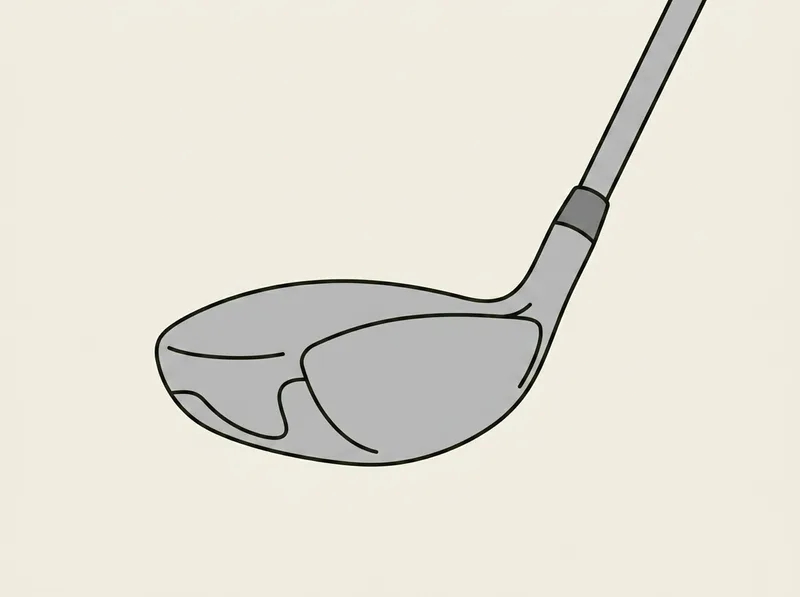 Around £270 to £295
PING G440 HL Hybrid
- Lofts
- 20°, 23°, 26°, 30°, 34°
- Shaft weight
- 38g in the 35 flex, 42g in the 45 flex
- Flexes
- 35 and 45, Ping's two lightest designations
- Lengths
- 40.25in at 20° down to 38.25in at 34°
- Lie
- 57.5° to 59.5°, published for every head
- Swingweight
- C7, with a Lamkin UTx Lite grip as standard
- A 38 gram stock shaft, which is lighter than the stock shaft in most modern drivers.
- A C7 swingweight and a Lamkin UTx Lite grip, so the saving is not given back at the butt end.
- ±1.5° of loft adjustment, which is the only hosel on this page that can follow your speed down.
- Ping publish no price on their own listing, so what you pay is set by the fitter.
- The range starts at 20°, so there is no 17° or 18° head for anyone replacing a 2 iron.
- Built to order, so lead times run longer than taking a club off a shelf.
VerdictThe best combination of light shaft, adjustable loft and published numbers available in this category, and the clearest first choice if you are being fitted. If you want a total club weight figure to compare against, Ping do not print one and XXIO do.
Five heads at 20°, 23°, 26°, 30° and 34°, with lengths from 40.25 inches down to 38.25 and lies from 57.5° to 59.5°, all published. The hosel gives 1.5° of loft adjustment either way, which is the only adjustment on this page and the reason this club can still be right for you in five years when your speed is not what it is now.
The gap is at the top. The range starts at 20°, so if you are replacing a 2 iron or want something to hit off a tight par 4 tee, the XXIO reaches lower and this does not.
XXIO 14: the only published total weight
The XXIO 14 Hybrid publishes the number every other maker in this category leaves out.
| Head | Loft | Head volume | Length | Head weight | Total club weight |
|---|---|---|---|---|---|
| 3 hybrid | 18° | 131cc | 41in | 231g | 319g |
| 4 hybrid | 20° | 130cc | 40.5in | 236g | 323g |
| 5 hybrid | 23° | 128cc | 40in | 241g | 328g |
| 6 hybrid | 26° | 126cc | 39.5in | 247g | 333g |
| 7 hybrid | 30° | 123cc | 39in | 252g | 338g |
Total club weight is the specification you actually feel, and it is the one almost nobody prints. A conventional hybrid lands somewhere around 355 to 375 grams. Knowing that this one is 328 grams at the 5 hybrid, rather than inferring it from a shaft weight, is the difference between a decision and a guess.
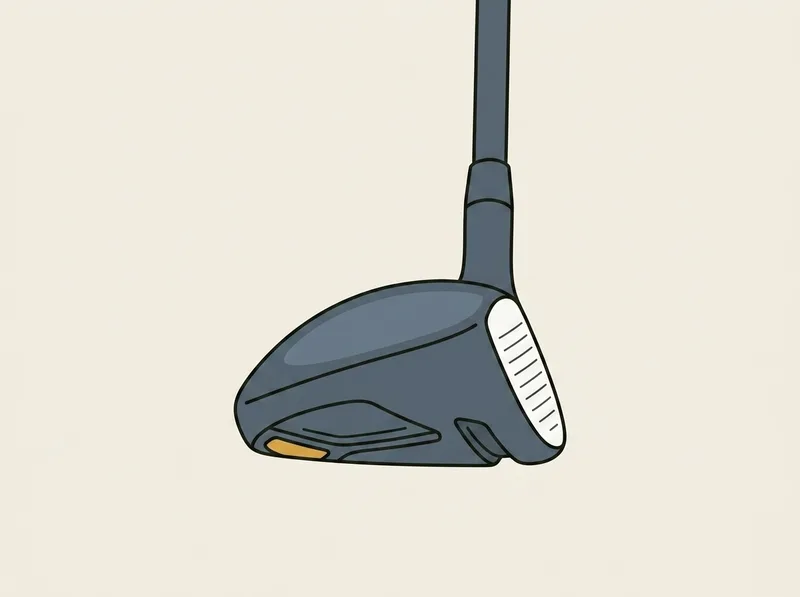 Around £350 at UK retail
XXIO 14 Hybrid
- Lofts
- 18°, 20°, 23°, 26°, 30°
- Shaft weight
- 39g in R2, 40g in R, 42g in SR, 43g in S
- Flexes
- R2, R, SR, and S to custom order
- Lengths
- 41in at 18° down to 39in at 30°
- Club weight
- 319g at 18° to 338g at 30°
- Head volume
- 131cc at 18° down to 123cc at 30°
- Total club weight published for every head, which nothing else in this category does.
- Head volume published for every head as well, so the size can be compared rather than guessed.
- An 18° head, so this is the only range here that reaches down to a 2 iron replacement.
- A D1 swingweight, which is heavier in feel than the Ping despite the lighter total build.
- No hosel adjustment at all, so the loft you buy is the loft you keep.
- XXIO price the rest of the bag the same way, which makes matching the set expensive.
VerdictThe right buy if you want to know what you are swinging rather than infer it, because 319 grams on the maker's own table is the only checkable number in this category. The lack of any adjustment is the real cost against the Ping.
The MP1400 stock shaft runs 39 grams in R2, 40 in regular, 41 in SR and 43 in stiff, with the grip at 43 grams. R2 is worth understanding: it is not marketing for regular, it sits a genuine step below it, and for a golfer whose speed has dropped into the low eighties it is often the flex that finally lets the shaft load at all.
Two costs. The swingweight is D1, which feels heavier in the hands than the Ping's C7 despite the lighter total build, because swingweight measures balance rather than mass. And there is no adjustment of any kind.
Callaway Quantum Max Fast: further down the bag
Callaway describe the Quantum Max Fast Hybrid as their lightest hybrid, built for players who benefit from an overall lighter setup, and the specification list backs it: a Mitsubishi Vanquish 40 shaft in Light flex, across six heads from a 3 hybrid to an 8.
An 8 hybrid is the interesting part. Head volume runs 122cc, 122cc, 115cc, 110cc, 105cc and 100cc as the loft rises, with lengths from 40.75 inches down to 37.625 and lies from 58.75° to 61.875°. The heads shrink as the clubs shorten, so the short ones genuinely sit like irons rather than like small fairway woods.
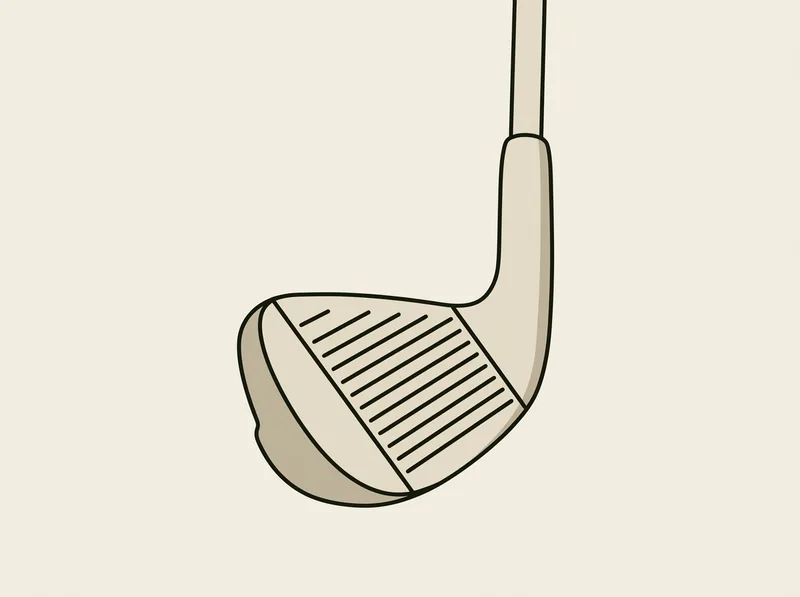 Around £330 at UK retail
Callaway Quantum Max Fast Hybrid
- Lofts
- Six heads, 3H through 8H, all adjustable
- Shaft weight
- Mitsubishi Vanquish 40, a 40 gram class shaft
- Flexes
- One, Light
- Lengths
- 40.75in at the 3H down to 37.625in at the 8H
- Head volume
- 122cc at the 3H down to 100cc at the 8H
- Lie
- 58.75° to 61.875°, published for every head
- Six heads reaching an 8 hybrid, which covers further down the bag than anything else here.
- Head volume published for every loft, shrinking from 122cc to 100cc as the club gets shorter.
- Callaway describe it as their lightest hybrid, and the whole build is specified to match.
- Light flex only, with no regular option if your speed turns out higher than expected.
- The lie angles run upright, to 61.875° at the short end, which suits an iron-style delivery.
- Right handed only across most of the range, which is a real limitation for this buyer.
VerdictThe pick for a golfer who wants to replace four or five irons rather than two, because nothing else here goes that far down the bag in a genuinely light build. The single flex is the ceiling and the upright lies will not suit a sweeping delivery.
That range is what makes this the pick for anyone replacing more than two irons. If your 6 and 7 irons have also stopped launching, this is the only range on the page with a proper answer, and the heads at that end are the right size to look at.
Two warnings. Light flex is the only build, so a golfer who turns out to swing faster than expected has nowhere to go. And 61.875° at the short end is an upright lie that suits a golfer who delivers the club like an iron, with the hands leading, and suits a sweeping delivery a good deal less.

TaylorMade Qi35 Max Lite: the grip tells you the build
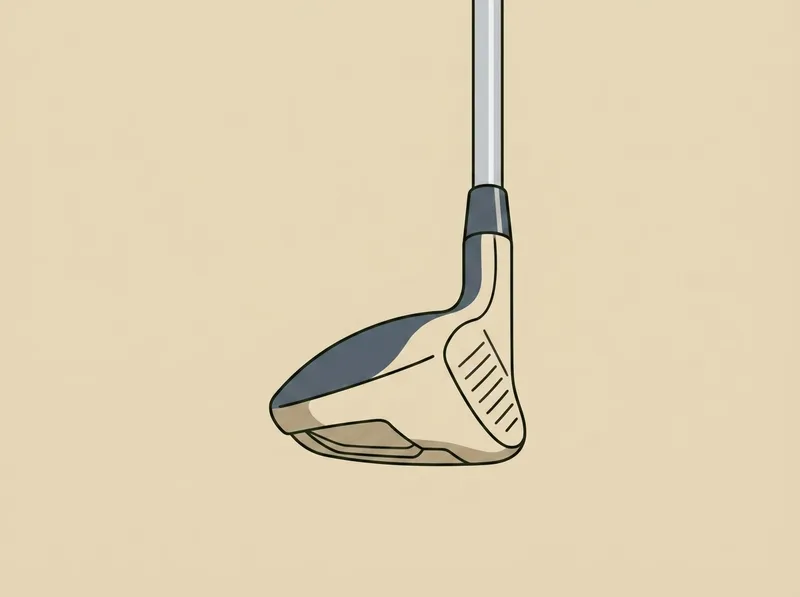
The Qi35 Max Lite Rescue takes weight out of the head, the shaft and the grip together rather than only the shaft, which is the correct way to build a light club and less common than it should be. The Mitsubishi Vanquish 5 shaft comes in regular and in a softer R2 or A designation, and the stock Golf Pride Z-Grip is 43 grams against roughly 50 for a standard grip.
 Around £200 at UK retail
TaylorMade Qi35 Max Lite Rescue
- Lofts
- Four heads, 4 through 7, degrees not published in launch material
- Shaft weight
- Mitsubishi Vanquish 5, weight not published
- Flexes
- R and R2 or A
- Lengths
- Not published
- Grip
- Golf Pride Z-Grip, 43g
- Build
- Weight removed from head, shaft and grip together
- A 43 gram grip fitted as standard, which is where most makers quietly add weight back.
- Both a regular and a softer flex offered as stock rather than as a custom order.
- Left handed builds offered across the range, which two of the clubs above do not manage.
- TaylorMade do not publish loft in degrees, length, lie or shaft weight in accessible launch material.
- Without a published length you cannot check the gap against the iron below it before buying.
- No hosel adjustment, so nothing about the club can follow a changing swing.
VerdictThe value pick, and the grip weight tells you the build was thought about rather than badged. The missing specifications are why it is fourth: this is the one club here you cannot gap into your bag on paper.
That grip figure is the tell. A maker who publishes it has thought about the total, and a maker who fits a light shaft under a standard grip has not. Four heads are offered, numbered 4 to 7, and left handed builds exist across the range, which is more than two of the clubs above manage.
What TaylorMade do not publish in accessible launch material is loft in degrees, length, lie angle or shaft weight in grams. On a club whose entire job is to slot between a fairway wood and an iron, missing lengths and lofts is a real problem, and it is why this sits fourth despite being the cheapest thing here.
How many irons to take out
This is where the senior version of the question genuinely differs from the general one. The usual advice is to replace the 3 and 4 irons. At a slower swing speed that is not enough.
| Driver club speed | Longest iron that still works | Hybrids to carry |
|---|---|---|
| Over 95 mph | 4 iron, sometimes a 3 | One, or none |
| 85 to 95 mph | 5 iron | One, around 20° to 22° |
| 75 to 85 mph | 6 iron | Two, around 22° and 26° |
| Under 75 mph | 7 iron | Three, around 23°, 26° and 30° |
Three hybrids sounds like a lot until you notice that the alternative is three clubs you cannot get airborne. The R&A's Rule 4.1b sets fourteen clubs as a maximum and no minimum, so there is no obligation to fill the slots with irons that do not work.
Check the loft of whatever you are removing before you buy, because iron lofts have strengthened over twenty years and hybrid lofts have not moved with them. A modern game improvement 5 iron can sit at 23°, which is exactly where several of the hybrids above sit. How far iron lofts have drifted has the figures by set type, and what tracked amateurs actually carry each club is the other half of the gapping check.
What flex actually means at this end of the market
Every club on this page offers something below regular and they all call it something different. Ping use 35 and 45. XXIO use R2. Callaway use Light. TaylorMade use R2 or A.
None of those designations mean anything across brands, because there is no published industry standard behind flex letters at all. What is comparable is the gram figure attached to them, which is why the shaft weight column exists and the flex column is mostly there to tell you a soft option is available. How to work out which flex you need covers estimating it from carry distance, which is the method available to anyone without a launch monitor.
Setting up to it, which is not what people expect
A hybrid is built at iron length rather than wood length. The Ping 20° head is 40.25 inches and the XXIO 20° is 40.5, where a typical 3 wood runs around 43 inches. Three inches changes how far you stand from the ball, how steep the shaft sits, and how much margin you have for finding the middle.
The delivery follows from that. Ball position sits closer to the middle of the stance than to the front, and the strike wants to be very slightly descending, taking a shallow divot after the ball rather than sweeping it clean.
How to hit a hybrid properly works through the whole delivery, and it is closer to an iron swing than nearly anyone expects.
Which of these pages you want
Three neighbouring questions have genuinely different answers.
- If speed is not the issue and you simply want the best hybrids on the market, head size and loft coverage matter more than grams. The general roundup linked above is that page.
- If the whole bag needs rebuilding rather than two slots, the answer is a set decision rather than a club decision. Clubs for seniors covers graphite through the irons and hybrid-heavy composition.
- If what you want is a club off the tee on a tight hole, that is a fairway wood question. Fairway wood picks starts there.
- And the driver has its own weight and flex argument, which is on drivers for seniors.
For the swing side rather than the equipment side, how golf changes with age deals with what to adjust and what to leave alone.
Key takeaways
- Below roughly 85 mph of driver speed a long iron does not get harder, it stops working. That is the case for a hybrid at this speed.
- The PING G440 HL pairs a 38 gram shaft with a C7 swingweight and a light grip, and it is the only club here with an adjustable hosel.
- XXIO publish total club weight for every head, from 319 grams at 18° to 338 grams at 30°. Nothing else in the category prints that number.
- The Callaway Quantum Max Fast reaches an 8 hybrid at 100cc, which is the only sensible answer if you need to replace four or five irons.
- The TaylorMade Qi35 Max Lite fits a 43 gram grip as standard, which tells you the total was designed rather than assumed.
- Flex designations mean nothing across brands. Compare the gram figures, not the letters.
- Tracked amateur data has a 20 handicap 16 feet closer with a hybrid and 11 yards longer from the rough, against 1 yard for a scratch player.
- Never carry a long iron and the hybrid that replaces it. Same loft, same distance, one wasted slot.
Common questions
What is the best hybrid for a senior golfer?
The PING G440 HL, because a 38 gram stock shaft, a C7 swingweight and a lightweight grip make it the most completely light build here, and it is the only one whose loft can be adjusted later. The XXIO 14 is the alternative if you want a published total club weight to check.
What swing speed do you need to hit a long iron?
Roughly 85 mph of driver club speed to hit a 4 iron usefully, and more than that for a 3. Below that the ball does not launch high enough to carry, which is why a slower swing often finds a 4 iron going shorter than a 7. It is a launch problem rather than a technique problem.
How many hybrids should a senior carry?
Two for most golfers, at around 22° and 26°, and three below about 75 mph of driver speed. The test is simple: any iron you cannot get consistently airborne should be a hybrid instead, and there is no rule requiring you to fill all fourteen slots.
Should a senior use a senior flex hybrid?
Only if the measured speed says so, and then look at the gram figure rather than the letter. There is no industry standard behind flex designations, so Ping's 35, XXIO's R2 and Callaway's Light are not directly comparable. The published shaft weights are.
How light should a senior hybrid be?
Lighter than standard, and total club weight is the number to look at. A conventional hybrid lands around 355 to 375 grams. The lightest published complete build here is 319 grams at the 3 hybrid. Anywhere meaningfully below the conventional figure is an improvement if you are struggling to accelerate the club.
What hybrid replaces a 4 iron?
Traditionally a 22° hybrid, but check the loft of the iron first. Modern game improvement 4 irons are often 20° or stronger, in which case a 20° hybrid is the match and a 23° one leaves a gap below it. Match the loft, never the club number.
Are hybrids easier to hit than fairway woods?
From a poor lie, considerably. A hybrid is roughly three inches shorter than a 3 wood with a much smaller head, which makes it easier to control and easier to strike from rough or a tight lie. A fairway wood still goes further off a tee, which is the trade.
Can I replace all my long irons with hybrids?
Yes, and at a slower swing speed you probably should. Nothing in the Rules requires an iron set to be complete, and three hybrids replacing the 4, 5 and 6 irons is a common and sensible build below about 80 mph of driver speed.
Do I need an adjustable hybrid?
It is more useful here than in most categories, because swing speed at sixty-five is not swing speed at seventy-five and a fixed loft cannot follow it. Of the four clubs on this page only the PING G440 HL adjusts at all. If nobody is going to change the setting, buy the loft you need instead.
Should a hybrid be swung like an iron or a wood?
Like an iron. The club is built at iron length, so ball position sits near the middle of the stance and the strike should be slightly descending, taking a shallow divot after the ball. Trying to sweep it clean is the most common reason golfers find hybrids inconsistent.
Is a lighter hybrid always better?
No. A very light club is easier to accelerate and harder to feel, and some golfers lose track of where the head is entirely. Give a light build a month. If your strike quality has not returned by then, the club is too light for you and going back up is the right answer.
How we put this together
- Published manufacturer specifications for each hybrid, taken from the maker's own listing rather than a retailer's summary, with unpublished figures recorded as unpublished.
- Stock shaft weight in grams and, where published, total club weight, because those decide how much of a slower swing actually reaches the ball.
- How many flexes below regular each model is genuinely offered in, since a soft flex that only exists as a custom order is not really available.
- Grip weight where the maker prints it, because a light shaft under a standard grip gives back a fifth of the saving.
- Shot Scope's published amateur datasets comparing hybrids with the long irons they replace, broken down by handicap.
- TrackMan's published club speed benchmarks, which set the floor under whether a long iron works at all.
On this page
- The four, compared
- The speed floor, and why it is a cliff
- PING G440 HL: the lightest complete build
- XXIO 14: the only published total weight
- Callaway Quantum Max Fast: further down the bag
- TaylorMade Qi35 Max Lite: the grip tells you the build
- How many irons to take out
- What flex actually means at this end of the market
- Setting up to it, which is not what people expect
- Which of these pages you want
- How we put this together

Tom Ashworth
Tom Ashworth is a PGA Professional who has taught golf since 2012, working mainly with beginners and mid-handicappers at club level in Surrey. He reviews the instruction guides on Learn Golf for technical accuracy before they publish.
Most of his teaching is with players in their first three years of the game, and most arrive having been told too much: six swing thoughts collected from videos, half of them contradicting each other. His approach is to check the grip and the alignment before touching the swing, on the basis that most bad ball flight is decided at address.