Best Fairway Woods: Four Picks and Which Loft to Buy
Most golfers buy a 3 wood, hit it badly off the ground, and use it as a nervous driver instead. The data on that swap is unkind, and the club that actually earns its place is usually two lofts weaker.
Some links here earn us a commission at no extra cost to you. It never changes what we recommend or the order we rank it. How this works.
A fairway wood gets bought for one job and used for another. Golfers buy a 3 wood to reach par 5s in two and end up carrying it as a safety driver, which is the one thing the amateur data says it is worst at. Here are four worth buying, and how to work out which loft actually deserves the slot.
The four, compared
Read this table across the whole family rather than just the 3 wood row. Lofts and lengths are what decide whether your bag has a 30 yard hole in it, and that is the mistake that survives the purchase.
| Pick | Best for | Lofts | Head volume | Lengths | Adjustment | Price |
|---|---|---|---|---|---|---|
| PING G440 MAX Fairway | The widest range, and the only full published spec table | 15°, 17°, 19°, 21°, 24° | 186cc at 15° down to 157cc at 24° | 43in at 15° down to 41.5in at 24° | ±1.5° loft, lie up to 3° flatter | Around £320 to £350 |
| TaylorMade Qi4D Max Fairway | The largest head, and the easiest to look at | 15°, 18°, 21°, 24° | 200cc | 43.25in at 15° down to 41.25in at 24° | None published for this model | Around £320 at UK retail |
| Cobra OPTM MAX Fairway | The most adjustment and the lightest stock shaft | 15.5°, 18.5°, 21.5°, 24.5° | 182cc at 15.5° down to 164cc at 21.5° | 43.25in at 15.5° down to 42in at 21.5° | FutureFit33 hosel, ±2° loft and lie | Around £300 at UK retail |
| Tour Edge Hot Launch Max Fairway | The shallowest heads, at less than half the price | 15°, 19°, 22° | 175cc at 15°, 160cc at 19°, 152cc at 22° | 43in, 42in and 41.5in | None. Fixed hosel, square face | Around £140 to £160 |
Every head here is well inside the legal limits, which for a fairway wood are the same ones that apply to a driver. The R&A Rules of Equipment cap head volume at 460 cubic centimetres and heel-to-toe dimension at 5 inches under Rule 2.4b(i). No fairway wood comes close, which is why the size differences between these models are meaningful rather than academic.
The 3 wood off the tee is not the safe play
This is the belief the whole category rests on, and the amateur data does not support it.
Three tenths of a stroke per par 4 is an enormous number in a golf context, and it is entirely explained by the second shot. Being 22 yards further back means a longer club into the green from a lie that is statistically no better.
That does not make the 3 wood useless. It makes it a situational club rather than a policy, and it moves the argument for buying one onto the shot it was designed for, which is off the ground. If the reason you reach for it is that the driver is unswingable rather than unreliable, that is a different problem with a different fix, and the main driver roundup is the better place to start.
PING G440 MAX Fairway: the widest range, fully published
The PING G440 MAX Fairway comes in five lofts and Ping print the complete table for all of them. The 15° head is 186cc at 43 inches with a 219 gram head and a 56.0° lie, and the family runs down through 17°, 19° and 21° to a 24° 9 wood at 157cc, 41.5 inches, 232.6 grams and a 57.5° lie.
The 17° 4-wood is the interesting inclusion. For a lot of amateurs the 15° 3 wood is genuinely too little loft off the ground and the 19° 5 wood leaves a gap, and a 4 wood is the club that has been missing from most bags for twenty years.
 Around £320 to £350
PING G440 MAX Fairway
- Lofts
- 15°, 17°, 19°, 21°, 24°
- Head volume
- 186cc at 15° down to 157cc at 24°
- Lengths
- 43in at 15° down to 41.5in at 24°
- Adjustment
- ±1.5° loft, lie up to 3° flatter
- Head weights
- 219.0g at 15° up to 232.6g at 24°
- Lies
- 56.0° at 15° to 57.5° at 24°
- Five lofts including a 17° 4-wood, which is the gap most golfers actually have between driver and 5 wood.
- Ping publish head weight, head volume, length, lie and swing weight for every single loft, which nobody else here does.
- An adjustable hosel across the whole family, so gapping can be tuned after the fact rather than accepted.
- The heads get smaller as loft rises, down to 157cc at 24°, which some golfers find intimidating rather than reassuring.
- Stock shafts start at 65g, which is heavier than the two lightest options on this page.
- The most expensive of the four, and the 4-wood is a niche club that will not suit everyone.
VerdictThe default buy for most golfers, because the loft range and the published table let you gap the whole top of the bag properly rather than guessing. If you only want a 3 wood and never think about it again, you are paying for options you will not use.
Every head adjusts 1.5° of loft either way with up to 3° of flatter lie, so a 17° head covers everything from 15.5° to 18.5°. Stock shafts start at 65g in the ALTA CB Blue, which is heavier than the Cobra and Tour Edge options and appropriate for a mid to fast swing.
TaylorMade Qi4D Max Fairway: the biggest head here
The TaylorMade Qi4D Max Fairway is built around a 200cc head with weight pushed to the perimeter and a shallow face profile. Two hundred cubic centimetres is a large fairway wood, roughly 15cc more than the Ping 3 wood and 25 more than the Tour Edge, and the difference is visible at address.
Lofts are 15°, 18°, 21° and 24° at 43.25, 42.25, 41.75 and 41.25 inches, with lie angles from a 57° to 61° range in the 3 wood up to 60.5° in the 9 wood. TaylorMade do not publish an adjustable hosel on this head, so the lofts you see are the lofts you get.
 Around £320 at UK retail
TaylorMade Qi4D Max Fairway
- Lofts
- 15°, 18°, 21°, 24°
- Head volume
- 200cc
- Lengths
- 43.25in at 15° down to 41.25in at 24°
- Adjustment
- None published for this model
- Lies
- 57° to 61° at 15°, 60.5° at 24°
- Design
- Perimeter weighting, shallow face profile
- A 200cc head is the biggest here by a clear margin, which is the specification that most reduces how intimidating the club looks on turf.
- Four lofts running to 24°, so the family covers the whole gap down to a 5 iron.
- The shallow face profile is the right shape for hitting off the ground rather than off a tee.
- TaylorMade do not publish an adjustable hosel for this head, so the lofts are what you get.
- No head weight or swing weight figures published, which makes cross-brand comparison guesswork.
- The 18° 5 wood is a wide jump from the 15° 3 wood if you carry both.
VerdictThe pick for a golfer who has struggled to get a fairway wood off the ground and wants the largest, friendliest head they can find. If you want to fine tune the gapping between clubs, the Ping is the better buy.
Head size is the reason to buy this one. A golfer whose fairway wood problem is confidence rather than gapping will get more out of a bigger, shallower shape than out of any adjustment feature, and this is the biggest and shallowest of the four mainstream heads.
Cobra OPTM MAX Fairway: the most adjustment, the lightest shaft
Cobra's OPTM MAX Fairway is the outlier on two specifications. The FutureFit33 hosel gives 2° of loft and lie adjustment either way, which is wider than anything else here, and the stock MCA Kai'li Dark Waves Red 50 is a 50 gram shaft with A flex available across most of the family.
The lofts are set at 15.5°, 18.5°, 21.5° and 24.5°, with the 3 wood at 182cc and 43.25 inches on a 58.5° lie, the 5 wood at 167cc and 42.5 inches on 60.3°, and the 7 wood at 164cc and 42 inches on 61.0°. Those lies are the most upright on this page by two to four degrees.
 Around £300 at UK retail
Cobra OPTM MAX Fairway
- Lofts
- 15.5°, 18.5°, 21.5°, 24.5°
- Head volume
- 182cc at 15.5° down to 164cc at 21.5°
- Lengths
- 43.25in at 15.5° down to 42in at 21.5°
- Adjustment
- FutureFit33 hosel, ±2° loft and lie
- Stock shaft
- MCA Kai'li Dark Waves Red 50
- Lies
- 58.5° at 15.5° up to 61.0° at 21.5°
- Two degrees of loft adjustment either way, which is the widest range on this page and enough to turn a 3 wood into a 4 wood.
- A 50g stock shaft with A flex available across most of the family, which is unusually light for this category.
- The most upright lies here, up to 61° in the 7 wood, which suits a steeper, more iron-like delivery.
- Lofts are set at half degrees, which reads oddly against every other maker and complicates comparison.
- The 7 and 9 woods come in regular and A flex only, so faster swings lose the top of the family.
- Thirty three hosel settings on a club most people set once is more resolution than anyone needs.
VerdictThe pick if the fairway wood in your bag is there to be hit off the deck by a slower, steeper swing, because the light shaft and upright lies suit that delivery. The half degree lofts are an irritation rather than a fault.
Upright lies and a light shaft point at the same golfer: someone who delivers a fairway wood more like an iron, steeper and slower, rather than sweeping it. If that is you, this is the club that fits the delivery.
Which loft actually earns the slot
The honest starting point is what the club is for. If it is for the second shot on par 5s and long par 4s, it needs to work off the ground, and that pushes loft up. If it is genuinely a tee club for holes where the driver reaches trouble, a 3 wood makes sense and the data above says use it sparingly.
| The job | Loft to buy | Why |
|---|---|---|
| Second shot on par 5s | 18° to 19° | Enough loft to launch off turf reliably |
| Long par 4 approaches | 21° to 22° | Lands softer, stops on a green |
| Tee club on tight holes | 15° to 17° | Length matters, lie is not a problem |
| Replacing a 3 or 4 iron | 21° to 24° | Higher, softer, far easier to strike |
Most bags are better served by a 5 wood than a 3, and a lot of golfers should go further and carry a 7 wood. How to hit a fairway wood covers the ball position and strike that goes with them, and it is a different motion from a driver.
Tour Edge Hot Launch Max Fairway: shallow, cheap and serious
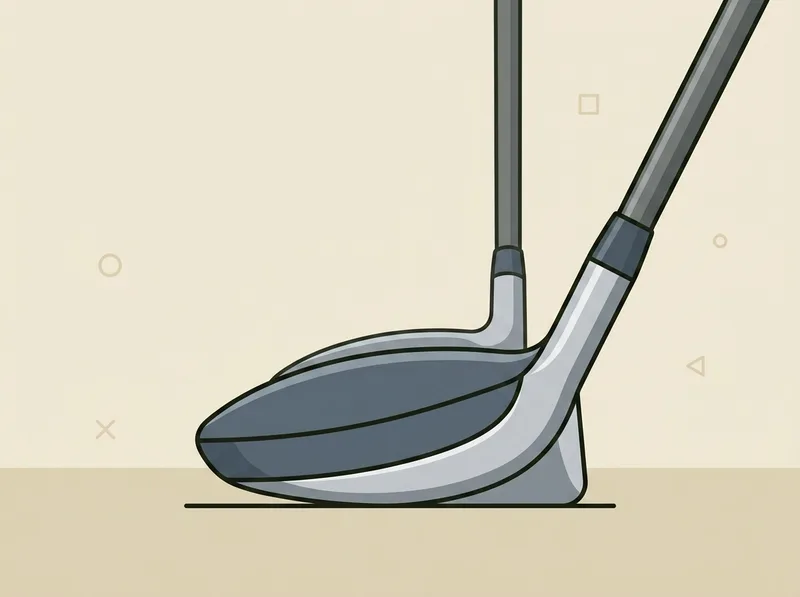
The Hot Launch Max fairway has the smallest and shallowest heads here, at 175cc in the 15°, 160cc in the 19° and 152cc in the 22°, on lengths of 43, 42 and 41.5 inches and lies of 57°, 59° and 60°. The face is square, the hosel is fixed, and the Aldila Ascent shaft comes in A, R and S at 55g, 57g and 59g.
Shallow is the relevant word. A fairway wood with a low face sits closer to the ground behind the ball, which is what makes a tight lie playable, and a smaller head reaches the ball with less to snag on the way through. The trade is a smaller target on the face, and hitting off a tight lie covers the strike that goes with it.
 Around £140 to £160
Tour Edge Hot Launch Max Fairway
- Lofts
- 15°, 19°, 22°
- Head volume
- 175cc at 15°, 160cc at 19°, 152cc at 22°
- Lengths
- 43in, 42in and 41.5in
- Adjustment
- None. Fixed hosel, square face
- Stock shaft
- Aldila Ascent, 55g in A flex
- Lies
- 57°, 59° and 60°
- The smallest and shallowest heads here, which is the profile that sits lowest behind a ball on tight turf.
- A, R and S flexes as standard in a 55g to 59g shaft, so the light option is not a special order.
- Costs less than half the Ping and gives up very little on a swing that is not fast.
- Right hand only, which rules the club out entirely for left handed golfers.
- Only three lofts and no adjustment, so gapping has to be right first time.
- Carried by far fewer UK stockists than the other three, so hitting one before buying takes more effort.
VerdictThe value buy, and a serious one: shallow heads, a light stock shaft and a price that leaves room for a hybrid as well. The right hand only limitation is the reason it is not ranked higher.
The disqualifying limitation for some readers is that this model is right hand only. There is no left handed version, which is a strange gap in a family that otherwise offers left handed drivers and irons.
Fairway wood or hybrid
The two clubs overlap at 19° to 24° and they do genuinely different things. A fairway wood has a longer shaft, a wider sole and a lower centre of gravity, so it launches higher and runs further. A hybrid is shorter, more upright and much easier to hit out of a bad lie.
The rule of thumb that survives contact with reality is that fairway woods suit sweepers and hybrids suit diggers. If your divots with a 6 iron are deep, the hybrid will serve you better at the same loft. If you pick the ball cleanly, the wood will go further. The best hybrids covers that side of the decision, and there is no rule against carrying both.
Gapping into the rest of the bag
The one mistake you cannot fix after the purchase is a hole in the distances. A driver at 225 yards, a 3 wood at 205 and a 4 iron at 175 leaves a 30 yard gap that will cost you shots on every long par 4.
Work it from the iron up rather than the driver down. Find the longest iron you hit reliably, work out its carry, and buy the wood or hybrid that sits about 12 to 15 yards beyond it. The golf club distance chart gives realistic figures by club to work from, and how many clubs to carry covers the fourteen club limit that forces the choice.
Where this club really earns back its price is the long approach, and that is as much a course management question as an equipment one. Playing a par 5 works through when going for it is worth the risk, and the answer is less often than most golfers assume.
Specifications that matter, and ones that do not
Face technology on a fairway wood is the least useful thing on the box. Every model here uses some variation of a variable thickness face and a cup construction, and the differences between them are small enough to disappear inside a normal shot to shot spread.
What does change the outcome is measurable: head volume decides how the club looks and how forgiving it is, face depth decides whether a tight lie is playable, shaft length decides how often you find the middle, and lie angle decides where the ball starts. Every one of those is printed. Golf club types explained sets out where the fairway wood sits against the driver and hybrid on all four.
Key takeaways
- The PING G440 MAX is the pick: five lofts including a 17° 4-wood, an adjustable hosel throughout, and a full published spec table for every head.
- The TaylorMade Qi4D Max has the biggest head at 200cc, which is the specification that most helps a golfer who cannot get the club off the ground.
- The Cobra OPTM MAX offers 2° of loft and lie adjustment either way and a 50g shaft, which suits a steeper, slower delivery.
- The Tour Edge Hot Launch Max is the shallowest and cheapest here at around £150, and it is right hand only.
- The 3 wood off the tee is not the safe play. Shot Scope have it 22 yards shorter for a 0.8 point accuracy gain and 0.3 strokes worse per par 4.
- Most bags are better served by a 5 wood or a 7 wood than a 3, because those actually work off the ground.
- Fairway woods suit sweepers and hybrids suit diggers. At the same loft, the divot you take with a 6 iron is the best predictor of which one to buy.
Common questions
What is the best fairway wood to buy?
The PING G440 MAX for most golfers, because it comes in five lofts including a 17° 4-wood, adjusts 1.5° either way across the whole family, and publishes head weight, volume, length and lie for every one. If the club looking small at address is your problem, the 200cc TaylorMade Qi4D Max head is the friendliest shape here.
Should I carry a 3 wood or a 5 wood?
A 5 wood, for most amateurs. A 15° head off tight turf is the hardest full shot in the bag, and a 19° head does the job it was bought for far more reliably. Carry a 3 wood only if you genuinely need a tee club for holes where the driver reaches trouble.
Is a 3 wood more accurate than a driver off the tee?
Barely. Shot Scope's 80 million shot database has fairways hit at 47.4% with a 3 wood against 46.6% with a driver, which is under one percentage point, while the driver goes 22 yards further on average. Their par 4 scoring average is 4.81 after a driver and 5.11 after a 3 wood.
What loft fairway wood is easiest to hit?
The higher the loft, the easier, which is why 7 woods at 21° to 22° have become popular. More loft launches the ball more reliably off the ground, the shaft is shorter so the strike is easier, and the head is smaller so it moves through turf with less resistance.
Fairway wood or hybrid at the same loft?
Fairway woods suit golfers who sweep the ball and hybrids suit golfers who hit down on it. At the same loft, a wood launches higher and runs further while a hybrid is easier out of rough and easier to strike. Look at your 6 iron divot: deep means hybrid.
How far should a fairway wood go?
Shot Scope put the average amateur 3 wood at 203 yards against 225 for a driver, though that figure is off the tee. Off the ground it will be shorter. A 5 wood typically runs 10 to 15 yards behind a 3 wood, and a 7 wood 10 to 15 behind that.
How much should I spend on a fairway wood?
Between about £140 and £350 covers this whole page. The Tour Edge sits at the bottom and gives up very little on a slower swing. Above roughly £320 you are buying loft range, adjustability and a published spec table rather than a faster head.
Does an adjustable hosel matter on a fairway wood?
More than on a driver, because it fixes gapping. Turning a 15° head to 16.5° or a 19° to 17.5° closes a hole between clubs without buying another one. Two of the four here adjust, the Cobra by a full 2° either way and the Ping by 1.5°.
Why can I hit my fairway wood off a tee but not off the ground?
Because a tee removes the hardest part of the shot. Off the ground the club has to arrive at the very bottom of its arc with a shallow face and almost no loft to help, and any steepness turns into a fat or thin strike. More loft and a shallower head both make the ground version far more reliable.
What length shaft should a fairway wood be?
Whatever the maker builds it at is usually right, and that runs from about 43 inches in a 3 wood to 41.25 in a 9 wood on the clubs here. If you struggle to find the middle of the face, the answer is a higher lofted head with a shorter shaft rather than trimming the 3 wood.
Can a fairway wood replace a driver?
For a small number of golfers, yes, and it is worth being honest about who. If your driver goes out of bounds regularly and the fairway wood does not, the scorecard will improve even though the data says the average golfer loses strokes making that swap. Base it on your own dispersion, not the average.
How we put this together
- Published manufacturer specifications for each fairway wood, taken from the maker's own listing rather than a retailer's summary, with unpublished figures recorded as unpublished.
- Loft and length across the whole family rather than just the 3 wood, because gapping is the thing you cannot fix after the purchase.
- Head volume and lie angle by club, since a fairway wood is judged on how it sits behind the ball on turf, not on a tee.
- Shot Scope amateur datasets comparing driver and 3 wood off the tee on distance, fairways hit and scoring, which is what decides whether the club is doing the job you bought it for.
- The R&A Rules of Equipment limits on head volume and dimensions, which apply to fairway woods as well as drivers.
On this page
- The four, compared
- The 3 wood off the tee is not the safe play
- PING G440 MAX Fairway: the widest range, fully published
- TaylorMade Qi4D Max Fairway: the biggest head here
- Cobra OPTM MAX Fairway: the most adjustment, the lightest shaft
- Which loft actually earns the slot
- Tour Edge Hot Launch Max Fairway: shallow, cheap and serious
- Fairway wood or hybrid
- Gapping into the rest of the bag
- Specifications that matter, and ones that do not
- How we put this together
Tom Ashworth
Tom Ashworth is a PGA Professional who has taught golf since 2012, working mainly with beginners and mid-handicappers at club level in Surrey. He reviews the instruction guides on Learn Golf for technical accuracy before they publish.
Most of his teaching is with players in their first three years of the game, and most arrive having been told too much: six swing thoughts collected from videos, half of them contradicting each other. His approach is to check the grip and the alignment before touching the swing, on the basis that most bad ball flight is decided at address.