Most golf advice aimed at older players is written as if the reader has become frail. That is the wrong starting point. Plenty of golfers score better at 65 than they did at 40, because the two things age takes and the two things it gives do not cancel out evenly. This page covers only what genuinely changes: equipment specifications, tee choice, and how you get round eighteen holes.
The honest version of what changes
Two things go, and one thing arrives.
Clubhead speed goes first and is the one everybody notices, because it shows up as a club or two more into every green. Mobility is second, and it matters less directly than people assume: it limits how far you can turn, which limits speed, but it rarely stops anyone playing.
What arrives is judgement, and there is data behind that rather than a compliment.
Equipment: three specifications that matter, and one that does not
A slower swing does not need different clubs so much as differently specified ones. The three that move the needle are weight, loft and ball compression, in that order.
Shaft weight comes first and gets discussed least. Every gram is mass you have to accelerate, and stock driver shafts now run considerably lighter than a decade ago. For a golfer short of speed, dropping shaft weight usually does more than dropping a flex letter. Our golf shaft flex guide covers how flex and weight interact, and why the letters printed on the shaft are manufacturer designations rather than an industry specification.
Loft is second, and it is the one most golfers refuse. Launch conditions are a function of speed, and TrackMan's explanation of launch angle puts it plainly: every golfer should be fitted to the optimal balance of launch angle and spin based on their own club speed and ball speed. Less speed means you need more help getting the ball up, which means more loft, not less. A 10.5 degree driver is a starting point rather than a ceiling, and our driver loft guide sets out how to choose.
| Specification | What a slower swing wants | Why |
|---|---|---|
| Shaft weight | Lighter, graphite over steel | Less mass to accelerate, so more speed for the same effort |
| Shaft flex | Softer, chosen from measured speed | A shaft above your speed leaves the face open and costs launch |
| Driver loft | More, often 12 degrees or above | Launch angle has to come from loft when it cannot come from speed |
| Long clubs | Hybrids and lofted fairway woods | Wider, lower heads launch the ball without needing speed |
| Ball | Lower compression | Compresses at speeds where a firm tour ball does not |
The specification that does not matter is the label on the box. Senior flex is not a category with a published standard behind it, and two clubs carrying the same letter can differ substantially in weight and stiffness. Fit to a measured number, not a word.
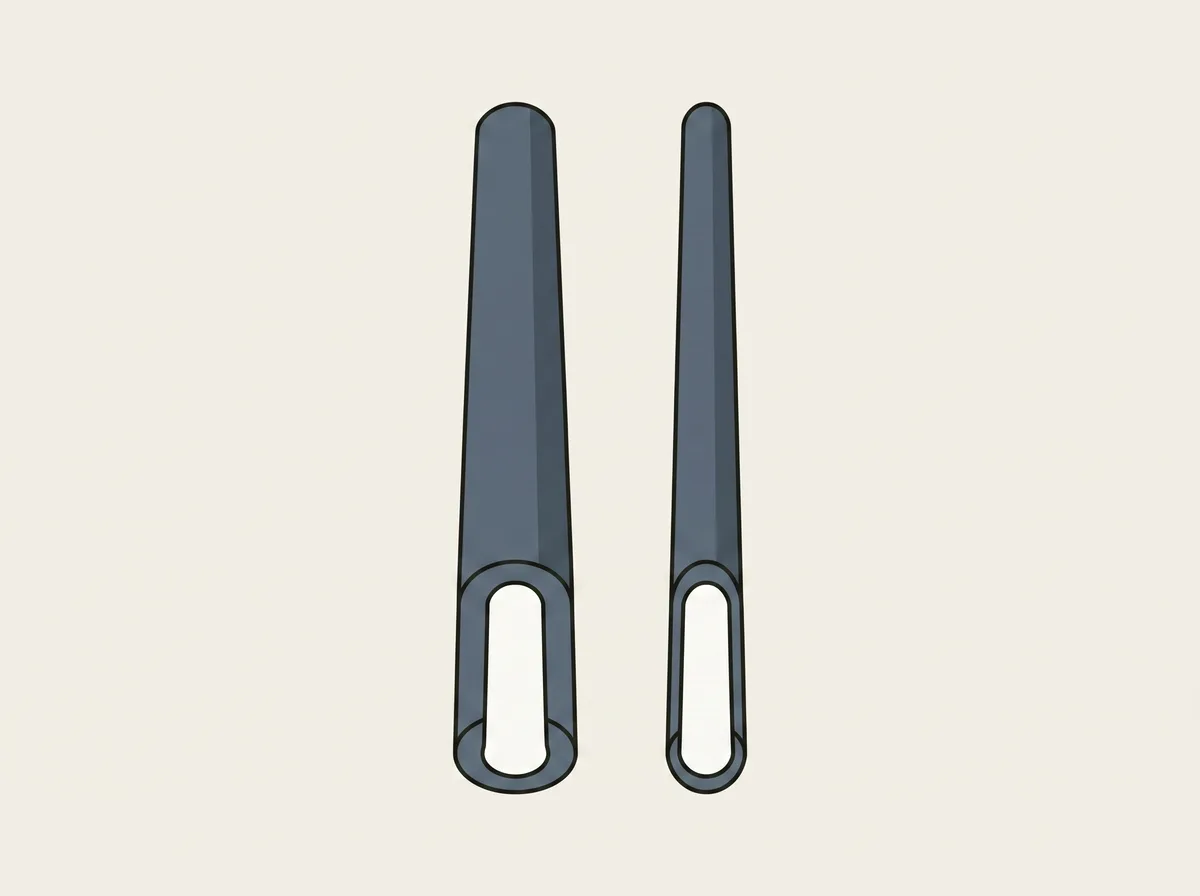
Long irons are the clubs where lost speed hurts most, because a 4 iron needs both speed and a precise strike to launch at all. Shot Scope's comparison of hybrids against long irons has 20 handicap golfers finishing 16 feet closer to the hole with a hybrid, with a 19 feet tighter miss pattern and 11 yards more distance from the rough. That advantage is available to anyone, and it is largest for the players with the least speed.
Playing forward tees is a scoring decision, not a concession
This is the section most senior golfers skip and the one that changes scores fastest.
The argument is not about pride. It is about which approach shots you are leaving yourself. Shot Scope's data referenced in its analysis of amateurs playing the professional tees has a 15 handicap hitting the green just 2% of the time from over 200 yards, and missing short 92% of the time. From 80 yards, the same golfer hits the green 58% of the time.
That is the whole case. A course you can reach in regulation is a different game from a course you cannot, and no amount of technique closes a gap that size. Moving forward one tee set does not make the course easier in a way that flatters you. It puts you back on the part of the distance curve where your skill is actually expressed.
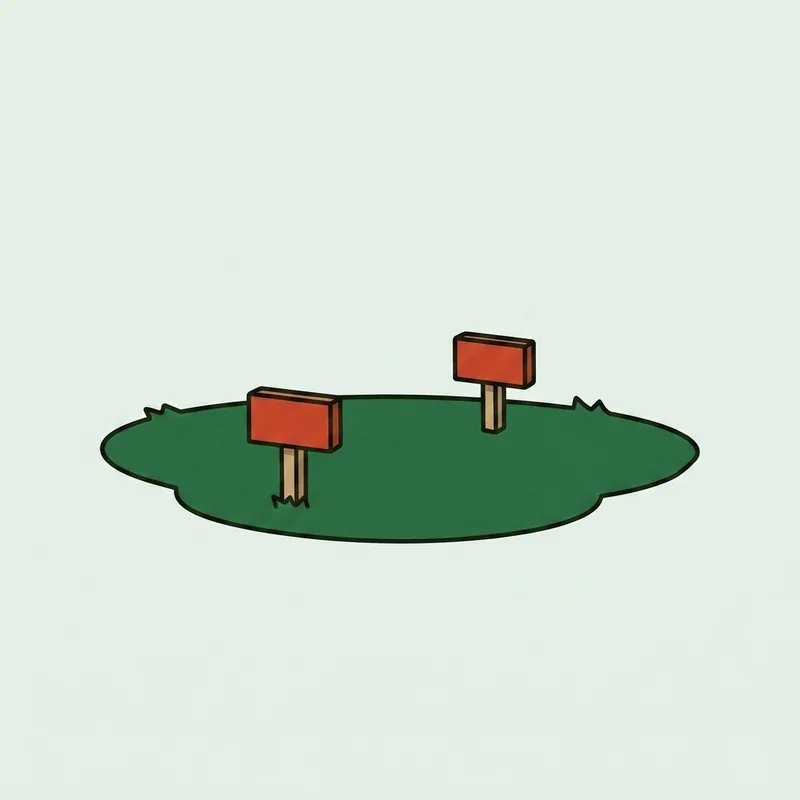
One practical note. Moving forward does not distort your handicap, because the World Handicap System already accounts for the difficulty of the tees you played through course and slope rating.
Walking, riding, and the bit in between
Whether to walk is usually framed as a fitness question. It is really a scheduling question, because the answer changes what golf is worth to you.
The health case for walking eighteen holes is unusually well evidenced for a sport. A randomised cross-over study from the University of Eastern Finland, covered by the Golf and Health project as golf outperforming Nordic walking in older adults, compared eighteen holes of golf against a 6 km Nordic walk and a 6 km walk in 25 healthy older golfers with a mean age of 68. Golf came out ahead on lipid profile and glucose metabolism, which the researchers attributed to its longer duration and higher total energy expenditure rather than to intensity.
That is the case for walking if you can. The case against is simpler: if riding is the difference between playing weekly and playing monthly, ride.
The middle option is the one most people skip. A push cart takes the load off your back and shoulders while keeping the walk, and it is the cheapest fix available to anyone who started riding because the bag got heavy rather than because the walk did. Our picks are in best golf push carts.
Hands, grips and arthritis
Hand pain is the one genuinely limiting issue that comes up often enough to plan around, and it is almost always addressed at the wrong end. Golfers grip harder to stop the club twisting, which increases pain and tension and makes the twisting worse.
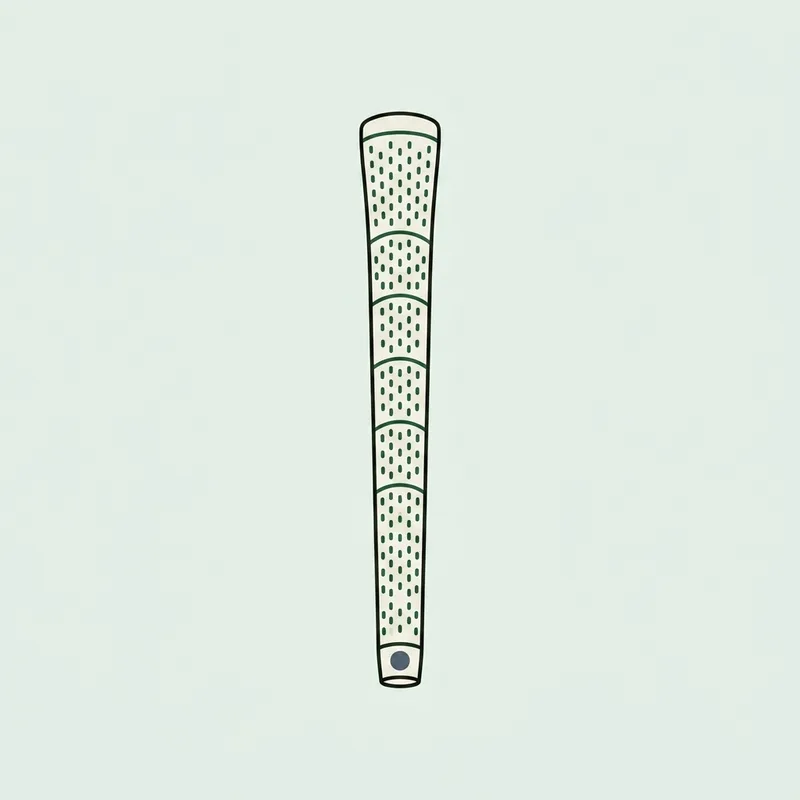
Larger grips are the usual answer and they work for a specific reason: a thicker grip reduces how much the fingers have to close, which lets the hands hold on with less pressure. The steps involved are far smaller than the names suggest. Our golf grip sizes guide has the measured diameters, and the entire usable range from undersize to the largest oversize is under a tenth of an inch.
Two things beyond size. Softer compounds absorb more vibration than firm cord grips, which matters off a thin strike on a cold morning. And reduced taper builds keep the lower hand section closer in diameter to the upper, which suits golfers whose trail hand is the sore one.
Warming up matters more than it did, for a reason that is not injury. A cold golfer turns less, and a shorter turn is a slower swing. Ten minutes of movement before the first tee buys back range you would otherwise spend the front nine finding. The sequence is in how to warm up before a round.
What to work on, and what to leave alone
The temptation with less speed is to rebuild the swing. It is almost always the wrong call, because the swing is not what changed.
Leave it alone unless a coach has identified something specific, and spend the practice time where age has handed you an advantage. Putting and chipping need no speed and no flexibility, and they are already the strongest part of most older golfers' games, so improvement there compounds instead of fighting the tide. Our data on how many putts per round shows where the realistic gains sit by handicap.
The one swing change worth considering is width rather than length. A shorter backswing that stays wide, with the arms extended and the chest turning as far as it comfortably goes, produces more speed than a long backswing built by collapsing the arms and lifting. That is a different instruction from "turn more", and it is achievable at any range of motion.
If you are returning to golf after years away or coming to it late, start with our complete beginner guide rather than here. The order of operations for a new golfer is the same at 68 as at 28, and this page is about the adjustments on top of it.
Key takeaways
- Shot Scope's age data puts golfers aged 50 to 59 at the lowest putts per round of any age group. Judgement improves as speed declines.
- Shaft weight matters more than the flex letter. Lighter graphite is usually the single most useful change.
- More loft, not less. Launch angle has to come from the club when it cannot come from speed.
- A lower compression ball compresses at speeds where a firm tour ball does not.
- Choose tees by the club you have left into a par 4. A 15 handicap hits 2% of greens from over 200 yards and 58% from 80.
- Hybrids beat long irons for everyone, and by the most for the players with the least speed.
- Larger or reduced-taper grips reduce how hard you have to hold on, which is the real cause of hand pain.
- Nobody publishes tracked amateur distance loss by decade. Treat yards-per-decade figures as invented.
Common questions
What golf tips actually matter for senior golfers?
Three equipment changes and one course decision. Lighter shafts, more loft, a lower compression ball, and a tee set that leaves you approach shots you can hit. Those four move scores more than any swing change available to a golfer whose speed has dropped.
Should seniors use senior flex shafts?
Fit to a measured swing speed rather than to the letter. There is no published industry standard behind flex designations, so one manufacturer's senior can measure stiffer than another's regular. Shaft weight is usually the more useful specification of the two.
What driver loft should an older golfer use?
More than they think. Launch angle depends on club speed, so a slower swing needs the club to supply what the speed cannot. Many golfers who have lost speed play better with 12 degrees or more, and adjustable drivers make it easy to test without buying anything.
Do senior golfers need a special golf ball?
Not a special one, a softer one. Lower compression balls deform properly at slower speeds, which is where distance comes from. The balls marketed at seniors are ordinary low compression balls, and the same models are often sold without the label for less money.
Is it better to walk or ride at 70?
Walk if you can, ride if the alternative is playing less. A study of older golfers found eighteen holes of golf outperformed a 6 km Nordic walk on lipid profile and glucose metabolism. A push cart is the option most people skip, and it removes the load without removing the walk.
Should seniors move to the forward tees?
Yes, and not as a concession. A 15 handicap hits the green 2% of the time from over 200 yards and 58% of the time from 80. Playing a tee set that leaves mid irons into par 4s puts your existing skill back in play.
Does playing forward tees affect my handicap?
No. The World Handicap System accounts for the difficulty of the tees you play through course and slope rating, so a score from a shorter set is adjusted accordingly. Nothing needs declaring and nothing is distorted.
What clubs should a senior golfer carry?
Fewer long irons and more hybrids. Shot Scope's data has hybrids beating long irons on proximity, dispersion and distance from rough at every handicap level, and the gap is widest for slower swings. A 5 wood and two hybrids replacing the 3, 4 and 5 irons is a common and sensible build.
Are oversize grips worth it for arthritis?
Often, though the mechanism is not what people expect. A thicker grip lets the hand close less, which reduces grip pressure, and grip pressure is what makes hands hurt. Reduced taper builds help golfers whose trail hand is the problem, and they are a different purchase from simply going up a size.
Should an older golfer change their swing?
Rarely. The swing did not change, the speed did. If anything is worth working on it is arc width rather than backswing length, because width produces speed without requiring the hip and shoulder range that a longer turn does.
Tom Ashworth
Tom Ashworth is a PGA Professional who has taught golf since 2012, working mainly with beginners and mid-handicappers at club level in Surrey. He reviews the instruction guides on Learn Golf for technical accuracy before they publish.
Most of his teaching is with players in their first three years of the game, and most arrive having been told too much: six swing thoughts collected from videos, half of them contradicting each other. His approach is to check the grip and the alignment before touching the swing, on the basis that most bad ball flight is decided at address.