Best Golf Clubs for Seniors: Build the Whole Bag Lighter
Changing the driver is the easy part and the smallest part. What decides how a bag plays at a slower speed is the eight clubs behind it, and that is a weight and loft decision made thirteen times over.
Some links here earn us a commission at no extra cost to you. It never changes what we recommend or the order we rank it. How this works.
Most senior club advice stops at the driver, which is the club you hit fourteen times a round and the one where the gain is smallest. The clubs that decide your score are the eight behind it, and at a slower swing speed those eight are all wrong in the same two ways: too heavy to accelerate, and too strong in loft to get airborne. This page is about fixing the whole bag rather than the first club in it.
The four, compared
One of these is a complete set and three are iron families you assemble. That is not an inconsistency, it is the actual choice: buy the bag in one go, or replace the part of it that is failing.
| Pick | Best for | Clubs | Shafts | Flexes | Lofts | Price |
|---|---|---|---|---|---|---|
| Yonex Ezone Elite 4 Senior Complete Set | The whole bag rebuilt in one purchase, with no long irons | 11 pieces including the bag and three headcovers | Yonex EX-E04 graphite throughout, woods and irons | Senior, Yonex's Super Light designation | 12° driver, 18° 5 wood, 26° 5 hybrid, then 6 iron to sand wedge | Around £1,049 |
| XXIO 14 Irons | The lightest iron set anybody publishes gram figures for | 5, 6, 7, 8, 9, PW, AW, SW | XXIO MP1400 graphite, or steel | R2, R, SR, and S to custom order | 22° at the 5 iron to 56° at the sand wedge | Around £1,200 for five irons, £1,900 for eight |
| PING G440 HL Irons | A light build with weaker lofts available as a published option | 4 through UW, built to order | PING ALTA Quick, 38g and 41g | Ping's two lightest designations | 19° at the 4 iron, with Retro Spec one to two degrees weaker | Around £715 to £1,050 |
| Cleveland Launcher XL Halo Irons | Replacing the whole iron set with hollow hybrid-style heads, one club at a time | 4 through sand wedge, sold as a set or one at a time | Project X Cypher graphite, 59g in A flex, or steel | A, R and S | 20° at the 4 iron, 30° at the 7, 54.5° at the sand wedge | Around £399 for six irons, or single clubs |
Read the shafts column first. Everything else on this page follows from it.
Age is not a swing speed, and it never was
The most common mistake in this category is treating a birthday as a fitting. Plenty of golfers past seventy still swing a driver at 90 mph and plenty of fifty-year-olds swing it at 78. Buying A flex because of the number on your driving licence is guessing, and it is an expensive guess when it applies to thirteen clubs rather than one.
Measure it, or estimate it from carry distance, before you commit a whole bag to a flex. Working out which shaft flex you need covers both methods, and the second one costs nothing.
Yonex Ezone Elite 4 Senior: the whole bag, done once
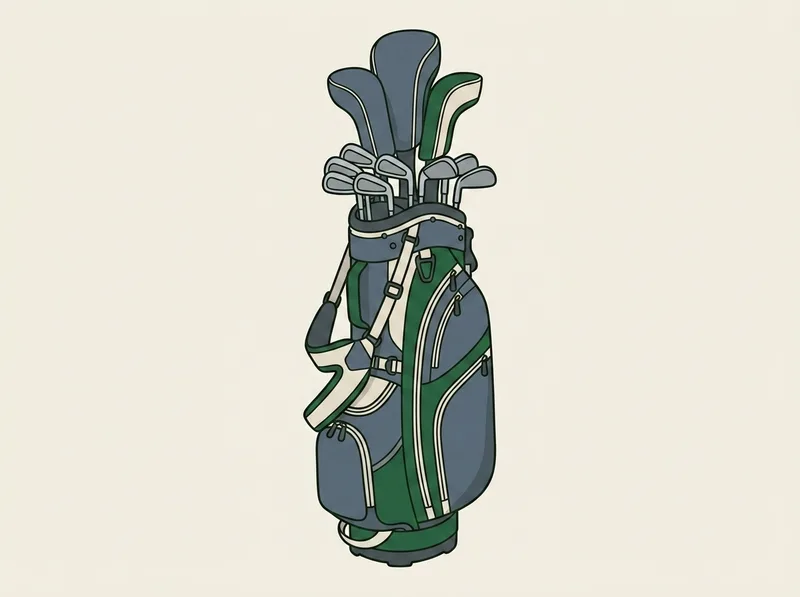
The Yonex Ezone Elite 4 Senior Complete Set is eleven pieces at about £1,049 against a £1,206 recommended price, and it is the only complete set on sale in the UK that answers all three parts of the senior question in the same box.
Graphite is the first. Every club in the set is on the Yonex EX-E04 shaft in the Super Light senior flex, including the irons, which is where complete sets almost always revert to steel because steel is cheaper. The second is loft: the driver is 12° as standard, not 10.5° with a note about adjustability, on a 3-1-1-1 forged titanium head with a cup face. The third is composition: an 18° 5 wood and a 26° 5 hybrid fill the long end, the irons start at the 6, and there is no long iron in the set at all.
 Around £1,049
Yonex Ezone Elite 4 Senior Complete Set
- Clubs
- 11 pieces including the bag and three headcovers
- Shafts
- Yonex EX-E04 graphite throughout, woods and irons
- Flexes
- Senior, Yonex's Super Light designation
- Lofts
- 12° driver, 18° 5 wood, 26° 5 hybrid, then 6 iron to sand wedge
- Long clubs
- A 5 wood and a 5 hybrid, with no long iron in the set
- Driver
- 3-1-1-1 forged titanium with a 6AL-4V cup face
- Graphite in every club including the irons, which almost no complete set at any price does.
- A 12° driver as standard rather than a 10.5° with a shrug, which is the loft a slow swing actually needs.
- A 26° hybrid sits where the 5 iron would, so there is no long iron in the set to fail with.
- Senior flex only, so there is no way to buy this set if your speed is still in regular territory.
- Right hand only, which rules out a meaningful share of the people it is designed for.
- One hybrid rather than two, and UK stocking is currently thin enough to be worth checking twice.
VerdictThe most complete answer to the senior bag question you can actually buy here, and the only set that gets graphite everywhere and a 12° driver into the same box at about £1,049 against a £1,206 recommended price. The long end is one club thinner than ideal. If your driver speed is still above about 85 mph, the senior flex is a real limitation and you should build rather than buy a set.
The 26° hybrid is the club doing the most work here. It sits exactly where a 5 iron would, and the whole argument of the next section is that this substitution is worth more to a slower swing than anything else you can buy.
Three real limits. Senior flex is the only build, so a golfer whose speed is still comfortably in regular territory has nowhere to go within this set. It is right hand only, which is a strange omission on a product aimed at a group that includes plenty of left-handers. And the long end is one club thinner than ideal: a second hybrid around 22° would sit naturally between the 5 wood and the 5 hybrid, and you would have to buy it separately.
One practical note. Yonex golf has narrow UK distribution at the moment and their own UK site lists golf as coming soon, so this set turns up at some retailers and not others. It is stocked and priced in sterling where it does appear, but check availability before planning a bag around it.
XXIO 14 Irons: the weight, with the numbers behind it
The XXIO 14 iron set is the only iron family on this page that publishes a total club weight, and it publishes it for both the graphite and the steel build side by side. That comparison is the single most useful table in the category.
| Head | Loft | Graphite club weight | Steel club weight |
|---|---|---|---|
| 5 iron | 22° | 357g | 390g |
| 7 iron | 28° | 368g | 403g |
| 9 iron | 37° | 380g | 417g |
| Pitching wedge | 42° | 387g | 425g |
| Sand wedge | 56° | 389g | 427g |
Thirty three to thirty eight grams per club, and you carry eight of them. That is not a marginal difference in a swing you are already short of speed for, and it is the reason shaft material outranks almost everything else on this page.
 Around £1,200 for five irons, £1,900 for eight
XXIO 14 Irons
- Clubs
- 5, 6, 7, 8, 9, PW, AW, SW
- Shafts
- XXIO MP1400 graphite, or steel
- Flexes
- R2, R, SR, and S to custom order
- Lofts
- 22° at the 5 iron to 56° at the sand wedge
- Club weight
- 357g to 389g graphite, 390g to 427g steel
- Shaft weight
- 47g in R2 to 50g in S at the 6 iron
- Total club weight published for every head in both graphite and steel, which is a figure almost no iron maker prints.
- The graphite build saves 33 to 38 grams per club against the steel one, on XXIO's own table.
- R2 is a genuine step below regular rather than a relabelled regular, and the shaft weight drops with the flex.
- Far and away the most expensive option here, and XXIO price the rest of the bag the same way.
- The set starts at a 22° 5 iron, so the long clubs have to be bought separately.
- Swing weights of C9 in graphite are light enough that some golfers lose the head entirely.
VerdictThe right buy for a golfer whose problem is that a full iron set now feels heavy to carry through eighteen holes as well as to swing. Nothing else publishes the numbers to prove it. The price is genuinely hard to justify unless the weight is the specific thing stopping you.
The shaft ladder follows the same logic rather than fighting it. At the 6 iron the MP1400 graphite runs 47 grams in R2, 48 in regular, 49 in SR and 50 in stiff, against 83 grams for the regular steel and 87 for the stiff. Swing weights come out at C9 in graphite and D1 in steel, and lengths differ by a quarter of an inch between the two builds.
The objection is the price, and it is a fair one. UK retail runs at about £240 a club, so a 6 through pitching wedge set lands near £1,200 and the full 5 through sand wedge set nearer £1,900. Dunlop publish no prices on their own European store, so those figures come from UK retail rather than from the maker. This is an iron set that costs what a whole bag costs elsewhere, and it buys you weight rather than distance.
PING G440 HL Irons: the only maker selling weaker lofts on purpose
The PING G440 HL irons are built around the ALTA Quick shaft at 38 grams and 41 grams, with a Lamkin UTx Lite grip fitted as standard and swingweights of C8 through the long irons. A 38 gram iron shaft is lighter than the stock shaft in most modern drivers.
The more interesting specification is one Ping publish and almost nobody else offers: Retro Spec lofts. Alongside the standard 19° 4 iron and 22° 5 iron, Ping list a Power Spec build a degree or so stronger and a Retro Spec build a degree or two weaker, and you order whichever you want.
 Around £715 to £1,050
PING G440 HL Irons
- Clubs
- 4 through UW, built to order
- Shafts
- PING ALTA Quick, 38g and 41g
- Flexes
- Ping's two lightest designations
- Lofts
- 19° at the 4 iron, with Retro Spec one to two degrees weaker
- Swingweight
- C8 through the long irons
- Grip
- Lamkin UTx Lite fitted as standard
- A 38 gram iron shaft, which is lighter than most makers offer in a driver.
- Retro Spec lofts are published as a build option, so you can order the set a degree or two weaker rather than stronger.
- Full loft, lie, length, offset, bounce and swingweight tables published for every head.
- Ping do not publish a price on their own listing, so what you pay depends entirely on the fitter.
- Built to order, so lead times are longer than taking a set off a shelf.
- No total club weight figure, only the shaft and the grip, so it cannot be weighed against the XXIO on paper.
VerdictThe pick for a golfer who wants a light set built to their own numbers rather than to a category, and the only one here that will sell you weaker lofts on purpose. If you are not going to be fitted, most of what makes this set good stays switched off.
That matters more than it sounds. Iron lofts have been strengthened across the whole market for two decades, which flatters the distance number on the box and quietly makes every iron harder to launch. For a golfer short of speed that trade is exactly backwards, and Ping are the only major maker who will sell you the way out of it as a catalogue option rather than a bending job. How far iron lofts have drifted sets out the scale of it by set type.
What Ping do not publish is a price or a total club weight, on their UK store any more than their US one. The set is built to order through a fitter, which is the right way to buy it and the reason it cannot be compared on paper with the XXIO above. UK retail gives the shape of it: a steel 6 through pitching wedge runs about £715, a six-iron graphite set about £900, and a seven-club build with the utility wedge about £1,050.
Cleveland Launcher XL Halo: replace three clubs, not eight
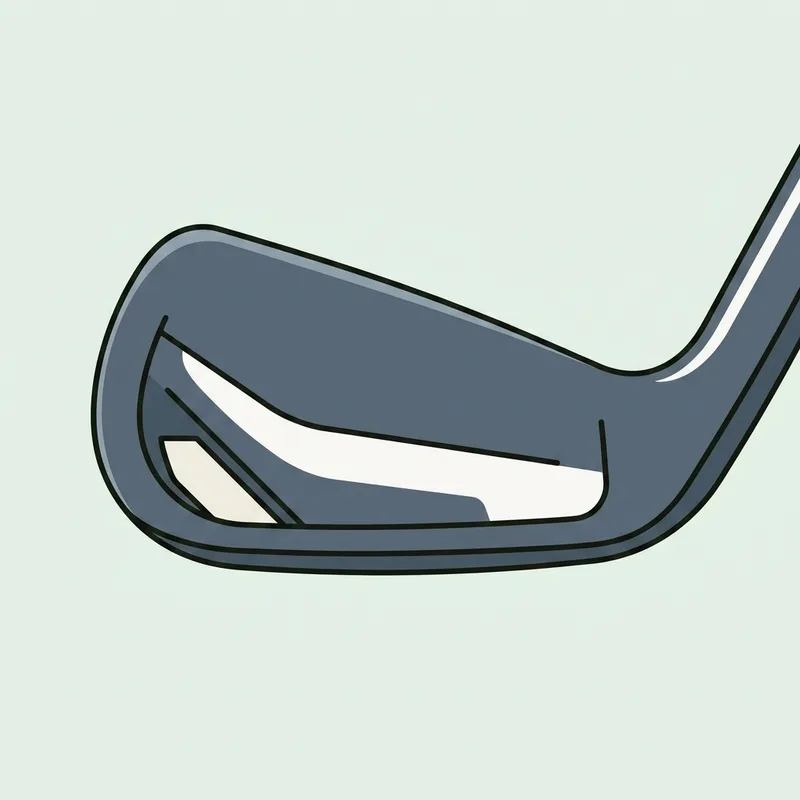
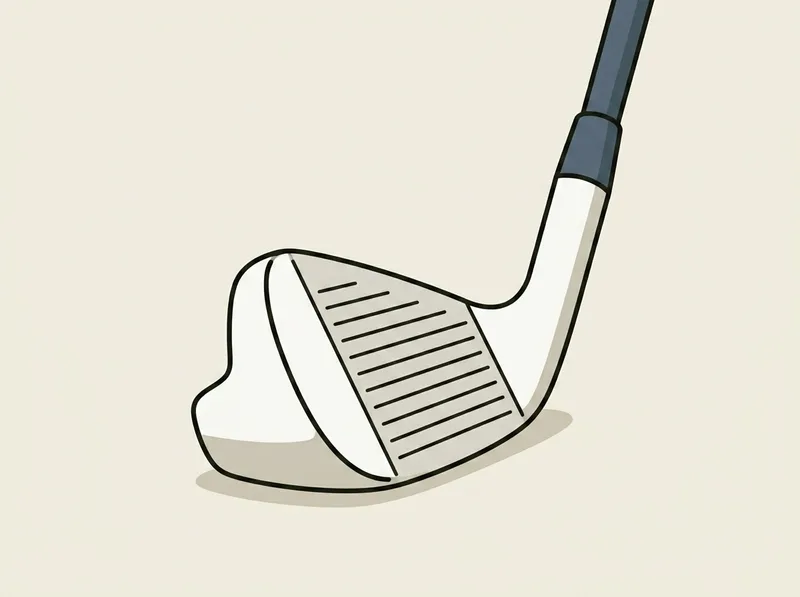
Every head in the Launcher XL Halo range is hollow bodied and built like a hybrid rather than an iron, which is why Cleveland call it a hybrid-iron rather than a game improvement iron. The range runs 4 iron through sand wedge and the clubs are sold individually as well as in sets. Shafts are the Project X Cypher graphite at 59 grams in A flex, or steel, in A, R or S.
 Around £399 for six irons, or single clubs
Cleveland Launcher XL Halo Irons
- Clubs
- 4 through sand wedge, sold as a set or one at a time
- Shafts
- Project X Cypher graphite, 59g in A flex, or steel
- Flexes
- A, R and S
- Lofts
- 20° at the 4 iron, 30° at the 7, 54.5° at the sand wedge
- Build
- Hollow body, hybrid-iron construction throughout
- MOI
- 2,908 g-cm² at the 7 iron, the highest Cleveland publish
- Sold club by club, so you can replace the three clubs that hurt instead of all eight.
- A flex offered in graphite at 59 grams across the range rather than only in the long clubs.
- Every head is hollow and hybrid-like, so the 20° behaves nothing like the 3 iron it replaces.
- A dual wedge sits between the pitching and sand wedge, so the gapping needs checking before you buy.
- The graphite shaft is 59 grams against the XXIO's 47, so it is light rather than the lightest.
- Cleveland do not publish a total club weight, so the build cannot be weighed against the XXIO on paper.
VerdictThe best answer for someone who already likes most of their bag and only needs the long end rebuilt, and the cheapest route on this page by a distance. A full six-iron set runs about £399 against a £599 recommended price, and buying only the 4 and 5 costs a fraction of that.
Bought one club at a time these are the most efficient purchase on the page. If your 6, 7 and 8 irons are still fine and it is the 4 and 5 that have stopped working, replacing two clubs solves the problem for a fraction of what a full set costs. Bought as a six-iron graphite set they run about £399 against a £599 recommended price, which is roughly a third of the XXIO and the cheapest route to a light build anywhere on this page.
The 4 iron sits at 20° and the 7 at 30°, so the lofts are conventional rather than weakened, and there is a dual wedge between the pitching and sand wedges that is easy to double up on by accident. Check the gapping against what you already carry before ordering. If the long end is all you need, hybrids for slower swings covers the alternative to an iron here at all.
The three specifications, in the order that matters
Everything above reduces to three decisions, and they are not equally important.
Shaft weight comes first, and it gets discussed least. Every gram is mass you have to accelerate, and it applies to all fourteen clubs rather than to the driver alone. Graphite over steel through the irons is usually the single most useful change available to a golfer whose speed has dropped, and the XXIO table above puts a number on it.
Loft comes second, and it is the one most golfers refuse on principle. Launch angle has to come from somewhere. When it stops coming from speed, it has to come from the club, which means a 12° driver rather than a 9°, lofted fairway woods rather than a 3 wood alone, and irons that have not been strengthened to flatter a catalogue.
Composition comes third. Long irons are the clubs where lost speed hurts most, because a 4 iron needs both speed and a precise strike to launch at all.
The gap widens as strike quality falls, which is precisely the direction a slower swing moves in. Which hybrids to put in those slots is a separate decision with its own answers: hybrids for slower swings covers the shaft weights and head sizes that suit this buyer.
What a senior bag should actually contain
Fourteen slots, and at a slower swing speed several of the conventional ones are wasted.
| Slot | Conventional bag | What suits a slower swing |
|---|---|---|
| Driver | 9° to 10.5° | 12° or more |
| Fairway | 3 wood at 15° | 3 wood and 5 wood, or 5 wood alone |
| Long clubs | 3, 4 and 5 irons | Two hybrids, roughly 22° and 25° |
| Mid irons | 6 through 9 | 6 through 9, in graphite |
| Wedges | PW, gap, sand, lob | PW, gap, sand |
| Putter | Anything | Anything you can aim |
That comes out at twelve or thirteen clubs, which is fine. The R&A's Rule 4.1b sets fourteen as a maximum and no minimum, so an empty slot is not a problem to solve.
The driver is deliberately one line here, because it is one club and it has its own page. Drivers for seniors works through total club weight, flex ladders and why an adjustable hosel earns its place on this particular club.
Grip size, and the part that is not about the swing
Grip size is the most under-discussed senior specification in golf, and unlike everything else on this page it is cheap to change on clubs you already own.
Hands stiffen, arthritis is common, and a grip that is too thin makes the fingers close further, which makes you squeeze harder, which is what actually causes the pain. Going up a size lets the hand hold on with less pressure. Both the Ping and the XXIO fit lightweight grips as standard, and the Lamkin UTx Lite on the G440 HL is a deliberate choice rather than a cost saving. Choosing the right grip size has the measured diameters, and the entire usable range is under a tenth of an inch.
There is also a case for spending the money somewhere else entirely. Older golfers putt better than everyone else and the data is not a compliment.
Judgement, green reading and speed control improve with repetition and need no speed at all. That is where the game is still growing rather than shrinking, and it is worth remembering while reading a page about equipment.
What to spend, and in what order
If the whole bag needs replacing, the Yonex set at about £1,049 does more per pound than any other route. If it does not, spend in this order:
- Irons in graphite, which is eight clubs and the largest single weight saving available
- Two hybrids to replace the long irons, which is the largest single strike-quality gain
- A higher-lofted driver, which is one club and the most heavily marketed one
- A lower compression ball, which costs almost nothing and compresses at speeds a firm ball does not
Balls for slower swings covers the last of those, and it is the cheapest change on the list by a factor of thirty. If distance loss is the thing that brought you here, why golfers lose distance separates the causes that equipment fixes from the ones it does not, and how the swing itself should change with age deals with the part no purchase covers.
If you would rather see the complete set market without the senior filter, complete golf sets compares the mainstream boxed sets on composition and build options.
Key takeaways
- The driver is one club. Shaft weight through eight irons is where a slower swing actually loses the most.
- XXIO publish the proof: their graphite build saves 33 to 38 grams per club against their own steel build, on the same heads.
- The Yonex Ezone Elite 4 Senior Set is the only complete set on UK sale with graphite everywhere, a 12° driver and no long irons, at about £1,049.
- Ping's Retro Spec lofts are the only published option in the market that makes an iron set weaker rather than stronger.
- Age is not a swing speed. TrackMan publish benchmarks by handicap and none at all by age.
- Tracked amateur data has a 20 handicap 16 feet closer with a hybrid than with the equivalent long iron, and the gap grows as strike quality falls.
- Softening the flex while leaving the lofts alone is a half-fix that costs you the same money.
- Grip size is the cheapest change on this page and the one most likely to reduce hand pain, because pressure rather than size is what hurts.
Common questions
What are the best golf clubs for senior golfers?
The Yonex Ezone Elite 4 Senior Complete Set if you want the whole bag in one purchase, because it is the only set on UK sale combining graphite throughout, a 12° driver and no long irons. If you are replacing irons only, the XXIO 14 set is the lightest with published figures behind it, and the Ping G440 HL is the cheaper light build with weaker lofts available.
Should seniors use graphite shafts in their irons?
Usually yes, and the reason is measurable. XXIO's own specification table shows their graphite build weighing 33 to 38 grams less per club than the identical set in steel. Across eight irons that is a substantial amount of mass you no longer have to accelerate.
What loft irons should a senior golfer use?
Weaker than the current market standard. Iron lofts have been strengthened for twenty years, which makes every club harder to launch, and a slower swing needs launch from the club because it cannot come from speed. Ping publish a Retro Spec build for exactly this reason.
How many hybrids should a senior carry?
Two for most golfers, at roughly 22° and 25°, replacing the 4 and 5 irons entirely. Never carry both a long iron and the hybrid that replaces it, because they are the same loft on different heads and one of them is much easier to hit.
Do seniors need a complete senior set or should they build one?
Buy a set if most of the bag is failing, build if only the long end is. A complete senior set is far cheaper per club and gets the loft and shaft decisions right in one go, and the Yonex at about £1,049 is the one on UK sale that does. Building is better if your mid irons still work and you only need the top of the bag rebuilt.
What flex should a senior golfer use?
Whatever a measured swing speed indicates, not what the label suggests. There is no published industry standard behind flex letters, so one maker's A flex can measure stiffer than another's regular. Shaft weight is usually the more useful of the two specifications anyway.
Are senior golf clubs worth the money?
The specification changes are worth it. The word on the box is not. What you are buying is lighter shafts, more loft and hybrids in place of long irons, all of which are available on ordinary clubs if you order the right build. Anything sold purely on the label is charging you for a word.
How much should a senior spend on a set of golf clubs?
About £1,049 buys the Yonex complete senior set with graphite throughout, which is the best value on this page if the whole bag needs replacing. Building the irons from a lightweight family runs from about £399 for the Cleveland Launcher XL Halo to about £1,900 for the full XXIO 14 in graphite. Above that you are paying for published weight figures rather than for performance.
Will lighter clubs get my distance back?
Some of it, and less than the advertising implies. Moving out of a heavy, strongly lofted set into a correctly weighted and lofted one is worth a genuine amount. Moving from one modern light set to another is worth very little, at any age.
Do senior golfers need shorter clubs?
Not because of age. Length is set by height and wrist-to-floor measurement, exactly as it is for anyone else. What does change with age is posture, and a golfer who has lost some rotation and stands more upright often needs a lie angle change rather than a length change.
What is the most useful single change for an older golfer?
Graphite iron shafts, if you are still playing steel. It applies to eight clubs at once, the weight saving is published and substantial, and unlike a new driver it changes clubs you use on every single hole rather than on fourteen tee shots.
How we put this together
- Published manufacturer specifications for each set or family, taken from the maker's own listing rather than a retailer's summary, with unpublished figures recorded as unpublished.
- Shaft weight and total club weight in grams wherever the maker prints them, because that is the specification a slower swing feels across every club in the bag rather than only in the driver.
- How far up the bag each option removes long irons, since a set is only hybrid-heavy if the hybrids replace something rather than sit alongside it.
- Whether weaker lofts are available as a published build, which is the opposite of what the rest of the iron market has been doing for twenty years.
- Shot Scope's published amateur datasets on hybrids against long irons, broken down by handicap, which is what decides whether the swap is worth making.
- TrackMan's published club speed benchmarks, used to show why age alone is a poor guide to any of this.
On this page
- The four, compared
- Age is not a swing speed, and it never was
- Yonex Ezone Elite 4 Senior: the whole bag, done once
- XXIO 14 Irons: the weight, with the numbers behind it
- PING G440 HL Irons: the only maker selling weaker lofts on purpose
- Cleveland Launcher XL Halo: replace three clubs, not eight
- The three specifications, in the order that matters
- What a senior bag should actually contain
- Grip size, and the part that is not about the swing
- What to spend, and in what order
- How we put this together

Tom Ashworth
Tom Ashworth is a PGA Professional who has taught golf since 2012, working mainly with beginners and mid-handicappers at club level in Surrey. He reviews the instruction guides on Learn Golf for technical accuracy before they publish.
Most of his teaching is with players in their first three years of the game, and most arrive having been told too much: six swing thoughts collected from videos, half of them contradicting each other. His approach is to check the grip and the alignment before touching the swing, on the basis that most bad ball flight is decided at address.