Best Golf Balls: Four Picks and the Specs That Matter
The premium golf ball is the one purchase where the marketing has almost entirely replaced the numbers. Here are four worth playing, what construction and compression genuinely change, and the point at which paying full price starts to return something.
Some links here earn us a commission at no extra cost to you. It never changes what we recommend or the order we rank it. How this works.

Every ball in the premium tier is a multi-layer urethane ball built against the same distance limit, which is why the marketing has quietly replaced the numbers. Two of the four makers here publish no compression figure at all, and the figures you see quoted for them came from somebody else's test rig. What follows is four worth playing, what construction actually changes, and when a premium cover starts paying for itself.
The four, compared
All four are multi-layer balls with a urethane cover, and all four appear on the list of conforming golf balls that the R&A and the USGA maintain jointly, which caps initial velocity and total distance for every model sold. That ceiling is why no ball here can be meaningfully longer than the others, and why the differences that remain are about spin, feel and flight rather than yards.
| Pick | Best for | Construction | Cover | Dimples | Compression | Price |
|---|---|---|---|---|---|---|
| Titleist Pro V1 | The default premium ball, and the hardest one to argue with | Core, casing layer, cast urethane cover | Soft cast urethane elastomer | 388 tetrahedral, spherically tiled | Not published | Around £50 a dozen at UK retail |
| Callaway Chrome Tour | Ball speed first, without dropping out of the tour tier | Core, Tour Fast Mantle, urethane cover | Tour level urethane | Not published | Not published | Around £45 to £50 a dozen |
| Srixon Z-STAR | The most greenside spin for the money | 3-piece urethane | Thermoplastic urethane with Spin Skin coating | 338 speed dimple pattern | 88, Srixon's published figure on their European store | Around £39 a dozen at UK retail |
| Vice Pro | Buying on published numbers rather than on adjectives | 3-layer, cast urethane cover | Cast urethane | 318 | 90, Vice's published figure | Around £41 to £45 a dozen |
Ball prices behave nothing like club prices. A driver loses a third of its value eight months after launch, while a premium ball holds close to full price for its whole two-year cycle. The discount, when it comes, is on the previous generation in the same box design, and that is the version worth buying.
Titleist Pro V1: the default, and the reason it stays there
The Titleist Pro V1 is built from a high gradient core, a high-flex casing layer and a soft cast urethane elastomer cover, with a 388 tetrahedral dimple pattern. Titleist describe the flight as mid, with low long game spin and maximum short game spin, and the casing layer is the part doing that work.
Separating those two behaviours is the whole trick of a tour ball. A driver strike at 90 mph and a wedge strike at 65 mph have to produce opposite spin outcomes from the same object, and the layer between the core and the cover is what lets the ball respond differently to the two.
 Around £50 a dozen at UK retail
Titleist Pro V1
- Construction
- Core, casing layer, cast urethane cover
- Cover
- Soft cast urethane elastomer
- Dimples
- 388 tetrahedral, spherically tiled
- Compression
- Not published
- Flight
- Mid, low long game spin, maximum short game spin
- Colours
- White and high optic yellow
- The speed-amplifying casing layer separates driver spin from wedge spin better than anything else in the category.
- Titleist run more than 90 quality checks on each Pro V1, and ball to ball consistency inside a box is genuinely the best available.
- A Pro V1x sits alongside it with a dual core, a higher flight and 348 dimples, so the same fitting conversation covers two trajectories.
- Titleist publish no compression figure for it, which makes a like-for-like comparison against a ball that does impossible.
- The most expensive of the four at recommended price, and Titleist discount less than anyone.
- A soft cast urethane cover scuffs on a thinned wedge or a cart path, and this ball is expensive to scuff.
VerdictThe right buy for a golfer who can already control trajectory and stop a pitch shot, because that is the only place the casing layer and the cast cover earn their money. If you cannot yet do those things, the money is going on consistency you will not detect.
The specification table above has a blank in it and the blank is deliberate. Titleist publish no compression figure for the Pro V1, and never have across their whole range. Numbers circulate freely, they come from independent test rigs rather than from Titleist, and this page will not repeat them. If you want a ball chosen on a stated compression, the Pro V1 cannot be that ball.
The Pro V1x sits alongside it rather than above it: a dual core, 348 dimples, a higher flight, more spin on full swings and a firmer feel. Neither is the better ball. They are two trajectories, and a fitter picks between them by watching the flight rather than by reading a box.
Callaway Chrome Tour: speed first
The 2026 Callaway Chrome Tour is the one ball here with a genuine specification change this year. Callaway have put a new mantle material into it, which they call the Tour Fast Mantle, and paired it with a second generation of their Seamless Tour Aero cover pattern. Both changes are aimed at ball speed rather than at spin.
What Callaway rate on the listing is useful in its own way: feel medium, long game spin low, short game spin high, workability medium-high. That is a shorthand for how the ball behaves, and it is arguably more honest than a compression number, because it describes an outcome rather than a laboratory measurement.
 Around £45 to £50 a dozen
Callaway Chrome Tour
- Construction
- Core, Tour Fast Mantle, urethane cover
- Cover
- Tour level urethane
- Dimples
- Not published
- Compression
- Not published
- Feel
- Medium, low long game spin, high short game spin
- Aero
- Advanced Seamless Tour Aero
- The 2026 mantle is the one genuine specification change in this group, and it is aimed squarely at ball speed.
- Callaway rate feel, long game spin, short game spin and workability on the listing, which is a more useful shorthand than a compression number.
- A Chrome Tour X sits above it with a firmer feel and more full-swing spin, so the family covers two flights.
- Callaway publish neither a layer count, a dimple count nor a compression figure on their own product page.
- Independent test rigs publish compression numbers for it that get quoted everywhere as though Callaway had stated them.
- Workability is rated only medium-high, so a golfer who genuinely shapes shots gets more from the X model.
VerdictThe pick if you want a tour ball chosen on speed rather than on spin, and you are happy to take Callaway's word for what is inside it. The spec sheet is the thinnest here by a distance, which matters less than it sounds and more than nothing.
What Callaway do not publish is almost everything else. No layer count, no dimple count, no cover thickness and no compression. Independent rigs measure this ball every year and their figures get quoted as though Callaway had stated them, which is how a third-party measurement becomes a specification in the reader's mind. Two rigs can disagree by several points and both be honest, so a number without a source behind it is not worth choosing a ball on.
Srixon Z-STAR: the most spin for the money
The Srixon Z-STAR is a three-piece urethane ball with a FastLayer core that starts soft in the centre and firms toward its edge, a thermoplastic urethane cover, and 338 speed dimples. Srixon's own comparison rates it as the highest greenside spin ball in the Z-STAR family, above the four-piece XV that costs the same.
The Spin Skin coating is the part worth understanding, because it is a mechanism rather than a claim. It is a few microns thick and uses a slide-ring material to raise the friction between cover and groove, which is a different route to spin than simply making the cover softer. Softer covers spin more and wear faster. A higher friction coating aims at the first without paying quite so much of the second.
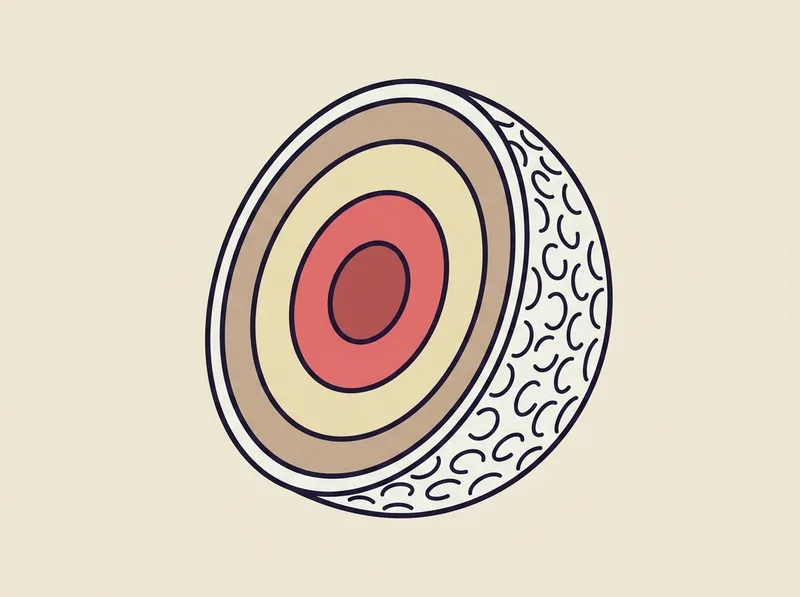 Around £39 a dozen at UK retail
Srixon Z-STAR
- Construction
- 3-piece urethane
- Cover
- Thermoplastic urethane with Spin Skin coating
- Dimples
- 338 speed dimple pattern
- Compression
- 88, Srixon's published figure on their European store
- Core
- FastLayer core, soft centre firming outward
- Flight
- Mid, highest greenside spin in the Z-STAR range
- Srixon rate this as the highest greenside spin ball they make, above the four-piece XV that costs the same.
- Srixon publish a compression figure of 88 on their European store, which Titleist and Callaway both decline to do.
- The Spin Skin coating uses a slide-ring material to raise cover friction, which is a mechanism rather than an adjective.
- Consistently the cheapest of the majors at street price, often by ten pounds a dozen.
- At 88 it is the firmest ball on this page, which is not what the soft feel reputation leads you to expect.
- A thermoplastic urethane cover behaves differently from a cast one, and Srixon do not publish cover thickness for this model.
- Softer feel than the Pro V1 rather than firmer, which some players read as a lack of feedback on long putts.
VerdictThe value pick in the premium tier and the one to buy if greenside spin is the reason you are shopping up here at all. The gap against the Pro V1 is in consistency and in flight control rather than in how much the ball checks.
Srixon also publish a compression figure for it, at 88, which their European store lists alongside the construction. That is worth pausing on, because 88 is firm. The Z-STAR is sold on spin and feel rather than on softness, and the number confirms it is the firmest ball on this page rather than the gentlest. Titleist and Callaway publish nothing comparable, so this is one of only two places here where a like-for-like comparison is even possible.
Cover chemistry is the quiet difference between this ball and the Pro V1, and it is one both makers publish. Titleist use a cast, thermoset cover, formed by a chemical reaction inside the mould. Srixon use a thermoplastic urethane, which is melted and formed. Cast covers are generally softer and grip more, thermoplastic covers are generally tougher, and the gap between them has narrowed to the point where it is a preference rather than a verdict.
Vice Pro: the one that publishes a number
The Vice Pro is a three-layer ball with a cast urethane cover, a Surlyn-grade mantle aimed at holding driver spin down, 318 dimples and a published compression of 90. Together with the Srixon it is one of the two balls here you can select on a stated number rather than on an adjective, and its sheet is the fuller of the two.
Selling direct is what makes that possible in commercial terms, and it also sets the price. Vice list a per-dozen price that falls as the order grows, which suits a golfer who plays weekly and loses a sleeve a round more than it suits somebody buying one box a season.
 Around £41 to £45 a dozen
Vice Pro
- Construction
- 3-layer, cast urethane cover
- Cover
- Cast urethane
- Dimples
- 318
- Compression
- 90, Vice's published figure
- Core
- High Energy Speed Core
- Mantle
- Surlyn grade, aimed at lower driver spin
- Vice publish compression, dimple count, layer count and cover chemistry together, which is the fullest sheet on this page.
- Cast urethane rather than thermoplastic, which is the construction the most expensive balls here use.
- Sold direct, with the per-dozen price dropping as you buy more, which suits anyone who plays a lot.
- At UK prices there is no saving against a street-price Z-STAR at all, and the Vice costs a little more, so the value argument rests entirely on the specification rather than on the discount.
- No presence in pro shops or big-box retail, so replacing a dozen mid season means waiting for a delivery.
- A Vice Pro Plus sits above it at a higher compression, and picking between them without a launch monitor is guesswork.
VerdictThe buy for a golfer who wants to compare balls on stated numbers rather than on marketing language, because it supplies more of them than anything else here. Everything else about it is a competent cast urethane ball rather than a remarkable one, and at UK prices it costs slightly more than the Z-STAR rather than less.
Being honest about the size of the gain matters here, and in the UK the gain is not there. The direct model cuts out the retail margin, but British retailers discount the Z-STAR hard enough that it lands under the Vice rather than over it, so buying the Vice Pro costs slightly more than buying the major. That makes the argument for it the specification sheet and the bulk pricing, and nothing else. If your reason for shopping outside the majors is money alone, cheaper boxes are a more direct route to it.
Compression: the number the industry stopped publishing
Compression measures how much a ball deforms under a fixed load. It is a real, repeatable laboratory figure, and it has become the most misused number in golf equipment for three reasons.
The first is that there is no single scale. Different rigs load the ball differently, so two honest measurements of the same ball can sit ten points apart. The second is that most manufacturers no longer publish one, so almost every figure in circulation is a third-party measurement wearing a manufacturer's badge. The third is the myth built on top of it, which is that swing speed selects compression.
| What compression genuinely affects | What it does not decide |
|---|---|
| How the ball feels at impact, especially off a putter | How far you hit it at club-golfer speeds |
| How much the ball deforms on a slow strike | How much the ball spins around the green |
| Sound, which most golfers read as feel | Whether a ball suits your swing speed |
The swing speed rule is the part worth killing. A 100 compression ball is not out of reach at 85 mph, because even a slow clubhead deforms the cover and outer layers substantially, and the cover is what produces spin. What actually changes with a firmer ball is feel and, marginally, driver spin. How compression is measured works through the physics and the several competing scales.
Construction: what each layer is for
Layer count is published far more often than compression, and it tells you more. Each layer exists to make the ball behave differently at different clubhead speeds.
| Construction | What it is | What it does |
|---|---|---|
| Two-piece | Core plus cover | Low spin everywhere, tough, cheap. Distance and durability |
| Three-piece | Core, casing layer, urethane cover | Low driver spin with high wedge spin. The tour standard |
| Four-piece | Dual core or extra mantle, urethane cover | Adds a distinct response to mid-iron speeds |
| Five-piece | Three mantle layers under a urethane cover | Separates the response at four distinct speeds |
TaylorMade's TP5 is the only five-layer ball on the market, and the argument for more layers is genuinely contested. More layers give the designer more control over how spin changes between a driver and a wedge. They also add manufacturing steps, and every step is a chance for a ball to come out slightly unbalanced. What each layer actually does sets out the trade properly.
The cover decides more than the layer count
A urethane cover is soft and grips a groove. An ionomer or Surlyn cover is stiff and does not. That single difference is most of what separates a fifty pound box from a twenty pound box, and it cuts both ways.
Soft is the point on a wedge and the problem everywhere else. A urethane cover takes a visible scar from a thinned iron, a cart path or a rake, and the scuff is on the part of the ball that does the work. Nobody sensible plays a scuffed premium ball for a full round, which means the real cost of these balls is not the price on the box but the price divided by how many holes each one survives.
That is also the honest argument for playing one model rather than switching. Distance control on part-swing wedges depends on knowing how the ball comes off the face, and a golfer alternating between a urethane ball and an ionomer ball inside 100 yards is guessing at every one of them. Controlling a pitch shot is hard enough without changing the variable you are measuring against.
When a urethane cover earns its money
Premium balls are sold on greenside control, so the fair question is how often a club golfer is in a position to use it.
Read those two together and the picture is clear. At 40 feet average proximity from a wedge distance, the shot that a urethane cover is designed to control is landing a long way from where it was aimed, and the extra spin is buying a smaller share of the result than the price implies. On the tee, meanwhile, the average amateur already generates more driver spin than a tour player, and a high-spin cover adds to a number that is too high rather than too low.
None of that makes a premium ball a mistake. It makes it a purchase that returns most where the strike is already good, which is why the sensible order of spending is lessons, then a fitting, then the ball. What spin rate actually means covers where your own numbers should sit before you spend anything.
The rules, and the date on the horizon
Two things are worth knowing before spending fifty pounds a dozen, and neither appears on a box.
The first is conformance. Any ball played in a competition has to appear on the joint R&A and USGA conforming list, which is republished regularly and is the only place to check. Every ball on this page is on it. A share of the unbranded boxes sold cheaply online is not.
The second is the distance limit, which has been in the news for three years and is now settled for the rest of this decade. The governing bodies had planned to change the testing conditions for the Overall Distance Standard in two stages, in 2028 for elite play and 2030 for everyone else. In a joint statement issued in June 2026 with the PGA Tour and the DP World Tour, they confirmed there will be no change to the testing approach until January 2030 while alternatives are evaluated.
In plain terms: nothing you buy this season stops conforming before 2030, and the recreational effect of the eventual change was always estimated at five yards or less. Anybody selling you a ball on the basis of a coming rollback is selling you a story.
Which of these pages you actually want
This is the general page, and general is doing real work in that sentence. Five of the most common ball searches deserve different answers, because the recommendation inverts rather than softens.
- In your first season the priority is a tough two-piece ball you do not mind losing. Beginner ball picks starts there and none of the four above appear on it.
- If you shoot in the high 90s or above, low driver spin outranks greenside spin. High handicap ball picks covers that trade.
- If your driver swing speed is under about 85 mph, feel and launch change the answer completely. Slow swing speed balls works through it.
- If you are over about sixty, the shift is toward softer feel and lower compression at the same time. Senior ball picks is the page for that.
- If distance off the tee is the only thing you want, the answer moves away from urethane entirely. Distance ball picks sets out why.
Key takeaways
- The Titleist Pro V1 is the default premium ball: cast urethane cover, 388 dimples, a casing layer that keeps driver spin low and wedge spin high, and the tightest tolerances available.
- The Callaway Chrome Tour is the speed-first pick and publishes the least, with no layer count, no dimple count and no compression figure.
- The Srixon Z-STAR is Srixon's highest greenside spin ball, the cheapest of the majors at UK street price, and at a published 88 the firmest ball here.
- The Vice Pro publishes the fullest sheet on the page: compression 90, 318 dimples, layer count and cover chemistry together.
- Titleist and Callaway publish no compression at all, so almost every compression number in circulation for those two is an independent measurement rather than a manufacturer specification.
- Swing speed does not select compression. Cover material and published spin behaviour are the specifications worth choosing on.
- The R&A and USGA confirmed in June 2026 that the Overall Distance Standard testing change will not take effect before January 2030, so nothing bought now stops conforming.
- Premium covers return most where the strike is already good. At 40 feet average proximity from 60 to 100 yards, greenside spin is buying a smaller share of the result than the price suggests.
Common questions
What are the best golf balls to buy?
For most golfers the Titleist Pro V1, because the casing layer separates low driver spin from high wedge spin better than anything else and the manufacturing consistency is the best in the category. The Srixon Z-STAR does most of the same job for around ten pounds a dozen less.
Are expensive golf balls worth it?
They are worth it once your strike is repeatable enough for the difference to survive. A urethane cover buys greenside control, which needs a clean strike at speed to produce. Below that point the extra money is buying consistency you cannot detect, and a ball you are reluctant to lose.
What compression golf ball should I use?
Not the one a swing speed chart tells you. Compression describes how much a ball deforms under a fixed load, which mostly shows up as feel, and two of the four balls on this page have no manufacturer figure at all. Choose on cover material and on how the ball feels off your putter.
Do low compression golf balls go further?
Not reliably, and the belief that they do comes from a misreading. Distance at club-golfer speeds is decided far more by launch and spin than by how much the ball deforms. A softer ball can feel longer because it feels easier to compress, which is not the same thing as travelling further.
What is the difference between a two-piece and a three-piece golf ball?
A two-piece ball is a core and a cover, which gives low spin everywhere and a tough surface. A three-piece adds a casing layer between them, which lets the ball spin little off a driver and a lot off a wedge. That separation is the whole reason tour balls exist.
Is a urethane cover better than Surlyn?
Better at gripping a wedge groove, worse at surviving a bad strike. Urethane is soft by design because softness is what generates friction against a groove. Surlyn and other ionomers are stiff and abrasion resistant, which is why they last longer and spin less.
How long does a premium golf ball last?
Until the cover is scuffed, which can be one shot. The core does not degrade from being struck and a clean urethane ball plays the same on the eighteenth as on the first. What ends its life is a scar from a thinned iron, a cart path or a rake, and on a soft cover that shows quickly.
Should I play the same golf ball every round?
Yes, and it is one of the cheapest improvements available. Wedge distances, chip release and putting pace are all learned against a specific ball. Switching models mid-season, or playing whatever was found in the rough, resets that learning without you noticing.
Are golf balls getting rolled back?
Eventually, and not before January 2030. The R&A and the USGA confirmed in June 2026 that the Overall Distance Standard testing change is postponed to a single date in 2030 while alternatives are considered. The effect on recreational golfers was always estimated at five yards or less.
Do yellow golf balls perform differently?
No. Colour is a finish applied over the cover and changes nothing about flight, spin or distance. It changes how easily you find the ball in rough or against a grey sky, which is worth more to most golfers than any performance difference between the balls on this page.
What does the number on a golf ball mean?
Nothing about performance. It is an identification number so two players in the same group can tell their balls apart, and most manufacturers offer a choice of them. On some models a higher number range simply denotes a different box, not a different ball.
How we put this together
- Published manufacturer specifications for each ball, taken from the maker's own product listing or launch material rather than a retailer's summary.
- Where a maker publishes no compression figure, this page records that rather than repeating a number measured on an independent test rig and circulated as though it came from the manufacturer.
- What each specification changes at impact: cover material against greenside friction, layer count against how spin separates between a driver and a wedge, and dimple pattern against flight.
- The R&A and USGA position on ball conformance and the Overall Distance Standard, which is the ceiling every ball here is built against and the reason none of them can be much longer than the others.
- Shot Scope and TrackMan amateur datasets on approach proximity and driver spin, because a premium cover is sold on control and only pays for itself where control is actually available.
On this page
- The four, compared
- Titleist Pro V1: the default, and the reason it stays there
- Callaway Chrome Tour: speed first
- Srixon Z-STAR: the most spin for the money
- Vice Pro: the one that publishes a number
- Compression: the number the industry stopped publishing
- Construction: what each layer is for
- The cover decides more than the layer count
- When a urethane cover earns its money
- The rules, and the date on the horizon
- Which of these pages you actually want
- How we put this together

Tom Ashworth
Tom Ashworth is a PGA Professional who has taught golf since 2012, working mainly with beginners and mid-handicappers at club level in Surrey. He reviews the instruction guides on Learn Golf for technical accuracy before they publish.
Most of his teaching is with players in their first three years of the game, and most arrive having been told too much: six swing thoughts collected from videos, half of them contradicting each other. His approach is to check the grip and the alignment before touching the swing, on the basis that most bad ball flight is decided at address.